
After 10 Days of Not Being Watered, This is What my Garden Looks Like

I was out of town for 10-days around Thanksgiving and filled up the the self-watering containers on my balcony garden the morning that I left.

When I came home you would never know that I wasn’t there to water and take care of them. Just check out the pic above and watch the video below.

This is partly due to how the self-watering containers work and how the plants absorb the water from the reservoir container.

When I explain to people how to build a self watering container, one of the first questions that’s usually asked is, “How often do you water it?”

They will say that they are too busy to water their garden everyday or travel too much. This just shows that you don’t have to dedicate a crazy amount of time.

There are many factors that determine how often you need to water them – such as weather, direct sunlight and type of plant. Generally, I change out the water in the reservoirs once a week.

This time I went away for 10 days, but I have gone away for 3 weeks and they’ve been fine. Anything past that and it starts to get iffy.

Share this post with those that tell you they don’t have the time to water a garden or travel too much.
Your Seed Starting Soil Should Not Have Twigs

Isn’t it mad frustrating and annoying when you start your seeds and they don’t sprout? Generally seeds will take somewhere between 7-14 days to sprout, depending on the seed. Once it hits that 14 day mark with no sprouts, start getting concerned.

About six-weeks ago, I started some lemon balm seeds on my balcony garden. They were planted in four parts of the container. I planned on thinning them out when they grew their true leaves so only the strongest stood. Six-weeks later and still nothing.

I shouldn’t say nothing, but very little. There are some small sprouts that appear to be attempting to forcing their way through. Not much though.

They have been watered regularly and get at least four hours of direct sunlight a day. I am going to say that the problem is with the soil that I’m using. It’s something that I’ve been suspect of for a while, but this solidifies it for me.

When taking a closer look at the soil, it has lots of twigs and bigger pieces. That’s not a great growing medium for containers. I’m going to toss the soil into the compost and get some new soil. Unfortunately, I don’t have the space to make my own potting soil like I did in Brooklyn. Damned soil.

What are some other reasons that seeds won’t sprout?

httpv://www.youtube.com/watch?v=pRJc05CmoSU

Decorating Your Recycled Container Garden

People (haters) often bust my balls about how ugly my balcony garden is. They say that it’s beaten up and used 5-gallon containers and not very pretty.

I’ve decided to take the challenge of the haters and decorate my self-watering containers. One of my containers was decorated by my girlfriend, Anita, who did a much better job than I could ever do. Since I’m not nearly that artistic I got some inspiration from Life on the Balcony. Her finished containers are more stylish than mine, but I’m working on it.

This would be a great project to do with your kids and get them involved.

I removed the reservoir containers and painted them a solid color for now. I’ve been contemplating creating stencils for them, but am undecided at this point.

What do you think of the new look containers? Should I leave them solid colors or decorate them a bit more? If so, what should I put on them?

httpv://www.youtube.com/watch?v=whJeTiFjHRY

Two Ways To Use Manure Tea In Your Container Garden

If you are using manure tea to amend the soil in your there are a couple of different ways that you can use it.

Directly in the reservoir container. If you made your self-watering containers with the pipe, you can pour the manure tea into the pipe as you would normally water. If you aren’t using the pipe, then you can remove the planting container and pour the manure tea directly into the reservoir container.

When you are done watering, sprinkle some of the manure tea on top of the planting container and allow the self-watering container to do it’s thing.

Pour on top of the soil. You could also use the manure tea by watering the container from the top like you would normally water. The tea will eventually filter it’s way down to the reservoir container where it will be stored.

Either one of these methods is fine to use. I’ve been using the manure tea about once a month.

Are there any other ways that you could apply the tea?

Where To Get Containers For Your Container Garden

The one question that I most often get from people is where I get the containers for my garden from. When I posted a question on Facebook asking what posts people would like me to write, it was mentioned again by some friends.

The first thing is that I never buy the containers brand new. I don’t for a few reasons. The most important is that I don’t want to use any unnecessary resources and materials, especially plastic. The other reason is that there are much cheaper ways.

Here are some places that you can easily get the containers for free or for a $1:

Bodegas
When I was living in NYC, the containers used on my fire escape garden, I got containers for free from the local bodegas.

All bodegas use the containers to put their flowers in. When I walked by and saw a big stack, I’d ask if I could take 3-4 of them off their hands. The usual answer was no. I’d follow up with how about just 1 or 2. They would usually say yes just so I’d stop bothering them. Free containers. That simple.

Farmers Market
Since I’ve moved to Los Angeles, and stared my balcony garden, there aren’t many bodegas where I live. So I’ve been sourcing them from the flower vendors at the farmers market for $1 each. It’s not free, but still not too bad.

Other places that you can likely get the containers from are:

Restaurants, Delis, Bakeries and Deli Section of Supermarkets
All of these places usually get their shipments of mustard, mayonnaise, pickles, etc in the 5-gallon containers. Check with them to see if they have any that they aren’t using.

It’ll be much easier if you are a regular customer or have a relationship with them. If you aren’t, it’s still worth inquiring.

Where you don’t want to get your containers from:

Construction Sites
It’s likely that the containers from construction sites had plaster, concrete, paint or something else nasty mixed inside of it. You don’t want to be growing your food out of that.

What other places are good to get containers from?

httpv://www.youtube.com/watch?v=4jNbC2-hhCA

Eliminating Another Excuse Not To Grow Your Own Food

A common excuse that people often give to not grow their own food is that they don’t know when or how much to water their plant.

I was away from my balcony garden for nearly two weeks during the holidays. While on vacation, I did not once travel back home to water my garden.

This wasn’t the first time that I was away for an extended period of time without having someone water the containers.

That doubt and thought started to creep into my mind as well. Some of the plants I started from seed and weren’t doing too well. A lot of the plants were dying or just looking pathetic. I just kept on though.

I started to think that I was under watering or over watering. Everyone was telling me something different. Then I stepped back and just let the plants do their thing.

One of the reasons that I use self-watering containers is that they allow plants to drink up the water naturally. It takes out a lot of the guess work. If you think it’s too dry, you can stick your finger in the overflow hole to check the water level or just remove the planting container all together.

Though the water in the reservoir container should be changed every week or so even though there are holes to allow for circulation. The water can get stagnant and nasty.

If you take a look at the picture above you can see how well the collard greens are doing.

There goes another excuse as to why you can’t grow your own food shot down.

What’s your excuse now?

httpv://www.youtube.com/watch?v=d7-ecHC7KGs

Allow for Air Circulation in Your Self-Watering Containers

I have about 10 self-watering containers on my balcony garden. In taking care of them, I’ve started to notice that the reservoir containers have been starting to stank and form algae.

The reason for this might be because there is no room for the air to circulate. The air can get in through the overflow hole, but no other way to get out.

What I’d recommend is to add 2-3 additional drainage holes around the reservoir container to allow the air to freely circulate.

httpv://www.youtube.com/watch?v=Y3Bkaytx2zE

How to Amend the Soil in Your Container Garden

We know that you need to feed your plants and amend the soil in your container garden. Here is a quick how to on amending the soil.

    You’ll need the following:

  • Container that is free of plants
  • Cultivator
  • Compost
  • Water
    How to amend the soil:

  • Use your cultivator to break up the soil
  • Add some compost to the container
  • Work the compost into the soil
  • Water the container and let it drain through

Your container is now ready for the next round of planting.

httpv://www.youtube.com/watch?v=DIv2lkvxX2A

How Self-Watering Containers Work

Nearly all of my urban gardens have self-watering containers in them. They work great on a balcony, fire escape or any other space that doesn’t have soil.

If you’re still trying to figure out what you can grow in small/medium sized container, check out this site for a list of plants and seeds that grow well in containers.

Self-watering containers are different from regular containers that you’d plant in. The main reason is that the water is sucked up by the roots from the bottom of the container.

They made up of two containers of the same size called a reservoir and planting container. I usually use two food-grade 5 gallon containers.

Inside of the reservoir container, you place a wicking basket with small holes in it. For that I use a 1/2 pound deli-container. There is also an overflow hole drilled into the side of the container to allow for drainage.

The planting container has a 3 1/2″ hole drilled into the bottom in the middle and a 1 1/4″ hole drilled along the edge. It’s placed inside of the reservoir container with the deli container centered. The pipe is then put through the smaller hole down to the reservoir container.

You fill the wicking basket with wet soil and continue to add moist soil to the planting container along with the plant. You water the self-watering container by pouring water into the pipe, which will allow the water to get down to the reservoir container. When the water reaches the top of the reservoir, it will begin to come out of the overflow hole.

Since there are holes in the wicking basket with the soil, it will soak up the water and allow the plants roots to drink up the water as needed. This is a more natural way for the plants to soak up water as opposed to watering them from the top.

It also makes it easier to never over or under water the plant because you can tell by the overflow hole.

httpv://www.youtube.com/watch?v=zu-ZF0MaWzA

Is Growing Food in a Plastic Container Safe?

One of the questions that people frequently ask me is revolved around the health concerns of growing in the plastic containers.

Is it safe to grow in plastic containers? Is it leaching harmful toxins into the soil, water, plants and eventually my body. I honestly have no clue, nor do I claim to. I think there is a valid concern in those beliefs and generally avoid plastic, but I rationalize doing so in a few ways.

  • The containers are being saved from the landfill. While this doesn’t directly effect my health. It does effect the health and well being of the planet, which in turn effects my health. None of the containers were purchased. All of them were already used.
  • I’m growing organically. The soil, plants, compost, manure tea and even the water is filtered. Does that counter balance any potential leaching? I dunno, but in my mind in kind of does.
  • Since I don’t have land, what am I going to use if I don’t use plastic containers? I’d have to buy pots of some sort which would increase the amount of money being spent and resources used in the production of the pots.

I don’t know the exact health effects and carbon footprint of everything (I don’t believe that anyone really does). For the reasons mentioned above, I can rationalize growing my own food in plastic containers simply because I know how the plants are being taken care of and am cutting down severely on the transportation costs of the food.

What are your thoughts on this?

Testing Soil Amendments: Manure Tea vs Compost

Now that I’ve remembered to amend the soil in my container garden, I’m going to be running a side-by-side test of soil amendments.

Here is the test that I’m going to run. I have two cucumber containers on my balcony garden. In one of them, I have amended the soil with straight compost. The other container I have watered with the cow manure tea that I brewed up.

The plant that I used the cow manure tea already started out slightly smaller than the other, but I want to test and see if the manure tea help to promote better growth.

I’ll monitor progress and report back in a few weeks. Which do you think will yield better results?

httpv://www.youtube.com/watch?v=MRvZ_KKVKlY

Self-Watering Container Made Out of a Soda Bottle

Here’s another creative gardening idea for those of you with limited space. It’s a self-watering container made out of a 2 liter soda bottle.

This self-watering container is made out of a soda bottle, an old t-shirt (or cotton string) and some newspaper. That’s it. Hard to get much cheaper than that. I had seen the idea on Instructables a while back and have been wanting to do it since.

These are just another option for you to start growing your own food besides the coconut shells, hanging soda bottle planters, cinder blocks and three other versions of self-watering containers. Any of these can fit your space regardless of how small your space is.

I’ve planted some basil seeds in mine. Now what’s your excuse for not starting to grow some of your own food? You don’t have to grow a lot. Just one plant will make a difference.

httpv://www.youtube.com/watch?v=P8obfQfu3mM

How To Easily Make A Self-Watering Container

One of the best parts about making self-watering containers for your garden is that it’s cheap. Most of the supplies needed are either already laying around the house or you can easily get in your neighborhood.

The best part is that you can grow a ton of different herbs and vegetables in containers just like this.

Container Within A Container and No Pipe
httpv://www.youtube.com/watch?v=nHZ4CLEGh-I

Tools

  • Drill
  • 1/4″ bit
  • 3 1/2″ hole saw for metal and wood
  • 1 1/4″ hole saw for metal and wood

Materials:

  • 2 food grade 5 gallon containers – 1 for planting container and 1 for reservoir container
  • 1/2 deli container for wicking basket

Instructions On How to Make With 2 Containers and No Pipe

  • Use the 1/4″ drill bit to drill holes in the deli container.
  • Attach the 3 1/2″ hole saw attachment to the drill. Drill a hole in the bottom of the container. I’ve found drilling in a counter-clockwise direction to work best.
  • Reattach the 1/4″ drill bit and drill holes in the bottom of the planting container to allow for drainage.
  • Put the wicking basket in the middle of the reservoir container.
  • Place the planting container in the reservoir container aligning the wicking basket with the hole in the middle.
  • There will be a little space between the wicking basket and the planting container. You can duct tape the basket to the bottom of the container, but it’s not necessary.
  • Hold the containers up to the light. You should be able to see through the reservoir container where the planting container is. Using the 1 1/4″ hole saw, drill a hole 1/4″ in the reservoir container below where the planting container is.
  • This is the hole where you will water the plant from.
  • That’s it. You’re done!

Yellow Plant Leaves: Use Coffee Grinds

The leaves around the base of my kale and lettuce plants are yellowing around the base. I’ve used coffee grinds as a fertilizer to help with this issue.

I think two of the main culprits causing the yellowing leaves could be lack of drainage for the soil or nutrients. I don’t think it’s drainage because there are plenty of drainage holes drilled at the bottom of the self-watering containers.

That leaves me with lack of nutrients as the reason. Coffee grinds are a simple and cheap way to provide the plant with the nutrition that it needs.

If you don’t have grinds around the house, go to your local cafe and ask them if you can have theirs. Most should gladly give them to you. If not, screw em and go to another.

I sprinkled some of the grinds around the base and soil. To make sure that the nutrients are absorbed, I poured (gray) water on top of them. If it was going to rain, I could’ve left the container out and let nature do it’s thing.

What are some other ways to help with yellowing leaves?

httpv://www.youtube.com/watch?v=1DSjc8CGqDc

Why To Use Two Containers When Making A Self-Watering Container

When I started my balcony garden this year, I changed up how I was making the self-watering containers. Last year I used vinyl tile to separate the reservoir from the plant and soil.

It worked well and served it’s purpose, but I learned my lesson when breaking them down. The containers froze up, and I had to wait three months until I was able to break them down.

As I was breaking them down, I noticed that the weight of some of the soil and plants was causing the tile to break. This caused the plants to become to wet and not allow them to drain.

That got me thinking about using two containers. They are called the reservoir and planting containers. The planting container holds the soil and plant. It has holes cut into the bottom for drainage, the pipe and the wicking basket. The reservoir container holds the wicking basket and the water.

One main difference in how the self-watering containers work is that you can easily remove the planting container from the reservoir container. This makes breaking them down a hell of a lot easier.

It also allows for better separation between the reservoir and the soil. All of the holes at the bottom of the planting container give the soil the chance to drain out any excess moisture and for the roots some more breathing room.

Using the vinyl tile definitely worked, but using two containers is much more sturdy and reliable design. Do you think using two containers is better than vinyl tiles?

httpv://www.youtube.com/watch?v=asjJbTCPo1g

Breakdown Your Self Watering Containers Before They Freeze

My winter container gardening ended in December, so I started to break down the self watering containers at my Grandmother’s. Once the sun went down the cold became freezing and I had to stop.

When I woke up the next morning to finish breaking down the containers, they were frozen solid. All of the soil that I had been storing in the wheelbarrow was frozen as well.

Unfortunately, I can’t do much until the soil defrosts, which I don’t see happening in the next few weeks. So I’ll have to wait to break down the rest.

There is also about 0 percent change of my Grandmother letting me bring the containers indoors. You heard her reaction when I brought some fresh picked lettuce into the house.

So that’s another lesson learned for me – don’t wait until it’s too cold to breakdown your containers.

Do you have any similar stories to breaking down your gardens in the winter?

httpv://www.youtube.com/watch?v=ZiezAh4q2fY

My Favorite UrbanOrganicGardener Moments of 2009

With this being my last post of the year, I wanted to share with you my favorite moments from UrbanOrganicGardener.

This might seem a bit self-serving, but when I first set out and started this project my goal was to get just one salad. It’s turned into a bit more than that. I’ve been able to get that salad (and many more), but I’ve also been able to connect personally with many of you and that’s really been the best part.

So I’ll close out this year with some of my faves:

Like I said my goal was to get one salad, so when I harvested veggies from my fire escape for the first time is up there for me.

Not only harvesting the salad, but eating the salad ranks high up there as well. The fact that I was able to trace my produce from fire escape to bowl was a bit overwhelming for me. Just check out the video in the post.

A few months into the blog, I started to receive emails from readers about starting their own gardens after seeing what I did.

Mariann in Arizona was the first to send me a note. She was hesitant at first and had lots of questions. The best part about her garden was that it was a way for her and her teenage son to bond.

A few months later her garden was doing well. She was able to harvest lots of basil and her cucumber and tomatoes were starting to fruit and blossom.

Annie also hit me up to tell me that she started her own urban garden in Washington, DC. She used some soda bottles, planted and hung them in her backyard.

Earlier in the month, I was on the left coast and did an urban gardening workshop with a kindergarten class in Sherman Oaks, CA.

I got to work with the kids and parents to get the class set up with their very own Urban-Kinder Garden. The first day was spent with the parents setting up the self-watering containers and talking to them about the importance of growing your own food.

On the second day, I worked with the parents and the students to set the garden up and start their own worm composting bin. This event was definitely one of the highlights for me of the whole experience – getting to work with the kids. Mad fun.

Without all of you none of this would have been possible. I sincerely thank all of you and look forward to learning more and keeping this journey going in 2010.

What were your favorite UrbanOrganicGardener moments of 2009?

Support Probelm with my Small Plastic Greenhouses

I set up the small plastic greenhouses last week on my fire escape and backyard vegetable gardens.

When I had set them up on my fire escape, I tied some strings up at the top to support the weight of the plastic and debris that fell on it. I didn’t do the same with the ones in the backyard.

So after a few days of rain and me not being there to drain off the water, the weight of the water fell onto the plants causing them to flatten out a bit.

There is no excuse for that happening except my laziness. I drained the water off the plastic, removed the containers and had to prop the plants back up. I’m hoping that it didn’t cause too much damage.

Now I have to set up some reinforcements on the greenhouses so that they can support some weight.

I don’t think the small plastic greenhouse is a failure. It’s just still a work in progress.

httpv://www.youtube.com/watch?v=M6KsfcJptqE

What To Do After Harvesting Your Vegetables

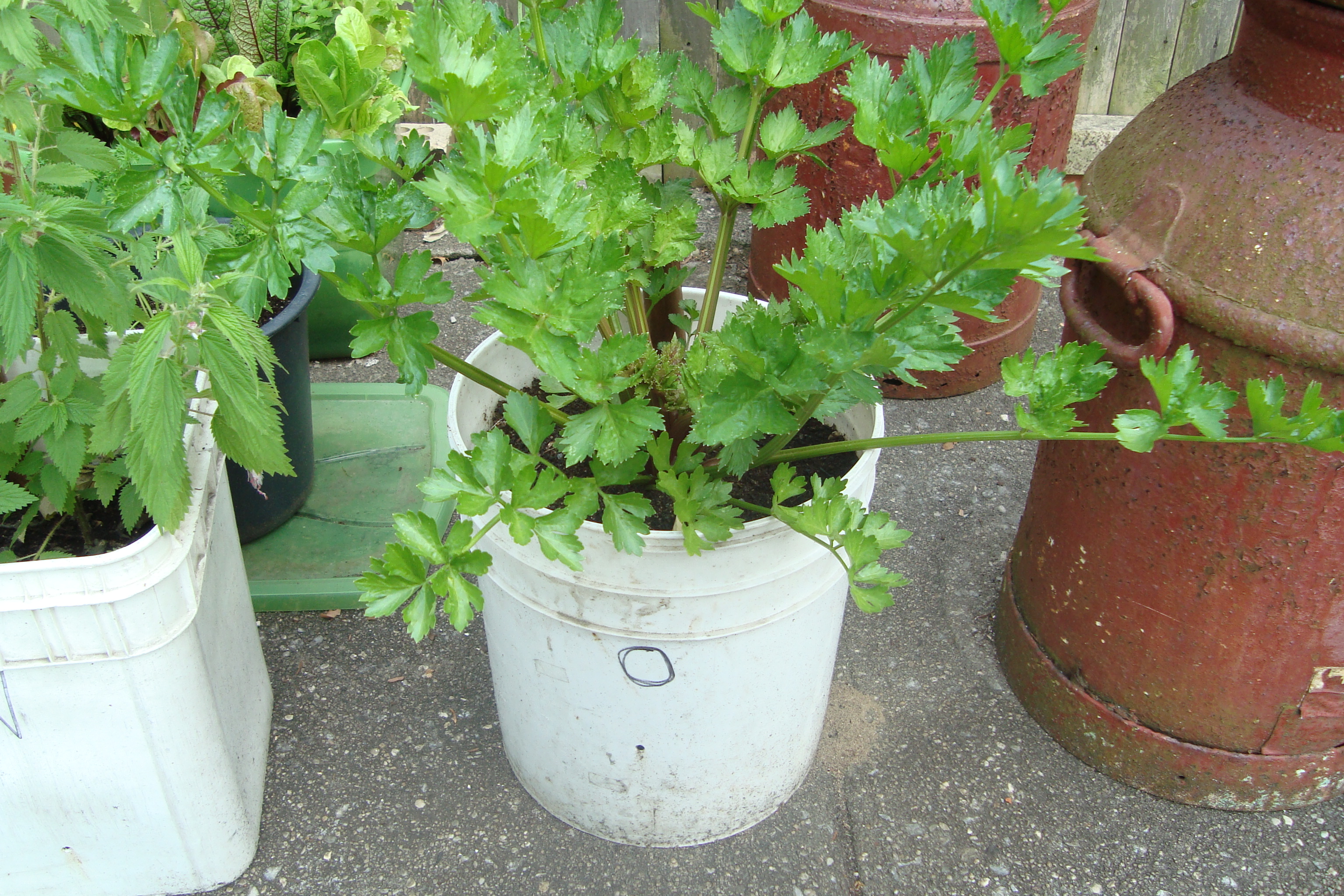
Last month, I planted kale and lettuce in the container that I harvested my celery from. At the time, I wasn’t sure if the the kale and lettuces would grow because of the celery root.

Little did I realize that after being harvested, the celery would continue to grow. So now the containers have celery growing along with lettuce and kale.

I don’t think it’s the optimal growing situation because I already know that celery plants like to grow in their own containers.

Much like “Ebony and Ivory” they are living in perfect harmony. Ok, I wouldn’t say perfect, but they are living together.

So I learned another one of these lessons in gardening – after harvesting a plant from a container, don’t jam more plants into it. Let the original plant grow and produce some more.

It seems so obvious as I type it, but I’m so used to picking something off the produce shelf and it not growing back that I assume that’s what’s going to happen here too.

What your gardening story that you look back and say, “What was I thinking?”

httpv://www.youtube.com/watch?v=HDGj8sIZ35A

Don’t Forget About Feeding Your Plants

Now that I’m over six months deep into this gardening game ‘m starting to notice a pattern in some of my plants. There is something wrong with their growth.

The cauliflower has yet to head and the cucumber leaves are yellowing. Now my spinach plants are starting to show some ill effects as well. They are getting some brownish dots on their leaves.

The one commonality between all of these plants is that I did not feed any of them. After I finished my initial planting with soil and compost, I never added more compost and nutrients.

Looking back on the containers, I’ve also come to realize that all of their soil lines were much lower than they initially were as well.

This leads me to believe that lack of nutrients is definitely a contributing factor to these symptoms. The cauliflower is the only plant that hasn’t yielded anything, so it’s not all bad, but just another lesson learned for me in this here gardening thing.

An important lesson learned – don’t forget about feeding your plants. Does this seem right to you?

httpv://www.youtube.com/watch?v=h2r_O4cqDCQ