1 Container, 10 Crops. How To Grow Food in a Container Year-Round.

Cherry-Tomatoes_3230404b

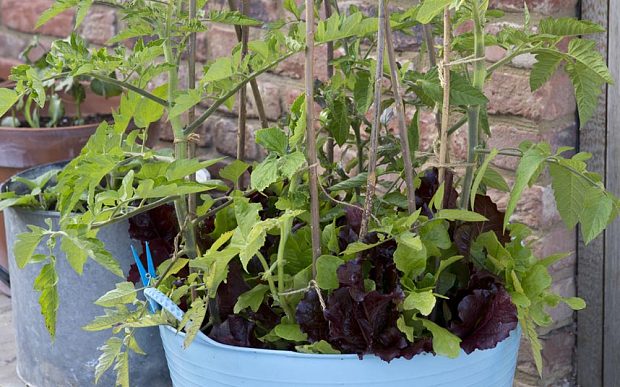
Even if you’re short on space, or gardening in urban areas, you can still grow some of your own food and enjoy a year-round garden.  Container gardening can be very productive as long as you maximize your containers potential.  As long as you have one large pot, (we suggest 18″ or larger in diameter) you can grow “10 different crops in a single year if you combine compatible plants and plan the growing year carefully.” -source “Telegraph.uk.co

To Get Started, You will need:

• 1 large pot – a rubber tub bin is ideal or any plastic pot at least 45cm diameter

• Household drill and drill bit if no drainage holes

• Multipurpose, organic, peat-free compost

• A wigwam support made from bamboo canes or any strong flexible sticks such as willow

Click here to read the rest of the article on how to grow 10 different crops in one container! 

Urban Farming Takes on More Important Role Worldwide

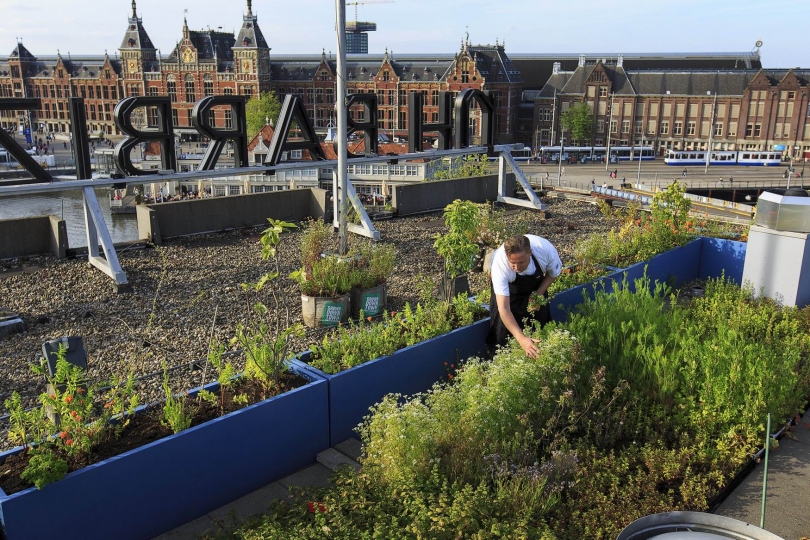
30278361-01_bigAround the world, urban farming is becoming an important part of the city landscape.  The new reality in which we live in, is that more than half of the worlds population is now urbanized.  That number is expected to rise to nearly 70% by the middle of this century. 

Read the entire article at: “NationMultimedia.com

9 of The Best Vegetables To Grow In Small Gardens

Gardening in small space can be just as rewarding and fun as growing in a large garden area.  These days, urban gardeners are growing more of their own food in sometimes less than 100 square feet.  Balconies, patios, even indoor windowsills are a great place to grow vegetables and herbs.  Almost anything can be grown in a container, and if you’re wanting to know what you should plant to maximize your yield in a small area, here are 9 of the best vegetables/herbs to grow in a small garden.

1. Shallots:

Space shallots approx. 4-6 inches apart with the rows 18 inches apart. Plant the bulb root side down, the top of the bulb 1 inch below the surface. Planting too deep grows elongated bulbs that don’t store well.

2. Carrots:

Sow seeds evenly in a very shallow trench, about 1/4 inch deep. Keep seeds moist so they will germinate. Space rows about 12″ apart and when the first leaves emerge, thin to 1″ apart; when true leaves emerge, thin to 3″ apart.

3. Cherry Tomatoes:

To start tomatoes indoors, sow seeds using expanding seed starting soil pods about 8 weeks before the last frost date for your area. Seedlings will be spindly with less than 12-14 hours of light per day, try to keep them in a warm sunny location. When seedlings have 4 leaves, transfer to a deeper pot (3-4″) and again when 8-10 inches tall. Each time, place the uppermost leaves just above the soil line and remove all lower leaves. Transplant into the garden when the stem above the soil has reached 8-10 inches tall. Be sure to harden them off before transplanting them outdoors. Allow up to 10 days for the tomato plants to harden off to the outside temperature fluctuations.

4. Runner Beans:

Set three 6 foot poles in the ground, tepee fashion, and tie together at the top. Leave 3 to 4 feet between the pole groups. Make a hill at the base of each pole, enriched with compost or well-rotted manure, and plant 6-8 seeds in each. After the second pair of true leaves appear, thin to 3 plants per pole. With regular harvesting, the pole beans should bear all summer.

5. Garlic:

Break apart cloves from bulb but keep the papery husk on each individual clove.
Ensure soil is well-drained with plenty of organic matter. Plant in Full Sun.
Plant 4 inches apart & 2 inches deep, in their upright position (the wide end down and pointed end facing up). Come springtime, shoots will begin to emerge.

6. Kale:

Plant Kale in rows 18 inches to 2 feet apart. When the seedlings are 3 or more inches high, thin plants to 10 inches apart and use the thinnings for salads or as a cooked vegetable.

7. Basil:

Try to space your basil plants about 12 inches apart. As long as you harvest the leaves when they are young, basil plants make a wonderful container crop.

8. Lettuce:

Seed should be sown thinly in rows 1 foot apart; for leaf types, thin plants to 2-3 inches apart, then thin again by pulling every other plant when half grown. This will encourage thickly developed plants. For head, Bibb, and cos types, space rows 18 inches apart, plants 8-10 inches apart. Closer spacing results in smaller heads, which may be preferable for small families.

9. Beets:

Sow seed 1/2 inch deep in rows 12-18 inches apart. The beet seed is a compact ball of many tiny seeds. Many plants germinate where each seed is sown, so seed should be placed sparingly. When seedlings are 4-6 inches high, thin plants to stand 1 1/2 inches apart. (They can be used in salad or cooked as spinach.) Then, as these beets grow to about an inch in diameter, pull every other one to allow larger beets to grow.

Original post can be found at: “SeedsNow.com

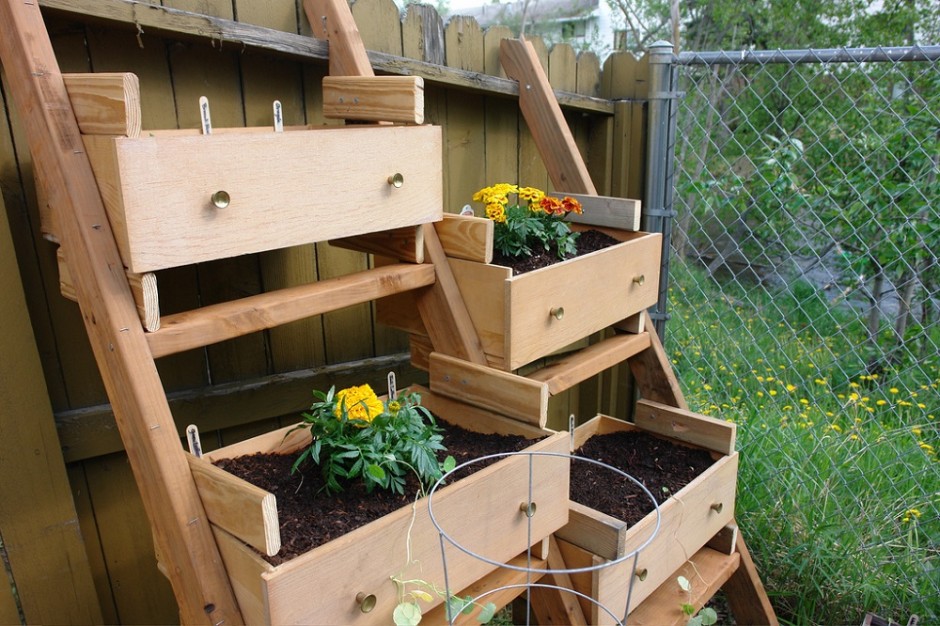
How to Turn A Dresser Into a Vertical Vegetable Garden

dresser-drawer-vegetable-garden-940x626

Old dressers are easy to come by and for balcony gardeners or anyone who’s wanting to grow more food in less space by creating a vertical garden, this project might just be for you!  “Making a container garden from up-cycled dresser drawers is pretty simple. You’ll want to start with a plan. Things you’ll want to consider…

  • Where will the container garden go? This will depend heavily upon what you plan to plant.
  • Do the plants you want to grow thrive in full sun, partial sun or shade? Also keep in mind that the drawers lend to a very shallow growing space. Plants that can thrive with less depth include lettuce, herbs, strawberries, cucumbers, onions and radishes.

Once you know what you want to plant and where your garden will grow, it’s time to inspect your drawers.

  • Are they sturdy enough? If not, reinforce them.
  • Have they been treated with any sort of paint, stain or chemicals? If so, you’ll probably want to sand them down or use some sort of a liner that will act as a protective barrier.

Next, you’ll need to drill holes in the bottom of your drawers so moisture has somewhere to drain out. Now it’s time to fill your new dresser drawer vegetable garden with potting soil. Be sure to add some of your homemade compost to give your veggies an extra boost!

At this point, you’re finally ready to plant your seeds. Be sure to read the instructions on the seed package and properly space the seeds so your plants have room they need to thrive.”

Read the full article and find more step-by-step instructions here: “Earth911.com“.

7 Easy to Build Vertical Gardens

Not everyone who grows their own food has acres of land or even a large suburban backyard. Many home gardeners everywhere are learning how to grow their favorite fruits, veggies and herbs vertically to save space. This is important for high-rise dwellers, balcony or rooftop gardeners and even renters who are unable to use what little space they may have in their yard.

Here’s 7 easy to build vertical gardens, perfect for those who are short on space!

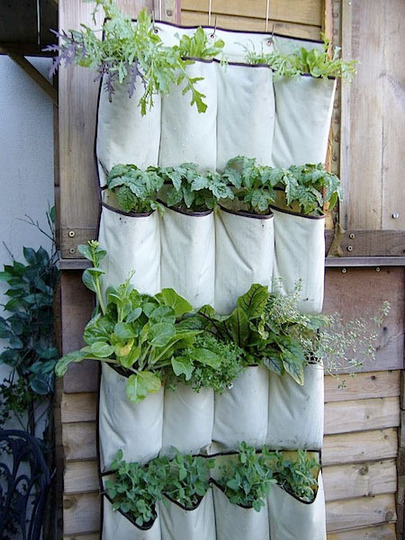
4.Shoe Organizer Garden

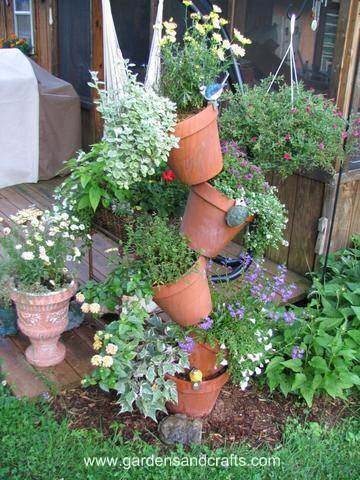
clayplanter071806Tipsy Tower Garden

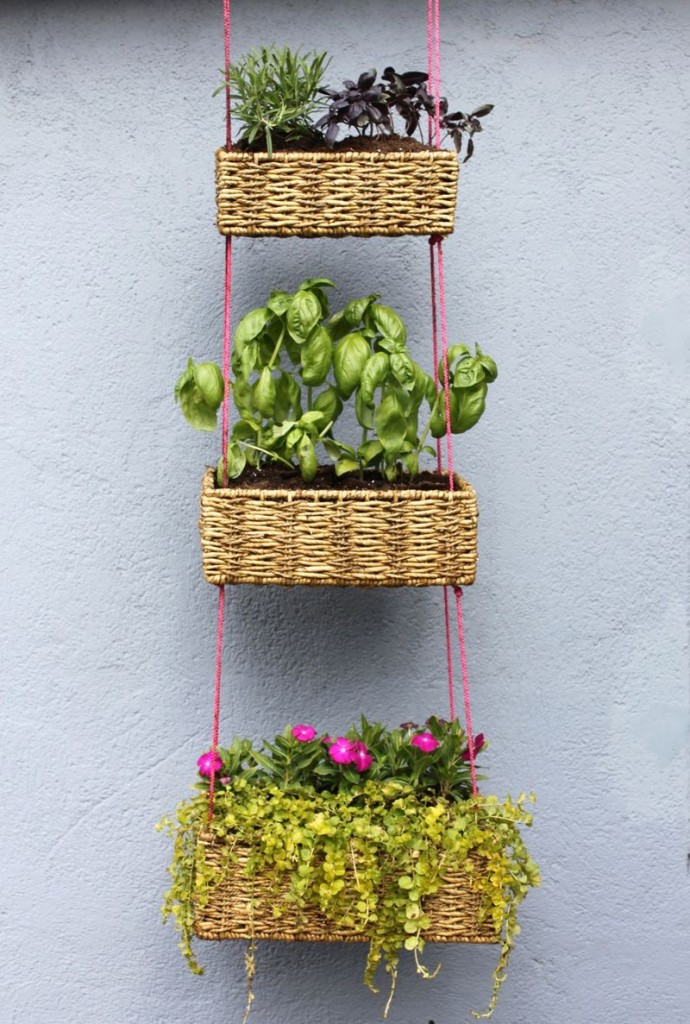
basket-01Hanging Basket Garden

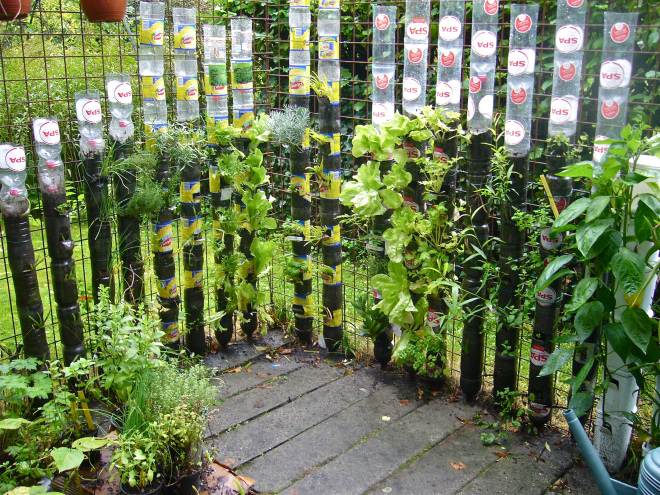
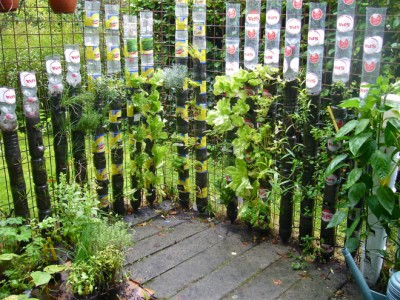
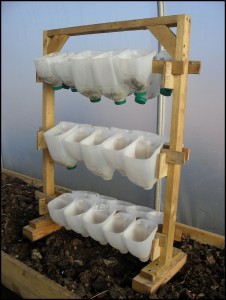
p1070455Bottle Garden

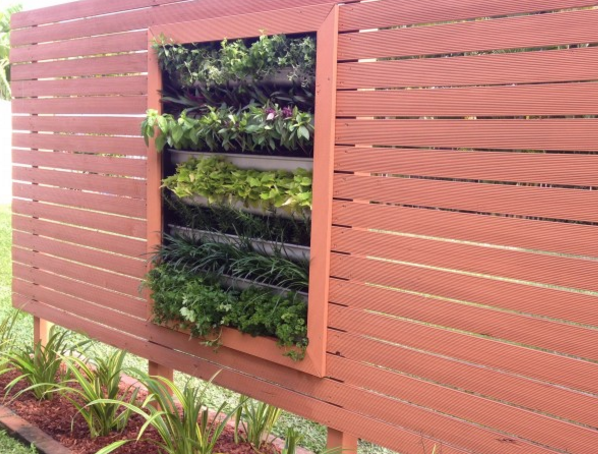
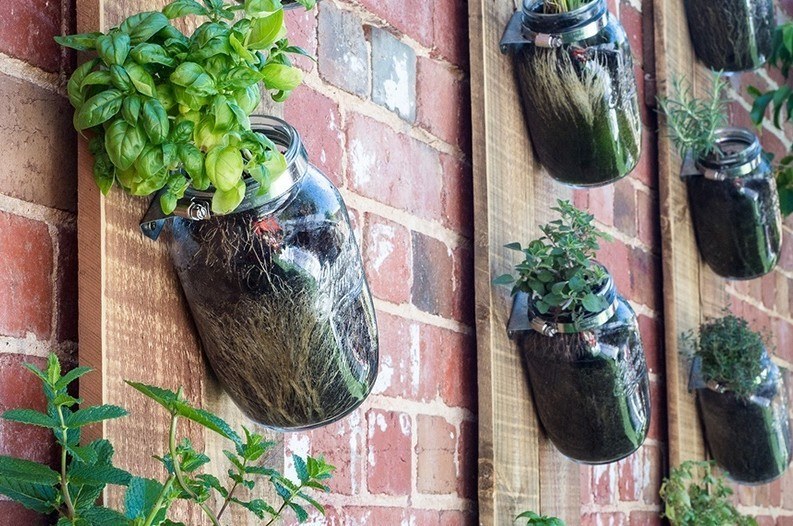
capture-20151227-173953Vertical Living Wall

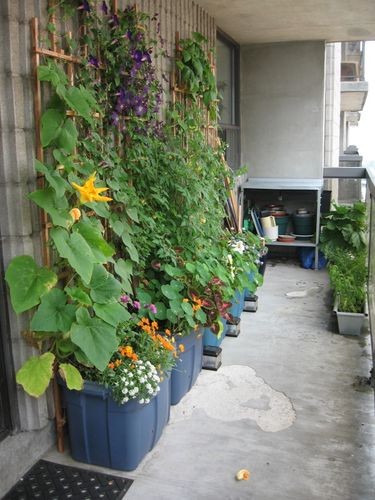
toronto-sip-balcony-garden-in-the-skyBalcony Garden with Trellis

garden project9 (1)Milk Carton Vertical Garden

Grow Fresh Vegetables This Winter With a DIY Vertical Garden

Original article can be found at: “WideOpenCountry.com

If you’re craving your own fresh winter vegetables but don’t have the space for a garden, you’re in luck.

Here are a few ways you can create your own vertical garden.

You don’t need a lot of space for many winter plants. Though some plants, like broccoli and cauliflower, take a larger space and aren’t necessarily recommended for a vertical garden. However, spinach, lettuce and strawberries can be a great start to your newfound green thumb.

There are a number of items sold at garden centers to help plant your vertical garden. Some felt hangers, much like shoe hangers, can be purchased. Hang your garden in an area where it’ll get plenty of sunlight, but where the harsh winter winds won’t do damage. The advantage to this garden – move it when a freeze is coming.

Pinterest
Pinterest

You can “upcycle” almost anything into a vertical planter. Put on your creative gloves and turn your 2-liter or 20-ounce soda bottles into a planter. We know you have those in the recycle bin, so why not recycle them yourself.

As with any garden, you’ll need to follow the seed instructions. Some plants need more space. If you’re planing something like beets or carrots, you’ll need to allow for plenty of root space, so plan accordingly. If you’re looking for leafy vegetables, soda bottles will work perfectly. Plant one per bottle and the plant will regenerate throughout the winter months, providing you with weeks of fresh salads.

Pinterest
Pinterest

Instructions

  1. Purchase or recycle your containers and locate an area to grow your garden.
  2. Be sure you poke small holes in your container (and put something under them if on your porch) so that the plants will have plenty of drainage. If you’re purchasing a store-bought container, you’ll most likely be able to skip this step.
  3. Buy garden soil and fill your containers with a good organic soil.
  4. You can sow the seeds indoors in small eggshells (yes, just another way to recycle) while you’re preparing your masterpieces. Once you have the vertical garden container purchased or made, you can transfer young seedlings into the containers.
  5. Even if you have enough room out back, vertical gardens can be a fun addition to any home. Many of these options maximize your water and minimize your overall work. So, who’s ready to garden?
Decoist

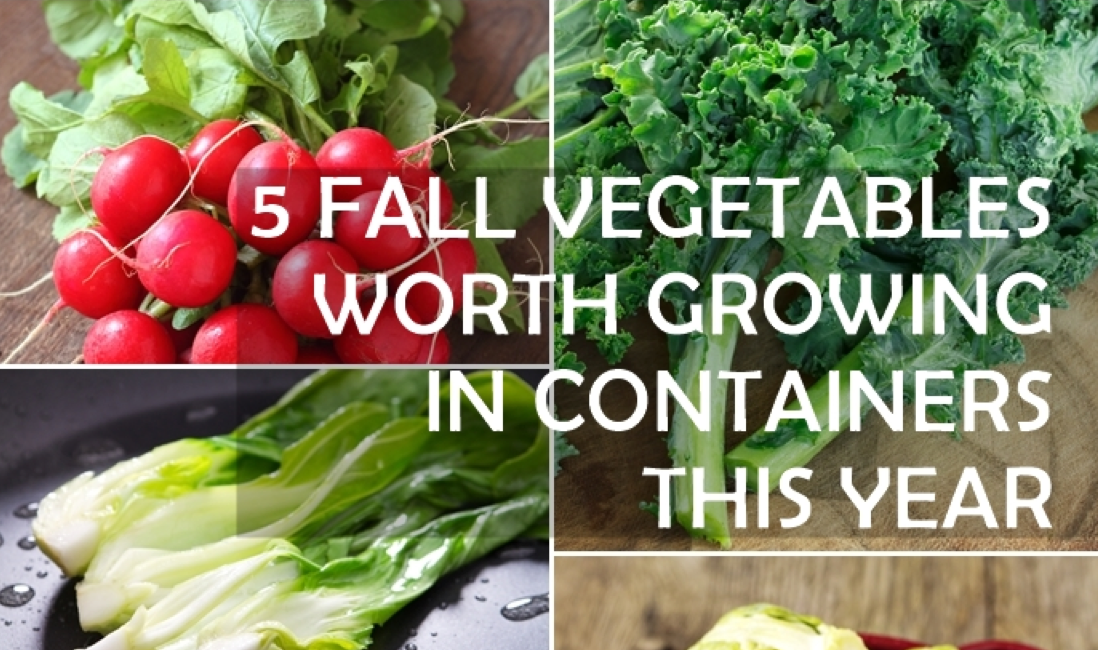
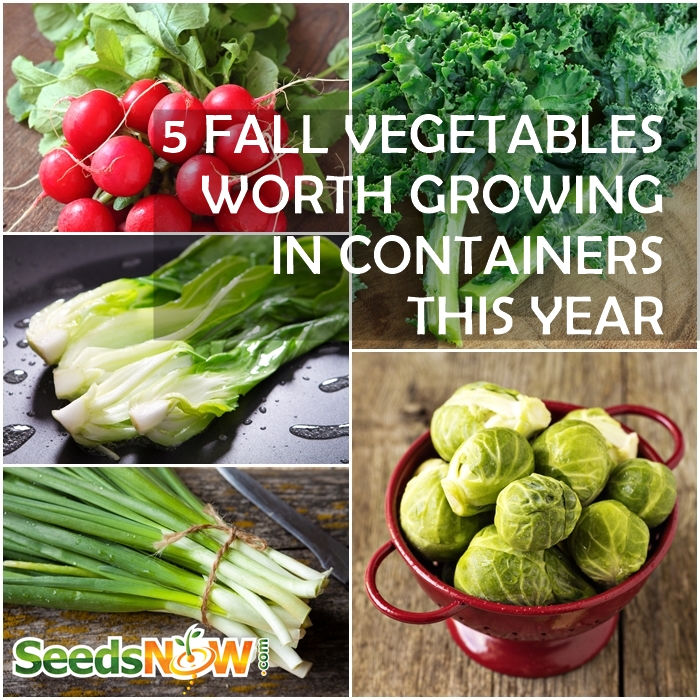
{Fall & Winter Season} 5 Cool-Weather Vegetables to Grow In Containers

This post was found from SeedsNow.com BLOG

5FALLCONTAINERVEGGIESX700
If you want to have vegetables to eat this fall, then you need to start planting in summertime. This might be your first time growing a fall garden, & these vegetables are a great place to start because they can all be grown in containers!

1. Radishes– The trick with growing perfect radishes, lays in the soil. Literally. Keep the moisture level of the soil close to that of a wrung out sponge. Don’t feel limited to growing common varieties like you’d find in the store. Try varieties like Japanese Minowase or Hailstone White radishes!

2. Kale– Kale is not only beautiful, but very tasty.  It will look great growing in a container! Keep the soil evenly moist and stop watering after the first frost.  You’ll be on your way to making healthy and delicious kale chips in no time! To keep with the theme of fall colors, try growing the Red Russian variety!

3. Bok Choy– Don’t let your soil get too soggy, and try staggering their plantings so you’ll have a new one to harvest every week or so. They love being fertilized every few weeks with an organic, time-released fertilizer.  They take less than 60 days to mature, and are great sauteed! Get Bok Choy seeds here!

4. Bunching Onions– The great thing about growing scallions or bunching onions in containers is that they are actually a perennial plant and will come back year after year if you leave a few behind. When you’re planting your bunching onions, don’t fill the pot completely full. As they grow, add a little more soil on top of the onions. The more plant that is under the soil, the more “white part” of the onion you’ll have at harvest time.

5. Brussels Sprouts– Plant your Brussels Sprouts in a deep pot, and place in full sun. One plant can produce up to 100 sprouts which is more than enough for several meals.  Start your harvest from the bottom of the plant up, as the ones closer to the ground will mature first.  Harvest when they are just smaller than a golf ball! We recommend Long Island Catskill Brussels!

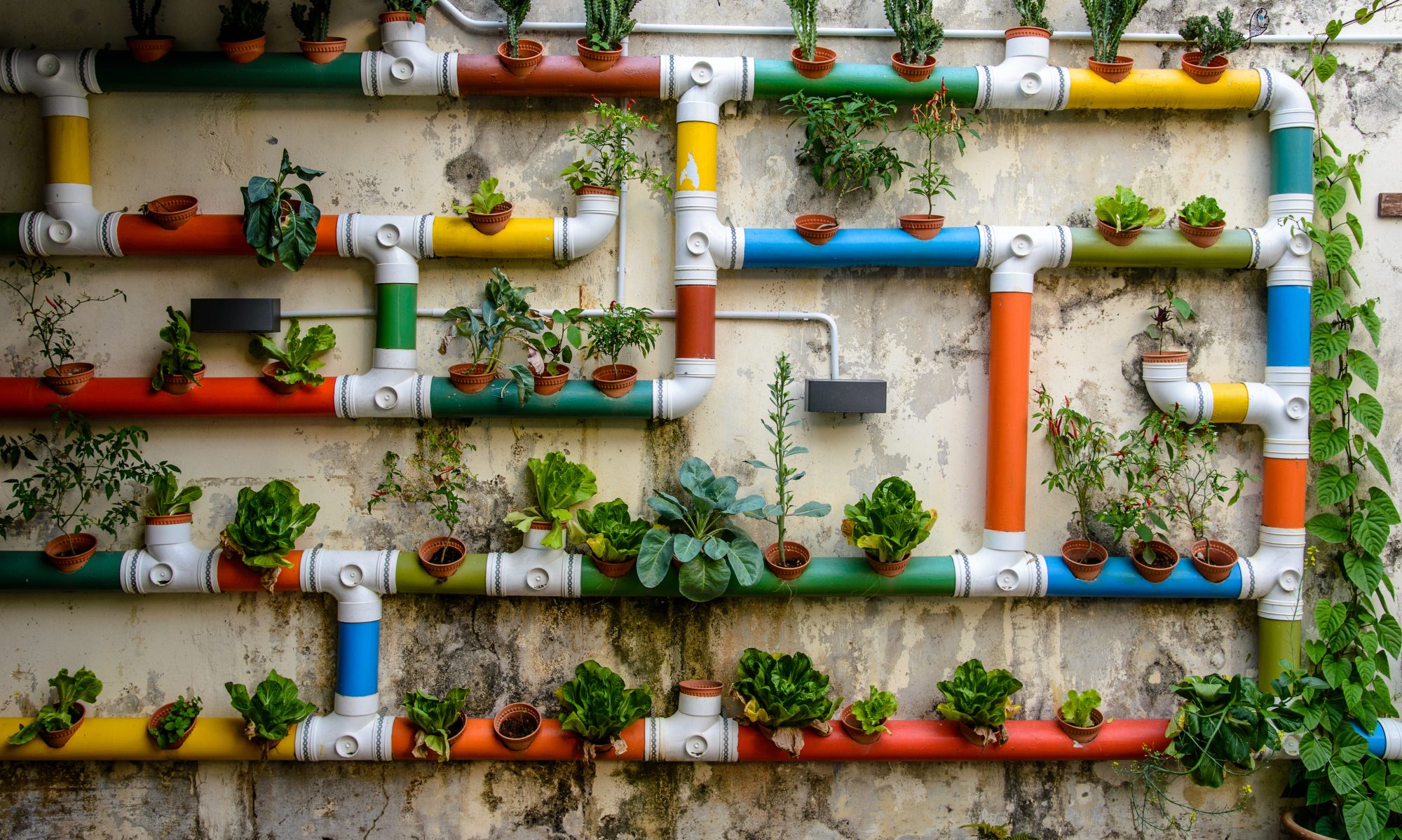
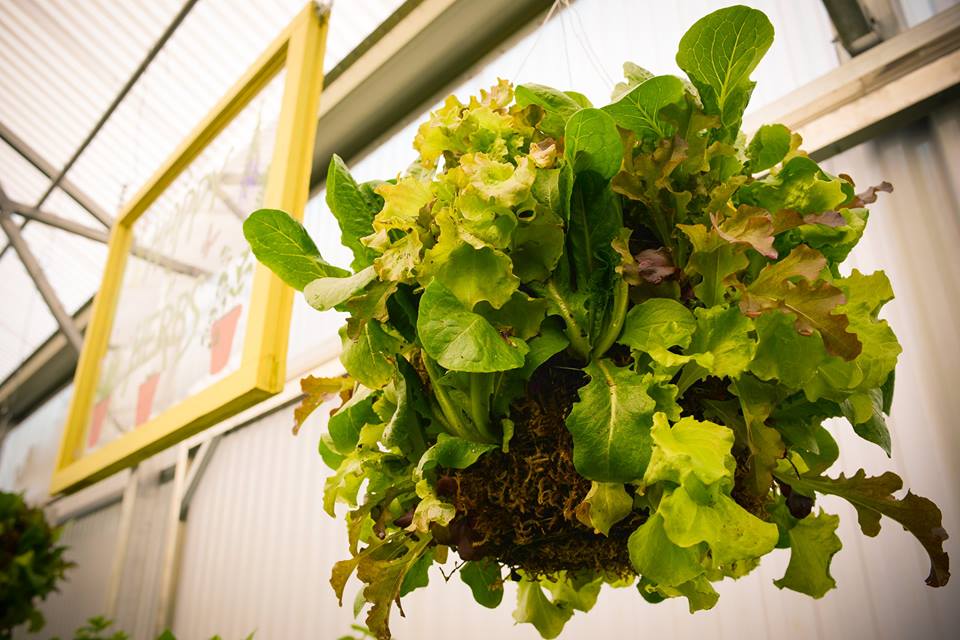
Hanging Basket of Lettuce Perfect for Urban Environments

You’ve seen hanging baskets of flowers, but have you seen a hanging basket of lettuce before? Cut small slits in the basket and place your lettuce through them. Fill with good potting soil and you’ve got an awesome basket of lettuce to hang on your patio.

hanging lettuce basket urban organic


Lettuce is super easy to grow from seed.  Lettuce seeds germinate in less than a week and mature sometimes as little as 20 days.

Sources to buy non-gmo seeds.

My August Planting for the Fall

Hard to believe it’s already August.

The summer is flying by.

Despite being the summer, it’s time to start thinking about your fall garden.

This past past, I planted some seeds in my new garden that’s alongside my building.

How to decide what to plant

To figure out what I should plant, I used my Veggie Virgin Formula.

It’s a simple 4-step process that will show you what you can start from seeds right now.

What I got planted

Since the summers are traditionally hot here in LA, my choices are still limited.

I went a little crazy for me. I usually stay away from the peppers and squashes. They require more sunlight, fertilizer and attention. Definitely don’t recommend them if you are starting out.

Here is what I got planted with much more coming in September:

  • Georgia southern collard greens (Cornucopia)
  • Yellow summer crookneck (Ferry-Morse)
  • Squash, blackbeauty (SeedsNow.com)
  • Pumpkin Jack Be Little (Botanic Interests)
  • Sweet cherry red peppers (from a friend
  • Pepper (HOT), jalapeno (SeedsNow.com)

If you still need to get your seeds to plant for this fall, check out SeedsNow.com’s Fall/Winter Harvest Kit. You can get 10% off by using the code URBAN10.

You can also check out these other reputable seed companies to get your vegetable seeds from.

Still need help starting your garden?

If want to start your fall garden, but feel overwhelmed or want step-by-step instructions in easy to understand English, then enroll in my Fall Gardening 101 course.

Your turn

In the comments below, let me know what you planted in your garden this August.

Questions to Ask Yourself When Deciding What to Grow

Deciding what to grow is an important decision.

It’s also the question that I get asked most often when people are starting their urban gardens.

To that question, I often respond with a series of questions that you need to ask yourself.

Here they are:

  1. What’s the location that I am growing in?
  2. How much sunlight does my space get?
  3. What am I growing in?

Once you answer those three questions, your choices will automatically be narrowed down.

If you only get three hours of sunlight, your chances of growing cucumbers are small.

Then you can move on to the next set of questions to ask yourself:

  1. What do I use most? If you are using a lot of something, you should consider growing it.
  2. What do I like to eat? This might seem like an obvious question to ask, but it’s an important one. We are working with small spaces and need to get the most out of them. Why grow something that you don’t like to eat?
  3. What makes the most $$$ sense? To me it’s herbs. At the grocery store you always have to buy a big bunch and only need a sprig or two of them.
  4. What season is it? Certain herbs and vegetables will only grow in certain temperatures.

Once you answer those questions, you will have a clearer picker as to what you can grow.

[vimeo clip_id=”35728824″ title=”0″ byline=”0″ portrait=”0″ width=”525″ height=”393″]

How did you answer these questions?

How to Determine the Amount of Sunlight Your Garden Gets

What can I grow?

That’s the most common question that I get asked.

First, you’ll have to decide on the location of your urban garden.

Then you’ll have to determine how much sunlight your garden space gets.

There are four main categories of sunlight:

  • Full sun. 6+ hours of direct sunlight.
  • Partial sun. 4-5 hours of direct sunlight.
  • Partial shade. 2-4 hours of direct sunlight.
  • Shade Less than 1 hour of direct sunlight.

Since we are living in urban environments, we have other structures that we are dealing with as well. Those can be adjacent buildings, over hangs and walls.

I would assume that most of us fall into the partial sun category and below.

Easily figure out how much sunlight you get

A simple way to figure out how much sunlight your space gets is to monitor it throughout the day.

All you have to do is pop outside for less than a minute every few hours and take some quick notes.

Start off with a quick sketch of your garden space. Section it off as the day progresses because the surrounding structures will cast shade in certain areas.

Here is a video of what the process looks like from my balcony garden:

[vimeo clip_id=”35606437″ title=”0″ byline=”0″ portrait=”0″ width=”525″ height=”393″]

Once you know how much sunlight your garden gets, the list of what you can grow has been narrowed down for you.

My balcony gets only three hours of direct sunlight. Based on that my selection is limited down to certain herbs and vegetables. This is why I’m growing a lot of greens.

Now you can repeat the same process and leave a comment below to let me know how much sunlight your urban garden gets.

7 Location Ideas for Apartment and Urban Gardens

When you live in an apartment your space is limited.

That’s especially true when it comes to your garden.

We barely have room for furniture. Forget about tomatoes.

This is why it’s important to consider all options when deciding where to start your apartment vegetable garden.

Since a lot of apartment dwellers are renters as well, we need to take into consideration the costs involved and what our landlord will allow.

It ain’t no thang though because here are seven (7) spaces where you can start your apartment garden:

  1. Fire escape. This is where it all started for me in 2009. You can fit a few containers on the landing, but be sure to leave plenty of space for a footpath.
  2. Hand rails. I used these too on my fire escape to hang 10 soda bottle planters filled with mint, oregano, lettuces and more.
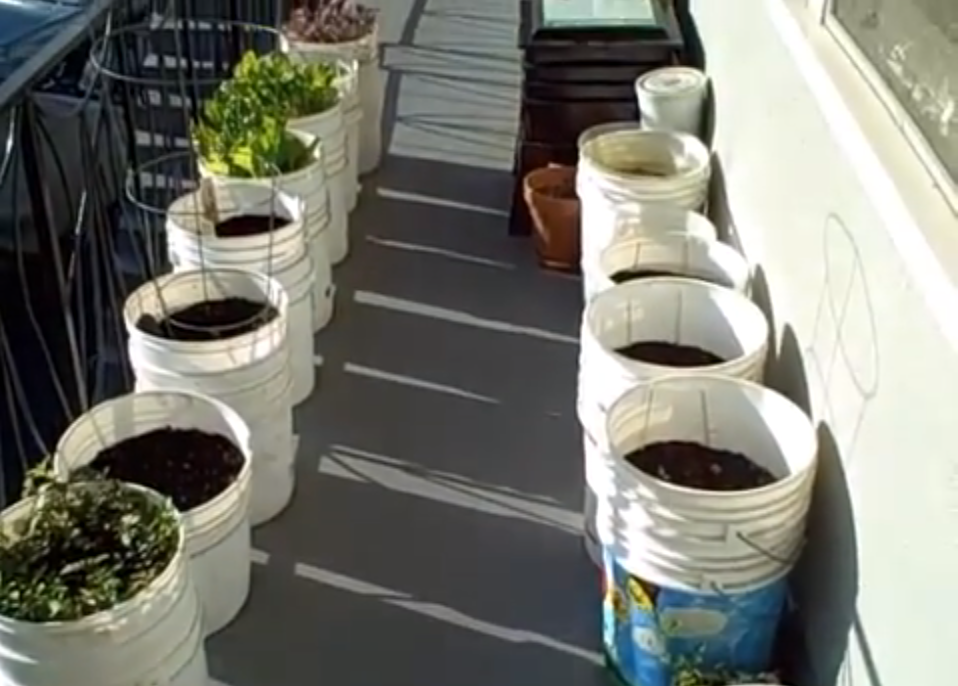
  3. Balcony or patio.This is what I had when I first moved to LA. I had about 10 containers out there. They lined up nicely on both sides allowing for a walkway down the middle.
  4. Walls.There are plenty of vertical garden planters out there right now. The thing with most of them is that you need to secure them to the walls, which might be an issue for some renters or landlords.
  5. Windowsill boxes. These are great to grow shallow rooted herbs and vegetables. Like the vertical planters they do need to be secured to the structure.
  6. Front or backyard.If you are on a lower level, this might be all you have. If you are renting, it’s unlikely that your landlord will allow you to rip up the lawn to start your garden. They might allow you to put some containers out there though.
  7. Along the side of the building. This is usually dead space that isn’t visible from anywhere and not being used. It is worth inquiring to find out if you can put containers out there to start your garden.

Where do you have or can you start your apartment garden?

I’m Moving and Losing My Balcony Garden

I’m going to be moving in the next couple of weeks.
Why does it matter and what’s it have to do with urban gardening?

Even though I’m moving into the apartment next door to mine, I am losing the balcony and the balcony garden.

Why should you care?

It matters because I will be growing in an all new location and using new methods including growing indoors using natural and grow lights and growing hydroponically.

So be sure to hit me up with your indoor and hydroponic questions.

Losing my balcony, but gaining more garden space

I am still going to be container gardening just in an all new location that I never thought of before.

When discussing the move with the landlord, he said that I could use the side of the building to put my containers.

It’s a much larger space and gets more sunlight.

[vimeo clip_id=”35353635″ title=”0″ byline=”0″ portrait=”0″ width=”525″ height=”393″]

Talk to your building manager or landlord

For those of you that don’t have a balcony, ledge or fire escape, ask your building managers or landlords if you can put some containers along the side of the building out of the way.

It will give you space to grow.

I thought I was going to lose space by moving, but I gained a lot more by asking a simple question.

Tell me what’s up

What spaces around your apartment can you ask your landlord to put some containers?

Collecting Rainwater for Your Small Space Garden

A rain barrel is something that would be great to have to be able to collect rainwater, but the reality is that it won’t work for those of us apartment gardening.

One reason is that since we are dealing with small spaces, so every little inch counts. Something as large as a rain barrel really isn’t practical.

That doesn’t mean that we can’t collect rainwater though.

The other day when I woke up, it was raining. It hit me that I could put some of the empty 5-gallon containers close to the edge of the balcony and harvest a bit of the rain water. It helped that the gutter is a bit busted and was overflowing at that spot.

It wasn’t a horrible rainstorm and lasted only a few hours, but during that time I was able to fully fill up two 5-gallon containers. Those will last me at least two weeks and will help to conserve some excess water usage as well.

Much like growing your own food, every little drop of conserved water matters.

What are some ways that you conserve water in your garden?

Back From Break. Balcony Garden Update.

Damned. Hard to believe that it’s been well over a month since I took my break. Much to your delight, I am back though and back to posting.

I appreciate all the comments and feedback that were left during that time to let me know what you are liking and not liking. It will all certainly be taken into consideration.

Screenshot 2014-04-10 17.27.07

When I was gone, nobody really took care of the garden. Anita was with me for most of the trip. Since they are self-watering containers, they can survive a bit longer than most traditional containers without being watered. Though one of my neighbors said that she did sprinkle some water on the containers for me.

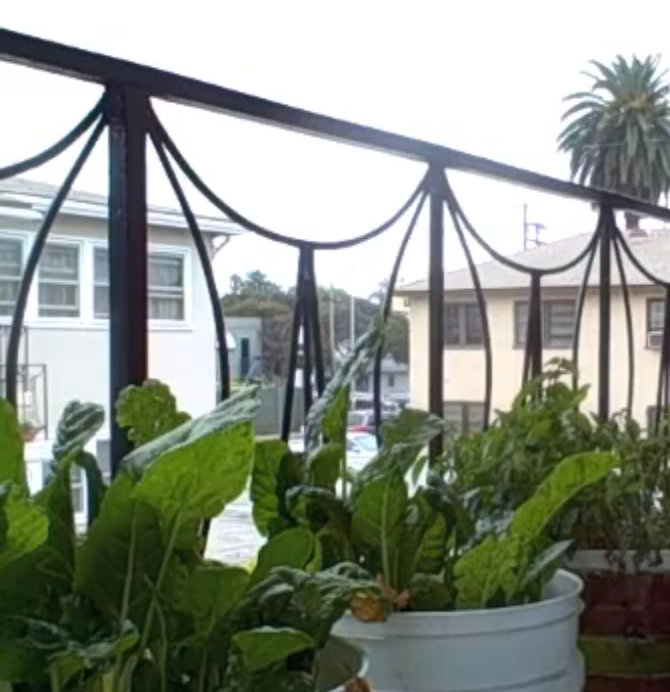
The two chard containers didn’t look so well when I got back. After Anita watered them, they perked up and are doing great.

The mint container which was doing amazing….isn’t anymore. It looks like crap. Hopefully it will come back around.

Now the pumpkin container, that I pruned because it was getting powdery mildew, ain’t doing well. By ain’t doing well I mean it’s dead. Was able to get a tiny little pumpkin from it though. All good.

Now it’s fall time and I have a crap load of containers and lots of space on the balcony garden to get some fall veggies growing.

Have you started your fall garden? If not, what’s up with that? If so, that’s what’s up and please share what are you growing in the comments below. Good to be back!

Update on my Garden – August 7,2011

My bad for missing last week. Some personal things going on, but all good.

It’s been a while since I gave an update on my balcony garden so wanted show you what I got going on and no matter where you live or how much space you (don’t) have, you can grow some of your own food.

I live in Los Angeles and my balcony is 13 x 4 and east facing. This means that I don’t have much space or direct sunlight (maybe 4-6 hours). That does’t mean that I can’t grow anything. Currently on my balcony, I have four self-watering containers that I built using upcycled 5-gallon containers.

In the containers I have the following:

  • 2 containers of swiss chard
  • Spearmint
  • Jack Be Little Pumpkin

I am using a tomato cage to grow the pumpkins vertically.

That’s what I have growing in my garden with some bigger plans for the fall. What do you have growing in your garden?

It’s Almost July, What’s Growing in Your Garden?

It’s almost July. Crazy ain’t it?!?! Around the country most of you should be at least a month deep into your growing seasons. You should have already thinned out some seedlings after their true leaves shown and done succession plantings.

You’ve already shared your spring garden ideas with me and last month you told me how your May gardening was coming along.

Ginger Renne Doxie had a raised bed built from cinder blocks that had some tomatoes, peppers and radish. She also planned to grow some tomatoes upside down.

Juanita pretty much wrote an entire post about all she had going on from spinach and lettuces that she was harvesting to the onions she was eating daily. It was great to read the excitement in her comment.

Melissa Willis asked if it was a loaded question and said how she went out of control with her plantings, but had not rain in New Mexico. Hopefully she’s had some since.

Well on my balcony garden, I had that issue with the twigs in the soil, but all is not lost. My mint container is doing well. There are two swiss chard containers that I’m harvesting from regularly and using in my smoothies. Also, my Jack Be Little Pumpkin is looking decent so far.

Now on to the important questions and part of the post, what’s growing in your garden this time of the year?

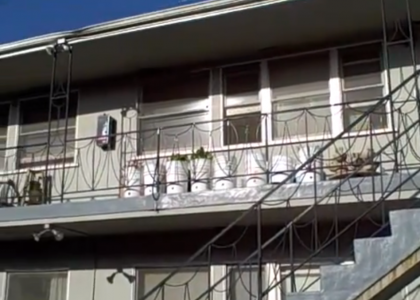
Update: Is a Balcony Garden Against Building Code?

So last week I mentioned that a building inspector from the Los Angeles Housing Department (LAHD) came to inspect our building and said that the balcony garden was against code.

He was vague and didn’t cite a code at the time, but said fire code. The local fire department didn’t seem to think so though.

Screenshot 2014-04-10 17.31.36A week later, there was a memo from LAHD posted in a common area saying that all citations needed to be addressed by sometime the end of June. I followed up and called them to get the exact citation.
The inspector couldn’t provide one and just kept saying he was “doing his job.” I appreciate him doing his job. If he is going to do his job and cite me doing something wrong, I’d like to know what it is and was not provided with that.

He told me that if it wasn’t taken care of by that date that a higher authority (I forget the name) would come out to assess the situation.

Screenshot 2014-04-10 17.32.48The fire department were followed up with again and they didn’t see it as against fire code. They even called up the inspector and he gave them the same run around.

Heck if it’s against a code and they can cite me on it, I’ll gladly comply. I’m not going to comply with, “I’m just doing my job.” I knew the fire escape garden was against code, but was never cited on it.

I’ll keep you updated, but what’s your thoughts on this whole situation?

Is a Balcony Garden Against the Fire Code?

When I had my fire escape garden in NYC, I knew that it was technically against the fire code (but J-walking is illegal too and no one ever gets busted). Now that I’ve been in LA for over a year, I’ve been told that a balcony garden is against the fire code too.

Last week a building inspector came by and said that it was a fire code to have anything on the balcony. I asked what the name of the code was, so I could research it. He didn’t know, but just said it was an “open zoning” thing.

I find it hard to believe considering people in LA have everything from bikes to barbecues on their balconies. Instead of just saying ok and taking everything down, I called the local fire department to inquire. If it really was a fire hazard, I’d want to remove it.

Some of the local firemen were kind enough to come by my apartment to check out the balcony to see if it was indeed a hazard. After inspecting, they said that it wasn’t

My only other guess is that it could be a building safety code violation, but the inspector said fire code.

Does anyone know anything about this?