Mixing Up a Living Microbial Treatment For Your Garden

I’ve mentioned before that when you are gardening in containers that you’ll need to amend your soil and keep your plants well fed. As the water drains out of the containers, so do the nutrients that it needs.

One other thing that your garden will benefit from is a living microbial treatment. The treatment that I am using is from one of my sponsors Thrive and their Vegetable Thrive. This is my first time using the product.

The microbial treatment will help to “restore the biological activity and improves the rooting of your plants in the soil.” The best analogy for it would be a probiotic for your plant.

You will need the following:

  • Container large enough to hold a gallon of water
  • Gallon of water
  • Capful of your microbial treatment (in my case Thrive)

To mix up the treatment:

  • Pour the water and Thrive into the container
  • Mix it up and use immediately

This is different from the manure tea, that needed to steep and sit for a few days before use. You can also apply it in the same manner to your containers/garden by pouring on top of the soil or into your reservoir container. I did a little of each. Will keep you updated on the results.

If you want to try Thrive in your garden, they are giving away free samples.

What living microbial treatments have you used or heard of before?

Update on my Garden – August 7,2011

My bad for missing last week. Some personal things going on, but all good.

It’s been a while since I gave an update on my balcony garden so wanted show you what I got going on and no matter where you live or how much space you (don’t) have, you can grow some of your own food.

I live in Los Angeles and my balcony is 13 x 4 and east facing. This means that I don’t have much space or direct sunlight (maybe 4-6 hours). That does’t mean that I can’t grow anything. Currently on my balcony, I have four self-watering containers that I built using upcycled 5-gallon containers.

In the containers I have the following:

  • 2 containers of swiss chard
  • Spearmint
  • Jack Be Little Pumpkin

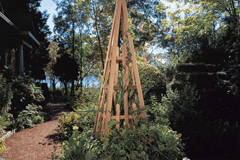
I am using a tomato cage to grow the pumpkins vertically.

That’s what I have growing in my garden with some bigger plans for the fall. What do you have growing in your garden?

Baked Zucchini, Tomato and Goat Cheese

    Here’s what you’ll need:

  • Zucchini
  • Tomato
  • Goat cheese
    How to make:

  • Slice zucchini into rounds.
  • Slice the tomato and cut into quarters. Place on top of the zucchini.
  • Top it with goat cheese.
  • Place in broiler for 8-10 minutes until the cheese begins to melt.
  • This is a great snack.

Does Local Environment Affect Your Organic Garden?

There was a discussion on my Facebook profile about how there is so much out of our control that we can’t truly be healthy and maintain an organic lifestyle.

That got me thinking about my balcony garden and how organic it really is. My block right now is a freakin circus and a mess. My street is being dug up and repaved and on the other side there is new construction going on.

There is lots of who knows what that is being tossed into the air, machinery and fuel that’s being burned in a close proximity to me and the fumes from the tar…need I say more?

These are all factors that I can’t really control though. I can control them, but I think the construction workers would win out if I attempted to stop them.

I can’t worry about that though. This is why to me organic means much more than just a label and certification. It doesn’t mean that I shouldn’t continue to grow my own food and it shouldn’t be a reason why you don’t either. It’s just another excuse.

I know what I’m putting in my containers and am doing my best given the circumstances that I’m facing.

What’s going on in your environment that might not be considered so organic to your garden?

Using Pumpkin Tendrils to Help It Grow Up a Tomato Cage

I am growing a miniature pumpkin variety from seed for the first time. It’s Jack Be Little Seed that I got from a sponsor of mine Botanical Interests.

No, I’m growing some huge Charlie Brown type pumpkin on my balcony garden. That would be dope though. These get to be about 2-3″.

It’s been about two-months or so since I first planted it (or maybe a month) and the plant is doing amazing. It looks like it is going to start blossoming soon and the leaves are getting large.

I am using a tomato cage to train it vertically since I don’t have much space for it to sprawl.

To help the plant grow upwards, you want to take the tendrils, those are the small viney (if that’s even a word) type things, and guide them up the cage. The tendrils help to support the plant while it’s growing and will wrap around anything that will support them.

Have you ever thought of growing pumpkins in containers? What have you learned learned about growing pumpkins?

Cabbage Worms Ate My Collard Greens. What’s Eating Your Garden?

When I was checking out my balcony garden, I noticed that one container looked pretty empty. After taking a closer look, I thought to myself…when did I plant aloe?

Turns out it wasn’t aloe, but it was a container that used to be collard greens? Cabbage worms went to town on them and completely devoured them. By the time I noticed, it wasn’t even salvageable so I let them have their way.

I’ve had pest problems before with the aphid infestation and have also wrestled with cabbage worms.

What pests are eating your garden? How to do you combat them without using toxic pesticides?

Growing Cucumbers Vertically to Maximize Space

A single cucumber plant can spread out over 12 to 20 square feet when grown in traditional rows or hills. But one way to make better use of space and maximize yields is to grow cucumbers vertically – that is, to let the vines expand upward instead of outward, by supporting them on a raised structure. This is a perfect space-saving solution for anyone growing cukes in containers, raised beds, or other small plots of land (like a narrow side yard).

By the way, if you’re looking for heirloom/non-gmo seeds this is where you can order cucumber seeds online.

There are other benefits to growing cucumbers vertically as well. When plants are raised off the ground, leaves are less susceptible to slugs. Since foliage dries off faster after a rain, fungal problems are reduced. And, vertically-grown plants may have more leaf surface area exposed to the sun, resulting in better growth.

The most important way to ensure success with vertical growing is this: Know the difference between vining and bush types of cucumbers – and choose your seeds or seedlings carefully so you don’t end up with a bush variety!

Bush varieties of cukes have been bred to take up less space when grown flat in the garden. While they’re still sprawling plants, they’re not climbers. Instead, they put out vines that radiate only three feet out from the plant’s center – meaning they require only nine square feet of horizontal space, about a third of what a vining cucumber takes up on the ground. But when you grow a true vining cucumber variety vertically, you can grow one or two plants in just one square foot of ground space.

Many people successfully grow cucumbers on long, low supports – three feet high by five feet long, for example. But when you’re really short on ground space, nothing beats growing them nearly straight up, on a tall support of five feet or more. Always start out with your growing structure in place, and then transplant seedlings around it – you’re less likely to damage roots this way.

If you’re growing in containers, use a pot of 21 inches or more, to allow for root room. You can grow four to six cucumber vines this way, with at least a five-foot trellis in or behind the pot.

Cucumbers climb via tendrils – specialized, touch-sensitive leaves that wrap tightly around objects they contact. If your vines seem reluctant to climb, your latticework may be too far apart or the individual bars may be too wide for the tendrils to grasp. Try stapling chicken wire or netting to your structure, to give the vines a toe-hold.

As you experiment with vertical growing, you can create your own plant supports from materials you have on hand.

Sound off

What other tips do you have for growing cucumbers?

Dairy Free Spinach Pesto

    Here’s what you’ll need:

  • Handful of spinach
  • 8-10 basil leaves
  • Some parsley sprigs
  • 2 tablespoons of olive oil
  • 1/4 cup each of walnuts and sunflower seeds
  • 2 cloves of garlic
  • Dash of sea salt and black pepper
  • Optional: 2 tablespoons of nutritional yeast
  • Optional: Get crazy and add 2 tablespoons of parmesan cheese
    How to make:

  • Add all ingredients to food processor.
  • Pulse down to desired consistency adding more olive oil if you want it looser.
  • Serve a top pasta, as a dip, on salads, whatever…


Grow Your Own Gum: The Chewing Gum Alternative

There was a post on The Healthy Home Economist called The Sticky Truth About Chewing Gum that got me thinking about alternatives.

That’s when it hit me, I already have some growing on my balcony garden and so can you.

Why you might want to consider popping that next piece of chewing gum

Before I get into the alternative, I want to briefly discuss some highlights of the post. Chewing gum…

  • …is often made up of lots of artificial ingredients and sweeteners. GMO corn syrup is a popular one.
  • …gets your stomach ready for digestion, but nothing ever makes its way down. Valuable digestive enzymes are therefore wasted.
  • …a cause for a lot of stress in the jaw bone according to an oral surgeon in Dallas.
  • …releases the mercury from your amalgam fillings into your body. This is even more toxic for pregnant women as the mercury makes its way down to the fetus.

The chewing gum alternative

Now that you have the reasons why you might reconsider chewing gum, check out my alternative – fresh herbs.

Yup that’s right. What’s better than chewing on some fresh mint or parsley? Nope, I’m not crazy. As with any alternative there are pros and cons. Let’s weight them.

Pros

  • There are no artificial sweeteners and GMOs. It doesn’t get any more natural than this.
  • If you go with the mint flavor, it will help with digestion.
  • You will save money. Your herbs will last longer and be much more affordable than regular chewing gum.

Cons

  • It only comes in one color – green.
  • Limited flavor selection. Mint comes in spearmint, peppermint, chocolate mint, apple mint and pineapple mint. Parsley only comes in one flavor….parsley.
  • No fun packaging and wrapping that you can put in your pocket and get stuck in the washing machine.

There it is your very own chewing gum alternative that you can grow on your own. What’s your thoughts?

How to Harvest Mint to Promote More Growth

Your mint container is likely overflowing and ready to harvest. If not, it should be. There is a way that you can harvest it to encourage even more growth from the delicious herb.

What you are going to want to do is pinch it from the top. What the hell does that mean? It means that you are going to have to find the sprig that you want and pinch it as close to the next set of leaves as possible. This will help to encourage the plant to grow more.

If that doesn’t make any sense, check out this quick video. It makes more sense visually than written.

What’s your favorite way to use mint?

Where to buy mint seeds? Get them here: http://www.seedsnow.com/collections/types?q=All+mint+seeds

Keeping Transparent About Sponsors

This is post that I was debating about writing or just letting it pass. I decided to write it because I have been so vocal about having sponsorships. I thought it was only fair.

Last week, I wrote the post about Miracle-Gro being organic and how I didn’t care. In the comments of the Facebook thread, someone mentioned that one of my sponsors was selling Round-Up.

If you’ve been following along the discussions, you would know that this is a product of chemical gardening that I speak out against (some might say too often). When I checked out the link provided for me, sure enough MasterGardening is selling Round-Up.

As I bring new sponsors on, I usually do my due diligence to look into them and what they are offering. Their offering of Round-Up is something that I completely missed. It was a mistake on my end. I don’t fault or blame MasterGardening. They were not trying to trick me. I accept full responsibility.

As soon as I found this out, I cut off ties with MasterGardening and have refunded them. I have nothing against them and appreciate them wanting to be a sponsor. If I would have realized from the beginning that they were selling Round-Up, I wouldn’t have started the relationship.

The reason that I am writing this is because I want to be upfront and honest with you about what’s going on. I don’t want to just sweep it under the table and act like nothing happened. By doing that I think it would be a disservice and disrespectful to you.

What do you think about the situation?

Cucumber Salad

    Here’s what you’ll need:

  • Cucumber
  • 1/4 red onion
  • 1/2 lemon
  • Tablespoon of olive oil
  • Sea salt
  • Teaspoon of raw honey
  • Optional: Fresh or dried herbs of your choice
    How to make:

  • Slice up cucumbers into thin discs. You can use a knife, food process or madnolin.
  • Add cucumbers to your bowl.
  • Cut up you red onion and add to bowl.
  • Pour your olive oil and squeeze the lemon over the mixture.
  • Sprinkle with sea salt.
  • Drizzle with raw honey.
  • If you are using, add your herbs.
  • Toss and let sit to marinate for 10-20 minutes.

Are Conventional Farmers Evil?

There was a great post on Cooking Up a Story titled The Unconventional Harvest: Conventional Dairy Farmer Art Thelen written by Nathan Winters.

The Conventional Side of the Story

Nathan stayed with a conventional dairy farmer, Art Thelen, in Wisconsin and had the chance to check out his farm and speak with art about his farming methods.

Stories like this are great because they give the other side of the story. It’s easy for people to get all preachy and demonize the farmers as if they are intentionally poisoning us and ruining the environment. That kind of attitude doesn’t help to bring about the change that we all want to see happen.

Most of these farmers have been pitched and sold on a way of farming that is supposed to yield more crops, be easier for them to maintain, all at lower costs. So I don’t think it’s the farmers that are to point the finger at. It’s government and the chemical companies to blame.

You Can Justify Anything You Want

With that being said there were three points in the article that stuck out to me. The first was the quote from Art, “Milk is milk! I don’t care if you are payin’ 3 dollars a gallon for regular milk or if you’re payin’ 6 dollars for organic milk. Milk is milk!”

I think there is a huge difference between the milk from a cow that’s been jacked up on hormones, milked for hours and days on end and is fed an unnatural diet compared to one that is grass fed, free roaming and treated more naturally.

The next statement that I had problems with is from Art’s wife. She said, “I am a good mother. Do you think that I would let my kids drink milk if it wasn’t healthy? Are you a spiritual person? I am firm believer that God has given us this technology. He has given us the tools to grow these crops so we are able to feed our animals and ultimately feed the world. When you are a farmer you are very close to God. He looks over the production of our food and he looks over us.”

C’mon religion? You are going to justify that with religion? That’s a faulty argument if I’ve ever heard one. You can twist it to fit anything you want. Pretty sure that terrorists justify what they are doing in the name of religion.

Her argument has zero validity to me. I wonder if she’d say the same thing about abortions, the death penalty and drugs? I mean God obviously gave us all of those too.

The final part of the article that rubbed me the wrong way was how Nathan concluded the article, “Art Thelen was simply doing what he loved and what was best for his family. Most of all, he was doing what he felt God had wanted him to do. Can anyone argue with that?”

Yes this might be true. I don’t necessarily believe that Art is an evil man that is plotting to destroy the environment and our health, but again does that justify what he is doing on his farm? There are plenty of people that love what they do and do it because it’s best for their family. That doesn’t necessarily make it right.

You can justify lots of actions in that way. The Nazi soldiers might not have necessarily agreed with what they were doing, but they carried out their orders because it was best for their families. That statement is likely gonna piss off a lot of people and I’m not comparing Art to a Nazi soldier, but I’m comparing the justifications of the actions.

It’s the Chemical Companies, Not the Farmers

With all of this being said, I don’t think that the farmers are the ones that we should necessarily be pointing our fingers at and demonizing. They have all bought into the system that has been pitched and sold to them. They are busting their asses to get by and doing a pretty good job of it.

It’s the system and those that are selling this to the farmers that are the ones we should be faulting. A farmer like Art can likely run circles around any of us when it comes to working hard. It would beneficial to get someone like him to change his ways than to argue with him.

Sound Off

The question is how do we reach out to farmers like Art to explain the benefits of sustainable and organic practices? What’s your thoughts on Nathan’s story of Art and conventional farmers?

Photo courtesy of Maraker on Flickr
Is Miracle-Gro Organic? Who Cares?

People often ask me if Miracle-Gro is organic. My response is usually, “Who cares?”

The majority of Miracle-Gro’s product line is filled with chemicals and synthetics. They do have some product that is organic and certified by OMRI.

Scott’s, the parent company of Miracle-Gro, is in bed with Monsanto and are the exclusive agent of Round-Up.

For me, I don’t care how organic one small part of their product line is because ultimately it is going to a company that I cannot support. I’d rather source my fertilizer and other gardening needs from elsewhere than to get organics from a company that I don’t believe in.

This is what it all comes down to. It’s not just about being organic. It’s about what your money is supporting.

I don’t care how organic their product is. As consumers, we vote with our dollars. When you give your dollar to a company like Scott’s you are supporting what they are doing. Even if you buy their organic product, it’s still going to the same company.

Once I learned this, I refused to purchase any more Scott’s and Miracle-Gro products. I also do not recommend them to anyone.

What’s your thoughts on buying Miracle-Gro even if it’s just their organic products?

The WTF Food News for July 2011

In the “WTF Food News”, I’ll highlight some food stories from the previous weeks that make you tilt your head, curl your brow, lift your shoulders and make that face like you thought you had to fart, but something else came out.

Here is the July 2011 installment:

Fried Kool-Aid a fair hit, Chicken Charlie says
County fairs give us such health conscious foods cotton candy, fried Oreos, fried Twinkies and fried beer. Now they give us their latest creation – Fried Kool-Aid. It comes in the form of doughnut holes. This is what people really need.

Lab-Grown Meat: Food of the Future?
This seems to be the next generation of GMOs to me. There will be no need for livestock as meat can be grown in labs. It’s just scary.

Scientist Develops Steaks From Human Poop
Have you ever had a steak that tastes like a piece of shit? Well a researcher from Japan has developed a steaks that are based on the proteins from poop. I think I just threw up in my mouth a bit.

Horse Semen Shots Taste ‘Like Custard’
Do I really need to make a comment on this one? Do I?

There you go. Is this the future of our food system? What are some other WTF Food News stories that you have seen lately?

Grow Great Tomatoes Without Using Chemicals


It’s frustrating to say the least when you spend hours tending to your tomato garden and the tomatoes still aren’t as big and vibrant as they could be. The soil quality will determine your success with each plant, and the more organic material you mix into your soil (versus synthetics) the better the plant will grow!

Chemicals Aren’t the Solution

Most people do not want chemicals anywhere near their garden, family, dinner table, pets or the soil. They do not want exposure to dangerous toxins and once they contaminate the soil they can take years to get rid of. Avoid synthetic fertilizers (use organic or worm castings instead), toxic pesticides, products with high nitrogen content or nitrogen only.

Tips for Planting Tomatoes

  • When you plant tomatoes, select a location that has full sun all day long. If sun can hit the entire plant, it will grow better and fruit will appear sooner.
  • Spacing is also important. We suggest 3 feet by 3 feet, and no closer.
  • Proper air circulation will reduce pest and disease problems.
  • Stimulating and maintaining healthy, biological soil is also a key component. Soil that drains well is preferred, and adding organic microbes such as beneficial bacteria and Mycorrhizal fungi will extend the root systems and increase water and nutrient retention.

Your Options

Some gardeners use organic compost or mulches to accelerate plant growth and help deter insect infestation and disease. Organic Compost and mulches contain the same microbes, but in a dry formula it takes a lot longer for them to get to the roots and they cannot attach to plant surfaces.

Read some of the comments below to see what tips and tricks others are using to grow tomatoes organically.

Join the discussion … What have you used and are other options for growing great tomatoes without the chemicals?

Avocado Dill Dressing

    Here’s what you’ll need:

  • 1/2 avocado
  • Handful of fresh dill
  • Tablespoon olive oil
  • 1/2 lemon
  • 1 clove of garlic
  • Few pieces of red onion
  • Sea salt
  • Splash of water
  • Optional: Raw honey
    How to make:

  • Add all ingredients to food processor or blender.
  • Blend down until smooth.
  • Add more water if necessary to thin out.
  • Serve over a salad or use as a dip.

How Do You Save Money on Healthy and Organic Foods?

There were a few posts that got me thinking about healthy and organic foods being affordable. The first one came from the New York Times titled A Look at How Many Calories $1 Will Buy.

The article states, “One dollar’s worth of Coke has 447 calories, while $1 of iceberg lettuce has just 16.5.” First off, who really eats iceburg lettuce??! That pretty much summarizes the problem. The cheaper foods are the ones that aren’t the healthier options.

On the same day, I saw another article on MindBodyGreen titled Why Americans Are Getting Fatter. It had an infographic that clearly showed why we have become an obese nation. Since the 1960s, the weight of the average male has increased from 166 to 191 pounds. It also said that the average American spends more money on education, computers or new cars.

When I talk to people about eating non-processed and organic foods, they often balk at the pricing. When I posed that question to friends on Facebook, they chimed in with ways how they avoid eating cheap and fast foods.

Ideas from Facebook Friends

Rachel Hoff suggested that learning how to cook your meals from scratch is a good way. Most people don’t know how to cook anymore because it’s so complex on the TV shows.

Using a slow cooker was recommended by Jesse Mabry. That eliminates the time and not knowing what to cook excuse. You can throw your meal in the morning and by the time you get home from work it is complete.

Other Ideas

Buy from the bulk bins at your grocery or health food store. Not only will this cut down on the packaging, but it’s often cheaper when you buy this way as well. I buy a lot of my dried goods this way such as nuts, seeds, beans and grains.

Join your local CSA (Community Supported Agriculture). If you can’t afford it or think it’ll be too much, make it more affordable by sharing or splitting it with a friend or family member.

You can often find deals at your local Farmers Markets. By growing directly from the grower, you are cutting out the costs of the middleman and likely getting fresher food.

You can also grow your own food. If you look at the economics of it over an extended period of time, it makes total sense. Obviously the scalability isn’t there for most of us, but every little bit certainly helps out.

Sound Off

What are other ways that you save money on healthy and organic foods?

httpv://www.youtube.com/watch?v=2Uu3hevEtxk

Garden Product Reviews: Should I Do Them?

When I wrote about having sponsors, some people mentioned that they wanted me to review the products. This is something that I wanted to get more feedback from you on.

To give you my thoughts, a straight review isn’t something that I’m really that interested in. For the most part they are pretty boring. I will definitely be using the products of my sponsors more, but don’t want to dedicate an entire post to a specific product (sans contests).

Before Botanical Interests even became a sponsor, I wrote a post about them. The reason I wrote this is because lots of people kept asking me where to get non-GMO seeds from and the seed companies that I contacted wouldn’t respond. In the comments of that post other people recommended other seed companies as well.

Thrive is another one of my sponsors that recently signed on. I have yet to use their product, but suggest it when people ask me for alternatives to liquid Miracle-Gro. I am going to be using Thrive in my garden, once I get the twig issue resolved.

I am sure not to say that I’ve used it with great results. That would be lying.

What I’ll be doing is if I am doing something and using a product, I will mention it within the post. If you have a question about that product, then feel free to ask via email, comments, Facebook, Twitter, carrier pigeon…whatever.

When using sponsor’s products, I’ve been very clear and upfront that I am not going to blindly say that the product is the shit and works great. If I have used the product and don’t like it, I will certainly say so as well.

The most important thing is that I don’t want to lose the focus of this site, which is to inspire and empower people to start growing their own food and give some gardening tips along the way.

I’m always down for the dialog and discussion, whether it’s by email, in the comments of this site, Twitter, Facebook or YouTube if you have any questions on products. That is, unless, you really want me to do product reviews.

What’s your thoughts?

httpv://www.youtube.com/watch?v=W9ca_F3mxBU

Mashed Cauliflower

    Here’s what you’ll need:

  • 1 head of cauliflower
  • Tablespoon olive oil
  • Dash of sea salt and pepper
  • Any of the following are optional to season as you wish: fresh or dried herbs, garlic, milk, cream or nut milk.
    How to make:

  • Boil up cauliflower in water until tender.
  • Drain cauliflower.
  • You can mash in a bowl or add to food processor (recommended).
  • Add olive oil, sea salt and pepper.
  • Blend down until smooth.
  • To mine I added splash of nut milk, dried herbs and clove of garlic and blended again.
  • Serve as you would mashed potatoes.

httpv://www.youtube.com/watch?v=fEBVtiOn9uA