May Gardening: What Do You Have Going On?

Back in March I asked you to share you spring gardening plans and ideas. I got some great responses from people saying what they were starting to or planning to do.

Katy said she was going to attempt to grow tomatoes in self-watering containers again.

Twinkle69 said she (I think it’s a she) was reading up a lot and planning to get started soon.

Barri and RootsandWingsCo had way too much going on for me to recap here.

Dan Polley said that he planned on transplanting a lot instead of starting from seeds.

Caitlin_Joe had learned a lot from working on an organic farm in Michigan and were hoping to apply some of that to their own venture.

Maren just moved into a new apartment in NYC and was figuring out what to grow.

Jes couldn’t wait to get her seedlings transplanted.

That was back in March, it’s now Mid-May and nearly everywhere around the country you can start getting things planted or pretty close to it.

All the ideas and planning don’t mean much without the actions behind them.

My balcony garden is far from perfect and I’ve had plenty of garden failures since I started my balcony garden from scratch. I’ve learned along the way and this is what I got planted this May

  • Lemon balm
  • Three kinds of basil (Italian, purple and lime)
  • Jack Be Little pumpkins
  • Green salad bowl lettuce
  • Collard greens

So after all that talk and planning what you got going on for your May gardening?

Steamed Carrots with Garlic Ginger Sauce

    Here’s what you’ll need:

  • 2-4 carrots
  • 2-3 cloves of garlic
  • thumbnail size of ginger
  • handful of cilantro
  • lime
  • tablespoon of olive or coconut oil (I used coconut oil)
    How to make:

  • Mince up garlic and ginger and set aside.
  • Cut carrots into small rounds.
  • Put carrots into vegetable steamer for about 10 minutes.
  • Add oil to a pan and heat it up.
  • Add garilc and ginger and stir for 1-2 minutes.
  • Remove pan from heat.
  • Add carrots to the pan along with cilantro.
  • Zest lime over the pan and squeeze in the lime.
  • Sprinkle on some sea salt.
  • Toss and serve.

The Organic vs Non-Organic Debate: Know Your Sources

One of my imaginary friends on Facebook, Michael Martz, said that he was listening to a local SoCal radio station. They were discussing how organic food wasn’t as nutritious as non-organic and that the farming practices couldn’t sustain the world.

He wanted my thoughts on this.

The show was titled The Non-Organic Future. I’ve heard these arguments and read these reports plenty of times before.
It all comes down to the same thing –

  • Who are the people making these claims?
  • What’s their affiliations?

Doing some quick research this is what I came up with.

Who is Pedro Sanchez?
The first “expert” was Pedro Sanchez, Director and Senior Research Scholar of Columbia University’s Tropical Agriculture & Rural Environment Program. He claimed the following:

If you ask me point blank whether organic-based farming is better than conventional, my answer is no.

Now coming from a professor at an Ivy League school this surely is a credible statement and one that we should trust. Let’s look deeper at Columbia’s affiliations.

Who funds Columbia University?
Back in 2006, Columbia University was awarded $15 Million to support science-based effort to end poverty in Africa from the Gates Foundation.

Ok, so this sounds great. What’s wrong with that? Let’s look into the Gates Foundation now.

What’s The Gates Foundation have to do with Monsanto?
According to this article the Gates Foundation was under scrutiny for heavily investing in Monsanto stock.

Ahh, now it makes sense why Sanchez would be saying that. He works for a University that has accepted money from a Monsanto backer. What do you expect him to say?

Who is Marks Rosegrant?
Now let’s move on to the other guest, Mark Rosegrant with the International Food Policy Research Institute.

When asked about organic farming he said:

It’s not an important part of the overall process to feed 9 billion people.

Who funds FPRI?
Let’s take a look into Rosegrant’s background. If you look a the very bottom of The International Food Policy Research Institute’s website it says, “IFPRI is supported by the Consultative Group on International Agricultural Research (CGIAR).”

What is CGIAR?
CGIAR, “…is a global partnership that unites organizations engaged in research for sustainable development with the funders of this work.”

This sounds great and wonderful, but after doing a quick search, I came up with this article from InMotionMagazine titled CGIAR Turns to Outsourcing.

The opening paragraph of the piece starts out with:

The Consultative Group on International Agricultural Research (CGIAR), once the harbinger of green revolution that swept through parts of Asia and Latin America in the early 1970s and 1980s, is in an advanced stage of decay. In a desperate effort to survive against all odds, the 16 international agricultural research centers that operate under the aegis of CGIAR, have therefore donned a new role – to serve as an agricultural research outsource for the multinational corporations.

It then goes on to explain that one of the people in control of one of CGIAR’s main projects is an old Monsanto executive.

The USDA ain’t helpin
We shouldn’t be too surprised by this type of research and studies finding such information. An article in The GMO Journal titled Regulatory Independence Myth Lives On At USDA explains how the USDA is allowing these companies to perform the safety studies themselves or allow them to fund the studies. So what would you expect the results to be?

What to do?
When listening to the “experts” weigh in on such issues or when you are reading reports, do a little digging and see what the connections are. Don’t just take them at face value.

What are your thoughts on the organic vs non-organic debate?

Saving Lettuce Seeds: A Simple How To

The first thing you want to make sure before you plant anything in your garden is that you’re growing heirloom or non-hybrid seeds/transplants.  This is really important when it comes to saving your seeds.  With heirloom or non-hybrid varieties you’ll be able to successfully save the seeds from the plant. With hybrid seeds you won’t.   What’s the difference between hybrid and non-hybrid?

Buy seeds from places that only sell heirloom and non-hybrid varieties. 3 sources to buy your vegetable seeds.

When I started my balcony garden from scratch, I left two bolting lettuce plants in a container.

It’s been about 3-months and they are starting to flower, so it’s time to harvest and save the seeds. This was my first time doing it and I was pretty stoked on it.

You will know that it’s time to harvest and save the seeds because the plant will first bolt, then it will flower and little white puffs will emerge.

To harvest the seeds, simply grasp the end of a white puff between your fingers and pull it out. At the end will be a few seeds. Just that simple and pretty f’n cool.

Now I’ll replant these seeds in the late summer/beginning of fall and bring everything full cycle.

Learning and experiencing something new all the time. This is what it’s all about.

Have you ever saved seeds before?

Video Bloopers Part I

People always ask me how I keep so calm and poised on camera. No one really asks me that I just couldn’t think of a better segue for this post.

Due to my fantastic editing skills, I’m able to edit out nearly all of my stumbles, stammers and stutters. I thought it would be fun to compile some of them here to laugh at.

Hopefully you’ll enjoy and I can share more in the future.

Lemon and Mint Salad Dressing

    Here’s what you’ll need:

  • 1 lemon
  • Handful of mint leaves
  • 2 tablespoons of minced onion
  • 1 tablespoon of olive oil
  • 1 teaspoon of raw honey
    How to make:

  • Mince up onion and put into a small jar.
  • Cut lemon in half and squeeze over onion.
  • Chop up mint and put in jar with lemon and onion.
  • Set aside for a few minutes to let marinate. The longer it sits, the more flavorful it gets.
  • Add olive oil and raw honey.
  • Put lid on jar and shake it up.


Food Activism: Make a Political Statement and Vote with Your Garden

There was a post on Nourished Kitchen titled The Fight to Label GMOs & 7 Ways You Can Avoid GMOs.

The post was about fighting to have GMO (genetically modified organism) foods labeled as such. They currently aren’t. The author of the post, Jenny, writes how the food choices you make are becoming political statements and, “No longer do you choose whether you’ll serve oranges or apples with that peanut butter sandwich, but also, too, you must choose whether those apples and oranges are grown locally, grown sustainably.”

She concludes the post with seven ways that you can avoid them. One of those ways is to grow your own food, which I’m all about.

This got me thinking about some of the posts that I’ve received some heat on lately about politics and gardening. Especially about Michelle Obama and the White House Garden.

Some of the comments were saying that anything to do with gardening is great, politics and gardening don’t go together and that I am being too negative.

I received a comment a few weeks ago from a new reader that said, “I really hope, as a newcomer to this site, that it stays with gardening and does not become political. Politics, to me, are like weeds – they will take over if you’re not careful. :)”

Gardening and politics are related and growing your own food is a political act of sorts. With the current state of our food system, to stick my head in the sand and not speak on this would be a shame.

Yes it’s about gardening and growing food, but that’s just at the soil line. There is much more going on under the soil with the roots (had to use the bad pun).

One of the goals of this site is to empower people to grow some of their own food for that reason. To stand up against the big corporations because we don’t have to tolerate what’s being pushed on us.

Growing your own food helps to keep you off of GMOs and products produced by industrial agriculture. By not supporting those industries and growing my own, I am voting. I’m voting for my garden and not for their corporate greed and you can too.

What are your thoughts? Is growing your own food a political statement?

Using Compost in Your Container Garden

When you are growing in containers, you need to make sure that you amend your soil because the nutrients are being washed through the container or absorbed by the plant.

One way that you can amend the soil is by adding compost to it.

To use the compost, you’ll want to add some to the container especially around the base of the plant. Then you’ll need to water it in. This will allow the compost to make it’s way into the container and into the plants.

A sign that your plant is lacking nourishment is when the leaves begin to yellow. Ideally you don’t want it to get to that point though.

Once the plant is established in your container for a few weeks, you might want to add some compost to feed it and gauge it from there.

What are some other ways to feed and nourish your plants?


When Gardening Failure is an Option

I’ve talked about not having a perfect garden before, but I still get questions and comments about failing when gardening.

People will say that they are scared of failing or making a mistake. They want things to be perfect.

My sage advice to them is, “You will fail when you garden.

It’s impossible to avoid. It doesn’t matter what you see on other blogs, read in books and magazines or watch on TV. It ain’t all perfect.

Once you get over and realize that, it makes it that much easier.

When making those mistakes the most important thing is that you learn something and continue on. You don’t want to keep repeating the same mistake over and over again. Pretty sure that’s the beginnings of insanity.

I’ve made plenty of mistakes on my fire escape and balcony gardens and will continue to. Since I’ve started my garden from scratch there are two important things that I’ve learned from failures.

The first is that you shouldn’t plant spinach in the warmer weather and the other is that mint needs space to grow outside of the container.

Lessons learned and I’ll move on.

Who cares how perfect and great everything seems on other blogs, magazines and the TV shows. Learn from your own experience and keep on going.

What are some gardening failures that you’ve learned from?

Roasted Broccoli and Carrots with Garlic and Herbs

    Here’s what you’ll need:

  • 1-2 heads of broccoli
  • 5-6 carrots
  • 3-4 cloves of garlic
  • 1 tablespoon of olive oil
  • Dash of sea salt
  • Herbs of your choice: I used parsley, cilantro and dill
  • Lemon
    How to make:

  • Pull of the top part of the broccoli and toss into bowl.
  • Chop up the carrots and add to bowl with broccoli.
  • Mince the garlic and put into the bowl.
  • Sprinkle with olive oil and sea salt.
  • Toss to coat.
  • Put into oven at about 375-400 degrees for 20-25 minutes.
  • Remove from oven, transfer to bowl and add your herbs.
  • Zest lemon over the bowl and squeeze half of the lemon.
  • Mix it up again and serve.


Food Quotes That Get You Thinking

Books are what really got me started down this path of wellness and health. They are the ones that made me want to start growing my own food.

Not gardening books, but books about food, health and the environment.

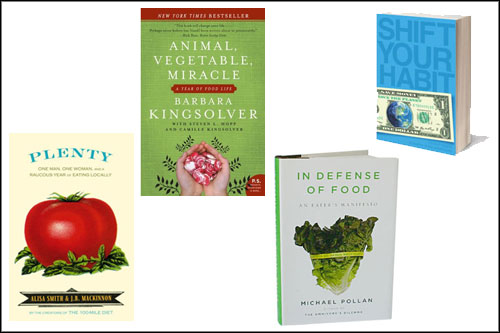
Here are four food quotes from books that are eye opening and can really get you thinking.

Ideally, a meal should be enjoyed at the dinner table with friends and family, instead of gulped down in front of the television.

From Shift Your Habit

At one time I was definitely guilty of doing this. I’d rarely eat at my kitchen table. Instead I would pull a tray in front of the couch and watch TV while I ate.

It’s easy to get caught in the trap of this. It often leads to mindless eating, as there are a lot of food ads constantly run. This also prevents discussion to possibly happen during the meal. You also don’t focus on the meal as much either because you are focused on the television.

A lot of people eat their food on the run from one activity to the next. Food and meals are seen as a task instead of nourishment.

When you sit down at the kitchen table and eat your meal, it’s your chance to slow down, get grounded and fully appreciate the meal before you.

Is it just a coincidence that as the portion of our income spent on food has declined, spending on health care has soared?

From In Defense of Food

If we were to look at our eating habits over the past 100 or so years and our health, there is definitely a correlation between the two.

I’ve been called a conspiracy theorist by some when I talk about the food, pharmaceutical and government, but in looking at what is going on, it’s hard for me not to think that.

People are more willing to spend money on cable TV or their cell phones than they are on food. People are also willing to take as many medications as they can that their doctors prescribe.

Instead let’s shift that spending to food that nourishes and keeps us healthy rather than puts us on medications.

Growing food was the first activity that gave us enough prosperity to stay in one place, form complex social groups, tell our stories, and build our cities.

From Animal, Vegetable, Miracle

This is one that I often reference in one form or another as to why you should grow your own food. Look back at the early cities and civilizations. They were built around fertile land and access to water.

Food brought people together on so many levels and fostered communities. We are far from that these days and our culture is suffering because of it.

Despite eating more than ever before, our culture may be the only one in human history to value food so little.

From Plenty: One Man, One Woman, and a Raucous Year of Eating Locally

This is another quote that I reference often as well. We are very fortunate to live in a time where we don’t have to rely on growing our own food or sourcing it locally. The global agriculture system takes care of that (or at least it’s supposed to).

At any time on any day we can go to the grocery store and pick up nearly anything that we want to eat. That is a luxury that we take for granted. There is no appreciation for food and what it takes to get it to our plates.

Not only that, but people are eating cheaper food like products instead of real whole foods. This goes back to the quote above about the healthcare spend.

These are only four of my favorite quotes regarding food. What are some of yours?
Two Ways To Use Manure Tea In Your Container Garden

If you are using manure tea to amend the soil in your there are a couple of different ways that you can use it.

Directly in the reservoir container. If you made your self-watering containers with the pipe, you can pour the manure tea into the pipe as you would normally water. If you aren’t using the pipe, then you can remove the planting container and pour the manure tea directly into the reservoir container.

When you are done watering, sprinkle some of the manure tea on top of the planting container and allow the self-watering container to do it’s thing.

Pour on top of the soil. You could also use the manure tea by watering the container from the top like you would normally water. The tea will eventually filter it’s way down to the reservoir container where it will be stored.

Either one of these methods is fine to use. I’ve been using the manure tea about once a month.

Are there any other ways that you could apply the tea?

Roasted Brussel Sprouts and Cauliflower with Balsamic Vinegar

    Here’s what you’ll need:

  • 1/2 head of cauliflower
  • 1/2-1 lb of brussel sprouts
  • 3-4 cloves of garlic
  • 3-4 tablespoos of balsamic vinegar
  • Tablespoon of olive oil
  • Dash of sea salt
    How to make:

  • Cut off knubby ends of brussel sprouts, then slice in half
  • Chop up the cauliflower into chunks and add to bowl with brusssel sprouts
  • Bust open a few cloves of garlic and add to the mixture
  • Pour olive oil and balsamic vinegar over the veggies with salt and toss to coat
  • Put on a baking sheet into the oven at about 400 degrees for 20 minutes
  • Mix up the veggies a bit and put back in oven for 10-15 minutes
  • Transfer to bowl and serve

httpv://www.youtube.com/watch?v=QX4RWqTpqHM

Recent recipes

6 Ways to Celebrate Earth Day Everyday

Earth Day is coming up this Friday and every company is jumping on the Earth Day bandwagon. They are doing “ABC in honor of Earth day” or “XYZ to celebrate Earth Day.” It’s all a bunch of BS and greenwashing.

I mean it’s great that people are acknowledging it, but unless true habits form, it’s all for naught and just another way for companies to sell you crap that you don’t truly need.

So in honor of Earth Day here on Urban Organic Gardener, I want to share with you “6 Ways to Celebrate Earth Day Everyday” because that’s when the Earth should be celebrated.

  1. Consciously Eating Who gives a damned about the difference between being a vegan and omnivore. Let’s unite against something that we can all agree is wrong and that’s factory farming.
  2. Conscious Consuming. This goes hand in hand with conscious eating, but let’s be conscious consumers as well and know how our purchases effect not only the environment, but other human beings as well. For instance, did you know that the exploitation of women goes on in a large amount of farm fields? Know how your purchases are supporting such practices and vote with your dollar.
  3. Give Thanks for Your Food. This is something that’s usually reserved just for Thanksgiving. It should be something that’s done on a daily basis. Thanks should be given to the workers who grew, produced, tended to and harvested the ingredients that make up our meals. Even if it’s just a quick, “thanks to everyone that helped get this meal to my plate.” Slow down and show some appreciation.
  4. Support the Locals. This is important especially with the rising food prices. It will help to keep money and jobs in the community. This also helps to cut out the middleman and costs that go into shipping of products.
  5. Avoid Using Additional Plastic in the Kitchen. Instead use or reuse glassware. This will not only help the environment, but will be good for your health as well.
  6. Grow Your Own Food You don’t have to have a huge garden or lots of space. Growing one herb or vegetable will make a difference for you and for the environment.

What are other ways that you can celebrate Earth Day everyday?

httpv://www.youtube.com/watch?v=q9sh_Z2_ViE

Spinach is Not a Warm Weather Plant

A few weeks ago, I posted about white clusters on the stems of a spinach plant. It turns out that the spinach plant is bolting and that it’s not insects.

There have a been some consecutive days of warm weather, which spinach doesn’t like. I assumed that greens could be grown year round here in LA, but I guess not all of them.

Previously I learned that basil does not like the cold weather and that kale can tolerate the cold. Now I’ve learned that spinach cannot tolerate much heat.

It’s all starting to come together.

What are some other plants and veggies that you know of that don’t like the warmer weather?

httpv://www.youtube.com/watch?v=VkB-mEjKahk

Where To Get Containers For Your Container Garden

The one question that I most often get from people is where I get the containers for my garden from. When I posted a question on Facebook asking what posts people would like me to write, it was mentioned again by some friends.

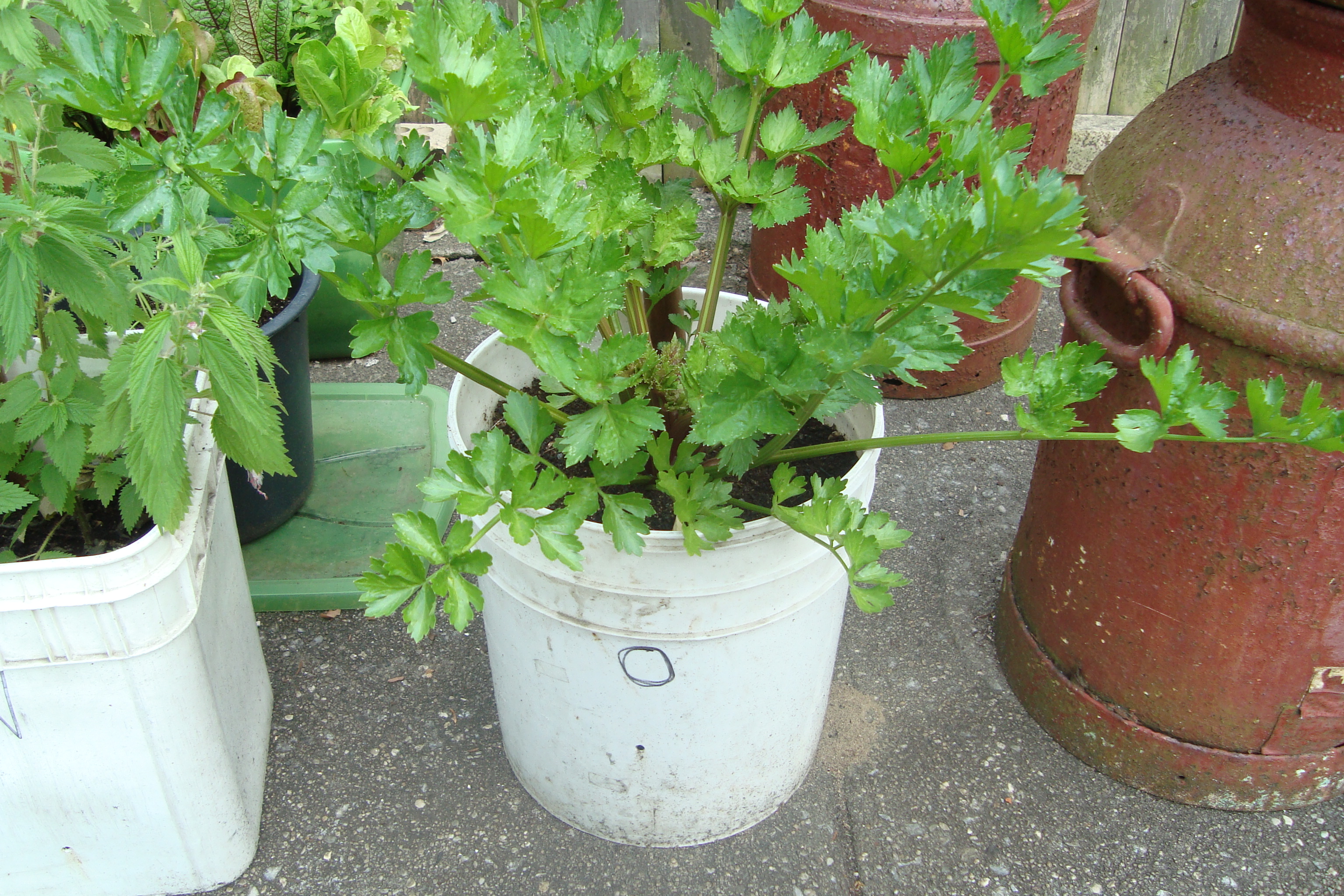
The first thing is that I never buy the containers brand new. I don’t for a few reasons. The most important is that I don’t want to use any unnecessary resources and materials, especially plastic. The other reason is that there are much cheaper ways.

Here are some places that you can easily get the containers for free or for a $1:

Bodegas
When I was living in NYC, the containers used on my fire escape garden, I got containers for free from the local bodegas.

All bodegas use the containers to put their flowers in. When I walked by and saw a big stack, I’d ask if I could take 3-4 of them off their hands. The usual answer was no. I’d follow up with how about just 1 or 2. They would usually say yes just so I’d stop bothering them. Free containers. That simple.

Farmers Market
Since I’ve moved to Los Angeles, and stared my balcony garden, there aren’t many bodegas where I live. So I’ve been sourcing them from the flower vendors at the farmers market for $1 each. It’s not free, but still not too bad.

Other places that you can likely get the containers from are:

Restaurants, Delis, Bakeries and Deli Section of Supermarkets
All of these places usually get their shipments of mustard, mayonnaise, pickles, etc in the 5-gallon containers. Check with them to see if they have any that they aren’t using.

It’ll be much easier if you are a regular customer or have a relationship with them. If you aren’t, it’s still worth inquiring.

Where you don’t want to get your containers from:

Construction Sites
It’s likely that the containers from construction sites had plaster, concrete, paint or something else nasty mixed inside of it. You don’t want to be growing your food out of that.

What other places are good to get containers from?

httpv://www.youtube.com/watch?v=4jNbC2-hhCA

Roasted Cauliflower and Leek Soup

When heated up and blended down, cauliflower can get to that creamy consistency like mashed potatoes.

This cauliflower and leek soup is dairy and gluten free.

    Here’s what you’ll need:

  • 1 1/2 small heads of cauliflower (or one large)
  • 1 leek the bottom white and light green part
  • 5-6 cloves of garlic
  • 3-4 cups of homemade veggie broth
  • Tablespoon of olive oil
  • Dash of sea salt
    How to make:

  • Chop up cauliflower and put into bowl
  • Smash the garlic cloves
  • Slice up leeks and smashed garlic and put into bowl with cauliflower
  • Pour olive oil over the veggies with salt and toss to coat
  • Put on a baking sheet into the oven at about 425 degrees for 40-45 minutes until they start to brown
  • Heat saucepan with some olive oil and put roasted veggies on pan
  • Cover with veggie broth
  • Allow to boil
  • Either use a hand blender and blend down in the pan or add to food processor to blend down until smooth
  • Transfer to bowl and top with leek and garlic pieces

httpv://www.youtube.com/watch?v=clMgVkapbs8

Recent recipes

Budget Cuts Threaten Food and Water Safety Programs: What You Can Do

There was a post on Change.org, Federal Budget Cuts Threaten Food and Water Safety Programs, which should give you another reason to grow your own food and source as much of it locally as you can.

Here’s an excerpt:

Congress recently proposed a federal budget that threatens to eliminate critical funding for food safety and clean water programs, placing the health and safety of all Americans at risk.

Since our country is in such an economic crisis, Congress sees it fit to cut the budget when it comes to the safety of our food and water. As a citizen, this is something that I’d like to vote on. Would you?

There are already food safety issues with the salmonella and other recalls. The S510 Food Safety Act was supposed to address this concern, but this proposed budget cut pretty much negates that.

We don’t get a chance to vote on this, but there are still things that we can do:

  • Continue to take food back from corporations.
  • Shop locally at farmers markets, CSAs and food co-ops.
  • Start growing your own food.

Between these proposed budget cuts and safety concerns that will follow and the rising food prices, do you really need another reason to take action?

What are your thoughts on these proposed federal budget cuts?

httpv://www.youtube.com/watch?v=qoLdWL7mKag

Photo credit: Kevin Dooley via Flickr

Tip for Growing Mint in Containers

Mint is a pretty invasive plant. Just ask anyone who has ever grown it in their garden. It can take over pretty quickly. This is why most people recommend growing it solely in containers.

I’ve had my mint plant for a few months now. The leaves have remained pretty small. It’s not until I started my garden from scratch that I began paying more attention to it.

The roots of the plant have been spreading all through the container and without much room to grow. Since the soil line is about 2-3″ below the top of the container, they were growing within the container and not out of it.

I started to pull some of the roots out of the container and drape them over the side. In less than a week the mint plant started to produce bigger leaves.

When you plant mint in containers, I’d recommend keeping the soil line closer to the top of the container to allow it to grow or make sure that you place the newer roots over the lip of the container.

What other tips for growing mint in containers do you have?

httpv://www.youtube.com/watch?v=yzKmF_BvF7E

Asparagus and Avocado Salad

Nothing quite says spring time (or makes your pee stink) like asparagus showing up again in your garden or at the local farmers market.

This recipe I slightly adapted from a cooking demo that I attended at Native Foods in Culver City.

Make this in the beginning of the week and enjoy throughout.

    Here’s what you’ll need:

  • 2 bunches of asparagus
  • 2 avocados
  • Handful of mint, cilantro and parsley
  • 2-3 tablespoons of olive oil
  • Tablespoon of balsamic vinegar
  • Tablespoon of raw honey
  • Juice of one lemon
    How to make:

  • Boil up a pot of water
  • Cut asparagus into 1-1 1/2″ pieces
  • Chop up mint, cilantro and parsley and place into a mixing bowl
  • Add lemon juice, olive oil and balsamic to the bowl
  • Whisk together and set aside
  • Cut avocados into cubes
  • Add asparagus to boiling water for about 2-3 minutes
  • Remove asparagus, drain and rinse under cold water
  • After asparagus cools, add to dressing with avocado
  • Toss to coat and serve

httpv://www.youtube.com/watch?v=qM3LASlSbwQ