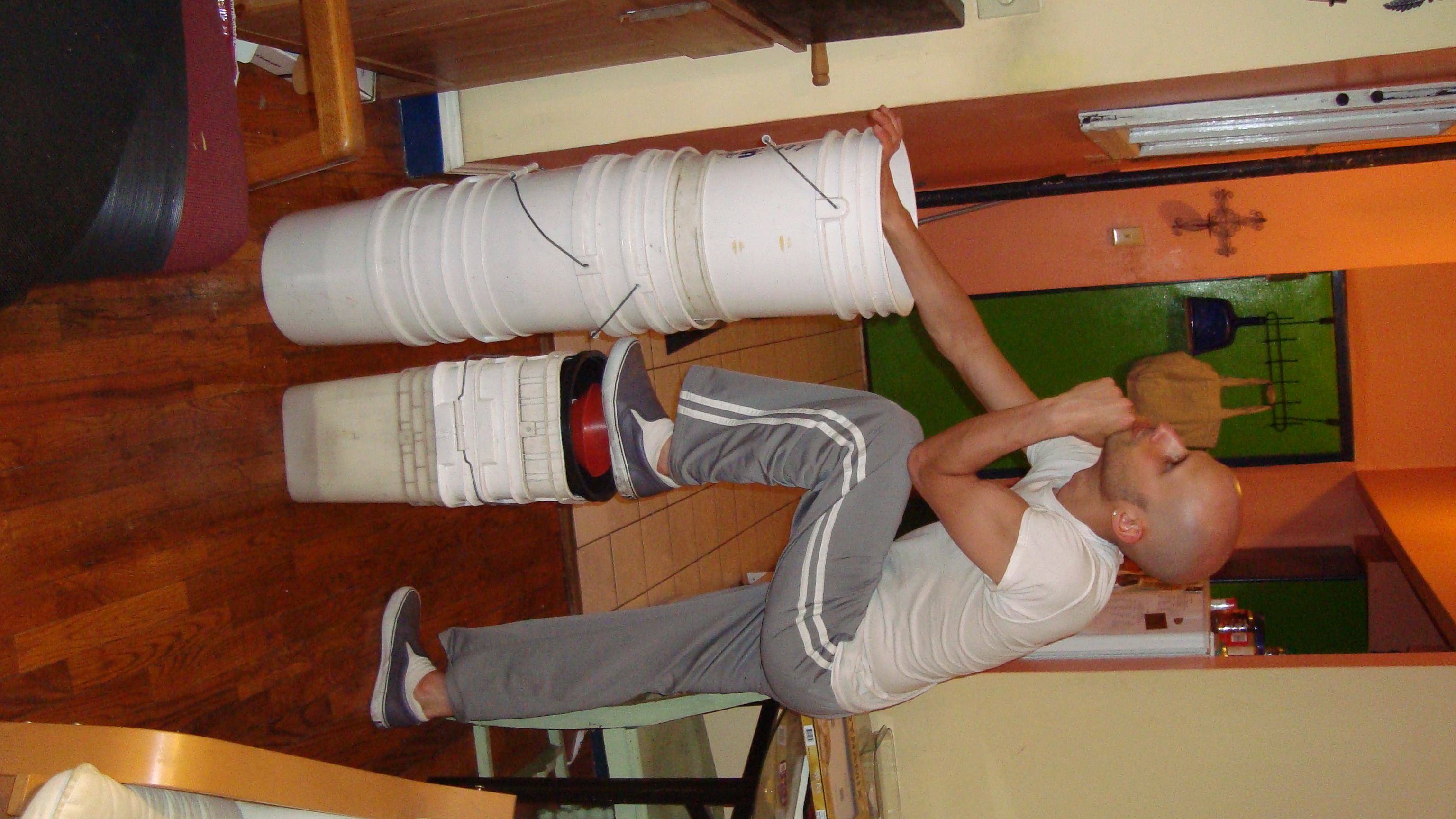
Recycling Buckets to Build My Containers

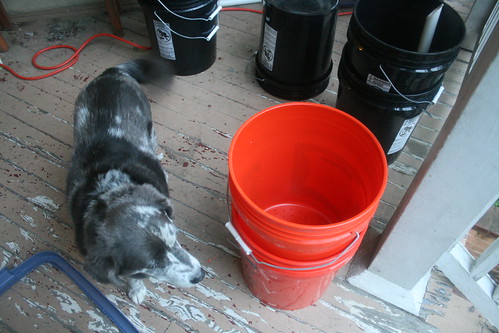
As you can see, by this time I am expert at getting buckets. Once I get my Flip Video camera I’ll have to record and educate you on my ways. For now just be in awe of my splendor.

I’ve also been doing more reading into building the self watering containers and what can be used. As of now, I am going to go with the bucket in bucket or the plastic tote in plastic tote approach. Those seem to be the ones that best suit my needs.

A Second Turn of the Compost Pile


It’s about a week since the compost pile was first turned. When I first opened up the can the lid was sweating. That is supposedly a good thing because the compost is supposed to heat up, so it can do it’s thing.

I took the broomstick and shovel to it again to get the air circulating and to mix up the browns and greens.

It seems to progressing nicely, so I threw a big heaping pile of fresh food scraps onto the pile and layered the browns on that. My guess is that I should have compost to use pretty soon.

Reading More on Self Watering Container Gardens


First off, I scored my first bucket last night. On the way back from the movies (I checked out Anvil and highly recommend to any 80s metalheads out there). I saw one laying out next to a dumpster, so I snagged it. Soaked it over night in some baking soda and vinegar. Like new. My Gram sure is smart.

Besides being a ridiculously gorgeous day outside today, it was a productive one as well. Picked up the Incredible Vegetables from Self Watering Containers book from the library.

I went to the park, laid out in the grass and started to plow through it. It all seemed simple and doable. I liked that. The thing that I didn’t like about the book is the most important part of how to build the insert for the self watering container was completely left out. Luckily, I came across those other resources on self watering containers last week.

The entire back section listed all of the vegetables that can be grown in the containers – beets, carrots, onions, leeks, all kinds of greens (i love me some greens), cauliflower, broccoli, peppers, squashes, turnips…you get the point.

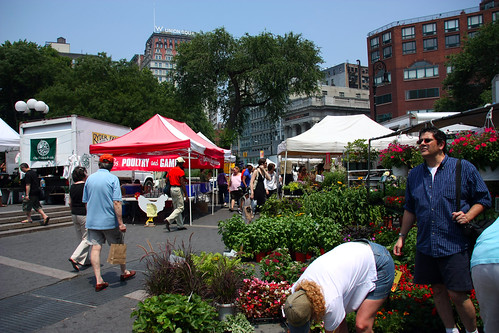
With this knowledge, I headed back to the Farmers Market at Union Square to see what plants I were available to buy. This time my trip wasn’t as disastrous as the last one.

I spoke to someone at Silver Heights Farm who answered my questions about shade, sunlight and watering. She also gave me their catalog since they don’t bring everything with them to the market. They have about 1.5 million different kinds of tomatoes.

To top off this day, I scored two more buckets.

Expanding My Vegetable Garden to Brooklyn


I am taking this project beyond my small fire escape garden and back to my Brooklyn roots in Canarsie. Yup, I’ll be growing a vegetable garden in Brooklyn. What?

A few weeks ago my grandmother offered up her backyard to grow what I wanted. The offer was turned down because I didn’t think that I’d have the time to tend to it, and I wouldn’t expect my 90-year old grandmother to take care of it. My gram still lives in Canarsie, which is about an hour commute from me.

Now that I’ve come across self watering containers it seems more realistic. I can handle doing that 2-3 days a week. Not like I’d need another excuse to visit my Gram, but it’ll give me another.

So I gave her a call and she was more than happy to give me some space as long as I didn’t disrupt her tomato plant. See my Gram used to grow a sh!tload of vegetables in her backyard. She no longer does for many reasons, but just has one tomato plant.

I agreed on not messing with her tomato plant and explained to her my plan to grow. She gave me the idea of going to the local bodegas and asking for the buckets since they usually wind up throwing them away. That would be great because it would cut down on costs considering I priced them out at like $8 a piece at the local hardware store.

The plan was to go to her spot over the weekend to negotiate the land space.

Also scored my first two soda bottles at work today for the upside down gardening. Doesn’t sound like a big deal, but I didn’t want to have to don the medical mask, trash bag suit of armor and hit the streets. I ain’t messin with them crazy old women.

How to Make an Indoor Compost Bin for Your Kitchen

The following instructions on how to make a compost bin can be scaled up or down based on the space that you have. Since I was dealing with the small space of my kitchen, I used a smaller 10 gallon garbage can. If you have more space, you can use a bigger can. The same concepts apply.

Making your own compost is a great way to cut into your out of pocket costs when starting a vegetable garden.

The tools and materials to build an indoor compost bin:

    Tools

  • Drill with 1/4″ bit
    Materials

  • 10 gallon metal garbage can
  • Black and white newspaper
  • Rubber mat
  • Organic potting mix
  • Composted organic manure
  • Old furniture legs
  • Food scraps
    Building the bin went down like this

  • Drilled holes in the bottom of the garbage can. Supposedly this allows for aeration and to help the compost do it’s thing.
  • Shredded the newspapers by hand.
  • Set up mat and rested garbage can on the furniture legs.
  • Put in first layer of newspapers and some of the potting mix.
  • Added a layer of the food scraps (Totally forgot to take a picture of this part).
  • Sprinkled some of the composted manure.
  • Covered with layer of newspaper and potting mix.
  • Food layer. Then another layer of newspaper and soil.
  • Closed up and done.

New Plan: Gardening in Containers & Upside Down


Attribution-NonCommercial License by your idea

After some research, I got more info on the self watering containers. The Homegrown Evolution had a great resource on Self Irrigating Planters posted on April 5.

One site that I checked out, Instructables, had a few different variations. One using 2 liter soda bottles and plastic totes. I like it cheap and green. Fits the criteria.

Before I got too far ahead of myself, I had to talk to my roommate to see if he’d let me put these containers out on the fire escape since it’s out of his window. Luckily, he and I are cool with each other and had no problems with it.

Now I am addicted to checking out how I can recycle materials to grow things for this project and found a way to make an upside down hanging planter for herbs.

Also reserved Incredible Vegetables from Self-Watering Containers from my local library.

This project is back on. Don’t call it a comeback.

Ideas on Container Gardening

For the past few days I’ve been lamenting in my stupidity of building a window garden in a spot that gets no sun. Smart move on my part. Good job.

But things done changed. I was trolling around on this here internet for what I can possibly grow or do. I came across the idea of self watering planters. Most importantly this video:

httpv://www.youtube.com/watch?v=aZUCxBHeq04

The basic concept of self watering containers is that the water is on the bottom of the container and the soil above. There is a separator between the two and a small basket that allows the plant to get the water. So ultimately, the plants are “drinking” the water when they are thirsty, which is what occurs naturally. So the plants drink when thirsty and get fed, instead of us forcing water on to them. Not much of the water even makes it to the roots.

Looks pretty simple. Looks environmentally friendly because most of the materials are reused plastics or garbage. Looks cheap. As Freedom Williams would say, “Thing that make you go hmmm.”

Need to look into this further…

Why Planning is So Important


Attribution-ShareAlike License by Tomás Fano

Great. Got the compost going and the shelves built. Walked down to the Farmers Market at Union Square today to talk to some of the farmers about what I grow on my newly built window garden. To sum it up real quick – nothing.

Yup, that’s right nothing can be grown out there. It gets about two-three hours of indirect sunlight a day on a good day, which doesn’t allow for most vegetables. So the window garden is out of the question.

Great planning on my part.

Back to square one to figure out what if anything can be done…

Building My Window Garden

The compost bin is set up in my kitchen. Wanted to keep the momentum going and build the shelves for the garden.

First thing I had to do was to measure the area of the window garden. Wasn’t sure exactly what dimensions were required so took a bunch of different ones, hoping that all or a combo of them would be good enough. You can see my masterpiece above.

Gathered my list of what I needed and headed to the local hardware store.

    Tools for Building the Window Garden

  • Saw
  • High gloss paint
  • Paint roller
  • Pen or marker to markup the wood
    Materials for Building the Window Garden

  • Enough wood to cover the area

Luckily my fifth grade diagram was useful and the dude at the hardware store understood it. I wound up needing two boards. One that was 1x12x6 and another that was 1x12x4

He said that paint would stand up better to the weather than stain. So I picked up paint and a roller.

The construction of this was harder than I thought it would be, but got it done. It took about 3 hours to complete.

Building the Shelves
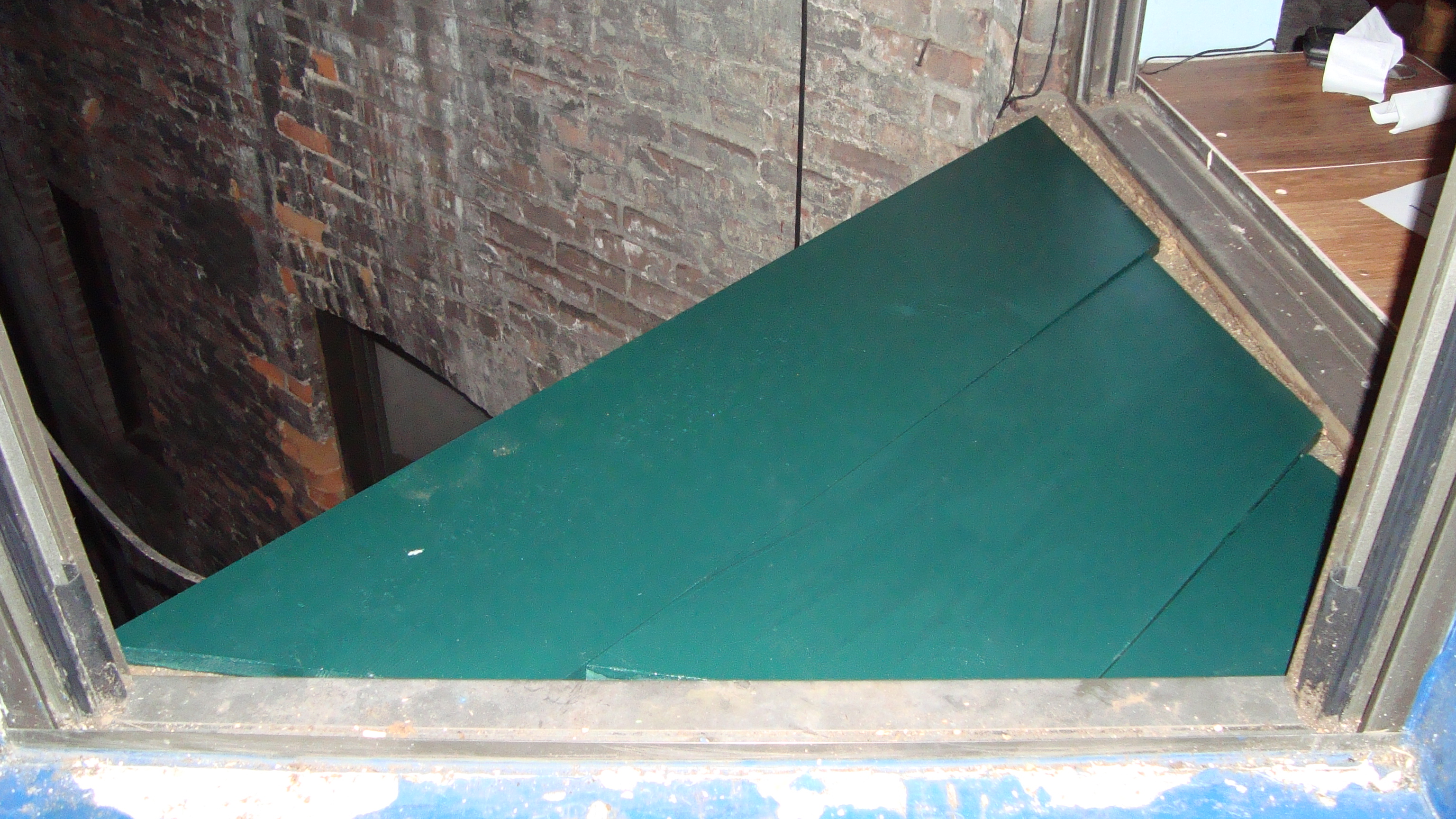
The board had to be cut at an angle, which confused me at first. I spoke to my old man and he suggested that I get the length across at each end of the board and then connect the dots. This would give me my angle. Sounded easy enough and sure enough it was for the first board.

With the first board in, I thought that this was going to be simple. I’ll spare the details of each cut, but the second and third boards took me three to four cuts each to get them to fit. They eventually fit. Not perfect, but functionable. That’s the purpose to be functionable. I ain’t Bob Villa or Martha Stewart.

Once the boards were cut and finally fit into place it was time to paint. Painting was much easier than cutting.

Then it was time for cleanup. The saw dust was swept up and dumped into the compost bin.

Now need to figure out what we can grow.
Building a Window Garden - The goal is turn these two pieces of wood into shelves.Building a Window Garden - To get the angle, the length of the area was measured at the shortest and longest parts of the board.Building a Window Garden - Once the board was cut at each end, it was placed on the window sills. Luckily it fit. Wasn't even on each end, but it works.Building a Window Garden - The second board wasn't as easy as the first to cut. Took about three to four cuts to get it to fit. Didn't line up perfect, but made it across.Building a Window Garden - The third board was the hardest and took the longest amount of time. After about five cuts, it made it into the tiny space.My Finished Window Garden Set-Up

Deciding to Grow a Small Window Garden

When I first moved into my apartment, my roommate had a small window garden. It was a shelf that bridged the areas between the window in the living room and my room. It was a small area that he use to grow plants.

On a rainy winter night, the wood had enough and collapsed. It happened while I was home and the crash scared the shit out of me.

Personally, I was never into plants, so it wasn’t much of a loss to me. I knew that my roommate enjoyed them though.

Shortly afterwards, he and I talked about building a new window garden, but this time I wanted to grow some vegetables out there in addition to the plants.

Today was the day that we decided we were going to start planning and rebuilding the window garden.

I don’t know much about gardening, planting or anything of the sort, so it’ll all be a learning experience.