Top 10 Most Popular Recipes from Urban Organic Gardener in 2011

Yesterday, we counted down the 10 Most Popular Posts on Urban Organic Gardener in 2011.

This was the first year that I started to share seasonal garden recipes. So, I’d like to share with you the Top 10 Most Popular Recipes from the year.

The list is compiled strictly from my analytics based on how many times a page was viewed, not by how many people ate it and liked it.

Here they are:

Now you are probably thinking, which is the best tasting? Well they are all best tasting because that’s how I roll.

Which recipe was your favorite from 2011?

Top 10 Most Popular Urban Organic Gardener Posts of 2011

There were over 150 posts on Urban Organic Gardener in 2011. Do I really have that much to say?!

Since it’s December, I’ve decided to share with you the most popular ones for the year based on your votes. You didn’t really vote, but you kinda of did by checking out these articles.

This list is compiled strictly from my analytics based on how many times a page was viewed. I won’t get into the speculation and reasons why I think they are so popular. I will let you do that.

Here they are:

There you have. What are some of your favorite posts from 2011?

Roasted Acorn Squash Stuffed with Sauteed Greens, Tomatoes and Goat Cheese

    Here’s what you’ll need:

  • Acorn squash
  • 1/2 onion
  • 2 cloves of garlic
  • 1 tablespoon of oil (I prefer coconut)
  • Tomato
  • Dark leafy greens (I used collards and dandelion. Kale also works really well.)
  • Goat cheese
  • Dash of salt and pepper
    How to make:

  • Cut acorn squash into halves and scoop out the seeds.
  • Rub the inside and outside of the squash down with oil and sprinkle with salt and pepper.
  • Put in oven at 375-400 for about 45 minutes until it can be easily pierced with a fork.
  • Mince up the garlic and onions.
  • Sautee in a heated pan for about 3-5 minutes until translucent.
  • While the garlic and onions are cooking, finely slice up your greens.
  • Add them to the pan with the garlic and onions.
  • If the pan is dry add a tablespoon or water or vegetable broth.
  • Stir it up and cover it to let the greens wilt down.
  • Cut up the tomatoes into chunks.
  • After 3-5 minutes of the green cooking, adding the tomatoes and stir.
  • Season with salt, pepper and whatever other seasonings you’d like.
  • Turn off heat and let pan sit covered.
  • When squash is ready, put some goat cheese in the bottom.
  • Then add your greens and tomatoes.
  • Top with more goat cheese and put back into the oven.
  • After 5-10 when the cheese has melted, remove from oven and serve.
  • Enjoy!

Charlotte Airport to Open Recycling Center With Composting System

One of my most favoritest sites, Earth911, had a post titled Charlotte Airport to Start Worm Composting.

They post said:

The airport plans to open a new $1.1 million recycling center in February with a worm-based composting system that can handle up to two tons of waste per day, the Charlotte Observer reported.

This is such a dope idea. The airport will be using the compost generated on their facility. Whatever is left, they will be packaging and selling it.

It would be great if other facilities around the country took on similar projects.

What’s your thoughts on the composting program and have you seen any others similar to it?

Photo courtesy of Vancour on Flickr.

5 Things I Learned About Gardening in 2011

It’s December that means it’s time to start breaking out the “2011” lists.

Here are five things that I learned about gardening in 2011.

Getting a Better Yield in Your Container Garden

  • One way to achieve this is through succession planting. That is when you space out your plantings, so as you are harvesting one crop another is growing right behind it.
  • After your seedlings start to grow, you’ll want to thin them out. This will give them room to grow and allow the strong ones to survive.

Organic Doesn’t Mean It’s Great

  • The best example of this is Miracle-Gro and their Organic Choice line. Yes it is organic, but it’s still Miracle-Gro who is partnered with Monsanto.
  • Since I live in a city there are things that I cannot control. One thing is the construction that is going on in my neighborhood. It is likely kicking up all kinds of dirt and toxins into the air, but that doesn’t make my garden any less organic.

Seed Saving

  • I saved seeds for the first time this year. I saved lettuce and parsley. Will get those planted in 2012.

Growing Your Own Food is a Political Act

  • This was one of the more controversial topics when mentioned. By growing my own food and inspiring others too, I see myself as a food activist. It touches on environmental, political, health and a variety of other subjects that most people don’t associate it with.
  • Talking about Michelle Obama and the White House Garden was a topic that pissed a handful of people off and resulted in people no longer reading my site, connecting with me on social media channels, as well as some hateful emails. I see her as a front to distract people from what her husband is doing.

Failure Will Happen

Those are some things that I learned about gardening in 2011, what did you learn?

After 10 Days of Not Being Watered, This is What my Garden Looks Like

I was out of town for 10-days around Thanksgiving and filled up the the self-watering containers on my balcony garden the morning that I left.

When I came home you would never know that I wasn’t there to water and take care of them. Just check out the pic above and watch the video below.

This is partly due to how the self-watering containers work and how the plants absorb the water from the reservoir container.

When I explain to people how to build a self watering container, one of the first questions that’s usually asked is, “How often do you water it?”

They will say that they are too busy to water their garden everyday or travel too much. This just shows that you don’t have to dedicate a crazy amount of time.

There are many factors that determine how often you need to water them – such as weather, direct sunlight and type of plant. Generally, I change out the water in the reservoirs once a week.

This time I went away for 10 days, but I have gone away for 3 weeks and they’ve been fine. Anything past that and it starts to get iffy.

Share this post with those that tell you they don’t have the time to water a garden or travel too much.

Video Bloopers Part II

There is nothing more fun than being able to laugh at yourself. Ok, there are many things that are much more fun, but I was stuck on writing an intro to this post.

Here are more out takes and bloopers from the past few months.

I’ll be taking a break and back to posting on Monday, December 5. Hope you enjoy the video and have a great Thanksgiving.

Apple Soaked Roasted Butternut Squash

    Here’s what you’ll need:

  • Butternut squash
  • 2-3 apples of your juice (I prefer Granny Smith) or fresh apple juice
  • 1 teaspoon of oil (I prefer coconut)
  • Optional: Ground cinnamon, nutmeg and cloves
    How to make:

  • Cut butternut squash into cubes and put into bowl.
  • If you are using apple juice, pour that into the bowl or cut up the apples and either juice or blend them down. I’d recommend juicing them.
  • Add the oil, cinnamon, nutmeg and cloves if you are using.
  • Pour over the butternut squash to submberge it.
  • Let soak for 30-45 minutes.
  • Put in oven at 375-400 degrees for 30 minutes.
  • Mix them around and put back in oven for another 15-20 until desired tenderness.

The Great GMO Experiment: There Is No Opt-Out Or Is There?

A post on Organic Connections Magazine called People Don’t Want to Be a GMO Experiment got me thinking about a few things.

Why we should be concerned about GMOs

Most people assume that GMOs are safe because they are so widely available, which is not true. GMOs have never been proven to be safe and no they aren’t feeding the world.

It was some time in the late 1980s/early 1990s when they were first widely planted. So it hasn’t been that much time to see any kind of long term effects and if they are truly safe.

Ultimately this means that we are walking experiments to see how safe they really are. GMOs are found in most of the foods that are widely sold in the supermarkets.

This makes us all subjects in the GMO science experiment, not only with our food, but with grass too.

Barack Obama lied to us

When he was campaigning in 2007, he specifically said, “We’ll let folks know whether their foods have been genetically modified because Americans should know what they’re buying.” Check the video to hear it yourself.

This sucks, but we can do something about it!

  • There is the Just Label It campaign, which is a petition to get GMOs labeled. They are hoping to get enough signatures and flood the FDA with them.
  • You can also start to grow some of your own food. Most of us don’t have the time or space to be completely self-reliant, but every little bit matters. It’ll assure you that you aren’t supporting GMOs even the tiniest bit.
  • Join your local CSA or shop at your farmers market. These are great ways that give you direct access to the growers to ask them about their growing practices.

What are other ways to ensure that you aren’t consuming GMOs?

Image courtesy of dzingeek on Flickr

What Will You Be Making For Thanksgiving From Your Garden?

Thanksgiving is a little more than a week away. It’s a time for us to get together with our friends and family. One of the biggest parts of Thanksgiving is the food.

The Thanksgiving dinner is one of the main things that the holiday is based around, getting together to share and enjoy the company of each other over food. Whether that’s what happened with the Pilgrims and Indians is another story.

The preparing, sharing and giving thanks for the food are all big parts of the Thanksgiving tradition.

What better time of the year to prepare and share your harvest with others.

On the Urban Organic Gardener Facebook page, I asked people to fill in the blanks of the following sentence, “For Thanksgiving I will be making _______ using ______ that I grew in my garden or raised on my own.”

Here is what they said.

There are a few people that have raised their own turkeys for the holiday.
“Turkey,” said Pam Carrico. “Lots of it! Using the Bourbon Red/White Midget turkeys I raised on my own. :-)”

Same for John Bradley Foster, “Dinner and turkey!”

Michelle Gehlman Teeter added, “Turkey that I raised from a chick, in my backyard!”

Side dishes and soups
Wendy Ribelin is going to make, ” Butternut squash soup with the squash from my garden. (that is if no one requests it before Thanksgiving day; it’s been a big hit)”

“It’s a potluck this year,” said Bewilder Ness. “Pumpkin cheesecake from my garden and roasted root veggies from a neighbor’s garden. Sweet potatoes from another friend’s garden.”

Erin Garner Dentmon is making, “Apple pie using my dad’s apples! Probably something with my own herbs. I tried some pumpkins this year, but that didn’t quite work out.”

“Sweet potato casserole from sweet potatoes that I grew I’m my back yard :),” said Green Pete.

Beverly Amborski is hooking up some, “Stuffing using sage from the garden….”

BuffaLoam is making, “Pesto using basil that I grew in my garden.”

Not all of us have the space to raise a turkey or grow apples. It’s all about the love that went into the food. Every little bit matters.

Now it’s your turn to fill in the blanks, “For Thanksgiving I will be making _______ using ______ that I grew in my garden or raised on my own.”

How to Plant Garlic in a Container

The fall time is perfect to plant garlic to be ready during the spring. It’s also simple to do.

Each clove that you plant winds up turning into a clove of garlic. The larger the clove you plant, the larger the bulb it produces.

I saw a tip on soaking the cloves in Organic Gardening Magazine to help prevent rot from occurring.

Here is what you’ll need to soak the cloves:

  • Garlic cloves (amount depends on the size of your container)
  • Glass jar
  • Tablespoon of baking soda
  • Tablespoon of organic seaweed fertilizer

When removing the cloves from the bulb, you’ll want to leave the skin (or whatever it’s called) on each of the individual cloves. If the garlic is actually showing, it’s best not to use it. So be careful when removing the cloves.

Soak the cloves in the pre-soak solution for about 2 hours.

Since I’m planting in a 5-gallon container, I soaked about 8-10 cloves.

To plant the cloves:

  • Dig a hole about 2″ deep with your fingers.
  • Put the clove in pointy side-up and bury in the soil.
  • Space the cloves about 4-6″ apart.
  • Once they are all planted, water the container thoroughly.
  • Add mulch to the top or greenhouse it with a covering. I put a plastic bowl on top of it. This will keep the moisture locked in.


Spicy Carrot Stir-Fry

    Here’s what you’ll need:

  • 2-3 carrots
  • Ginger knub the size of your thumb
  • 2-3 cloves of garlic
  • Teaspoon of cumin
  • 1/2 teaspoon of cinnamon
  • Tablespoon of olive oil
    How to make:

  • Cut the carrot into thin rounds.
  • Mince up the garlic and ginger.
  • Add the garlic and ginger to the pan that’s heated with oil.
  • Stir it up until it’s lightly browned.
  • Add the carrots and mix them in.
  • Add cumin and cinnamon.
  • Let it cook until desired tenderness.
  • Serve it up as a side dish, mixed with a salad or over some rice.

Imported Food is Elitist and a Luxury

Mark Bittman wrote a piece for the New York Times titled Local Food is Not Elitist. It’s American.

The food industry has done a great job of making it seem like wanting or eating foods from local sources is an elitist act. I mean no one wants to be an elitist and it’s easy to dismiss that way of eating if it’s deemed so. This justifies eating cheap, processed and imported foods.

Someone once said to me that they live in Chicago and love pineapples. He asked if he was supposed to give up his values and not eat pineapples anymore?

First off that isn’t giving up a value. Living in Chicago and having access to pineapples is a luxury.

That brings me back to the piece by Bittman. Isn’t having our food imported at the expense of farm workers and the environment, elitist? Isn’t that saying, I want (insert food here) for cheap and I don’t care what it takes. Wouldn’t that be more of an elitist type attitude?

Elitism has many different meanings, but in the case of imported foods it says, “I am an American and from a dominate country. Therefore, I have the right to this food at a cheap price.”

That seems pretty elitist to me. Me wanting to support my local grower, respect my health, the environment and those that grew the food. That just seems like showing respect…not elitism.

Maybe I’m wrong.

What’s your thoughts on local food being elitist?

Simple Fall Vegetable Gardening Tips

The following sentence was posted on the Urban Organic Gardener Facebook page, “My special fall vegetable gardening tip is _____.”

Here are some of the tips that were left:

Justin J Stewart summed it up best when he said, “Don’t give it, you’d be surprised what plants can survive what!”

I couldn’t agree with Justin more. The best way to learn is through your own experiences. Just because something didn’t work for someone else, doesn’t mean that it won’t work for you.

Keep an Eye on the Temperature
“Keep those babies warm and dry,” suggested Andrew Odom from tinyrevolution.us.

Fred J Temple expanded on that and said, “Harvest tomatoes before they freeze or provide means to prevent it (like a greenhouse).”

Erica Stelcik made a recommendation that might be obvious, “Eat your Veggies before they get too ripe. I rarely get to mine on time.”

I hear you on that Erica, I sometimes forget that I’m gardening to eat too.

“Watch your night time temperatures!” warns Cristina Evans. “There’s nothing more disappointing than finding your hard work wilted in the morning.”

The magic number when it comes to getting too cold is usually somewhere in the 40s. Also if there is a huge difference between the daytime and evening temperatures – like 80s at night and 40s during the day. That’s what you want to be weary of.

Before Your Season is Done
Michelle Dahl made a great point to, “Make notes of what went well/bad before you forget for next year.”

We all think that we are going to remember what happened last year, and never do. Taking some notes won’t hurt and will be a great reference point.

Aao Herbs looks out for the wildlife and said, “I never trim my flowers till spring because it’s winter food for the birds.”

Continue Growing Indoors
“Grow your favorite herbs inside in the kitchen window,” suggested Urban Sacred Garden.

For some of us that’s the only space that we have, so might as well use it.

Gloriby Gigi Garcia said to, “Plant a few sugar pumpkin vines in the kitchen 😉 and invest in a grow lamp or two 😉 They make awesome pies, breads, and great gifts for neighbors!”

That definitely struck my interest. Would love to see what that looks like.

Finally BuffaLoam’s comment was to, “Divide and dig up those plants and bring some inside for winter blooms and eats!”

What are some other simple fall vegetable gardening tips?

Image courtesy of Chiots Run on Flickr.
How to Deter Ants From Your Garden (or Anywhere) Using Coffee Grounds

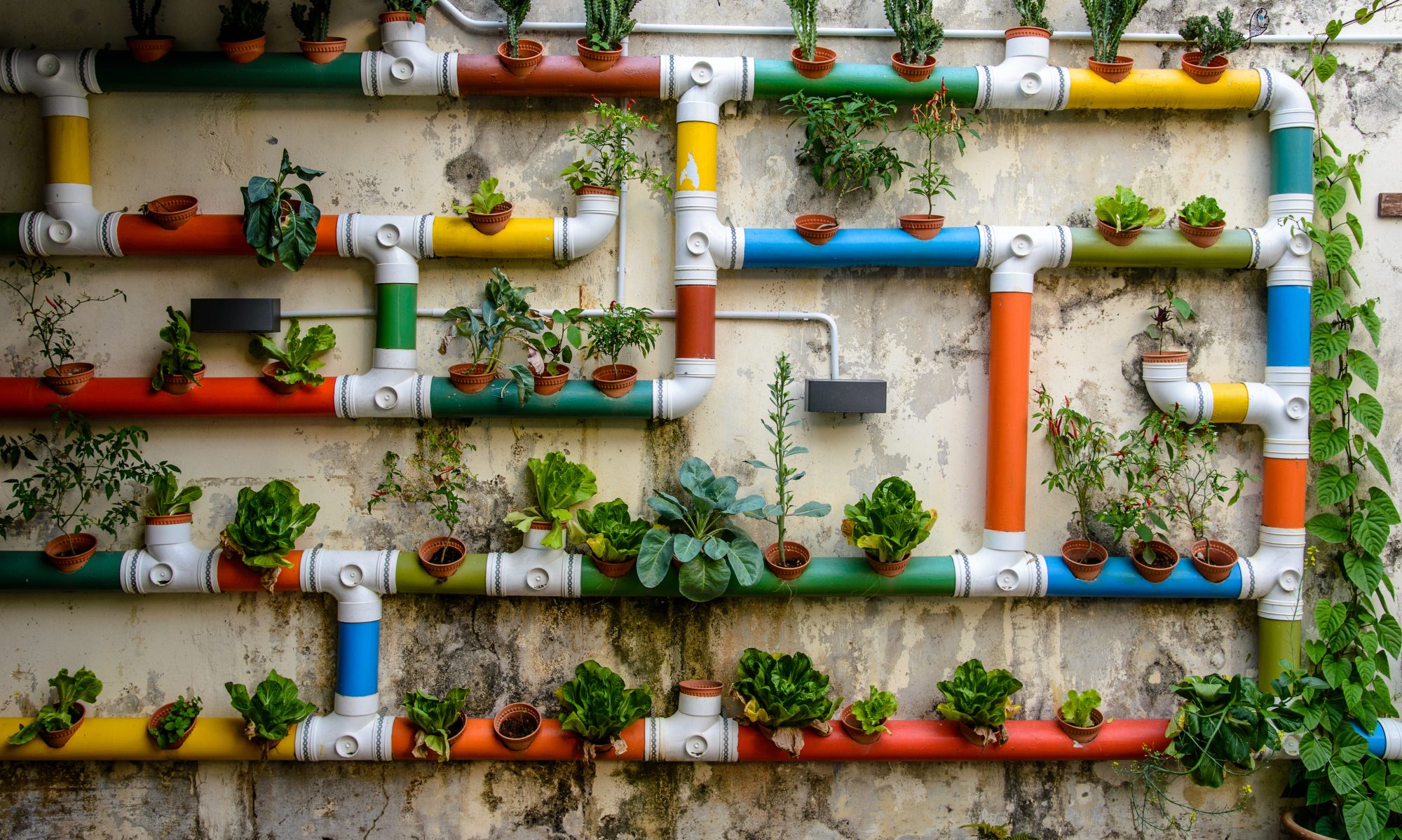
There has been a bit of an issue on my balcony garden lately with some ants. One of the swiss chard containers dried up and ants have gotten to it. I’ve been using coffee grounds to help deter them.

I’m not sure why exactly this works, but when the ants go near the grounds, they freak out and won’t cross them.

The first thing that I did was line the bottom of the container with the grounds. Then I had to follow the trail of ants to where they were going, which was into holes that were at the bottom of one of the rails.

A few coffee grounds were sprinkled around the rail, but also into the holes which the ants were using. After grounds were sprinkled into one of them, I watched as they went to the next and filled that one too. Grounds were put directly into the holes, otherwise they would just go around it.

Since putting the grounds down, I’ve definitely noticed a decrease in the ants.

Bonus Tip: If you don’t drink coffee, you can hit up your local coffee shop or cafe. If you ask, they will usually give you the grounds for free.

What are some other ways to deter ants from your garden?

Butternut Squash and Dark Leafy Green Salad

    Here’s what you’ll need:

  • Butternut squash
  • 1/2 onion
  • 3-4 cloves of garlic
  • Dark leafy greens (I used collards and kale)
  • Dash of cayenne pepper
  • 3-4 tablespoons of vegetable broth
  • Teaspoon of cumin
  • 1/2 teaspoon of cinnamon
  • Tablespoon of olive oil
    How to make:

  • Cut the squash into cubes.
  • Cut up the onion and mince the garlic.
  • Add the onion to the pan that’s heated with oil.
  • Stir it up until it’s lightly browned.
  • Add the garlic and cayenne.
  • Mix for 20-30 seconds you’ll be able to smell the garlic.
  • Add the butternut squash and mix to coat with the oil.
  • Add the veggie broth and let it cook for 4-5 minutes.
  • While that’s cooking, chop up your greens into bite sized pieces.
  • Keep checking on the squash, stirring it and making sure there is enough liquid.
  • Add the greens.
  • Sprinkle in the salt and pepper and mix it all up.
  • Put the cover on and cook for another 5-10 minutes.
  • When the greens are nice, dark and slightly wilted, it’s ready.

Speech About Growing Your Own Food at OccupyLA

I was asked to speak at Occupy LA about growing your own food. The speech touches on how the food industry is similar to the financial world and what we can do to bring about the change that we want to see.

Excerpts from the speech:

This Occupy movement that started out on Wall Street was started because of the outrage at the outsized power of the banks and financial industry.

As the movement has grown to other cities, it’s become apparent that this doesn’t only apply to the financial world, but to a lot of other aspects of our lives as well.

The power is in the hands of an elite few that have an interest in keeping us clueless and left out in the cold to maintain the status quo that benefits them.

When you look at the financial world, it’s pretty apparent. That’s why we are all here today.

When it comes to our food and food policy, the same thing can be said. Just like in the financial world, the food industry has lots of money and lobbyists pulling strings.

What does all of this mean though? One of the complaints that I hear about these Occupy movements is that there is no plan of action. It’s just protesting and complaining.

So let’s talk about some action. Any action that can be done.

Let’s talk about growing your own food. I’m not talking about completely living off the land and being completely self-sufficient, I’m talking about growing some of your own food.

How will that make a difference?

We live in a country that’s run on capitalism. Though dead for many years, George Washington is still a pretty powerful guy. He can help to change people’s minds pretty quickly.

When you grow some of your own food, you are voting. You are voting against the current food system and the monopoly that it is. You are taking a dollar away from those large corporations. You are becoming more self-sufficient and lest reliant on the system and corporations.

I’m not saying that just one person growing something, will make a difference. No doubt about that. But if I grow something, and you grow something and you grow something and you grow something and you all inspire someone else to grow something. That one + one + one + one effect becomes huge and on a larger scale makes a big difference. All of us taking that action, will help to shift some power and bring about change.

People, we live in LA where we can pretty much grow year round. Let’s take advantage of this and do something about this situation that we aren’t happy with. Let’s take action today and make some change that we all want to see.

Here is the speech in its entirety, including some dude heckling me for a quick moment. Hope you enjoy and chime in with some other ways that we can help bring about the change that we want to see.