Shipping Pallet Herb Garden: Drainage Problems

It’s been over a month since I started the shipping palette herb garden. It didn’t take long for the containers to sprout, but there is a slight problem.

Initially I thought there would be a problem with the second and third rows because of the way that the water was draining down. That has not been an issue. I’ve been applying a small amount of compost every other week and reusing the water to help keep the plants nourished.

The problem that I am encountering is that the containers in the top row aren’t doing well. There appears to be drainage problems. When I water them, they fill up and slowly drain. This is causing either the seeds or sprouts to get dislodged.

Some of the containers at the top do have sprouts. I’ve been watering those slower in attempts to keep the sprouts in place.

I don’t think there is much that I could do right now, but when building more shipping palette herb gardens in the future, I’d make sure that the soil had better drainage. Maybe add some sand to it!?!!

What are some other ideas?

httpv://www.youtube.com/watch?v=iDfN5BuctJ0

Hydroculture Contest Winner

There were a total of 13 comments left to enter the hydroculture contest.

To select a winner, I used Random.org to randomly select a number between 1-13. The number generated was…7.

Counting from the top, the seventh comment was from Risa whose comment was, “Hey (PCOStherealdeal here)Been following your channel on YT since before you made the big move and I love watching your channel grow and change. Iv got a small jerry riged system half way put together with optional fish and tank it actually really could be cool. I plan on growing cherry tomato’s, and a few other types of herbs and veggies maybe some cucumber’s in the grow tray. My last attempt killed off the fish because of the pete moss. Any way’s here’s my comment. -crossing fingers- (BTW LOVE LOVE LOVE the give away idea!)”

Congrats to Risa and thanks to all of those that left a comment to enter. Be on the lookout for another contest soon.

httpv://www.youtube.com/watch?v=YkMB8oDA-7g

You’re Getting Your Garden Ready for the Spring While I’m Still Growing

I want to brag a little bit in this post. It’s been about 7-months since I left NYC for LA. In terms of growing food and gardening, it’s starting to settle in now.

It hit me when Colleen Vanderlinden wrote 10 Things to Do Now for a Better Garden Next Spring on Planet Green.

Last year during this time, I was fussing around and attempting to build small plastic greenhouses on my fire escape garden and in my Grandmother’s backyard. I eventually scrapped those ideas.

I actually just planted two containers with kale and collard greens. There really is no frost here, so I can grow year round. Though I still do have to drive everywhere, which sucks.

For those of you in the middle and right side of the country, I definitely recommend check out Colleen’s article and starting getting your spring garden ready.

I’ll just gloat and keep growing during the winter.

httpv://www.youtube.com/watch?v=2YRcyBQ2KeE

What It’s Like Feeding My Worms

Wanted to give a glimpse into what it’s like feeding my worms.

Since I’m using a Worm Factory 360, I needed to start a new tray. Here’s what I did:

  • Added some blended food scraps to the bottom.
  • Covered them with some browned fallen leaves.
  • Topped that with shredded newspaper that I sprayed down with a water bottle.
  • Covered everything with a sheet of newspaper that I sprayed down as well.

It’s quick and easy. Here’s a video to see what it’s like.

httpv://www.youtube.com/watch?v=p7xCkWDXM8A

School Gardens: Rejected for Ridiculous Reasons

Susan Reimer wrote a piece on the Garden Variety blog of the Baltimore Sun about the objections that people have when it comes to school gardens. I’m pretty sure that the mentions were specific to the Chicago area.

In my humble opinion the reasons that people gave were ridiculous.

Before we get to the reasons I want to express my beef with the fact that the food grown in the school gardens can’t be used in the cafeteria’s to feed the kids. According to the article:

Monica Eng of the Chicago Tribune describes the garden bounty grown by Chicago public school children, and reports that school system rules — which do not apply to the commercial food suppliers — prohibit any of that food from making it into the school cafeteria.

C’mon. Seriously? They can’t be served the food that they grow, but they can eat the stuff that’s pawned off as food everyday?

What?

Am I missing something here? What kind of message does this send to the kids? You can grow your own food, but don’t eat it. That would be bad. WTF?!?

Sending the Wrong Cultural Messages
Now on to the objections for having the school gardens. The first were cultural objections. Yes, cultural objections.

People thought that since some of the kids were minorities that it might send the wrong message. The reason is that they could’ve come from a background of farm workers or slaves.

Ok, what’s wrong with this? Knowing how to tend to the land and grow our own food is one of the most important things that we can possibly do. Yet we see it as unskilled labor. This is how far disconnected we have become from our food.

You know what sends the wrong message? Being a banker or someone in the financial field and screwing someone out of their money. That’s the wrong message.

Time Is Better Spent on Real Education
The final objection was that time could be better spent on education like math and reading. First off you need math and reading to grow your food. You also need to use critical thinking skills.

What is so great about the curriculum of the current education system? Unless you are an engineer or physicist who really needs to know what sine, cosine and tangent are? They are freaking useless.

Learning how to grow your own food, now that is knowledge. It allows us to be independent and not rely on others. Instead education teaches us how to rely on others and to become consumers.

By the way isn’t the school year based on the agricultural calendar? Kids have off during the summer to tend to and harvest crops? What’s happened to that?

Yet again schools show us how they are hypocrites when it comes to educating the kids about food and nutrition.

httpv://www.youtube.com/watch?v=GMiQe0-2Vkk

Updated on November 30, 2010: Robert Bloomer, regional vice president, Chartwells-Thompson Hospitality, Chicago responded to this post in Letters to the editor. Read his reason here.

My Garden Ain’t Perfect, So What

The thing that I think needs to be communicated more often is that my balcony garden ain’t perfect And you know what…who cares?

Everything that I plant, grow, sprout, whatever doesn’t look great and doesn’t always work. I’ve been having problems with my cucumber containers.

I think this needs to be said and said more often for a few reasons. The first, and most important, is that one of the biggest excuses that I hear from people is that they always fail when attempting to grow things. I have three containers right now that look like death.

The second reason is that when you look at most (not all) gardening websites everything is perfectly manicured and looks amazing. That ain’t life and for some people it’s not attainable, so why try?

Some of my latest failures are one cherry tomato container that is beyond sad looking, though I have been able to harvest a few tomatoes from. I have the remaining cucumber plant that the leaves are starting to turn brown and die. There is also another tomato plant that was transplanted recently that has browning and yellowing leaves.

I’ve been regularly adding compost and manure tea, but no luck. Lots of advice has been given to me to help remedy the leaves, but nothing has worked yet.

The fact that the balcony is east facing and gets direct sun until about 1030-11 am is likely a big factor. So I’ve decided to pull-up the plants and grow something that can survive without the direct sunlight.

I just wanted to express some of my failures to show that it’s not all perfect, but I learned my lesson and will continue. All good.

httpv://www.youtube.com/watch?v=o014gQzGNU4

Mysterious Sprout Growing in Containers

I noticed that there were mysterious sprouts growing in some of the containers on my balcony garden. Unsure as to what they were, I posted a picture on Between the Posts and asked. No one could identify them.

They started off showing up sporadically in a few containers, but they’ve since started to grow more densely. Then I realized it.

Before I left for Costa Rica, I dumped out all of the soil (and seeds) that were in the coconut shell planters. There were about 20 in total and only three or four had sprouted. The soil was put into a bag to be reused when I got back.

After the trip, I mixed the soil with some compost, totally forgetting the seeds were in there, and filled up new containers.

They took so long to sprout because they were well mixed into the soil. So the mystery sprouts that are growing in all of the containers are some kind of lettuce that used to be planted in the coconut shells.

No clue how I totally overlooked that. What this shows is that these things want to grow and will under many conditions. Gotta love nature.

httpv://www.youtube.com/watch?v=f-gQdl15kGw

What Organic Means To Me

Organic. It’s a terms that’s thrown around like crazy, but what the hell does it mean? What is organic gardening? What is organic food?

There is the USDA definition of organic, which you can try to decipher and understand because it’s as useful as the last Juvenile album.

I do know what organic, living organically and gardening organically mean to me.

To me there are many things that factor into being organic. Some we have more control and access to than others.

We can’t really decide that we don’t like breathing the air around us and stop. Well we can, but would wind up dead pretty quickly. We can control the water though by filtering. See what I mean?

Neither you nor I can control all of these factors. To me it’s about doing the best that I can given the circumstances that I’m facing.

Yes, I am gardening organically, but the containers that I’m using are made from plastic. So there is the potential threat of toxins (BPAs) leaching into the soil. The water I use is filtered, but I put it into a plastic container to pour.

Let’s not even talk about the environment and air that I’m in. I live in LA, which is one of the most polluted cities in the world. I decided against living in a hamster bubble and dealing with it.

Since I’m growing in containers, I bought organic soil. How about people that grow the traditional way in the ground?

Even if they aren’t using sprays and pesticides, how organic is their soil?

From the water and environment, there are likely some toxins in the soil. For $30, you can send your soil to the Environmental Sciences Analytics Center at Brooklyn College to get your soil tested for lead and other crap.

Yes that might all sound daunting and disempowering, but it shouldn’t be. You have the power to control certain apsects. You don’t have to use toxic chemicals to spray. You don’t have to use toxic fertilizers. Worry about what you can control.

That’s what organic and organic gardening is to me. It’s anything that I am actually doing and have control over. I can’t control the air around me (yet).

What does organic mean to you?

httpv://www.youtube.com/watch?v=vRwcSL6fSE0

Restarting The Hyrdoculture Experiment

I am going to restart my experiment in starting seeds using hydroculture.

After the first week, there was nothing. No sprouts. Nada.

I thought, and from what people were saying, it could’ve been because they were getting too dry. So I put a tray under them and kept that filled with water. Still nothing.

It was then suggested that it could be too dry for them being outdoors.

I’m not one to give up easily and want to get this to work. They have now been brought back indoors to pretty much start from the beginning again.

I took some water with fresh squeezed lemon and poured it onto the seeds and rockwool. The egg carton is still sitting in the tray to catch the water and to keep moist. I’ve also put a sheet of plastic over the top to keep the moisture up as well.

Hopefully in the next few days, they will have sprouts.

Anything else you think I can do?

httpv://www.youtube.com/watch?v=blJUGoY0kio
It’s been about three weeks since I started seeds using hydroculture as an experiment. They still haven’t sprouted. Nada.

One issue

Sprouts Growing On the Shipping Pallet Herb Garden

A few weeks ago I started the shipping pallet herb garden on my balcony. There are sprouts that are starting to grow.

The top most row had parsley planted in it. Only one of the containers is actually showing parsley sprouts and they aren’t where I had initially planted them.

Since when I water the garden, I water the parsley at the top, the seeds might be getting dislodged. This is might not be allowing them to get situated and firmly root.

The middle row has coriander in it and all of the containers are sprouting. I might actually have to thin them out a bit soon as well.

The bottom row has dill planted and those are sprouting as well. After the rain the other day, I thought the dill sprouts were going to get drowned out, but they survived.

At the very bottom, I have a few containers to catch the water. I’ll reuse this water 2-3 times before I use new water to water the garden. This helps to conserve water.

Thus far the shipping palette herb garden is doing great. It’s something that I’d definitely recommend for other to build for their garden.

httpv://www.youtube.com/watch?v=yJt9UtBQNy4

Schools Are Hypocrites When It Comes To Nutrition and Education

I think the public school system needs to be called out on their hypocrisy when it comes to nutrition and education. Jamie Oliver said it best when it comes to food and what’s going on, “You can’t scream about bad health on one hand and then strategically feed them crap everyday on the other.”

That is what pretty much what happens in the school system when it comes to food and food education. I am not saying that it is the sole responsibility of the education system to educate kids on food, the parents are just as responsible.

The schools don’t help the matter at all when they host such events as “McTeacher Night.” Yes, you read that right. It’s called “McTeacher Night.”

The whole idea and concept is absurd. It sickens me that schools, principals and teachers are on board with this program and get excited about it.

This is when teachers work for a night at McDonald’s and encourage their students to come in to buy McDonald’s. The store is generous enough to donate some of the profits back to the school. C’mon? Really?

Of course the kids get all excited about wanting to see their teacher (an authority figure) working at McDonald’s so they put the pressure on their parents to go and buy food. Yes, the parents could still very well stand firm and say no.

As principals and as teachers, they should be ashamed of themselves for promoting such crap to kids. Looking at childhood obesity and instances of diabetes, then promoting McDonald’s…let’s use some common sense.

The food that is served in school cafeteria’s is jacked up with sugar and other processed ingredients. There was an article on Change.org Sustaiable food section that said kids get nearly half of their calories from junk food. Surely some of this is coming from school served meals.
There are also the candy sales that I’m sure still go on as well. I know that schools are hard up for money. I get that, but there has to be other ways to raise money that don’t involve killing the kids.

There was an article on Rodale.com about how gardens should be a part of the classroom. The article sites a study done at University of California – Berkeley that shows –

…that when schools teach some classes in the school’s garden and kitchen, and offer healthy fare in their cafeterias, it has a very clear and positive impact on kids’ diets. And on their attitudes towards food: Kids not only eat more fruits and vegetables, they know more about nutrition.

I am by no means saying that school gardens should supply food for the whole school. I believe that food should be sourced from local farms, but that’s a separate post.

Getting gardens and coursework built around the gardens would be a great way to discuss real food and nutrition with students. It could be fun and get them interested.

This is one of the reasons that I did the Urban Kinder-Garden Workshop last year and will do another this year. It gets the parents involved, helping to educate them. It gets the kids involved and gets them excited about what’s going on, thus making them ask their parents to do this at home.

The education system has been broke for a while. A program like this implemented by school’s would show that they are committed to truly educating kids about food and nutrition.

What are some other programs ideas that schools can start?

httpv://www.youtube.com/watch?v=VW-BXmm-3hs
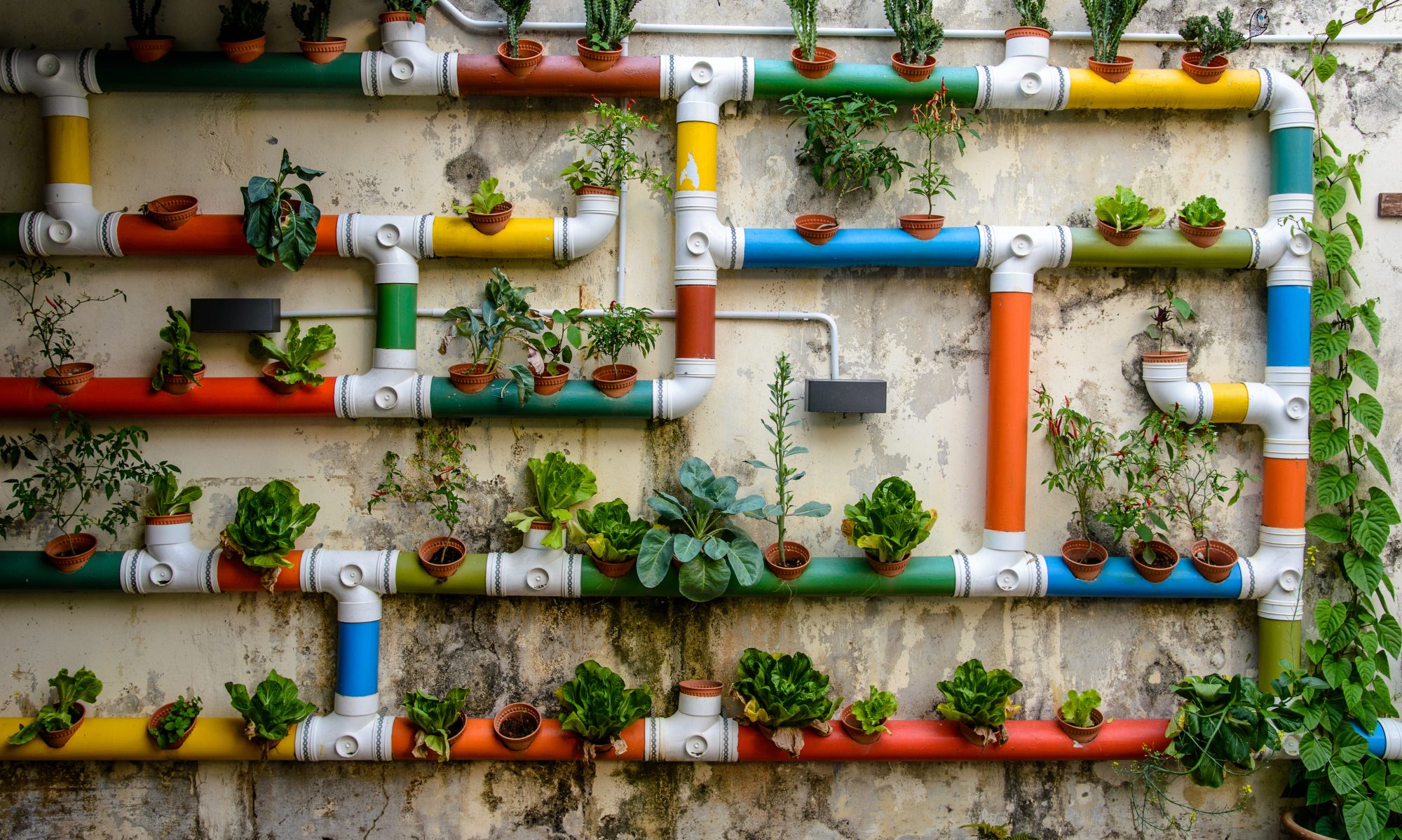
Have the Hydroculture Seeds Sprouted?

It’s been about a week or so since I started some seeds using hydroculture as an experiment.

Since I started them, I have to admit that I’ve been a bit negligent and haven’t been taking the best care of them. I’ve put them out on my balcony garden and have sprayed them down once in a while.

As of now, they haven’t sprouted yet at all. By this point, something should’ve have sprouted. I’m not saying that they don’t work and will keep the experiment going.

I’ll just need to take better care of them and make sure that they are kept moist. I’m also not sure, but they might do better indoors to start as well.

This is a way of growing that I definitely think could be useful for people with no growing space at all, so I’ll keep it going.

Any other ideas or recommendations?

httpv://www.youtube.com/watch?v=v4Yx7_uINmE

Growing Green Onions From Green Onions in Your Kitchen

Here is another quick and simple way that you can grow some of your own food. It’s not really growing, it’s more like regrowing.

First you need to have either grown your own scallions or bought some at a local farmers market.

You can now re-grow green onions from the existing green onions in your kitchen on the countertop. This ideas was give to me by Leah Stoltz, one of my friends on Facebook.

You don’t need a backyard, fire escape, balcony or sunny windowsill to do this. All you need is a cup, water and your green onions.

Once your green onions have about three to four inches left on them simply place them in about one inch of water and set on your countertop. After two days, dump out and refresh the water.

You should be able to see them start growing again. Cut and use as necessary. Repeat until they no longer grow.

By doing this, you’ll be able to save some money, grown some of your own and save some trips to the market.

httpv://www.youtube.com/watch?v=yzfRtkCsauI

Organic Isn’t a Splurge, It’s My Healthcare

There was a post on CNN.com called Organic produce – when is the splurge worth it?

The title in and of itself is ridiculous that to consider buying unsprayed produce that hasn’t been treated with any chemicals as being a splurge. It shows how disconnected we have become from associating real food with health.

A licensed dietician, Sonia Angel, reported that organic produce isn’t significantly more nutritious than conventionally grown produce. She does say that organic is safer because it’s pesticide free.

I don’t care about reports, studies or tests. You can make the number tell whatever story you want.

Personally I don’t want to chug and put chemicals into my body, which is what conventionally grown produce is littered with. There is no way that it could be good for anybody or for the land that it’s being grown in.

The fact that one would even consider non-sprayed produce to be a splurge is telling of the the times that we currently live in. We see health as coming from pills or a bottle and not from the food, which we put into our bodies.

You know what a splurge is? A splurge is the car you are driving. A splurge is the huge TV that you watch. A splurge is getting your nails done. A splurge is not providing yourself with the best quality food that you can get your hands on or growing on your own.

For me buying organic isn’t a splurge. Buying organic is party of my healthcare.

What are your thoughts on splurging on organic produce?

httpv://www.youtube.com/watch?v=I_84DjcnofY

Cucumbers Turning Yellow and Flowers Not Falling

A few weeks back, I posted saying that all my cucumber flowers were falling offand thought it was because they weren’t getting pollinated.

People were saying that this is common on cucumber plants and that they are usually a sausage party with more male flowers than female. I’ve also added a bit of coffee grinds to the soil and watered them in as well.

The good news is now I have definite female flowers with cucumbers behind them. The bad news is that the first cucumber that emerged is slightly yellowing and the flower appears to be shriveled up a bit.

I’m wondering if this is a pollination thing or if it’s not getting enough direct sunlight. My balcony garden is east facing and gets about 4-6 hours of direct sun a day.

Maybe the extreme heat from the past week caused this?

What are your thoughts? Think I should start the hand pollination?

httpv://www.youtube.com/watch?v=upkh24SITlM

Starting Seeds Using Hydroculture: An Experiment

I received a message from Lica who checks out this blog. She lives in Brooklyn and doesn’t have any space to grow, so she’s been experimenting using hyrdoculture, not hydroponics. There is a difference and she explains it on her blog.

She contacted me, told me about what she was doing and offered to send some to me to experiment with. Always down to experiment with new things, I figga’d why not.

The package consisted of:

  • A-OK Rockwool Starter Plugs
  • Hydrotron
  • Nutrient solutions that she kindly informed me weren’t organic and why she had them.

To get started, I also needed

  • 1/2 lemon
  • Gallon of water
  • Seeds of my choice
  • Egg carton

Since I wasn’t familiar with Rockwool and Hydrotron, I looked them up to see what the hell they were. I didn’t come across anything bad, except that you really shouldn’t handle Rockwool with barehands.

So if you know anything different about these two, please let me know.

Moving forward I am not going to use the nutrient solutions because I really don’t know what they are and will see if I can just use my manure tea.

Here is how I started the seeds:

  • Cut the Rockwool cubes and placed them in a bowl of water to soak for 15 minutes.
  • Squeezed the lemon into the bowl to raise the pH a little.
  • Removed the Rockwool and placed each cube into the egg carton.
  • Place a seed into each hole of the Rockwool.
  • Set outside to germinate.
  • Used water bottle to mist and keep moist.

What do you think about hydroculture?

[flickrset id=”72157624902858725″ thumbnail=”square” overlay=”true” size=”medium”]

httpv://www.youtube.com/watch?v=Xf9E5CUCVnE

There is More to Gardening That Just the Harvest

Maria Rodale recently wrote post on her Maria’s Farm Country Kitchen blog titled A Harvest of Healing.

It was a beautifully written post about how there is more to gardening than just the harvest. The harvest is great, but it’s not everything.

The one quote from the post that stuck with me was:

With gardening, we harvest more than food and flowers; we harvest health and healing.

She goes on to talk about the physical aspects that are involved in gardening – weeding, planting, carrying water, shoveling. So gardening helps to build you up physically and keeps your body moving.

On my balcony garden, I definitely don’t get that kind of exercise, but my fire escape garden did prove to be an adventure sport.

Though for me there are some physical aspects in involved in moving the containers and carrying the water.

Maria continues and talks about the food and nutritional value of gardening. Since you are growing your own food, you are fully aware of what’s going into it and can make those decisions.

She also talks about the spiritual aspect of it, which I think gets lost on a lot of people. I believe there is something to be said about putting your hands in soil, planting something, nurturing it and watching it grow. We become more connected with the earth and nature that way.

For me it started out as I just want to grow my own food, but it has turned into more than that. Especially on the spiritual tip. I feel more connected and appreciative for the food that I grow and for any food that I consume.

This is why that I say that I believe that people should grow just one vegetable and it will change the way they think.

What else is gardening to you?

httpv://www.youtube.com/watch?v=EjzHmRx5X6U

Starting an Herb Garden Using a Shipping Pallet

The project of using a shipping palette to make an herb garden is one that I originally saw on Instructables.

The concept is that you water the top plant and it drains through to the plant below that and then to the plant below that.

I followed the basic steps steps that were laid out there. You are supposed to drill the neck of the bottle through the top part of the bottle below it.

The palette that I had the slats weren’t close enough and the bottles weren’t long enough, so I had to adapt.

Here is what I did and what was used.

    Tools and Materials

  • Shipping palette
  • Soda and juice bottles
  • Razor and scissors
  • Drill
  • Wood screws
  • Rocks
  • Newspaper
    Instructions on how to build the herb garden

  • Cut the bottom parts of the bottles off.
  • Screw the first bottle into the top slat. Use two screws spaced out evenly to support the weight.
  • Crumple up some newspaper and stick in the bottom of the bottle. Put some rocks in the bottom too.
  • Line the entire inside of the bottle with newspaper to protect the roots and soil from direct sunlight.
  • Trim off any excess newspaper that’s flowing over the top.
  • If your bottle doesn’t reach the slat below, then you will have to reinforce it with something sturdy. I used hangers that I bent out of shape and chopsticks.
  • Fill the bottles with soil.
  • Plant seeds or transplants as necessary.
  • Be sure to put something under the bottom bottle to catch the water.

[flickrset id=”72157625027314308″ thumbnail=”square” overlay=”true” size=”medium”]

httpv://www.youtube.com/watch?v=Hi4Bazmc6-U

Vegetable Garden Soil Amendments: Compost or Manure Tea

It’s been almost two months since I started to test the soil amendments in my container garden.

I was testing using manure tea versus using regular compost. I had two cucumber plants that I had started from seeds.

In looking at the two containers, it’s hard to make a definitive statement on which works better. If you were just to look at the containers, you’d think that the regular compost was performing better since it’s a larger plant and has more flowers.

If you were to take a closer look at the plants, you might think otherwise. The plant that just had compost in it was a bit larger to start with, so it had a headstart. When I lifted the planting container from the reservoir container, I noticed something very interesting.

The container that I was putting the manure tea in had much deeper roots. The roots were coming through the drainage holes in the planting container. They were hanging at least a foot out of the container. The roots of the larger plant barely had any roots growing out of the bottom of the container.

This makes me believe that if the plants were in the ground that the container with the manure tea would be doing much better. Since it’s in a container it is restricted and can’t grow as well.

I’m not sure if this is coincidence or if the longer roots are due to the manure tea. So at this point, I don’t have a definitive answer as to which vegetable garden soil amendments work best, especially in a container garden.

What are your thoughts?

httpv://www.youtube.com/watch?v=N6jo4-wc7ak