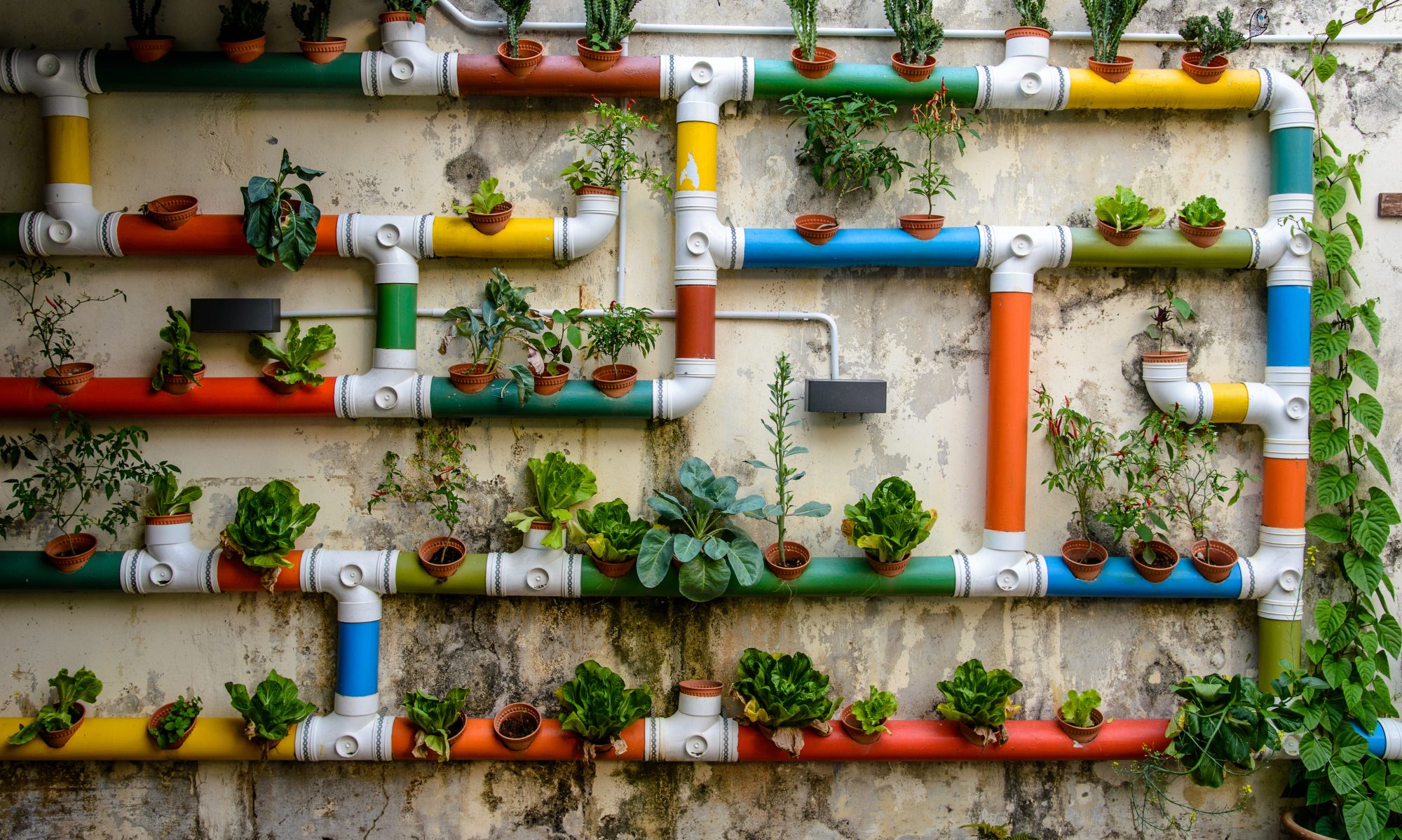

Is Growing Food in a Plastic Container Safe?

One of the questions that people frequently ask me is revolved around the health concerns of growing in the plastic containers.

Is it safe to grow in plastic containers? Is it leaching harmful toxins into the soil, water, plants and eventually my body. I honestly have no clue, nor do I claim to. I think there is a valid concern in those beliefs and generally avoid plastic, but I rationalize doing so in a few ways.

  • The containers are being saved from the landfill. While this doesn’t directly effect my health. It does effect the health and well being of the planet, which in turn effects my health. None of the containers were purchased. All of them were already used.
  • I’m growing organically. The soil, plants, compost, manure tea and even the water is filtered. Does that counter balance any potential leaching? I dunno, but in my mind in kind of does.
  • Since I don’t have land, what am I going to use if I don’t use plastic containers? I’d have to buy pots of some sort which would increase the amount of money being spent and resources used in the production of the pots.

I don’t know the exact health effects and carbon footprint of everything (I don’t believe that anyone really does). For the reasons mentioned above, I can rationalize growing my own food in plastic containers simply because I know how the plants are being taken care of and am cutting down severely on the transportation costs of the food.

What are your thoughts on this?

Testing Soil Amendments: Manure Tea vs Compost

Now that I’ve remembered to amend the soil in my container garden, I’m going to be running a side-by-side test of soil amendments.

Here is the test that I’m going to run. I have two cucumber containers on my balcony garden. In one of them, I have amended the soil with straight compost. The other container I have watered with the cow manure tea that I brewed up.

The plant that I used the cow manure tea already started out slightly smaller than the other, but I want to test and see if the manure tea help to promote better growth.

I’ll monitor progress and report back in a few weeks. Which do you think will yield better results?

httpv://www.youtube.com/watch?v=MRvZ_KKVKlY

How to Make Cow Manure Tea

I am making cow manure tea to use as a soil amendment in my container garden.

I’m brewing cow manure tea from Authentic Haven Brand.

The brewing process will take 1-3 days to complete. You’ll need the following:

  • One five-gallon container filled with water
  • Bag of cow manure tea bag
  • Towel or cloth to keep the bugs out

You just need to drop the tea bag into the bucket of water and let it steep for 1-3 days until it looks golden brown. Put a cloth over the top of it if you are keeping it outside to keep the bugs out.

For more complete instructions on how to make manure tea check out ManureTea.com.

httpv://www.youtube.com/watch?v=jEqI2VL8w3o

Don’t Forget to Amend the Soil in Your Container Garden

One of the mistakes that I made last year was not feeding my plants and amending the soil in my container garden.

When you first plant the potting soil that you use should likely have all the compost, nutrients and minerals for the plant to initially survive, but over time the plant will use these up and they will deplete.

If you were growing in the ground, the soil would likely take care of itself with the worms and everything that’s going on underground.

I was a having a discussion with someone the other day about this and it makes perfect sense why you would have to amend the soil in your container garden. The reason is because it’s contained…hence the name container. Nothing is added to it unless you add it.

In my online networking on Twitter (@CanarsieBK), I connected with a company Authentic Haven Brand Products (Twitter: @GreenSoil) that provide soil amendments in the form of cow and horse manure tea. Sounds great with some breakfast.

Cow and horse manure might sound nasty to put in your garden, but it makes sense. What happened before garbage got picked up? Cows and horses crapped on the dirt roads and it got buried under the soil. It’s natural.

While speaking with Annie, I learned more about the company and her product. AHaven has been a small family owned business since the 1920 and all of the animals are allowed to roam free and are treated humanely (for an animal). This is the kind of company that I can support.

I got me some cow manure tea that I am going to brew up and use on some of the plants. Some benefits of it are that it’s quick releasing and it won’t burn your plants. Read up on some more benefits of using manure tea in your garden.

I’ll be running some experiments on plants using the cow manure tea, vermicompost and whatever else I can get my hands on. You’ll have to stay tuned to see the results.

Most importantly – Don’t forget to amend the soil in your garden and feed your plants!

What do you use to amend the soil in your garden?

httpv://www.youtube.com/watch?v=drjXz7RppKE

Thinning Out Your Mesclun Lettuce Plants

When you started to plant your mesclun seeds, you likely just threw some seeds in your container and watered them to see what would grow. I know that’s what I did.

Now that they’ve started to grow, you’ll need to thin out your mesclun plants to allow the strongest ones to survive and produce more. Yes, the container might look pretty with the purples and greens, but this is about growing food, not about looking pretty.

All you’ll need is a pair of scissors (or your bare hands). Go through the container and pick out the leaves that haven’t grown so well or don’t look that good. You can totally munch on them as you go. As rule, I like to leave about 2-3 inches in between the plants if I can.

The reason for doing this is to allow the focus and energy to go into fewer plants, allowing them to grow more. As opposed to the energy being spread out amongst many plants.

You could very well not thin out your container and let them all grow. That’s up to you.

I choose to do some thinning of my mesclun plants to get a heartier yield.

Do you thin yours out? How? When?

httpv://www.youtube.com/watch?v=r1k_bXF1Fqs

Training Your Tomato Plant in a Small Space

In order to keep your tomato plant thriving and producing more food, you’ll need to train it upwards in addition to removing the suckers.

The purpose of training your tomato plant is to keep the plant from getting to heavy and falling over. As it begins to blossom and fruit, it will start to slouch.

To keep it from doing so, you’ll need to train it upwards. In a small space there are a few ways that you can do this. Regardless of which way you choose, you’ll just need some rope/string and some scissors.

On my balcony garden, I tied string about two-thirds of the way up the stem and tied the other end up the railing of the balcony. You don’t want to tie it too tight because as the plant grows, you’ll want to move the string up higher the railing.

It’s just that simple. This will help to keep the plant upright and encourage it to start growing up the railing.

What are some other ways that you can train a tomato plant in a small space?

httpv://www.youtube.com/watch?v=A5yOCv6xp6o

Pruning Your Tomato Plant: A Suckers Guide to Removing Suckers

Once your tomato plant starts to grow, you will want to prune it to remove the suckers.

They will start to grow regardless of how you take care of your plant. You might notice them as your plant is growing, but think nothing of them. Suckers won’t harm your tomato plant, but will prevent it from producing more fruit.

A sucker is off-shoot growth that grows where the stem and a branch of the tomato plant meet. It doesn’t serve much of a purpose.

If you pick them off it will help encourage more growth because the plant can focus on growing more food instead of keeping the sucker alive.

To prune your tomato plant, eye your plant along the stem and look at where the branches are are. If you see growth in between the branch and the stem in that corner, you got yourself a sucker. Pick it off. You can either use your fingers or a scissor. That’s it.

You’ll have to check the plant every once in a while for suckers, but they are easy to identify and maintain.

That’s my suckers guide to removing suckers from your tomato plant. You ain’t no sucker, are you?

httpv://www.youtube.com/watch?v=wF_ASuZPogI

Picking and Attempting To Grow Wild Fennel

Pretty much everywhere here in Cali fennel is growing. It’s one of the most invasive weeds in the state.

I see it growing in peoples yards, along the sidewalks on trails when hiking. I really don’t think that most people are aware of what it is and that it’s food that they can eat. It’s free food that is growing everywhere. Fennel can be used to make teas, in salads, juices…

The other day when I was walking around the hood, I chopped some off a stem from a fennel plant that was growing along the sidewalk. I stuck it in some water for now with the hopes of it starting to grow some roots that I can then plant in a container on my balcony garden.

You think this will work?

httpv://www.youtube.com/watch?v=IY7ivFvgREg

Figuring Out How To Trellis Vining Vegetables

Now that I have three self-watering containers with vining vegetables – one tomato plant and two cucumber seeds – I need to figure out the best way to trellis them.

Since my balcony garden is not huge, I need to utilize the limited space the best way that I can. What I don’t want to happen is the for the plants to grow out of control like my cherry tomatoes did on my balcony last year.

I’ve been starting to look around for items that can be reused to help grow the plants upwards instead of outwards. The railing on the balcony might be a good option to help train the vegetables.

The other day, I came across a shipping palette that I might be able to use either as is or break down the pieces to build something similar to the cucumber trellis that I built last year.

What are some ways that you’ve been able to trellis your vining vegetables with items that are lying around the house?

httpv://www.youtube.com/watch?v=NjmlJIa6SfE

I Am Not A Gardener

I’m gonna get philosophical and say that I am not a gardener. I am Mike, and I grow food.

Yes, this might seem contradictory considering the site is called Urban Organic Gardener, but I have to use the term gardener because that’s what people associate with what I’m doing.

There is nothing wrong with gardening, but it’s just not what I do. To me gardening is what Fern, Teresa, Jenny and Jean Ann do.

I gots no beef with gardening and what they are doing. When I think of gardening, I think of pretty landscaping with nice neat lines in a space that’s well manicured. Plus the phrase gardening just sounds foo foo to me. The word in and of itself is a turn off.

That’s not what I’m doing. I’m not doing this to make things like pretty. I’m doing this to supply myself with food. There is a distinction.

If a few kale leaves go yellow, that’s cool. If all of the kale leaves go yellow, that’s a problem because then I can’t eat it.

I’m growing my own food because I know what is going into it from the soil, to the plants to the water. It helps to decrease my carbon footprint because I’m using mostly materials that would be tossed to landfill to plant in the self-watering containers, soda bottles and coconut shells.

No toxic chemicals or sprays were used and I can eat a salad within 20 minutes of harvesting it, which cuts down on the oil used to transport our food to us.

It’s about re-establishing my connection with my food source. I have some food growing on my balcony garden and plan to grow a lot more. I guess you can say that I have a vegetable garden on my balcony.

Not everyone is going to be into growing so much, but I believe that if everyone were to grow just one plant, it would change their outlook on food.

So step away from the machine and get to growing. Let me know how it works out for you.

httpv://www.youtube.com/watch?v=saOUvs-_oIc

Eating My First Balcony Garden Salad

Three months after starting my balcony garden, I was able to harvest my first balcony garden salad made up of romaine lettuce and kale. This was a much different experience than when I harvested my first fire escape garden salad in NYC.

Last year I was pretty overwhelmed that I was able to trace my produce from fire escape to bowl, but this year I have a different appreciation considering all the problems that I’ve had with the cabbage worms and aphids.

As I was picking my lunch from the self-watering containers, I came across a cabbage worm that I tossed off the balcony.

I pretty much harvested all three of the containers because when I first transplanted them I think that I packed them in too tightly. I don’t think that it was too many plants in a container. I think it was too many plants close together.

After picking the containers, I brought them inside to rinse off since they were sprayed down with worm leachate and the organic soap spray. The salad was prepared with other fresh ingredients sourced locally from the farmers market.

I enjoyed the salad on my balcony garden where I harvested it just 20 minutes earlier. It’s not going to get much fresher than that.

This has given me a whole new appreciation for food and what goes into growing it. It’s not something that I’m going to take for granted between the insects and the yellow leaves.

This is my first balcony garden salad, but I have a lot more growing to feed me.

All it takes is just one herb or vegetable and it will make a difference. It will open up your eyes and give you a new appreciation for and connection with food. When are you going to start growing your own food?

httpv://www.youtube.com/watch?v=eHrYFXIR2wE

Succession Dill Seed Planting

The dill seeds were planted sometime in the beginning of June. To make sure that I continually have dill available to be I did some succession planting of more seeds.

Succession planting is when you plant seeds in a way that you continually have a fresh crop available. Once one crop is harvested, there is another growing right behind it.

This is great for small space gardening. I never did it on my fire escape garden, but am trying it for the first time on my balcony garden.

Initially there were two rows of dill seeds planted. Now there are four seeds that have sprouted. For some reason, it’s the seeds that were planted in the corners. The ones in the middle have yet to sprout.

For this succession planting, two more rows of dill seeds were planted in between the initial two. I’m hoping that this will provide me with plenty of fresh dill throughout the coming months.

httpv://www.youtube.com/watch?v=UJ1LdsOA_Z0

Creative Herb Garden Container Idea

Most of my planting so far have been of one single herb or veggie in a container. This time I decided to get creative with a herb container idea – I surrounded calendula with basil, cilantro, parsley, and oregano.

I know that’s pretty crazy. It’s summer time, and I’m feeling frisky. Chopsticks were also reused as row markers to tell what the hell was planted where.

There were four sets of calendula seeds that were planted in the center of the container. To the top of basil about five sets of basil seeds were planted. To the left cilantro seeds were planted in about three rows. Parsley seeds were scattered along the bottom and oregano along the right side.

One of the top five gardening mistakes that I made last year was planting too many herbs together.
This is the first time that I’ve mixed up different kinds of seeds in s container like this.

That was in much smaller containers, so I’m hoping that the bigger self-watering container will allow the herbs to grow together. What do you think?

httpv://www.youtube.com/watch?v=v3BjT_1OZqc

How You Can Make Gardening Cheap

One of the reasons that people won’t start growing their own food is that they say that it is too expensive. There are free and cheap resources out there, you just need to seek them out. Here are some ways that you can make gardening cheap, so that you can start to grow your own food.

  • Local Department of Sanitation or Office County Extension They usually have free events or programs throughout the year where you can get free resources such as compost or mulch. This past weekend, I attended an open house held by LA’s Bureau of Sanitation where I walked away with bags of free compost, mulch and a tomato plant.

    During the week, at nine different locations, you can get free mulch and compost (at certain locations) at . All you need to do is bring your own shovel and container.

    Most cities usually offer compost bins at a discount to their residents as well.

  • 5-Gallon Containers Check your farmers markets, delis and restaurants. Most will gladly give them to you because they are just going to throw them away. If not, offer up a dollar or two. These are great to make self-watering containers with.
  • Soda Bottles Unfortunately soda bottles are everywhere. If you don’t drink soda, then check your local recycling bin or ask friends and family to save them for you. You can use them to make hanging soda bottle planters or self-watering containers made out of a soda bottle.
  • Coconut Shells If you buy coconuts, then save the shell and you can plant shallow rooted herbs and veggies in them like lettuce.
  • Horse Manure Call up any local horse stables or riding academies to see if they have any horse manure that you can take off their hands. Most usually do and will give it away for free or for a small cost. It makes a great addition to compost.
  • Cafes and Coffee Shops Hit up your local cafe or coffee shop and ask them for their coffee grinds. Most keep them on hand to give out to local gardeners. The grinds works great as a fertilizer and help to feed the plants. They also make a great addition to your compost.
  • Beaches The next time you are at the beach make sure to bring some sand and seaweed home with you. If you are having drainage issues, the sand will help with that. The seaweed will really help to mineralize certain plants.
  • Free Tomato Seeds WinterSown.org offers 6 packets of free tomato seeds when you send them a self-addressed stamped envelope.

These are just a few ways that you can make gardening cheap. Nearly all of these resources are readily available to you, you just might have to inquire a bit and seek some of them out. Lemme know if I can help you to find them in your area.

What are some other great local resources that can help to make your gardening cheap?

httpv://www.youtube.com/watch?v=yleqMj1WouU

What Causes Yellow Kale Leaves

I haven’t had the best of luck on my balcony garden. The oak greens were wiped out by cabbage worms and the purple kale had an aphid infestation.

Now the leaves on my kale containers are continuing to yellow. From what I’ve heard and read there a bunch of causes for the leaves of kale to yellow.

It could be a lack of nitrogen, so I added coffee grinds to help with the yellow leaves. That didn’t work.

I’ve also read that it could be because of poor drainage. I stopped watering them for a bit. That didn’t work.

Someone else said that it could be due to lack of watering. I watered more frequently. That didn’t work.

The most important thing is that kales are a decent size, so I am gonna harvest and eat them before the end of the week.

This is another reason that I don’t read many gardening books (except for “Grocery Gardening” ) and listen to the “experts” because there is no one right answer.

I’m sure there are a million other causes that people can think of for yellow kale leaves. What are they?

httpv://www.youtube.com/watch?v=DoQ06KH794c

Aphid Infestation Wiped Out My Purple Kale

A few weeks ago the cabbage worms killed the container that had the oak greens in them. This week an aphid infestation has wiped out the container with the purple kale.

The natural garden pest control worked well for a bit, but I couldn’t keep up with them. There were massive gray clumps of them on the plant each time I went out there.

When I had my fire escape garden in New York City, I had no insect problems at all. In the two months that I’ve had my balcony garden, the insects have already wiped out two containers.

I still refuse to use any kind of pesticides or nasty ass chemicals. What I’ll have to do is buy some netting and make row covers to keep the insects out.

Between killing all the seeds and two containers falling victims to insects, I’m not having the best of luck in LA so far, but I’m still gonna keep on growing.

httpv://www.youtube.com/watch?v=nr6PEl_KT90

Self-Watering Container Made Out of a Soda Bottle

Here’s another creative gardening idea for those of you with limited space. It’s a self-watering container made out of a 2 liter soda bottle.

This self-watering container is made out of a soda bottle, an old t-shirt (or cotton string) and some newspaper. That’s it. Hard to get much cheaper than that. I had seen the idea on Instructables a while back and have been wanting to do it since.

These are just another option for you to start growing your own food besides the coconut shells, hanging soda bottle planters, cinder blocks and three other versions of self-watering containers. Any of these can fit your space regardless of how small your space is.

I’ve planted some basil seeds in mine. Now what’s your excuse for not starting to grow some of your own food? You don’t have to grow a lot. Just one plant will make a difference.

httpv://www.youtube.com/watch?v=P8obfQfu3mM

Little Black Eggs On My Plants

The green oak lettuce on my balcony garden has not been doing well at all. When checking out the containers the other day, I took a closer look at it and noticed little black egg looking things that were accumulated at the bottom of the leaves.

I have no clue what they are, but can only describe them as caviar looking. They didn’t budge when I poked the with a stick and there were dozens of them lining the leaves around the soil line. I have no clue what they are and if they eventually grow into anything.

My assumption is that these and the cabbage worms, which I had to pick one off as I was checking out the container, are the reasons for the plant dying.

To be safe, I’m going to dig up the plant and get rid of it. I won’t throw it into my compost. Not sure what I’ll do with the soil though.

What’s your thoughts on what the hell those things could be and what to do with the soil?

httpv://www.youtube.com/watch?v=Zv4_IAGaCPA

Reminder: You can enter to win a Spin Bin Compost Tumbler until Thursday, June 10, 2010 12am PST

Planting My First Seeds On The Balcony Garden

Two more self-watering containers were made and put out on the balcony garden. I started seeds in each of them.

After some discussion about if it was better to start seeds indoors or by direct sowing, I decided it was best to start the carrot and mesclun seeds by directly planting them into the containers.

When I started to plant the carrot seeds, I noticed that the package said, “Packaged for 2009.” It’s now mid 2010. I still planted the seeds and will see what happens.

The mesclun seeds were dated for 2010, so I’m not too concerned with them being ok to grow.

To plant the seeds, I used my finger nail and made some rows in the containers. Took some seeds, put them in the soil and spaced them out about 1/2 – 1″ apart.

I wasn’t about to get all crazy, picking individual seeds and measuring everything out to a tee. My goal is grow food. If it doesn’t grow perfectly, I’ll adjust along the way. This way I got seeds planted and am starting to grow food.

As for the rest of the garden, it’s been about two weeks since I first planted, and I am happy with the way that it’s coming along.

The two containers of kale have grown a noticeable amount, so have the purple kale and romaine lettuce. The oak green container doesn’t seem to have grown too much.

Now I have a total of seven self-watering containers on the balcony.

The next thing that I want to do is start some of the other seeds indoors, so when I make more containers I can transplant them.

As for the carrots seeds that were packaged in 2009, my Grandmother eats food with expiration dates from the 1990s. You think these seeds are gonna grow? What are your favorite seed stories?

httpv://www.youtube.com/watch?v=QrbQWnDdcpg

Help Identifying An Aloe Plant

While hiking in the LA mountains this weekend with my girlfriend (roommate), I was noticing the vegetation on the side of the trails. It got me thinking about something that I read by Fern Richardson of Life On The Balcony about growing aloe indoors over the winter.

She mentioned that you can cut off the “pups”, replant them and grow a whole new aloe plant. I assume that a “pup” is an aloe leaf that’s cut off from the plant.

As we were hiking, I pulled the leaf off of an aloe plant to plant on my balcony garden. Before I get it planted and eat the thing, I did a little research on any potential dangers of eating aloe plants. Of course there are some species that aren’t meant for consumption.

To be safe, I want to make sure the leaf that I have won’t make me dead when I eat it. The bottom part of the leaf is white, and it’s green until close to the tip where it starts to change to a rust color. The prickly edges of the leaf are a yellow color and the underside is completely green.

[flickrset id=”72157623979890152″ thumbnail=”square” overlay=”true” size=”medium”]

Growing my own aloe plant is something that I’ve been wanting to do for a while to use in smoothies and juices. Aloe is supposed to have all kinds of nutritional benefits, but it’s also mad expensive to buy in the store at $3-4 leaf.

Does anyone know what species of aloe this might be and if I’ll die if I eat it?

httpv://www.youtube.com/watch?v=OYvBzDasUGY