$5000 fine hanging over the heads of a Norman Park couple – all because of what they’ve done with their veggie patch

Original post can be found at: http://blogs.abc.net.au

13 October 2015 , 9:17 AM by Spencer Howson

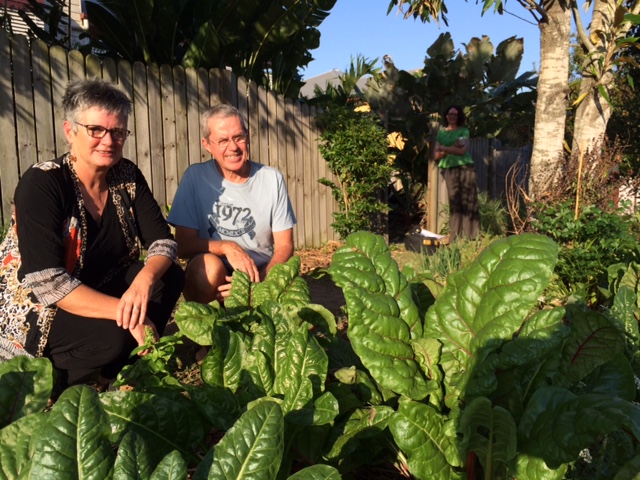
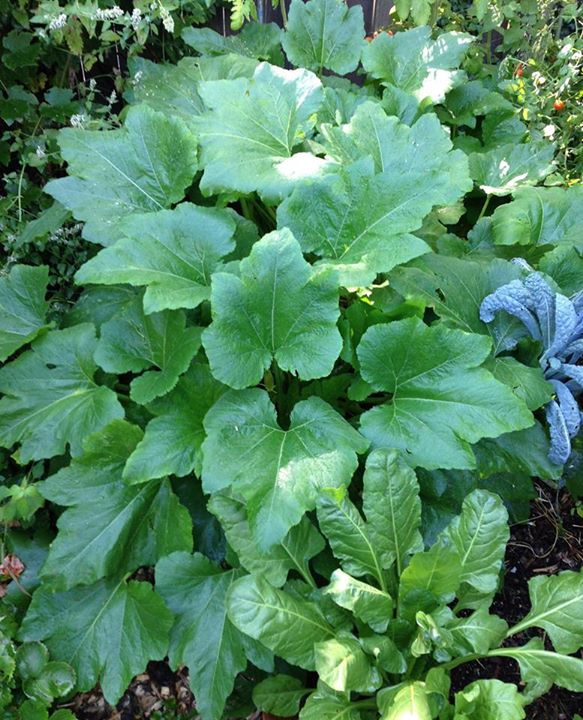
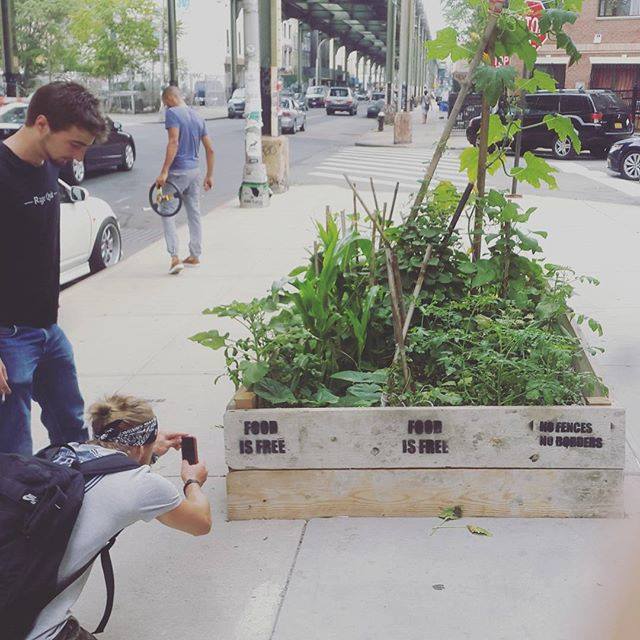
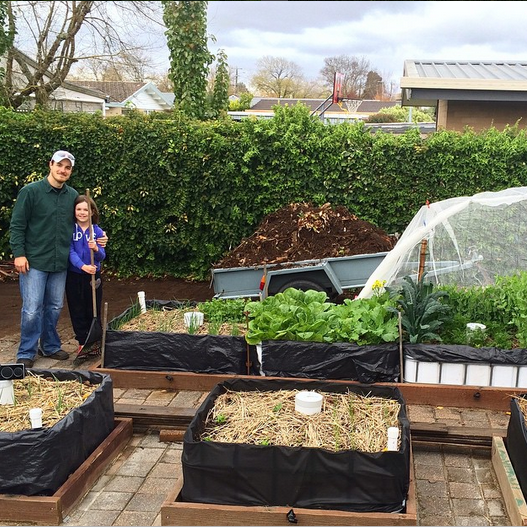
Norman gardenLeft: Kay and John’s nature strip community veggie patch. Image by Terri Begley/612 ABC Brisbane.

Your veggie patch is constantly attacked by possums – so you try something different.

You move everything outside your fence – onto the nature strip – and for whatever reason, the possums leave everything alone.

You invite everyone in the street to enjoy the fruits of your labour and for years, everyone’s happy. Even though you know you’re not really meant to be planting anything on the footpath.

Then, in 2015, someone complains to council and suddenly you’re facing a $5000 fine.

Terri Begley is live at Kay and John Davidson’s place in Norman Park and BCC’s Parks, Environment and Sustainability Chair Cr Matthew Bourke is on the phone:

Statement from Brisbane City Council 10.52am:

Council has completed its review of a complaint received about a verge garden planting at Norman Park and the plantings will be retained with a small change. Council must conduct an investigation and notify residents when a complaint is made against them. The priority is to always allow pedestrian safety and to ensure no impacts to underground public utility services. In this case, the commonsense solution is for the garden to remain with a small change to the garden edge to remove a trip hazard. Council is conducting a review of its current practices with the view of creating a new guideline to make it easier for residents to undertake garden plantings outside their fencelines.

Postscript Wednesday 6.35am – Cr Bourke explains the statement here:

Kay says: “That is AWESOME news Spencer. Thank you!!! It would not have been possible without the fabulous community support and in particular your broadcast. The power of media!!! I am really pleased that common sense did in fact prevail. The development of guidelines for verge gardeners is a positive move forward. This certainly has been a great outcome-thanks again Spencer and please thank Matthew for me.”

Grow. Fish. Cook. Meet Nathan the Bartender/Gardener!

capture-20151015-044553How did you get started with your blog?
It started 3 years ago. I was just showing some of my food and veggie pics to one of my coworkers
and he was like wow those are some awesome pics. He asked had I heard of Instagram, said it was like Facebook but photo based. Im not a ‘Facebooker’ so I was immediately intrigued. Signed up that night, he taught me the whole hashtag thing, woke up the next morning and had a new follower from Brazil. Im from Washington DC and now connecting with someone from Brazil from just a posted photo….too cool.


Did you start your blog when you started your transition to live this life style? Have you always been this way?
No. I’ve always loved food, love to cooked, create, etc. I did change my username once I delved deeper into the gardening/farming world. My first name was @slangin_tails I am a Bartender, I slang cocktails! It was about 2 years ago when I came up with @grow_fish_cook that’s what I love to do…grow…fish…and cook!
capture-20151015-043916What sparked your passion?
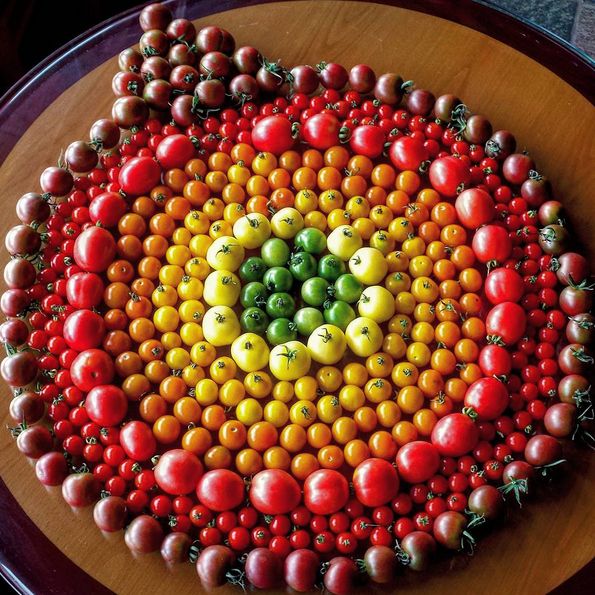
It was a friendly competition between a buddy of mine about 7 years ago. At the time tomatoes in the supermarket were tainted with Salmonella. We were like, WTF??? He said he was going to start growing his own tomatoes, went to Home Depot and he bought 4 plants, containers & soil. A week later, I went to his house, the plants had tripled in size, I was shocked, then I went and bought double what he had purchased! The following week The Washington Post featured an article in the Food section all about Heirloom Tomatoes, I had only thought tomatoes were red. Nope! Recommended literature from article was ‘The Heirloom Tomato’ by Amy Goldman, I purchased that book and I have been infected ever since.
It’s so funny because now I wouldn’t ever dare think about purchasing a plant from Home Depot!
capture-20151015-044103
What are some of the other things you would like to have other people understand about living a healthier and self-sufficient life style? 
That it is very simple. Growing is simple. Dirt, seed, sunlight, water. We are such a ‘I want/need what I want NOW society’ – I’m just gonna go buy so called “organic” produce from the store for $5 a pound and think I’m living that lifestyle. Are you informed? Do you really know what’s allowed to be in your “organic” produce? Growing yourself gives you the choice on what nutrients you choose to provide and they’re so cool. Compost, Compost Tea, Seaweed or Fish Emulsions, planting cover crops in the fall, no Salmonella!

What tips and tricks could you share with other people? 
Love your plants. They are going to love you back. Provide the absolute best for them and they will produce. When I harvest it’s like a sped up version of raising children and seeing them off to college!
Grow from seed. Be informed. Pull your suckers ’til your fingers are black.
capture-20151015-044150Have you ever made mistakes or failed doing something? 
Nope. Never. OF COURSE I HAVE! The second year of growing for me I learned a lot. I went from 8 plants the year before to over 40. I started everything from seed that year, planted in ground and containers. Everything started great until about a month after planting in the containers I noticed they weren’t doing great, starting to wilt, discolor, etc. I thought I had created the perfect environment for them. I got online typed in symptoms and that’s when I discovered Aphids. It was too late, I had a complete infestation of thousands of the little juice sucking pricks. I lost 90% of the container plants and half of plants in ground. I was crushed having started everything from seed 12 weeks prior. I learned, never had another Aphid problem, yay for Spiders & Ladybugs! On a side-note, I make mistakes every year, its gonna happen. I’m never satisfied with my knowledge always trying to learn more.

How did you overcome any obstacles?
The internet is just awesome. So many garden forums, blogs, posts out there and people are willing to help.
It’s also a lot of trial and error so take notes.
capture-20151015-044359
Have you ever dealt with a person who disregards your life style?
Ummm…no.

What are some of your greatest rewards with a lifestyle such as the one you live?
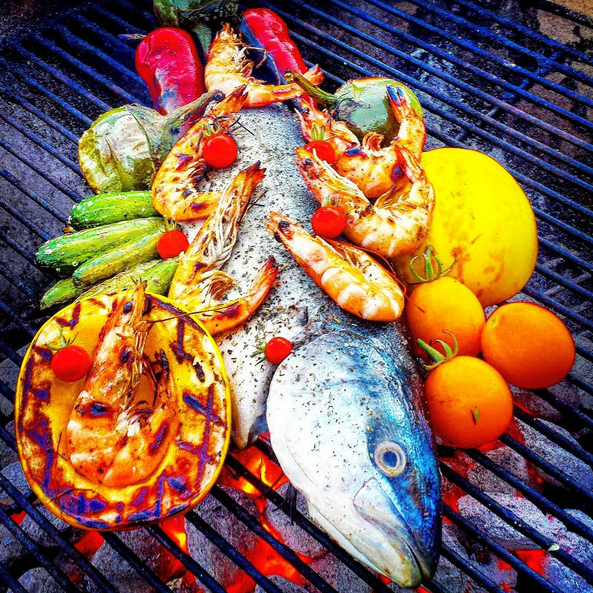
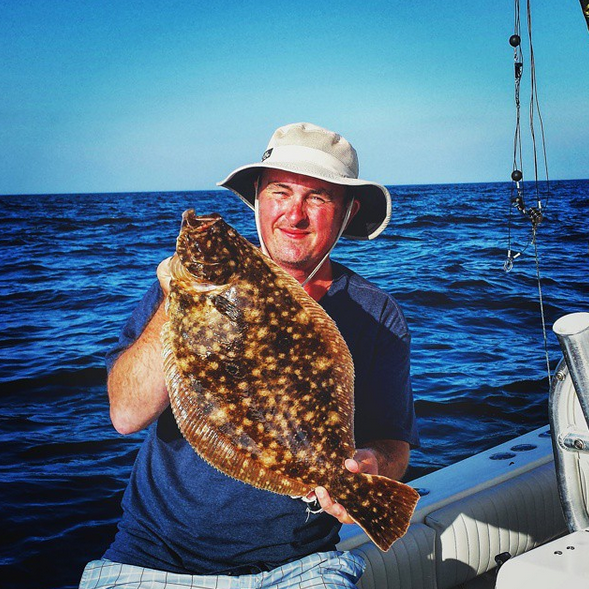
The freshest most delicious food you could ever imagine. I’ve been featured on quite a few sites, sold produce to some of the top restaurants in my area, received great compliments. But nothing is more rewarding then creating your own meal from everything you caught and grew. In the summer I go fishing out in the Atlantic Ocean, return home with my catch and stroll through my plot and pick whatever I want to pair with my fish. This is how people back in the day provided for themselves, that is often over looked.
capture-20151015-044307

Follow @Grow.Fish.Cook. on Instagram! 


Urban Farms Are Sprouting Up Like Weeds!

Original post can be found at: Inquisitr
capture-20151013-054532
If your town isn’t on board with urban gardens, they are living in the past, because urban gardens are sprouting up all over the nation as people search for more sustainability and more control over what they put in their mouths.

Farmland is scarce and costly, according to WGBH News, which featured an article on urban farms. Courtney Hennessy and John Stoddard were two urban farmers interviewed for the article. Instead of plowing the fields, they tend produce on a rooftop in Boston.

“We literally biked around looking at big buildings,” Hennessy, owner of Higher Ground Farm, said while harvesting arugala on the roof above the Boston Design Center in the Seaport District to sell to restaurants. Their rooftop farm is so new it’s only breaking even right now, so the couple kept their other jobs. Both Hennessy and Stoddard believe that urban farming businesses have no where to go but up, because growing city populations are increasingly wanting to know where their food comes from.

“There’s a lot of really amazing urban agriculture going on in this country, but all of it’s through nonprofits and grant funding,” Hennessy explained. “And we’re determined to see if we can do this as a for-profit company. Can you live and work in a city and still be a farmer, I guess, would be the thing we’re trying to figure out.”

Catherine Bertini, a former executive director of the United Nation’s World Food Programme, says that she doesn’t believe that urban farms will have a very big impact on the food stem.

“I’d like to be proven wrong, but it’s not going to change the world because it’s the big-volume farms that can do that,” Bertini said. “And until these small projects become very large, they’re not going to have a big impact.”

It’s not just rooftops, urban farmers are using their front yards, their back yards, and even their closets to grow food in. Grove Labs is a startup company that is encouraging people to grow their own produce from cabinets right inside their homes. Jamie Byron and Gabe Blanchet, MIT graduates, started Grove Labs and fully believe that home-grown food is the wave of the future.

“In the future we see people being able to grow lots of things in their home and maybe have an entire room that’s dedicated to growing,” Byron said.

“The reality with a new technology like this is we want to make sure it’s beautiful and works really well,” Blanchet said of the indoor mini-farms. They’re a few thousand dollars, but the pair is committed to changing the way food is brought to the table. “And so the price point isn’t — we didn’t just go for the bare minimum we could scrape by with. So for those who are really price sensitive, we plan to release do-it-yourself plants so people can build their own ecosystem.”

Byron and Blanchet’s opinion on the food demands of the future are contrary to Catherine Bertini’s opinion. The MIT graduates believe that the newer generation of adults don’t want to repeat the mistakes of past generations.

The newer generations, Byron and Blanchet say, will want to stay connected to their food sources.

“Besides providing a green space for customers and crew members, it will help us become even more sustainable,” Brian Holtman, JetBlue’s manager of concession programs, explained. Food scraps from the restaurants there will become compost for the urban farm. Meanwhile, a rotunda garden at Chicago’s O’Hare International Airport supplies nearby restaurants with beans, peppers, leafy greens, and herbs from 26 aeroponic growing towers. O’Hare has even utilized landscaping goats, sheep, llamas, and burros to clear “dense scrub vegetation,” according to a Take Part article.

Whether the agriculture leaders of the country want to believe it or not, a farming revolution is happening. Urban farms are found everywhere from high rise buildings to street dividers. Many urban farmers are using vertical farming techniques. After all, for decades, we’ve heard threats that there isn’t enough farmland to feed the nation, so innovative sustainable folks went vertical instead. The new designs allow for larger yields and better control over crops. Traditional farming ends up with a 50-50 risk of crop loss, according to Food World News.

Not only do urban farms let people feel good about what they are eating, urban farms’ green benefits also reduce the number of delivery trucks, cuts back on fuel needs, and promote cleaner air. Besides, with urban farming, food can go from farm to table in less than a day. Food from urban farms maintain their fresh-picked taste, because they’re actually fresh, not artificially ripened or preserved.

The Rise of the Rain Collectors

Original post can be found at: earth911.com

Whether it’s because of the looming increase in water bills across the nation resulting from the ongoing drought,  or it’s the wealth of creative ways people are finding to harvest rainwater, the technique of rainwater collection is springing up in gardens throughout the United States. In fact, a recently published study conducted by The Home Depot found that one in four gardeners is opting to reap the rewards of heavy storms through a variety of rain collection alternatives.

Rain barrel This growing trend makes sense when you consider that just 1 inch of rainfall on a 1,000 square foot house is equivalent to 312 gallons of water (or close to eight, 40-gallon baths). Why let all that rain go to waste when storing it away for a non-rainy day requires little more than the use of your existing gutter, a water spout diverter, a screen filter and pretty much anything that can hold water?

Rain collection isn’t just a trend for experienced gardeners with established plots, either. According to the survey, about 15 percent of millennials, many with small but efficient urban gardens, report using rain water collectors. One in five of these younger cloud harvesters are located in the increasingly arid West.

As for gardeners over the age of 35, the southern U.S. currently boasts 28 percent of its gardeners employing water collection techniques compared to other regions (although one might expect this trend to increase in the West, as well, if our current drought conditions continue).

Whether you do it for its cost-saving aspect, as a self-watering technique, as a way to irrigate an irregularly graded backyard or as a functional work of art, rain water collection is a simple way to make the most out of your property’s natural resources, while spending very little of your resources—time and money.

Wondering how much rain water you could be collecting from roof runoff alone? Check out the United States Geological Survey (USGS) rainfall calculator, which can estimate rainfall in areas from a couple square feet to several square miles.

About the author

Kristin Hackler is an experienced gardener who lives in Charleston, South Carolina, and writes about gardening for The Home Depot. Kristin has a strong interest in sustainable gardening and water conservation. To view Home Depot’s wide selection of irrigation, rain barrel and other water-saving solutions, you can visit the company’s website.

Feature image courtesy of Several Seconds

It’s an unexpected romance: Real Estate Developers and Urban Farmers

Source: citylab.com

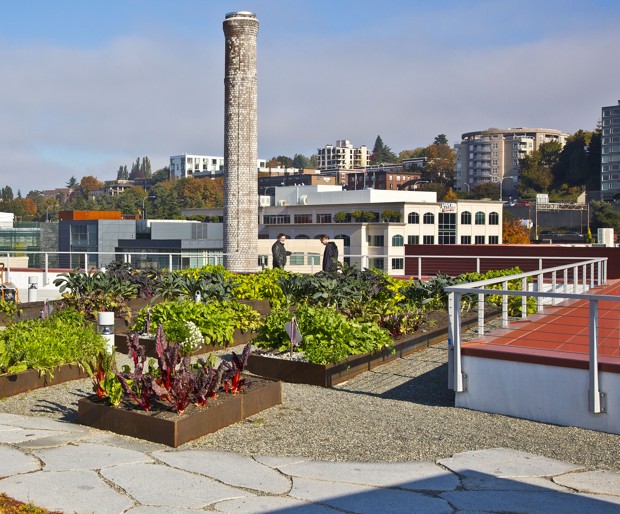
 The roof garden on the Stack House Apartments in Seattle's South Lake Union neighborhood. (Michael Walmsley/Vulcan Real Estate)
The roof garden on the Stack House Apartments in Seattle’s South Lake Union neighborhood. (Michael Walmsley/Vulcan Real Estate)


At the Stack House Apartments in Seattle’s now-trendy South Lake Union neighborhood, residents can walk out onto a terrace and pluck a tomato right off the vine.

In the South Bronx, an 8,000-square-foot hydroponic greenhouse atop an affordable housing development is creating jobs and food for the residents below—along with cooler summers and warmer winters.

And in Somerville, Massachusetts, Assembly Row, a still-under-construction mixed-use development, features a small garden that serves several local restaurants and is a learning site for area employees.

Environmentally conscious construction and building systems are old news at this point, but building-integrated food production is a relatively new, though growing, area of focus. And it’s led to a bit of a strange bedfellows situation: As both urban agriculture and real estate boom in a number of U.S. cities, real estate developers are looking to small-scale local growers to augment their plans. At the same time, food activists are beginning to recognize how even luxury builders can advance their cause.

Henry Gordon-Smith, who advises schools, builders and cities as they roll out vertical farming projects, says he now receives up to 10 calls a week from builders and architects inquiring about such technologies or, increasingly, seeking experienced growers.

A rendering of Sebastian Mariscal Studio’s forthcoming Mission Hill project in Boston, a mixed-use development that will incorporate a rooftop community roof garden and solar farm. (Courtesy SMS)

“The building has to be productive,” he says. “All of that creates better occupants, and better citizens. Food is the next frontier in this.”

Instead of seeing Boston’s building boom as a threat to her urban farming business, Jessie Banhazl, founder and CEO of the Somerville-based Green City Growers, looks at new development as a positive. She started out installing terra firma gardens in backyards and public spaces, but says much of her work of late has been meeting with major developers and architects to build rooftop and grade-level farms into their plans from the conception stage.

“It’s really important that developers understand the value of this, and that they can provide amenities and lots of value to their property by having a rooftop farm,” she says. “There’s so many different applications where the tenants would value having food growing on the property.”

Indeed, many of these developments view urban agriculture as an added amenity for tenants, similar to a gym or a media lounge. As a perk for tenants like Google and Akamai, commercial property management company Boston Properties asked Green City Growers to initiate a garden and education program at its Kendall Center building in Cambridge. Another firm, Beacon Capital Partners, collaborated with a local beekeeper to put beehives in a number of its Boston buildings, which allows building managers to bring little jars of honey to their tenants, providing a “rare opportunity for a landlord to come by when they don’t need something,” says Noah Wilson-Rich of Best Bees.

Across the country in Seattle, the same is true for a number of newer residential developments. Vulcan Real Estate, run by Microsoft co-founder Paul Allen, has included rooftop community gardens in many of its recent projects. At the 24-story Martin apartment building downtown, residents chose to tend their rooftop gardens themselves, while the terrace garden at the Stack House Apartments in South Lake Union is maintained by Colin McCrate and a team of farmers from Seattle Urban Farm Company. McCrate and Vulcan are now working together on another, larger residential development, and they say gardens appeal to a younger generation of Seattleites who carry with them “a more holistic environmentalism.”

“A lot of our residents wished that they had some green space to tend rather than just a shoebox in the window,” says Brandon Morgan, development manager at Vulcan. “It’s also a visual amenity, as part of our landscaping, it’s sort of a centerpiece on that roof deck. And it also encourages healthy living by basically providing residents with greens, if they want it, for consumption.”

Food activists are starting to see the long-term benefits of integrating agriculture into existing or new infrastructure, says Holly Fowler of Northbound Ventures, who facilitated the yearlong urban agriculture visioning process on behalf of the City of Boston that ended this summer. “Typically, the land that is slated for housing,” she says, “agriculture is not going to be competing with that land. Period. The end.” When conversation at meetings turned to combining development and agriculture, Holly says, “reactions were always, ‘we should do more of this.’”

This is not to say concerns do not exist among the urban food justice crowd. Chief among them is the fear that access to an urban garden is an amenity available only to those who can afford it, says Andrea Dwyer, executive director of Seattle Tilth, a large nonprofit with a variety of urban agriculture projects throughout the city. And after the initial luster of that new bed of veggies at the apartment complex or office wears off, she adds, what will become of the project then?

“I do worry that some of these trendier developments, that while it’s a fad, people will incorporate it, but it will fade and they’ll do the equivalent of asphalting over it and turn it into something else,” she says. “In order for urban food production to have staying power, there has to be a real commitment and dedication to it from all perspectives—from people who are developing the buildings, the planning departments, the politicians.”

Read the full article here: http://www.citylab.com/cityfixer/2015/10/the-newest-odd-couple-real-estate-developers-and-urban-farmers/409060/

Could triple-decker floating farms address future food issues?

 Each Smart Floating Farm would be a triple-decker barge, featuring a fish farm, hydroponic garden and rooftop solar panels (Credit: Smart Floating Farms)
Each Smart Floating Farm would be a triple-decker barge, featuring a fish farm, hydroponic garden and rooftop solar panels (Credit: Smart Floating Farms)

With the world’s population expected to hit 9.1 billion by 2050, coupled with the growing effects of climate change on our ability to grow crops, a company out of Barcelona has proposed a solution to feeding the future world. Forward Thinking Architecture’s triple-decker Smart Floating Farms would feature 2.2 million square feet (2.04 sq km) of fish farm, hydroponic garden, and rooftop solar panels to power a floating barge, which could be anchored to the beds of oceans, lakes or rivers. The company estimates that each of its floating farms could produce about 8 tons (7.3 tonnes) of vegetables and 1.7 tons (1.5 tonnes) of fish per year.

The floating farms are intended to provide a solution that can keep up with food production levels that will have to increase by 70 percent globally, and 100 percent in developing nations, to feed more than 9 billion mouths. With so many people, arable land would be stretched to its growing capacity (we’re currently using 80 percent), while fresh water supplies would be severely stressed. Oceans are also being overfished at present.

The company’s idea to move farms onto the surface of water would address all those issues. Each level of the triple-decker farm would have its own function, and would operate as part of a sustainable loop that feeds into the other decks.

Skylights and solar panels on the top deck would convert sunlight into energy to power the farm. The middle level would consist of tiers of hydroponic organic crops that would maximize the limited space on the barge. Waste water from the crops would filter down to the fish farm level at the bottom as a food source.

floating-farms-4

Meanwhile, the nitrogen-rich fish poop would be recycled back to fertilize the crops. Unlike livestock animal manure, fish manure is a fast-acting fertilizer that doesn’t take months to break down, and would provide the plants a quick nutrient boost, including the macronutrients phosphorous and potassium. Fish farming combined with hydroponics – a combo known as aquaponics – is a proven system that is growing in popularity, so this part of the concept is perfectly reasonable.

Also added to the barge would be a possible desalination plant (if floating on sea water), a fish-processing house, and a packaging facility. Wind turbines and wave turbines could also be added, to provide extra energy. The entire barge would be protected from the seas and bad weather with inflatable wave protectors. Thus the farm would be self-sufficient and largely self-operating, requiring minimal labor.

Javier Ponce, the CEO of Forward Thinking Architecture, envisions locating the floating farms, which would be scalable, near densely-populated cities which will see the greatest growth in the future. Of the 35 megacities with more than 10 million people, 25 are located near water, such as Shanghai, Jakarta, Lagos, Tokyo and New York. Ponce believes the floating farms could complement existing traditional agriculture systems, helping reduce food risks associated with climate change issues in especially vulnerable parts of the world.

Source: Smart Floating Farms

This London Underground Farm Grows Salad in a WWII Bomb Shelter

This post is originally from http://www.fastcoexist.com

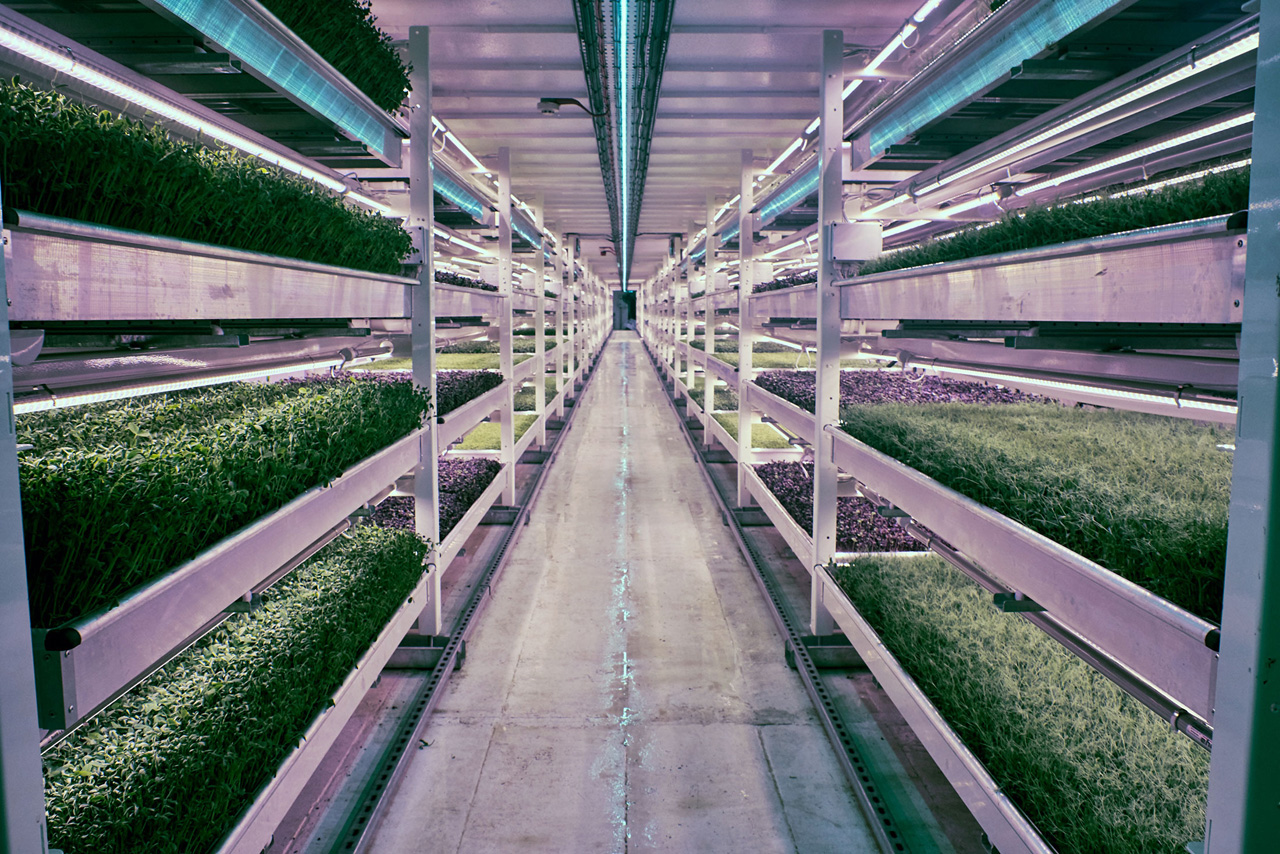
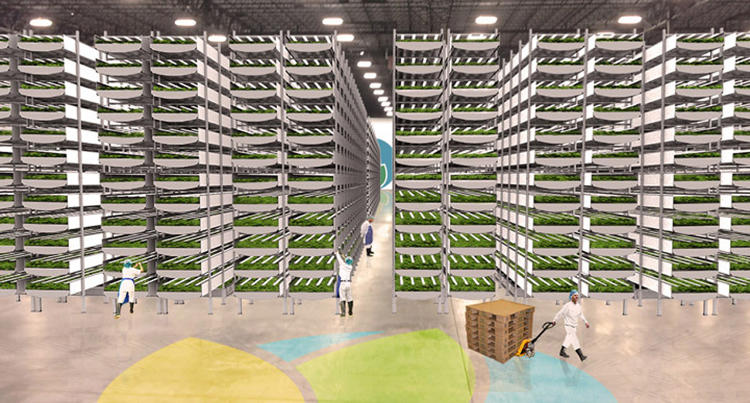
3051209-slide-s-2-this-london-underground-farm-growsDeep below the streets of London, something is growing in tunnels that once kept people safe from World War II bombs. One hint: It’s leafy.

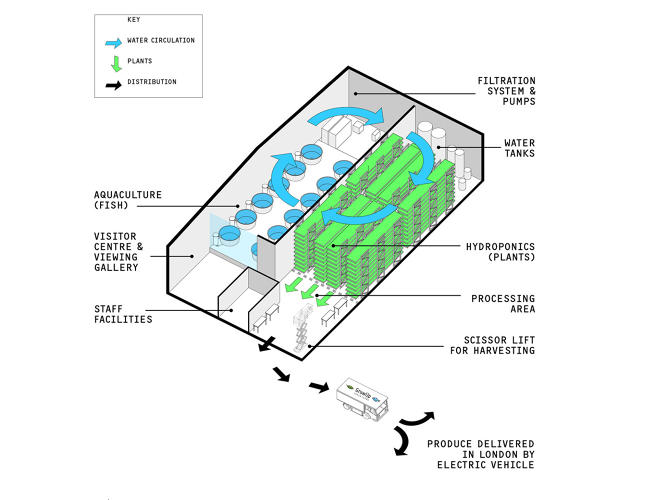
3051209-slide-s-6-this-london-underground-farm-growsAn old bomb shelter is also pest-free, as well as weather free, and there’s never a frost. That means no pesticides. And because the farm is hydroponic, all the nutrients remain in the tanks, instead of running off into the soil and then into rivers.

3051209-slide-s-9-this-london-underground-farm-growsGrowing Underground is a company that makes “kilometer zero” eating possible in London, by growing salad in LED-lit, underground factories right beneath the customers’ feet.

3051209-slide-s-3-this-london-underground-farm-growsThe Growing Underground farm sits 100 feet under Clapham in South London.

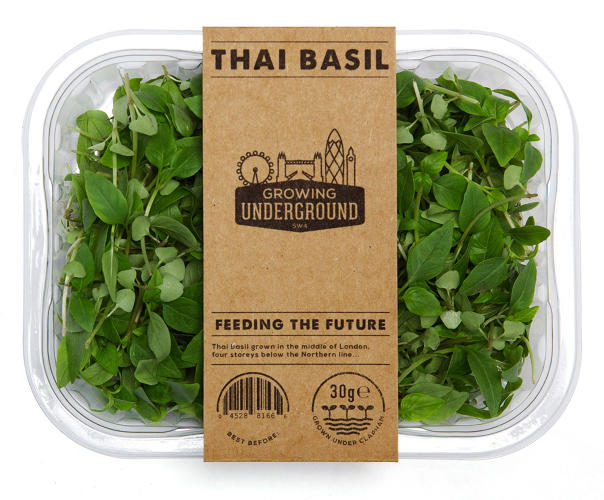
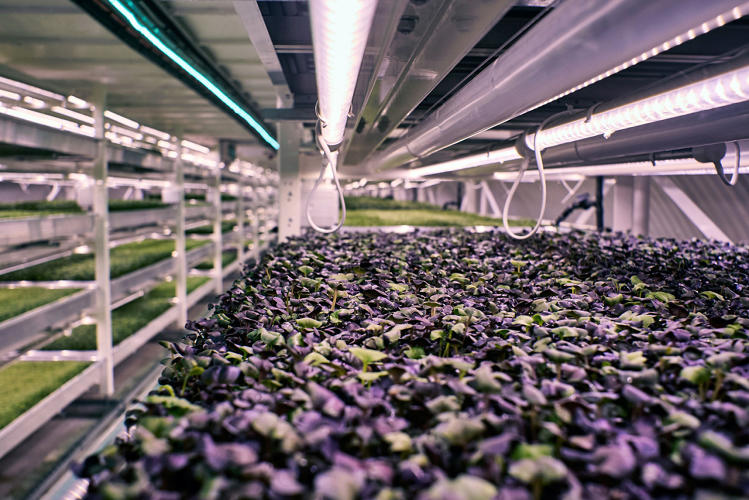
3051209-slide-s-1-this-london-underground-farm-growsIt uses hydroponics and low-energy lighting to grow salad, including mizuna, watercress, Thai basil, radish, pea shoots, mustard leaf, and red vein sorrel.

3051209-slide-s-4-this-london-underground-farm-grows

They grow year-round on racked beds that look like warehouse shelving. Best of all, the process uses 70% less water than regular surface farms.

3051209-slide-s-5-this-london-underground-farm-growsBeing underground has many advantages. One is food miles, or the lack thereof. Transport makes up a significant proportion of the cost of food, both financially and environmentally, so growing in a city center cuts that cost almost to zero.

FRONT & Back-Yard Vegetable Gardeners, Meet “One Yard Revolution”!

11012942_894037963968604_7081093700018044669_nHow would you quickly describe yourself?

My wife Karen and I live in Chicago and love organic gardening. We started with a small vegetable garden many years ago, but over time it expanded to take over most of the backyard. Now we’re growing in the front yard too. During the summer and early fall, we don’t buy any vegetables from the store and buy very little fruit as well. We also use cold frames and hoop houses to extend the growing season, so we always have some fresh food to harvest, even in the winter.

11885324_917004621671938_7259222270097734038_nHow did you get started with your One Yard Revolution YouTube channel and Facebook page?  

I started my YouTube gardening channel and Facebook page in hopes of promoting a low cost, low effort, sustainable approach to organic gardening that relies minimally on store-bought products.  There has been huge a proliferation of organic gardening products in recent years. If you believe the marketing, you could easily get the impression that growing your own food requires a wide array of costly fertilizers and amendments that need to be applied year after year.

Our approach improves soil fertility with compost and mulch from free local resources like autumn leaves, grass clippings, wood chips, and used coffee grounds. We also plant a nitrogen fixing cover crop in late summer. We don’t use any store-bought fertilizers, and we get excellent results. Soil testing has proven that our approach provides more than enough organic matter and nutrients.

I’m passionate about this approach, first of all, because it works very well. But, more importantly, I think all the marketing creates false barriers. It creates financial barriers for those who don’t have the financial resources. It creates access barriers for those who don’t have access to the products. I want to advocate an approach that has few, if any, barriers.

There are also environmental issues with many organic products. For example, rock dust and rock phosphate are mined resources. Bat habitats are disrupted when bat guano is collected, and harvesting kelp from the ocean disrupts a very fragile ecosystem. Using free local resources, on the other hand, actually improves the environment by building soil fertility with material that otherwise may end up in a landfill.

I hope to advocate an environmentally friendly approach that anyone can use to grow healthy food no matter where you live and no matter how much money you have.

11949413_926257137413353_201179725024171022_nDid you start your YouTube channel when you started your transition to live this life style?  

In my case, the lifestyle definitely came first. I’ve had a vegetable garden nearly all my life, but I didn’t start my YouTube channel until the spring of 2013.

Have you always been growing your own food?  If not, what sparked your passion?  

Both of my parents grew up on dairy farms in Pennsylvania, where they produced most of their own food, including vegetables. Though my father wanted to remain on the farm, my grandfather was all too aware of the economic challenges faced by small family farms and insisted my father learn a new trade and find work elsewhere.

When my parents moved to a small town to start their family, they took a little bit of the farm with them by always planting a vegetable garden. Though my approach is somewhat different than that of my parents, I learned a lot of what I know today from my experiences in our family’s vegetable garden.

My wife Karen also grew up with a garden, so it was almost inevitable that we would start our own when we bought our home 25 years ago.

11220889_924064084299325_340821405131616806_n

Have you ever made mistakes or failed doing something?  How did you overcome any obstacles?  

Sure, I make mistakes all the time, but I just learn from them and move on. One great thing about growing your own food is that it’s a lifelong learning experience. No matter how much you learn, it’s still just the tip of the iceberg. This makes gardening both challenging and endlessly fascinating.

Have you ever dealt with a person who disregards your lifestyle?  

Not really. I’m a vegetarian, and sometimes get teased about that, but I don’t take it to heart and it’s usually in good fun. As far as my YouTube channel goes, I’ve found that the overwhelming majority of people who leave comments are very kind, positive, and supportive. I think this says a lot about the online gardening community.

10986639_913568802015520_6436360042226958990_nWhat are some of your greatest rewards with a lifestyle such as the one you live?

To me, gardening is a form of meditation. It helps me relax and keeps me grounded and connected to nature, despite the fact I live in a heavy populated urban area. It’s also something my wife and I enjoy doing together, which is great for our relationship. And because we rely on free local resources and nitrogen fixing cover crops to improve soil fertility, our gardening costs are very low and we save a lot of money on groceries. Of course, the flavor and nutritional value of homegrown produce simply can’t be beat.

What are some of the things you would like to have other people understand about living a healthier and self-sufficient lifestyle?

For someone new to gardening, the idea of growing more of your own food might seem like a daunting task. As I mentioned earlier, there are so many gardening products and practices marketed to consumers that it’s easy to get the impression that starting a new garden is very expensive, time consuming, and complicated. I’d like people to know that, while some products can be helpful, most are not needed and many are of questionable value. You can improve soil fertility with homemade compost and mulch from free local resources. You can fix nitrogen in the soil by growing inexpensive nitrogen fixing cover crops. You can all but eliminate weeding by using mulch. Simply put, my message is that you can grow a lot of food on a little land using sustainable organic practices without spending a lot of money or working very hard. This is the message I try to communicate in my videos, and I share specific strategies on how to make it a reality.

11953108_923618271010573_2630161704006131143_nWhat are your favorite plants to grow in the garden?

That’s a tough one to answer, because we grow a wide variety of crops and love them all. Given our goal of working less and growing more, though, I have to say that I really enjoy growing edible perennials like strawberries, blackberries, blueberries, sorrel, Good King Henry, and sun-chokes. They come back year and year with very little effort on our part. Of course, you have to love annuals too. Our garden wouldn’t be the same without tomatoes, peppers, potatoes, kale, and squash. Like I said; it’s really hard to pick favorites.

Win a FREE All-In-One Urban Gardener Fall & Winter Garden Kit!

Enter to win this FREE Gift from Urban Organic Gardener! 

This 82 year old man, maintains a garden of 1,000 fruit and vegetable plants in buckets

This post is originally from commercialappeal.com

Some people are happy with a patio tomato on the porch.

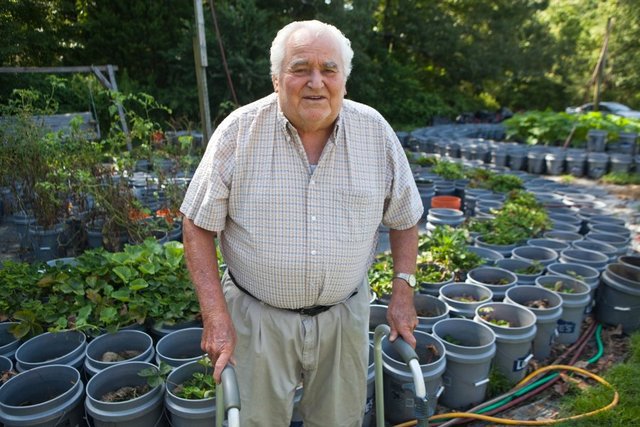
Willie Anderson, 82, took container gardening to another level; he planted tomatoes, cucumbers, corn, okra, squash, peppers and eggplants in five-gallon plastic buckets in his yard in Red Banks, Mississippi. He now has plants in more than 1,000 buckets.

Willie Anderson, 82, maintains a garden of 1,000 fruit and vegetable plants in buckets at his home in Red Banks, Miss. The garden requires no special equipment. There'€™s no hoe on the place, he said. And it'€™s totally organic. I use grass clippings, soybean stalks, cotton hulls, he said.
Willie Anderson, 82, maintains a garden of 1,000 fruit and vegetable plants in buckets at his home in Red Banks, Miss. The garden requires no special equipment. There’€™s no hoe on the place, he said. And it’€™s totally organic. I use grass clippings, soybean stalks, cotton hulls, he said.

It’s easier to grow an entire garden if you’re planting everything in buckets, Anderson said. “There’s no hoe on the place,” he said. “We don’t need one.”

“You don’t have to have any equipment,” said his son, Ron Anderson. “You don’t have to have any utensils to farm with as far as hoes and shovels. You don’t have to have a tiller. All you do is plant, water and harvest.”

The garden is totally organic. “I use grass clippings, soybean stalks, cotton hulls — that’s the waste that comes out when they gin the cotton,” Willie said.

Ron came up with the idea of the bucket garden for his dad nine years ago. Willie always was a robust man, he said. He was in farming, raised hogs and cattle and went into the home building business with Ron and his other son, Mark Anderson. “He had a hip that deteriorated and he had to have hip surgery and replacement,” Ron said of his father. “When he had that, he was pretty much home bound and his hopes and dreams were just going down. He had cabin fever. He didn’t have anything to look forward to or to do. He couldn’t get out like he had all his life.”

Willie liked the idea of the bucket garden. “I was just tired of sitting up in the house,” he said.

Ron bought 100 buckets from Lowe’s and some Miracle-Gro potting soil. He said, “Dad, let’s try this and see if we can do this for your hobby.”

Ron punched holes in the bottoms of the buckets for drainage and put them on sheets of black plastic to keep weeds from growing around them. “We raised our own tomato plants from seed,” Ron said. “We planted one tomato to a bucket, one squash seed to a bucket, one corn seed to a bucket.”

Willie didn’t want to stay in the house anymore. “We got him a little four-wheel scooter and he’s out the first thing every morning to check his garden,” Ron said.

“You can garden in the shade,” Willie said. “It needs to get at least five hours of sunshine a day. That’s enough for the plants.”

Their first harvest was better than they expected. “We probably had about 10 cases of tomatoes that weighed 30 pounds apiece,” Ron said. “I sold them to some pizza companies in the Olive Branch area. They froze them and canned them for soups.”

Now they mostly give away the produce they don’t use. “I thought at first there might be a little money to be made in it,” Willie said. “But I don’t think there is. I just give what I grow to whoever wants it.”

They stopped using Miracle-Gro after the first year and went organic. “We don’t use any kind of chemical fertilizer and we use the same dirt year after year,” Ron said. “We plant them in the same pots every year. After people cut their grass and sack the grass cuttings on the side of the curb, my brother and myself go around with a trailer and bring home 20 to 30 sacks. He puts it around the top of the buckets. The grass fertilizes every time you water.”

To irrigate, they attach water hoses to sprinklers atop 10-foot landscape timber posts, which are stuck in the ground. They use one sprinkler per each group of 350 buckets. “All I do is turn the faucet on,” Willie said. “It wets everything down in about an hour and a half. It usually lasts about a week if it’s not too dry.”

They’ve experimented with different vegetables. “We had a cabbage big as our granddaughter,” Willie said. “I got a cantaloupe this year. It’s ripe down there now. It’s the first one we’ve been able to raise in the buckets. We haven’t been able to raise a watermelon. I don’t believe the bucket’s big enough to raise a watermelon.”

They haven’t tried everything. “We haven’t grown any field peas, but they’re so simple to grow,” Willie said. “I don’t see a problem with them.”

Plastic buckets aren’t the only container gardeners can use, Willie said. “These gardens can be grown in a plastic shopping sack like you get at the grocery store if you want to, but they’ll only last one year and you’ll have to redo it every year,” he said. “I have done it. It’ll work. But the plastic will rot out by the end of the year.”

Ron, his mother, Geneva, his wife, Gidget, the grandchildren and a hired man help with the garden. Willie basically oversees the garden.

Willie also gives the plants pep talks. “I say, ‘Now, y’all got to do better than that,’” he said.

“He does go down there and talk to them three times a day,” Ron said.

Garden writer Felder Rushing, a former Extension Service urban horticulture specialist, is a fan of bucket gardening. “I have grown veggies and herbs in five-gallon buckets in my Mississippi garden for years,” he said. “So cool. So easy. Just the right size. Can’t grow a decent tomato or pepper in anything smaller. And no worries about soil diseases.”

Rushing doesn’t stick with drab-colored buckets. “I spray paint mine to make them more cheery.”

As for Willie’s 1,000-plus bucket garden, Rushing said, “I totally agree with the sentiments of Mae West, who once said too much of a good thing is — wonderful.”

Read the full story here: http://www.commercialappeal.com/entertainment/lifestyle/home/bucket-crops-mississippi-man-takes-container-gardening-to-another-level-ep-1211661529-324126561.html

Artsy, Science Nerds, and “Foodies”…Meet “wicking.wolfe”!

capture-20150917-102247

How would you quickly describe yourself to others?

I’m a green thumb, nature lover from the suburbs, and my husband is a tech nerd from the country!  We are both a bit artsy, love science, and love food.

How did you get started with your blog/Instagram page/etc?  

I wanted to record our garden as it changed.   I felt my personal FaceBook page was not the place for it,  so I set up Instagram so that also posts straight to Tumbler, and people started following. My small following seemed to enjoy it, they gave me great advice and got just as excited as I do when we start a new venture. This has just added to my enjoyment in the garden.  It’s a great online community. I love being a part of it!
capture-20150917-102115Did you start when you began your transition to live this life style? 

We have had a clean lifestyle for a few years now, though I would very much call us newbies!   Sparked by a couple of difficult pregnancies, (the last one I developed insulin dependent gestational diabetes), our family turned our eating and exercise habits upside down, and we didn’t  turn back.  We started with small steps: cooking our food from scratch, (no processed food, etc), and I only recently started making our own cleaning products.  We now compost most of our waste or recycle it.  We have plans for clean heating our home and being as self sufficient as possible – we will get there, time and money allowing.

I only started blogging when we bought our first home last year.  We have learnt so much from the online community, so now we are trying to give a little back.
capture-20150917-101713Have you always been growing your own food?  If not, what sparked your passion? 

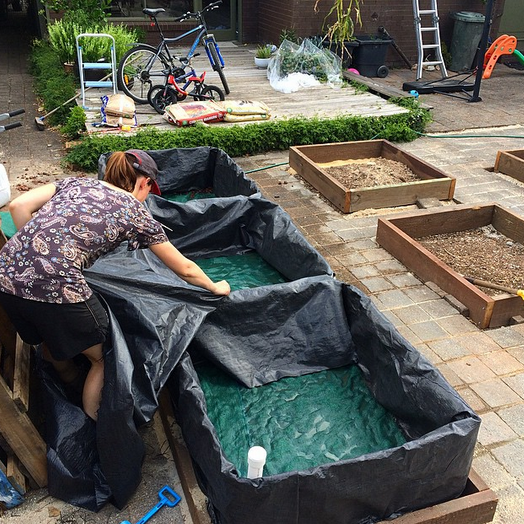
I have gardened for as long as I can remember.  One of my first jobs was in a garden center.  At times my garden has been no more than a tomato or chili in a pot.  Other times we could set up full veggie patches with chickens.  It was dependent on the rental property we had at the time.  This is our first wicking bed set up, and we are very excited to get started on our aquaponics greenhouse that we have been researching for the past couple of years.  We are on a tight budget, so we reuse as much material as we can (Our wicking beds are used pallets and repurposed lintels from our old pool shed.  My passion has always been there; however, I had to work on my husband’s – his main passion is eating the food!

Have you ever made mistakes or failed doing something?  How did you overcome any obstacles?  

Mistakes, ah, so, so many!  I know my plants, but I’m a definite newbie to the tools.  While I’m getting the hang of it now,  the beginning was very slow.  We had to work out how to dismantle pallets so that they were still usable pieces of wood.  Then building the cladding for the wicking bed caused a few disagreements between my husband and I on how it should be done!!  Hubby decided to leave me to it in the end.

We have also had a couple of leaks in water outlets; we put the water inlets and outlets on opposite sides of the bed, which means we have to runaround when we are filling the water reservoir.  My cabbage and peas were both infected with fungi this year, so we lost both crops!  (My seeds were cheap imported, so we will be buying local from now on).  The frost has turned into my worst enemy.  I had never had to deal with such severe frost as we get in Ballarat.  Though it has produced some of the best kale I have ever tasted – very sweet. We have made plenty of mistakes, but it is the best way to learn!  (Well for me, anyway).  It’s all experimenting, finding what works.  Ooh, almost forgot about my mushroom flop, Ive been meaning to update on my Instagram about that.
capture-20150917-101959Have you ever dealt with a person who disregards your life style?   

Sure, but if they are disregarding mine, good chance I’m not impressed with their life style choices either!  I get a lot of the sideways head and “Why?”  Why spend so much time and effort?  My answer is generally, “why not?”. It’s one of those things that until you do it yourself you don’t fully comprehend how good it is, bit like yoga!  I don’t think it is a lifestyle you can push onto anyone.  We are not all gardeners after all, nor are we all academic or able to create great art.  But, if I can make a difference, be it a small one, to the environment and world around me, why would I not?  One of my favorite sayings is “If you think you are too small to make a difference, try sleeping with a mosquito! (Dalia lama or African proverb!) Small changes to your life can lead to so much more.

Another statement I get is “you’re a stay at home mum, you have all the time in the world – It’s impossible with a job!”.  For which I suspect they are making excuses for themselves!  Sure, you can be busy with work, doing long hours, working weekends more often than not in a job without much joy, making someone else rich, but me, I work hard making a home that feeds my family and is cheap to run, while I study an area (nutrition and psychology), that is close to my heart and will hopefully, one day, pay for the holidays and bigger garden I have been dreaming about!  Not sure who the crazy one is in that scenario.  I’m still baffled by those that think three kids is not a full time job!

What are some of your greatest rewards with a lifestyle such as the one you live?

Good health just naturally follows.   Growing your own organic food saves you money, though we still have to buy some.  We are not yet producing enough to live off.   My kids have become more interested in what is going on, too.  The waste that leaves our house is minimal, due to composting food scrapes, avoiding having to buy packaged food, and when I do I save most plastic containers for seedling trays or pots (yogurt tubs are grate).  That alone is pretty satisfying for me.  The health benefits for your mind are amazing, symptoms of  anxiety and depression can be reduced! People don’t realize what a bit of sun (vitamin d) can do for you, add to that a little dirt and you’re a winner!  It helps me feel connected and calm, and it’s just so cool, picking a veggie or fruit that you yourself grew from seed, what more can I say!
capture-20150917-101912What tips and tricks would you like to share with other people?

Research and plan your garden, it has been a big part of ours.  I’m not a neat-freak in the house, but I seem to be in the garden!  The gardening community, online and locally, are a wealth of information, so ask questions, lots of questions.  YouTube is fantastic, check it out, but beware the vortex!  Patience, lots of patience.  Love your bugs, sometimes putting up with a few of the not so good bugs will attract beneficial bugs that helps create a happy little Eco system in your garden.  Learn about the climate in your area. Melbourne, where I lived previously, is only one and a half hours from Ballarat, my new home, but the climate difference is huge.  I feel like I’m trying to grow veggie in a freezer some days!

If you are planning to use pallets in your garden look into what stamps mean what, example they mark what they may or may not have been treated with. Especially if your dirt or animal will be come in to contact with them.  From what I have read Australia has the worst problem with this. America and Canada have banned most of the problematic chemicals from their pallets.  Also, be careful where you grab your pallet from.  That lonely looking pallet on the nature strip may well have been there for months but if it has any markings like a name Chep, Loscom come to mind, on it it still belongings of that company, if you take it, you’re a thief.

Start small, it will grow if you let it!

What are some of the other things you would like to have other people understand about living a healthier and self-sufficient life style?

I’m of the belief we as humans can not continue down the path that common consumerism  has taken us.  It’s a lazy way of life. People are so busy being busy, too busy to recycle, or so busy they have to eat that plastic, microwave rubbish.  People want new things, always throwing out the old (cyclical consumption). I could go on for hours about our current government and them trying to shovel coal energy down our throat, but I wont!   I get so overwhelmed with the helpless feeling of “what can I do?”  I’m not claiming I’m not guilty of the busy lifestyle,  but I can definitely say I have been a happier person living off my own food and striving towards self sufficiency.  In my opinion, we need to get back to basics not only for our environment, but for our own sanity and for our kids.   Another favorite saying “I don’t believe we were put here to work”. Another favorite? ” Do what you love and you will never work a day in your life” both said by I’m not sure who.
capture-20150917-102156What are your favorite plants to grow in the garden?

I’m a bit basic I LOVE my chili, tomato, herbs lots of herbs are always good.  I’m really looking forward to getting our apple trees in!  I only grow what I would eat regularly

Is there anything else you would like readers to know about you?

While I talk about my big garden here, I realize not everyone can live this way.  A lot of people are in rentals or flats.  I just wanted to say you can still make a wicking bed, just on a smaller scale and take them with you when you move.  But, more importantly, I think those of us who are lucky enough to grow so much produce should share when they can.  When I moved to Ballarat I was blown away by the community.  We have people sharing seeds, seed potatoes, manure, etc.  It is a large city/ county town that still cares about one another.  We need to cultivate that community attitude back into the suburbs and our big city’s.  I really feel food and growing it could help do this.
Follow “wicking.wolfe” on Instagram!

{Fall & Winter Gardening} Growing Food in 1, 2, and 3-GALLON Containers

2

Fall and winter gardens are possible, even when growing in containers. Stick with these cool-weather crops and planting suggestions for success. Don’t wait.  Now is the perfect time to order your seeds online and start planting! Believe it or not, September – October are great times to start these seeds listed below ….

First, we’re going to break it down by container size.  If you go to a local garden center you’re going to come across the same thing.

1-gallon, 2-gallon, and  3-gallon containers are all great for growing food.  You’d be surprised.

Here’s what you can grow in them:

If you’re using a 1-GALLON CONTAINER:

  • Beets (you can fit about 2- 3 beets in this size container)
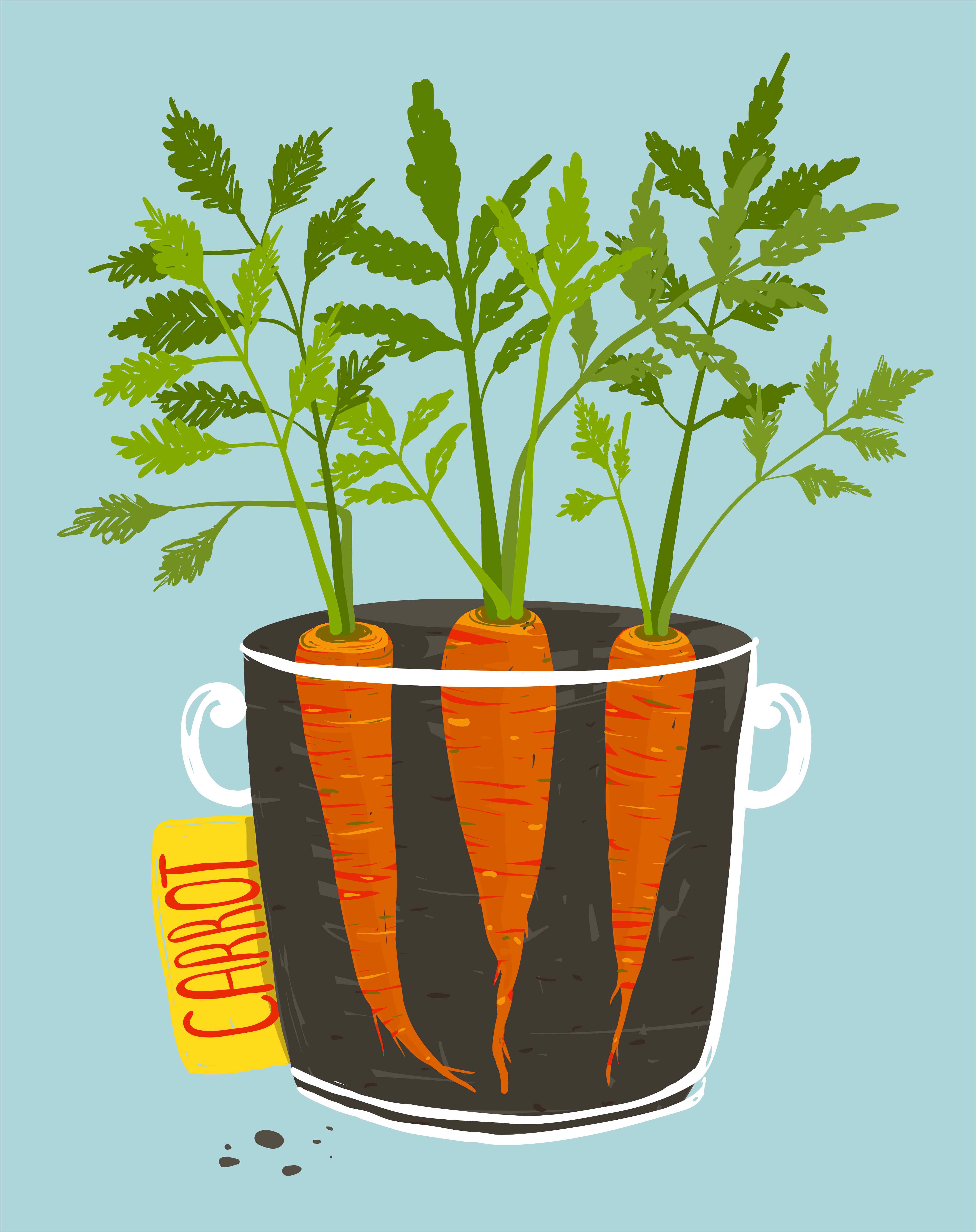
  • Carrots (3-4)
  • Celery (1)
  • Collards (1)
  • Kohlrabi (1)
  • Leeks (1)
  • Lettuce (1-2)
  • Mustard Greens (2)
  • Bunching Onion (2-3)
  • Radish (3-4)
  • Spinach (2)
  • Swiss Chard (1)
  • Turnips (2)

– – – – – – – – – – – – – – – – – – – – – – – – – – – – – – – – – – –

If you’re using a 2-GALLON CONTAINER:

You can plant all the same things as you could using a 1-GALLON CONTAINER with the addition of these larger varieties:

  • Broccoli (1)
  • Cabbage (1)
  • Kale (1)

– – – – – – – – – – – – – – – – – – – – – – – – – – – – – – – – – – –

If you’re using a 3-GALLON CONTAINER:

Try even planting these large varieties:

  • Brussels Sprouts (1)
  • Cauliflower (1)

– – – – – – – – – – – – – – – – – – – – – – – – – – – – – – – – – – –

Note: These varieties listed above are for Fall and Winter gardening.  So keep in mind that all these varieties tolerate the cold weather pretty well.  You don’t want to be planting pepper and tomatoes at this time of the year.  Trust me.  Been there.  Done that.

– – – – – – – – – – – – – – – – – – – – – – – – – – – – – – – – – – –

MORE INFO: Check out Sources for Buying Non-GMO Seeds.  Ordering seeds online is easy to do and you get a  wider selection of things to choose from. Find out more here and see how you can Start Container Gardening and How to Use Self-Watering Containers

– – – – – – – – – – – – – – – – – – – – – – – – – – – – – – – – – – –

No excuses.  You need to be growing at least one thing this season!

Federal Court Overturns EPA Approval of Bee-Killing Pesticide

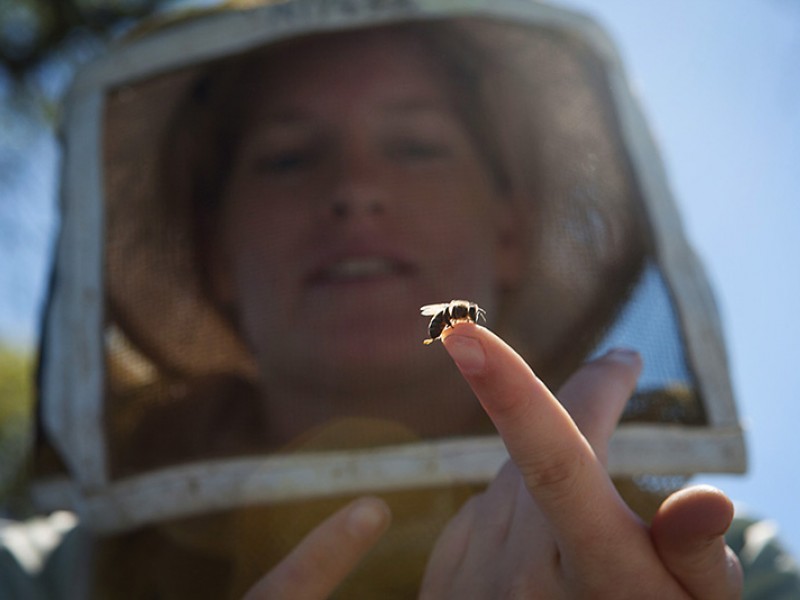
Alyssa Anderson, daughter of a beekeeper, holds a baby bee in a California orchard. Chris Jordan-Bloch / Earthjustice
Alyssa Anderson, daughter of a beekeeper, holds a baby bee in a California orchard.
Chris Jordan-Bloch / Earthjustice

Source: earthjustice.org

San Francisco, CA —

Today, the Ninth Circuit Court of Appeals rejected U.S. EPA’s approval of the neonicotinoid insecticide “sulfoxaflor.” The Court concluded that EPA violated federal law when it approved sulfoxaflor without reliable studies regarding the impact that the insecticide would have on honeybee colonies. The Court vacated EPA’s approval, meaning that sulfoxaflor may not be used in the U.S. unless, and until, EPA obtains the necessary information regarding impacts to honeybees and re-approves the insecticide in accordance with law.

Earthjustice represented a coalition of commercial beekeeping trade groups, as well as individual commercial beekeepers. The coalition included Pollinator Stewardship Council, National Honeybee Advisory Board, American Honey Producers Association, American Beekeeping Federation and beekeepers Jeff Anderson, Rick Smith, and Brett Adee.

Statement from Greg Loarie, our lead counsel on this case: “Our country is facing widespread bee colony collapse, and scientists are pointing to pesticides like sulfoxaflor as the cause. The Court’s decision to overturn approval of this bee-killing pesticide is incredible news for bees, beekeepers and all of us who enjoy the healthy fruits, nuts, and vegetables that rely on bees for pollination.”

Statement from Michele Colopy, Program Director of Pollinator Stewardship Council, Inc.: “The Pollinator Stewardship Council is pleased with the 9th Circuit Court’s Opinion concerning the registration of sulfoxaflor. Our argument, presented by Earthjustice attorney Greg Loarie, addressed our concerns that EPA’s decision process to unconditionally register Sulfoxaflor was based on flawed and limited data, and the 9th Circuit Court agreed with us. We can protect crops from pests and protect honey bees and native pollinators. To do this EPA’s pesticide application and review process must receive substantial scientific evidence as to the benefits of a pesticide, as well as the protection of the environment, especially the protection of pollinators.”

The Court did state Sulfoxaflor is a subclass of neonicotinoids. With the findings in this case, EPA may be encouraged to re-examine other unconditional registrations for possible flawed and limited data.

Read the full article here.

Doctor’s Orders!

Doctor:  I want you to meditate for 20 minutes, twice a day, exercise for at least 30 minutes a day, avoid processed foods, eat plenty of organic fruit and veg, spend more time in nature and less indoors, stop worrying about things you can’t control and ditch you TV.  Come back in 3 weeks.

10616180_820268961346585_1818029167578276714_n

Hive of Industry, a Husband-and-Wife Partnership Living in Portland, OR.

capture-20150909-102941How would you quickly describe yourself to others?

We’re Evan and Judith, a husband-and-wife partnership living in a small house in Portland, Oregon. We are trying to grow and make things and carve out a good life for ourselves that hopefully doesn’t hurt or impede on the lives of those around us in the process. Together we have created a little urban homestead that we love and hope will produce a lot of healthy food for us. Though we each currently maintain fulltime jobs in the city, our goal is to someday work a modest piece of land in order to provide as much as we can for ourselves using our own capabilities, time, and effort.

How did you get started with your blog/Instagram page/etc.? 

We started our blog and Instagram account in June of 2014, about one year after purchasing our home in Portland. Our goal was simply to document our attempt at learning to grow some of our own food and live a more self-reliant lifestyle. We created our blog to join in a global community of homesteaders and their useful and inspiring conversation.

capture-20150909-103217Did you start when you began your transition to live this lifestyle? 

For as long as we can remember, we’ve each been interested in living a slower, simpler existence where we are actively involved in the process of growing and making more of what we need to subsist. When we bought our home, we finally had the space we needed in order to begin doing these things more regularly and, as we worked together to renovate and put infrastructure in place for gardening and homesteading, we realized that we wanted to find a community of like-minded people to exchange ideas with around homesteading and self-reliance. 

Have you always been growing your own food? If not, what sparked your passion? 

We haven’t always grown our own food, but we have both had an individual interest in gardening and farming since we were very young. We both have roots in farming, and each participated in a family garden when we were growing up. As we each have gotten older together, our interest in growing our own food expanded beyond our individual family pastimes to include the environmental, social, health, and philosophical aspects, as well.

capture-20150909-103442Have you ever made mistakes or failed doing something? How did you overcome any obstacles? 

We fail at things all of the time, and we’re beginning to realize that failure goes hand-in-hand with doing more things for oneself. We can’t be experts in everything, or even many things, but homesteading has given us the opportunity to try to do a lot of things on our own. The first time Judith tried to make fermented pickles with our cucumber harvest last year, for example, they turned out to be a mushy mess of mold. When Evan started out trying to construct a simple chicken run for our future hens, it took him over six months and a couple different iterations to finish it. Then there was the time we remodeled our own bathroom, which took us just shy of seven weeks due to some serious trial-and-error and watching of YouTube how-to videos (it really did turn out pretty well, though). We just try to learn from our mistakes and try to make better decisions going forward. 

capture-20150909-103614Have you ever dealt with a person who disregards your lifestyle? 

We haven’t yet, at least not to our knowledge, but we’re prepared to encounter this eventually. Most people are incredibly supportive, and are interested in learning more about growing food and homesteading. One of the reasons we are committed to living as we do is that it doesn’t much threaten or impede on anyone else’s way of life. We know that there are flaws in what we do, and this lifestyle probably won’t appeal to most people, but we aren’t living this way to convince anyone else to do what we’re doing—we’re just living in a way that feels best for us.

What are some of your greatest rewards with a lifestyle such as the one you live?

The greatest reward for us is being connected to our daily life in the most physical and basic sense. Our food tastes better when we watch it grow from seed or forage it in the woods; transportation feels truly remarkable when our bodies are the engine; heat seems hotter when we have to chop the wood and nurture a spark. There is enough detail and beauty in the most fundamental and biological cycles of life to entertain and educate us for a long time.

capture-20150909-103855What tips and tricks would you like to share with other people? 

This is going to be a boring answer, but to be honest, one of the best tips we have for transitioning into a more self-sufficient lifestyle is to keep an overall family budget that everyone agrees upon and that you all consult often. One of the biggest challenges we have faced from the onset in conceptualizing how to live a more self-reliant existence is figuring out how we’re going to support ourselves financially. We want to do more for ourselves, but this requires an investment of money for infrastructure and personal time for labor. We sometimes feel like we’re stuck in an ongoing game of tug-of-war with our day jobs and accomplishing what we need to do around our homestead. We still have a long way to go before we can rely on the homestead to support us in a way that would allow one or both of us to leave our jobs, but having a budget has been critical in moving us in that direction. What we have realized is that homesteading takes a lot of time, but also has the potential to significantly reduce our monthly expenses. As we begin to make the shift away from a system where we work for cash and then trade cash for goods and services, it has become very important for us to understand the resources we have to work with and what we are obligated to pay each month. Once we started to identify (and really think about) what our household expenses are, as well as what we want our lifestyle to look like, the easier it has become to make decisions that are in line with our overall vision.

capture-20150909-104018What are some of the other things you would like to have other people understand about living a healthier and self-sufficient lifestyle?

For as much hard work and planning go into living an intentionally more self-sufficient life, it’s a truly fun and exciting way to exist in the world! We look forward to every evening and weekend, when we can turn our attention back to the simple, basic projects we need to complete to live well. When we’re working on projects around the house and garden, it requires us to employ our intellectual, creative, and physical selves, which truly feels fantastic.

What are your favorite plants to grow in the garden?

We love growing plants that seem to thrive in our space and climate: a wide variety of greens (kale, chard, arugula, lettuces, et cetera), carrots, beets, peas, beans, and all sorts of summer and winter squashes. We’re also very excited to be growing many different kinds of herbs and flowers, which add color, texture, and aroma to our garden. We’re studying the value of pollinators, too, and love adding new plants that will attract them to our yard. Someday soon we want to take a class or classes about soil science, as well, to more fully understand the value of good dirt.

Links:

Hive of Industry Blog / hiveofindustryblog.com

Hive of Industry on Instagram (@hiveofindustry) / instagram.com/hiveofindustry

Hive of Industry on Tumbler / hiveofindustryblog.tumblr.com

Stockton Urban Garden Provides Fresh Produce In Poor Communities

ImageGenThis post is originally from capradio.org

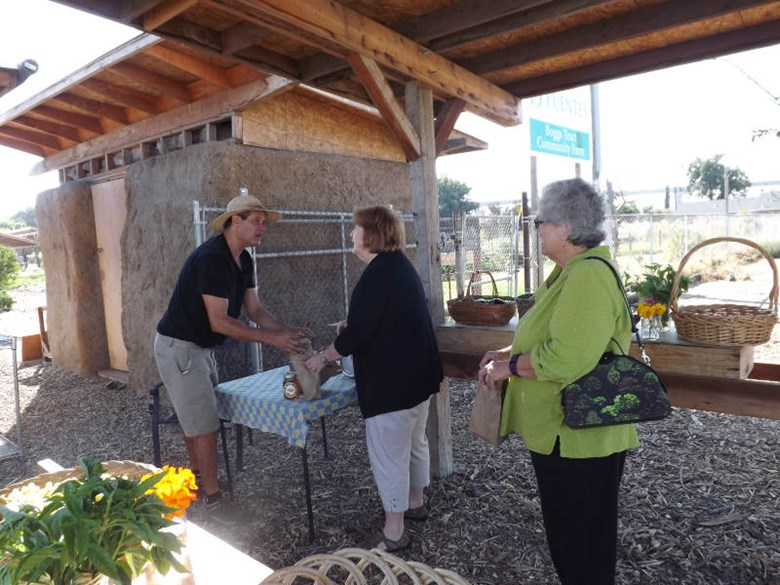
An urban farm in Stockton may serve as a model for the Central Valley. The non-profit group “Puentes” built the Boggs Tract Community Garden on a three-acre plot in a poor neighborhood where garbage had piled up for years.

Puentes Director Jeremy Terhune says the organic garden allows more than two dozen families to farm their own 20-by-20 foot plots with seed, water, and compost provided to them.

At a fruit stand on the Boggs Tract Community Garden, Sally Edmonds buys fresh organically grown produce.

“I bought some tomatoes and some zucchini,” says Edmonds.

Puentes leases the land for a dollar a year from the Port of Stockton.

Puentes Director Jeremy Terhune says the community garden gives people everything they need to grow their own food.

“Each family gets a 20-by-20 foot garden plot, and we give them all the free organic compost they can use, free water, seeds, training and everything they grow in the plot is theirs to do with as they wish.”

Jesse Hughes, a volunteer, is chopping down weeds on his garden plot. Hughes says he shares what he grows.

“You find joy and peace when you able to help and reach out and touch others in the community that’s sometime less fortunate because sometimes it’s very hard to even put food on the table.”

Volunteers are building an outdoor kitchen, and raising produce for home delivery.

Across the street another three-acre plot will become the next urban farm.

Puentes hopes to develop urban gardens in other cities as funding becomes available.

Read the entire post here: http://www.capradio.org/articles/2015/08/27/stockton-urban-garden-nonprofit-provides-fresh-produce-in-poor-communities/

Do you believe that diseases can heal with the correct diet and absolutely no medication?

FoodIsYourMedicineNotPillsEatRightToBeHealthyThis post was found originally from vegfriend.com

Not just a few, but all diseases can heal with the correct diet and absolutely no medication. Your body is capable of handling and recovering from any ailment provided you give it the appropriate terrain to heal. Supplements may at times be beneficial, but your true medicine is food and always has been.

The next time your blood pressure shoots up, remember that your body is capable of controlling it without a trip to the GP. Dr Nandita Shah, a  homeopath, says simple dietary changes can help prevent, and more importantly reverse, ailments like osteoporosis, diabetes and even high blood pressure without popping pills.

Shah, who has been a homeopathic practitioner for 30 years, says the biggest hurdle most of us encounter is that we fail to understand our body. “If you put kerosene in a car that runs on petrol, the car will break down,” Shah says, adding that the human body functions better if it consumes foods that are a better fit.

She offers an instance. Our body is mostly alkaline, she explains. A pH (potential Hydrogen) level between 1 and 6.9 is considered acidic, while one between 7.1 and 14 is marked alkaline. The human body’s natural pH level stands at 7.45, making it alkaline. All fruits and vegetables, natural juices like coconut water are alkaline, which make them a better nutrition fit than say animal proteins, tea, coffee, sugar, alcohol, and packaged foods that have high acidic levels. An imbalance in pH levels, says Shah, can lead to a disruption in cellular activity, causing health problems that range from heartburn to heart disease.

Nutrients in foods do not work alone in isolation, instead they work together as a powerhouse team in what’s called synergy. We’re often so focused on single nutrients like vitamin c and calcium, that we don’t consider that maybe it’s how these nutrients work with one another that make them so great.

The Journal of Nutrition in 2004 conducted a study on rats that were fed tomatoes and broccoli. Prostate tumors grew less in rats fed a combination of tomatoes and broccoli versus rats who were fed tomatoes and broccoli on its own. They even isolated and removed the cancer fighting substances found in tomatoes and broccoli and fed them to the rats, but they were ineffective. The point I’m trying to make is, a lycopene (the potent nutrient in tomatoes) supplement might be useful, but the whole tomato is better, and that tomato with a bit of fat is even better, but that tomato with a bit of fat and some broccoli is so much better. Why exactly? Scientists are still unsure but it’s all attributed to food synergy.

Eat Right To Be Healthy

Osteoporosis cause: Calcium deficiency is not the cause of this condition. It’s a diet that’s either very rich in acidic foods or high in protein. Proteins are broken down into amino acids which are acid yeilding. And so, consuming large amounts of animal protein results in the body extracting calcium from the bones to neutralise the effect of acids. When the lost calcium is not restored, it causes osteoporosis over a period of time.

Food solution: Eat foods rich in vitamin D (it helps the body absorb calcium from foods), eliminate acidic foods like colas and caffeine. Include more fruits and vegetables in your meals. Green leafy veggies are rich in Vitamin K, and help rebuild bones.

Diabetes cause: Sugar is not the cause of diabetes, rather high blood sugar is the result of diabetes. The real cause of type 2 diabetes is the presence of fats in muscle cells. Beta cells present in the pancreas monitor the bloodstream for glucose. When blood sugar levels rise after meals, the beta cells respond by secreting insulin. Insulin helps in the further absorption of glucose. Consumption of unhealthy fats causes beta cells to lose their ability to sense glucose in the blood, allowing blood sugar to rise unnaturally.

Food solution: Avoid unhealthy fats found in fried foods, packaged foods, butter, meat, whole fat dairy products, and most vegetable oils. Any fat that comes with fibre is good for you. Think peanuts, cashew, and sunflower, sesame and pumpkin seeds.

Acne cause: Eating processed foods increases the body’s insulin levels, causing skin inflammation and breakouts. An imbalance of Omega-3 fats in the diet can also aggravate acne. Omega-3 fats are known to counter the effect of inflammatory chemicals that lead to breakouts.

Food solution: Have a diet that’s low on sugar and rich in whole grains, fibre, fruits and vegetables. It will balance the body’s insulin levels. Go for Omega-3 rich walnuts, flaxseeds, spinach and strawberries. Avoid fried and greasy foods.

High blood pressure cause: Blood pressure is the force ex- erted against the walls of the arteries as blood flows through them. If a person has high blood pressure, it means that the walls of the arteries are receiving too much pressure repeatedly. Consumption of unhealthy fats leads to a build up of cholesterol deposits along the artery walls, thinning the passage for blood flow, and thereby adding to the pressure.

Food solution: Adopt a two-pronged approach — stay away from unhealthy fats found in fried and packaged foods, and boost the intake of potassium, a mineral that reduces the effect of sodium on blood pressure levels. Mushrooms, bananas, dark green leafy vegetables, sweet potatoes, oranges and dates are high in potassium.

Asthma cause: Asthma is an allergic response of the body to a substance, such as foreign dust particles or foods that cause swelling or inflammation of the airways. High levels of histamine, a chemical messenger that helps direct the body’s response to a foreign invader, have been found to inflammate respiratory airways.

Food solution: Although no diet can guarantee the reversal of asthma, avoiding foods that up histamine levels can help control it. These include: alcohol, vinegar, ketchup, confectionary made with yeast, sour cream and fermented and processed foods.

This post is continued here … http://www.vegfriend.com/profiles/blogs/food-is-your-medicine-not-pills-eat-right-to-be-healthy