Bus Converted into Mobile Food Market Brings Fresh Produce To Low-Income Neighbourhoods

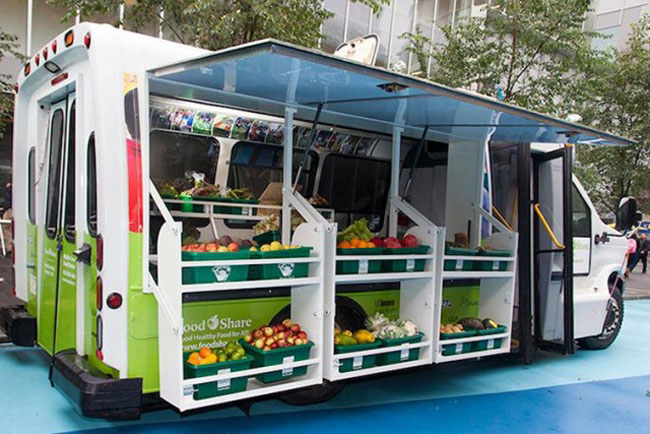
1Much of the population that lives in urban areas isn’t able to maintain a diet that consists of a lot of fresh vegetables, herbs or fruit.  Money seems to play the number one factor for this, because fresh vegetables and fruits can be expensive in these areas.  The Mobile Good Food Market is changing this, by bringing more fresh produce into these areas without the consumer needing to travel.
“Thanks to a collaboration between FoodShare Toronto ,the City of Toronto, and United Way Toronto, an old bus was converted into what is a mobile food market. Everything from broccoli and lettuce, to apples and onions or other fruits and vegetables are available when the bus comes to town, twice per week. The price isn’t that much lower, because they have to take care of the costs involved by the bus, but all in all, the idea behind such a conversion is easy to praise and be impressed by.”

You can find more details in a video here: “OffGridQuest.com

Farming Instead of Recess: More Schools Launch Garden Programs to Plant Seeds of Learning

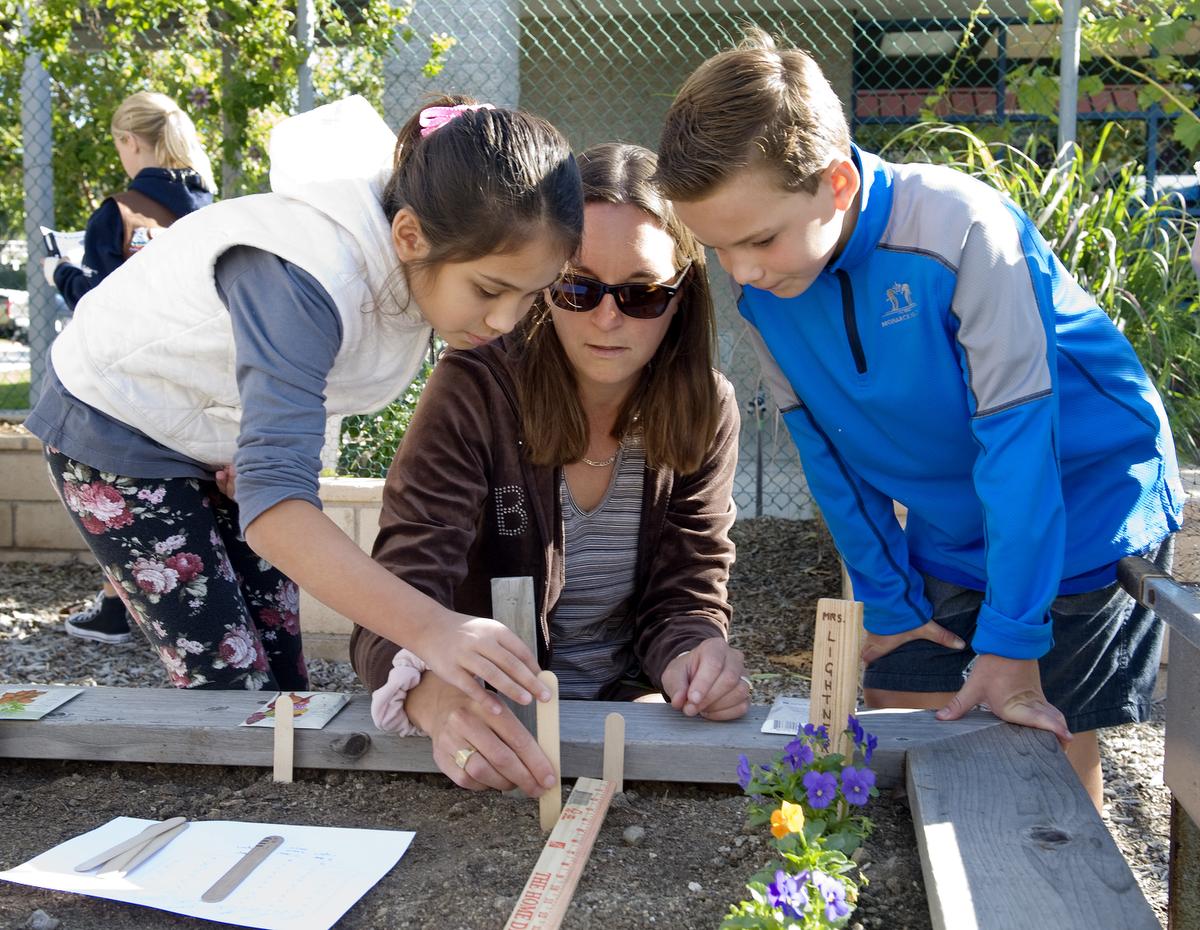
Adult Volunteer Celine Belotti (center) assists Ava Foote in and Lucas Aga in planting vegetables at the Ecology Center at Malcolm Elementary School in Laguna Niguel. //////// Additional Information  ocfamily.garden 11/12/15 Photo by Nick Koon / Staff Photographer.  The Ecology Center at Malcolm Elementary school trains teachers and volunteers on gardening so they can then teach students on how to start and maintain a garden.
Adult Volunteer Celine Belotti (center) assists Ava Foote in and Lucas Aga in planting vegetables at the Ecology Center at Malcolm Elementary School in Laguna Niguel.
Additional Information ocfamily.garden 11/12/15 Photo by Nick Koon / Staff Photographer. The Ecology Center at Malcolm Elementary school trains teachers and volunteers on gardening so they can then teach students on how to start and maintain a garden.

Several days a week, at Malcom Elementary School, kids anxiously wait to skip their recess during lunch hour. Instead of playing on the playground, children line up outside of the school’s garden.  The children work on starting vegetables and herbs from seed, and learn techniques for transplanting and thinning seedlings.  They also participate in activities like scavenger hunts that are centered around botany.

“Since 2012, the Grow Your Own! program has expanded to serve 30 area schools, and now receives more applications than it can accept. The Ecology Center consults with schools about garden design and provides guidance about what to plant. The organization also offers curriculum development and ongoing training for teachers and garden volunteers.”

Read the rest of the article at: “OCregister.com


17 Hacks for Your Vegetable Garden

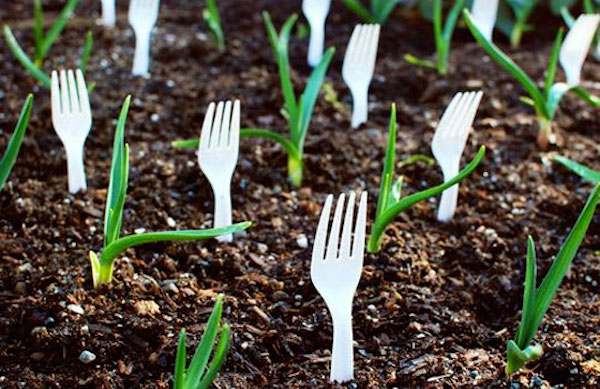
Forks-in-Garden

Everyone loves simple and genius ways to save time in the garden. Over at OneLittleProject, they’ve outlined 17 Clever Vegetable Gardening Hacks that will save you time, money and headache in the garden.

To get you excited, here’s just a handful of those tips!

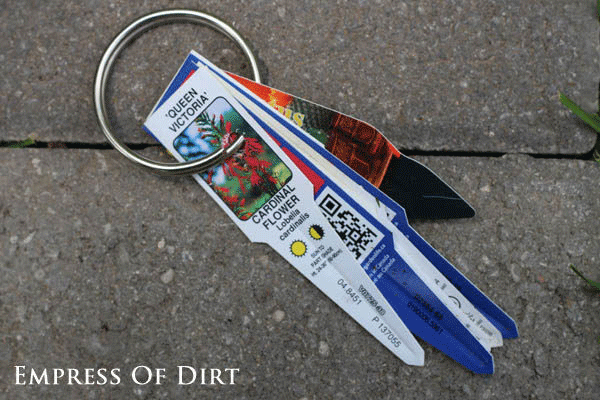
12PLantLabelKeyringKeep Those Instructions Handy

You know those plant tags you throw into the shed because you know you should save them, but you aren’t exactly sure what to do with them?   Put them on a key ring to keep them organized!”

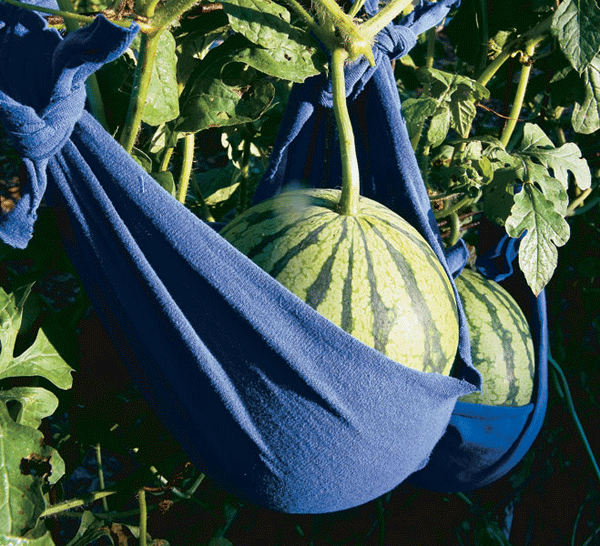
13WatermelonSlingPut Those Melons in a Sling

“The bigger and heavier melons get as they grow, the more likely they are to break from the vine before they are ripe. Give them a bit of support by making a sling out of an old t-shirt to reduce the strain on the vine.”

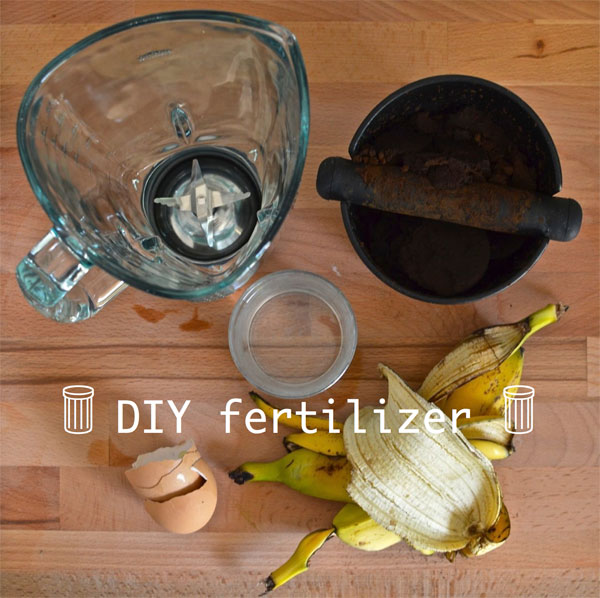
DIY-FertilizerMake your Own Fertilizer with Kitchen Scraps

Let’s face it, composting isn’t for everyone. But, guess what?  You can still make your own compost in small quantities from kitchen scraps.   Get the step-by-step directions here.

Read the other 14 amazing gardening hacks, here at: “OneLittleProject.com

Urban Farming in Long Forgotten Tunnels Below London

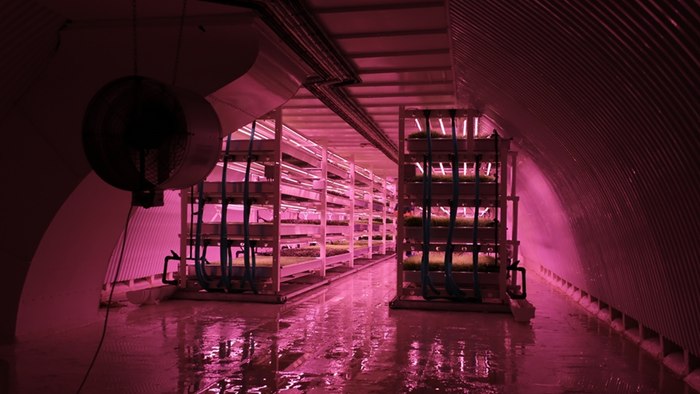
uogIn the tunnels below London, you’ll find an abandoned bomb shelter that was once able to accommodate around 8,000 people.  These days, it provides a controllable environment ideal for growing crops underground. Their aim is to provide produce with zero effects on the environment.  The site is located just two miles from city center and promises “farm to fork in less than four hours”.

“The location allows for all year round urban farming, as it’s unaffected by weather and seasonal changes. It is a pesticide-free environment and the hydroponics system employed is said to use 70 percent less water than traditional open-field farming. Likewise, the lighting and irrigation systems mean the crops can be grown with very little energy. What energy is used is sourced only from green suppliers.”

Read more of the original article at “gizmag.com

City Mulls Urban Garden Plan For Vacant Lots in San Diego

51642751

San Diego is moving in the right direction! Newly proposed was an incentive for owners of vacant or unsightly properties if they would set aside the land for gardening.

“Under the Urban Agriculture Incentive Zone program, property owners would be allowed to enter into contracts at least five years long with the city and county of San Diego to allow their vacant, unimproved or blighted land to be used for agricultural uses, like community gardens.”

Some of the requirements would be that each property size would need to be at least 1/10 of an acre and no more than three acres.  No zoning changes would need to be made.

“A landowner would benefit in return when a piece of property is assessed using the per-acre value of irrigated cropland in California.

The county of San Diego is developing its own ordinance since the county assesses properties. The incentive program was authorized by the state Legislature in January 2014.”

The original article can be found at: “Fox5SanDiego.com

Farms in The Sky: Fewer Food Miles, Less Waste, More Jobs

chrome_2016-01-19_15-27-39

Urban farming on city rooftops is gaining popularity, and for many reasons. Everyone wants to consume food that is produced closer to home.

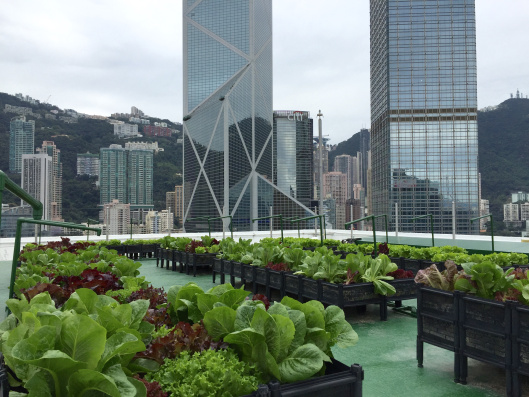
Space limitations in a city such as Hong Kong make rooftop farming an attractive option for growers. Farming on the rooftop has numerous social, economic and environmental benefits. A HKU paper examining green roofs concluded that:

“Apart from enhancing the city landscape and environment, mitigating the urban heat island effect and improving air quality, green roofs can improve the micro-climate and increase the life span of waterproof and insulation facilities on the roof. Consequently, roof greening with a sufficiently large scale is conducive to energy conservation and life cycle cost saving for the urban city.

gogreen1

Green roofs can help reduce three of the four top problems facing society in the next 50 years: energy, water, and environment. In this way, the green roof technology has a potential to improve the quality of population health and welfare in urban areas with dramatically reduced vegetation.”

Read the entire article at: “HongKongfp.com

9 of The Best Vegetables To Grow In Small Gardens

Gardening in small space can be just as rewarding and fun as growing in a large garden area.  These days, urban gardeners are growing more of their own food in sometimes less than 100 square feet.  Balconies, patios, even indoor windowsills are a great place to grow vegetables and herbs.  Almost anything can be grown in a container, and if you’re wanting to know what you should plant to maximize your yield in a small area, here are 9 of the best vegetables/herbs to grow in a small garden.

1. Shallots:

Space shallots approx. 4-6 inches apart with the rows 18 inches apart. Plant the bulb root side down, the top of the bulb 1 inch below the surface. Planting too deep grows elongated bulbs that don’t store well.

2. Carrots:

Sow seeds evenly in a very shallow trench, about 1/4 inch deep. Keep seeds moist so they will germinate. Space rows about 12″ apart and when the first leaves emerge, thin to 1″ apart; when true leaves emerge, thin to 3″ apart.

3. Cherry Tomatoes:

To start tomatoes indoors, sow seeds using expanding seed starting soil pods about 8 weeks before the last frost date for your area. Seedlings will be spindly with less than 12-14 hours of light per day, try to keep them in a warm sunny location. When seedlings have 4 leaves, transfer to a deeper pot (3-4″) and again when 8-10 inches tall. Each time, place the uppermost leaves just above the soil line and remove all lower leaves. Transplant into the garden when the stem above the soil has reached 8-10 inches tall. Be sure to harden them off before transplanting them outdoors. Allow up to 10 days for the tomato plants to harden off to the outside temperature fluctuations.

4. Runner Beans:

Set three 6 foot poles in the ground, tepee fashion, and tie together at the top. Leave 3 to 4 feet between the pole groups. Make a hill at the base of each pole, enriched with compost or well-rotted manure, and plant 6-8 seeds in each. After the second pair of true leaves appear, thin to 3 plants per pole. With regular harvesting, the pole beans should bear all summer.

5. Garlic:

Break apart cloves from bulb but keep the papery husk on each individual clove.
Ensure soil is well-drained with plenty of organic matter. Plant in Full Sun.
Plant 4 inches apart & 2 inches deep, in their upright position (the wide end down and pointed end facing up). Come springtime, shoots will begin to emerge.

6. Kale:

Plant Kale in rows 18 inches to 2 feet apart. When the seedlings are 3 or more inches high, thin plants to 10 inches apart and use the thinnings for salads or as a cooked vegetable.

7. Basil:

Try to space your basil plants about 12 inches apart. As long as you harvest the leaves when they are young, basil plants make a wonderful container crop.

8. Lettuce:

Seed should be sown thinly in rows 1 foot apart; for leaf types, thin plants to 2-3 inches apart, then thin again by pulling every other plant when half grown. This will encourage thickly developed plants. For head, Bibb, and cos types, space rows 18 inches apart, plants 8-10 inches apart. Closer spacing results in smaller heads, which may be preferable for small families.

9. Beets:

Sow seed 1/2 inch deep in rows 12-18 inches apart. The beet seed is a compact ball of many tiny seeds. Many plants germinate where each seed is sown, so seed should be placed sparingly. When seedlings are 4-6 inches high, thin plants to stand 1 1/2 inches apart. (They can be used in salad or cooked as spinach.) Then, as these beets grow to about an inch in diameter, pull every other one to allow larger beets to grow.

Original post can be found at: “SeedsNow.com

The Impacts of Increased Urban Farming in Phoenix

capture-20160125-221322

Arizona State University is tackling big questions as to what would some of the impacts be if urban farming continues to increase.  What would Phoenix look like if more of the vacant or empty lots were transformed into community, urban farms?  Would it mean that more locally grown food would be available to those who live near the farms?

“Arizona State University is taking the lead on a collaborative national project to answer questions like these. Researchers in the university are developing a physics-based model utilizing weather and farming data to predict environmental, economic and socio-economic impacts of increased urban agriculture.”

“For example, the team will study what would happen if vacant lands around the Phoenix metropolitan area were converted to farms. The model will be able to take a future map of the city expansion and samplings based on current densities, and use that data to predict a future city scenario. Bringing food closer to consumers with less shipping means fresher, more nutritious food available at lower cost.”

To read the full article, visit: “asunow.asu.edu

40 Smart Space Savvy Garden Ideas

For those who have a desire to garden but are lacking square footage, here are 40 awesome ways you can garden in small spaces! Most of these ideas use repurposed items that you might already have.

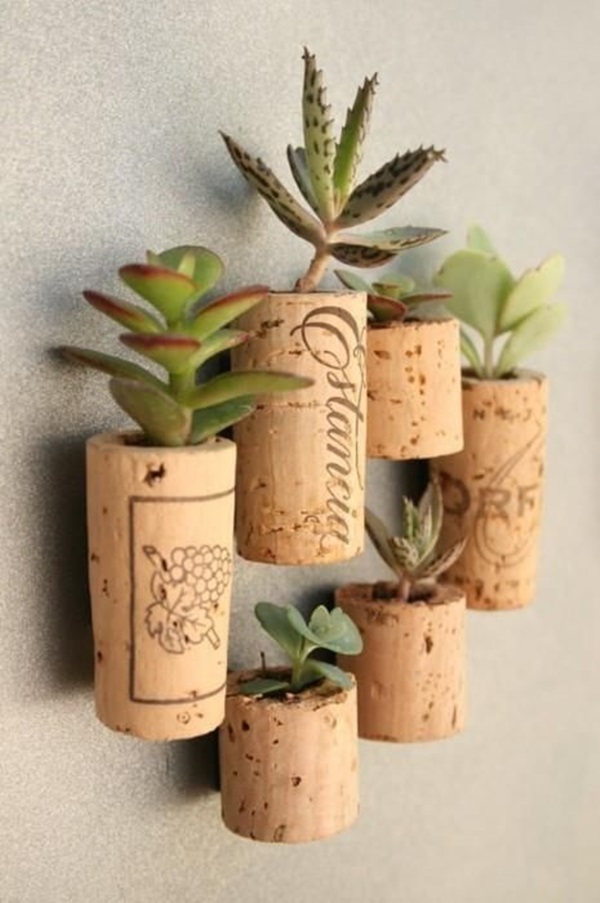
1. Grow succulents on top of wine bottle corks that have magnets secured to the back. Smart-space-Savy-Garden-Ideas-10

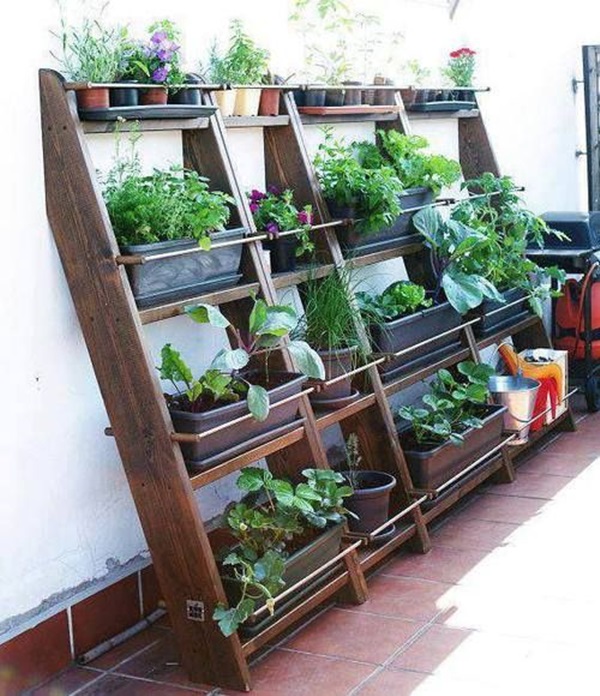
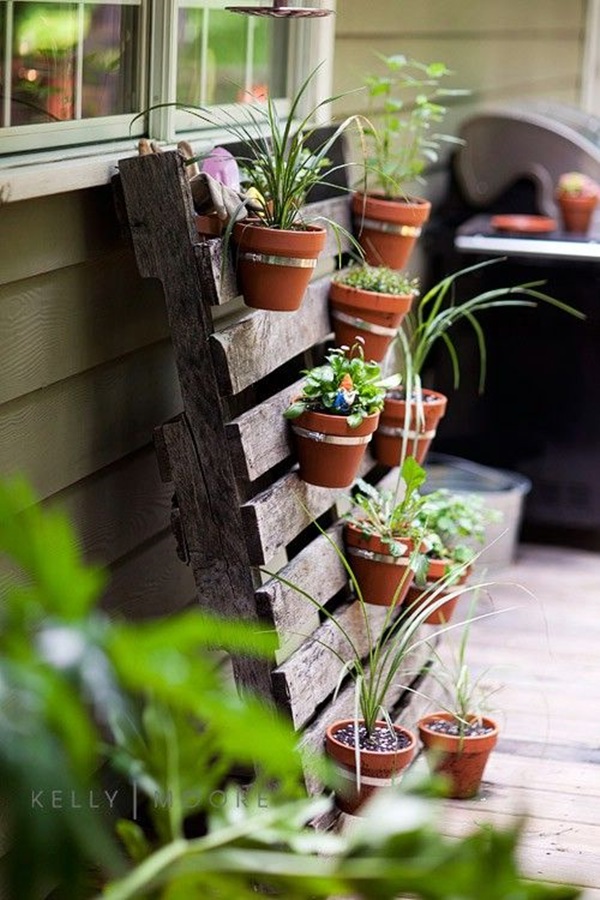
2. Use pallets to grow vertically. Especially useful on decks, patios and balconies. 
Smart-space-Savy-Garden-Ideas-18

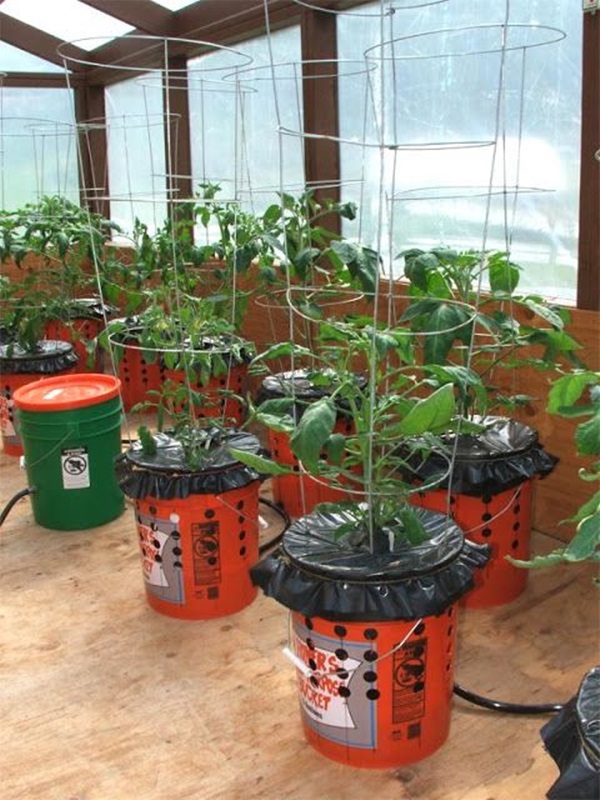
3. Try growing in a “Dutch Bucket” hydroponic system. Smart-space-Savy-Garden-Ideas-9
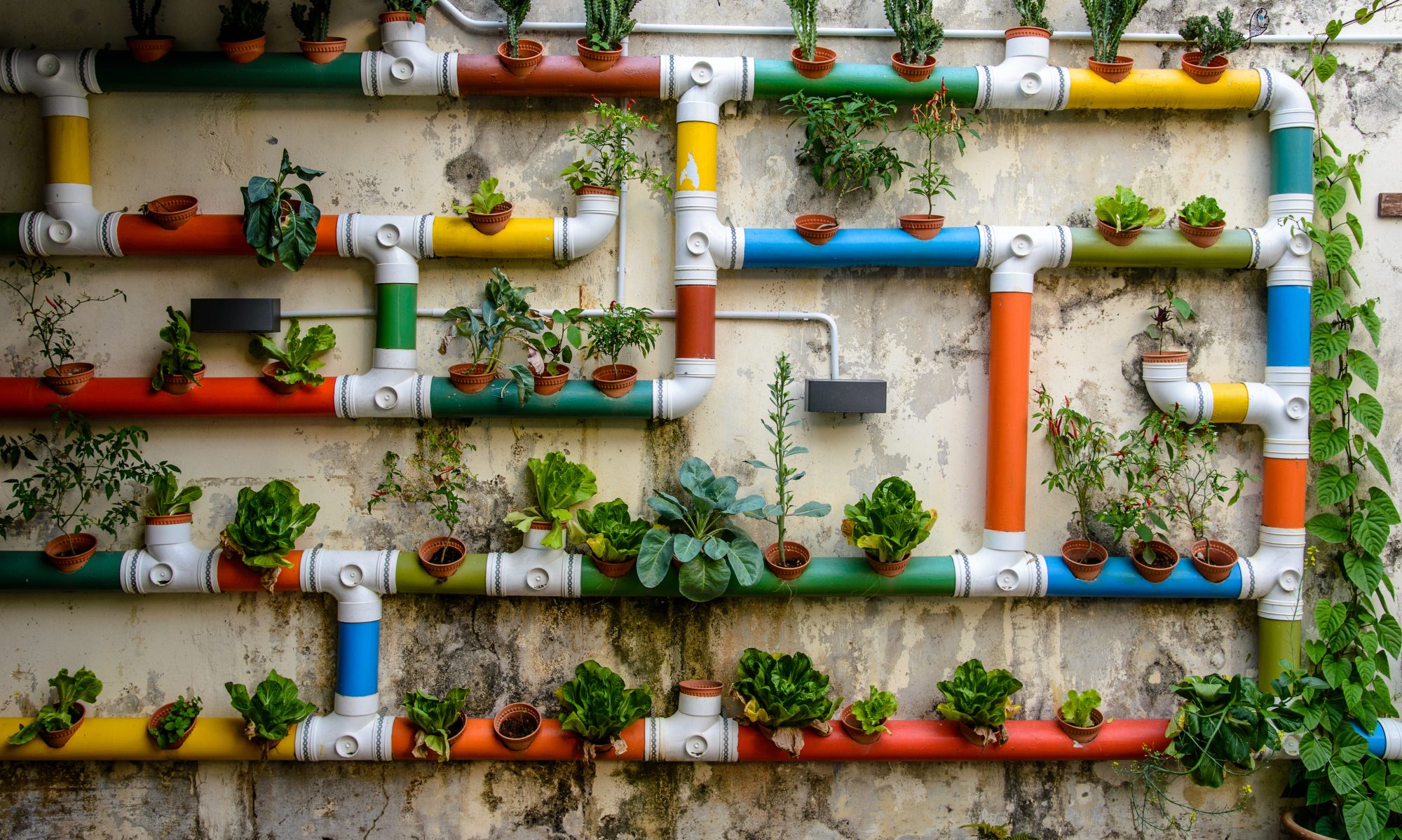
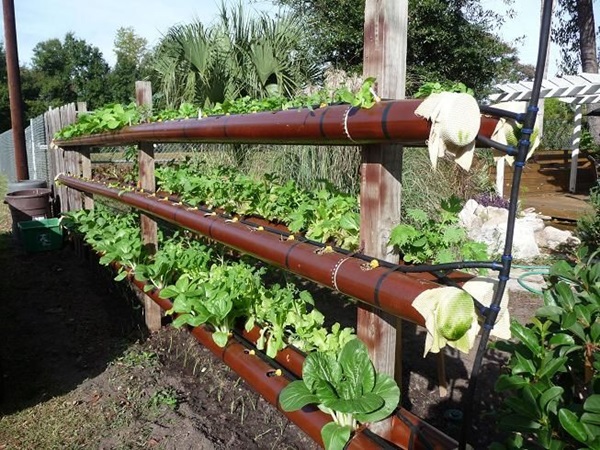
4. Create a vertical hydroponic system using repurposed pipes. Smart-space-Savy-Garden-Ideas-7
Visit the original article at “art.ekstrax.com” to view more Smart Space Savy Garden Ideas.


Follow Urban Organic Gardener’s board Small Space Gardening Ideas on Pinterest.

San Francisco Restaurant the Perennial is Facing Climate Change Head-On

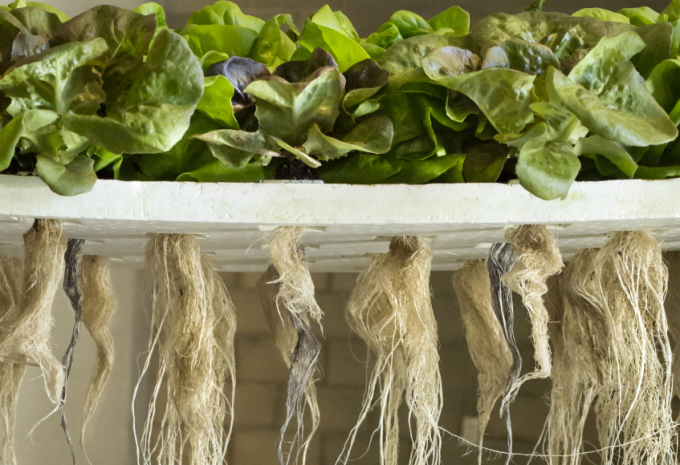
Aquaponic-roots-e1415150086463-680x465Today, all over the United States, chefs and restaurants have figured out a way to keep where their food sources more local. This means they could be growing their own tomatoes on a rooftop or even sourcing food from some of their customers backyard gardens.

“The Perennial, a soon-to-open San Francisco eatery, plans to take the business of local sourcing several steps further. Many of the greens and herbs the restaurant serves will be grown in a closed-loop aquaponic system based across the Bay in Oakland. And when chef Chris Kiyuna wants to serve say, some sorrel or sprigs of purple basil, he’ll be able to harvest them from the “living pantry”–an area of the restaurant where the greens will float until just moments before they’re served.”

“The living pantry is meant to spark conversation about the many connections between food and climate change–as will many other elements of the restaurant Eater SF has called “mega-sustainable.” Leibowitz says she and Myint were inspired to focus on the topic after hearing that greenhouse gas emissions from the farms and fisheries could increase by 30 percent by 2050.”

To read the full article, visit: “CivilEats.com

How to Plant Tomatoes the Right Way

Once you have started your favorite tomato varieties by seed, and the garden soil outside reaches at least 50-60 degrees F at night, you’ll be ready to transplant your young tomato plants into your garden.
If you want to ensure healthy tomato plants, there are a few steps you’ll want to take when planting them into the ground.

  • Instead of digging a “hole”, aim for more of a “trench”.  Make it about a foot long in length.
  • Loosen the soil.
  • Amend the soil with compost.
  • Add a little “slow-release” fertilizer into the trench as well.
  • Remove the leaves and branches along the stem, leaving several of the ones at the top of the plant.
  • Lay your tomato plant horizontally into the trench and position the top of the plant upwards, gently.
  • Fill in the trench with soil, leaving the top of your tomato plant sticking up out of the ground with several healthy leaves.  The stem of the plant should mostly be under the soil if you’ve followed these steps correctly.
By using this method of planting your tomato plants, you’ll encourage more roots to grow along the entire length of the stem, below the surface of the soil.  The end game will be a stronger, more vigorous and overall healthier tomato plant.

Original article can be found at: “SeedsNow.com

Urban Farming is Booming, But What Does It Really Yield?

skygardenLondon

Did you know that in Philadelphia alone their 226 community and squatter gardens grew about 2 million pounds of vegetables and herbs back in 2008? Or how about Brooklyn’s “Added-Value Farm“, which is just shy of 3 acres and grows nearly 40,000 pounds of fresh fruit and vegetables for the nearby low-income neighborhoods. Don’t forget about what they’re doing over in Camden, New Jersey! Their city of about 80,000 people have about 44 different gardens throughout the community and harvest roughly 30,000 pounds of vegetables during their summers.  “That’s enough food during the growing season to feed 508 people three servings a day.”

Young farmers across the United States are popping up in increasing numbers. Their desire to grow healthy and “local” produce for themselves and their community is what drives them.

“The Food and Agriculture Organization of the United Nations reports that 800 million people worldwide grow vegetables or fruits or raise animals in cities, producing what the Worldwatch Institute reports to be an astonishing 15 to 20 percent of the world’s food. In developing nations, city dwellers farm for subsistence, but in the United States, urban ag is more often driven by capitalism or ideology. The U.S. Department of Agriculture doesn’t track numbers of city farmers, but based on demand for its programs that fund education and infrastructure in support of urban-ag projects, and on surveys of urban ag in select cities, it affirms that business is booming. How far—and in what direction—can this trend go? What portion of a city’s food can local farmers grow, at what price, and who will be privileged to eat it? And can such projects make a meaningful contribution to food security in an increasingly crowded world?”

To read the rest of the article, visit: “PolicyInnovations.org

Truck Farm, a Wicked Delicate Film & Food Project

truck-farmImage source: “Well+Good.com

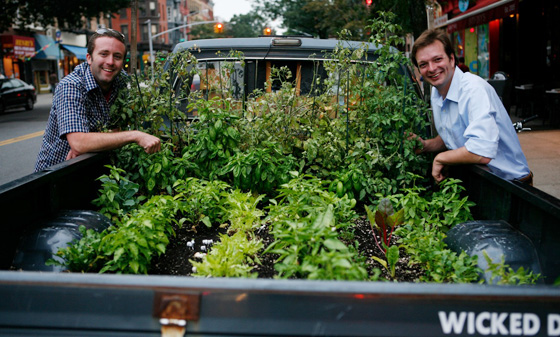
Fun and quirky urban farmers tell their story about how they planted vegetables and herbs in the back of a truck’s pick-up bed and literally drove around one of America’s largest cities.

“The design and installation of the Truck Farm was simple, and took less than a day once materials had been collected, all for less than $200. Victoria Foraker of Alive Structures donated the green roof materials for the bed, with PaulMankiewicz of the Gaia Institute providing the lightweight soil necessary for keeping the truck from buckling under a heavy load.”  They ordered their heirloom seeds and once planted, they germinated within a few days.

“A time-lapse camera, powered by a small solar panel atop the truck’s cab, captured the progress of the plantings every 5 minutes, thanks to the clever gadgetry of physicist Dan Larsen. Once the seeds started to grow, Ian moved the Truck Farm to find shade on hot days, to borrow a bit of water from the hose spigot of the Italian restaurant down the block, and of course to dodge the street cleaners on Mondays and Fridays.”

To read more about America’s first “Truck Farm”, visit the original article at: “TruckFarm.org

Underwater Farms Are Growing Basil, Strawberries and Lettuce

41946a6a-2024-4583-b322-fb1b372337a2-620x372

Off the coast of northwest Italy a group called the Ocean Reef Group along with a team of agricultural experts are installing ballon like mini greenhouses under the sea. Inside they are growing things like basil, strawberries, cabbage and beans.  They currently have 7 pods which can each hold around 22 potted plants.

319015ac-9f31-4362-add4-4deefaea4e2a-bestSizeAvailable
“Unlike underground hydroponic systems and greenhouses, which rely on various heating and cooling systems and LED lights to regulate the temperature, submersion in seawater offers a stable temperature while avoiding exposure to extreme weather conditions on land. When it comes to sunlight, studies have shown that a majority of plants – although not seaweed – are dependent on the red spectrum in light for physiological development; the red can filter out at depths of around five to 15m. To address this, the pods are submerged five to eight metres below the surface; they could potentially go deeper but more data is needed to work out the viability of this.”


You can read the full article at: “TheGuardian.com

The Homeless Garden Project Helps People Find The Tools They Need to Build a Home in the World.

10603663_10153765726467521_7141662828457441159_nSource: facebook.com/HomelessGardenProject

In the Homeless Garden Project, in Santa Cruz, trainees are able to learn about transitional employment in a structured environment. They also are learning basic life skills that are required for employment, while learning a variety of other marketable skills.   While volunteering in the gardens, they receive 4 hot meals a week prepared by other trainees and staff members.   The opportunity is there for giving back to the community by growing food for other numerous homeless and needy populations. The Homeless Garden Project currently grows organic fruit, flowers and vegetables for their community by hosting a CSA program.

Why do they do it? 
“Homelessness and joblessness go hand in hand. Lack of job skills, recent work history, social support network and low self esteem all make the transition out of homelessness more difficult. The integrated approach of the Homeless Garden Project’s programs addresses all of these needs.”

Learn more about this project at:www.homelessgardenproject.org


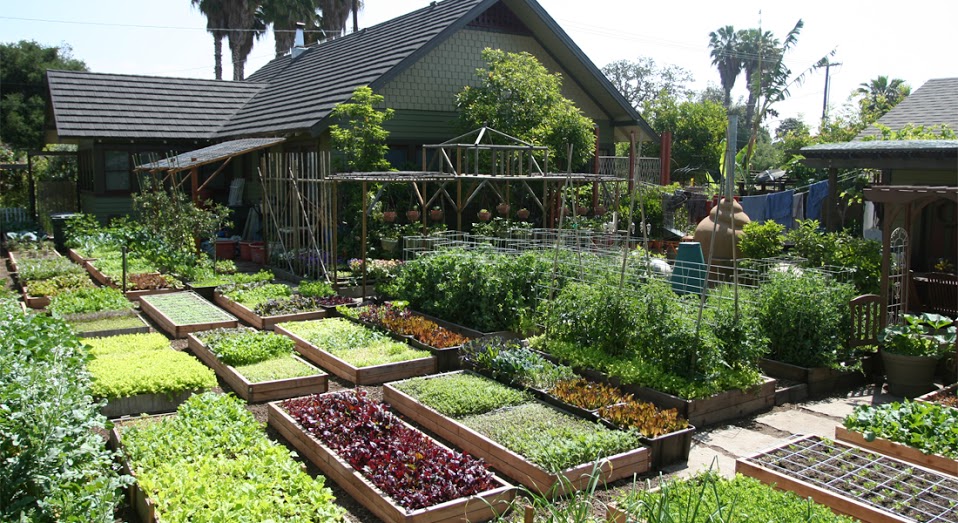
Visit The Dervaes’ Urban Homestead, Pasadena, California

“Growing one’s own food in urban areas can seem like a far-fetched idea. But not for one Pasadena family.

The Dervaes family has been growing their own food for more than a decade. They’ve been at the forefront of urban homesteading by growing thousands of pounds of food annually in an average-size backyard.

“I brought the country to the city rather than having to go out to the country,” said Jules Dervaes, the man behind the self-sufficient farm he created with his three adult children.

The Dervaes’ Urban Homestead is sustainable and dense. They grow and raise 400 varieties of vegetables, fruits, and edible flowers that amount to about 6,000 pounds of food a year, enough to feed the family with surplus left over to sell. Fresh eggs from chickens round out their diet.

The family-owned city farm is the talk of the town for many local chefs looking to cook up a tasty meal. The family makes roughly $20,000 just from selling their freshly grown produce. They use the money to buy staples that they can’t grow like wheat, rice, and oats.

Reporter Val Zavala visits the Dervaes’ homestead to find out what inspired Jules Dervaes to go green in the extreme.”

Gardening Guru is Getting Children Hooked on the Joys of Gardening

capture-20160115-210411

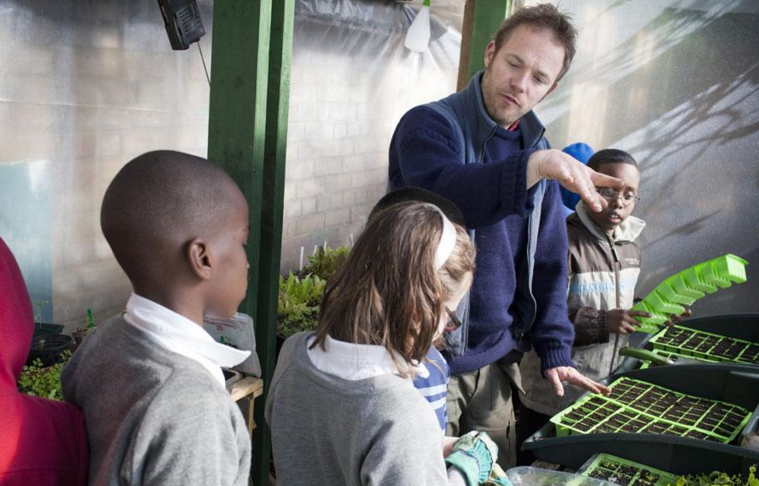
One man, Tom Moggach, is teaching children all about the joys of gardening from a small urban garden located at a London school. They have several raised beds, and the school even built a polythene-covered greenhouse.  At this school, every Wednesday, the children get to spend time in this garden growing vegetables and herbs and for those really interested there’s even an after school program.

“It’s all about the power and potential of outdoor learning,” he says. “And eating.” This year they have plans to build a compost pile as well.  400 children in the school have the experience of growing their own food.

To learn more about this gardening guru, you can read the full article at: “TheIndependent.co.uk

DIY: Landscaping Your Yard with Edibles

920x920

If you’re looking to landscape your yard why not landscape with edibles? These edible plants will not only provide you beautiful surroundings to look at, but some healthy and nutritious food to eat.  These days a lot of people are finding ways to put their yard to work for them by planting edible trees, shrubs, and vines which will provide their family with edibles year-round.

Before you go laying all new sod or traditional hedges/bushes think outside the “norm” by focusing on herbs, vegetables, edible vines and ground covers, maybe even some fruit trees.

Try planting in a wheelbarrow.

“What you plant depends on the depth of the wheel barrow. Carrots may not work because they need plenty of soil to grow in. But shallow-growing greens such as Swiss chard as well as strawberries and most herbs, including thyme and basil, should all be right at home in a wheelbarrow garden.

Finally, before filling it with dirt, drill several drainage holes in the bottom of the wheelbarrow to help keep the soil from getting — and staying — too wet.”

Try herbs as borders.

“Consider planting herbs such as bay or rosemary instead. Not only will they provide a year-round screen, thrive in full sun and require little water or other maintenance once established, but you can use the leaves while cooking.”

Try planting veggies in the front yard.

“For example, ornamental sweet potato vines, are popular for their attractive leaves, but the sweet potato tubers they produce tend to be bitter. How about planting pumpkin, melon or cucumber instead? They grow well in full sun, all produce long, interesting vines that, at the end of the growing season leave you with something good to eat.”

To read the rest of the article and find more ways you can landscape with edibles, visit: “ExpressNews.com”


This Californian Urban Farm Is A Glimpse Into The Future Of Agriculture

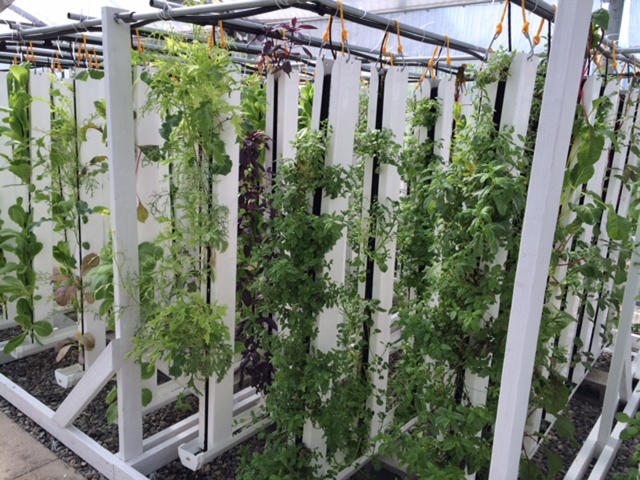
Urban farming is taking off, and California is is getting a glimpse of what future agriculture might be like.  Take a look at this Long Beach urban farm, all part of The Growing Experiment. Here you’ll find countless fruits, veggies and herbs growing in 175 metal towers.  It’s also home to a 600 gallon tub filled with tilapia and goldfish. They use this tub filled with fish as part of their aquaponic system which delivers the nutrients to the plants.

3054017-inline-s-7-how-an-urban-farmer-in-california-is-pioneering

“For each square foot of space, we’re basically replicating three to four square feet outdoors. We’re maximizing vertical space. Even though this is 1,000 square feet, it’s almost the equivalent of up to 4,000 square feet in the ground.”

You can read the entire article at “fastcoexist.com“.