Teen Urban Farmers expand work through partnership with Ithaca Bakery

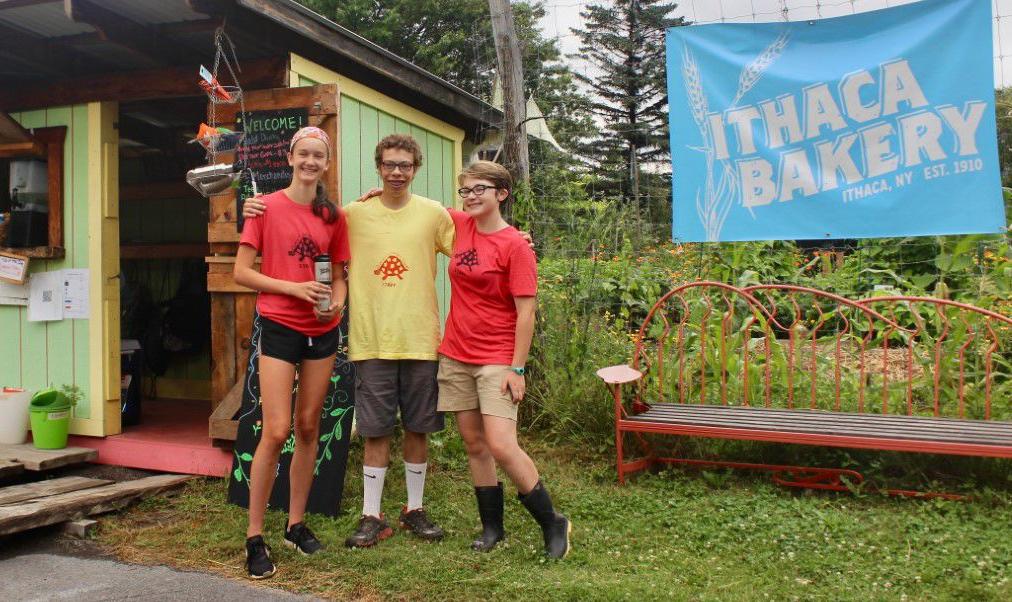
The Ithaca Children’s Garden (ICG) is an award-winning public children’s garden free and open to all every day of the year, from dawn to dusk. Its mission is to inspire the next generation of environmental stewards, and does so through authentic, hands-on, child-led engagement with the natural world.

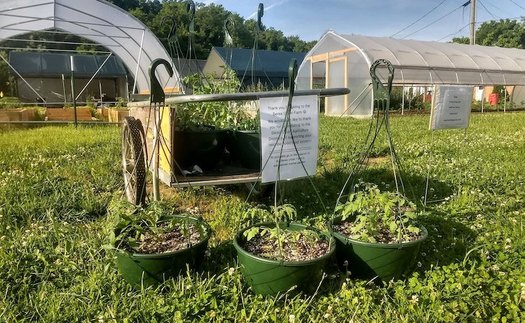
Ithaca Bakery is a local destination that has stood the test of time and remains today one of the busiest eateries in town. And so it made perfect sense for these two Ithaca favorites to work together in the best interests of our community. Ithaca Bakery donates cold brew coffee to be sold at the garden’s Teen Urban Farmers (TUF) Farm Stand Café all summer long. Emmy’s Organics macaroons, other drinks, healthy snacks and new ICG merchandise will also be available for purchase. Pete’s Dandy Mart supplies daily ice needs. Feel free to enjoy your refreshments on the new Farm Stand patio area, which was made possible by support from the Haslinger Foundation out of Akron, Ohio. All proceeds from sales at the stand will go toward providing critical support for the TUF program.

READ THE FULL ARTICLE Ithaca.com
Free Soil Tests Offered as U. of I. Studies Lead’s Impact on Urban Farming

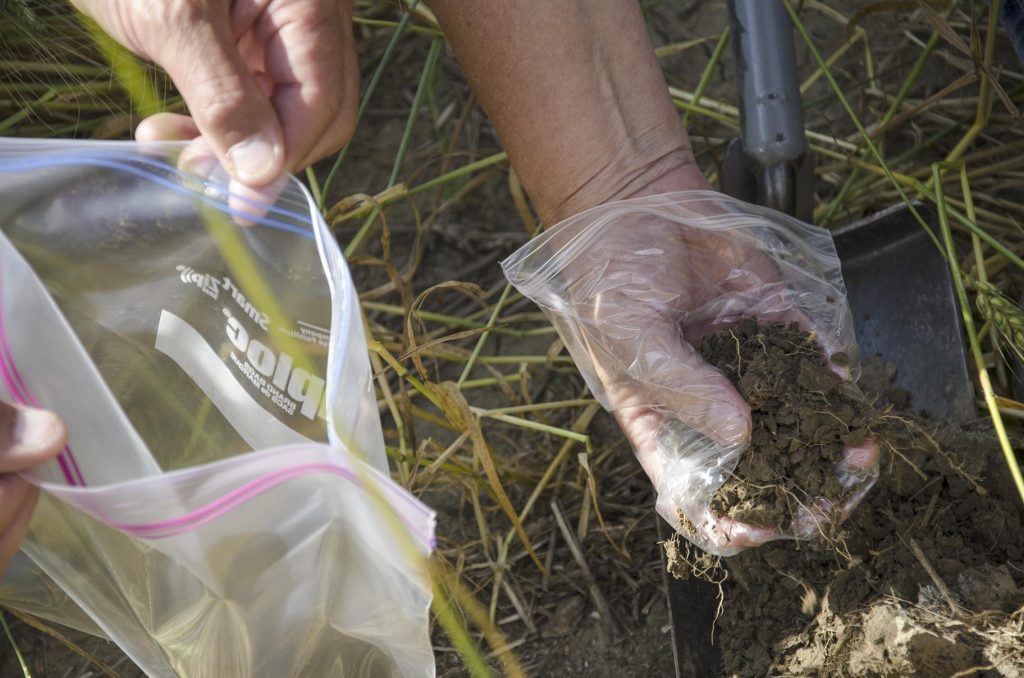
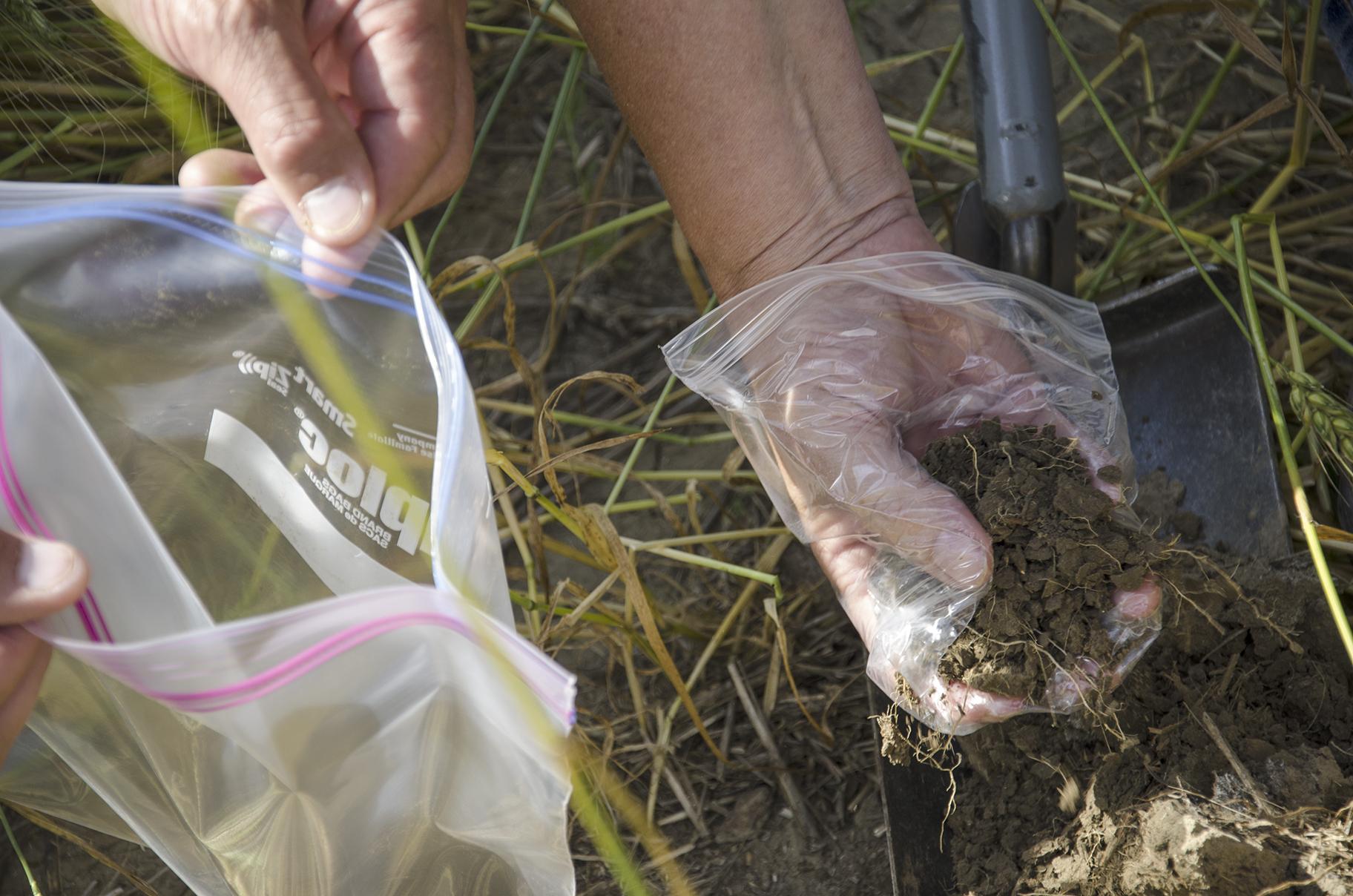
As urban agriculture programs expand in Chicago and other cities, a new project aims to unearth data on one of the biggest potential obstacles to city-based farming efforts: soil contamination.

The University of Illinois’ Chicago Safe Soils Initiative is offering free soil lead tests to home gardeners and urban farmers across the Chicago area.

The new effort – led by the university’s College of Agricultural, Consumer and Environmental Sciences in partnership with U. of I. Extension and Chicago-based nonprofit Advocates for Urban Agriculture – is looking to collect thousands of soil samples from backyards, community gardens and larger-scale urban farms over the next two years.

Researchers say the results will allow them to map lead hot spots across the area. The data can then be used to guide decisions about where to start new urban gardens or farms and inform mitigation strategies in areas with contaminated soil.

READ THE FULL ARTICLE News WTTW

Food after oil: how urban farmers are preparing us for a self-sufficient future

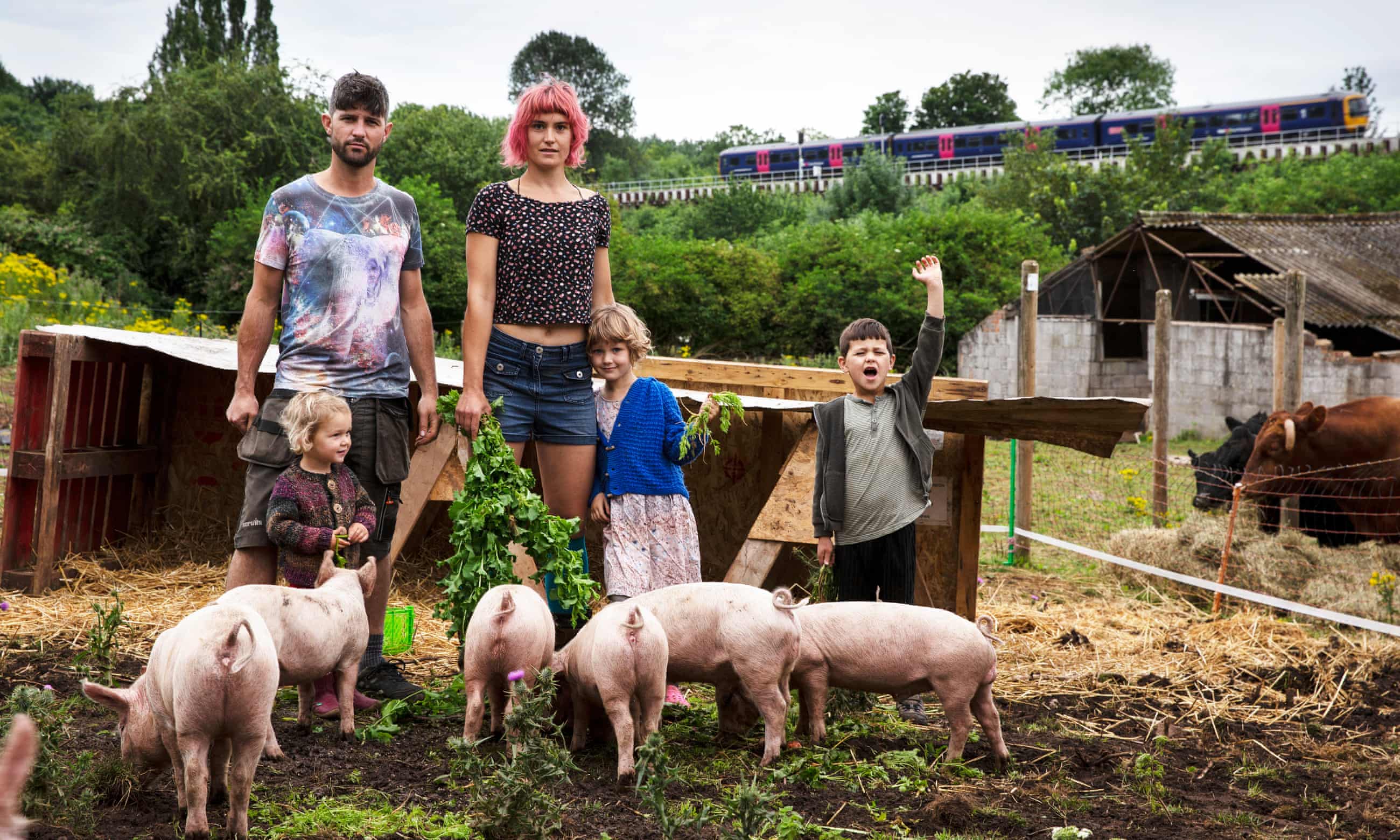
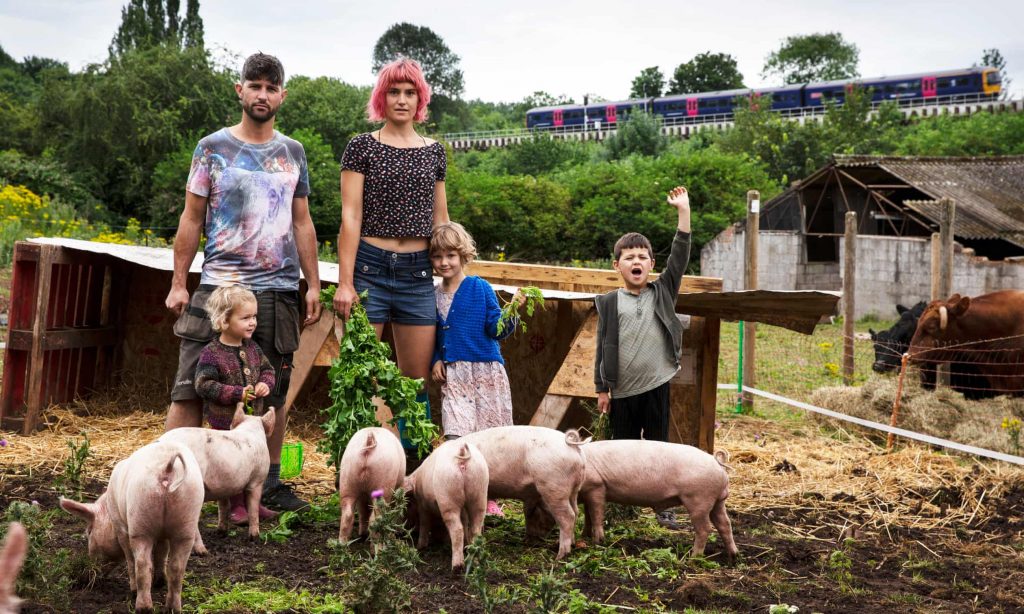
If you travel by train into Bristol from north of the city, there is a point two miles from the center when you can catch sight of a tiny farmyard. Nestling at the bottom of a railway embankment between houses, builders yards, and a car rental depot, it has sties, snoozing Gloucester Old Spot pigs, a paddock with caramel-colored Dexter cattle grazing and vegetable plots in which you might see the farmer and her three young children at work.

It is not, as you might assume, a visitor attraction. Founded on the council-owned site of a former market garden, Purple Patch is a fully functioning four-acre smallholding that turns a profit from vegetable boxes, bagged salads and meat. Mary Conway, the 32-year-old who formerly worked for a veg-box scheme in Norwich, set it up five years ago and has become something of a local hero. Her salads – blends of unusual leaves, herbs and edible flowers – are popular in the nearby liberal enclave of St Werburghs. She lives in a converted shed on Purple Patch, with her kids and her husband, Jona, a carpenter, and finds any missing suburban comforts amply compensated for by the friendships she makes.

READ THE FULL STORY The Guardian

Urban Farm Provides Job Skills to Women in Recovery

BEREA, Ky. — A pilot program in Berea where women in recovery learn job skills through farming saw its first batch of graduates this month.

Harvesting Hope is a partnership between Sustainable Berea and Liberty Place, a recovery center for women in Richmond, along with several local businesses. Program director Cheyenne Olson said many people might be surprised by how much planting and harvesting translates to other types of work.

Kentucky has one of the lowest workforce participation rates in the country, according to a 2017 report by the Kentucky Chamber of Commerce. Olson pointed out while the opioid epidemic has made it difficult for many employers to fill available jobs, communities haven’t put effort into helping people transition from sobriety into employment.

READ THE FULL ARTICLE Public News Service

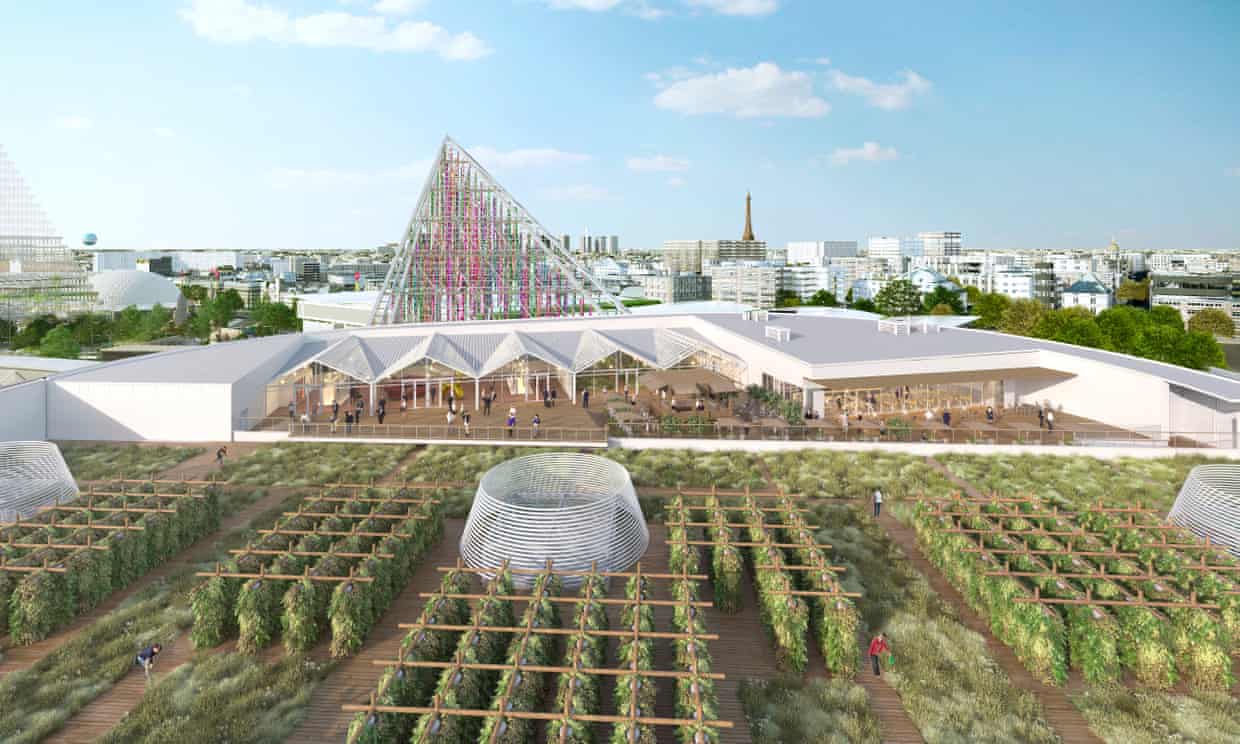
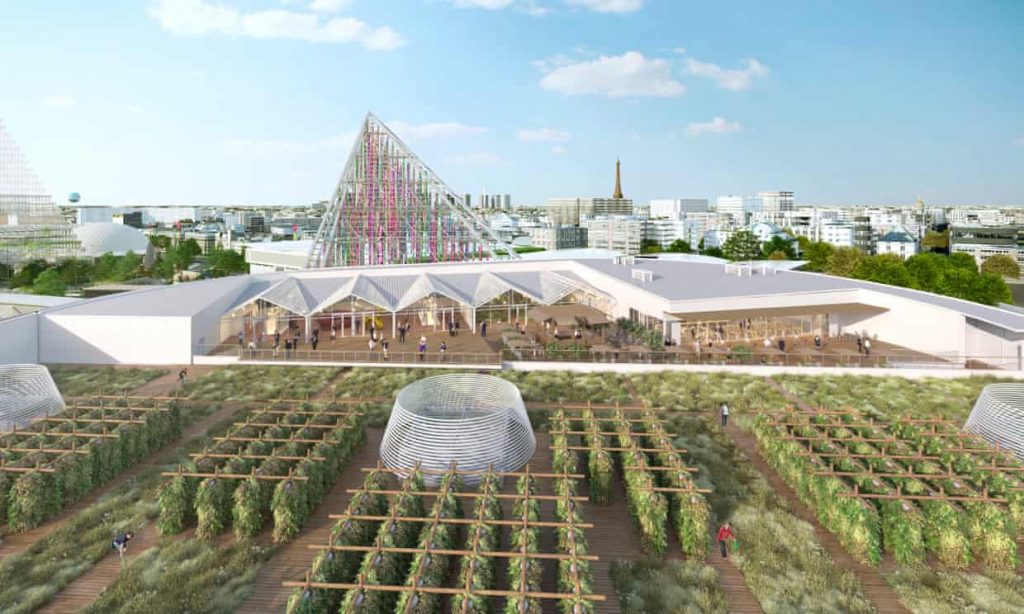
World’s largest urban farm to open – on a Paris rooftop

It’s a warm afternoon in late spring and before us rows of strawberry plants rustle in the breeze as the scent of fragrant herbs wafts across the air. Nearby, a bee buzzes lazily past. Contrary to appearances, however, we are not in an idyllic corner of the countryside but standing on the top of a six-storey building in the heart of the French capital.

Welcome to the future of farming in Paris – where a whole host of rooftop plantations, such as this one on the edge of the Marais, have been springing up of late. Yet this thriving operation is just a drop in the ocean compared to its new sister site. When that one opens, in the spring of 2020, it will be the largest rooftop farm in the world.

Currently under construction in the south-west of the city, this urban oasis will span approximately 14,000 sq metres (150695 sq feet) – also making it the largest urban farm in Europe. With the plan to grow more than 30 different plant species, the site will produce around 1,000kg of fruit and vegetables every day in high season. Tended by around 20 gardeners, they will also be using entirely organic methods.

READ THE FULL STORY: TheGuardian.com

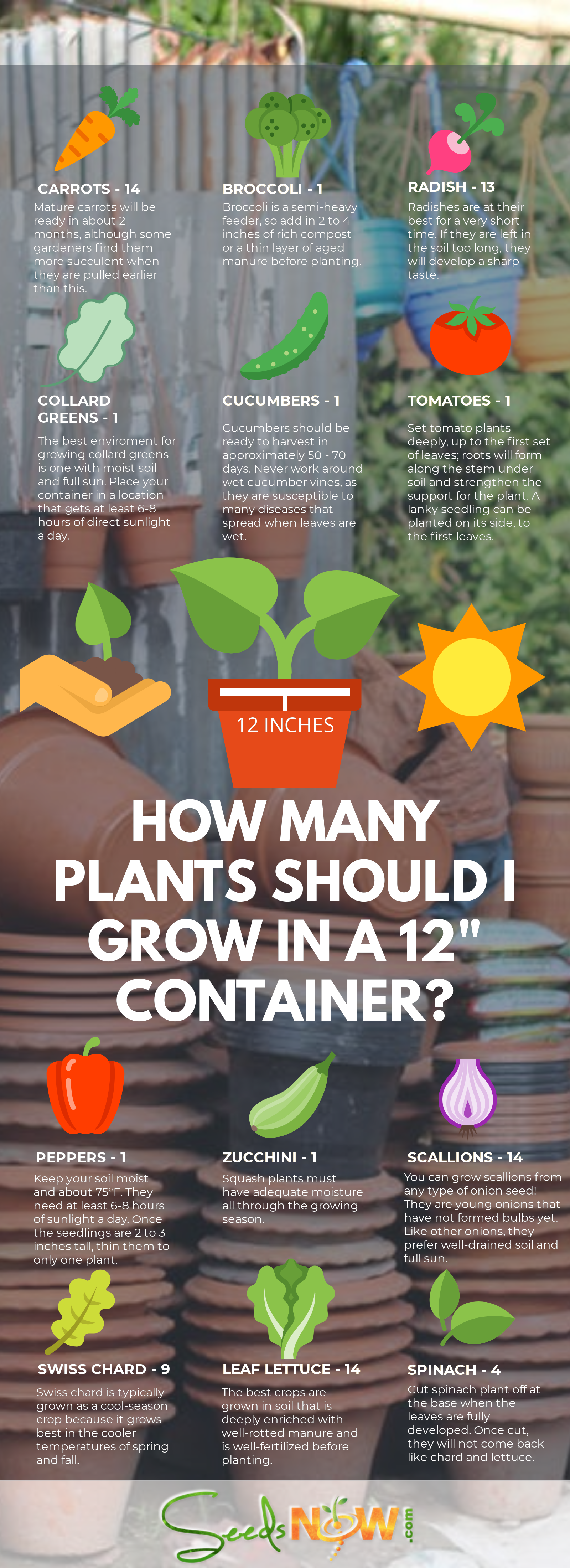
How Many Plants Can You Grow in a 12″ Container?

Before you start your seeds, and if you’re growing in containers, you should look over this infographic. We’ve given you a suggested number of plants that will grow successfully in a 12″ container. It would be a waste of money and time to start more seeds than you’ll need so here’s a simple guideline of where to get started!

Growing in containers is a fun and easy way to start vegetable gardening. They are ideal for anyone with a patio, balcony or rooftop garden. They also are popular among those who rent their home.

Ready to Learn MORE About Gardening In Small Spaces?

9 Of The Best Vegetables To Grow In Small Gardens

5 Vegetables To Grow In Containers This Fall

Tips For Successfully Starting Your Seeds Indoors

5 Tips For Growing Herbs In Containers

This Delaware teen is teaching ag skills for a sustainable future

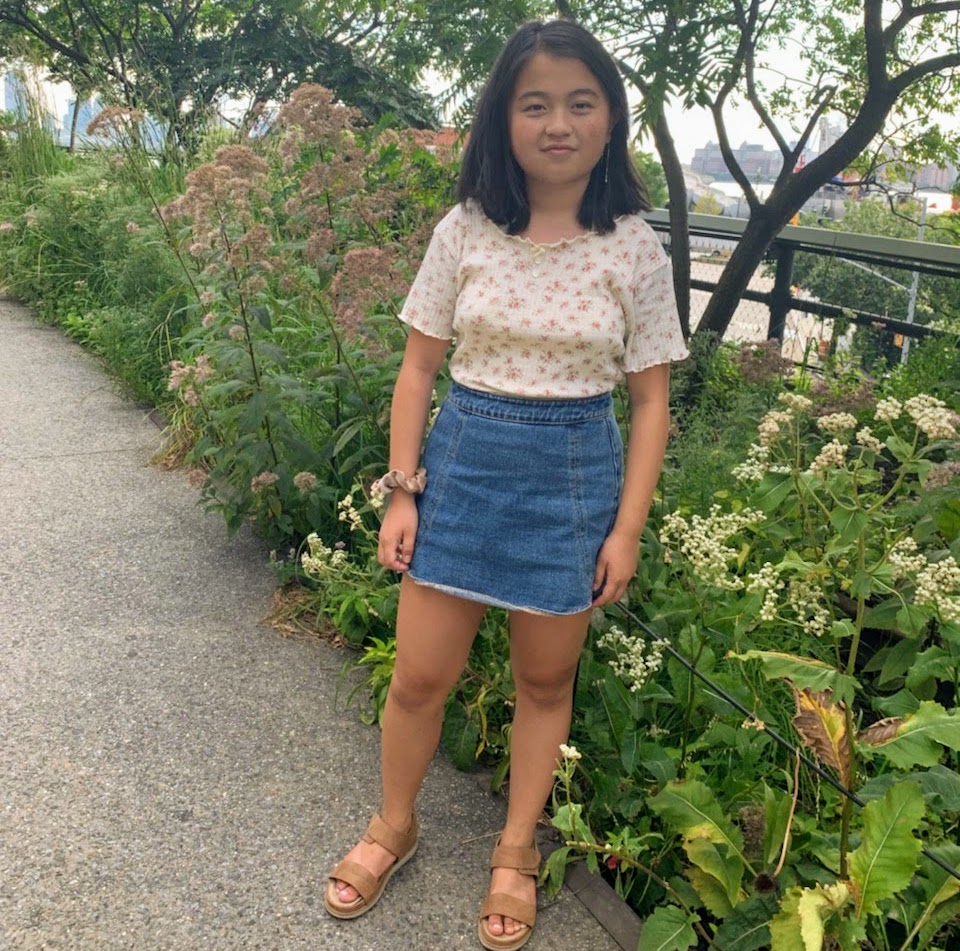
Megan Chen — author, Dual School alum and rising junior at Newark Charter — has always had a passion for environmental issues. Now, she’s also the founder of a 501(c)(3) called the Urban Garden Initiative.

“I learned about the food desert problem in Wilmington, and I had an idea that I really wanted to stick with,” she told Technical.ly.

Chen is sharing the concept of urban gardening with kids as young as preschool age, through middle school — where agricultural education is often lacking — by partnering with local schools and teaching hour-long container gardening workshops. Classes can then maintain the containers themselves.

“We aim to spread environmental and sustainability education through the urban gardening educational component,” said Chen. “The gardens are one way to learn how to do that, but we go over other [aspects of sustainability], too.”

READ THE FULL ARTICLE AT https://technical.ly/delaware/2019/08/12/megan-chen-urban-garden-initiative-teen-teaching-ag-skills-sustainable-future/

This farmer helps undocumented families find community

In Chelsea, Massachusetts — a 2-square-mile chunk of mostly industrial land across the river from Boston — a tiny urban farm sits in a gravel parking lot, sandwiched between towering, tarp-covered salt piles and a tightly packed residential neighborhood.

The farm was created to provide food for the Waterfront District’s high concentration of undocumented people, who don’t qualify for federal assistance and struggle to make ends meet in the gentrifying city. And that it does: 10 undocumented families visit the farm regularly to harvest from beds containing an abundance of peppers, holy basil, and fist-sized tomatoes.

But in the middle of its first growing season, the farm has also become a community hub. It’s a place for field trips, sharing knowledge, and people who just want to say hey. Excess food gets cooked into a weekly community meal held by a nearby young mothers’ program.

“We want to connect people back to growing, so they feel like they’re taking care of this piece of land together,” says Leilani Mroczkowski, food justice organizer and farmer extraordinaire for GreenRoots, the nonprofit behind the farm. “We also want to connect people to Chelsea.”

READ THE FULL ARTICLE Grist.org

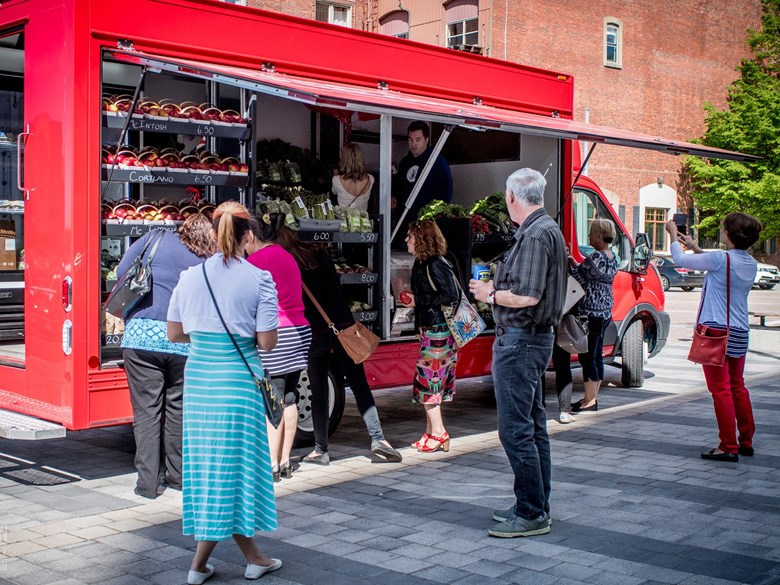
Farm Stand Truck Could Bring Produce From Urban Farms To West Sacramento Food Deserts

Imagine hearing that familiar summer song and looking up to see a truck rolling up your block. Kids flag it down, only to find vegetables.

A mobile farm stand truck might be less exciting to kids than an ice cream truck, but the prospect of getting one in West Sacramento has proponents of urban agriculture pretty pumped up.

Here’s how it would work. Several urban farmers in West Sacramento would sell their produce through a refrigerated truck that stops in neighborhoods where residents face barriers when it comes to affording fresh, local produce.

Several areas of West Sacramento are designated as food deserts by the USDA.

The project is Sara Bernal’s brainchild. She’s the program manager of West Sacramento Urban Farms, which is part of the Center For Land-Based Learning, a non-profit based in Winters that runs farmer training programs. Bernal oversees 10 start-up farmers working on “incubator” plots that were formerly empty lots.

READ THE FULL STORY: CapRadio.org

Urban farmer helps boys grow into responsible men through mentor program

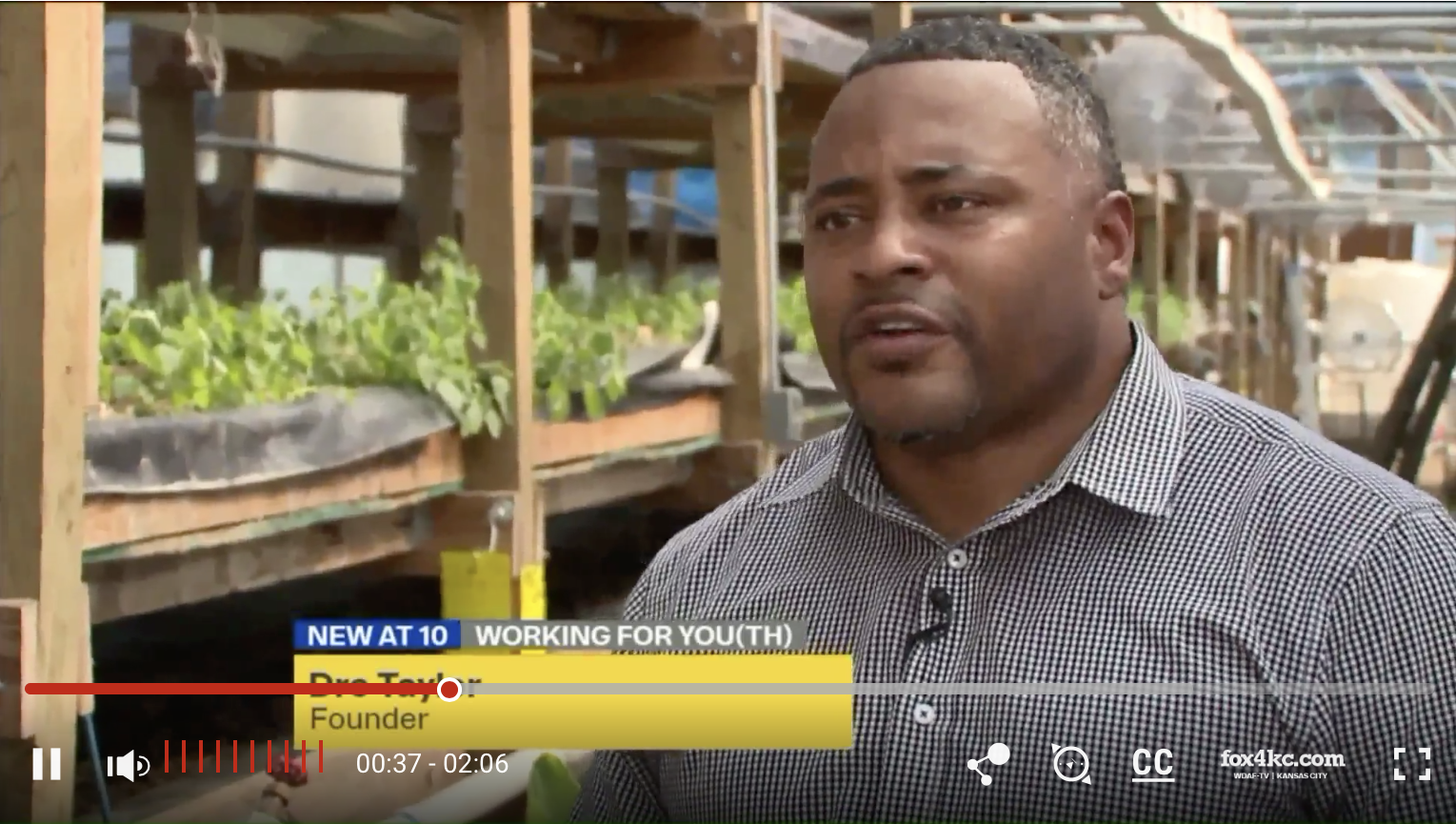
KANSAS CITY, Mo. — An urban farmer in Kansas City is using his skills and life experience to cultivate the minds of young men.

Dre Taylor is the founder of Males to Men, a rites of passage program that works to raise “strong, conscious and productive young men.”

“A man has accountability and responsibility with himself and his community and that’s what we try to teach our young men,” Taylor said.

One component of the program involves Nile Valley Aquaponics, a plant and fish-based farm at the corner of 29th and Washbash. Taylor, who operates the farm, uses it to teach the young men in his program valuable lessons.

SEE THE FULL ARTICLE AT Fox4KC.com

Green Umbrella helps secure the city’s future in urban agriculture

This month, Green Umbrella’s Greater Cincinnati Food Policy Council announced that the long-awaited Urban Agriculture Zoning Ordinance has finally passed in the City of Cincinnati. With this legislation comes increased freedom for residents and communities to take their food security into their own hands.

The Greater Cincinnati Food Policy Council is a formal initiative of Green Umbrella. Its mission is “to advance a healthy, equitable, and sustainable food system” across all of Greater Cincinnati. The council works to address systematic and legislative changes that affect food systems and access on a community level.

The council program manager, Michaela Oldfield, says that this legislation is good news for Cincinnati residents as it cleans up the rules and regulations surrounding things like community gardens, backyard gardening, small-scale urban farming, and community composting.

READ THE FULL ARTICLE Soapbox Media

Detroit’s farmers are losing patience with the city’s outdated livestock laws

In March this year, Atieno Kasagam came home from a long vacation to find a slip for a misdemeanor complaint on the front door of her house. It cited her for possession of a farm animal without a permit and having an unlicensed dog.

It wasn’t the first time her and her partner Zomi Huron have gotten the fine, and it probably won’t be the last. The couple owns a produce farm, Ile Ibeji, spread across several lots in Jefferson Chalmers where they keep dozens of fowl—chickens, ducks, geese—and don’t plan on getting rid of any. It’s currently illegal to keep any “wild animals” inside the city limits, according to Detroit’s city code.

Kasagam was furious. She and Huron have been keeping animals for years and live on a block with lots of vacancies and only six neighbors, none of whom mind the animals. The law is largely enforced through a complaint-based system, so Kasagam suspects that an outsider spotted the animals and reported it.

READ THE FULL ARTICLE Detroit Curbed

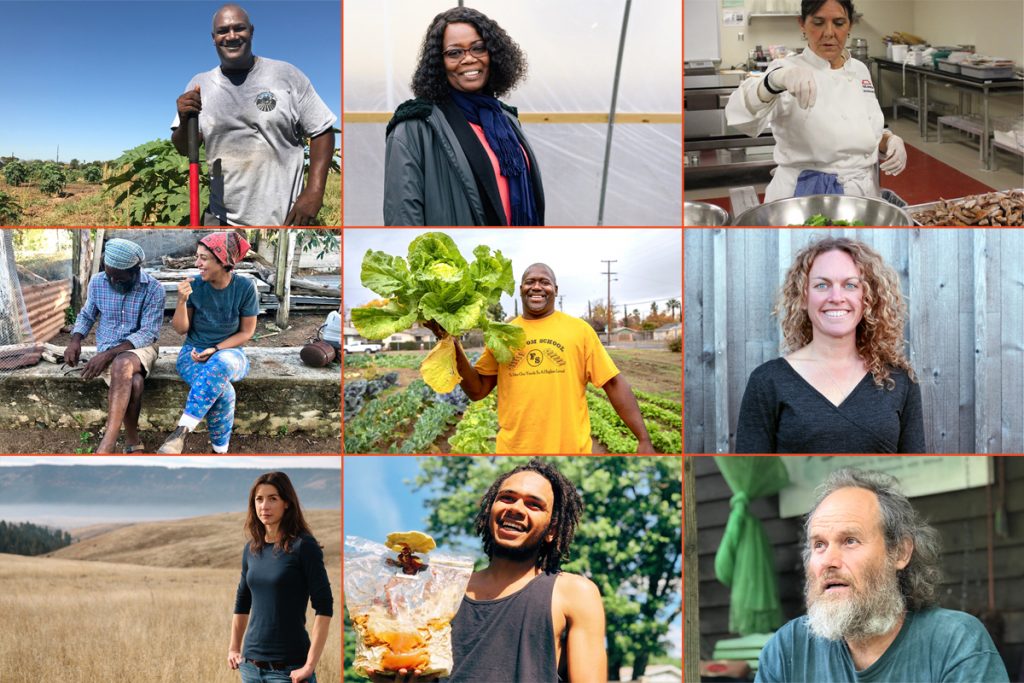
Summer Inspiration: 24 Food and Farming Change-Makers

Some of the most inspiring people we’ve covered this year are working to make the food system more just, sustainable, and equitable. -Civil Eats

Darren Chapman: A Phoenix Urban Farmer Growing Hope for the Formerly Incarcerated

Since 2005, the founder of the Tiger Mountain Foundation in Phoenix, Arizona has recruited and worked with thousands of formerly incarcerated people, teaching them practical, on-the-job skills for growing food, maintaining landscaping, and more. The foundation grows produce for 12 of the region’s farmers’ markets, and has helped more than 1,000 entrepreneurs launch their businesses.

Kate Greenberg: Shaping Colorado’s Farmland for the Next Generation

The 31-year-old advocate and policymaker has her work cut out for her: How to preserve the state’s farming and ranching traditions amidst a wave of farm retirements, development pressures, and climate change?

Art Cullen: Putting Rural Politics on the National Stage

The Pulitzer Prize-winning newspaperman from Storm Lake, Iowa, has used his “tenacious reporting, impressive expertise, and engaging writing” to get readers to look closer and think harder about the political, economic, and environmental challenges unfolding in the Midwest.

TO SEE THE FULL LIST VISIT Civil Eats

Urban Farms Helping Chicago Neighborhoods Grow More Than Vegetables; ‘We Can Really Impact The Community’

CHICAGO (CBS) — Thousands of acres in Chicago are little more than empty fields.

But CBS 2 Morning Insider Vince Gerasole learned they could sprout jobs and economic opportunity by converting them into farms. He spent a day down on the farm getting to know the people who work the soil.

“I get to eat a lot of good vegetables and grow a lot of vegetables,” said Urban Growers Collective production manager Malcolm Evans. “I can put in a lot of work and get a lot of love out of it.”

Evans grew up in the Cabrini Green public housing complex, so he didn’t know much about farming – or even where vegetables came from – until he started with Urban Growers in 2003.

He’s now worked in urban farming for 16 years.

READ THE FULL STORY Chicago CBS Local

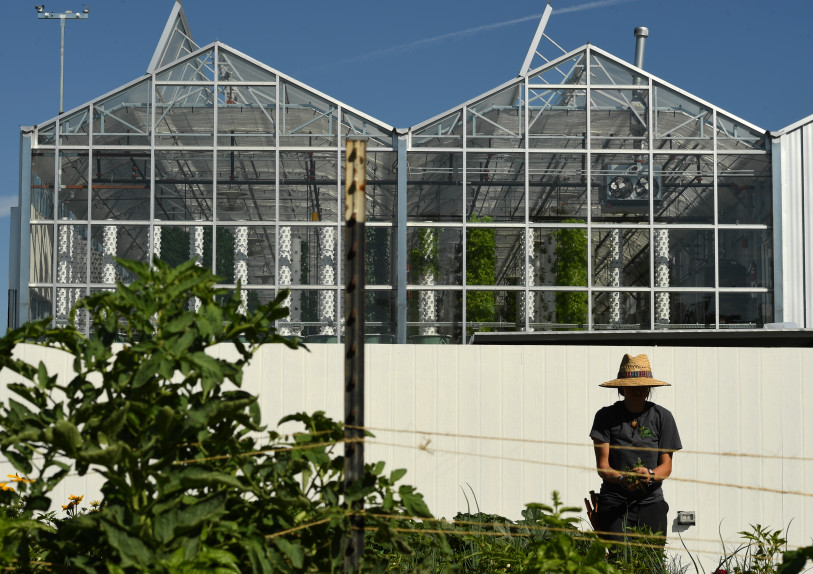
Denver urban farming trend grows from a Sloan’s Lake condo tower to a Larimer Square parking garage

DENVER CO – JULY 26: Emily Lawler, farm manger, works outside at Altius Farms, in the RiNo neighborhood, on July 26, 2019 in Denver, Colorado. The urban agriculture sells items to local restaurants. (Photo by RJ Sangosti/The Denver Post)

It was 8:15 Tuesday morning and the greenhouse was just waking up for the day.

Spurred by an electrical panel that serves as its brain, its roof vents had popped open, letting in the cool, morning air.

Meanwhile, the human staff of Altius Farms was already busy doing its work. Moving among rows of aeroponic growing towers the pickers plucked leafy greens, herbs and edible flowers like Genovese basil and red Russian kale, washed them and packed them in coolers.

Within hours the harvest would be distributed to some of Altius’ three dozen odd regular and seasonal customers in the Denver area including top restaurants and grocers like Choice Market and Marczyk Fine Foods.

READ THE REST OF THE ARTICLE Denver Post

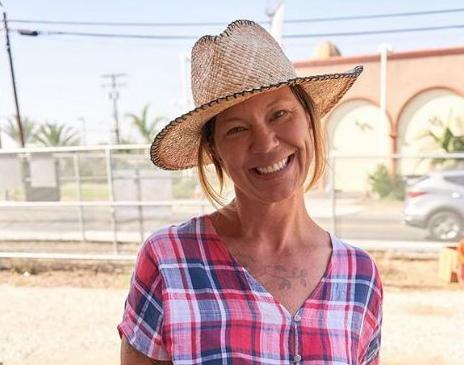
Farm Lot 59 Continues To Grow

Sasha Kanno is the eternal optimist.

The founder and farmer of Farm Lot 59, an organic farm, retail spot and education center that sits on a one-acre site surrounded by oil fields, is absolutely convinced that the people of this city need a business like hers.

But…

“I’m just a one-woman show here,” she said. “It’s a very expensive operation. We are looking for a grant to fund it. (Long Beach) Park and Rec is supposed to do some improvements to the area. Some improvements need to happen to re-open the stand.”

Created in 2010, and located at 2714 California Ave., Farm Lot 59 has historical ties to the city’s past. According to the University of California’s Urban Agriculture website, the property is one of the last remnants of a 20-acre farm lot subdivided by the American Colony Tract in the late 1800s.

READ THE FULL STORY Gazettes.com

Got dirt? Grow food cheaply.

LANSING — The city is growing — in population and also vertically.

Tomatoes, greens, squash and more sprout in garden plots and small farms across Lansing.

More than 100 community gardens are tucked into vacant lots sitting in Lansing neighborhoods, their use coordinated by the Ingham County Land Bank, which owns them.

There were only nine such gardens in 1983 that were managed through the Garden Project, a Greater Lansing Food Bank program that’s partnered with the land bank.

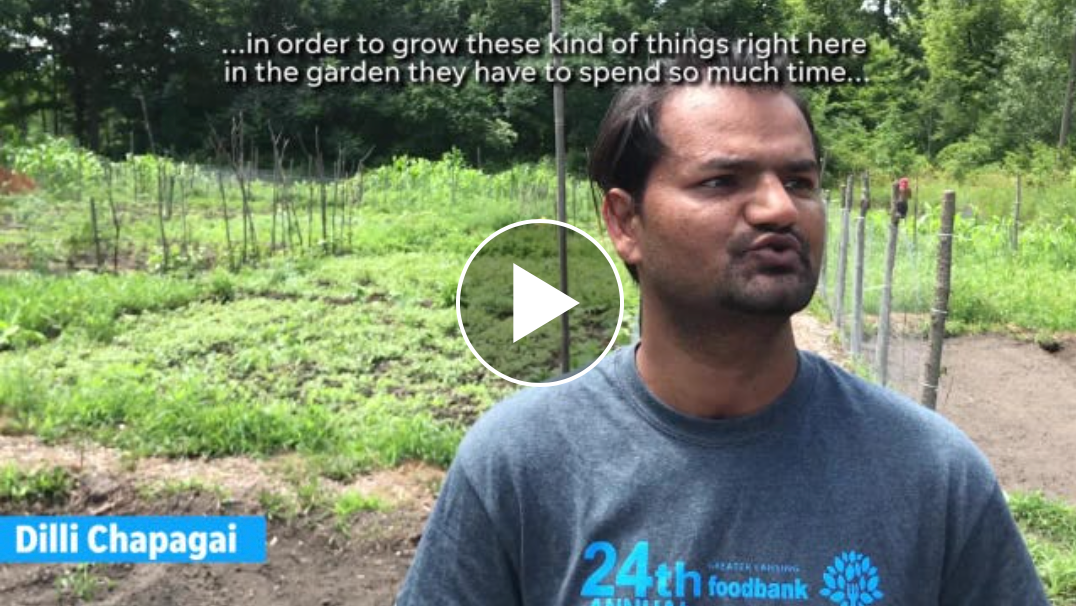
“(It’s) growing every year,” said Dilli Chapagai, 31, a liaison to immigrants and refugees through the Garden Project.

READ THE FULL ARTICLE Lansing State Journal

A NYC Urban Garden Teaches Youth Community and Justice

“Community Roots uses the entire city as a classroom. It sees place-based learning as essential to teaching and learning. Urban gardening serves as a departure point for learning about land and relationships, as well as food, consumer culture, and social activism.”

“Raven, a student who grew up in Coney Island, recalls a reading in Community Roots class from Brazilian educator and theorist Paulo Freire’s book Pedagogy of the Oppressed. Freire introduced an approach called problem-posing: teachers and students teach and learn together. Their major subjects of inquiry include themselves, each other and the ideas and issues that shape their realities and relationships.”

“Community Roots attracts many students like Iris and Raven: immigrants, children of immigrants and first-generation college students. Each student brings to the class deep, rich experiences of food, of places that are important to them, and their own relationships to these things. Learning starts in the garden and branches out into related themes and different parts of the city. When students make connections through critical thinking and relationships, their capacities to lead in their families and communities is strengthened.”

READ THE FULL ARTICLE Civil Eats

Part of Broadway becomes an urban garden for the summer

A pop-up urban garden has taken over a small slice of Broadway for the summer.

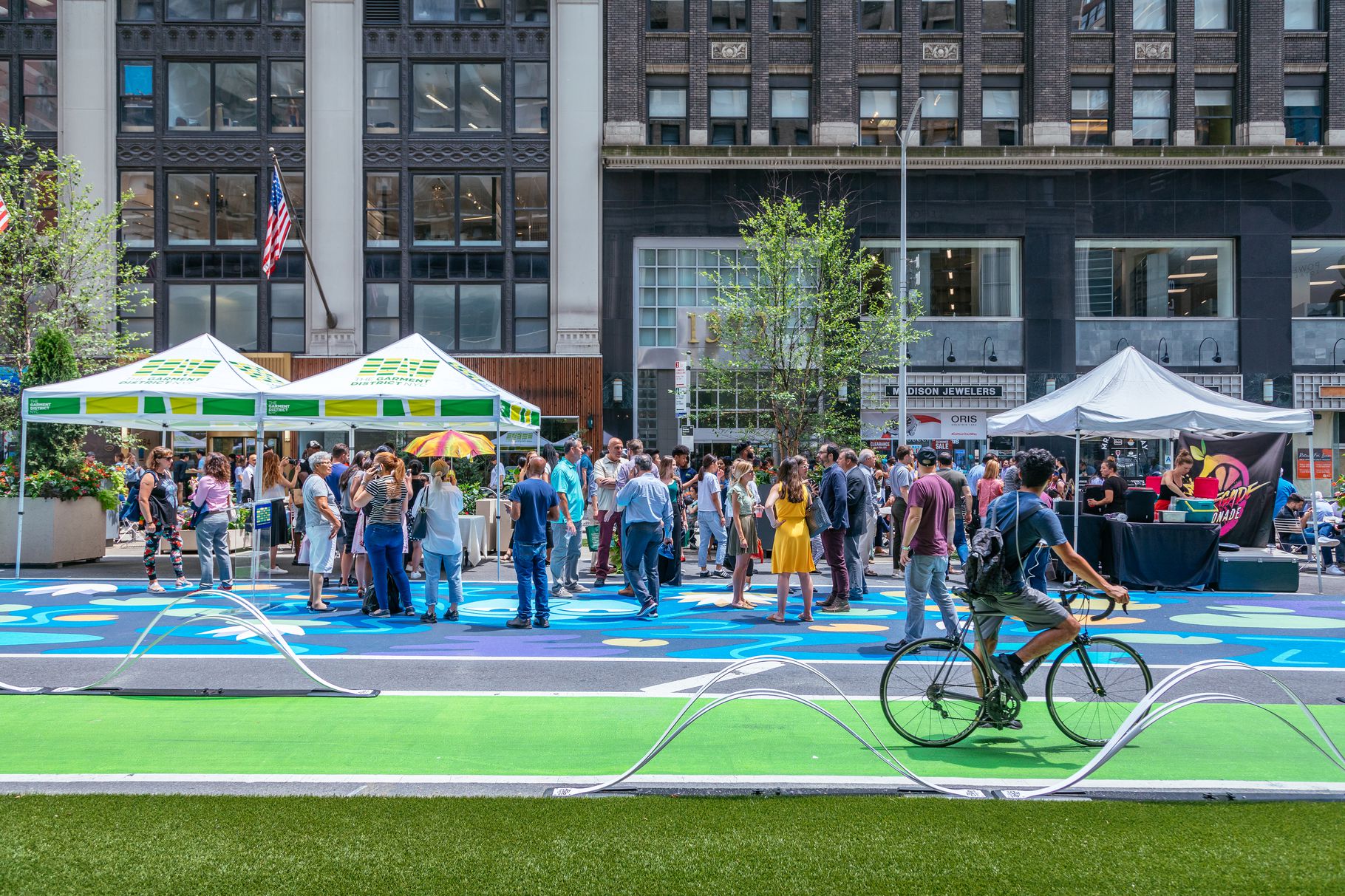
This week, the Garment District Alliance announced the return of a seasonal pedestrian plaza to the neighborhood. The space is located along Broadway between 37th and 38th Streets, a block that was converted into public space.

The garden features a mural by Ecuadorian-born artist Carla Torres, called Nymph Pond. The 180-foot-long mural was inspired by a small pond in the Galapagos Islands that she would visit often when back home.

Part of the summer plazas program, the garden offers additional space for pedestrians and cyclists, along with birch trees, planters, turf, café tables, and chairs. The space will be open until August 31, and every Wednesday there will be free lemonade and music.

“Over the past few years, the Garment District Urban Garden has served as a vibrant, welcoming outdoor space for the public to enjoy during the summer in the heart of Midtown Manhattan,” Barbara A. Blair, president of the Garment District Alliance, said in a statement.

READ THE FULL STORY NY Curbed

This Librarian Turned Her Backyard into an Urban Eden, One Plant at a Time

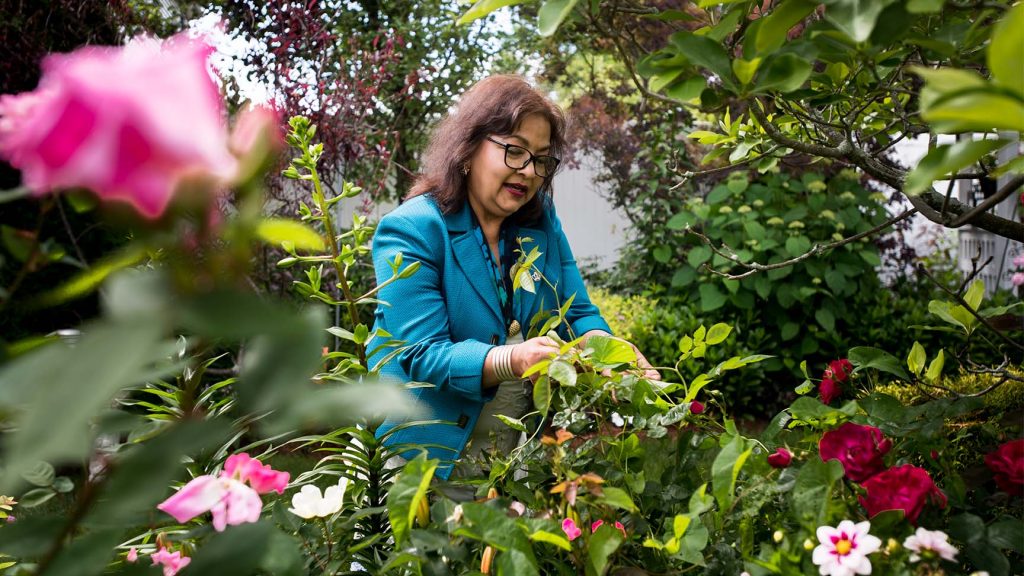
It began with a packet of seeds. Growing up in Dhaka, Bangladesh, Nasim Parveen was mesmerized by the lush flowers she saw growing in neighbors’ gardens. As a second grader, she begged her father for a garden of their own, but he rebuffed her, saying, “No, this is dirty stuff.” After many entreaties on her part, he finally relented and bought her a packet of seeds. When she returned from school one day to see that those seeds had produced plants with purple blossoms, she was smitten.

“I said, ‘Oh, this is something,” Parveen recalls. Thus began her lifelong passion for plants and gardening. A librarian at BU’s Stone Science Library, Parveen (Wheelock’83,’86) has plied her green thumb from one continent to another. And for the past 17 years, her passion project has been her quarter-acre backyard garden at her West Roxbury home. When she bought the house, it was still under construction. The lot had previously been used by the city of Boston to store salt and sand in winter and when she bought it, there wasn’t a tree or shrub anywhere in sight. But, she says, she instantly knew “this is the place I have to have.” At the time, she was going through a divorce and both of her children were attending Boston Latin School. To keep them enrolled there, she had to live in the city limits. But she immediately saw the numerous possibilities the blank canvas of the empty backyard provided.

READ THE FULL ARTICLE BU EDU