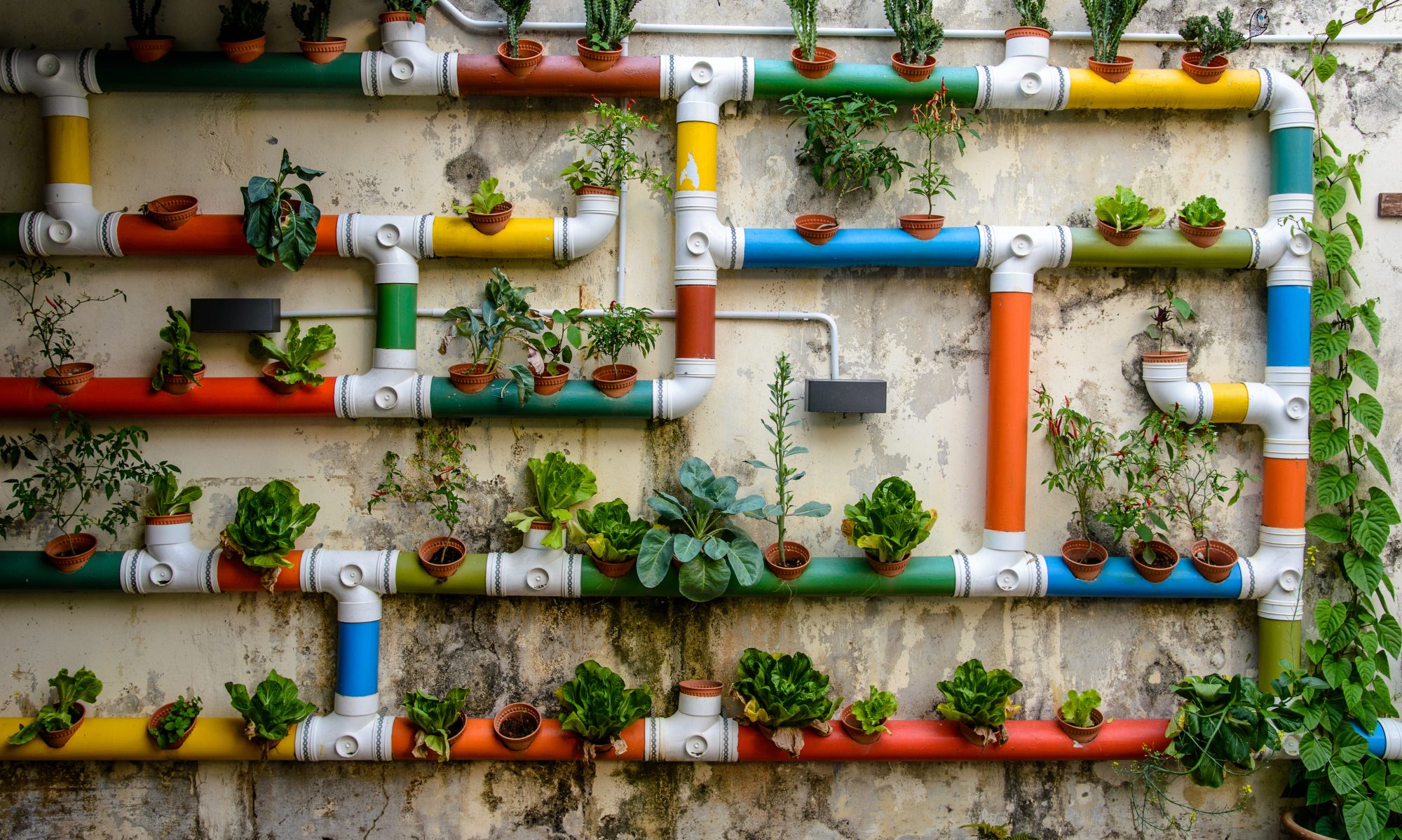

I Want to Get Fined for Growing Too Much Food

Last week it was in the news that a Georgia man was fined $5,000 for growing too much food in his backyard garden.

He’s been growing on his land for 15 years and growing food was the reason for him buying the land. He’s been selling some of his excess produce at the local farmers market and giving it to neighbors as well.

The reason for him receiving the fine is that it is illegal to grow that much food for the zone that he is in. I understand that it is illegal, but how is it legal for it to be illegal to grow food? Yet it’s legal for fast food restaurants to exist?

Is growing your own food that risky and that much of a threat to society. Isn’t growing and sharing food with your community what society has been built around for years? Are we that disconnected from food?

I currently have 10 containers in my balcony garden and am certainly not going to get fined for that. I would like to expand to more containers and wonder how many I’d have to hit before I’d get fined. I should keep adding more until I find out.

httpv://www.youtube.com/watch?v=OfPd54ublA8
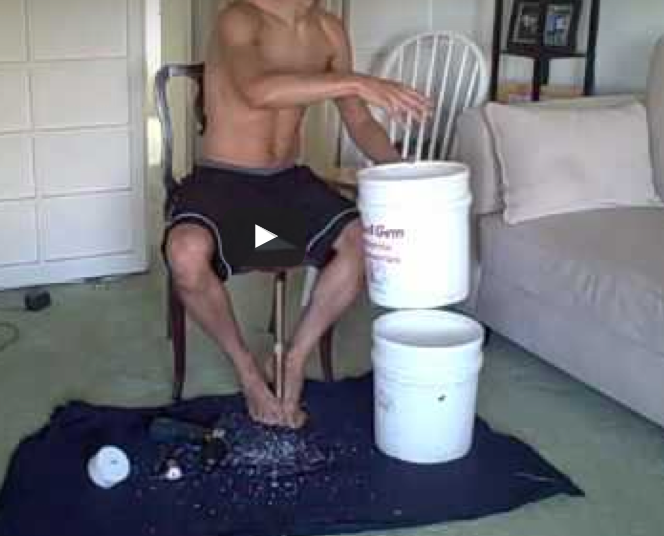
Harvesting Carrots That Are Too Small

I harvested the first carrots from my container garden on my balcony. The carrots were way too tiny.

They were planted over four months ago in the beginning of May. I thought that this would be plenty of time for them to grow.

On the outside the carrot tops were showing and looked great, but when I harvested my first carrot it was mad small about an inch and very thin. I harvested two more carrots. One was a bit fatter, but still very tiny.

After I planted the carrot seeds, I didn’t do much beyond watering them. I think this might be the issue.

As the seedlings grew, they were never thinned out to allow for more space for the carrots to grow. Since they were all packed in to tight, their growth was stunted.

The container is plenty deep at about 14″, so I don’t think that’s an issue. I am going to let them grow until the end of the month to see if they grow anymore.

If they are still small, I will rip them up and start anew, but this time I’ll thin them out and take better care of them.

What are your thoughts?

httpv://www.youtube.com/watch?v=QRNyMOeQAUU

Falling Cucumber Flowers

The flowers on my cucumber plants are falling. For the most part, they appear to be doing well on my balcony garden.

They are continuing to grow up the tomato cages, but none have set any fruit, just fallen leaves.

I think this might be because of a pollination issue. I really haven’t seen many bees in and or around my balcony to pollinate the flowers.

In looking closer at the flowers, there are definitely a lot of male flowers, but no female flowers. You can tell a female flower because it has fruit behind the flower.

So I might have to keep a closer eye on the flowers that bloom and start to hand pollinate the flowers if need be. I never thought I’d be artificially inseminating cucumber flowers, but I gotta do what I gotta do.

I’m pretty sure that lack of pollination is causing the cucumber leaves to fall. What do you think?

httpv://www.youtube.com/watch?v=shxPjmKRU_w

If Our Food Supply Is Cut-Off, Where Will You Get Food From?

I have already given you plenty of reasons to start growing your own food and am gonna give you another.

In reading an article on Grist.org about urban agriculture, I learned that, “If some sort of natural disaster or terrorist attack were to shut down New York City’s food supply chain, our supermarket shelves would reportedly be picked clean within three days. Other U.S. cities aren’t any better prepared for such emergencies, thanks to our fuelish dependence on a globalized food system.”

That is pretty nuts. I am by no means saying that I will be able to survive off of my balcony garden in LA if some sort of event would occur. What I am saying is that by growing some of my own, I have the knowledge and ability to grow even more food for myself and others.

Our current food supply chain is broken and not sustainable. It has caused us to become so reliant on others to supply us with our food. Not only are we relying on others, we are relying on others that are thousands of miles away.

If that food supply chain ever does get cut off, all the money in the world couldn’t buy you food. Money will be useless at that point. The ability to provide oneself will be power and allow you to survive.

Hopefully we will never be faced with such a situation. If the shit ever goes down, you can stop by my crib for dinner. I’ll be growing plenty.

Now you gonna start growing your own food?

httpv://www.youtube.com/watch?v=nomIGp0Ls1Q

Planting Fall Vegetables in September

Hard to believe that it’s the middle of September already. That means that it’s time to start planting your fall vegetables.

Ok, it’s been time to plant your fall vegetables, but now it’s really time.

The best thing to plant in the fall, especially if you are container gardening, are greens. Lots of greens.

They will survive the slight chill, you will be able to pack them into the containers and you will get the most food from them.

Greens are also great if you only have access to a shady area, which is all I have on my balcony garden, they will survive. I have four self-watering containers, one regular container and two soda bottle self-watering containers that I sowed my seeds into.

Here is what I planted for my fall vegetables in September:

    Four self-watering containers

  • 3 rows: Leaf lettuce, kale, leaf lettuce. When planting the kale, I accidentally spilled some seeds into the container, so I have some extra thinning to do.
  • 3 rows: Kale, leaf lettuce, kale
  • 3 rows: Mesclun mix, kale, mesclun mix
  • 2 rows: Kale

    Two soda bottle self-watering containers

  • Romaine lettuce
  • Leaf lettuce
    Regular container
  • 2 rows: Cilantro and dill

Crazy as it is that it’s f’n mid-September already, you gotta stop holding on to summer and the excuses for not growing your own food. I’m going hard with the greens.

What are you planting for your fall garden?

httpv://www.youtube.com/watch?v=nEP9ejWGIfw

How to Amend the Soil in Your Container Garden

We know that you need to feed your plants and amend the soil in your container garden. Here is a quick how to on amending the soil.

    You’ll need the following:

  • Container that is free of plants
  • Cultivator
  • Compost
  • Water
    How to amend the soil:

  • Use your cultivator to break up the soil
  • Add some compost to the container
  • Work the compost into the soil
  • Water the container and let it drain through

Your container is now ready for the next round of planting.

httpv://www.youtube.com/watch?v=DIv2lkvxX2A

What Can “Garden Writers Today” Do For Me?

“Garden Writers Today” is a website (www.digplantgrow.com) for garden writers (duh) that’s been created to help the garden writing community.

More importantly, it’s been created to help the readers of gardening websites, which is even more important.

They wrote to me and other garden writers across the web asking, “What Can ‘Garden Writers Today’ Do For Me?”

Since the main reason that I keep this blog is for you to help encourage and inspire you to start growing your own food, I pass along this question to you. What can “Garden Writers Today” do for you?

Lemme know in the comments below, and their staff will check it out.

I will start off by saying that they can do a better job of stressing the importance of growing food through natural and organic methods…but I say that in all of my posts ;-p

In the meantime, be sure to connect with Garden Writers Today on DigPlantGrow and on Facebook.

Separate Your Plants When Transplanting Them

I’ve made another gardening mistake. This time I didn’t separate the plants when transplanting them into the containers on my balcony garden.

When I did my first round of planting on my balcony, I popped the plants out of the plastic and just planted them into the container. This seemed like a good idea, but wasn’t.

There were about 4-5 plants per bunch. They grew for a bit and I was able to harvest a salad from them, but they were growing very slow and having some other problems.

Initially the plants were taking a while to grow and after harvesting they weren’t growing back very much at all either. So I decided to just pull them up and start the container anew.

When the plants were pulled up, sure enough they were still in the shape of the plastic that they came in and the roots weren’t very well established. All reasons that the plants should’ve been separated before transplanting.

Now that the plants are out, I’ll reamend the soil and get something new planted in those containers.

httpv://www.youtube.com/watch?v=2celm8P9Np8

Why Don’t Costa Rican Restaurants Use Locally Grown Produce

One of the things that I was most surprised during my trip to Costa Rica was how little the restaurants used locally grown produce. It became even more apparent to me how we have lost touch with our food.

There were coconut trees nearly everywhere that you could turn. Yet it was impossible to go into a restaurant and get fresh coconut water. Some of the restaurants actually had signs saying that they were out of coconut water.

All they had to do was go outside and pick up a coconut off the ground. The trees were steps outside of their stores. It’s not like they had to travel far. There were some entrepreneurial people who were selling the fresh coconuts though.

Some of the restaurants and places that I stayed in only had canned coconut water. It was appalling. There was fresh, locally grown food all around, yet they were selling some canned processed version of what they had available at their fingertips.

One of the places that I stayed at had papaya trees growing on their grounds, but in their breakfast fruit salad they were using chemically sprayed apples and oranges shipped in from Chile (yes, I checked the labels).

When I was in a supermarket, I noticed that the produce was “California Grown.” I didn’t travel all the way to Costa Rica to eat Cali grown produce.

It makes more sense to me in the States how sourcing locally grown produce can be more of a challenge. I don’t expect restaurants to source 100% of their food locally, but when they literally have the stuff growing on your grounds or within feet of them…come on now.

They could even take it one step further and grow their own produce to utilize in their restaurants. They all have the space and certainly live in the climate.

Are we that out of touch with our food and our food systems that broken?

httpv://www.youtube.com/watch?v=CwqNrUGLQbA

How Self-Watering Containers Work

Nearly all of my urban gardens have self-watering containers in them. They work great on a balcony, fire escape or any other space that doesn’t have soil.

If you’re still trying to figure out what you can grow in small/medium sized container, check out this site for a list of plants and seeds that grow well in containers.

Self-watering containers are different from regular containers that you’d plant in. The main reason is that the water is sucked up by the roots from the bottom of the container.

They made up of two containers of the same size called a reservoir and planting container. I usually use two food-grade 5 gallon containers.

Inside of the reservoir container, you place a wicking basket with small holes in it. For that I use a 1/2 pound deli-container. There is also an overflow hole drilled into the side of the container to allow for drainage.

The planting container has a 3 1/2″ hole drilled into the bottom in the middle and a 1 1/4″ hole drilled along the edge. It’s placed inside of the reservoir container with the deli container centered. The pipe is then put through the smaller hole down to the reservoir container.

You fill the wicking basket with wet soil and continue to add moist soil to the planting container along with the plant. You water the self-watering container by pouring water into the pipe, which will allow the water to get down to the reservoir container. When the water reaches the top of the reservoir, it will begin to come out of the overflow hole.

Since there are holes in the wicking basket with the soil, it will soak up the water and allow the plants roots to drink up the water as needed. This is a more natural way for the plants to soak up water as opposed to watering them from the top.

It also makes it easier to never over or under water the plant because you can tell by the overflow hole.

httpv://www.youtube.com/watch?v=zu-ZF0MaWzA

Changing the Focus to the Importance of Growing Your Own Food

I am going away on vacation and this will be my last post until August 30, 2010. Please do your best to get by without me.

I have been thinking about changing the focus of this blog to include more about the importance of growing your own food.

For the past year plus this blog has been about growing your own food and how to do so, which it still will include. I want to write and discuss more about the importance of growing our own food, what’s involved in it, the growing, harvesting, sharing, preparing and still focus on the how to part as well.

I’ll cut back on this site as a journal for exactly what I’m doing and only mention the cool things (which will be difficult since everything that I do is so cool) and projects.

This will help to expand the site to give reasons why it’s important to grow your own food and how you can grow your own food. One plant. That’s all you need to grow to make that difference.

Hit me up with your thoughts on this direction. If you likes. No likes. Would like to see other topics. The same. Lemme know your thoughts, and I’ll get at it when I gets back.

httpv://www.youtube.com/watch?v=m1FP28HdmC8

Is Growing Food in a Plastic Container Safe?

One of the questions that people frequently ask me is revolved around the health concerns of growing in the plastic containers.

Is it safe to grow in plastic containers? Is it leaching harmful toxins into the soil, water, plants and eventually my body. I honestly have no clue, nor do I claim to. I think there is a valid concern in those beliefs and generally avoid plastic, but I rationalize doing so in a few ways.

  • The containers are being saved from the landfill. While this doesn’t directly effect my health. It does effect the health and well being of the planet, which in turn effects my health. None of the containers were purchased. All of them were already used.
  • I’m growing organically. The soil, plants, compost, manure tea and even the water is filtered. Does that counter balance any potential leaching? I dunno, but in my mind in kind of does.
  • Since I don’t have land, what am I going to use if I don’t use plastic containers? I’d have to buy pots of some sort which would increase the amount of money being spent and resources used in the production of the pots.

I don’t know the exact health effects and carbon footprint of everything (I don’t believe that anyone really does). For the reasons mentioned above, I can rationalize growing my own food in plastic containers simply because I know how the plants are being taken care of and am cutting down severely on the transportation costs of the food.

What are your thoughts on this?

Testing Soil Amendments: Manure Tea vs Compost

Now that I’ve remembered to amend the soil in my container garden, I’m going to be running a side-by-side test of soil amendments.

Here is the test that I’m going to run. I have two cucumber containers on my balcony garden. In one of them, I have amended the soil with straight compost. The other container I have watered with the cow manure tea that I brewed up.

The plant that I used the cow manure tea already started out slightly smaller than the other, but I want to test and see if the manure tea help to promote better growth.

I’ll monitor progress and report back in a few weeks. Which do you think will yield better results?

httpv://www.youtube.com/watch?v=MRvZ_KKVKlY

How to Make Cow Manure Tea

I am making cow manure tea to use as a soil amendment in my container garden.

I’m brewing cow manure tea from Authentic Haven Brand.

The brewing process will take 1-3 days to complete. You’ll need the following:

  • One five-gallon container filled with water
  • Bag of cow manure tea bag
  • Towel or cloth to keep the bugs out

You just need to drop the tea bag into the bucket of water and let it steep for 1-3 days until it looks golden brown. Put a cloth over the top of it if you are keeping it outside to keep the bugs out.

For more complete instructions on how to make manure tea check out ManureTea.com.

httpv://www.youtube.com/watch?v=jEqI2VL8w3o

Don’t Forget to Amend the Soil in Your Container Garden

One of the mistakes that I made last year was not feeding my plants and amending the soil in my container garden.

When you first plant the potting soil that you use should likely have all the compost, nutrients and minerals for the plant to initially survive, but over time the plant will use these up and they will deplete.

If you were growing in the ground, the soil would likely take care of itself with the worms and everything that’s going on underground.

I was a having a discussion with someone the other day about this and it makes perfect sense why you would have to amend the soil in your container garden. The reason is because it’s contained…hence the name container. Nothing is added to it unless you add it.

In my online networking on Twitter (@CanarsieBK), I connected with a company Authentic Haven Brand Products (Twitter: @GreenSoil) that provide soil amendments in the form of cow and horse manure tea. Sounds great with some breakfast.

Cow and horse manure might sound nasty to put in your garden, but it makes sense. What happened before garbage got picked up? Cows and horses crapped on the dirt roads and it got buried under the soil. It’s natural.

While speaking with Annie, I learned more about the company and her product. AHaven has been a small family owned business since the 1920 and all of the animals are allowed to roam free and are treated humanely (for an animal). This is the kind of company that I can support.

I got me some cow manure tea that I am going to brew up and use on some of the plants. Some benefits of it are that it’s quick releasing and it won’t burn your plants. Read up on some more benefits of using manure tea in your garden.

I’ll be running some experiments on plants using the cow manure tea, vermicompost and whatever else I can get my hands on. You’ll have to stay tuned to see the results.

Most importantly – Don’t forget to amend the soil in your garden and feed your plants!

What do you use to amend the soil in your garden?

httpv://www.youtube.com/watch?v=drjXz7RppKE

Contest Winner of 6 Packets of Botanical Interests Seeds

Thanks to everyone who submitted a comment to enter for a chance to win 6 packets of seeds courtesy of Botanical Interests.

There were 61 comments submitted.

To select the winner, I used Random.org to randomly select a number between 1-61. The number generated was 21.

Counting from the top the 21st comment was from….Snow. Not sure if it’s the 90s white reggae artist from Toronto because if it is that would be awesome.

The comment that Snow left was , “I love my urban veggie and herb container garden! I encourage everyone to do it too. I have not planned anything for fall and look forward to your posts for ideas and tips. Thanks much! ”

Word. I’m with you Snow, I think people should grow some of their own food too.

Thanks again to Botanical Interests, everyone that participated and congrats to Snow.

Stay tuned for another contest coming next month.

httpv://www.youtube.com/watch?v=-3UfmZpqC1o

Thinning Out Your Mesclun Lettuce Plants

When you started to plant your mesclun seeds, you likely just threw some seeds in your container and watered them to see what would grow. I know that’s what I did.

Now that they’ve started to grow, you’ll need to thin out your mesclun plants to allow the strongest ones to survive and produce more. Yes, the container might look pretty with the purples and greens, but this is about growing food, not about looking pretty.

All you’ll need is a pair of scissors (or your bare hands). Go through the container and pick out the leaves that haven’t grown so well or don’t look that good. You can totally munch on them as you go. As rule, I like to leave about 2-3 inches in between the plants if I can.

The reason for doing this is to allow the focus and energy to go into fewer plants, allowing them to grow more. As opposed to the energy being spread out amongst many plants.

You could very well not thin out your container and let them all grow. That’s up to you.

I choose to do some thinning of my mesclun plants to get a heartier yield.

Do you thin yours out? How? When?

httpv://www.youtube.com/watch?v=r1k_bXF1Fqs

Training Your Tomato Plant in a Small Space

In order to keep your tomato plant thriving and producing more food, you’ll need to train it upwards in addition to removing the suckers.

The purpose of training your tomato plant is to keep the plant from getting to heavy and falling over. As it begins to blossom and fruit, it will start to slouch.

To keep it from doing so, you’ll need to train it upwards. In a small space there are a few ways that you can do this. Regardless of which way you choose, you’ll just need some rope/string and some scissors.

On my balcony garden, I tied string about two-thirds of the way up the stem and tied the other end up the railing of the balcony. You don’t want to tie it too tight because as the plant grows, you’ll want to move the string up higher the railing.

It’s just that simple. This will help to keep the plant upright and encourage it to start growing up the railing.

What are some other ways that you can train a tomato plant in a small space?

httpv://www.youtube.com/watch?v=A5yOCv6xp6o

Pruning Your Tomato Plant: A Suckers Guide to Removing Suckers

Once your tomato plant starts to grow, you will want to prune it to remove the suckers.

They will start to grow regardless of how you take care of your plant. You might notice them as your plant is growing, but think nothing of them. Suckers won’t harm your tomato plant, but will prevent it from producing more fruit.

A sucker is off-shoot growth that grows where the stem and a branch of the tomato plant meet. It doesn’t serve much of a purpose.

If you pick them off it will help encourage more growth because the plant can focus on growing more food instead of keeping the sucker alive.

To prune your tomato plant, eye your plant along the stem and look at where the branches are are. If you see growth in between the branch and the stem in that corner, you got yourself a sucker. Pick it off. You can either use your fingers or a scissor. That’s it.

You’ll have to check the plant every once in a while for suckers, but they are easy to identify and maintain.

That’s my suckers guide to removing suckers from your tomato plant. You ain’t no sucker, are you?

httpv://www.youtube.com/watch?v=wF_ASuZPogI

Picking and Attempting To Grow Wild Fennel

Pretty much everywhere here in Cali fennel is growing. It’s one of the most invasive weeds in the state.

I see it growing in peoples yards, along the sidewalks on trails when hiking. I really don’t think that most people are aware of what it is and that it’s food that they can eat. It’s free food that is growing everywhere. Fennel can be used to make teas, in salads, juices…

The other day when I was walking around the hood, I chopped some off a stem from a fennel plant that was growing along the sidewalk. I stuck it in some water for now with the hopes of it starting to grow some roots that I can then plant in a container on my balcony garden.

You think this will work?

httpv://www.youtube.com/watch?v=IY7ivFvgREg