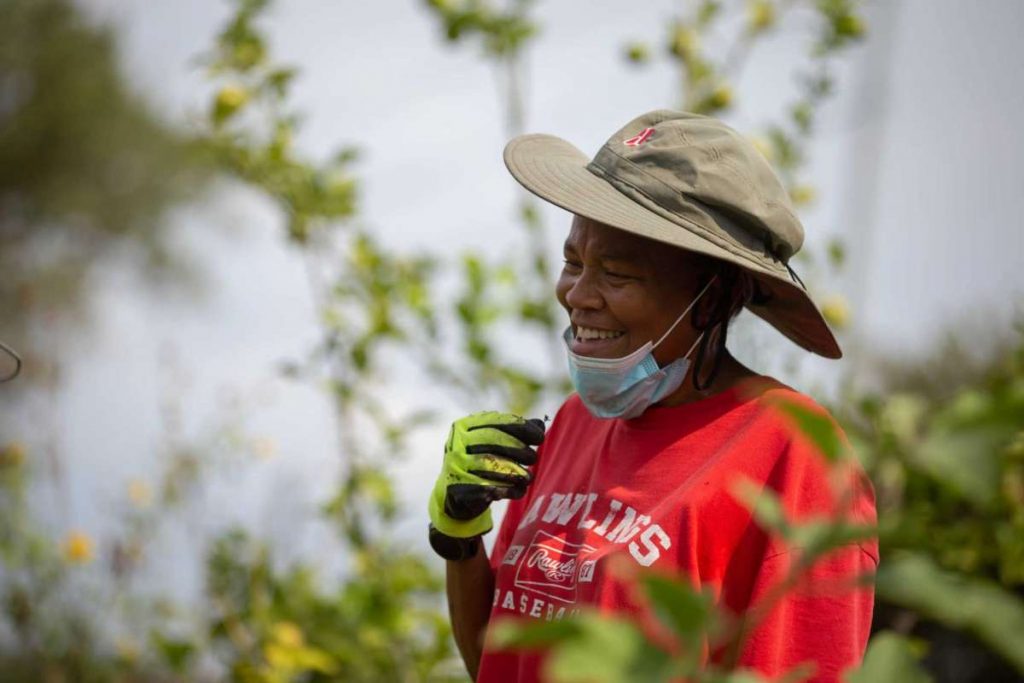
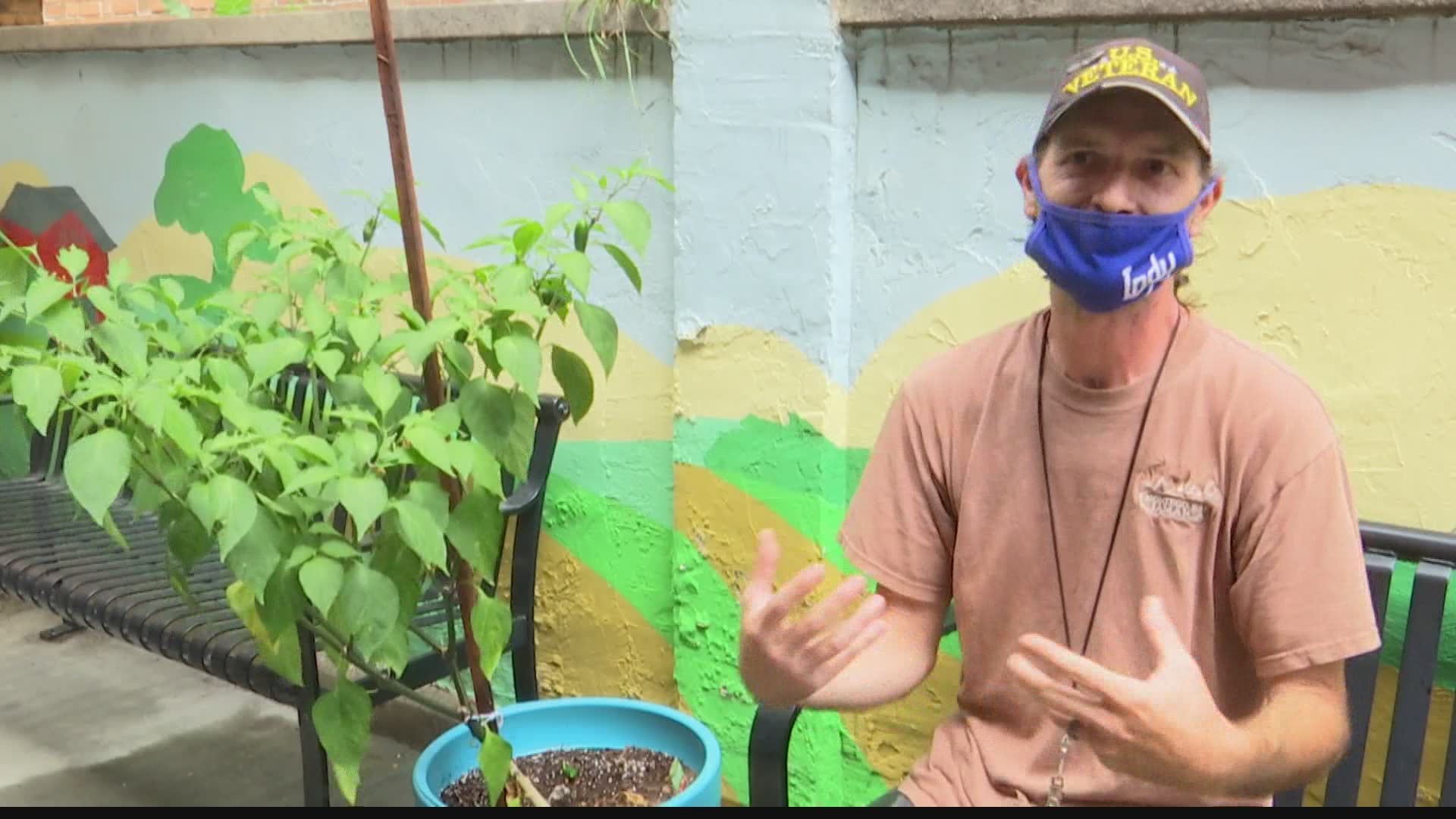
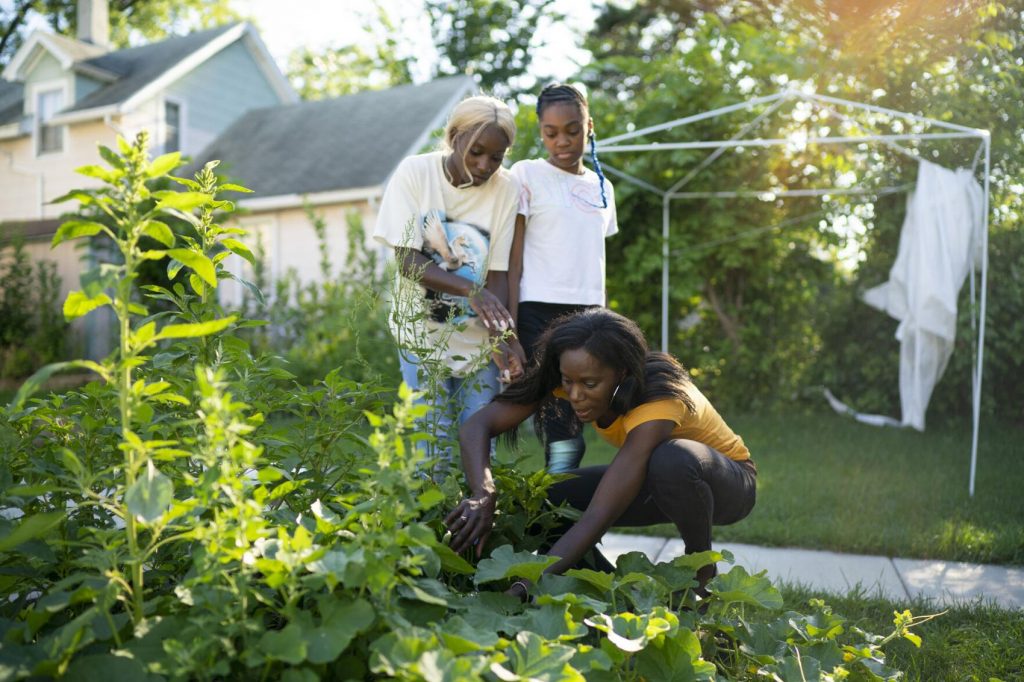
Dr. Sheri Smith is a professor of Urban Planning and Environmental Policy at Texas Southern University and a board member of Blodgett Urban Gardens. Her students first came to her with the idea of starting a community garden.
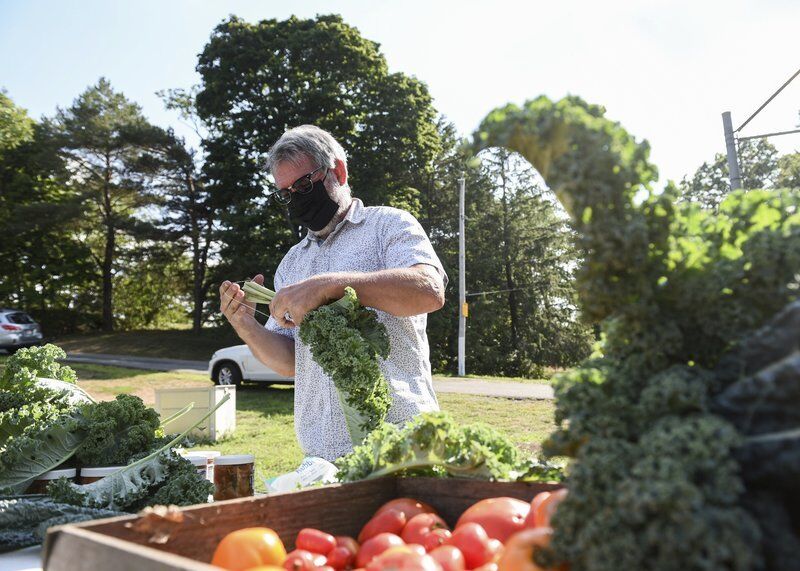
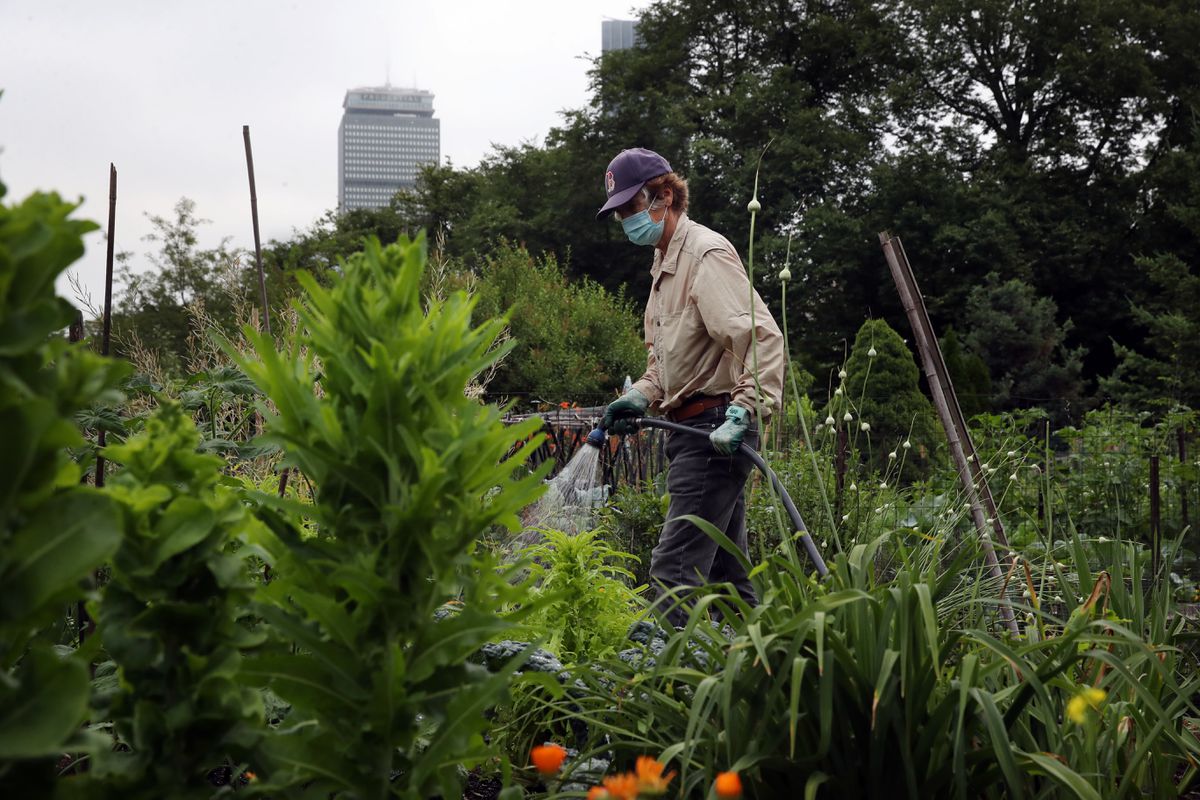
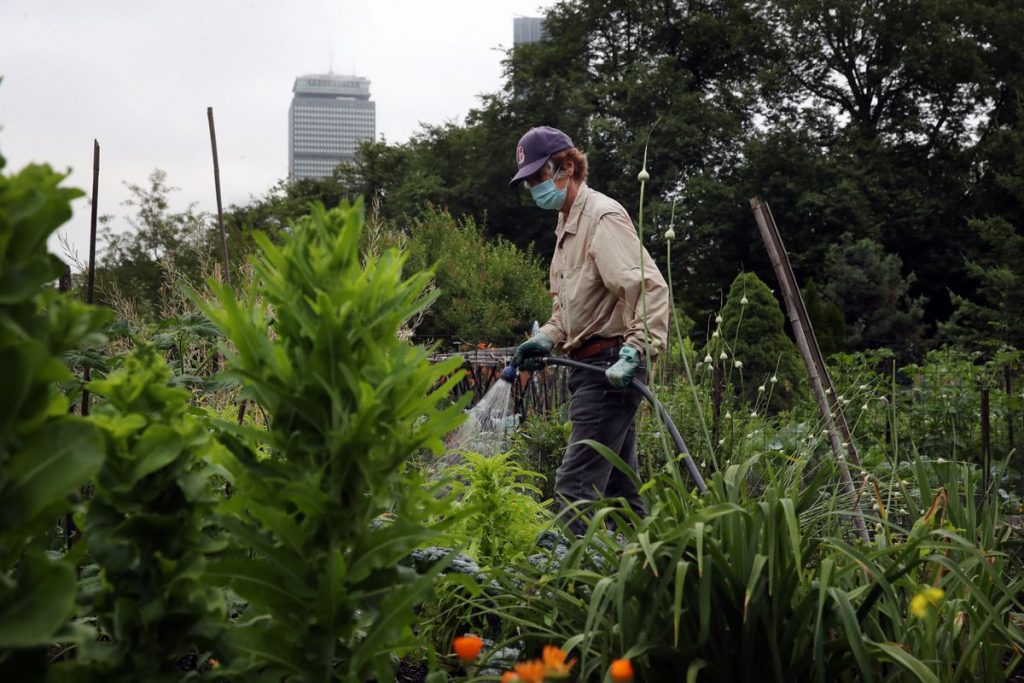
Sheri Smith is on a mission. It’s Saturday, which means it’s farm stand day at Blodgett Urban Gardens, the Texas Southern University community garden she leads in Third Ward.
Smith, who teaches urban planning and environmental policy at TSU, is wearing an oversize red Rawlings T-shirt; her eyes are darting left and right between her beige sun hat and face mask, surveilling the activity in the garden and the handful of volunteers tending their beds.
WeForum.org – Since lockdown, public interest in growing fruit and vegetables at home has soared. Seed packets are flying off shelves and allotment waiting lists are swelling, with one council receiving a 300% increase in applications. Fear of food shortages will have motivated some, but others with more time on their hands at home will have been tempted by the chance to relieve stress doing a wholesome family activity.
The seeds of enthusiasm for home-grown food may have been sown, but sustaining this is essential. Urban farming has much to offer in the wake of the pandemic. It could help communities boost the resilience of their fresh fruit and vegetable supplies, improve the health of residents and help them lead more sustainable lifestyles.
WSJ MAGAZINE – Linda Goode Bryant will be the first to tell you she didn’t know much about farming when she decided to open a community garden in Brooklyn, New York back in 2009.
“I have actually never been very good at putting seed in soil and watering it,” said Goode Bryant, an accomplished artist and filmmaker-turned-agrarian who founded Project EATS, a circuit of small plot, high-yield farms in New York City.
Determined to transform a local Brownsville lot into a sprawling farm, Goode Bryant endured a season of swiping her credit card to support her vision and relied on her trusty hammer and bucket for her daily chores. As community members slowly opened up to the farm and they began to lend their tools and their time. “That’s power,” Bryant said. “A belief in our own power to do for ourselves.”
SAVANNAHNOW.COM – Students at Savannah-Chatham schools will have more fresh veggies to eat this year thanks to a $100,000 grant the district recently received from the U.S. Department of Agriculture. They will also learn how vegetables are planted, grown and prepared for meals.
The grant is part of the national Farm-to-School program that encourages schools to start or augment their on-campus vegetable gardens and incorporate lessons from science, math, language arts and other core subjects into the project.
Even though the schools are open in a virtual-only format for now, Dorothy Dupree, district school nutrition coordinator, is confident she will still be able to do the program and work with students.
“Many of our in-person activities can be bumped to Year 2 or to the spring,” she said. ”[We are] definitely thinking of some creative ways to get materials out. A lot of the planned work in the fall is more behind the scenes stuff, so I am optimistic that key in-person student interactions we had planned for will not be impacted.
This article was produced by Earth | Food | Life, a project of the Independent Media Institute.
When I call Chef Q. Ibraheem to discuss urban farming in her own cooking career, she’s in the middle of placing an order for microgreens from a small farm in Lake Forest, a ritzy suburb just north of downtown Chicago. Now’s a great time for her to chat, actually, because the Chicago-based chef is immersed in what she loves, sourcing ingredients as locally as possible.
“It’s really important we know where our food is coming from,” she says. “I know my farmers by name. I can go to the farms, see how they are growing everything, see it in the soil. It’s always nice to have something within reach and know your produce.” Chef Q runs supper clubs and chef camps throughout Chicagoland, sustaining the local economy by purchasing ingredients from urban gardens and farms within miles of her pop-up experiences.
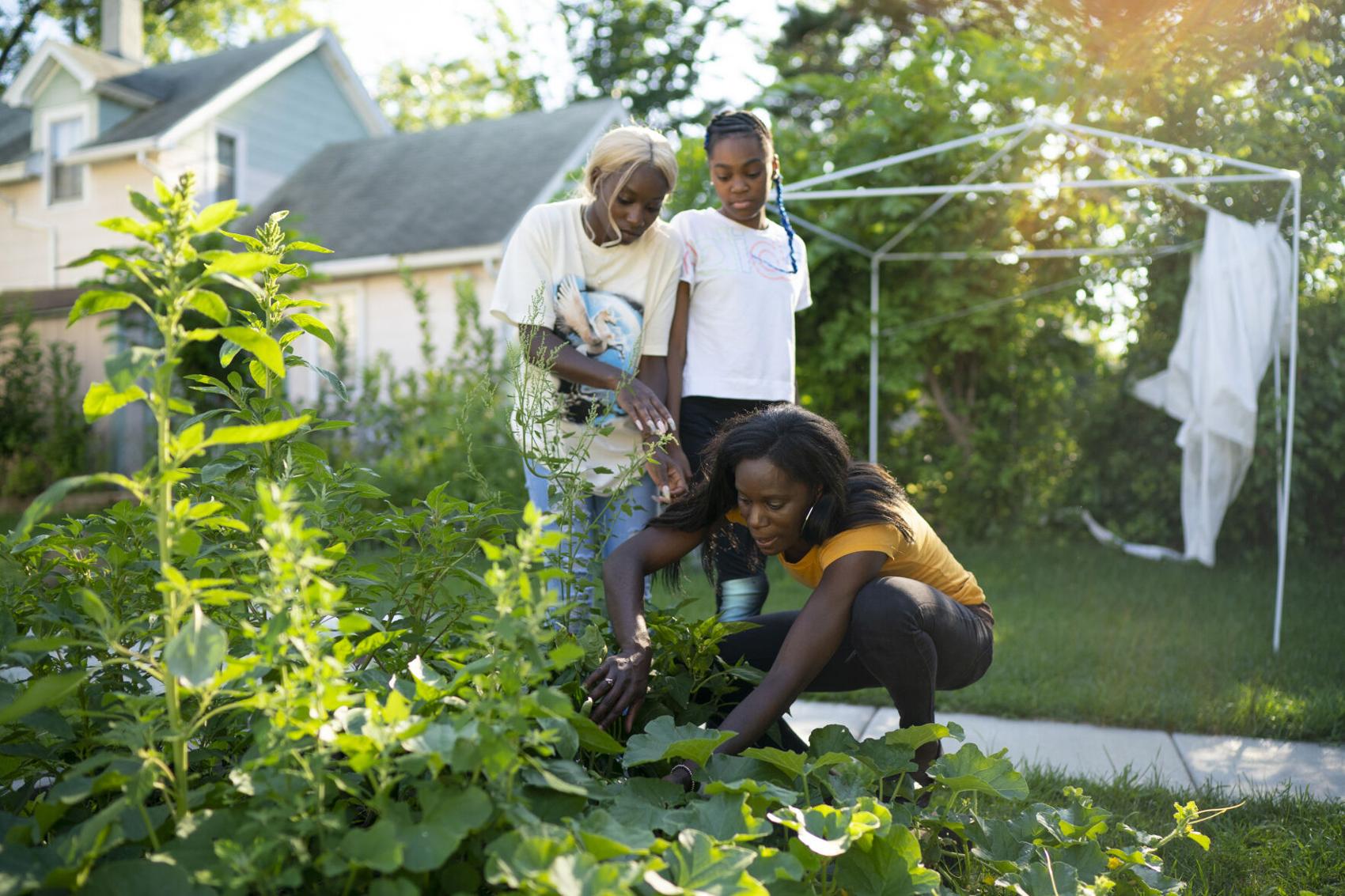
LeAndra Estis checked on the growth progress of vegetables in her backyard garden in St. Paul. Her daughters Quaia, left, and Lonna help in the garden and post their successes on social media. (Jeff Wheeler/Minneapolis Star Tribune/TNS)
MINNEAPOLIS — When a suspicious-looking sprout appeared in the St. Paul garden of LeAndra Estis, she plucked it. The willful plant popped up again. Instead of pulling it out a second time, the new gardener fired up Google. The would-be intruder was spinach.
“I kept thinking, ‘That’s not right,’ ” said Estis, who had never seen the leafy green emerge from the ground and was expecting the spinach she planted from seed to look more bushy, like the mustard and collard greens she watched grow as a child.
In Minneapolis, Christopher Lutter-Gardella faced a different problem. He had to sow peas several times because his plants were getting chewed down at the base from some unseen force.
“Florida may be known as the Sunshine State, but it deserves another nickname — the Gardening State (not to be confused with New Jersey, the Garden State). Three cities in Florida are at the top of our list of America’s Best Cities for Urban Gardening, and another three Sunshine State cities finished in the top 12.
Another sunny state — California — boasts two cities in the top tier.
What about the four other cities in the top 12? Well, they might be as surprising as a rose bush blooming during the winter in Minneapolis.
LawnStarter ranked the 150 biggest cities for urban gardening because tending to herbs, vegetables, and fruit trees is especially popular during the coronavirus pandemic.
With more of us stuck at home, gardening gets us outside. It also provides food security at a time when store shelves are running bare.
So, what are the best U.S. cities for urban gardening? CLICK THE LINK BELOW!”
In urban areas like New York City, green space might be limited, especially at apartments and brownstones. This can mean you might have to get creative if you’re surrounded by concrete and want to grow a garden. Plus, soil contamination is a big problem all over New York. So, it’s important to consider health and safety in your growing endeavor.
Fear not, lots of New Yorkers nurture flourishing gardens. These tips and ideas should help you get growing.
Considering Soil Contamination – Important Safety Tips
Unfortunately, soil in urban garden areas might contain toxic chemicals or pollutants. As such, exposure to and contact with these contaminants can pose health risks for people of all ages. However, young children are especially at risk because they are more likely to play with the soil and even put it in their mouths.
Furthermore, eating food grown in contaminated soil or putting your hands in your mouth after touching it, can cause health problems. So, first and foremost, monitor children’s actions when they are in an urban garden and make sure they (and you) avoid doing these things.
“Food insecurity is an all too real problem for many in our state, and it only got worse due to the recent pandemic. It stems from many issues: lack of money to afford food, food deserts where grocery stores simply don’t exist, and even where things like convenience stores are an option, fresh foods aren’t available or are too expensive to purchase.
Add to that school’s closing due to COVID-19, cutting access to free meals for students who needed it (though many schools went above and beyond to try to get that food to their students and families), and we are in the midst of a crisis.
Fortunately, there are several individual and organization leaders who are cultivating new ways to both provide access to fresh food and access to the community, including Growhaus, Fresh Food Connect, and SummerHom Garden.”
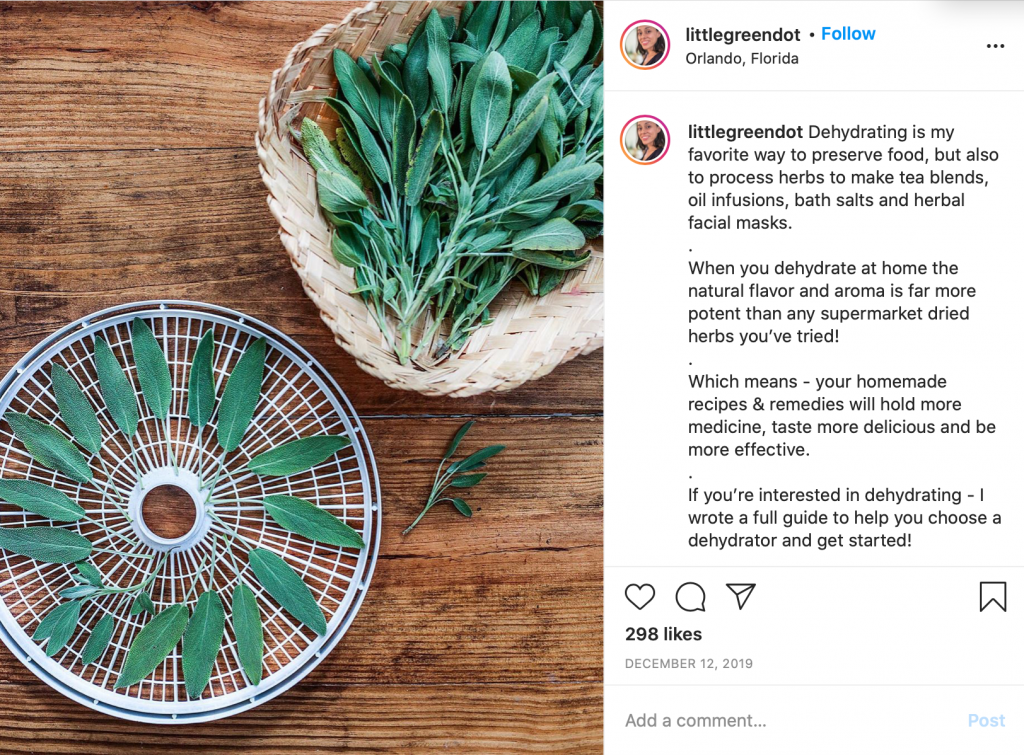
Summer is coming to an end, and your gardens are bursting with produce! It’s time to break out your dehydrator to start preserving your fruits, vegetables, and herbs so that you can enjoy them later on in the season or throughout the fall and winter months.
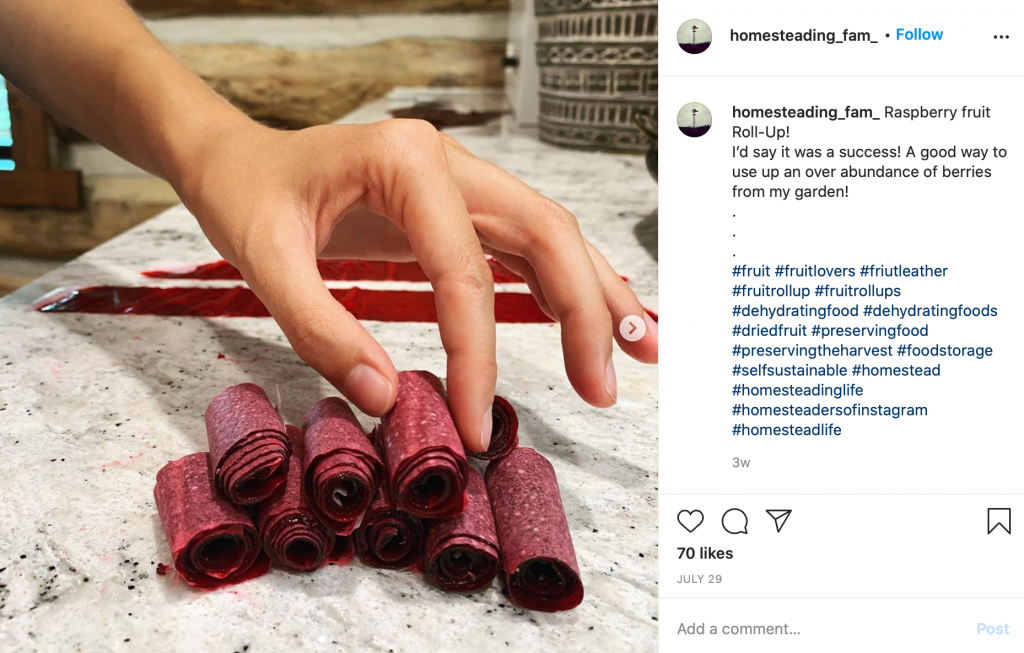
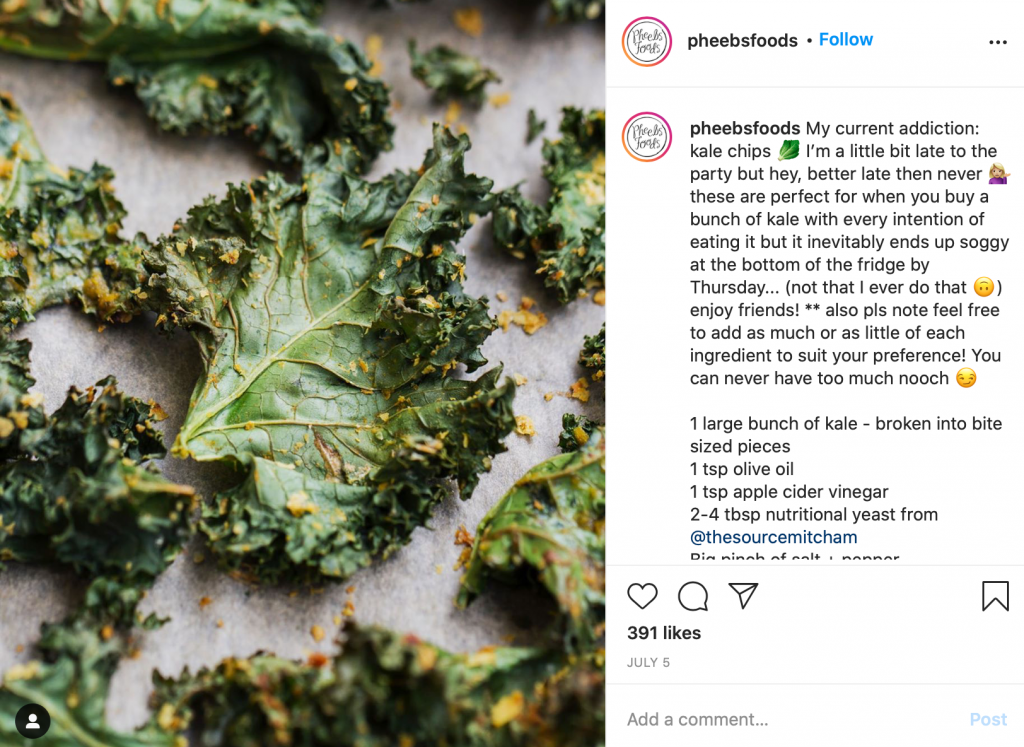
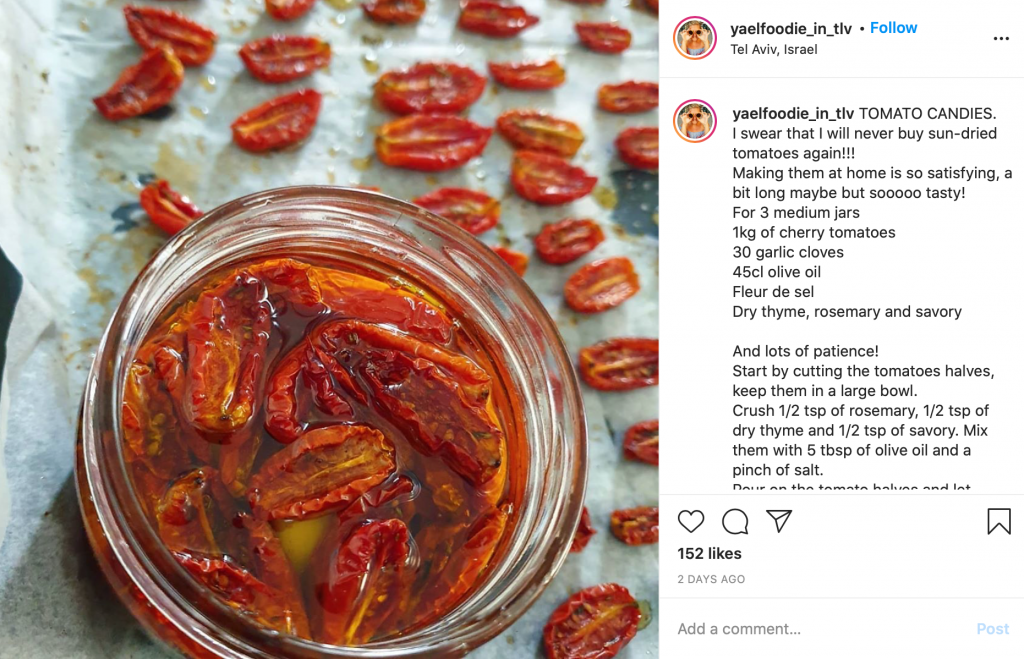
Here are some of our favorite Instagram posts that deliver awesome dehydrated food inspiration!
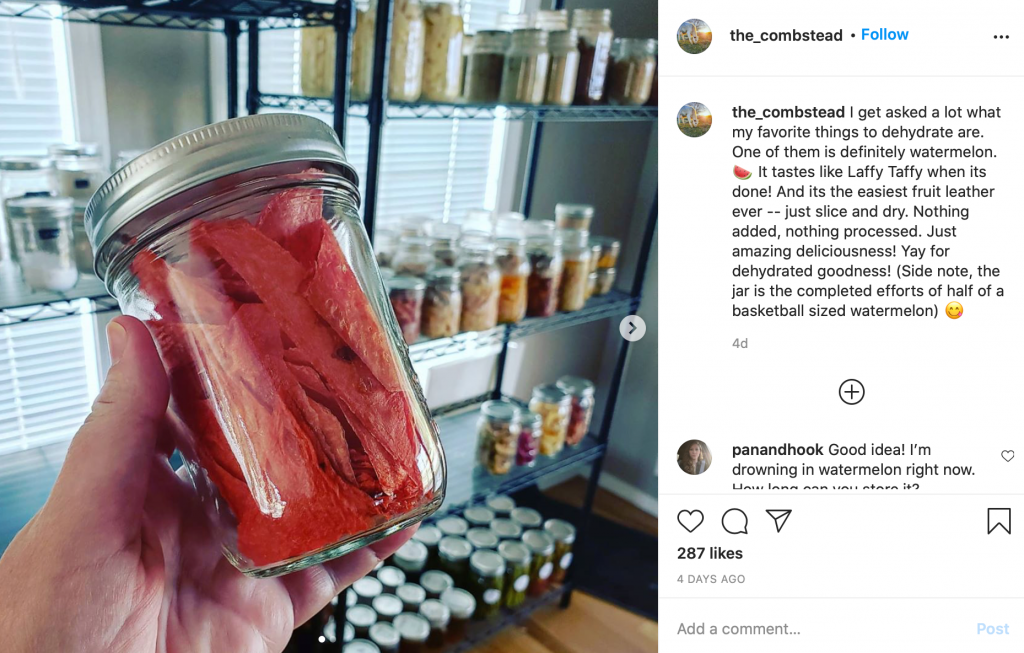
Dried “watermelon jerky” or watermelon candy is a sweet and delightful treat! It’s chewy like taffy and the flavor is reminiscent of a watermelon Jolly Rancher. Generally, you can be enjoying this homemade snack in 24 hours or less.
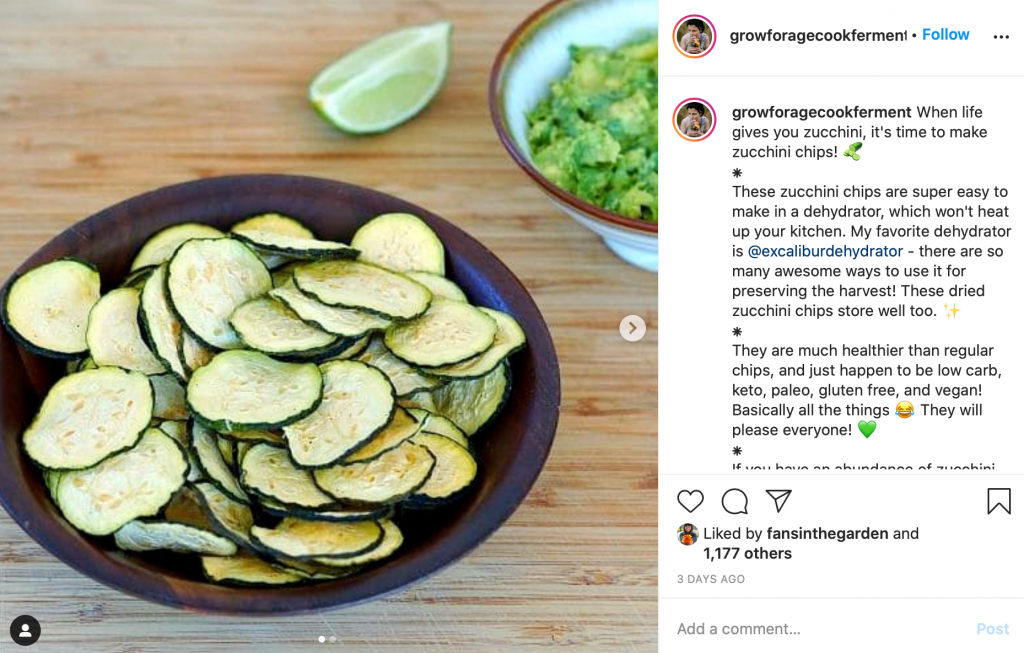
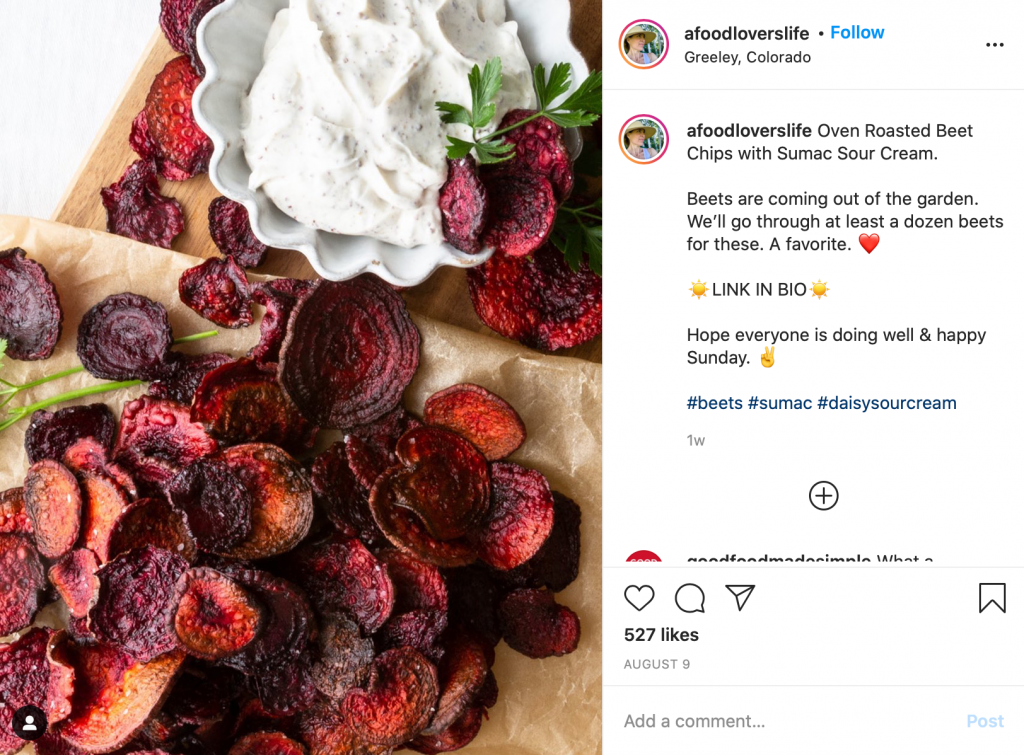
Skip the fatty potato chips and crunch on these! Zucchini chips can be seasoned with your favorite flavors and are completely guilt-free, so snack away!
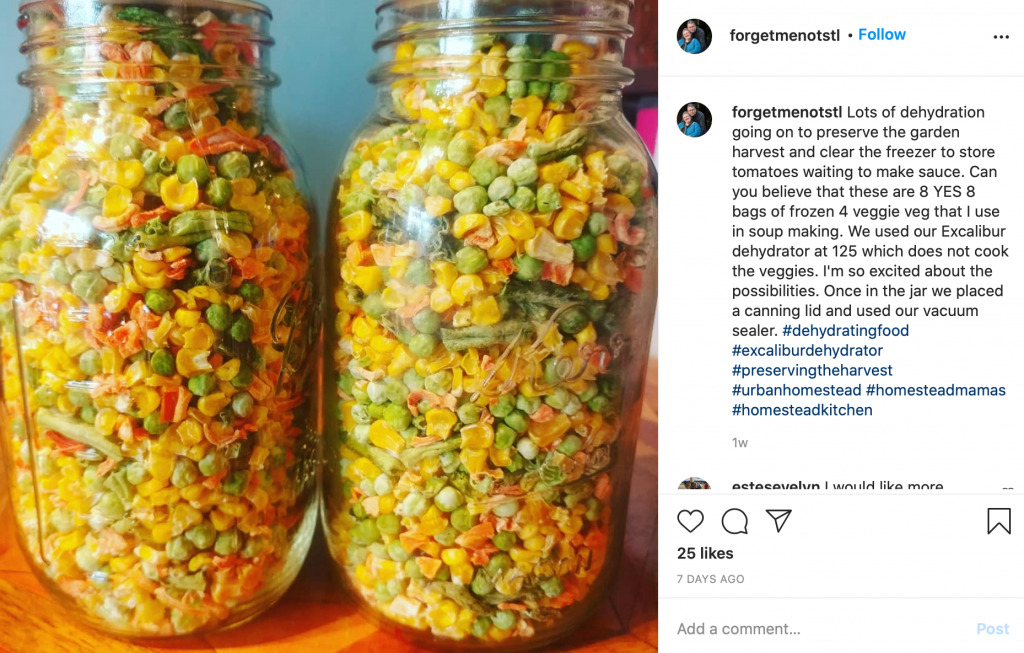
Let us introduce you to this meal-prepping hack! Dehydrate your mixed veggies and then freeze for long term storage. Make sure to use your vacuum sealer before sealing them away.
If you have kids, this one’s for you! You’ll feel great about feeding your kids this healthy treat without any added sugar, colors, or preservatives. You’ll never buy store-bought fruit roll-ups again!
This light and flavorful snacks will satisfy your cravings for potato chips. Coat them with your favorite flavors and never let another leaf of kale from your garden go to waste.
“Way back in March, definitely after 15 Days to Stop the Spread; maybe during 30 Days to Stop the Spread, when we were all heading toward the realization that we had no real plan to stop the spread, I ordered a window-garden flower starter kit.
This wasn’t my inaugural attempt at urban gardening. Last year, in my first stab at growing things, I’d gone to Home Depot for tomato and eggplant and pepper plants and put them in pots on my roof deck.
This year, though, I wasn’t sure that I’d be able to go shopping, or that anyone would be able to go anywhere. Better safe than sorry, I thought.
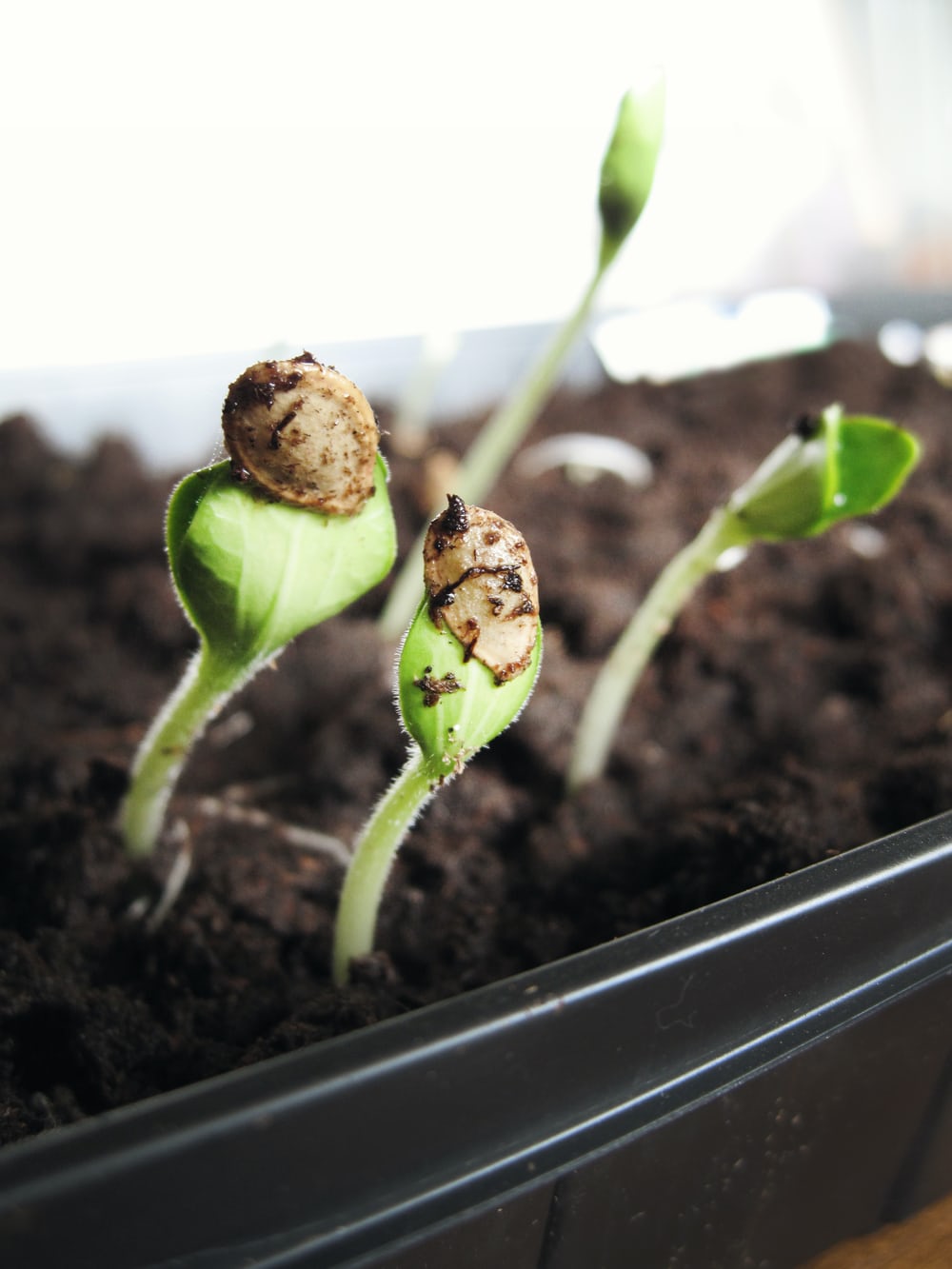
When the kit arrived, I soaked the seeds overnight. In the morning, I pushed them deep into their little cylinders of soil. I left them on the windowsill. The next morning, tiny shoots of green had poked their way into the world. It felt like a miniature miracle.”
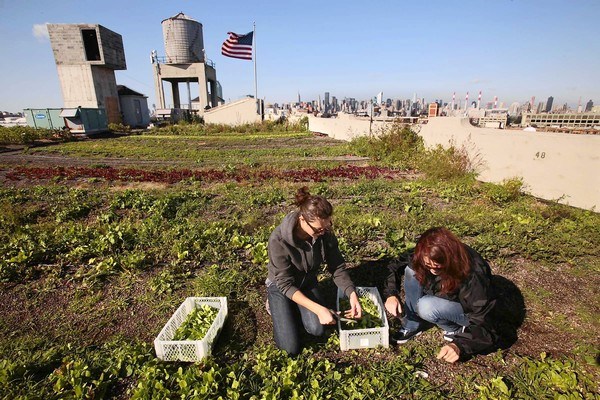
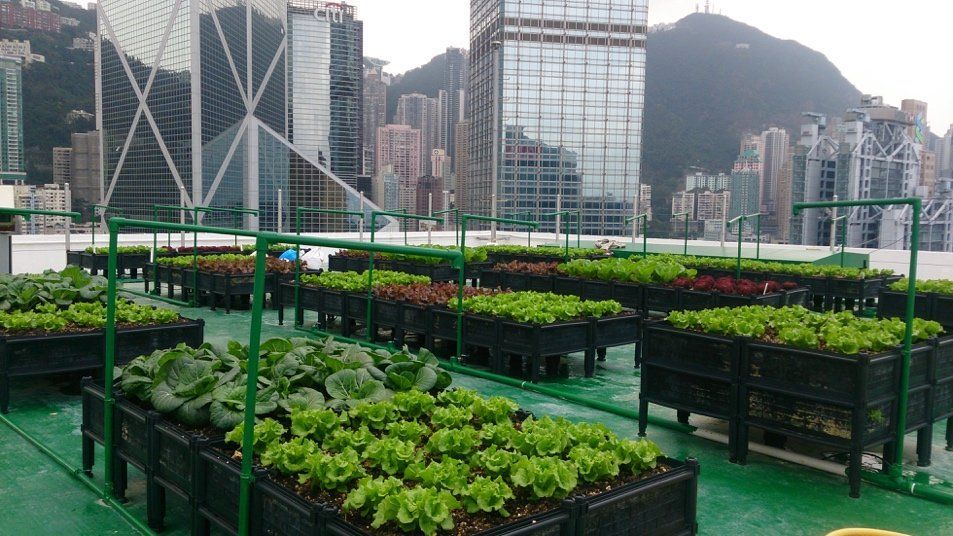
Roofs with vegetation are widely believed to extend roof life, conserve energy, and reduce stormwater runoff and air pollution; new studies show they can also boost the performance of solar panels. Plants reduce a roof’s contribution to the urban heat-island effect by lowering the surrounding air temperature through evaporation; this cooling can also make photovoltaic panels perform more efficiently. Plants also reduce airborne pollutants and dust particles, allowing the panels to absorb more sunlight.
GSFI CEO Madeline Cammarata comments, “In the last few years, rooftop gardening has been growing exponentially. The opportunity and necessity to grow crops on rooftops and inside tall buildings allows for efficient use of the limited space found in cities and we have the infrastructure in place to begin cultivating these structures alongside and even within a select group of our current projects.”
SALEM — A robust “food farm” has popped up at Mack Park and is doling out thousands of pounds of food to local families. But the farm is growing a lot more than carrots and kale.
Described as “a municipal farm and future food forest,” the Mack Park food farm replaced an unused baseball practice area at the base of the park’s hilly Grove Street entrance. Today, it constitutes about 10,000 square feet of growing space, along with a manmade pond that captures water for irrigation and overflows to a wetland abutting Tremont Street.
But as city councilors and other Salem officials toured the farm on Monday, there was a sense from some that more farms are not just coming, but must keep coming.
“We’re working on a lot right now, and so far the city — all of you — has been terrific, and this project is sailing,” said Pat Schultz, one of three agricultural minds behind the farm. “I know everybody is going to say this, but (demand) is going to continue to grow, and we can’t keep up with our three markets on Wednesday and the food giveaway on Saturday with just this farm.”
READ THE FULL ARTICLE: https://www.salemnews.com/news/local_news/growing-more-growing-space-mack-park-food-farm-triggers-urban-agriculture-movement/article_f5bf4d42-d8af-5adb-815a-f255ceeddd3b.html
A survey by the Royal Horticultural Society found that 80% of millennials own a houseplant of some sort. But did you know that caring for indoor plants also comes with its share of benefits? Besides improving our well-being by boosting moods and concentration, indoor plants are beneficial to our home. Growing plants indoors, especially edibles, eliminates the need to package and transport produce. As a result, there is minimal waste created and reduced carbon emissions.
Indoor gardening also makes it easier to control pests and diseases without the use of chemical-based herbicides and pesticides. And as water shortages threaten the future of agriculture, cultivating indoor plants can boost sustainability. If you have been looking to create a more sustainable garden, here are tips on how to grow healthy indoor plants.
When Edmunds heard that a local nursery, Soil Sisters, was offering a gardening camp this summer, she enrolled her daughter Lenyxx, 7, in it.
“It is just a great idea,” she said. “I am really grateful.”
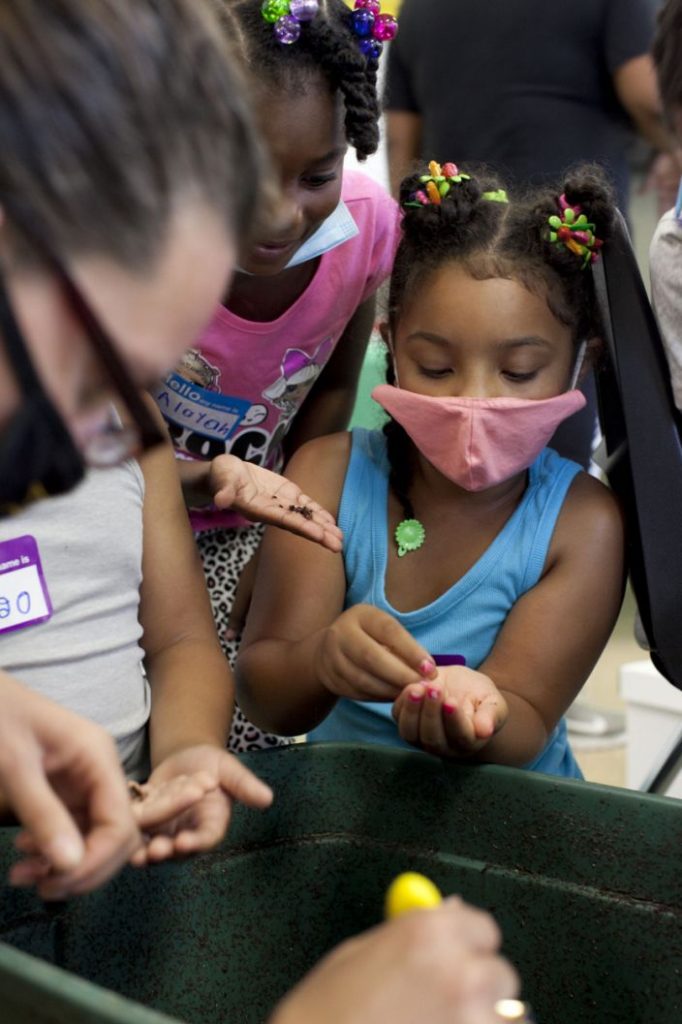
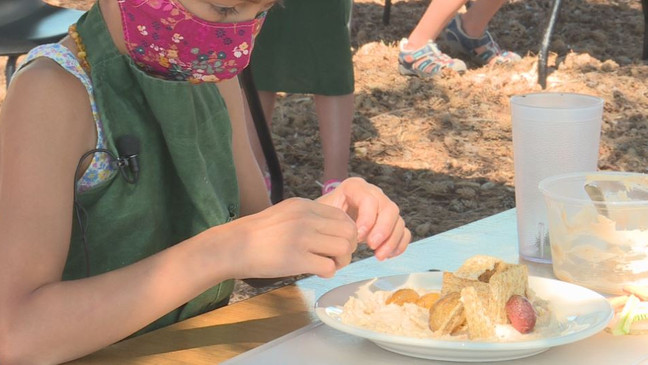
The Soil Sisters are Raynise and Taray Kelly. Thanks to a grant, they started the camp to give children in the Beltzhoover neighborhood of Pittsburgh outdoor activities as the COVID-19 pandemic lingers. Like Edmunds, the Kellys gardened with their grandparents growing up and wanted to introduce a new generation to the tradition.
“I am hoping it gives kids a sense of connection to things that aren’t charged up to batteries that don’t necessarily have to involve a huge group of people. You can garden with your family or by yourself,” Raynise told TODAY Parents.” “We’re just slowing down the day and just appreciating what nature has to offer.”
BOISE, ID (CBS2) — “Now more than ever it is especially important to know where your food comes from, the importance of environmental education is huge,” explains Executive Director of Boise Urban Garden, Lisa Duplessie. “Getting outside of that traditional classroom where they get to put their hands in the dirt.”
Boise’s Urban Garden School, located on Five Mile Road, is an outdoor learning environment, set on 1,500 square feet of outdoor classroom space and 3/4 acre teaching garden, this school gives our community the opportunity to learn about organic and science based gardening and how to grow your very own food.
“You know we are having to look outside of the box and out programs fit in perfectly,” Duplessie says.
Conservation being one of the main focuses, they tell me that their programs welcome all ages of students.
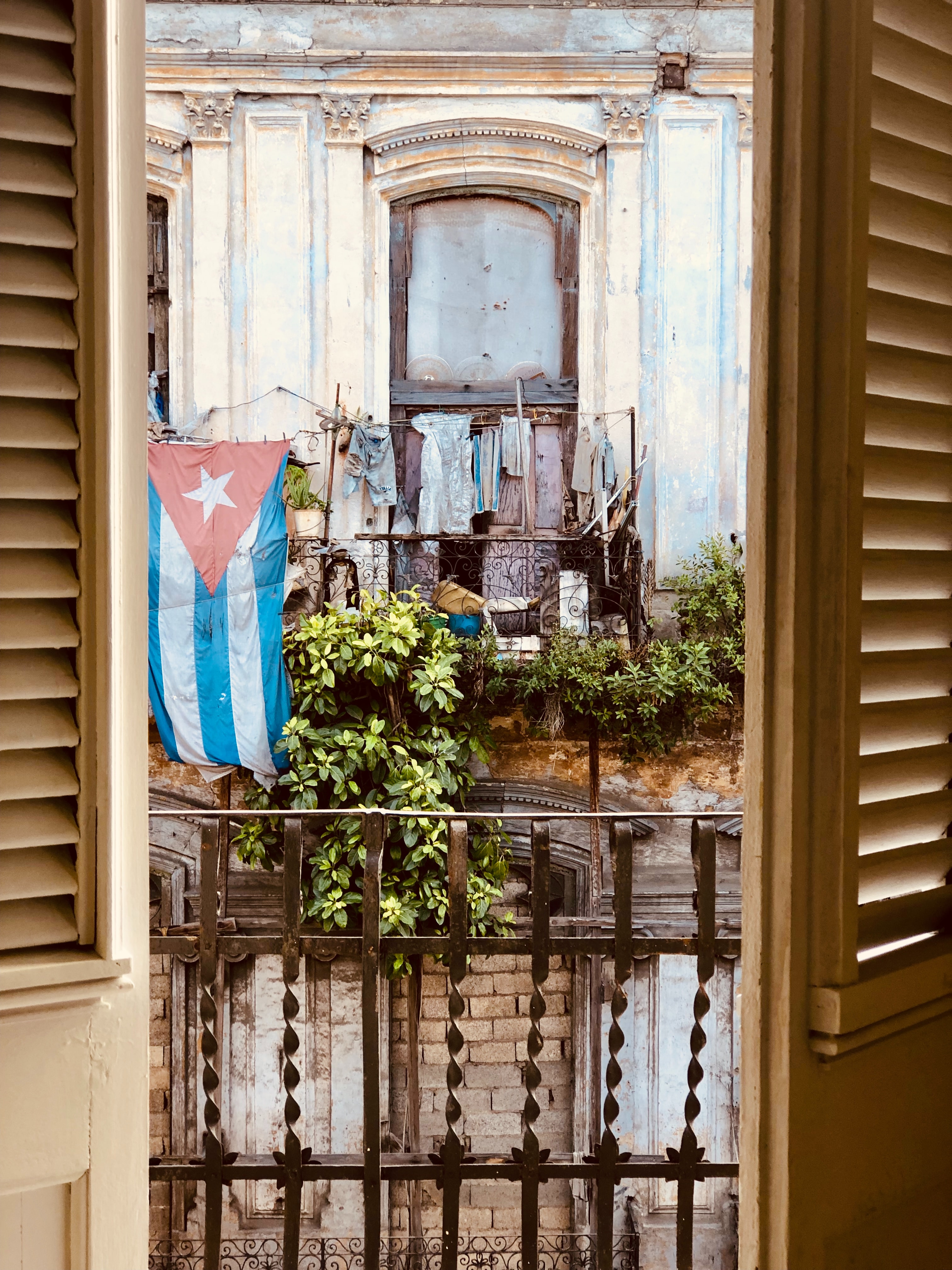
HAVANA, July 5 (Xinhua) — Angel Hernandez, a resident of Havana’s central Playa district, never imagined he would be cultivating crops again after retiring, but the COVID-19 pandemic presented a good excuse.
Like many Cubans, he has been supportive of the country’s efforts to increase food production amid economic restrictions, the tightening of the six-decade U.S. trade embargo against the island and now the health emergency.
The 74-year-old spends more than three hours a day tending to his urban garden, a 150-square-meter plot of land where he grows herbs, vegetables and fruit, from beans, tomatoes and cucumbers to mangoes and spearmint, an indispensable ingredient of Cuba’s signature cocktail, the mojito.
“We did not need to go outside for vegetables and herbs during the lockdown,” Hernandez said.
“I cannot totally feed a family of seven with this small-scale production, but it helps a lot,” he said, adding “this is my passion.”His passion has also contributed to building community through a seed-sharing network that has enhanced connections among urban gardening enthusiasts, community leaders and food security activists.
Thousands of people like him across the country are part of Cuba’s urban agriculture movement, which emerged as an alternative solution to help the sanctioned country stabilize the supply of fresh produce to Cuba’s cities.
Amid the pandemic, Cuba’s government is again encouraging farmers and urban gardeners to increase output locally to substitute food imports.
This sudden, shared urge to grow food in the middle of America’s cities intrigued us — enough to make an episode on urban agriculture, featured above. As the creators of a food podcast, we’re well aware of the harms caused by the intensive, industrial system of agriculture that feeds America, from the food miles racked up by the average spinach leaf to the underpaid farm workers who harvest it. Could the solution to these problems lie in diversifying where food is grown? Advocates claim that urban agriculture, which has been expanding in many ways in recent years, yields healthier diets, environmental benefits, and a host of more intangible outcomes, from beautification to food sovereignty. We couldn’t help but wonder: Might this spontaneous efflorescence of COVID Victory Gardens be part of a genuine shift, as America’s city-dwellers begin to feed themselves?
In March, as the United States began to lock down, shoppers met an unfamiliar and disturbing sight: empty shelves where bags of flour, jugs of milk, and packages of chicken breasts used to be. These shortages, combined with the “Groundhog Day”-like experience of being home day in, day out, for months on end, inspired a wave of gardening novices to try growing vegetables at home — and we at Gastropod, the podcast that looks at food through the lens of science and history, wanted to join in. To our dismay, we discovered that some of the plants we’d hoped to grow had long since sold out, like bags of flour before them, in what has been hailed as the great COVID-19 Victory Garden comeback.
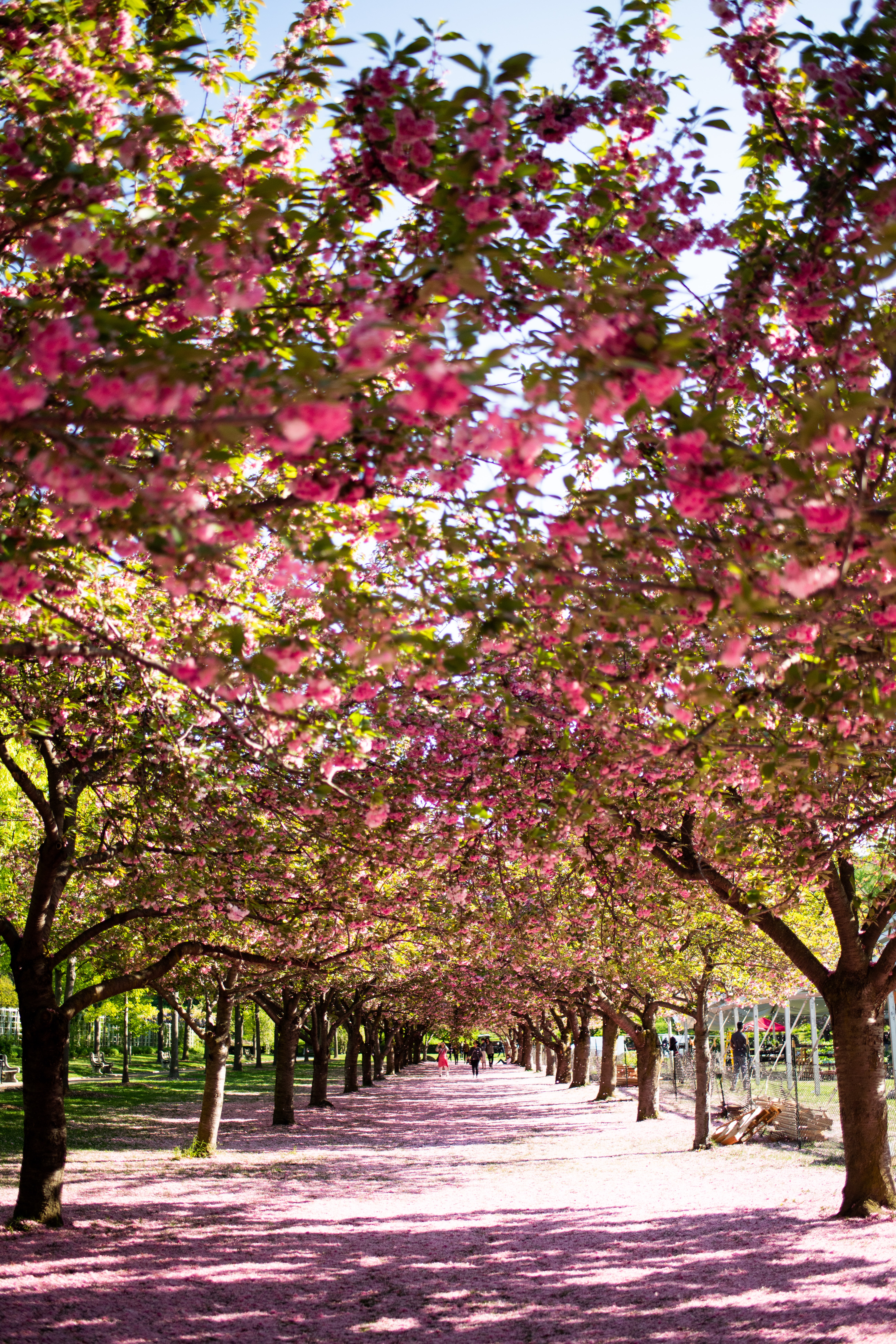
BBG is the Brooklyn partner for the NYC Department of Sanitation’s Bureau of Recycling and Sustainability’s NYC Compost Project hosted by Brooklyn Botanic Garden, which helps to reduce waste in NYC and rebuild city soils by giving New Yorkers the knowledge, skills, and opportunities they need to produce and use compost.
Brooklyn Botanic Garden’s Community Greening programs promotes urban greening through education, conservation, and creative partnerships. Programs include free, seasonal workshops on sustainable food-growing topics, Making Brooklyn Bloom, an annual spring symposium on sustainable urban home/community gardening, the Brooklyn Urban Gardener(BUG) certificate program that cover the basics in urban gardening and community greening, and the Community Garden Alliance, a collaborative network of community gardeners in Brooklyn, most of whom engage in urban farming and food production practices.
BBG’s adult education program offers a range of lectures and workshops to help people better connect with their food system. The curriculum is organized into categories ranging from art, floral design, food, gardening, and horticulture to nature and wellness, and include courses in container gardening on rooftops, introduction to organic vegetable gardening, soil science 101, and seed starting Interested adults can either take a one-time drop-in class or enroll in a series. For the very serious, the BBG offers certificates in horticulture and composting, which require successfully completing eight courses.