
Rising Food Prices: What You Can Do About Them

The rising food prices have been in the news a lot lately. I mean c’mon it helped to cause an uprising in Egypt.

Here in the States, the food prices are starting to rise as well. While indeed that may be true, it’s not the food that is too expensive it’s everything else that goes into getting the food to your plate that’s causing the price to increase.

The Daily Green had a great post titled For Every Dollar You Spend on “Food,” Less than 16 Cents Pays for Food. They broke down where the money goes based on what the USDA reports.

Wait how much actually goes to the food?
As you can tell by the title less than 16% of each dollar goes towards the actual food. The other 84% goes towards the marketing of the food.

They break down that 84% even further. Food processing (19%) and services (34%) make the lion share of that 84%.

Food processing are the ones that process your food into the “food” products that can be found on the shelves. Food services are the ones that distribute, package and label the food.

Pretty much what this means is that most of the money that we are paying for food goes to the middleman NOT to paying for the food. This system doesn’t seem like one that can work and is sustainable in the long term.

That is the real issue.

Great food prices are rising, but what can we do?
Our current food system relies on these middlemen to provide us with our food. I say we cut these middlemen out of the equation thus bringing down the price of food.

There are a few ways that you can cut out the middleman and get your food from closer to the source.

  • Start to grow your own food. You might not be able to fully survive off of what you grow, but every little bit matters.
  • Go to your local farmers market and buy directly from the grower. There is no middleman involved there.
  • Join your local CSA. This is a good way to connect with others in your area and to support the local farmers.

By doing any of those or a combination of them, we can combat the high prices of food and help to cause the change that we want to see.

What are other things that we can do about the rising food prices?

httpv://www.youtube.com/watch?v=4txpTgGpvBw
Succession Planting: Grow More Vegetables in Your Garden

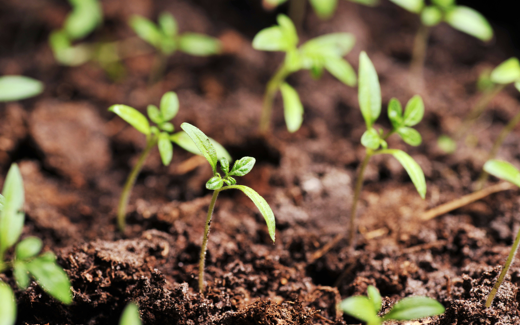
About two weeks after I started my garden from scratch, I did some succession plantings. Since I’m gardening food to eat, not look at, this will help me to grow more on my balcony garden and eat from it more than twice in a year.

Succession planting is when you plant a new set of seeds about 2-3 weeks after your initial planting. The purpose of this is that it will keep you with a continual harvest. When you harvest the first set, the second set is growing right behind it. Make sense?

When I did the first round of plantings, there were two rows planted in each of the containers. For this succession planting, I added two more rows to each of the containers.

Now each container has four rows of seeds planted. This should allow me to grow more vegetables on my balcony and hold me accountable to my word.

Have you ever done succession planting? What other tips are there to grow more vegetables?

httpv://www.youtube.com/watch?v=3uzZaonv-5A

BevoWorks Sponsor Profile

I’d like to introduce BevoWorks as a sponsor of Urban Organic Gardener. I spoke with one of their operating managers and co-owners, Taylor Hill to learn more about the company. Here’s the Q&A.

What does your company specialize in?
We hand-select beautiful, durable products for the home, specifically outdoor products like raised beds, greenhouses, garden decor and architectural items, such as post caps and finials.

What is your best selling product?
Right now, our best selling products are T5 High Output Fluorescent Lighting Fixtures that are used for starting seeds and getting a jump on the growing season.

Which of your products do you think is a must have and why
The Urban Garden Raised Bed is by far one of the most attractive, functional gardening systems we have found for urban gardeners. It’s certified organic cedar, and allows gardeners to really get a lot of production from a very small space. Plus, the folks that make it provide excellent customer care, so we feel really good about selling these.

What do sustainable and organic gardening mean to you?
For me, it’s about being able to control part or all of my food supply in a way that doesn’t rob the earth or my neighbors that live on it with me. It’s about doing things that connect me to the source of my food, and getting really great benefits in return, such as exercise, and healthier, more delicious food so that I can feed my family and friends.

What is your funniest gardening story?
I had a neighbor who went out and bought a huge tiller and tilled half his yard, about a 24 ft x 24 ft area, to plant a huge garden after he watched me put in a large raised garden bed that took an area of about 16 ft x 14 ft. With a shovel and a hoe, I removed the grass and put down newspaper and brought in a large load of organic dirt.

This neighbor laughed at my prep work and told me his garden would out preform mine in the end. However, as spring turned into summer, my wife and I were sharing our yield with this neighbor because their garden did not produce and yield half of what our garden was producing. Needless to say, the next spring this neighbor was asking me at every turn what he should do; dirt, planting combinations, etc. For us, half the fun of urban organic gardening is being able to share the produce with others, and get them excited about trying it, too!

Be sure to check out BevoWorks on Facebook and Twitter.

Find out more about becoming an Urban Organic Gardener sponsor.

Roasted Broccoli and Garlic Soup

When I was a kid broccoli was one of the only veggies that I actually liked, but I used to eat them floating in a pool of melted butter (or whatever it was). Since broccoli is tough to be eaten it’s raw form, this roasted soup is a nice way to get more broccoli in your meals during the cold winter months.

This broccoli soup is dairy and gluten free.

    Here’s what you’ll need:

  • 2 heads of broccoli
  • 1/2 parsnip
  • 1/4 medium sized onion
  • 4 cloves of garlic
  • Tablespoon of olive oil
  • Dash of sea salt
  • 4-6 cups of homemade vegetable broth
    How to make:

  • Chop up broccoli and put into bowl
  • Slice up parsnip, onion and smashed garlic and put into bowl with broccoli
  • Pour olive oil over the veggies with salt and toss to coat
  • Put on a baking sheet into the oven at about 375-400 degrees for 15-20 minutes until they start to brown
  • Flip over veggies and roast for another 10-15 minutes
  • Add to your blender or food processor with about 2 cups of veggie broth, removing some pieces of broccoli for garnish
  • Blend up, slowly adding more veggie broth to your desired consistency
  • Pour into pot and warm over the stove
  • Continually stir the soup as you want to warm it and not boil it
  • Transfer to bowl and top with roasted broccoli pieces

What’s your favorite broccoli soup recipe?

httpv://www.youtube.com/watch?v=nKvEg5btdSA

Recent recipes

Sources for Buying Non-GMO Seeds

One of the questions that I often get and have had myself for a while is where can you buy non-gmo seeds or seeds from companies that aren’t owned by Monsanto.

Monsanto owns something like 90-95% of the seed companies out there. So the company might not be selling genetically engineered seeds, the money is still going into the pockets of Monsanto. I’m not down with that.

Here are some seed companies that I’ve either worked with or have been highly recommended by others.

SeedsNow.com

SeedsNow is a family owned business right in Los Angeles that provides 100% Pure GMO-FREE Non-Hybridized/Heirloom seeds. All their seeds are raw and always un-treated.

Without getting into the specifics, the seeds they have are the most natural most pure form of seed you can get.  Knowing that their site doesn’t offer any hybrid seeds is a really good thing for me.  With their heirloom open-pollinated varieties I know that I’ll be able to save my seeds after harvest. Can’t do that with hybrid or GM seed!

One of the things that I like most about SeedsNow.com is that they have seed sampler packs starting out at  99¢. At those prices you can afford to try growing a lot of different things.   A lot of people don’t know this but their “sampler” packs actually have the equivalent amount of seed (or more) than regular sized packs form other companies.

They have a huge variety of NON-GMO seeds for you to start growing your own food. Definitely a site worth checking out:  www.SeedsNow.com

You can get 10% off your SeedsNow.com purchase by using the code URBAN10.


Botanical Interests

I also contacted, Botanical Interests to find out where they source their seeds from and their stance on genetically engineered seeds.

This is the response that I received from one of their representatives:

We understand people’s concerns regarding food safety and the health of the environment, and we do our best to be good stewards of the environment and to help people have access to safe, nutritious food.

Companies that care as much as we do

For this reason, these are companies that I can support and get behind. There are some seed companies out there that sell a small amount of Monsanto seeds (less than 10%), but it’s not like they are weening themselves off and going strictly non genetically engineered seeds.

I know that this is a business decision and much more goes into than I likely know. It’s easy for me to sit here on my laptop and spout off, but it takes action for things to change. Supporting these giants, as small as that support may be, will keep them growing and alive.

When it comes to the choices and purchases that we make, it’s best to know the source of where our stuff (be it food, clothing, seeds or whatever) comes from and support what we believe in. We cannot pretend to be blind to what really goes into and the results of our purchases.

Your turn…

What other non-Monsanto owned, non-GMO seed companies do you know of?

How Mobile is the Stack N Grow Mobile Planter?

One of the questions that I’ve been getting a lot in the past week is just how mobile the Stack N Grow mobile planter is.

When it’s filled is it too hard to push? The short answer to that is – no. It’s on wheels and can easily be pushed around from spot to spot.

I actually had to move mine to the since the gutter is broken above my balcony, the rain water was pouring directly into it. It now sits in the front of my balcony garden.

You can easily move it around your space to follow the sun or to suit whatever needs that you have.

Don’t forget that today is the last day to buy the Stack N Grow at 20% off (expires end of day on March 1, 2011).

All you have to do is go to GardenSupermart.com to buy the Stack N Grow. When you put it into your Shopping Cart enter the coupon code UOG20 to get 20% off your purchase.

This offer expires today, so be sure to act now!

httpv://www.youtube.com/watch?v=yZvZRZhn9UA

Stack N Grow Mobile Planter Winner & Limited Time Discount

I’d like to thank everyone that entered the contest for the Stack N Grow Mobile Planter and Algreen Products for supplying the product.

There were 170 entries. To select the winner, I went to Random.org and put in the number 170. The random number that it generated was 82.

Sorting the comments from newest to oldest, I counted down to the 82nd comment, which was left by Nicky of DirtAndMartinis. She can also be found on Twitter @DirtAndMartinis.

Her comment was:

I’d put this on a table in my garden as a centerpiece and plant herbs with an Italian theme. Basil, oregano, thyme…

Since there was a such a positive response to this contest, I was able to get all of you the Stack N Grow at 20% off for the next two days (expires end of day on March 1, 2011).

All you have to do is go to GardenSupermart.com to buy the Stack N Grow. When you put it into your Shopping Cart enter the coupon code UOG20 to get 20% off your purchase.

This offer is only available for the next two days, so be sure to act now!

httpv://www.youtube.com/watch?v=Y8xeLhFXhSY

Simple Spaghetti Squash Recipe

Spaghetti squashes are another winter squash that are prevalent this time of the year no matter what part of the country you are in.

This recipe is simple and the squash can be used in a variety of ways afterwards. It can be used as a standalone dish or it can be mixed in with regular pasta to lighten up the dish a bit.

    Here’s what you’ll need:

  • 1 spaghetti squash
  • Olive oil
  • Sea salt
    How to make:

  • Cut off top and bottom of the squash
  • Rest squash on cutting board one of the cut sides down and cut down the middle
  • Scoop out the seeds and place in a bowl to roast later on
  • Drizzle olive oil in the squash, rub it in and sprinkle with sea salt. Flip the squash over and repeat on the other side.
  • Do for both halves
  • Place on a baking sheet cut side down, skin side up
  • Place in oven at about 375-400 degrees for about 30-45 minutes
  • It is ready when your fork can easily pierce through the skin and squash
  • Remove from the oven and place on cutting board skin side down
  • Use your fork to gently scrape out the squash. It should be stringy like spaghetti
  • Place in a bowl on the side
  • Top as you’d like or mix it up with regular pasta to lighten up the dish

What kind of sauce would you make for this dish?

httpv://www.youtube.com/watch?v=PUkMIQs-OhE

Recent recipes

Women Exploitation: How Your Dinner is Supporting It & What You Can Do

There are plenty of safety problems in the food industry and your dinner is linked to them. These safety problems are why you should grow your own food and organic gardening makes sense to me, but right now I want to discuss problems beyond the food.

Let’s talk about how the workers are treated, but more specifically the female workers. There was an article on Alternet.org titled “Why Women Who Pick and Process Your Food Face Daily Threats of Rape, Harassment and Wage Theft.”

That’s a pretty heavy title. Here’s an excerpt from the first paragraph:

The report, “Injustice on Our Plates: Immigrant Women in the U.S. Food Industry,” compiles the experiences of 150 immigrant women who came from Mexico or other Latin American countries to work in the food industry, both in fields and in factories, across the United States. The picture it paints is grim. Women, who make up nearly a quarter of U.S. farmworkers, face the same indignities that immigrant men face — and then some.

It makes it difficult to sit down and enjoy your meal today, doesn’t it? To know that anyone, especially a woman, is being treated this way so that we can enjoy our food. Can you really enjoy your food knowing this?

As you read what goes on in the post, it hits you like a ton of bricks. There is no way that I could consciously support these practices and companies that employ them.

This is why I like to vote with my dollar, since George Washington is the most powerful man in this country.

Even though it’s a depressing post, there are things that you as an individual can do to stand up against the way these women and workers are treated.

Totally removing yourself from the industrialized food world might not be possible right now, but here are somethings that you can do:

  • Be self-sufficient. This is a long term goal of mine, but one that many might not be able to do right now.
  • Start your own garden. You can start to grow some of your own food. Space shouldn’t be an issue or excuse because I’ve already shown you what can be done on a fire escape and balcony.
  • Support local growers. Shop at your local farmers markets or join your local CSA.
  • Buy organic produce. At the very minimum, you can buy organic produce. If these workers are going to be working the fields under these horrible conditions, at least let them be fields that are free from chemicals.

The next time you sit down to eat your meal, think about where you food came from and how it got to your plate.

How else can we join together to not support this exploitative food system?

httpv://www.youtube.com/watch?v=tebyf2y7_Y4

How to Set-Up a Stack and Grow Mobile Herb Planter

Since I’m running the contest for the Stack and Grow Mobile Herb Planter I thought I’d show you how to set it up.

The set-up was a bit mess for me and potting soil got all over, but overall it was pretty simple. Here’s how you set it up:

  • Check all of the planting trays. One of them has a closed center. If you want to grow smaller plants, then put that tray at the top. If you want to grow a small tree or shrub, put that tray towards the bottom.
  • Place the cart down on a solid surface.
  • Put the wheels into the holes. You’ll have to force them in slightly and twist them.
  • Place the first planting tray on the cart. Align the holes and press it into place.
  • Fill the trays with potting soil and the ring that’s within each tray.
  • If you are transplanting, then insert your transplants. If you are starting from seed, continue to add more trays.
  • Add the next planting tray so that the planting pocket is between the two below it. Fill with potting soil and repeat.
  • After you have your planting trays added and filled with you soil, you can begin to sow your seeds.

The seeds that I decided to plant from bottom to top are:

  • Marigolds
  • Calendula
  • Parsley
  • Cilantro
  • Leaf lettuce in the top middle

The flowers are supposed to grow larger, which is why that I put them on the bottom. I also hope that these flowers are shallow rooted enough.

Don’t forget to enter for your chance to win a Stack and Grow Mobile Herb Planter from Algreen Products. All you have to do is check out this post and leave a comment. Best of luck.

httpv://www.youtube.com/watch?v=29M2GTA-5u4

Green Onion Salad Dressing

A while back I received that tip from my Facebook friend, Leah, about how to grow green onions from green onions. Now here is a salad dressing recipe using those green onions.

    Here’s what you’ll need:

  • 2-3 whole green onions
  • 1/4 cup of olive oil
  • 2-3 tablespoons of apple cider vinegar
  • 1 tablespoon of raw honey
  • Dash of sea salt

    How to make

  • Place all ingredients in blender or food processor
  • Blend up until smooth and creamy
  • Adjust the ingredients to your taste

httpv://www.youtube.com/watch?v=uLUj4WC7riA

Using a Rock as a Garden Marker: A Plastic Free Container Garden Tip

This is my second post for Rodale.com’s Plastic-Free February. Last week, I showed you my kitchen and how I do my best to avoid storing food in plastic containers and the challenges that I’m facing.

This week, I want to show a small tip that I’ve started to use in my balcony garden to reduce some of my plastic usage. I know that I’m growing food in plastic containers in and have already covered that issue.

This post is about using new or unnecessary plastics in the garden. What I’ve been doing is using a rock as a garden marker.

Marking what I’m planting and where has been something that I’ve done a horrible job at. By horrible I mean that I haven’t been doing it at all. I know that I’m planting lettuce, but not sure of the kind of lettuce. Total disrespect of the plant.

I actually got this idea from a friend of mine who was doing this. When I was riding my bike around my neighborhood, I collected the rocks.

It’s a simple (and stylish) way to create garden markers for your container garden without using any plastic.

What are your plastic free garden tips?

httpv://www.youtube.com/watch?v=jUV_tUEyovc

Starting My Garden From Scratch

Since I’ve been called out on not being able to eat from my balcony garden, I’ve decided to start it from scratch.

To start, the plants that were left over from being harvested were pulled up from the roots. Using a trowel, the soil in the containers was loosened up and turned. Any big clumps of roots were taken out as well. The plants, roots and soil were tossed into the compost bin.

I also got rid of the shipping pallet herb garden because that space can be better utilized. It worked and I’d recommend it for others, but it wasn’t a great use of my space.

There is a total of 11 containers on my balcony. 10 self-watering containers and one regular container.

My plan is to plant less varieties, but more of them. I’m also going to stick to one variety of plant per container. Each container is planted with two rows of seeds, and in two weeks, I’ll plant another two rows. This will help to ensure continual harvests.

    Here is what I now have planted:

  • 1 container of mint
  • 1 container of cilantro
  • 2 containers of lettuce mesclun
  • 2 containers of Fordhook Giant swiss chard
  • 2 containers of red winter kale
  • 2 containers of spinach avon
  • 1 container of bunching green onions

I’ll also build some more self-watering containers as well. I’m hoping that by starting from scratch that I’ll be able to source more of my meals from the balcony.

What are your thoughts on this new strategy?

httpv://www.youtube.com/watch?v=rbXPyofCrkM

Home Harvest Sponsor Profile

I’d like to introduce Home Harvest Garden Supply as a new sponsor of Urban Organic Gardener. I spoke with their Director of Internet Marketing, Jeff Edwards to learn more about the company. Here’s the Q&A.

What does your company specialize in?
Hard-to-find gardening supplies including organic fertilizers and soil amendments; natural pest controls and beneficial insects; pots, containers, & potting mixes; nursery and greenhouse supplies; hydroponic equipment and supplies; hobby greenhouses & accessories; seed starting and plant propagation supplies; high output propagation and growing lights; and much more.

What is your best selling product?
Right now, our best selling products are T5 High Output Fluorescent Lighting Fixtures that are used for starting seeds and getting a jump on the growing season.

What’s the one piece of advice that you wish someone gave you when you first started to grow your own?
When starting seeds indoors under artificial light, be sure to place a small oscillating fan near the seedlings once they have sprouted, so as to provide a gentle breeze for at least a couple of hours each day. You don’t need a hurricane, just enough to make the seedlings sway a bit.

This will encourage your seedlings to develop a compact plant habit with a much sturdier stalk that will help lessen the shock of transplant into the garden and give them a stronger start.

What herb or veggie do you recommend for first-timers?
Basil, super easy to grow anywhere… super easy to use in the kitchen.

Be sure to check out Home Harvest Garden Supply on Facebook and Twitter.

Find out more about becoming an Urban Organic Gardener sponsor.

Roasted Butternut Squash Fries

Regardless of what part of the country you are in, winter squashes should be in season and available at your local farmers market. Our market has them for $0.59 a pound, so we’ve been loving them.

When buying a butternut squash, you want to pick one that has a longer and/or fatter neck because that’s where most of the squash is. The bottom part has squash, but also the seeds.

The following recipe for Butternut Squash Fries is one that we have been enjoying a lot lately.

    Here’s what you’ll need

  • Butternut squash
  • Organic olive oil
  • Sea salt
    How to make:

  • Cut the squash where the neck meets the fat bottom part.
  • Remove any seeds from the neck. Save them for later to roast.
  • Cut off the top part of the squash.
  • Cut the squash into discs that are about 1/4-1/2″ thick.
  • Cut the skin off the squash and save to make vegetable broth.
  • When the skins are removed, cut the discs into fry shapes. The thicker the cuts, the longer it will take to roast.
  • Put all of the fries into a bowl.
  • Sprinkle on some olive oil and sea salt.
  • Toss to coat.
  • Put one baking sheet and into oven at 400 degrees.
  • After about 30 minutes, flip the fries by hand or using a spatula.
  • Roast for another 20 minutes.
  • The most important part — enjoy!

httpv://www.youtube.com/watch?v=pJvASIGO6og

How To Avoid Storing Food in Plastic Containers: My Almost Plastic Free Kitchen

Rodale.com has dubbed this month Plastic-Free February. From their site:

We’re going plastic free in February—or at least, trying to. Follow our efforts, share your advice…and join us if you dare!

After reading the difficulty that my fellow bloggers Christa and Theresa have experienced and what rock star Michael Nolan is already doing to reduce his dependence on plastic, I felt inspired to get involved.

To start I wanted to share with you what I’m doing to avoid plastic in my kitchen to cook and store food. There are definitely some areas that need work, and hopefully you can help me out with those.

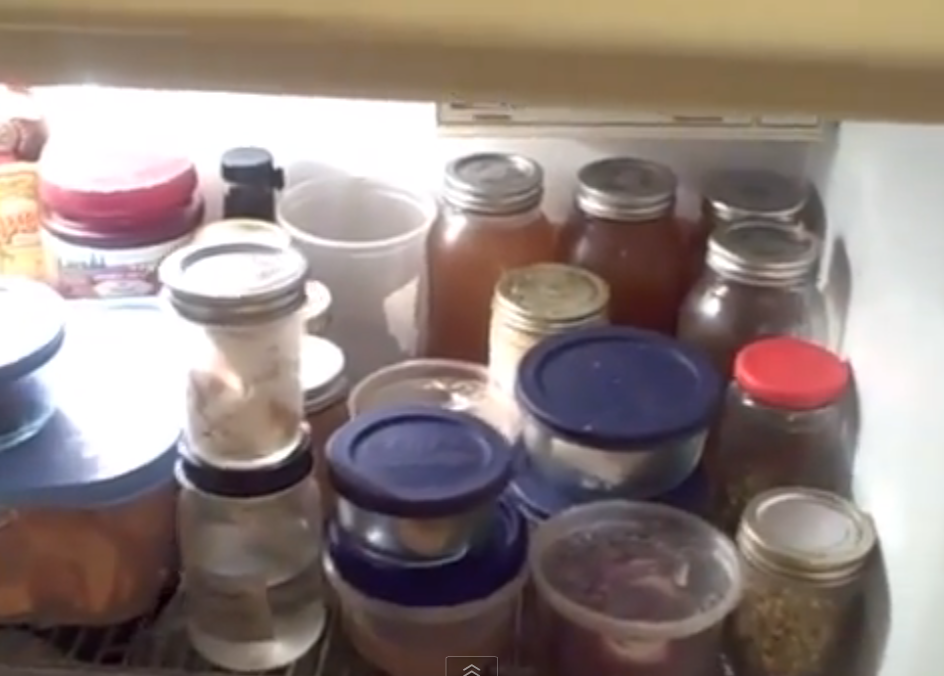
Screenshot 2014-04-10 17.34.55The reasons to avoid plastic when it comes to cooking and storing your food are for both environmental (plastic can take up to 1,000 years to decompose in the landfill) and health reasons. Yahoo! Green has a good story on which plastics to never use with food.
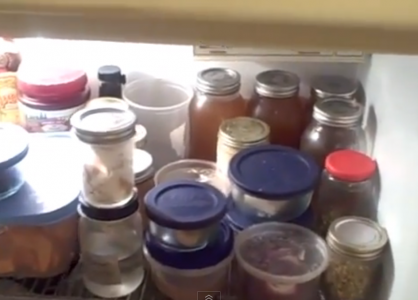
Cookware. This is the area that I need the most help in. Nearly all of my cookware is non-stick. I need to change over to cast iron and stainless steal. Read more about the dangers of using non-stick cookware from NaturalNews.

Kitchen appliances. I nearly used my food processor, juicer and Vita-MIx all on a daily basis. They are all almost completely made from plastic. I’m not sure of any alternatives for these. Anyone?

Screenshot 2014-04-10 17.35.46Freezer. My freezer is the area where I (re)use the most plastic in the form of Ziploc bags. They are what I store my scraps in to make my veggie broth. Not sure of alternatives for that.

Also the wheat and gluten free bread that we buy comes packaged in plastic. I know you can buy bread with no packaging at the farmers market, but not sure if they have wheat and gluten free.

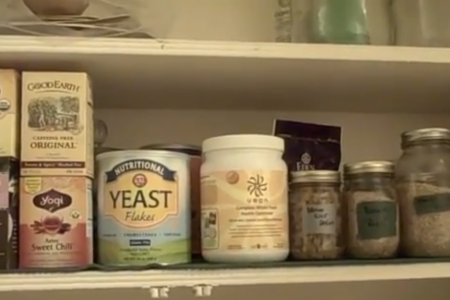
Spices and bulk goods. Lately we’ve been buying items in bulk from our local co-op. This includes spices, grains, nuts, seeds and flours. We’ve been bringing out own glass jars to load-up. It winds up being cheaper and cuts down on all of the wasteful packaging.

Single-use plastics. There are a few scattered items that we have that were impulse or convenience buys that came in plastic packaging like sea salt and buckwheat. These are definitely items that could be bought in bulk.

Glass jars. We intentionally buy certain items in glass jars, like applesauce, so that we can reuse the jar afterwards. We now have a pretty big collection of jars that we are always reusing.

Herbs. Pretty much everything in my fridge is stored in glass jars, except for the herbs. We continually reuse plastic bags to help keep them fresh.

That’s what my almost plastic free kitchen is like. Does anyone have any suggestions for food processor, juicer and Vita-Mix alternatives? Or of another way to store the herbs?

You can check out the video below for a more detailed look.

I’m Gardening Food to Eat: I Forgot The Eat Part

The main reason for me writing this blog and being active in the social media world is to encourage you to start growing your own food. I show that I could do it on my fire escape in NYC and now my balcony in LA.

It’s been 9-10 months since I’ve moved to LA from NYC. During that time I’ve had a total of one balcony salad. Yes, one. Uno.

The other day my girlfriend, Anita, called me out and asked when we were going to eat off of it. She is all for not supporting Whole Foods and supplementing our weekly trips to the farmers market in other ways, but the balcony wasn’t cutting it.

It’s hard to argue that. I mean it’s been one salad since I moved here.

The reason that I haven’t been able to eat more off of the balcony is because I’ve been focusing more on documenting everything instead of tending to the garden. I forgot the eating part.

I know what needs to be done. I need to do some succession planting, amend the soil and water the plants. Most importantly, I need to walk my talk. I’ve become one of those people that talks a lot and doesn’t back it up. I hate those people.

The containers have been harvested and a big salad was made. Now I’m going to come up with a better plan, so that Anita and I can eat more regularly off of the balcony.

The challenge for me has been laid out and I’ve accepted it. I hope that you will hold me accountable during this time.

I’m gardening food to eat. Please don’t let me forget that.

http://www.youtube.com/watch?v=7sHkl4OnD6o

Urban Garden Solutions Sponsor Profile

I’d like to introduce Urban Gardening Solutions as a new sponsor of Urban Organic Gardener. I spoke with one of the founders and co-owners Rachael Ross to learn more about her company. Here’s the Q&A.

What does your company specialize in?
Innovative and earth-friendly products for the small-space edibles gardener.

What are your best selling products?
It really depends on time of year. Right now they are raised garden beds and grow lights and plant stands.

What does organic gardening mean to you?
We feel that organic gardening and sustainability really go hand in hand. Let’s face it. At this point, our planet is no longer pure. We have pollutants in our air, soil and water supply. There are some things we can do to mitigate how those pollutants affect life on Earth and some things we have no control over.

However, moving forward we can make choices in how we live, including how we grow our food, that doesn’t perpetuate the damage.

Instead of applying that chemical pesticide, how about creating a habitat for beneficial insects to rid your plants of the harmful ones?

Instead of dousing your veggie plants with a synthetic fertilizer, opt for pouring compost tea on them.

What organic gardening really means to us is understanding our natural world and the delicate balance of all living things and then working within that structure. By making these types of choices, we achieve a certain level of sustainability as well.

Which of your products do you think is a must have and why.
Any composter a household can accommodate. There are a 101 ways to grow food, but the one thing you always need is organic nutrients. Composting is one of the best ways to participate in living a more sustainable lifestyle. If everyone would recycle their organic waste into nutrients to grow their own food plants, not only does it keep this methane-producing waste out of the landfills, but also makes much better use of our available resources.

What’s the one piece of advice that you wish someone gave you when you first started to grow your own?
I wish I’d known that gardening doesn’t just consist of robotically following steps in your gardening book, but also possesses an element of art. There are a lot of variables in the mix when growing a plant – location, amount of light, soil quality, water quality, temperature, etc. There’s no one data repository that can tell everyone, everywhere how to successfully garden.

So start small and pay attention. Learn how best to garden in your specific environment and grow the size and number of varieties over time. Don’t get discouraged – Successful gardening is a learning process.

Be sure to follow Urban Garden Solutions on their blog, Facebook and Twitter.

Find out more about becoming an Urban Organic Gardener sponsor.

Marinated Collard Green Salad

Collard greens are one of my favorite greens to eat. Most people usually cook them and couldn’t imagine eating them raw.

I’ve found a way that you can enjoy this hearty green in it’s raw and pristine state by massaging it down and marinating it. You would swear that it’s been cooked.

    What you’ll need:

  • One bunch of collard greens
  • One lemon or a few tablespoons of apple cider vinegar
  • A few slices of onion
  • Dash of sea salt
  • One clove of garlic
  • Teaspoon of raw honey
  • Teaspoon of olive oil
  • Dash of paprika
    How to make:

  • First make the marinade by dicing up the onions and putting into a small bowl or container
  • Squeeze the entire lemon over the onions or cover with apple cider vinegar
  • Chop up the garlic clove and add to onions
  • Let it sit on the side for the onions to soak in the lemon
  • Cut up your collards by placing the leaves on top of each other
  • Roll them up tightly and cut across into ribbons
  • Place into salad bowl and sprinkle with sea salt
  • Massage down the collards by hand
  • They should start to wilt down
  • Put bowl on side and finish of marinade
  • Add few drops of olive oil to the marinade
  • Also add your honey and mix or shake well
  • Pour marinade over the collards and work it in
  • Sprinkle on paprika
  • The collards will start to have a sauteed like texture
  • You can either eat the salad as is, let it sit to marinate or put in fridge to eat later

The longer you let this dish sit, the stronger the flavors become.

httpv://www.youtube.com/watch?v=QwVizEzgLFI

I Still Say The Organic Elite Surrendered to Monsanto and GE Alfalfa

One of the biggest news stories over the past week has been the USDA’s announcement that it’s going to be deregulating Monsanto’s genetically engineered alfalfa.

There has been a lot of confusion circulating around this news. This confusion started with Organic Consumers Association report that the “Organic Elite” of Whole Foods, Stonyfield Farms and Organic Valley decided to surrender the fight. They decided to give up and select what amounts to the lesser of the presented evils.

I’m always for listening to all sides of the story. Initially I jumped to the conclusion that these companies caved and surrendered. After reading through lots of posts in the past week and the PR statements issued by all of the parties, I still hold that same opinion.

First off, it’s nearly impossible to read the entire PR statements issued and understand what they are saying and the point. That’s the first problem. They are company issued and crafted PR statements. They are not true and genuine statements. At least they don’t seem that way to me.

Here’s an excerpt of the statement as posted on Stonyfield’s blog:

In December, to no one’s surprise, the USDA took a complete ban of GE alfalfa off the table as an option, leaving only two choices: complete deregulation or deregulation with some safeguards to protect organic farmers, which they called “co-existence.” The choice we were faced with was to walk away and wait for the legal battle in the courts or stay at the table and fight for safeguards that would attempt to protect organic farmers and consumer choice, still maintaining the option for legal battle later.

Read Stonyfield’s full statement.

This is an excerpt from statement Organic Valley’s that was posted on their Facebook page:

However, as of December, they had left only two options on the table: allowing unrestricted commercial growing, or partly restricted growing. As much as we wished a complete ban could still on the table, it wasn’t, and we knew we needed to throw our whole weight behind advocating for certain rules, so that farmers would have legal recourse in the face of contamination, and contamination could be avoided by mandating sizable buffer zones and geographical planting restrictions.

Read Organic Valley’s full statement.

Besides the fact that both of those statements are pretty similar (think their PR people spoke with each other about crisis control?), here is how I interpret these excerpts:

We didn’t have any options. We didn’t want to fight anymore. We caved and chose the lesser of the evils presented.

What happened to standing up for what you believe in and fighting? At this point, I don’t think you can continue the fight. They know that if they stand still long enough that you will cave. So they will wait you out, and you’ll cave again.

Thank you “Organic Elite” of Whole Foods, Stonyfield Farms and Organic Valley for opening up my eyes to what you truly are and stand for – just another corporation making a dollar. I can say that I will no longer be supporting any of your brands anymore.

This is just another reason why you should start to grow your own food. We don’t need these corporations controlling our food and making decisions for us. Go to your local farmers market and support your local farmers. Get to know them and ask them questions about their farming practices. Join your local food co-op or CSA. The power is truly in your hands to make a difference.

Beth Buczynski did a good write up on the Care2 blog about this situation called 3 Major Organic Brands Surrender To Monsanto’s GE Alfalfa. She received some heat and copy and pasted corporate response from some of the companies involved, and I’m sure that I will as well.

When David from The Good Human asked the Organic Elite to outright deny the Organic Consumers Association piece, they wouldn’t. They just responded with their cut and past PR statement. Sad.

In the ideal world, I hope that I’m wrong and that they did fully stand-up against Monsanto and GE alfalfa. Maybe I am misinterpreting what has gone down. I’m just stating my opinion as to how I see the situation. I vote with my dollar and will not be supporting these brands.

What are your thoughts on this whole scenario?

httpv://www.youtube.com/watch?v=fz01BVgW2cE