The Global Food System Isn’t Safe: What to do About It

There was an article in The Atlantic called The FDA Details Its Struggle to Regulate Imported Foods.

In the article it goes into details about the current global food system, the reasons why the FDA cannot ensure it’s safety and regulate all of the imported foods.

Here are some facts for you from the article:

  • Between 10 percent and 15 percent of all food consumed by all U.S. households is imported.
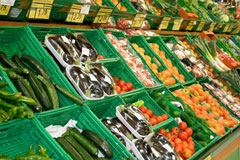
  • Nearly two-thirds of all fruits and vegetables are imported.
  • 80 percent of seafood is imported.

The majority of the produce that we are eating, comes from outside of the United States. Again, this begs the question – where is our food coming from?

The amount of food being imported is also on the rise. In the past 7-10 years that number has increased by around 10%.

Here is the part of the article that caught my eye and ear the most:

…in 2008 the FDA would have needed “1,900 years to check every foreign food plant at its rate of inspections at the time.

Obviously that much time wasn’t spent checking and inspecting the food. This is how the outbreaks and food borne illness occur. I guess all that matters to the FDA is that it’s cheap and one of their friends is getting paid.

So when you are at the grocery store, supermarket, bodega, Whole Foods or where ever you get your food from, this is something that you should consider.

This global food system just ain’t safe. It’s not working and built for our safety. The FDA has pretty much said that they can’t handle it to ensure our safety. Therefore we have to ensure our own safety. Who better?

How can you take your food safety in your own hands? Glad you asked. You can:

  • Start growing your own food.
  • Shop at your local farmers market and ask the growers questions.
  • Join your local CSA
  • At the very minimum, if you are shopping at a local grocery store, buy organic. That’s a pretty safe bet.

We as consumers and individuals have the power to take a stand and make a difference with our purchasing power.

What’s your thoughts on the global food system and what do you do to ensure your food safety?

httpv://www.youtube.com/watch?v=zjc8Yx5_cPs

It’s Almost July, What’s Growing in Your Garden?

It’s almost July. Crazy ain’t it?!?! Around the country most of you should be at least a month deep into your growing seasons. You should have already thinned out some seedlings after their true leaves shown and done succession plantings.

You’ve already shared your spring garden ideas with me and last month you told me how your May gardening was coming along.

Ginger Renne Doxie had a raised bed built from cinder blocks that had some tomatoes, peppers and radish. She also planned to grow some tomatoes upside down.

Juanita pretty much wrote an entire post about all she had going on from spinach and lettuces that she was harvesting to the onions she was eating daily. It was great to read the excitement in her comment.

Melissa Willis asked if it was a loaded question and said how she went out of control with her plantings, but had not rain in New Mexico. Hopefully she’s had some since.

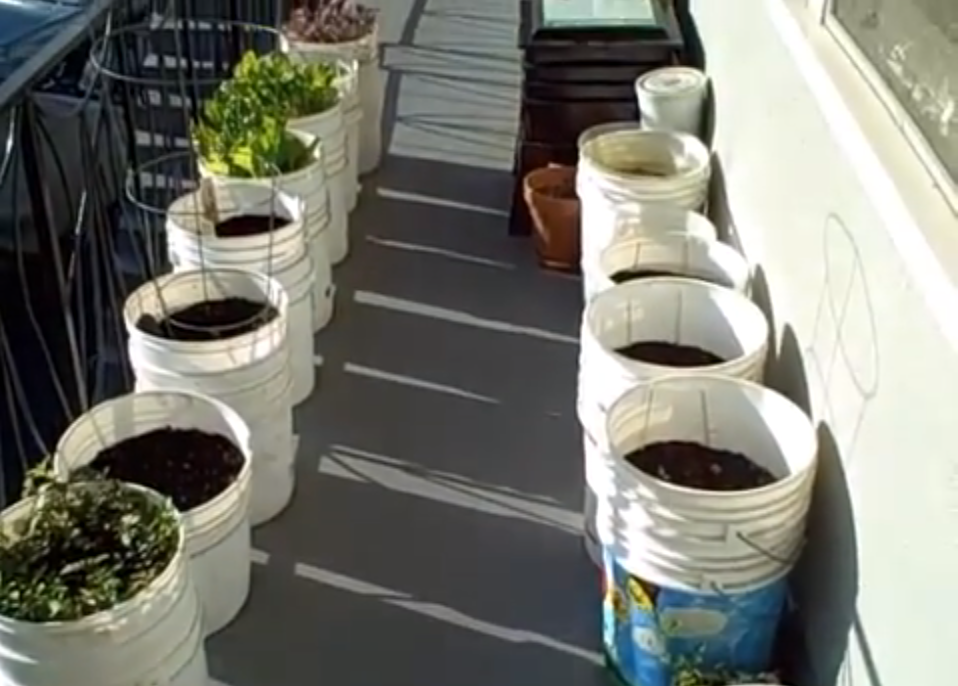
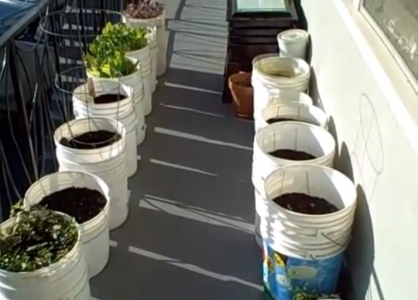
Well on my balcony garden, I had that issue with the twigs in the soil, but all is not lost. My mint container is doing well. There are two swiss chard containers that I’m harvesting from regularly and using in my smoothies. Also, my Jack Be Little Pumpkin is looking decent so far.

Now on to the important questions and part of the post, what’s growing in your garden this time of the year?

Thrive Sponsor Profile

I’d like to introduce Thrive as a sponsor of Urban Organic Gardener. I spoke with Heather, the Marketing & Customer Service Specialist for Thrive to learn more about the company. Here’s the Q&A.

What does your company specialize in?
We specialize in helping people live a more natural lifestyle! We’ve been working hard for years to bring sustainable results to our customers we reach them in their homes, in their ponds, in their gardens, in their kitchens and even on their farms.

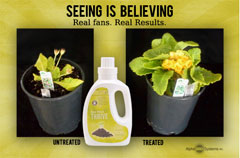
We do that using THRIVE, our all-natural garden, lawn, and pond application products. In a nutshell, THRIVE promotes growth in your lawn, veggies, flowers, and trees by using a concentrated dose of beneficial bacteria and mycorrhizal fungi elements that are already found in nature.

One of the greatest benefits of using our product is that our customers can rest assured they’re doing something good for the environment and doing something great for their plants. It’s a win-win situation!

We have products for plants, flowers, lawn care, vegetables, tomatoes, trees & shrubs, composting, pond clarification, and even pets. After using the products our customers see real results.

What is your best selling product?
We have a three-way tie: Tomato THRIVE, Vegetable THRIVE, and New Plant THRIVE are the hottest this season.

In addition, now that the summer heat has begun in most parts of the country, we’re receiving more calls than ever from people who are looking for our pond clarifier. Plus, our web traffic has substantially increased since we launched our brand new web site.

People all over the country have really embraced this alternative to chemical solutions. It’s easy to use, helps anything that grows, and perhaps best of all, people don’t have to worry about over treating. It is the kind of product that the minute you use it, you just feel better since it does not contain harsh chemicals.

Which of your products do you think is a must have and why?
That’s the beauty of THRIVE as we have something for everyone. Whether your passion is focused towards one area or all areas of gardening and beautifying your lawn and plants, the THRIVE line of products has a product specific to your needs. While there are subtle differences in the products, they all perform the same basic functions for the plants. Simply, THRIVE is designed to release locked away nutrients in the soil, restore biological activity, increase root growth and provide an extension to the root system with the mycorrhizae.

What do sustainable and organic gardening mean to you?
Sustainable and organic gardening are integral parts of living a healthy lifestyle and they’re aspects we believe in wholeheartedly. We appreciate the resources we have around us, and we don’t take them for granted. Things like water, soil, labor, and community support/services are all precious, and the goal is to not use them up faster than they can be replaced. We want to avoid altogether the depletion of natural resources.

We do that by promoting organic gardening, which is growing without using chemical fertilizers. If you can naturally build the soil so that it supports the healthy growth of the vegetation within it, why wouldn’t you? It’s safer for everyone literally especially when it comes to the food we consume.

That’s why THRIVE is such an important part of sustainable organic gardening. It’s all-natural, and doesn’t contain any harsh chemicals. THRIVE helps restore the natural, biological activity already going on in the soil. A great side-effect of THRIVE is that it helps plants retain food and water for longer, meaning you have to water less often.

What’s the one piece of advice that you wish someone gave you when you first started to grow your own?
Always remember that each plant will grow and react differently in different geographic areas and climates across the nation. What may have worked for someone in one area may not work in another area depending on rainfall, drought, soil conditions etc. Always try to assess your conditions and be willing to adapt your practices accordingly.

Be sure to check out Thrive on Facebook and Twitter and YouTube.

Want to reach over 10,000 garden enthusiasts a day? Find out more about becoming an Urban Organic Gardener sponsor.
Pan Roasted Peaches and Walnut with Tarragon Salad

    Here’s what you’ll need:

  • 1 large ripe peach
  • Tablespoon of dried tarragon or some fresh sprigs
  • 2 handfuls of walnuts
  • 1/4 of a small red onion
  • 1 clove garlic
  • 2 tablespoons of oil divided. You can use olive oil, but I used coconut oil.
  • Bed of greens. Mine were red leaf lettuce and arugula.
    How to make:

  • Heat up a pan and put the walnuts on it to dry pan roast them.
  • Stir occasionally.
  • Cut up your peach into slices and toss with 1 tablespoon of the oil.
  • When the walnuts are slightly warmed. Remove them from the pan and set aside.
  • Add other tablespoon of oil to the pan to heat up.
  • Cut up your garlic and onion.
  • Add tarragon to the heated oil and sautee for a 15 seconds..
  • Add garlic and onion to the pan.
  • Sautee until tender and soft.
  • Add the peach slices.
  • Let them heat up for 3-5 minutes until slightly browned and flip.
  • When the other side is browned, add the walnuts and let all cook for 2 minutes.
  • Serve on top of bed of greens.

httpv://www.youtube.com/watch?v=RbkpBcOh5_I

Why GMOs Are (Not) Feeding the World

The main reason that so many people get behind chemical gardening and agriculture is the belief that it’s the only way to feed the world. This load of crap has been force fed to us by the same companies that are producing the food. What else do you expect them to say?

They have all of us believing that with the rising population and our limited resources that organic methods of growing food couldn’t possibly feed the world. I have news for you – GMOs aren’t doing such a great job of it either. Here is why:

Top GMOd crops

Three of the top GMOd crops are corn, soy and wheat. Combined something like 80-90% of all of those crops planted are of the genetically modified variety. Even if it’s on the lower end it’s still somewhere around 70%. Source: USDA

This sounds great. We can grow these crop because they are resistant to pests, drought and everything else. So what’s wrong with that?

They don’t get fed to humans

Instead these crops wind up being unnaturally fed to livestock to help fatten them up quicker. Close to 50% of the soy and 60% of the corn grown goes to feeding livestock. Source: Sustainable Table

All right! This is even better because My Plate says that we need protein. Protein comes from meat, and we are getting meat that’s fattening up quick for us to eat.

Not so much. Since these animals are being fed an unnatural diet and being kept in factory farms, this is what contributes to outbreaks such as e.coli and other food scares.

I don’t know the percentage, but whatever doesn’t get fed to livestock is made into food like products using high fructose corn syrup and all those other mystery ingredients.

In actuality, it’s not even being given directly to people to consume.

Wheat is the new corn

The price of wheat has dropped below that of corn. Now livestock is being fed wheat because it’s cheaper. Source: Bloomberg

This is being done for price reasons, not for health.

Ethanol for cars

Behind the scenes, Monsanto, who is one of the main suppliers of GMO corn, has been pushing hard for using ethanol to power cars. This would result in the corn being grown to be used for a gas alternative instead of food.

Conclusion

Those are just a few of the reasons why GMOs are not feeding the world. The crops aren’t even being given to humans to consume. Let’s not even get started on the potential health and environmental impacts of them.

This is another reason to start growing your own food, at least some of it. You can supply yourself and stop supporting this hamster wheel that we are on of continually giving the same companies our money over and over again. Start putting that money towards your farmers markets, CSA or local co-ops. We have the power to shift and change the power. Let’s utilize that.

What are your thoughts on GMOs feeding the world?

httpv://www.youtube.com/watch?v=fYbT0OF7_F8

Your Seed Starting Soil Should Not Have Twigs

Isn’t it mad frustrating and annoying when you start your seeds and they don’t sprout? Generally seeds will take somewhere between 7-14 days to sprout, depending on the seed. Once it hits that 14 day mark with no sprouts, start getting concerned.

About six-weeks ago, I started some lemon balm seeds on my balcony garden. They were planted in four parts of the container. I planned on thinning them out when they grew their true leaves so only the strongest stood. Six-weeks later and still nothing.

I shouldn’t say nothing, but very little. There are some small sprouts that appear to be attempting to forcing their way through. Not much though.

They have been watered regularly and get at least four hours of direct sunlight a day. I am going to say that the problem is with the soil that I’m using. It’s something that I’ve been suspect of for a while, but this solidifies it for me.

When taking a closer look at the soil, it has lots of twigs and bigger pieces. That’s not a great growing medium for containers. I’m going to toss the soil into the compost and get some new soil. Unfortunately, I don’t have the space to make my own potting soil like I did in Brooklyn. Damned soil.

What are some other reasons that seeds won’t sprout?

httpv://www.youtube.com/watch?v=pRJc05CmoSU

From Seed to Table: Food Brings People Together

I’ve said it before that we are humans, therefore we grow food. If you look back at societies, civilizations and communities, you will see that the common factor was growing food.

Over the past 100 or so years, that skill has been lost to chemical agriculture and the ability to transport food long distances. There is so much that goes into food that we don’t get to partake in anymore. We just see it as congregating around a table and eating it. Some of the time it’s not even that, it’s something that’s done en route from one task to another.

Everything about food can bring families, couples, partners, neighbors, whoever it may be together. There is camaraderie and a relationship that is built when going through the process.

Each of the steps in the process are chances to forge deeper relationships with each other and with the food. From the decision of what to grow to planting and tending to, then there is harvesting, preparing and sharing.

You know damned well that if you were to grow some parsley and put it in a dish, you are certainly going to stick your chest out and tell everyone you grew that parsley. There is a sense of pride and accomplishment that comes with growing your own food.

It’s not just about the eating part, which is mad fun, but it goes much deeper than that. You’ll start to get a better appreciation of food that you buy because you know what goes into it. You certainly are less likely to waste food when you grow your own.

This is why I think we should all start to grow some of our own food or source it locally. It helps to bring us together.

What stories do you have to share about growing food and bringing people together?

httpv://www.youtube.com/watch?v=5SZYNckCvS4

Zucchini Strips Baked With Thyme and Basil

    Here’s what you’ll need:

  • 3-4 small zucchini or 2 large
  • 1 lemon
  • 2 cloves of garlic
  • 2-3 sprigs of fresh thyme or tablespoon of dried
  • 3-4 leaves of basil or tablespoon of dried
  • Tablespoon of olive oil
  • Dash of sea salt and pepper
    How to make:

  • Chop up garlic put into a small jar or dish.
  • Squeeze lemon over garlic. Let sit for a few minutes.
  • Cut up zucchini into rounds or strips.
  • Add thyme, chopped up basil, olive oil, salt and pepper to lemon garlic mixture.
  • Pour it over the zucchini to cover and toss it.
  • Put in oven at 400 for 15 minutes.
  • Flip strips and bake for another 15 minutes.
  • Remove and serve..
  • You can put this over pasta, rice, a salad or eat it on its own.

httpv://www.youtube.com/watch?v=muUIzmLjZjc

USDA’s My Plate = Waste of My Money

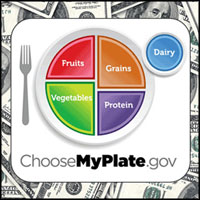
It’s been a few weeks since the USDA unveiled My Plate along with the help of First Lady Michelle Obama. This replaces the old food pyramid.

My only commentary on how it’s divided is – when did protein become a food group? Wonder if this could have anything to do from the meat lobbying industry. I won’t get into that discussion because Michele does a wonderful job of that on Appetite for Profit with Why we need more policy instead of My Plate.

I would like to address the $2 million of our money that went into creating the kindergarten sketch. This is what our tax dollars are going towards?!?! It doesn’t even come close to addressing the issue of what’s wrong with our food.

For the most part, the plate would likely be more nutritious than the foods that are actually being put onto it.

If Michelle Obama really cared about health and what people are putting on their plate, then why doesn’t she take the time to talk to her husband about deregulating GMO crops.

That would be time better spent then posing for another photo-op like she does with the White House garden. That might mean that she would actually have to dedicate the time and show that she really cares. It would take away from the flashing cameras.

The head of the USDA might want to spend some time cleaning up the food industry that is putting out arsenic laced chicken, but that would mean confronting his friends and those that put him in the position he is in.

The creation of this plate took something like two years and $2 million, talk about a complete and total waste. You can put all the protein, vegetables and fruit you want on a plate, but if it’s causing sickness and disease, who cares?

This is why I’m not into counting calories and why I grow my own food.

Why not allocate the time and resources into addressing the real issue and not just masking it some more?

Better yet, stop wasting my f’n money on this crap. I want a refund.

httpv://www.youtube.com/watch?v=njken2E4gcw

Where Does Your Food Come From?

One of the reasons that I started my fire escape garden in 2009 is because I learned that on average our food travels 1,500 miles from farm to plate. That’s about the distance from one coast of the United States to the center of the country.

The next time you are at the grocery store or supermarket (aren’t they the same thing?), pick up some produce and look at the label to see where it’s from. I started to do this when I was living in NYC and saw Chile, Argentina, Mexico, Peru and other far off countries. There wasn’t even anything from my country, nonetheless my state.

It got me thinking about all of the variables that go into getting that food to the store and what it means for me to purchase.

  • Oil is used to transport the food, which has an environmental impact. It also effects the rising food prices.
  • Nutrients are likely lost because it’s been harvested 3-4 weeks before it even made it to the shelf of the store.
  • Local farmers are affected because we are shipping it in from elsewhere instead of a local source.

These are what got me started apartment gardening in New York and why I keep doing it with my balcony garden in LA. When I was in NYC, I got a lot of my produce from a CSA. Now that I’m in LA, I go to the farmers market a few times a week. So I’m fortunate that most of my food is grown pretty close to me.

1,500 miles is a pretty long distance for food to be traveling and it’s not completely necessary. You can start growing some of your own and support your local farmers.

What’s your thoughts on food traveling so far? Were you aware of this?

httpv://www.youtube.com/watch?v=d-3FLLidFDI

The WTF Food News for June 2011

I am gonna start to write a new monthly post and call it the “WTF Food News.” In the post I’ll highlight some food stories from the previous weeks that make you tilt your head, curl your brow, lift your shoulders and make that face like you thought you had to fart, but something else came out.

So here is the first installment:

Care2: Is China Manufacturing Plastic Rice?
This article is citing a source that was in Korean, but the sad part is that it isn’t out of the realm of being completely viable. If it’s cheaper to produce and people will buy it, why not produce it? It’s only available in one small town or village, but that doesn’t mean it won’t spread beyond that.

What is up with China and producing toxic stuff, there was the toys that had toxic lead in them, now plastic rice. What could possibly be next?

Business Insider: China Genetically Modifies Cows To Produce Human Breast Milk
Pretty smooth segue, huh? Not sure the point of, who would consume and why one would even do this, but some Chinese farmers think it’s a good idea.

Grist.org: FDA admits supermarket chickens test positive for arsenic
I don’t know of anyone that would willingly ingest arsenic. If the FDA is admitting to there being some levels in supermarket chicken, then the problem must be bad.

Huffington Post: Roundup Birth Defects: Regulators Knew World’s Best-Selling Herbicide Causes Problems, New Report Finds
Sadly enough this story doesn’t surprise me too much – the fact that Round-Up causes birth defects and the fact that regulators knew.

These stories have definitely made me think WTF is going on with our food? These are the reasons that you should start to grow some of your own food and source it locally from farmers markets or CSAs.

What WTF food stories have you seen lately?

httpv://www.youtube.com/watch?v=JD0S1oYTTT0

Simple Kale Salad

    Here’s what you’ll need:

  • 1 head of kale
  • 1 lemon
  • Few slices of onion
  • Clove of garlic
  • Tablespoon of olive oil
  • Teaspoon of raw honey
  • Dash of sea salt
    How to make:

  • Chop up garlic and onion and put into a small jar or dish.
  • Squeeze lemon over garlic and onion and let sit for a few minutes.
  • Cut up kale and put into bowl.
  • Sprinkle sea salt over kale.
  • Massage the sea salt into the kale until it starts to wilt down. It might take 2-3 minutes.
  • Pour olive oil and raw honey into lemon, garlic and onion mixture.
  • Shake it up and pour over kale.
  • Massage the dressing into the salad as well.
  • The longer it sits, the softer it will get.

httpv://www.youtube.com/watch?v=Ll3XvbvGGa0

Recent recipes

What are the Effects of Chemical Gardening and Agriculture?

When people ask why they should grow their own food, one of the top reasons I give is because of the chemicals and pesticides that are used to treat our food.

Just because you are growing your own, doesn’t mean that you aren’t using chemicals and the toxic crap like Miracle Grow, but it means that you have more control over it.

Yes the pesticides might be getting rid of the pests and insects, but what else are they doing?

You don’t rinse off chemicals
It’s not as simple as using some water and washing the item off. My grandmother used to (and still does) tell me to do that. Ok, Gram I’m just going to wash off the chemicals that have been sprayed with a quick rinse under the water?!??

Chemicals don’t make sense
Using chemicals and pesticides to treat the produce just doesn’t make sense to me on any level. I don’t want that stuff on my food and getting into my body. Would you take a bottle of chemicals and just chug them? So why would you eat them?

If you look at our society and the health problems that we are facing, then look at the increase use of these toxins over the years, there is a heavy correlation. Just sayin.

Organic Manifesto
I’ve started to read the book Organic Manifesto by Maria Rodale and here are some interesting things I’ve learned:

  • More than 80,000 new chemical compounds have been introduced since World War II. Many of which are now used in agriculture.
  • To feed our demand for cheap food, we’ve put ourselves and our children’s lives at risk.
  • In the animal world, alligator’s penises are shrinking. This can be tied to increased pesticide usage.

Those are just a few things that I’ve pulled from the book early on and it’s some serious shit to be thinking about. The food that we are eating and the way that it’s being grown is having a serious effect on us and the animal kingdom.

In the past 100 or so years, we have bombarded our bodies with all these new toxins and it’s not sure how to react.

There is an alligator waddling around somewhere right now with a small penis because of you. New abnormalities in humans are emerging as well.

You have the control
By growing your own or sourcing your food from farmers markets, you can control of or can ask the grower directly how the food is treated.

If you are using a product, find out what the ingredients are and don’t just read the marketing hype on the label. It’s your health that’s at stake.

Step away from the chemical gardening and chemically produced foods.

What’s your thoughts on chemical use in gardening and agriculture?

httpv://www.youtube.com/watch?v=UVo5khcV2yU

What are True Leaves?

When you read information on seed packets and other garden related materials, you might come across the term “true leaves.”

Screenshot 2014-04-14 17.25.26If you are anything like me, you might be wondering what they hell that means and if there are fake leaves.

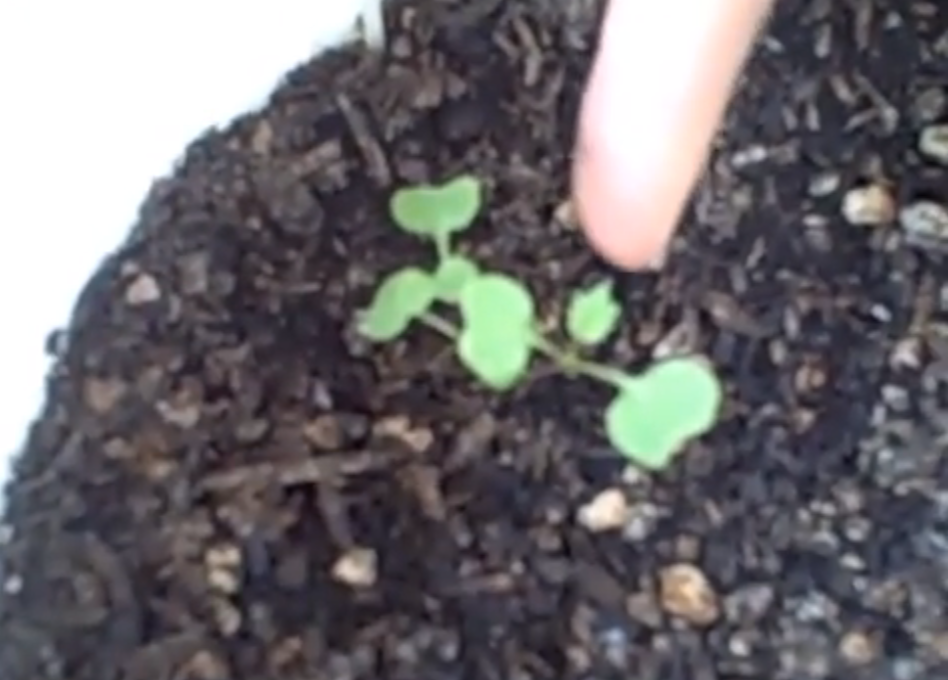
When seedlings sprout, often there are two-sets of leaves that form first. They look almost four-leaf clover like. A few days later a third single leaf will emerge that doesn’t look like the first two. That’s the first true leaf.

When the first true leaves emerge that is usually when you can start fertilizing, transplanting, thinning or doing whatever else you are going to do.

So that’s what true leaves mean figuratively and literally. Now can we come up with a better name for them – maybe third-leaf?! What would a better name be?

Decorating Your Recycled Container Garden

People (haters) often bust my balls about how ugly my balcony garden is. They say that it’s beaten up and used 5-gallon containers and not very pretty.

I’ve decided to take the challenge of the haters and decorate my self-watering containers. One of my containers was decorated by my girlfriend, Anita, who did a much better job than I could ever do. Since I’m not nearly that artistic I got some inspiration from Life on the Balcony. Her finished containers are more stylish than mine, but I’m working on it.

This would be a great project to do with your kids and get them involved.

I removed the reservoir containers and painted them a solid color for now. I’ve been contemplating creating stencils for them, but am undecided at this point.

What do you think of the new look containers? Should I leave them solid colors or decorate them a bit more? If so, what should I put on them?

httpv://www.youtube.com/watch?v=whJeTiFjHRY

Four-Herb Salad Dressing

    Here’s what you’ll need:

  • 1 lemon
  • Handful of dill
  • Handful of cilantro
  • Handful of parsley
  • Handful of basil
  • Tablespoon of olive oil
  • Few slices of onion
  • Half handful of nuts or seeds of your choice (I used sunflower seeds)
  • Clove of garlic
    How to make:

  • Squeeze lemon into blender or food processor
  • Add rest of the ingredients
  • Splash in some water to get it movin
  • Blend up until nice and smooth adding more water as necessary.

httpv://www.youtube.com/watch?v=by-Hfv2vWhg

Recent recipes

We are Humans. We Grow Food.

When people ask why they should grow their own food, I don’t break out all kinds of reports and studies that tell how it’s better for you and the environment. I break it down even simpler and tell them it’s because we are human. It’s what we do.

It’s not until the last 100 or so years that we’ve stopped growing our own and put that responsibility in the hands of others. Think about it. Humans have grown their own food for hundreds and thousands of years.

Civilizations and societies were built around fertile land and access to water. Communities were built around food. There is so much that goes into it from the planning to the planting, tending to the harvesting and most importantly the preparing and sharing of it. It’s what brings people together on so many levels.

We now just skip right to the eating, which is often done on the run too.

These days we’ve come to sit at a desk in front a computer all day or in a large SUV traveling through space. That’s not what we are designed to do. That’s all relatively new to us.

This is why I keep it simple and say that the reason we should grow our own food is because we are humans. I’m not saying an entire garden, but growing just one thing will make a difference.

What’s your thoughts?

httpv://www.youtube.com/watch?v=erPJ0oRAvls

Update: Is a Balcony Garden Against Building Code?

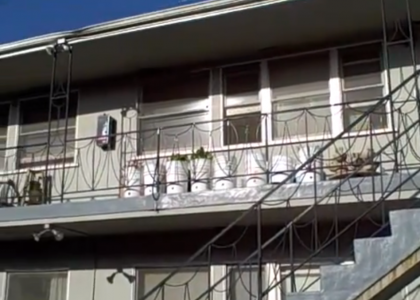
So last week I mentioned that a building inspector from the Los Angeles Housing Department (LAHD) came to inspect our building and said that the balcony garden was against code.

He was vague and didn’t cite a code at the time, but said fire code. The local fire department didn’t seem to think so though.

Screenshot 2014-04-10 17.31.36A week later, there was a memo from LAHD posted in a common area saying that all citations needed to be addressed by sometime the end of June. I followed up and called them to get the exact citation.
The inspector couldn’t provide one and just kept saying he was “doing his job.” I appreciate him doing his job. If he is going to do his job and cite me doing something wrong, I’d like to know what it is and was not provided with that.

He told me that if it wasn’t taken care of by that date that a higher authority (I forget the name) would come out to assess the situation.

Screenshot 2014-04-10 17.32.48The fire department were followed up with again and they didn’t see it as against fire code. They even called up the inspector and he gave them the same run around.

Heck if it’s against a code and they can cite me on it, I’ll gladly comply. I’m not going to comply with, “I’m just doing my job.” I knew the fire escape garden was against code, but was never cited on it.

I’ll keep you updated, but what’s your thoughts on this whole situation?

Asian Style Steamed Vegetable Bowl

    Here’s what you’ll need:

  • Bok choy
  • Mustard greens
  • 2-3 Carrots
  • 2-3 broccoli florets
    How to make:

  • Cut up bok choy, mustard greens, carrots and broccoli florets and layer in your steamer.
  • Steam for 10-12 minutes
  • Add to serving bowl.
  • Top with sauce of your choice or with olive oil, lemon and sea salt.

Food Waste in America Shows Lack of Appreciation

We all know that food is wasted in our country, but there was a post on Planet Green “1/3 of Global Food Production Goes to Waste” written by Sara Novak that caught my eye.

Think about that. Over 30% of the food in this country that is grown for human consumption is wasted. To me that shows a lack of appreciation for food.

It’s not too much of a surprise that the richer nations in North America and Europe are the ones that waste more food than the less developed countries.

As a society we have become so far removed and disconnected from food that we waste so much of it. It’s so readily available and easy for us to get.

When I was living in New York, I went “dumpster diving” a few times and that really opened up my eyes to how much usable food was wasted because it wasn’t “perfect.”

There are ways that Sara mentions that we can cut back on food waste, but I think it starts with the way that we think about food.

If we were to all start getting our hands dirty and growing some of our own food, even just one thing, it would make a difference. It would make a difference in how you eat and how you think about food as well.

What’s your thoughts on the amount of food waste in America?