Vertical Gardening Goes High-Tech And Large-Scale

Source: ResilientCommunities.com

“We have spent a fair amount of time discussing vertical gardening techniques and how beneficial it can be for those with limited space or access to fertile land for gardening.

It’s entirely possible to create enough food to feed a couple of people using this technique in a space as small as a one bedroom apartment and perhaps more importantly, vertical gardening represents a sustainable, organic growing technique that anyone can implement inexpensively.

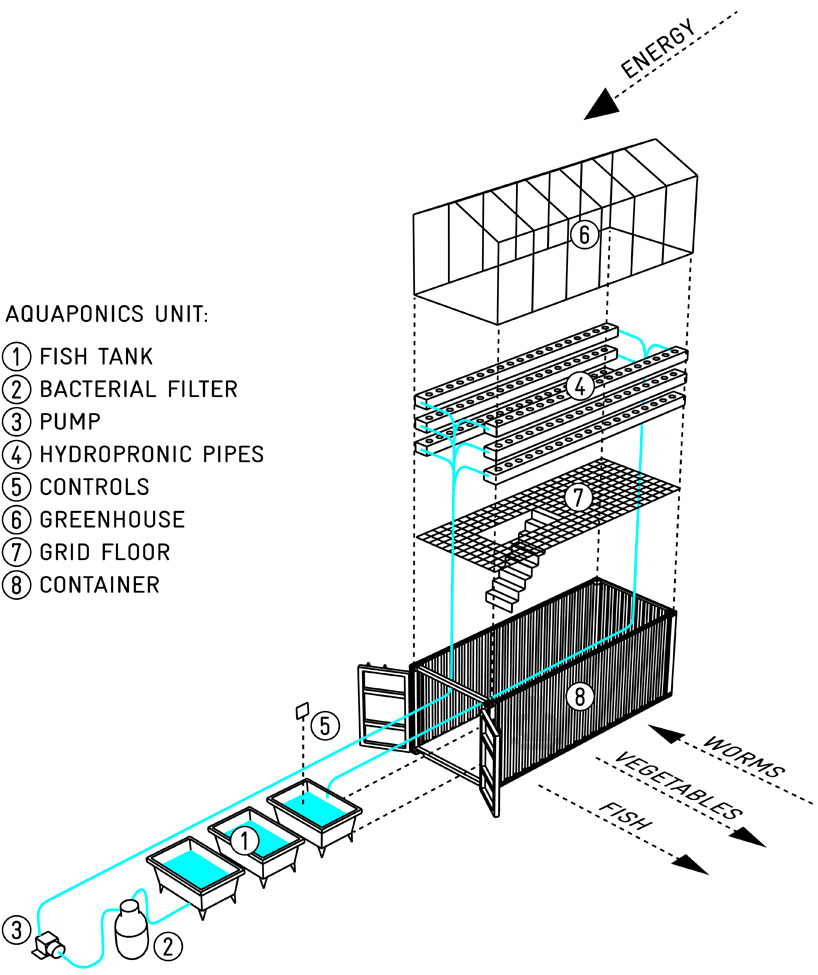
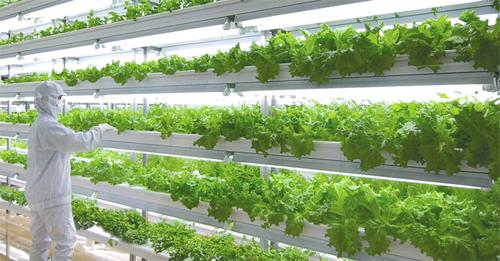
But what if we were to scale up vertical gardening into say…a food factory? I’m not talking about a factory in the normal sense of the word; rather, an abandoned factory that has been repurposed to produce fresh fruits and vegetables in a controlled environment year round.

Believe it or not, it’s already happening and this new practice could represent a departure from the negative connotations typically associated with mass-produced foods.
vertical garden 1


A recent market research report published by Reportstack estimates that plant factories will be a $1.97 billion business by 2020.

Using a combination of new growing techniques and more sustainable energy practices, food markets around the world could soon benefit from the adoption of plant factories taking up a lot less space than traditional agriculture but boasting significantly more production.

And if you ask me, these advances couldn’t come at a better time as the world faces a looming food shortage that many experts believe will begin manifesting itself in the next 20 years.

New Technology Could Make Plant Factories Self-Sufficient

Employing a controlled environment to oversee every aspect of plant growth, plant factories do not have to deal with detrimental influences like pesticides and poor weather conditions. This translates into a much more reliable harvest every year – helping to keep prices consistent and supply plentiful.

Other technological advances are also being used in many of these plant factories. Robots are being used to monitor plant health and even harvest crops at the perfect time without human intervention.

One of the questions critics often pose regarding the widespread reliance on indoor growing facilities is the power and resource consumption required for year round crop production. One entrepreneur in Chicago – John Edel – may have the answer.

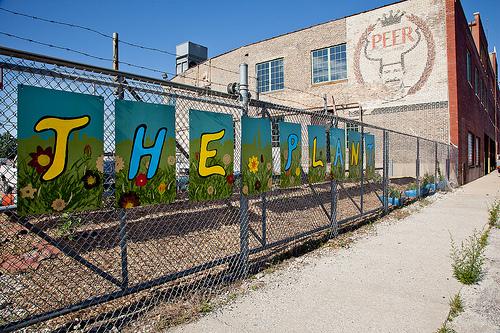
Edel has converted a 93,000 square foot abandoned meatpacking facility into an indoor plant factory that differs from similar facilities in one important way. Rather than rely on grid power to keep the lights on, Edel’s factory uses a massive anaerobic digester designed to convert food waste into biogas.
vertical 2


As more people flock to urban areas every year, it only makes sense to begin looking at constructive ways to increase food production in areas known for consuming food resources; not producing them.

Even in more rural areas known for producing consistent fruit and vegetable crops, the effects of adverse weather conditions (such as this year’s drought in California) have far-reaching economic consequences; many of which have manifested themselves yet this year.

As technology continues to improve, adverse weather conditions and other problems typically faced by the agricultural community could become a thing of the past as plant factories like the one in Chicago begin to take over.

About the only problem I see with widespread adoption of this technique is the large initial investment required to make it a reality. Most farmers are already up to their neck in debt and are simply unable to take on the financial risk presented by implementing an indoor plant factory.

Hopefully, as technology continues to become less expensive and demand for a consistent food supply rises exponentially, the many benefits of plant factories will overshadow the cost constraints and we can confidently enter a new era where previously abandoned factory buildings are transformed into meccas for sustainable food production.”

Read the entire article here: http://www.resilientcommunities.com/
Your Garden Shouldn’t Be Perfect

Do you strive for perfection in your garden?
Is it important for you for everything to be just so?

Are these questions that you ask yourself and beat yourself up about?

I don’t want an organic garden

People will often tell me that my garden isn’t “organic” because I am growing in plastic containers and the containers might be leaching BPA in the soil.

They will tell me that because of the water that I’m using and it’s not filtered in a certain manner that it’s not truly organic.

People will say that they don’t want to start unless they have the ideal conditions to grow their food in.

I usually wind up asking them, “Is it really that bad to grow in “non perfect” conditions as opposed to eating who knows what that we buy at the grocery store.”

Don’t be perfect

If you have been waiting for the perfect conditions and time to start, I challenge you to not be perfect.

I challenge you to do the best that you can with the conditions and knowledge that you are given to start and maintain your garden.

Your turn

In the comments below, tell me one thing about your garden that isn’t perfect and share this post with friends and family that are waiting for the perfect conditions.

The Great GMO Experiment: There Is No Opt-Out Or Is There?

A post on Organic Connections Magazine called People Don’t Want to Be a GMO Experiment got me thinking about a few things.

Why we should be concerned about GMOs

Most people assume that GMOs are safe because they are so widely available, which is not true. GMOs have never been proven to be safe and no they aren’t feeding the world.

It was some time in the late 1980s/early 1990s when they were first widely planted. So it hasn’t been that much time to see any kind of long term effects and if they are truly safe.

Ultimately this means that we are walking experiments to see how safe they really are. GMOs are found in most of the foods that are widely sold in the supermarkets.

This makes us all subjects in the GMO science experiment, not only with our food, but with grass too.

Barack Obama lied to us

When he was campaigning in 2007, he specifically said, “We’ll let folks know whether their foods have been genetically modified because Americans should know what they’re buying.” Check the video to hear it yourself.

This sucks, but we can do something about it!

  • There is the Just Label It campaign, which is a petition to get GMOs labeled. They are hoping to get enough signatures and flood the FDA with them.
  • You can also start to grow some of your own food. Most of us don’t have the time or space to be completely self-reliant, but every little bit matters. It’ll assure you that you aren’t supporting GMOs even the tiniest bit.
  • Join your local CSA or shop at your farmers market. These are great ways that give you direct access to the growers to ask them about their growing practices.

What are other ways to ensure that you aren’t consuming GMOs?

Image courtesy of dzingeek on Flickr

What Will You Be Making For Thanksgiving From Your Garden?

Thanksgiving is a little more than a week away. It’s a time for us to get together with our friends and family. One of the biggest parts of Thanksgiving is the food.

The Thanksgiving dinner is one of the main things that the holiday is based around, getting together to share and enjoy the company of each other over food. Whether that’s what happened with the Pilgrims and Indians is another story.

The preparing, sharing and giving thanks for the food are all big parts of the Thanksgiving tradition.

What better time of the year to prepare and share your harvest with others.

On the Urban Organic Gardener Facebook page, I asked people to fill in the blanks of the following sentence, “For Thanksgiving I will be making _______ using ______ that I grew in my garden or raised on my own.”

Here is what they said.

There are a few people that have raised their own turkeys for the holiday.
“Turkey,” said Pam Carrico. “Lots of it! Using the Bourbon Red/White Midget turkeys I raised on my own. :-)”

Same for John Bradley Foster, “Dinner and turkey!”

Michelle Gehlman Teeter added, “Turkey that I raised from a chick, in my backyard!”

Side dishes and soups
Wendy Ribelin is going to make, ” Butternut squash soup with the squash from my garden. (that is if no one requests it before Thanksgiving day; it’s been a big hit)”

“It’s a potluck this year,” said Bewilder Ness. “Pumpkin cheesecake from my garden and roasted root veggies from a neighbor’s garden. Sweet potatoes from another friend’s garden.”

Erin Garner Dentmon is making, “Apple pie using my dad’s apples! Probably something with my own herbs. I tried some pumpkins this year, but that didn’t quite work out.”

“Sweet potato casserole from sweet potatoes that I grew I’m my back yard :),” said Green Pete.

Beverly Amborski is hooking up some, “Stuffing using sage from the garden….”

BuffaLoam is making, “Pesto using basil that I grew in my garden.”

Not all of us have the space to raise a turkey or grow apples. It’s all about the love that went into the food. Every little bit matters.

Now it’s your turn to fill in the blanks, “For Thanksgiving I will be making _______ using ______ that I grew in my garden or raised on my own.”

Imported Food is Elitist and a Luxury

Mark Bittman wrote a piece for the New York Times titled Local Food is Not Elitist. It’s American.

The food industry has done a great job of making it seem like wanting or eating foods from local sources is an elitist act. I mean no one wants to be an elitist and it’s easy to dismiss that way of eating if it’s deemed so. This justifies eating cheap, processed and imported foods.

Someone once said to me that they live in Chicago and love pineapples. He asked if he was supposed to give up his values and not eat pineapples anymore?

First off that isn’t giving up a value. Living in Chicago and having access to pineapples is a luxury.

That brings me back to the piece by Bittman. Isn’t having our food imported at the expense of farm workers and the environment, elitist? Isn’t that saying, I want (insert food here) for cheap and I don’t care what it takes. Wouldn’t that be more of an elitist type attitude?

Elitism has many different meanings, but in the case of imported foods it says, “I am an American and from a dominate country. Therefore, I have the right to this food at a cheap price.”

That seems pretty elitist to me. Me wanting to support my local grower, respect my health, the environment and those that grew the food. That just seems like showing respect…not elitism.

Maybe I’m wrong.

What’s your thoughts on local food being elitist?

Speech About Growing Your Own Food at OccupyLA

I was asked to speak at Occupy LA about growing your own food. The speech touches on how the food industry is similar to the financial world and what we can do to bring about the change that we want to see.

Excerpts from the speech:

This Occupy movement that started out on Wall Street was started because of the outrage at the outsized power of the banks and financial industry.

As the movement has grown to other cities, it’s become apparent that this doesn’t only apply to the financial world, but to a lot of other aspects of our lives as well.

The power is in the hands of an elite few that have an interest in keeping us clueless and left out in the cold to maintain the status quo that benefits them.

When you look at the financial world, it’s pretty apparent. That’s why we are all here today.

When it comes to our food and food policy, the same thing can be said. Just like in the financial world, the food industry has lots of money and lobbyists pulling strings.

What does all of this mean though? One of the complaints that I hear about these Occupy movements is that there is no plan of action. It’s just protesting and complaining.

So let’s talk about some action. Any action that can be done.

Let’s talk about growing your own food. I’m not talking about completely living off the land and being completely self-sufficient, I’m talking about growing some of your own food.

How will that make a difference?

We live in a country that’s run on capitalism. Though dead for many years, George Washington is still a pretty powerful guy. He can help to change people’s minds pretty quickly.

When you grow some of your own food, you are voting. You are voting against the current food system and the monopoly that it is. You are taking a dollar away from those large corporations. You are becoming more self-sufficient and lest reliant on the system and corporations.

I’m not saying that just one person growing something, will make a difference. No doubt about that. But if I grow something, and you grow something and you grow something and you grow something and you all inspire someone else to grow something. That one + one + one + one effect becomes huge and on a larger scale makes a big difference. All of us taking that action, will help to shift some power and bring about change.

People, we live in LA where we can pretty much grow year round. Let’s take advantage of this and do something about this situation that we aren’t happy with. Let’s take action today and make some change that we all want to see.

Here is the speech in its entirety, including some dude heckling me for a quick moment. Hope you enjoy and chime in with some other ways that we can help bring about the change that we want to see.

“No Food Choice” Judge Now Works for Monsanto Law Firm

The Wisconsin Judge, Patrick Fiedler, who said that we do not have a fundamental right to consume the food that we grow or raise has stepped down.

This might seem like great news at first, but he now works for the law firm, Axley Brynelson, LLP.

Why is this such a big deal? Because according to InfoWars.com, this firm has worked for and defended Monsanto in the past.

This isn’t the first time that time that a situation like this has happened where a high ranking US official either comes from a large corporation into office or goes from office to a large corporation.

In the comments section of the initial post, some people mentioned this is why it’s important to vote. To me, voting doesn’t matter. It’s choosing one clown over another.

The strongest action that we can take that will make a difference is to shift our dollars and where they go. George Washington is still a very powerful man in this country.

Start growing your own food (at least some of it). This will keep money away from the big corporations. Each and every time you make a purchase, of any kind, you are voting.

If enough of us take that action and shift our spending habits, then change will follow. Every little bit helps.

As long as we continue to keep spending the way that we do and deciding who to vote on, clowns like Patrick Fiedler will continue to take away our rights and ruin our lives.

The power is in our hands. What are some other things we can do to make a difference?

Photo courtesy of shyb


Judge Says Our Food Choice Is Not a Fundamental Right

When I asked about what food news has caught your attention, most people mentioned the cantaloupe listeria outbreak.

One person, David Csonka, mentioned a story from Food Renegade that no one else did called Is Your Choice of Food a Fundamental Right?.

I’m surprised that this one didn’t get more attention.

There was a court decision in Wisconsin where Judge Patrick J Fiedler said that we do not have a fundamental right to consume the food you grow or raise.

His words were:

“no, Plaintiffs do not have a fundamental right to own and use a dairy cow or a dairy herd;”
“no, Plaintiffs do not have a fundamental right to consume the milk from their own cow;”
“no, Plaintiffs do not have a fundamental right to produce and consume the foods of their choice”
source

He is saying that we don’t have the right to grow and/or raise our own food to consume. I would somewhat understand if he was talking about selling that food, but he’s not. That’s what makes this ridiculous.

This is not an issue about being Democrat or Republican. It’s an issue about saying that we as humans and Americans do not have a right to grow and consume our own food.

I’m not sure about what this ruling means and what is going to happen. I just wanted to bring it to your attention and get some discussion going around it.

I thought getting fined for growing too much food was a bit much, but this definitely supersedes that one.

Here are my thoughts – I say screw Judge Fiedler and what he has to say. I’m going to continue to grow my own food. I might even get some miniature cows and goats for my balcony garden too.

What are your thoughts on this? Is your food choice and being able to grow and consume your own food a fundamental right?

Photo courtesy of SocialRobot on Flickr.

Aminopyralid: Know Your Manure Source

I read a story in the Guardian UK about a plant disease called aminopyralid and how it’s affecting small growers and home gardeners. Even though it’s a disease that seems to have just hit the UK, how it happened is what’s alarming to me.

What is aminopyralid

Here is what happened. The chemical company, Dow Chemicals, produced a hormone based herbicide, aminopyralid, that started being used in the UK back in 2005.

According to the Guardian article:

It is used by farmers to kill broad-leaved weeds growing in fields of grass. It locks onto the cellulose in the plants, passes through the guts of the animals that eat them, and retains its potency in their manure, sometimes for two or three years or more. It is not believed to present a risk to human health.

How it affected growers

What wound up happening is that the small growers and home gardeners like you and I who were using animal manure instead of chemical fertilizers were being hit hard because the chemical was being passed through the manure into the gardens. Plants were shriveling up and dying. You can read more about the whole story on the Guardian web site.

This is why we need to not only get as close to our food source as possible, but also do our best to know the source of all/most things that we are using.

In the case of aminopyralid, they are having a hard time tracing it back to the exact source. There is all kinds of paperwork and redtape that needs to be filled out to prove that your manure is safe, etc.

It’s not easy to separate conventional and organic

This just shows that it’s not as simple as having conventional farming over here and organic/sustainable practices over there. There will be cross contamination through run-off, wind and other means. We don’t live in bubbles. Everything affects everything.

As an individual it’s disempowering because you think you are doing something that you believe in by using animal manure, but then it results in plant disease from chemical companies. The worst part is that there is no retribution that can be sought against the chemical companies.

In this specific instance, this is a problem that is happening overseas. I would think that similar instances with other chemicals and diseases are occurring here in the States as well.

The responsibility is on us

It puts more of the responsibility on us the consumers and individuals to question and really know the source of what we are buying. What’s your thoughts on the situation?

Photo courtesy of John Mason, on Gardeners’ Alert: Aminopyralid-contaminated manure – a problem that has not gone away.

Does Local Environment Affect Your Organic Garden?

There was a discussion on my Facebook profile about how there is so much out of our control that we can’t truly be healthy and maintain an organic lifestyle.

That got me thinking about my balcony garden and how organic it really is. My block right now is a freakin circus and a mess. My street is being dug up and repaved and on the other side there is new construction going on.

There is lots of who knows what that is being tossed into the air, machinery and fuel that’s being burned in a close proximity to me and the fumes from the tar…need I say more?

These are all factors that I can’t really control though. I can control them, but I think the construction workers would win out if I attempted to stop them.

I can’t worry about that though. This is why to me organic means much more than just a label and certification. It doesn’t mean that I shouldn’t continue to grow my own food and it shouldn’t be a reason why you don’t either. It’s just another excuse.

I know what I’m putting in my containers and am doing my best given the circumstances that I’m facing.

What’s going on in your environment that might not be considered so organic to your garden?

Grow Your Own Gum: The Chewing Gum Alternative

There was a post on The Healthy Home Economist called The Sticky Truth About Chewing Gum that got me thinking about alternatives.

That’s when it hit me, I already have some growing on my balcony garden and so can you.

Why you might want to consider popping that next piece of chewing gum

Before I get into the alternative, I want to briefly discuss some highlights of the post. Chewing gum…

  • …is often made up of lots of artificial ingredients and sweeteners. GMO corn syrup is a popular one.
  • …gets your stomach ready for digestion, but nothing ever makes its way down. Valuable digestive enzymes are therefore wasted.
  • …a cause for a lot of stress in the jaw bone according to an oral surgeon in Dallas.
  • …releases the mercury from your amalgam fillings into your body. This is even more toxic for pregnant women as the mercury makes its way down to the fetus.

The chewing gum alternative

Now that you have the reasons why you might reconsider chewing gum, check out my alternative – fresh herbs.

Yup that’s right. What’s better than chewing on some fresh mint or parsley? Nope, I’m not crazy. As with any alternative there are pros and cons. Let’s weight them.

Pros

  • There are no artificial sweeteners and GMOs. It doesn’t get any more natural than this.
  • If you go with the mint flavor, it will help with digestion.
  • You will save money. Your herbs will last longer and be much more affordable than regular chewing gum.

Cons

  • It only comes in one color – green.
  • Limited flavor selection. Mint comes in spearmint, peppermint, chocolate mint, apple mint and pineapple mint. Parsley only comes in one flavor….parsley.
  • No fun packaging and wrapping that you can put in your pocket and get stuck in the washing machine.

There it is your very own chewing gum alternative that you can grow on your own. What’s your thoughts?

Are Conventional Farmers Evil?

There was a great post on Cooking Up a Story titled The Unconventional Harvest: Conventional Dairy Farmer Art Thelen written by Nathan Winters.

The Conventional Side of the Story

Nathan stayed with a conventional dairy farmer, Art Thelen, in Wisconsin and had the chance to check out his farm and speak with art about his farming methods.

Stories like this are great because they give the other side of the story. It’s easy for people to get all preachy and demonize the farmers as if they are intentionally poisoning us and ruining the environment. That kind of attitude doesn’t help to bring about the change that we all want to see happen.

Most of these farmers have been pitched and sold on a way of farming that is supposed to yield more crops, be easier for them to maintain, all at lower costs. So I don’t think it’s the farmers that are to point the finger at. It’s government and the chemical companies to blame.

You Can Justify Anything You Want

With that being said there were three points in the article that stuck out to me. The first was the quote from Art, “Milk is milk! I don’t care if you are payin’ 3 dollars a gallon for regular milk or if you’re payin’ 6 dollars for organic milk. Milk is milk!”

I think there is a huge difference between the milk from a cow that’s been jacked up on hormones, milked for hours and days on end and is fed an unnatural diet compared to one that is grass fed, free roaming and treated more naturally.

The next statement that I had problems with is from Art’s wife. She said, “I am a good mother. Do you think that I would let my kids drink milk if it wasn’t healthy? Are you a spiritual person? I am firm believer that God has given us this technology. He has given us the tools to grow these crops so we are able to feed our animals and ultimately feed the world. When you are a farmer you are very close to God. He looks over the production of our food and he looks over us.”

C’mon religion? You are going to justify that with religion? That’s a faulty argument if I’ve ever heard one. You can twist it to fit anything you want. Pretty sure that terrorists justify what they are doing in the name of religion.

Her argument has zero validity to me. I wonder if she’d say the same thing about abortions, the death penalty and drugs? I mean God obviously gave us all of those too.

The final part of the article that rubbed me the wrong way was how Nathan concluded the article, “Art Thelen was simply doing what he loved and what was best for his family. Most of all, he was doing what he felt God had wanted him to do. Can anyone argue with that?”

Yes this might be true. I don’t necessarily believe that Art is an evil man that is plotting to destroy the environment and our health, but again does that justify what he is doing on his farm? There are plenty of people that love what they do and do it because it’s best for their family. That doesn’t necessarily make it right.

You can justify lots of actions in that way. The Nazi soldiers might not have necessarily agreed with what they were doing, but they carried out their orders because it was best for their families. That statement is likely gonna piss off a lot of people and I’m not comparing Art to a Nazi soldier, but I’m comparing the justifications of the actions.

It’s the Chemical Companies, Not the Farmers

With all of this being said, I don’t think that the farmers are the ones that we should necessarily be pointing our fingers at and demonizing. They have all bought into the system that has been pitched and sold to them. They are busting their asses to get by and doing a pretty good job of it.

It’s the system and those that are selling this to the farmers that are the ones we should be faulting. A farmer like Art can likely run circles around any of us when it comes to working hard. It would beneficial to get someone like him to change his ways than to argue with him.

Sound Off

The question is how do we reach out to farmers like Art to explain the benefits of sustainable and organic practices? What’s your thoughts on Nathan’s story of Art and conventional farmers?

Photo courtesy of Maraker on Flickr

How Do You Save Money on Healthy and Organic Foods?

There were a few posts that got me thinking about healthy and organic foods being affordable. The first one came from the New York Times titled A Look at How Many Calories $1 Will Buy.

The article states, “One dollar’s worth of Coke has 447 calories, while $1 of iceberg lettuce has just 16.5.” First off, who really eats iceburg lettuce??! That pretty much summarizes the problem. The cheaper foods are the ones that aren’t the healthier options.

On the same day, I saw another article on MindBodyGreen titled Why Americans Are Getting Fatter. It had an infographic that clearly showed why we have become an obese nation. Since the 1960s, the weight of the average male has increased from 166 to 191 pounds. It also said that the average American spends more money on education, computers or new cars.

When I talk to people about eating non-processed and organic foods, they often balk at the pricing. When I posed that question to friends on Facebook, they chimed in with ways how they avoid eating cheap and fast foods.

Ideas from Facebook Friends

Rachel Hoff suggested that learning how to cook your meals from scratch is a good way. Most people don’t know how to cook anymore because it’s so complex on the TV shows.

Using a slow cooker was recommended by Jesse Mabry. That eliminates the time and not knowing what to cook excuse. You can throw your meal in the morning and by the time you get home from work it is complete.

Other Ideas

Buy from the bulk bins at your grocery or health food store. Not only will this cut down on the packaging, but it’s often cheaper when you buy this way as well. I buy a lot of my dried goods this way such as nuts, seeds, beans and grains.

Join your local CSA (Community Supported Agriculture). If you can’t afford it or think it’ll be too much, make it more affordable by sharing or splitting it with a friend or family member.

You can often find deals at your local Farmers Markets. By growing directly from the grower, you are cutting out the costs of the middleman and likely getting fresher food.

You can also grow your own food. If you look at the economics of it over an extended period of time, it makes total sense. Obviously the scalability isn’t there for most of us, but every little bit certainly helps out.

Sound Off

What are other ways that you save money on healthy and organic foods?

httpv://www.youtube.com/watch?v=2Uu3hevEtxk

The Global Food System Isn’t Safe: What to do About It

There was an article in The Atlantic called The FDA Details Its Struggle to Regulate Imported Foods.

In the article it goes into details about the current global food system, the reasons why the FDA cannot ensure it’s safety and regulate all of the imported foods.

Here are some facts for you from the article:

  • Between 10 percent and 15 percent of all food consumed by all U.S. households is imported.
  • Nearly two-thirds of all fruits and vegetables are imported.
  • 80 percent of seafood is imported.

The majority of the produce that we are eating, comes from outside of the United States. Again, this begs the question – where is our food coming from?

The amount of food being imported is also on the rise. In the past 7-10 years that number has increased by around 10%.

Here is the part of the article that caught my eye and ear the most:

…in 2008 the FDA would have needed “1,900 years to check every foreign food plant at its rate of inspections at the time.

Obviously that much time wasn’t spent checking and inspecting the food. This is how the outbreaks and food borne illness occur. I guess all that matters to the FDA is that it’s cheap and one of their friends is getting paid.

So when you are at the grocery store, supermarket, bodega, Whole Foods or where ever you get your food from, this is something that you should consider.

This global food system just ain’t safe. It’s not working and built for our safety. The FDA has pretty much said that they can’t handle it to ensure our safety. Therefore we have to ensure our own safety. Who better?

How can you take your food safety in your own hands? Glad you asked. You can:

  • Start growing your own food.
  • Shop at your local farmers market and ask the growers questions.
  • Join your local CSA
  • At the very minimum, if you are shopping at a local grocery store, buy organic. That’s a pretty safe bet.

We as consumers and individuals have the power to take a stand and make a difference with our purchasing power.

What’s your thoughts on the global food system and what do you do to ensure your food safety?

httpv://www.youtube.com/watch?v=zjc8Yx5_cPs

Why GMOs Are (Not) Feeding the World

The main reason that so many people get behind chemical gardening and agriculture is the belief that it’s the only way to feed the world. This load of crap has been force fed to us by the same companies that are producing the food. What else do you expect them to say?

They have all of us believing that with the rising population and our limited resources that organic methods of growing food couldn’t possibly feed the world. I have news for you – GMOs aren’t doing such a great job of it either. Here is why:

Top GMOd crops

Three of the top GMOd crops are corn, soy and wheat. Combined something like 80-90% of all of those crops planted are of the genetically modified variety. Even if it’s on the lower end it’s still somewhere around 70%. Source: USDA

This sounds great. We can grow these crop because they are resistant to pests, drought and everything else. So what’s wrong with that?

They don’t get fed to humans

Instead these crops wind up being unnaturally fed to livestock to help fatten them up quicker. Close to 50% of the soy and 60% of the corn grown goes to feeding livestock. Source: Sustainable Table

All right! This is even better because My Plate says that we need protein. Protein comes from meat, and we are getting meat that’s fattening up quick for us to eat.

Not so much. Since these animals are being fed an unnatural diet and being kept in factory farms, this is what contributes to outbreaks such as e.coli and other food scares.

I don’t know the percentage, but whatever doesn’t get fed to livestock is made into food like products using high fructose corn syrup and all those other mystery ingredients.

In actuality, it’s not even being given directly to people to consume.

Wheat is the new corn

The price of wheat has dropped below that of corn. Now livestock is being fed wheat because it’s cheaper. Source: Bloomberg

This is being done for price reasons, not for health.

Ethanol for cars

Behind the scenes, Monsanto, who is one of the main suppliers of GMO corn, has been pushing hard for using ethanol to power cars. This would result in the corn being grown to be used for a gas alternative instead of food.

Conclusion

Those are just a few of the reasons why GMOs are not feeding the world. The crops aren’t even being given to humans to consume. Let’s not even get started on the potential health and environmental impacts of them.

This is another reason to start growing your own food, at least some of it. You can supply yourself and stop supporting this hamster wheel that we are on of continually giving the same companies our money over and over again. Start putting that money towards your farmers markets, CSA or local co-ops. We have the power to shift and change the power. Let’s utilize that.

What are your thoughts on GMOs feeding the world?

httpv://www.youtube.com/watch?v=fYbT0OF7_F8

USDA’s My Plate = Waste of My Money

It’s been a few weeks since the USDA unveiled My Plate along with the help of First Lady Michelle Obama. This replaces the old food pyramid.

My only commentary on how it’s divided is – when did protein become a food group? Wonder if this could have anything to do from the meat lobbying industry. I won’t get into that discussion because Michele does a wonderful job of that on Appetite for Profit with Why we need more policy instead of My Plate.

I would like to address the $2 million of our money that went into creating the kindergarten sketch. This is what our tax dollars are going towards?!?! It doesn’t even come close to addressing the issue of what’s wrong with our food.

For the most part, the plate would likely be more nutritious than the foods that are actually being put onto it.

If Michelle Obama really cared about health and what people are putting on their plate, then why doesn’t she take the time to talk to her husband about deregulating GMO crops.

That would be time better spent then posing for another photo-op like she does with the White House garden. That might mean that she would actually have to dedicate the time and show that she really cares. It would take away from the flashing cameras.

The head of the USDA might want to spend some time cleaning up the food industry that is putting out arsenic laced chicken, but that would mean confronting his friends and those that put him in the position he is in.

The creation of this plate took something like two years and $2 million, talk about a complete and total waste. You can put all the protein, vegetables and fruit you want on a plate, but if it’s causing sickness and disease, who cares?

This is why I’m not into counting calories and why I grow my own food.

Why not allocate the time and resources into addressing the real issue and not just masking it some more?

Better yet, stop wasting my f’n money on this crap. I want a refund.

httpv://www.youtube.com/watch?v=njken2E4gcw

What are the Effects of Chemical Gardening and Agriculture?

When people ask why they should grow their own food, one of the top reasons I give is because of the chemicals and pesticides that are used to treat our food.

Just because you are growing your own, doesn’t mean that you aren’t using chemicals and the toxic crap like Miracle Grow, but it means that you have more control over it.

Yes the pesticides might be getting rid of the pests and insects, but what else are they doing?

You don’t rinse off chemicals
It’s not as simple as using some water and washing the item off. My grandmother used to (and still does) tell me to do that. Ok, Gram I’m just going to wash off the chemicals that have been sprayed with a quick rinse under the water?!??

Chemicals don’t make sense
Using chemicals and pesticides to treat the produce just doesn’t make sense to me on any level. I don’t want that stuff on my food and getting into my body. Would you take a bottle of chemicals and just chug them? So why would you eat them?

If you look at our society and the health problems that we are facing, then look at the increase use of these toxins over the years, there is a heavy correlation. Just sayin.

Organic Manifesto
I’ve started to read the book Organic Manifesto by Maria Rodale and here are some interesting things I’ve learned:

  • More than 80,000 new chemical compounds have been introduced since World War II. Many of which are now used in agriculture.
  • To feed our demand for cheap food, we’ve put ourselves and our children’s lives at risk.
  • In the animal world, alligator’s penises are shrinking. This can be tied to increased pesticide usage.

Those are just a few things that I’ve pulled from the book early on and it’s some serious shit to be thinking about. The food that we are eating and the way that it’s being grown is having a serious effect on us and the animal kingdom.

In the past 100 or so years, we have bombarded our bodies with all these new toxins and it’s not sure how to react.

There is an alligator waddling around somewhere right now with a small penis because of you. New abnormalities in humans are emerging as well.

You have the control
By growing your own or sourcing your food from farmers markets, you can control of or can ask the grower directly how the food is treated.

If you are using a product, find out what the ingredients are and don’t just read the marketing hype on the label. It’s your health that’s at stake.

Step away from the chemical gardening and chemically produced foods.

What’s your thoughts on chemical use in gardening and agriculture?

httpv://www.youtube.com/watch?v=UVo5khcV2yU

We are Humans. We Grow Food.

When people ask why they should grow their own food, I don’t break out all kinds of reports and studies that tell how it’s better for you and the environment. I break it down even simpler and tell them it’s because we are human. It’s what we do.

It’s not until the last 100 or so years that we’ve stopped growing our own and put that responsibility in the hands of others. Think about it. Humans have grown their own food for hundreds and thousands of years.

Civilizations and societies were built around fertile land and access to water. Communities were built around food. There is so much that goes into it from the planning to the planting, tending to the harvesting and most importantly the preparing and sharing of it. It’s what brings people together on so many levels.

We now just skip right to the eating, which is often done on the run too.

These days we’ve come to sit at a desk in front a computer all day or in a large SUV traveling through space. That’s not what we are designed to do. That’s all relatively new to us.

This is why I keep it simple and say that the reason we should grow our own food is because we are humans. I’m not saying an entire garden, but growing just one thing will make a difference.

What’s your thoughts?

httpv://www.youtube.com/watch?v=erPJ0oRAvls

Food Waste in America Shows Lack of Appreciation

We all know that food is wasted in our country, but there was a post on Planet Green “1/3 of Global Food Production Goes to Waste” written by Sara Novak that caught my eye.

Think about that. Over 30% of the food in this country that is grown for human consumption is wasted. To me that shows a lack of appreciation for food.

It’s not too much of a surprise that the richer nations in North America and Europe are the ones that waste more food than the less developed countries.

As a society we have become so far removed and disconnected from food that we waste so much of it. It’s so readily available and easy for us to get.

When I was living in New York, I went “dumpster diving” a few times and that really opened up my eyes to how much usable food was wasted because it wasn’t “perfect.”

There are ways that Sara mentions that we can cut back on food waste, but I think it starts with the way that we think about food.

If we were to all start getting our hands dirty and growing some of our own food, even just one thing, it would make a difference. It would make a difference in how you eat and how you think about food as well.

What’s your thoughts on the amount of food waste in America?