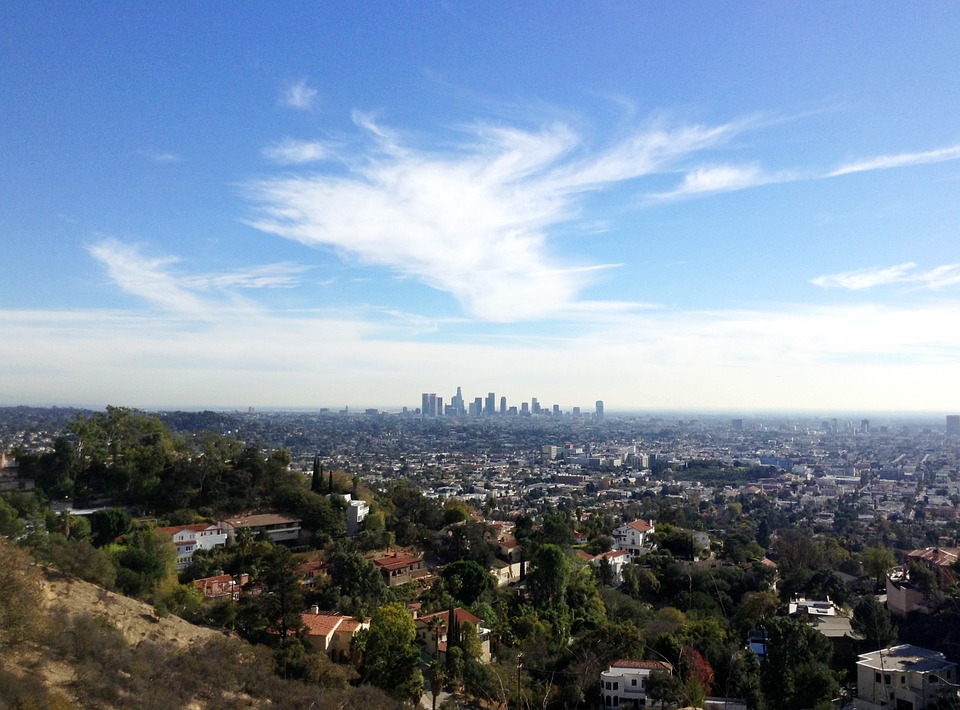
Finding the Avenue 33 Farm is a serious challenge. Plug the address into GPS and you end up on a steep residential street packed with older, neatly landscaped homes. To the west, downtown L.A. fills the horizon and, to the south, your destination looks like a modest home with a slightly scruffy front yard and a long, sloping driveway that ends with a carport.
How can this be the site of a farm?
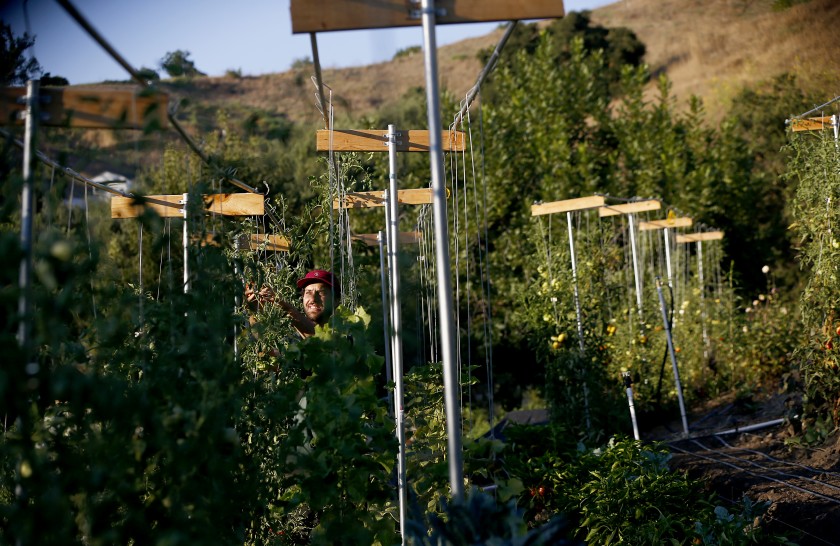
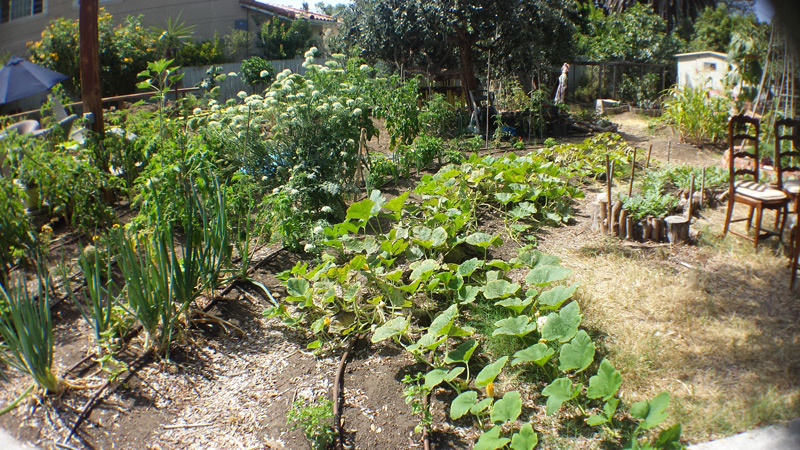
The answer lies above, an arduous climb up the hill behind the home of farmers Ali Greer and Eric Tomassini, past the covered patio, with the new walk-in refrigerator Tomassini built the week before, past barrels of rainwater and flats of seedlings waiting to be planted, up another set of stairs to an acre-wide sprawl of flowers, tomatoes, peppers and lettuce basking in the sun.
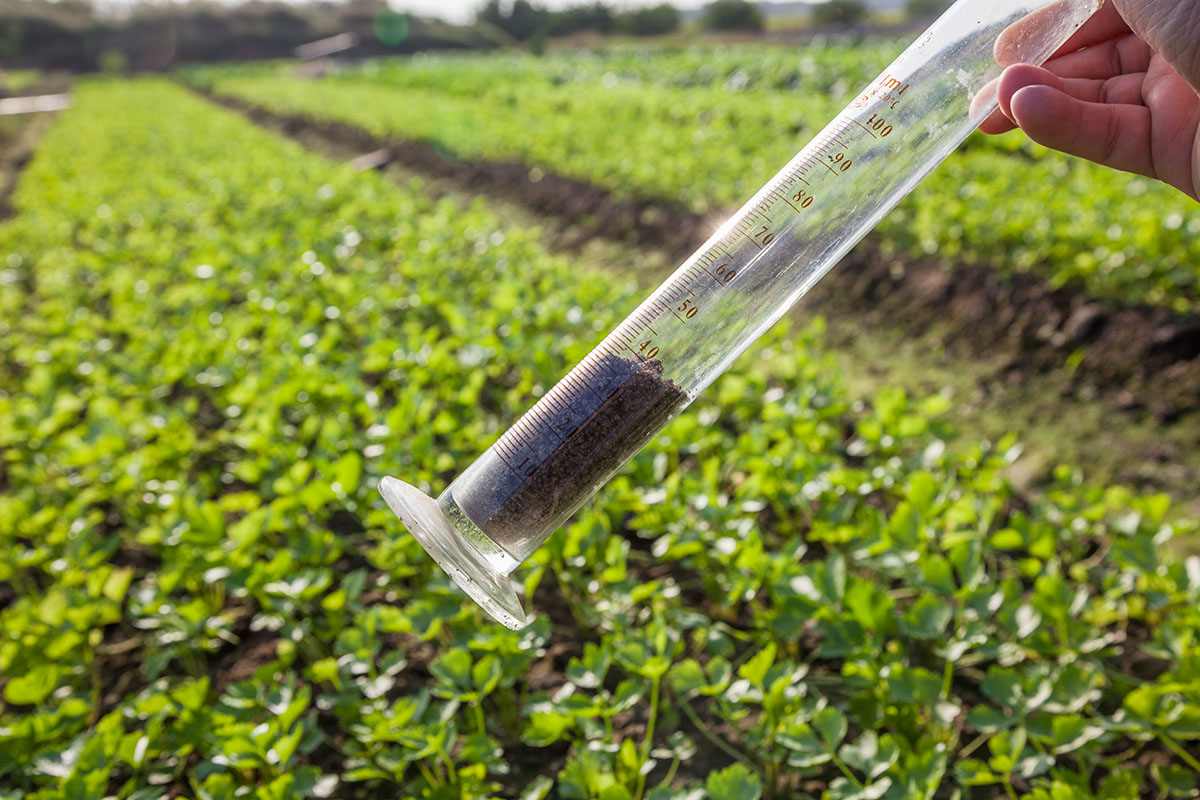
Urban soils are particularly prone to contamination. 50 years ago, your yard could have belonged to a farmer, who, perhaps not knowing any better, disposed of old bottles of anti-freeze or contaminated diesel in a hole out behind the tractor garage. Or perhaps the remains of a fallen down outbuilding, long ago coated in lead-based paint, was buried on your property buy a lazy contractor when your subdivision was built.
For those wanting to garden on non-residential urban property – school yards, church grounds, parks, commercial areas, vacant lots – the likelihood of contamination is even higher. There is no telling what sort of past activities took place there, all visible signs of which have disappeared. Prior the 1970s, environmental rules were very lax, and it was not uncommon for all sorts of hazardous chemicals to be dumped at any location where they were used. Many such chemicals persist in the soil for decades, if not longer.
The good news is that if the property was redeveloped (any significant new construction, demolition, or change of use) since environmental laws tightened, it would have had to go through a strict assessment to determine if contamination was present. If anything unacceptable was found, the owner would have been forced to remediate the soil before starting construction. However, if the property has remained more or less as-is since the 1970s (or earlier), it is unlikely that anyone has ever investigated what might be lurking in the soil.
With “everything from Alice Waters to Cesar Chavez,” to learn about local agricultural history, a new Oakland exhibition at the Oakland Museum of California that explores the rich topic of local farming is “only going to be a tasting menu,” says Sarah Seiter, the museum’s associate curator of natural sciences. That means Take Root: Oakland Grows Food , a new, year-long exhibition a the OCMA, will provide a broad overview of the current state of Oaklanders growing food for themselves and their community, answering basic questions like “what grows in Oakland?” and connecting visitors to information about local farms including City Slicker, Acta Non Verba, and New Roots. Take Root runs from December 16th through January 2019.
“It’s not a secret that the Oakland Museum is moving towards progressive, social justice issues” says Seiter. Recent exhibitions have covered cannabis to capitalism. “This exhibition is a way to do that in the natural sciences gallery. We wanted to focus more on ecosystems that are managed and experienced by humans — fisheries, working water fronts, landscapes where humans are deeply enmeshed.”
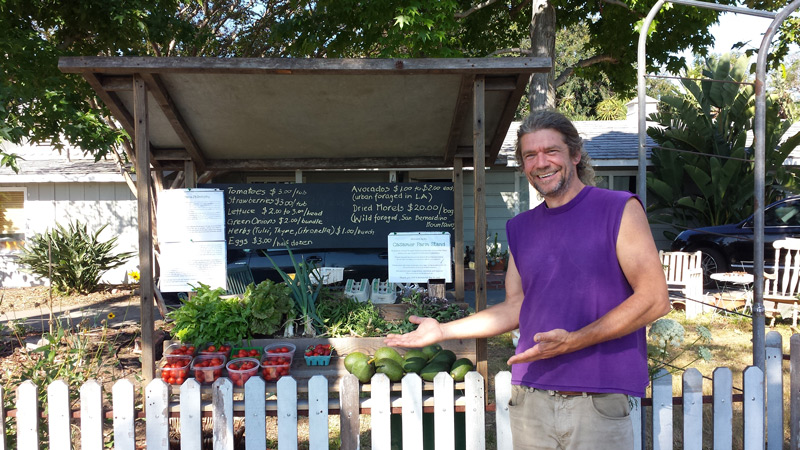
“Walk north past the Mar Vista Post Office along Grand View Boulevard and enter a tree-lined, residential street. Less than a block in, on the street’s west side, you’ll find a red ranch house surrounded by wooden furniture, an elliptical driveway, and a wooden stand with a blackboard menu that reads, “Take as many as you want, leave what you think they’re worth to you.” This is the unlikely setting for Casamor Farm, an urban farmhouse run by Andre Kohler that grows produce on-site on a Mar Vista side street.”
“His corrective mission extends to the wild, where Kohler frequently forages for mushrooms, acorns, nuts, berries, herbs, and flowers. His hunt covers the mountains, but also focuses right here in the city, where he snags fruit, avocados, and lemons. He’ll also “forage” frozen fish from grocery store dumpsters to feed his cats. He even prepares a “dumpster Thanksgiving dinner” prepared entirely from “trash,” a vision that brings to mind the dumpster diving documentary Just Eat It: A Food Waste Story.”
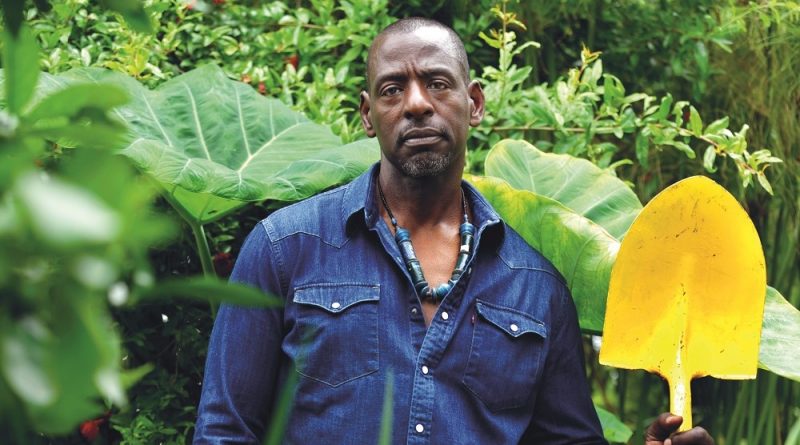
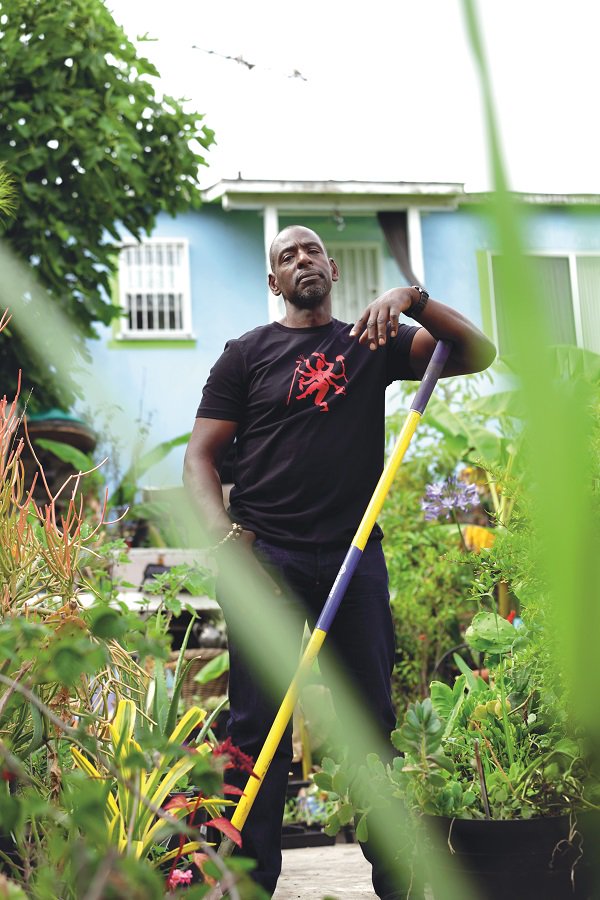
“Los Angeles-based ‘gangsta gardener’ and community leader Ron Finley is determined to redefine ‘gangsta’ as being about building thriving communities, not machismo.”
“Gardening is gangsta: Mother Nature is gangsta. Being educated, creative and self-sustaining is gangsta. That whole concept was about turning a negative into a positive. If you want to be gangsta about anything, make it about building your community, sharing knowledge.
Men are brought up being told that we’re supposed to be provider and protector. But, as far as I can see, a lot of our communities are basically designed to kill people, because you can’t find healthy or nutritious food in them. Why is it easier to get alcohol than an organic apple? Why, in certain communities here, is it easier to get a gun than it is to get an organic carrot? Cities are designed for commerce, not for people.”
This article was first published by Positive News and is republished with permission.
“Jesse DuBois is an urban agriculturalist. He moved to Los Angeles to become a screenwriter, but instead got caught up in reshaping the food system. He is the CoFounder and currently serves as the Chief Eclectic Officer for two start-ups: Farmscape, an urban farming maintenance company, and Agrisaurus, a web-based polyculture gardening assistant. Horticulturally, he is a big fan of the nightshade family.”
“In this episode, you will get a tour of the front yard and back yard of this residential tract home lot. You will discover what is growing and John will share his tips and tricks along the way. You will learn how you can improve how you are growing in raised beds to grow more food in less space.
You will also discover the secret to composting in a 3 bin pallet pile system and learn about the one perrenial vegetable you must grow that can grow more food than a whole 4’x4′ bed of kale!
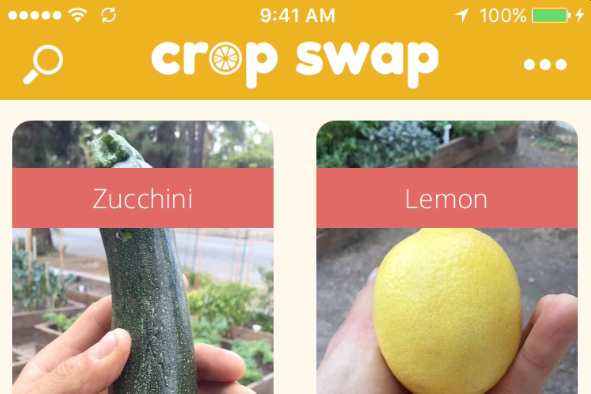
Finally, John will interview gardener Daniel McCollister creator of the CropSwap app, which is a new product on kickstarter that helps gardeners “trade homegrown, perfectly ripe heirloom fruits and vegetables in our own neighborhood. Let’s take control of our food system!”
“Our biggest challenge is a behavioral challenge: people are used to shopping in grocery stores. We need to teach people HOW to grow food and show them why creating a localized food system is better on every level.”
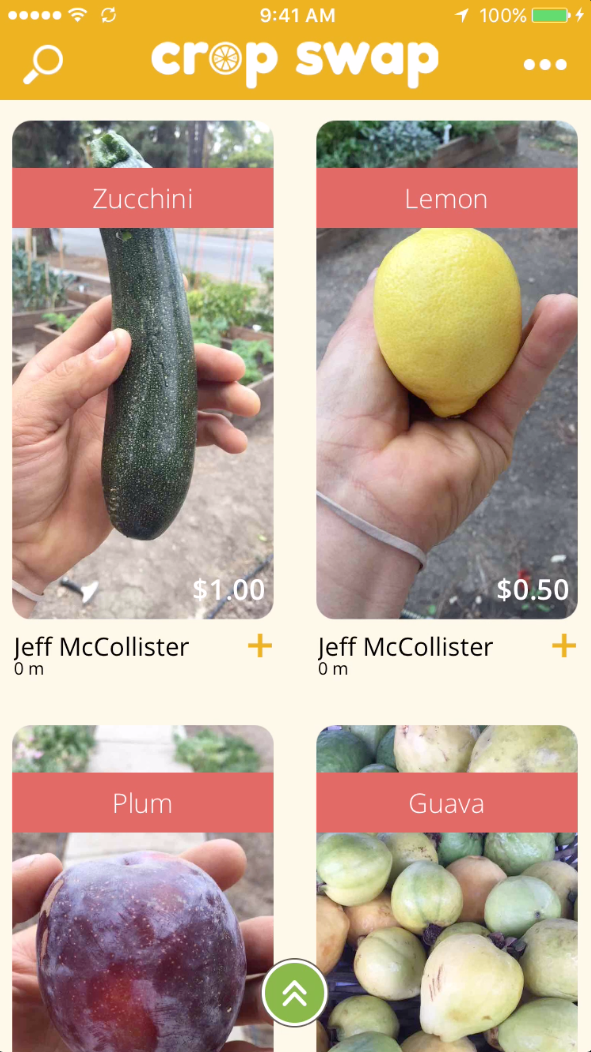
Main timeline of the app. Users can scroll and look at available produce in their neighborhood, click on each item and see a detailed profile about it.
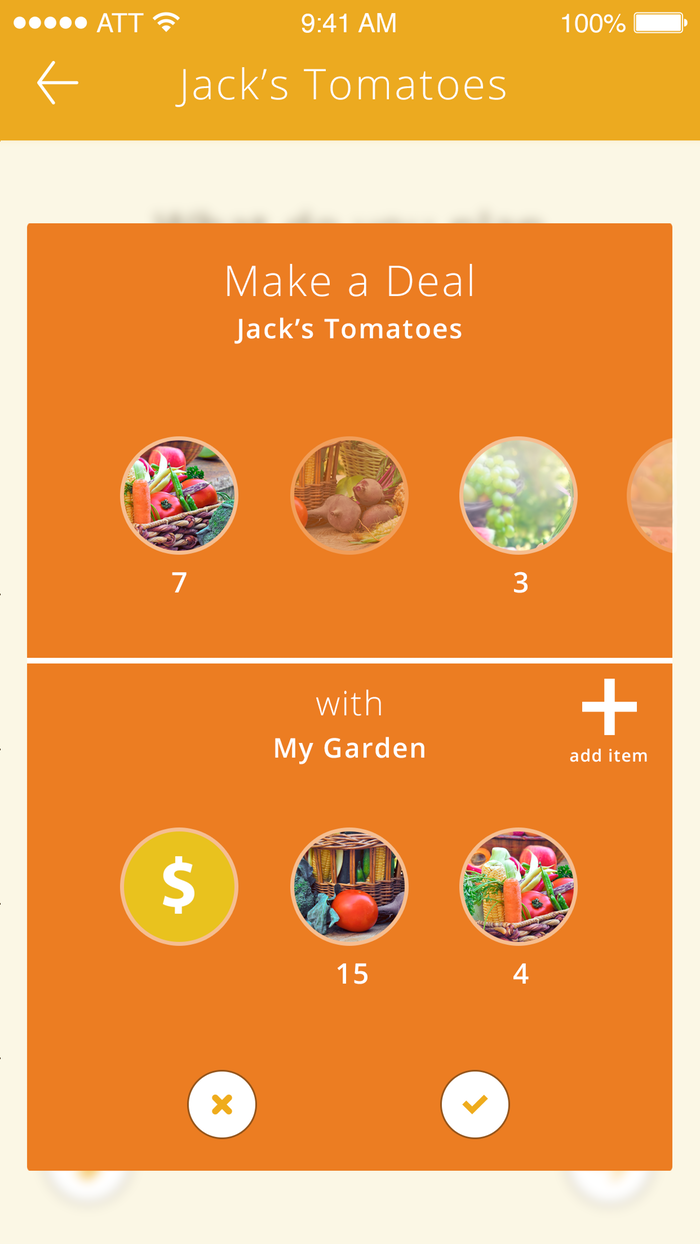
To make a deal, users make offer from their garden and say what they want back. Other user can either approve or make a counter offer until both sides agree.
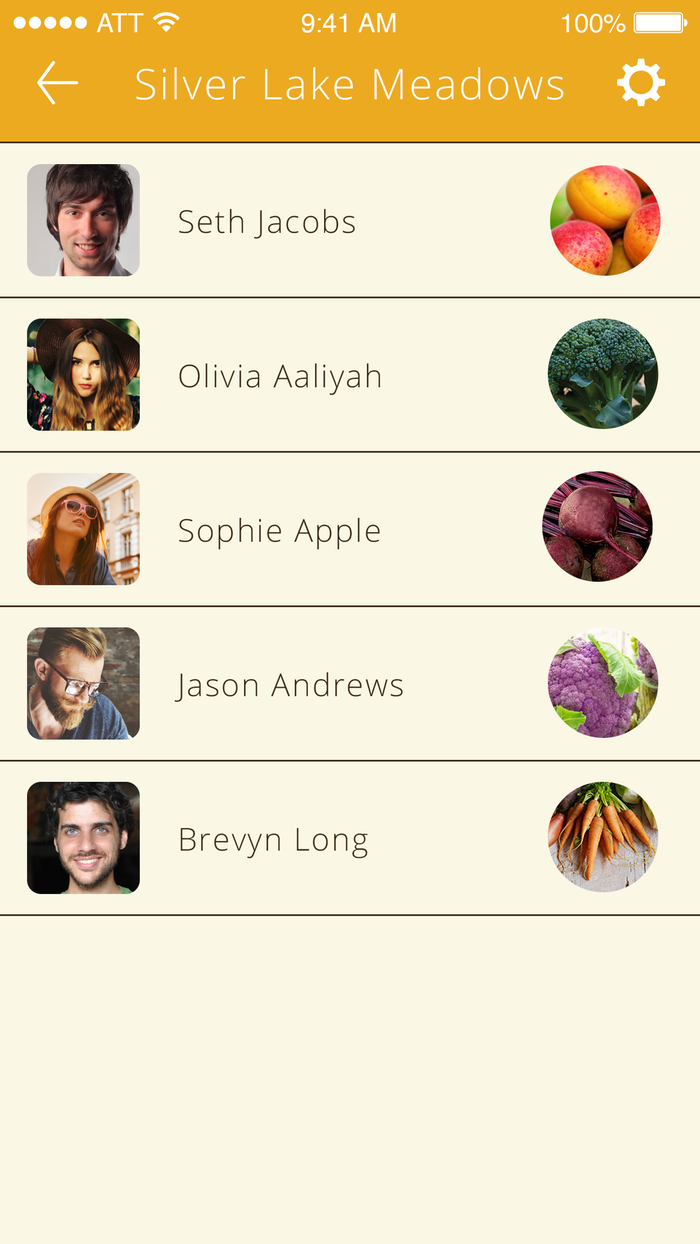
CropSwap confirmed neighbors coming. Scroll through pictures of vegetables your neighbors will be bringing.
“The garden was beautiful,” Finley said teary eyed, “and then someone complained.” The city threatened him to remove the garden and put out a warrant for his arrest. The LA Times picked up the story, which prompted a petition, which prompted the city to change its zoning laws. The garden grew and thrived.
In 2011, the owner of the property on which the Gangsta Garden and the Ron Finley Project headquarters now sit defaulted on his loan. But over the past few years – since the garden became a success – the owner has been battling the bank for a loan modification that would allow the project to continue and expand. But the bank refused, foreclosed on the property in November, and sold it to a real estate corporation called Strategic Acquistions, Inc., in what Finley calls “a shady business deal.”
With the sound of busy free-ways near by, this community gathers at the Boyle Heights Urban Garden to find peace and relaxation. At the Mott Street Urban Farm, there is a school garden, and room for community members to garden in their own plots. People of all ages, and all income levels come together to do one thing. Take back control of their food source.
“The farm is part of a trend in community gardening that can be seen in urban areas across the nation. Urban agriculture is a way for people to take control of what they grow and eat, as well as their overall health. According to the National Gardening Association, gardening in urban areas increased 29 percent from 2008 to 2013.”
Whenever UC Berkeley student Sara Cate Jones has felt the blues coming on, she’s relied on the same remedy: she goes to the student garden on the corner of Walnut and Virginia streets and picks herself a bouquet of flowers.
“The garden is always here for you,” said Kate Kaplan.
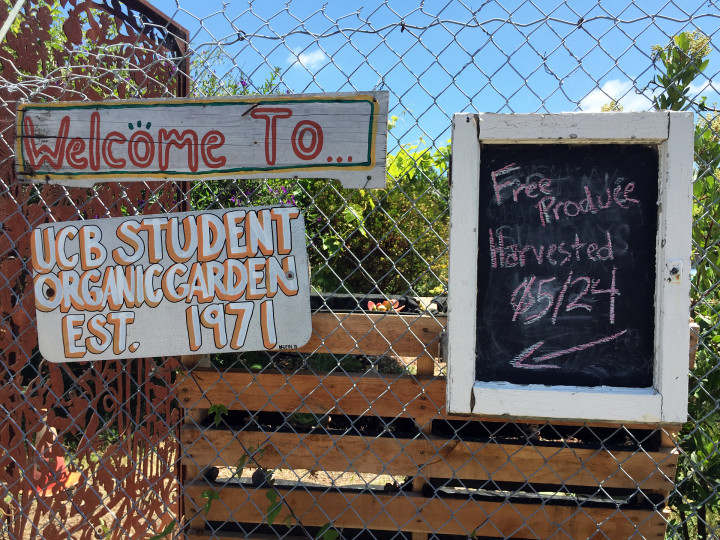
Established in 1971 by a group of students shortly after the first Earth Day, the garden has offered students and the community at large an urban oasis in North Berkeley for over 40 years.
About a quarter acre in size, the garden sits on a plot of university-owned land and is overseen by SOGA’s student volunteers. SOGA was founded in 1999 when the university gave the garden space to EBMUD for a pumping station. The students protested and a compromise was reached; the pumping station is now adjacent to the garden.
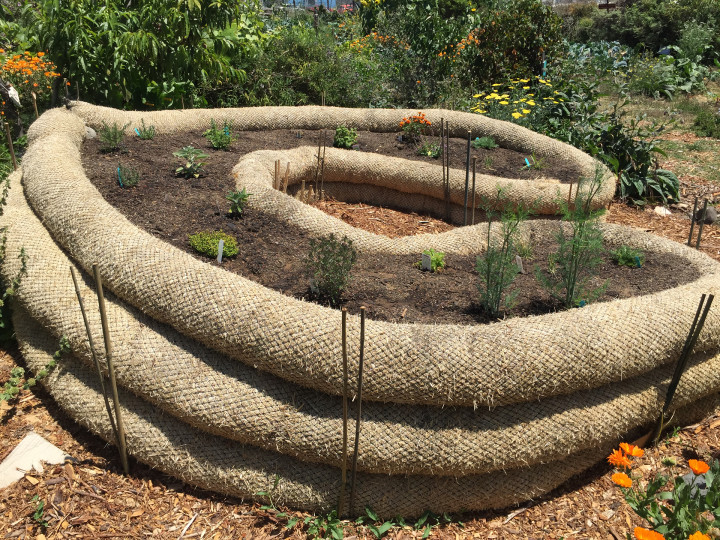
This keyhole raised bed, in which herbs are growing, is made out of straw wattles. It was a student project to experiment with cheaper solutions than planter boxes to grow above ground. Photo: Alix Wall
As for what’s planted, it’s entirely up to the students. There are several varieties of apple, plum and fig trees, flowering plants and bushes like sunflowers and lavatera, succulents and native plants, and of course, plenty of vegetables.
Though the garden gets some funding from student fees, SOGA is responsible for applying for grants to keep the garden running, and is also “meant to be the stewards of the garden, to make sure something like that doesn’t happen again,” said Kaplan. “We also make sure relations are good with the administration, and make sure they know what’s going on,” said Jones.
(For example, at one time students brought in chickens and goats without university approval – they are not allowed to raise animals.)
Kaplan emphasized that the garden gives students a chance to connect to a more nontraditional education, which “allows them to build off the lecture-based education we receive and get their hands in the dirt with hands-on experience.”
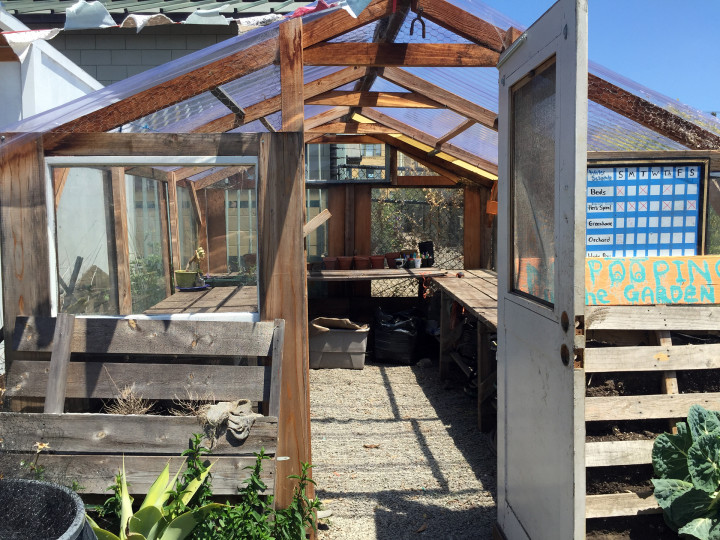
Several classes are held inside the garden. Organic Gardening and Food Justice is one and Garden Leaders is another, which “teaches students how to do project management within the context of a garden,” said Jones, while showing off several projects that were conceived of and brought to fruition by students recently. One such project was a greenhouse made entirely of reclaimed wood and glass.
Then there’s also what’s known as BUGI, or Berkeley Urban Gardening Internship, which connects students with other urban gardens in Berkeley and teaches students how to manage a garden.
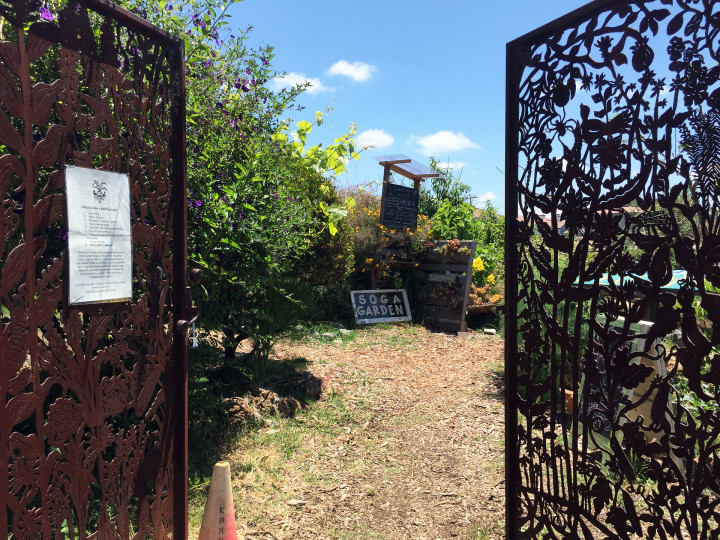
The entrance to the garden is on the corner of Walnut and Virginia Streets in North Berkeley. Photo: Alix Wall
And while those who take care of the garden tend to have more than a passing interest in environmentalism, those who take classes in it run the gamut of the entire campus.
In a class of 150 students this spring, their majors were “all over the map,” said Kaplan. “They had majors like math, business, French, everything.”
While only organic practices are used in the SOGA garden, the piece of land next door, called the Oxford Tract, is used by professors for their various research projects and the students worry about non-organic pesticides drifting over the fence.
One of the allies of the garden, Agroecology Professor Miguel Altieri, often tries to rent the space closest to the garden where he too gardens organically, but the students can’t control what happens on the other side of the fence.
While they sometimes put a sign outside offering the latest harvest to passersby, they don’t have a regular food giveaway because their output isn’t that regular.
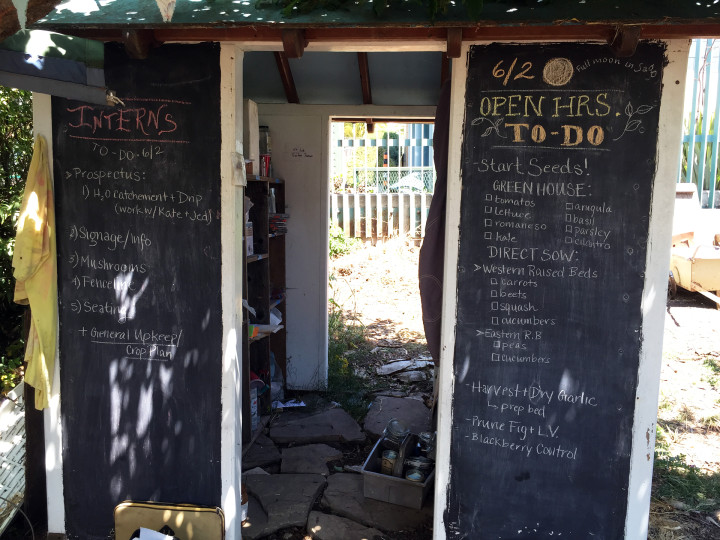
Several summer interns are getting paid to help oversee the garden while the students are away on summer break. Here they keep track of their to-do list. Photo: Alix Wall
“Last year we partnered with the UC Berkeley Food Pantry, providing fresh produce for them to give away,” said Kaplan, noting that their grant money only provided the pantry with non-perishables.
The students often take the produce to share with their roommates, and community members are welcome to drop by when the garden is open, to see if anything has been freshly harvested. (During my visit, one woman dropped by to ask advice about why her apple tree wasn’t fruiting, and another man came by to see if he could score some kale or chard leaves.)
However, many longtime neighbors barely know the garden is there.
“Most neighbors who come in are super excited to see it,” said Kaplan. “Most say they have to come by more often.”
While the students have led some programming for local schoolchildren, and offer workshops through Berkeley Unified School District, they admit that because of a lack of continuity in management, sometimes they aren’t the best at marketing what they have to offer.
“We’re trying to expand beyond the campus community,” said Kaplan. “Many people think it’s just for students, but we’re trying to break that barrier. The garden was started by students and is mostly run by students, but it’s open to everyone. We never turn away anyone if they want food or just want to walk around.”
This green house, made of reclaimed wood and glass, was completely student implemented and built. Photo: Alix Wall
Many students are also not aware of the garden’s existence.
“It does seem kind of hidden,” said Jones. “My favorite part of it is its ability to teach students. But it’s also such a great place to create community, especially in a university that can be so competitive, and that is so big, that students can get lost in it. It provides a kind of safe haven for us.”
The SOGA Garden is always open on Sundays from 10am to 2pm. This summer, it’s also open Tuesdays and Thursdays from 10am to 2 p.m. It is located on the corner of Walnut and Virginia Streets in North Berkeley.
I’ve arrived safe and sound in Los Angeles. Now I have lots to do to get my balcony garden set-up.
It’s a much bigger space than the fire escape garden that I had in New York. I’m working with a 13×4 space, plus some areas for possible hanging planters. Not sure if I’ll be able to use the soda bottles though.
I’m going to find out where I can get 5-gallon containers so that I can make the self-watering containers. I brought all of the copper pipe for the containers with me.
I’ll likely hit up the farmers markets and some restaurants for the containers. After the trouble that I had breaking them down in the winter, I’m likely going to change the design of them a bit this time around.
Also going to need to find a place where I can get some organic soil and compost. For the soil, I might just buy the ingredients to make my own. To start out, I’ll need to find a place to buy some organic compost until I can get set up in making my own again.
After finally getting comfortable with the resources that I had available to me in NYC for containers, compost, plants, soil, etc, I need to seek all of that out again. Should be a good way for me to familiarize myself with the community and area.