This London Underground Farm Grows Salad in a WWII Bomb Shelter

This post is originally from http://www.fastcoexist.com

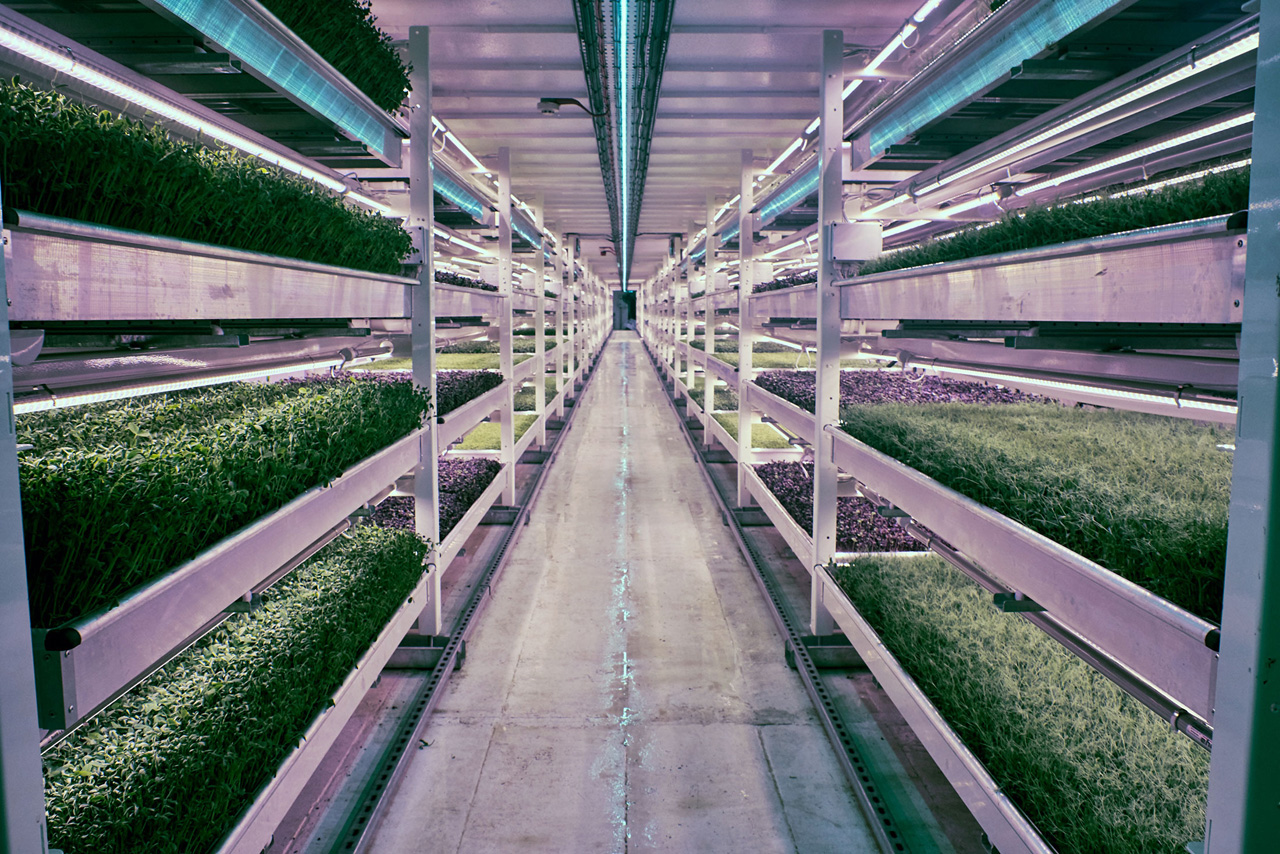
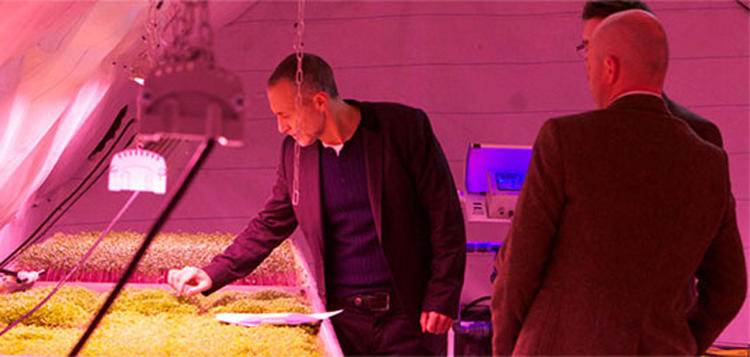
3051209-slide-s-2-this-london-underground-farm-growsDeep below the streets of London, something is growing in tunnels that once kept people safe from World War II bombs. One hint: It’s leafy.

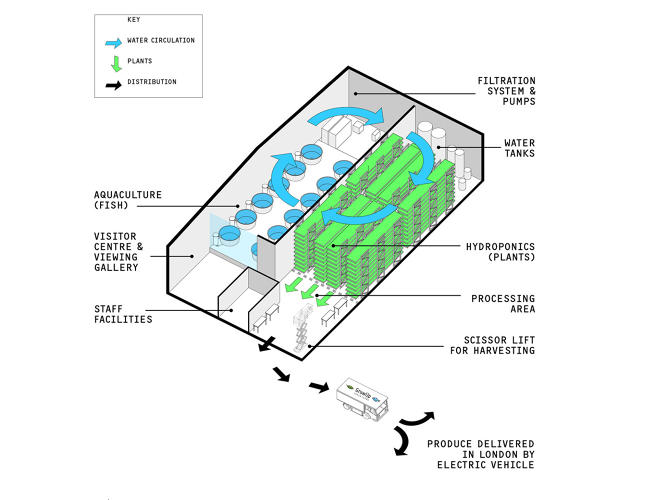
3051209-slide-s-6-this-london-underground-farm-growsAn old bomb shelter is also pest-free, as well as weather free, and there’s never a frost. That means no pesticides. And because the farm is hydroponic, all the nutrients remain in the tanks, instead of running off into the soil and then into rivers.

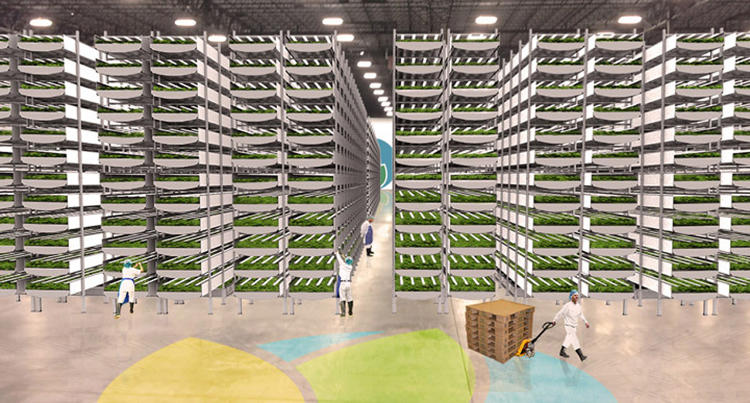
3051209-slide-s-9-this-london-underground-farm-growsGrowing Underground is a company that makes “kilometer zero” eating possible in London, by growing salad in LED-lit, underground factories right beneath the customers’ feet.

3051209-slide-s-3-this-london-underground-farm-growsThe Growing Underground farm sits 100 feet under Clapham in South London.

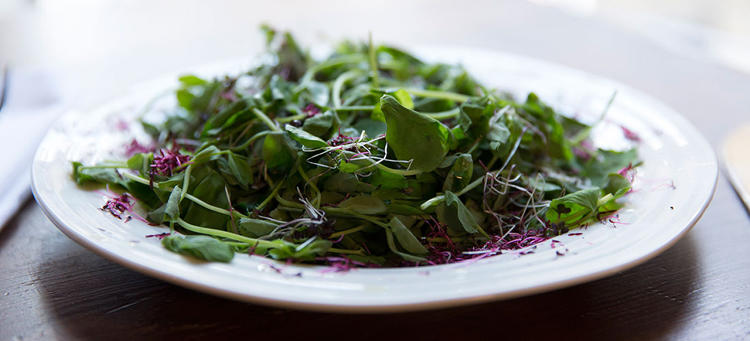
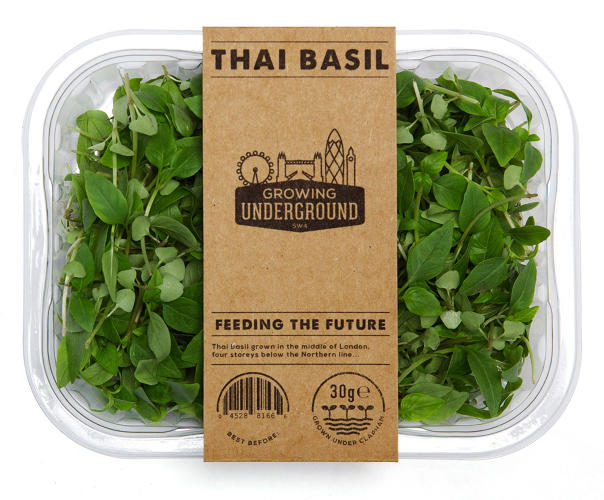
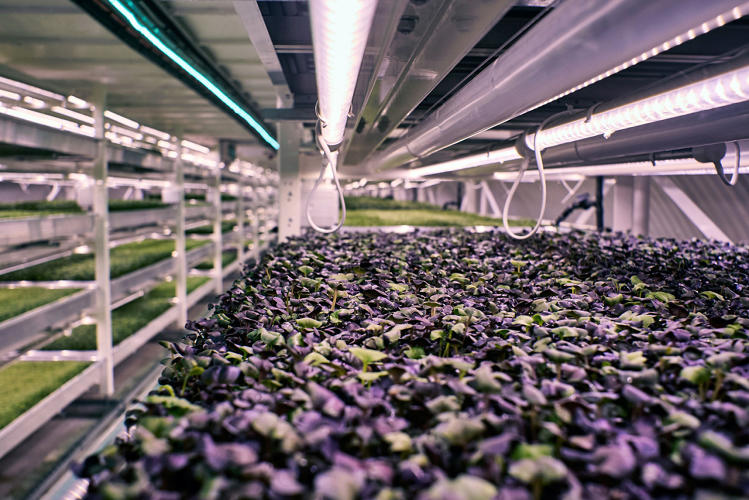
3051209-slide-s-1-this-london-underground-farm-growsIt uses hydroponics and low-energy lighting to grow salad, including mizuna, watercress, Thai basil, radish, pea shoots, mustard leaf, and red vein sorrel.

3051209-slide-s-4-this-london-underground-farm-grows

They grow year-round on racked beds that look like warehouse shelving. Best of all, the process uses 70% less water than regular surface farms.

3051209-slide-s-5-this-london-underground-farm-growsBeing underground has many advantages. One is food miles, or the lack thereof. Transport makes up a significant proportion of the cost of food, both financially and environmentally, so growing in a city center cuts that cost almost to zero.

How to Select the Best Grow Light for Indoor Growing

Not all light is the same by Michelle Moore

Plants respond differently to different colors of light. Light on either end of the spectrum, blue light or red light, have the greatest impact on photosynthesis.

Kind of Lights

Blue light, referred to as cool light, encourages compact bushy growth.

Red light, on the opposite end of the spectrum, triggers a hormone response which creates blooms.

Orange and reddish light typically produce substantial heat, however, some lights are able to produce full spectrum light without the heat.

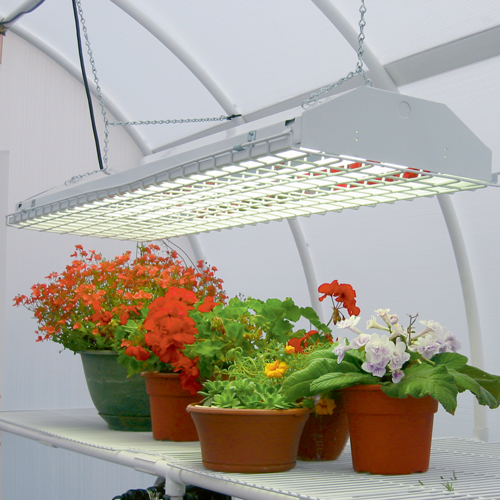
Grow lights come in all shapes, sizes and price ranges.

As a general rule, inexpensive lights to purchase tend to be the most expensive to operate and the least effective. While price is not necessarily an indicator of performance, many of the efficient grow lights require ballasts as well as specialized fixtures.

new

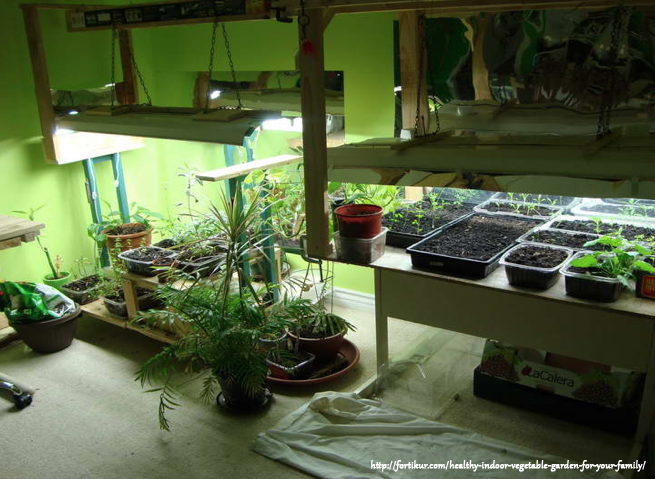
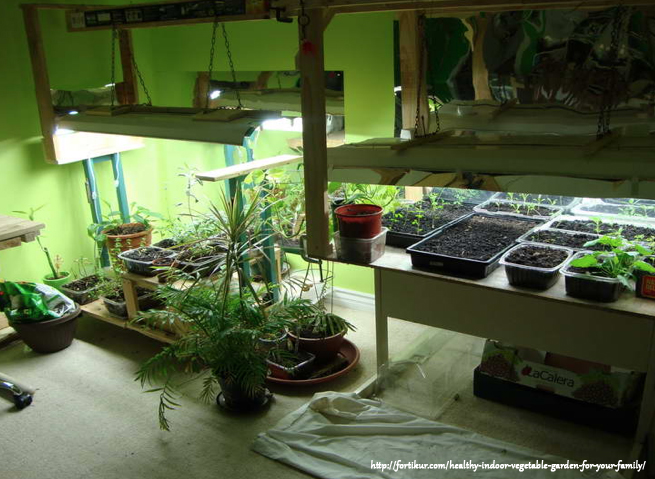
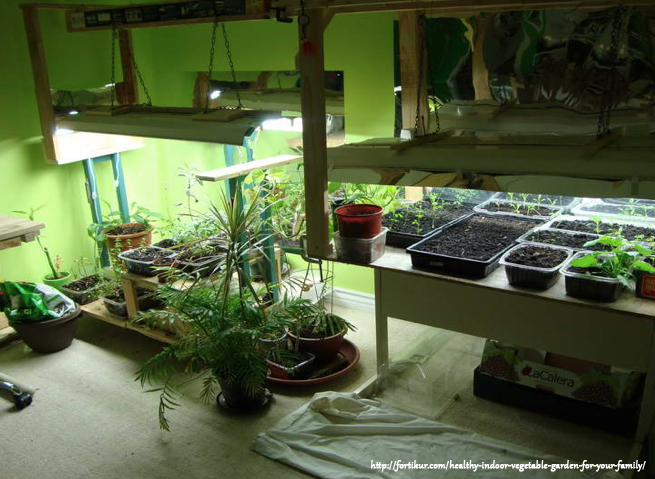
Image of vegetable being grown indoors under artificial light is via fortikur.com.

Check out SeedsNow.com if you’re looking to grow organic vegetable and herbs from seed. They have a huge selection of seeds that grow well using indoor hydroponic systems!

Click here to read more about what GMOs are. It’s really easy for you to grow all kinds of vegetables, herbs, and sprouts inside.  All year long!  Invest in a grow light and you’ll be happy.
Your turn!  Are you growing anything indoors?  Which grow lights have you found to be most effective?

A a great TED Talk on how you can grow your own food, regardless of your living situation.

“Britta Riley wanted to grow her own food (in her tiny apartment). So she and her friends developed a system for growing plants in discarded plastic bottles — researching, testing and tweaking the system using social media, trying many variations at once and quickly arriving at the optimal system. Call it distributed DIY. And the results? Delicious.” –http://www.ted.com

Advice for Successfully Starting Vegetable Seeds at Home

By Michelle Moore
Owner of The Greenhouse Catalog

There is nothing like new life in spring…

…and starting seeds is one of the best ways to enjoy the start of the season.

Unlike transplants, seedlings are fragile and require newborn-like attention:

The right media, temperature, light, water and food.

To a new gardener, meeting these needs may seem like a challenge.

But with a little knowledge and the right equipment, success is easy and just a few short days or weeks away.

With a little knowledge and the right equipment, seed starting success is easy. — Tweet This

Note–before you even start

It is important to select the right seeds. There is nothing wrong with planting seeds that are more than a year old, but if you are trying seed starting for the first time and need a confidence boost—stick to current year seeds for the best germination rate.

What You’ll Need for Seed Starting Success

Media: The best seed-starting media holds moisture and air. Seedlings need to stay moist, but not wet, and need to have plenty of aeration. You can purchase specially formulated seed starting mix, use coco-pith, or a number of seed starting cubes for the best results.

Temperature: Seeds need warmth, so don’t put your seed trays in a drafty area. Add bottom heat for even better and faster roots to development. Seedling heat mats are an excellent investment.

Light: Most seedlings germinate best in light. A sunny window may be enough light, but the addition of a small grow light can make a tremendous difference in a healthy start. Plants receiving too little or too much light tend to get leggy and don’t make for the best transplants. T-5 or LED grow lights are extremely energy efficient and do not take up much space. They also don’t create a lot of heat, so seedlings won’t dry out as quickly.

Water: Seedlings dry out quickly, so it’s easy to overwater them. The best methods include frequent but gentle misting, or bottom watering. We love the Smart Float tray. It provides an excellent media and the sturdy Styrofoam base floats on the water, so seedlings are never over or under watered. Additionally, the Styrofoam insulates tender seedlings and the white base reflects lights back to plants.

Feeding: Once plants have their second set of leaves, they are ready for food (generally within 72 hours of spouting). A high-quality organic fertilizer, diluted to ¼ strength for the first feeding, works well. Continue feeding at ½ strength until seedlings are ready to transplant.

Happy planting and be sure to check all of the seed starting supplies at The Greenhouse Catalog.

About Michelle Moore

Michelle Moore is the owner of the Greenhouse Catalog where she has worked with greenhouses for 20 years. Michelle writes and lectures about greenhouse gardening as an Oregon State University Master Gardener and member of Garden Writers Association. Michelle and her husband live in Oregon, but they enjoy hints of summer all year in their greenhouse! Become a Greenhouse Catalog fan on Facebook to get year-round gardening tips and advice.

Your Turn

Share this post with your friends and family to help them successfully start their seeds this year.

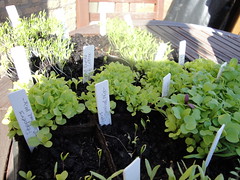
Photo courtesy of janeyhenning on Flickr

5 Items to Start Your Seeds In

You’ve scouted out the location for your garden

Figured out how much sunlight your space gets

And have decided what you are going to grow.

Now it’s time to finally get your seeds started and aren’t sure what to use. That’s why, I wanted to share 5 items that you can start your seeds in.

Strawberry containers. If you are growing fruit bearing vegetables, you can reuse strawberry containers to start your seedlings in.

Toilet paper rolls. Toilet paper is something that we all use and wind up tossing into the trash when done with them. If you are feeling crafty, you can turn your toilet paper rolls into seed starting pots.

Newspaper pots. You can either make these on your own by following these directions or buy a kit that allows you to easily make them.

Expanding seed pellets. If you aren’t feeling so crafty, you can buy seed starter pellets from an online seed company like SeedsNow.com

Seed starting kits. If you really want it to all be done for you, then you can purchase a seed starting kit that comes with everything that you need. You can buy ones that have heating mats, greenhouse covers and pellets.

Your Turn

Whether you are a DIY kind of person, or want to buy a ready to go kit, one of these five (5) options will help you to get your seeds started.

What are you going to use to start your seeds this year?

Photo courtesy of annethelibrarian on Flickr.

Indoor Seed Starting Tips for Beginners

Today I am going to share basic indoor seed starting tips

…along with common mistakes and how to avoid them.

It will be a good starting point if it’s your first time, and reminder for those of you who have done this before.

The main reason that you are going to want to start your seeds indoors is so that you can get a jumpstart on the season and to the harvest quicker.

I’ll say that again —

Start your seeds indoors, so you can get to the harvest quicker. — Tweet This

4 Basic Tips for Starting Your Seeds Indoors

Start Your Seeds on Schedule
Seed packets come with a lot of information on them. Most of which gets ignored. If you look closely, the seed packet will tell how approximately how many days until the seed will sprout and be ready to be planted. It will also let you know when is the recommended time to plant outdoors. Do a little bit of math and figure out when you should get those seeds started.

Know What You Planted
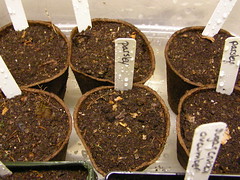
This sounds ridiculously obvious, but often gets overlooked. We think we’ll remember and don’t label them and sure enough as soon as we walk away, we forgot. Happens every time. Don’t take the lazy way out and just label them from the start.

Give the Seeds Even Sunlight
The tendency is often to keep the seeds in one position and just water them. When you do that, you’ll notice your seeds start to develop a lean to them. That’s because they are stretching towards the sun. To prevent that rotate the seed tray every few hours. That should help to straighten them out.

Know Your Seed Source
You are going to want to make sure that you are buying from a seed company that cares as much about your health and environment as you do.

[vimeo clip_id=”37359992″ title=”0″ byline=”0″ portrait=”0″ width=”525″ height=”393″]

4 Common Seed Starting Mistakes and How to Avoid Them

I asked Michelle Moore, owner of the year round gardening supply company The Greenhouse Catalog (one of my sponsors), about common indoor seed starting mistakes and how to avoid them. Here is what she said:

Over or Under Watering
“Using a media like coconut pith or coir is a wonderful way to control the moisture content-especially if you water from the bottom,” said Moore. “The coir wicks water as needed so seeds don’t get soggy. Don’t forget to add diluted fertilizer within 72 hours after the first leaves appear.”

Growing in Low-Light Conditions
“South facing windows may work well, as long as the spot isn’t drafty and daylight lengths are greater than 12 hours,” suggested Moore. “Supplementing with grow lights (up to 18 hours of light) will speed up growth. Make sure to read the directions for each grow light as it’s a common mistake to place the light source too far away from the plants.”

Temperatures Too Cool for Root Growth
“Cool temperatures on the surface encourage compact growth, but roots need warmth,” said Moore. “Adding bottom heat with a seedling heat mat encourages healthy root growth, which makes for healthy plants. Make sure to use a media that won’t dry out too quickly with bottom heat.”

Not Starting Enough Seeds
“It’s also a good idea to plant more seeds than you will need,” recommended Moore. “This will allow you to pick the healthiest starts to plant.”

Your turn

Now that you have some basic tips and mistakes to avoid laid out, in the comments below let me know what vegetable seeds you’ll be starting indoors and when.

Image courtesy of normanack on Flickr

How to Select the Best Grow Light for Indoor Growing

Michelle Moore

Not all light is the same.

Plants respond differently to different colors of light.

Light on either end of the spectrum, blue light or red light, have the greatest impact on photosynthesis.

Kinds of Light

Blue light, referred to as cool light, encourages compact bushy growth.

Red light, on the opposite end of the spectrum, triggers a hormone response which creates blooms.

Grow lights producing the orange and reddish light typically produce substantial heat, however, some lights are able to produce full spectrum light without the heat.

Grow lights come in all shapes, sizes and price ranges.

As a general rule, inexpensive lights to purchase tend to be the most expensive to operate and the least effective. While price is not necessarily an indicator of performance, many of the efficient grow lights require ballasts as well as specialized fixtures.

Image of vegetable being grown indoors under artificial light is via fortikur.com.

Check out SeedsNow.com if you’re looking to grow organic vegetable and herbs from seed.

Click here to read more about what GMOs are. It’s really easy for you to grow all kinds of vegetables, herbs, and sprouts inside.  All year long!  Invest in a grow light and you’ll be happy.

Basic Types of Grow Lights

These lights run the gamut of performance and price range.

Incandescent Lights.

The least expensive lights to purchase cost around $30. These incandescent lights work well for specific plants where the light is placed a minimum of 24” from the plant. These lights get extremely hot so they must be used with care. Spot grow bulbs, color corrected incandescent lights, install easily and are good for use with a specific plant or a small grouping of plants. Most spot incandescent bulbs last less than 1,000 hours. Some light fixtures come with a clip handle so you can put them exactly where they’re needed.

Fluorescent Grow Lights.

They are a common choice for homeowners. Fluorescent lights are reasonably energy efficient and relatively easy to install. A typical fluorescent bulb will last approximately 20,000 hours. Fluorescent light is typically on the blue end of the spectrum. Blue light encourages bushy compact growth which makes them perfect for seed starting. Blue light is also cool to the touch making it possible to place lights within just a few inches of the seedlings.

New Full-Spectrum Fluorescent Lights.
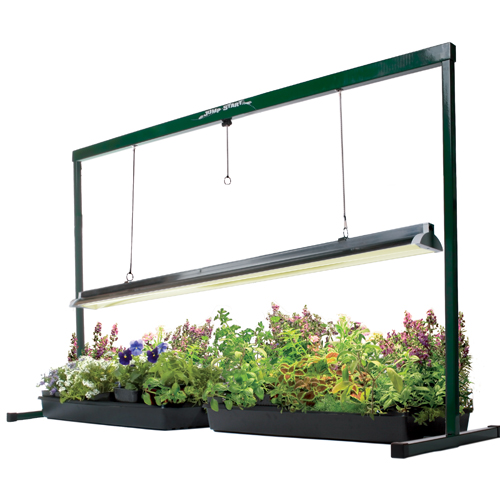
Provide the red spectrum as well to encourage blooming.

Combining the lights in a fixture makes for even, all around growth.

The next generation in fluorescent lighting includes the new T-5 lights.

These new lights have extremely high output but are energy efficient and long lasting.

The T-5 lights triple the light output of normal fluorescent lights without increasing the wattage. Plants absorb a high percentage of T-5 lighting because the fixtures function well very close to plants. High output bulbs require a high output fixture to operate, so the bulbs and normal fluorescent fixtures will not work together.

LED Lights
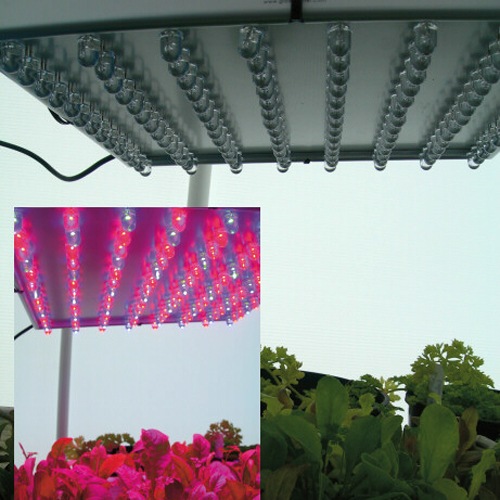
The newest type of grow lights use LED technology.

One major advantage to the LED lights is the small size.

LED lights are only a few inches in diameter and are easy to mount.

In some greenhouses, LED lights may be the only practical light option.

Hanging most grow lights requires a strong greenhouse structure and a place to hang the lights.

LED lights weigh a fraction of other lights and are easy to configure where needed. According to LED manufacturers, LED grow lights maximize blue and red light to provide and excellent balance for plants.

They do not have much green-yellow light. Since humans see green-yellow light best LED grow lights appear dim to our eyes. This is an exciting new technology that will be interesting to watch as it develops.

The Best Grow Light Option

Now that I’ve given you a good rundown on greenhouse lighting options, it’s also important to mention darkness.

Almost all plants benefit from a period of six hours or more of darkness.

It’s a good idea to know how much light your plants need, but unlike commercial growers, hobbyists often have a wide variety of plants so they need to take a broad approach to lighting.

Fluorescent lights offer excellent overall lighting options.

Other Considerations

If you chose to use any type of fluorescent lighting, you will need to account for plant growth.

Fluorescent lights perform best when positioned very close to plants.

As plants grow into the light, it is important to raise the fixture.

Generally only the plants touching the lights will burn, but be prepared because they grow quickly.

Adjustable hangers are a good solution. These hangers move easily allowing you to make quick adjustments.

If you’re looking for non-gmo seeds that grow well using hydroponic systems, click here.

Your Turn

Are you currently using grow lights to grow indoors? What kind? What are you growing?

Do you plan on growing indoors using grow lights?

Let me know in the comments below.
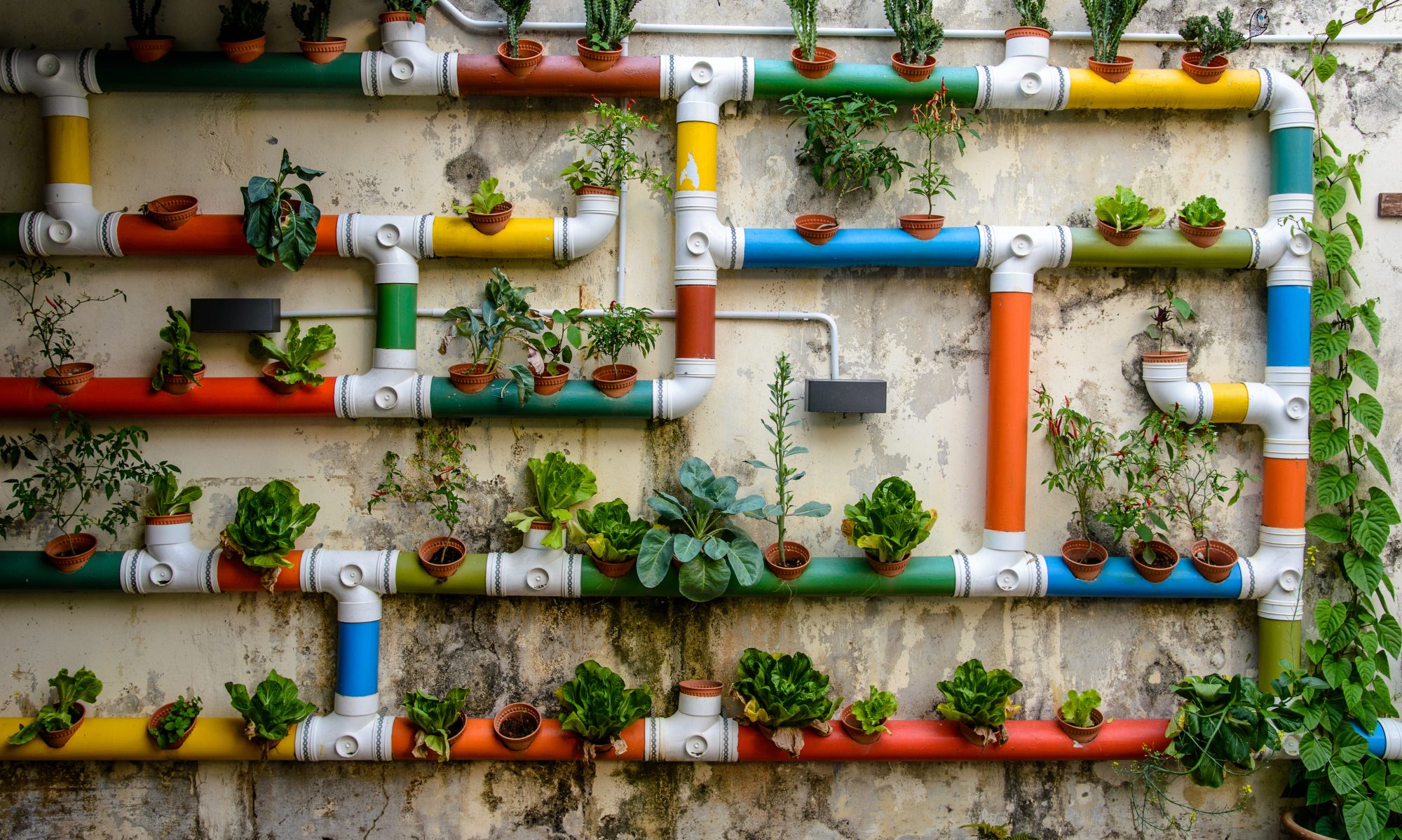
How to Grow Your Own Sprouts Indoors

Today I am going to show you the easiest way that you can start to grow your own food.

And you won’t need any outdoor space…

You just need a spot on your kitchen counter.

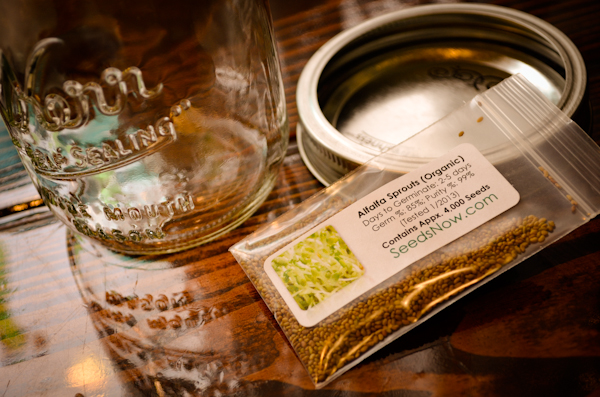
I am going to share with you how to grow your own sprouts indoors.

No need to buy fancy gadgets or machines. You can do this on the cheap.

You ready?

Let’s do it!

What you’ll need to grow your sprouts

  • Mason jar
  • Cheescloth or another breathable cloth
  • Canning lid or rubber band
  • Bowl or dish

Steps to grow your own sprouts

  • The first thing to do is to soak the seeds for 8 hours in the mason jar. I prefer to do this right before I go to bed to let them soak overnight.
  • The next morning, put the cheesecloth over the mouth of the jar and secure it with the canning lid. Drain out the water. Refill with water to rinse the seeds and drain again. Place the jar out of direct sunlight at an angle in a bowl. This will allow the rest of the water to drain.
  • Repeat the previous step every 8-12 hours (about 2 times per day).
  • Generally it’ll take 5-7 days for them to be ready to eat. The seeds are ready to eat as soon as they start to sprout. Just rinse and drain them one last time before you store them in the fridge.

Sound off

What is your favorite sprout?

Update on the Indoor Mushroom Garden: One Week Later

It’s been a week since I’ve started my indoor mushroom garden. Per the instructions, I’ve been misting the bag two times a day.

I was starting to get a bit skeptical, but after the eighth day I started to see some growth bursting out the front of the bag. At this point it almost looks like a piece of cauliflower.

On the side of the box, it says that you can harvest your first mushroom as early as 10 days, so I’m not too far off.

This seems like a good way to not only grown some of your own food, but also a good option for those that have limited space. Mine are sitting on my kitchen table in the indirect sunlight.

Get 20% off a mushroom garden kit: Offer expires today
Today is your last day to get 20% off when you buy a mushroom garden kit from Back to the Roots Ventures. All you have to do is visit Back to the Roots Ventures and enter promo code UG202011 when checking out and you will get 20% off your purchase. This offer expires at 11:59pm PST tonight.

If you click on any of the links above and make a purchase, I will be getting a portion of the money. If that doesn’t sit well with you, here is a straight link to Back to the Roots Ventures that you can use.

httpv://www.youtube.com/watch?v=YgWvZA_V7Vk

Starting an Indoor Mushroom Garden

While I’m running the contest to win your own mushroom garden from Back to the Root Ventures, I am going to be growing the mushroom garden to see how it works.

Growing my own mushrooms is something that I’ve been wanting to do for a while. Most of the kits that I’ve seen use logs and require a damp, dark location, which I don’t have. That’s why I’m curious to see how this kit will do.

Plus mushrooms are crazy expensive in the store, and I’m all about growing my own food when I can.

The set-up was pretty simple. I’ll go over all of the steps after it’s finished.

In the meantime, don’t miss out on your chance to win your own Mushroom Garden kit by leaving a comment on the post in this link.

httpv://www.youtube.com/watch?v=TpBRruugO_g