
Which Vertical Garden System is Right For You?

More people are wanting to grow food in their small urban spaces like on their decks, patios, balconies and even indoors!  Regardless of your budget or style, there’s a system that will suit your taste and your wallet. Here’s a few of our favorites and why we love them so much.

Growing outdoors has never been easier or more beautiful. This system has a composter built into the center that you can add your kitchen scraps and “compostables” into it. Make sure you load up your tower with plenty of worms so you can take advantage of the compost tray at the bottom. It also has a container that stores compost tea that is automatically created when you water your Garden Tower.
Pallet Gardenimage via @midlifegardener
Affordable and readily available to most gardeners, pallets are becoming the new “craze” in vertical gardening. Usually the perfect size for a small deck or patio and a great place to grow things like strawberries, leafy greens and herbs. Just make sure you don’t pick up a chemically treated pallet, as they aren’t safe to grow edibles in. Make sure your pallet is either un-treated or heat-treated.
Gronomicsimage via @txmerebear
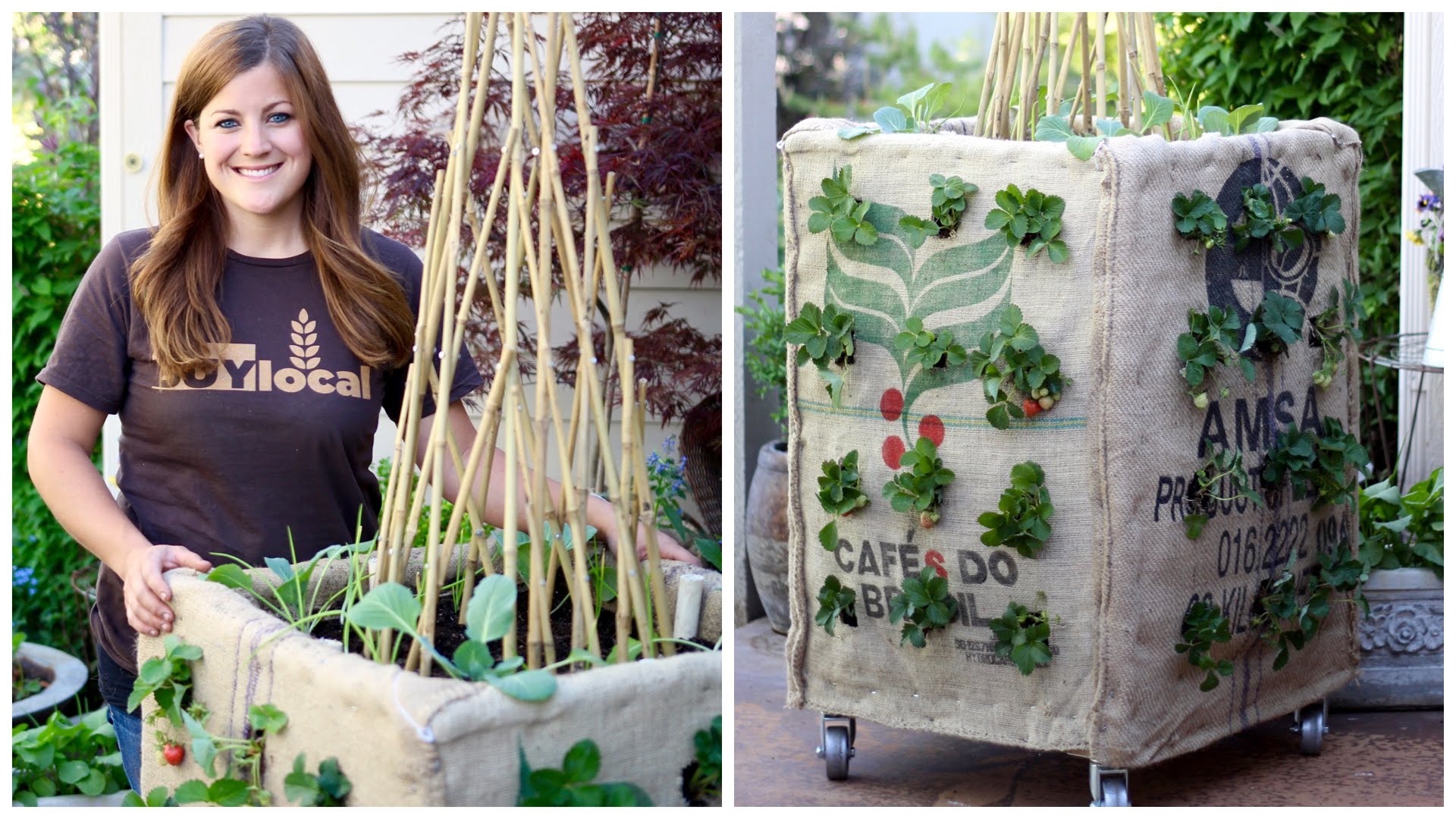
Raised garden beds make gardening a cinch! No more bending over to harvest your favorite fruits, veggies and herbs. These are also the perfect solution to those who are renting and are unable to “alter” the appearance of their landscaping. Plus, you can easily take this raised bed with you if you relocate.


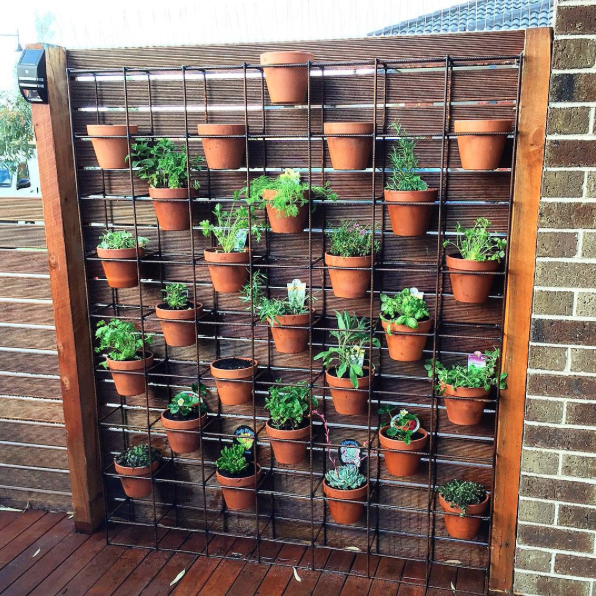
ReoGro Vertical Gardens
Made from something resembling rebar and terra-cotta pots, this system is clean, and function-able. Create this system as small or as large as you like for a stunning piece that will have all of your urban gardening friends green with envy.


Recycled Bottle Garden, via @giobelkoicenter
If you’re big into recycling, this garden is for you. Constructed from leftover water bottles, this garden is extremely cost-effective and fun to look at. Stick to small crops when planting in such a small container so that the roots do not become crowded.

Tower Garden, image via @fitninja_dan
If you’re thinking about dabbling in hydroponics or aeroponics a Tower Garden might be for you! This system takes up very little space and does well both indoors and out. The “once a month” feeding regime will allow you more time to do what you enjoy and you won’t have to ever worry about watering your garden again. Simply keep the reservoir at the bottom filled with water and nutrients, and a timer will spray just the right amount of water onto the roots of your plants throughout the day.


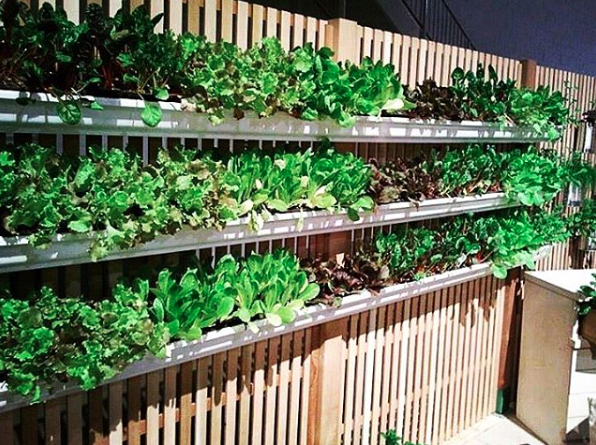
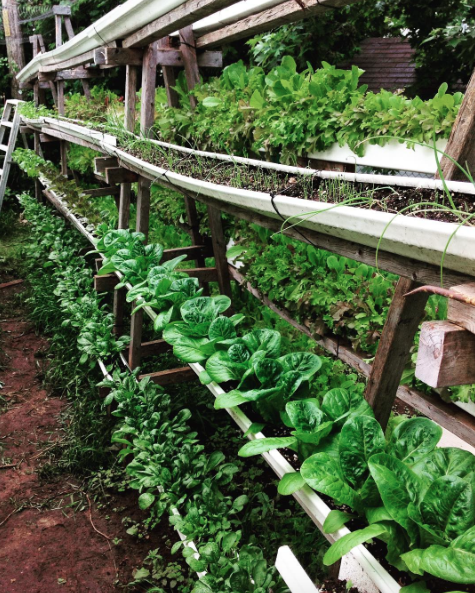
Rain Gutter Garden, image via @frk_munkeby
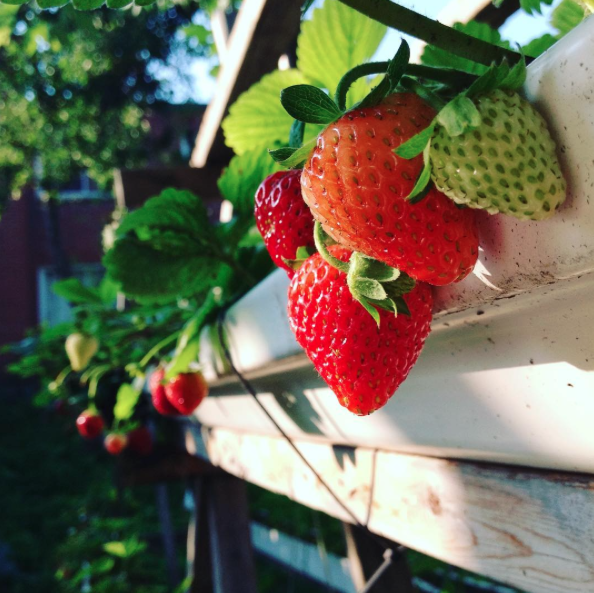
This is the perfect set-up if you have a wall or fence line you are looking to grow on. Simply attach some rain gutters to your vertical space, add soil and start growing. Just make sure you drill a few drainage holes throughout the gutter. Strawberries look stunning when grown on a wall in this type of system.

Wall Pockets by Florideja 
Looking for a small, simple way to grow a few lettuces or leafy greens indoors? Perhaps you’d enjoy having your favorite culinary herbs right at your fingertips near your kitchen. Wall Pockets allow you to grow indoors inside a felt pocket which ensures the plants roots are able to breathe.Original blog post can be found at: SeedsNow.com
37 Edibles You Can Grow Indoors In The Winter

indoor-vegetable-garden-940x582
Live in a colder climate? Worry that because of freezing temperatures outdoors that you may not be able to garden like your friends in warmer locations? That’s not the case! There are actually many options that you can choose from when it comes to gardening fruits, vegetables and herbs indoors. “If you want to find out which goodies you can grow in pots, read: Indoor Vegetable Gardening: 37 Edibles You Can Grow Indoors In The Winter.”


“As you can see, there are many vegetables that can be grown indoors during winter, or in all seasons if you don’t have a garden at all. Now, you only have to decide which veggies you want to grow.”

Read the FULL Article at: “LoyalGardener.com

Get Your “Cool-Season” Vegetable Garden Off To a Great Start – Join the NEW UOG, Monthly Seed & Garden Club TODAY!

uog-gif
Last Chance! Must join before November 4th if you’d like to receive a shipment this Month. Shipments go out November 5th. Get seeds & garden supplies delivered to you at just the right time of the year.

🌱Fully customized based on your grow zone – garden specs – sunlight – and more. Get your fall and winter garden off to a great start with a hand-selected, customized selection of seeds for your area and garden type.

🌿Join now: https://urbanorganicgardener.cratejoy.com/

🌱This is the easiest way to grow an organic garden all-year-round with totally raw un-treated GMO-FREE seeds. We will guide you and your family on your way to living a healthier and more self-sufficient lifestyle. Join UOG today and let’s grow something together.

Paris Allows Anyone to Plant an Urban Garden

paris-greenery

Paris has passed a new law stating that ANYONE is allowed to plant and grow food in urban areas within city limits.  After applying for a permit, gardeners will be able to grow wherever they want! Flower boxes, rooftops, under trees, on walls or even on fences.  Gardeners can choose from flowers, vegetables or fruit.  The mayor’s goal was to create more green areas and living walls by the year 2020 and more space dedicated to urban agriculture.

To read the entire article, visit: “InHabitat.com
Vertical Farmer Extraordinaire! “Come Follow My Journey as I Disrupt the World of Agriculture!”

1

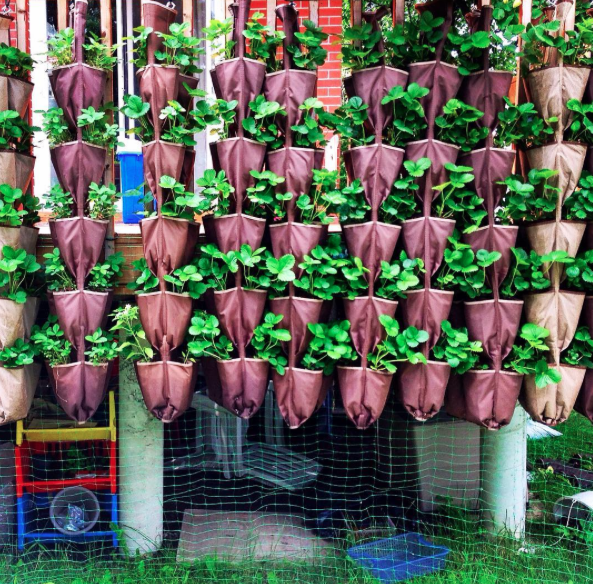
I was always fascinated by growing food but turned off by how inefficient “conventional” methods are.  I did try them but between weeds, bugs, bending over, digging, and the rest, I knew there had to be a way to come up with a better mouse trap!  I started looking for something that could be used for vertical growing and that could be deployed at scale while staying within reasonable cost. The idea was of course to lower production costs and increase productivity.  While cruising the local store alleys I came across the over the door shoe organizers and that became my first vertical system.

5

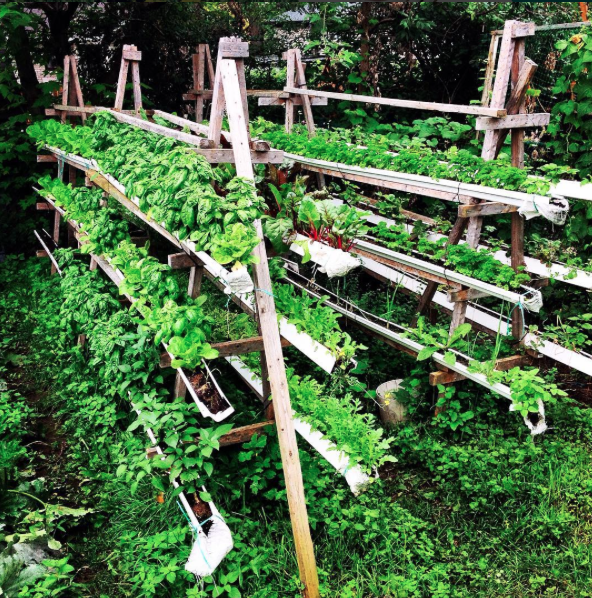
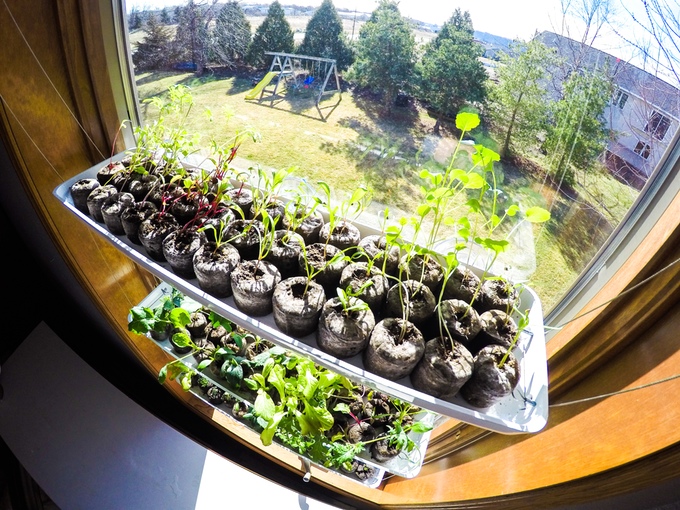
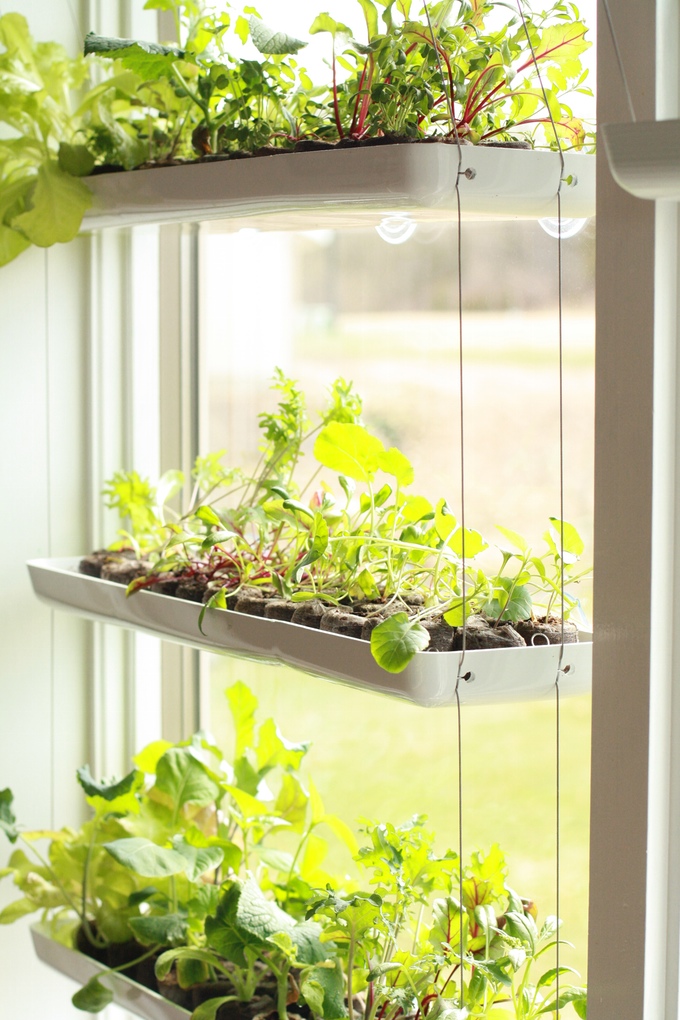
I have photos of this on my Instagram @ThePlantCharmer and it’s obvious from those that it grew plants REALLY WELL!  The issues came when it was time to amend/fertilize. We had to put a little bit of chicken manure pellets in each pocket and that took forever. Second issue was that each pocket being sealed from the next, the roots were limited in how much they could grow.  That also prevented me from deploying affordable automatic irrigation.  I started looking for a solution that would solve these challenges.  Enter the rain gutter systems.  Cheap to build, durable, easy to operate, solves all challenges mentioned above and yields up to 100$ per square foot at retail values.  I call it the holy grail of vertical farming.  One massive difference between what I do and other vertical operations is that we are WAY profitable.  We fixed all the quirks associated with vertical production and that translates into the highest production farming operation on the globe, however small it may still be at this point.  We’ve mastered production of over 100 crops in vertical systems and our catalog keeps on expanding rapidly.
2

I think my biggest successes are with crops that are small and prone to pests and weed competition when grown at ground level.  Those also happen to be the most expensive crops because of the very difficulty involved in growing them.  Lettuce, both head and loose leaf comes to mind.  Arugula, most herbs also.  Strawberries is a huge one as they are very difficult to grow without chemicals and without incurring large losses and investing lots of labour.  We also don’t need to bend over to harvest or tend to crops and that’s huge.  Most people don’t realize that one of the main problems of farming is that there is no local labour.  Nobody wants the pain associated with it in exchange for minimum wage.  When we increase productivity and make labour a little more fun and less painful, we overcome this important challenge.  Farming suddenly becomes a viable career possibility.
6

One of the main reasons we research vertical production in such an obsessive way is that this is the key to bringing local, fresh, affordable, chemical free food  everywhere.  I am building a full size farm next year and will be opening a sales location in a large city in parallel.  I will bring in a truck of fresh food every morning from our farm.  Our production levels, low labour requirements and direct sales model allows us to beat the competition on all levels.  Once this first operation is established we will slowly expand into every large city in Canada first, then the US.  We are in essence ushering in a new industry and pushing all middlemen aside.  Enter the era of seed to retail, traceable food systems.

3

The produce I grow is what supports me and the research I conduct as well.  I sell it to neighbours, friends and people who have heard about us on social media.  This also is part of the research; I really wanted to go full circle and prove the model, from seed to repeat sales to a crowd of satisfied customers.  I give A LOT to charity.  My mom comes from a very poor background and I have always been extremely sensitive to poverty.  A smile from someone in need is better than a pay check for me.  I also try to balance this out with the very real need to pay my bills!  But ya it’s always a fresh food party on my block.  The neighbours are always like ” whats he gonna come up with next ” and that’s just awesome!  Me and my girlfriend also freeze and dehydrate a lot of stuff and are pretty much self sufficient in produce, bar the grain based foods and I think it’s pretty cool to know that we are eating real healthy foods!

4

My favourite plant is the strawberry by far!  From a cultural point of view at least.  I love it’s fruit, yet it can be a very finicky plant.  Mastering its production vertically has been my biggest challenge so far.  It’s one of those fruits that you never seem to have enough off.  I’m particularly proud of my work on them as they are the most chemical sprayed crop out there so growing them clean is always a pleasure!

7
8 insta

Northern Alabama Woman Grows Edibles in her Front Yard & Loves Spreading Happiness {INTERVIEW}

5

Urban Organic Gardener Interviewing @mujerlocaplanta, from Instagram!

What inspired you to start a front yard, urban garden? I grew up in a rural area about 30 minutes from where I live now. My grandparents and various other family members all live on “the Farm” and pretty much all of them are and have always been farmers in some capacity. My granddad is 85 years old, and at the end of May the family helped him get his garden in the ground to celebrate his last chemo treatment. He has taught us all to love a garden, to respect the land, and to find joy in watching things grow. My grandmother is the same way, but she favors flowers and shrubs instead of vegetables. She is a butterfly and hummingbird guru, and grows the most incredible roses I’ve ever seen. My mother’s partner is a chef and owns a farm-to-table restaurant. He uses our family farm these days to supply the café with heirloom, organic produce. His specialty is tomatoes. I work at the café, and Chef Garfrerick has taught me how to be a bangin’ craft cocktail bartender. I grow most of my herbs and edible flowers with boozy drinks in mind. I have had a lot of wonderful influences in my life, thankfully, and many of the most powerful and lasting lessons I’ve learned and concepts I’ve discovered have come to me in a garden, some with the help of some truly incredible people. I plant a garden to share the wisdom they handed down to me with the people I love. Also, it makes for really good Instagram pics 😉

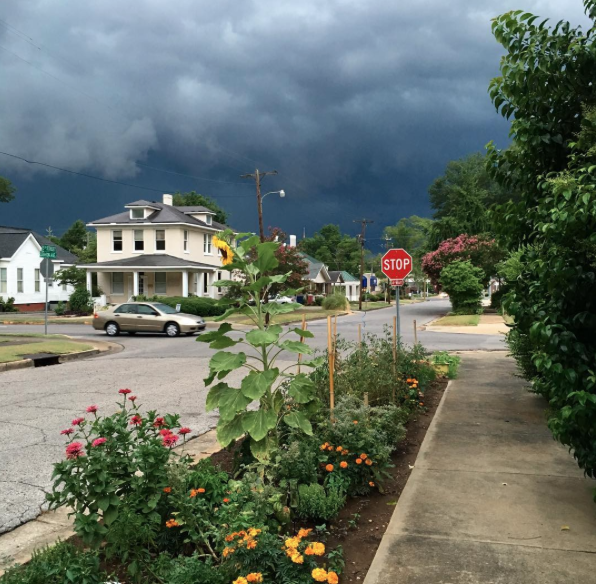
What do you suppose your neighbors think about your gardening efforts? My neighbors know I am crazy. They don’t think it, they know. I mean, I’m growing squash between the sidewalk and the road in front of a 1-bedroom, upstairs apartment. I’m out there at midnight with a headlamp watering everything. I literally stand in the street sometimes in my wide-brim straw hat and my galoshes and a sundress to gather hard-to-reach tomatoes or zucchini. It’s not uncommon to find me in the garden either crouched down into some undignified position that would make my grandmother fuss like mad, or twisted up like a contortionist trying to take a picture or string up twinkle lights. My neighbors and community are convinced that I’m a little off, but they seem to find it endearing. I have made a lot of friends. People stop while I’m out there all the time and tell me that they love my garden and it makes them happy every time they see it. People like to take note of how things change from day to day as they drive by.

Have you run into any challenges with having a front yard vegetable garden? 
Challenges? The whole thing is a challenge! The first one was getting permission from the city. They had no idea what I was asking permission to do. No one had ever done this here before, so they didn’t have any idea what I was talking about. After a while, we figured something out. Another challenge is city employees. City “groundskeepers” seem to think that their weedeater gives them authority, and they do not like being asked to keep their tools out of my garden. They also don’t like being asked to not spray herbicide in the gutter next to the garden, and mosquito truck drivers resent being detoured away from my street corner. But hey, pick your battles, right? I pick this one. My landlord’s yard crew is another special case. Jerry is the yard crew supervisor. He and his guys aren’t so bad, but it took some tricky conversations to get everyone on the same page as far as the garden is concerned. The worst was my landlord’s handyman who was determined to drive a bucket truck through my garden to paint some trim on my building. I had to make a few phone calls that day, and say a few ugly words, and I may have threatened to kill the guy’s truck with a frying pan. People force you to be mean, I swear.

Other than location-related challenges, there are just regular old garden challenges, too. Space is a big issue. I amended the soil with organic compost so I could plant everything close together, bio-intensive style. Because everything is packed in together, the ground stays shaded, which is necessary when you’re working with a 6-foot wide strip of dirt between a sidewalk and a paved road, and daily temperature highs here are over 100 degrees for days at a time. It gets really, really hot down there. Some things just couldn’t make it, so I’m going to try again with them in the fall. The catch-22 of planting close together is that circulation is a problem, and powdery mildew will take over your whole life if you don’t stay on top of it. A spray bottle of water +1 tsp neem oil, +2 tbsp dish soap, +1 tsp baking soda will help. 
Also, my garden isn’t level. Water runs down the sidewalk and pools up in the west end of the garden, where all my okra is. Instead of fighting this, I pretended that I was a Roman aqueduct engineer and dug some trenches that channel water runoff into hard-to-reach areas of the garden. It’s probably not going to last for millennia like the Romans’ did, but it works just fine for now. Work with what you’ve got, right?

Do you have any tips/tricks to share with our readers on how to start or maintain an urban garden or how to garden in small spaces?  
Be nice. Urban gardening isn’t remote. This type of gardening is art. It’s on public display, and people are going to be interested. Talk to people about your garden when they ask. Educate them. Even though people around here grew up in a traditionally agrarian culture, they are shockingly under-informed about organic gardening and a healthy lifestyle. I spend at least half of the time that I’m in my garden standing in the street, chatting to strangers about compost and heirloom tomatoes. Also, be nice to city employees. They’re just doing their jobs, and honestly, they probably don’t get paid well enough to put up with some crazy plant lady’s crap. Be flexible. Things change. Some kid may drive his mud tires through my tomatoes tonight. I can’t pretend that I wouldn’t be pissed about that, but I have about half a dozen more tomato seedlings just waiting for their turn in the sun.
Don’t forget to follow this Instagram page, here!

Starved by Socialist Policies, Venezuelans Urged to Take Up Urban Farming

dscf5088“In February, the country launched a Ministry of Urban Farming, tasked with encouraging more home and community gardening and chicken-keeping. Its head, Lorena Freitez, said the push will help bring “food sovereignty” to Venezuelan cities, where both local food production and food imports are down and social unrest is increasing. ”

So now between narrow roads and dilapidated homes, you might just find the unexpected tomato plant or patch of fresh herbs growing.  Neighbors are working together to grow things like root crops, beans, lettuces and leafy greens just to name a few.

Residents of these “slums” are hauling garden soil to balconies, rooftops, basically anywhere they think they can grow a little bit of food.

Read the entire article at: “Reason.com

A NEW SEED CLUB – Fully Customized Around YOU!

final seed club
Don’t wait, join the new Urban Organic Gardener’s Monthly Seed Club now! MUST JOIN BEFORE JULY 4th at 11:59pm PST to receive the next shipment. Sign up now at: https://urbanorganicgardener.cratejoy.com

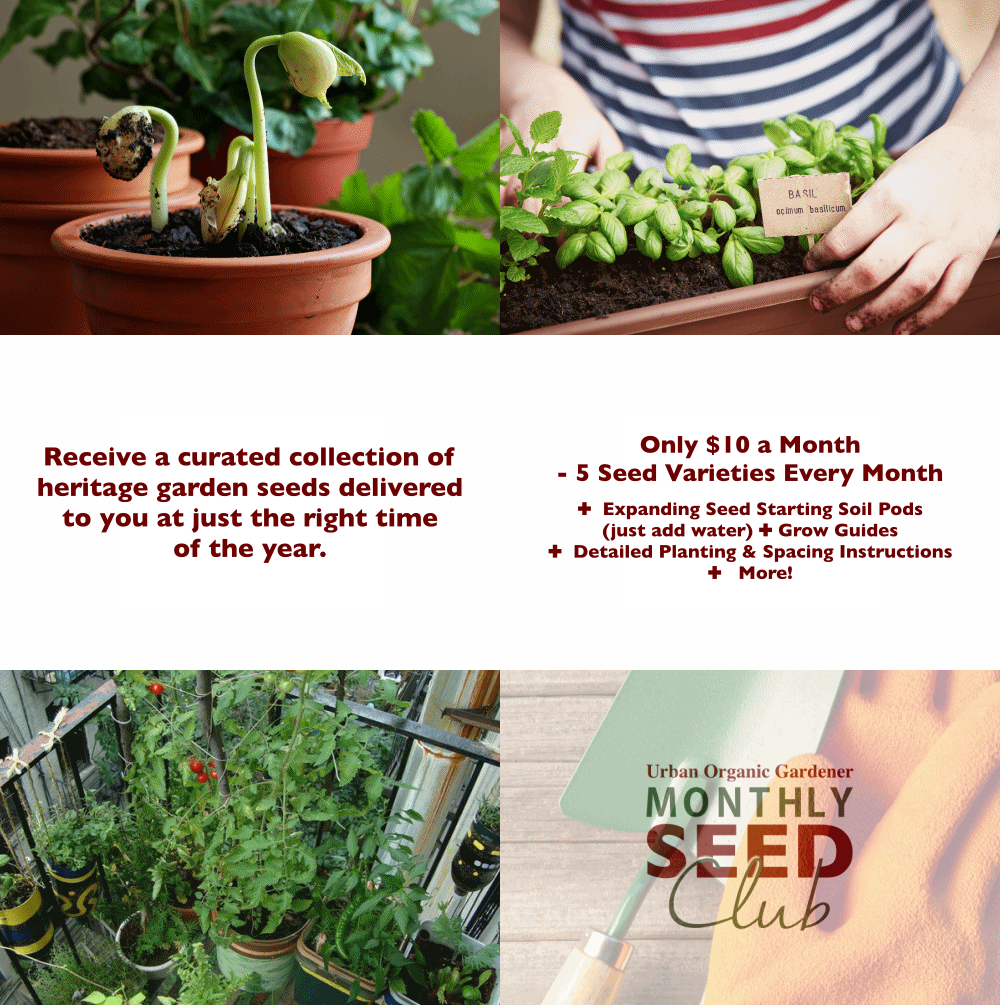
For $10/month our garden experts will build a custom curated collection of seeds & garden supplies designed around you – your grow zone – garden space – and your preferences.

Includes everything you need to grow 5 new edible plant varieties every month – varieties can include herbs, vegetables, flowers, sprouts, micro-greens, bulbs, and more!

Join the rest of the UOG community and get growing now! We promise to make this a great experience for you and your family.

Join the new Urban Organic Gardener’s Monthly Seed Club

JULY UOG

Don’t wait, join the new Urban Organic Gardener’s Monthly Seed Club now! Must join before July 4th at 11:59pm PST to receive the next shipment.

Sign up now at: https://urbanorganicgardener.cratejoy.com

For $10/month our garden experts will build a custom curated collection of seeds & garden supplies designed around you – your grow zone – garden space – and your preferences.

Includes everything you need to grow 5 new edible plant varieties every month – varieties can include herbs, vegetables, flowers, sprouts, micro-greens, bulbs, and more!

Join the rest of the UOG community and get growing now! We promise to make this a great experience for you and your family.

The Urban Garden: Making Most of Small Spaces

BN-OJ441_tot060_H_20160607143327Owner of Brook Landscape in Brooklyn, N.Y., knows all about urban gardening and how to design the perfect “small space” edible landscape.

“The goal is to fabricate an alternative to the reality,” says Mr. Klausing. When you step into a space, “it should offer a sense of transition and change.”

Read all of Mr. Klausing’s urban gardening tips & tricks at: “WSJ.com

Urban Gardening Campaign Grows Potatoes for a Cause

dsc-0431.jpg.size.xxlarge.promo

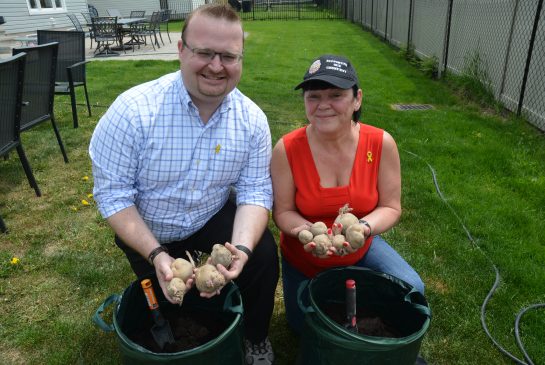
If you have a sunny spot in your garden, patio or balcony you can literally grow up to 100 lbs. of potatoes this summer.  One charity is hoping you want to join in on the movement and donate the spuds to your local food pantry or soup kitchen.

“Soldiers Helping Soldiers has launched the Grow Potatoes program, which aims to feed Ottawa’s hungry right from the city’s balconies and backyards.

To get started, you don’t even need a proper planter: just grab “a big old garbage bag,” punch some drainage holes in the bottom and fill it up, said retired sergeant Dannelle Gauthier, the project’s co-ordinator.”

One soup kitchen in Ottawa is using up to 120 pounds of potatoes a day!

To read the entire recipe for growing 100 lbs. of potatoes somewhat effortlessly, & learn more about Soldiers Helping Soldiers, visit: “MetroNews.ca

Urban Gardening 101: How to plant in the space you have

7640630158_924baf1465_o-850x478$large

Growing your own vegetables and herbs is very rewarding. Even if you’re new to gardening and live in an apartment or tiny space, you are still able try out your green thumb! “You can still create a green oasis.”

Jeff Gilbert, a gardener and marketer for Green City Growers, helps people learn how to grow a garden in a small space, even if they only have room for one container.

“I think there’s a number of reasons why you would grow your own,” he said. “The value of the produce is one, but also the fact that gardening is an enjoyable thing to do, and that it’s helping you create a little more green space, that’s value in and of itself.”

Read the entire article at: “Boston.com

5 Veggies You Can Easily Grow in a Container

There are many reasons why you might choose container gardening over more traditional methods. Maybe you’re short on space, have trouble bending over, or are just really, really lazy (like me). Regardless of why you settle on container gardening, I’m here to tell you that it’s an absolute delight and has the potential to be incredibly productive.

After a few years of gardening, I’ve found a slew of vegetables that grow effortlessly in containers.

peppers

Bell Peppers

Container Type: 2 gallons or larger, 14­16 inches deep, 24 inch diameter with multiple drainage holes. Ensure there is room for stakes.
Sun: 6 ­8 hours daily

Peppers like consistently moist — but not soggy — soil. Water them whenever the top of the soil is dry, and be careful to never let the soil dry out completely. You can help them avoid drying

out by covering the top of the potting soil with mulch. Bell peppers are sweetest when they’ve ripened fully on the plant in full sunshine.

carrots

Carrots

Container Type: M ore than 12 inches deep to give carrots room to develop. Make sure there are multiple drainage holes.
Sun: At least 6­8 hours daily, more is better.

Carrots require little skill, minimal care, and minimal effort — perfect for beginning gardeners. Grow carrots in soil that is loose, lightweight, and well drained. They’ll need regular moisture, but not too much as root crops may rot if left in soggy soil.

cucumbers

Cucumbers

Container Type: M inimum 12 inches deep, 24 inch diameter with multiple drainage holes. Ensure there is room for a cage or trellis. When in doubt, go with a larger container rather than a smaller one.
Sun: 6 ­8 hours daily

Cucumbers absolutely depend on water, so you want to make sure they get a consistent level — you must ensure the soil never dries out completely. Add a trellis or tomato cage as the plant grows to maximize floor space and allow the plant’s leaves to get more sun.

tomatoes

Tomatoes

Container Type: 1 5 gallon minimum, 18 inch diameter (determinate), 24 inch diameter (indeterminate). Ensure there is room for a cage. When in doubt, go with a larger container rather than a smaller one.

Sun: 6 ­8 hours daily

Tomatoes have extensive root systems, and once they become root bound, their fruit production tanks. They need large containers, plenty of room, and lots of water once they start producing..

zucchini

Zucchini
Container Type: B road and deep, at least 24 inch diameter.

Sun: A t least 6­8 hours daily, more is better.
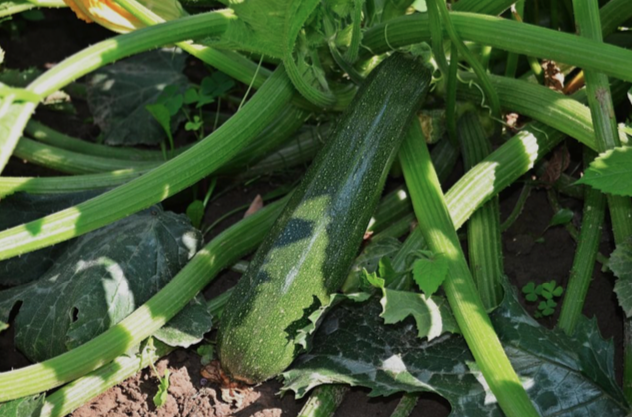
Zucchini plants have high yields, even when grown in containers. They sprawl, naturally

reaching diameters of three plus feet, so take that into consideration when choosing a container.

Tips

The most important thing to remember about container gardening is that containers lose moisture quickly, especially when they’re in full sun. In the spring, you’ll water everyday, and in the heat of summer, when plants are producing, you may need to water two or three times daily, depending on the temperature.

I’ve spent the last few evenings dutifully watering my tomatoes and cucumbers, checking the leaves for damage, and looking closely for any signs of insects. The time I devote to my container garden is some of the happiest and most peaceful I have each day. I’m looking forward to seeing what my plants produce this season.

**Liz Greene is a dog loving, history studying, pop culture geek from the beautiful City of Trees, Boise, Idaho. You can catch her latest misadventures on her blog, Instant Lo.

SekuraGarden – Hang it. Grow it. Eat it.

0206f0874afe3b2c4a12350395549702_originalThe SekuraGarden is a new kind of gardening system that makes it easy to create beautiful, multi-shelved hanging gardens in unused window space. Best of all, the system adjusts to fit most windows, install in just a few minutes, and does no damage in or around your window!

The SekuraGarden uses specially designed support arms that adjust to fit most window trim. Shelves hang below the support arms suspended by steel cables. The hanging shelves swing forward and are secured against the window with powerful suction cups. Being right up against the window gives plants full access to the sunlight and turns windows into a sort of mini-greenhouse.

“I created the SekuraGarden to get my seedlings off of messy crowded tables in front of windows and up into the window taking full advantage of the light. With the SekuraGarden I can start over 100 seedlings in a single window. It makes starting my garden each spring so much easier!” says the SekuraGarden inventor Jacob Ricks.

813ed58da7bad9fe8fb709702beac685_original

The SekuraGarden is perfect for city dwellers looking for gardening space in small apartments and makes it easy to grow year round herbs, greens, or other small plants.

The SekuraGarden is available in two-shelf units or can be ordered as part of the SekuraGarden Educational Pack. This pack includes a gardening curriculum for young children, a two-shelf SekuraGarden, 100 seed pods, and a selection of seeds.

“We currently have a SekuraGarden hanging in a window at our local library. It has been a huge success and the kids have loved learning about plants and watching their seeds grow! We hope that the SekuraGarden can be used by educators everywhere to help children develop a love of plants and gardening early in their lives.”

2 SekuraGardens

The SekuraGarden is available now for preorder on Kickstarter. “We chose to launch the SekuraGarden on Kickstarter to help cover the expensive up front production costs like plastic injection molds. It will also allow us to make a large order and receive a volume discount on the parts.” says Ricks.

SekuraGardens and SekuraGarden Education Packs can be pre-ordered for backers themselves or the teachers/schools of their choice from April 20, 2016 until May 25, 2016. Early backers of the campaign can get up to 27% the retail value.

Backers of the SekuraGarden during the Kickstarter campaign will be the first to receive their SekuraGardens with an estimated delivery date of August, 2016.

To learn more about the SekuraGarden, click here! 


Join the NEW! Urban Organic Gardener, Monthly Seed Club

uogfinal

What’s Included?

5 New & Unique Varieties Every Month  ✚  Expanding Seed Starting Soil Pods (just add water) ✚ Grow Guides  ✚  Detailed Planting & Spacing Instructions  ✚   Bonus Items & Special Offers

We will curate the absolute best seeds known to grow for your exact garden location, preferences, grow zone, and time of the year.

WHAT KIND OF SEEDS WILL I RECEIVE?
We will surprise you with everything from vegetables, culinary herbs, sprouts, medicinal herbs, edible flowers, micro-greens, and more. Our goal is to make growing your own organic garden as fun, healthy, exciting, and as easy as possible.

WHEN IS THE NEXT SHIPMENT?
Shipment occur on the 5th of every month. You will be notified via email as soon as the order has been shipped. Receive instant tracking and delivery confirmation.

Ready to Sign Up? Visit, https://urbanorganicgardener.cratejoy.com/