LAND O’ LAKES — Angeline, Lennar’s massive development planned for a former central Pasco ranch, is paying homage to its agricultural roots.
The company is proposing the area’s first agricultural neighborhood development or “agrihood” on a 63-acre parcel, according to preliminary plans filed with Pasco County.
The agricultural site, at the southwest corner of State Road 52 and the planned extension of Sunlake Boulevard, could potentially include a restaurant, playground, demonstration garden, a cattle barn and pasture, a community garden, a high-yield organic farm, a barn and pavilion for community use and parking for 75 cars, according to conceptual drawings.
The United Nations estimates (PDF) that nearly 10 billion people will live in cities by 2050. According to a recent publication by the Barilla Center for Food & Nutrition, urban eaters consume most of the food produced globally and maintain more resource-intensive diets including increased animal-source and processed foods — rich in salt, sugar and fats. At the same time, many urban populations — particularly in low-income areas and informal communities — endure acute hunger and malnutrition as well as limited access to affordable, healthy food.
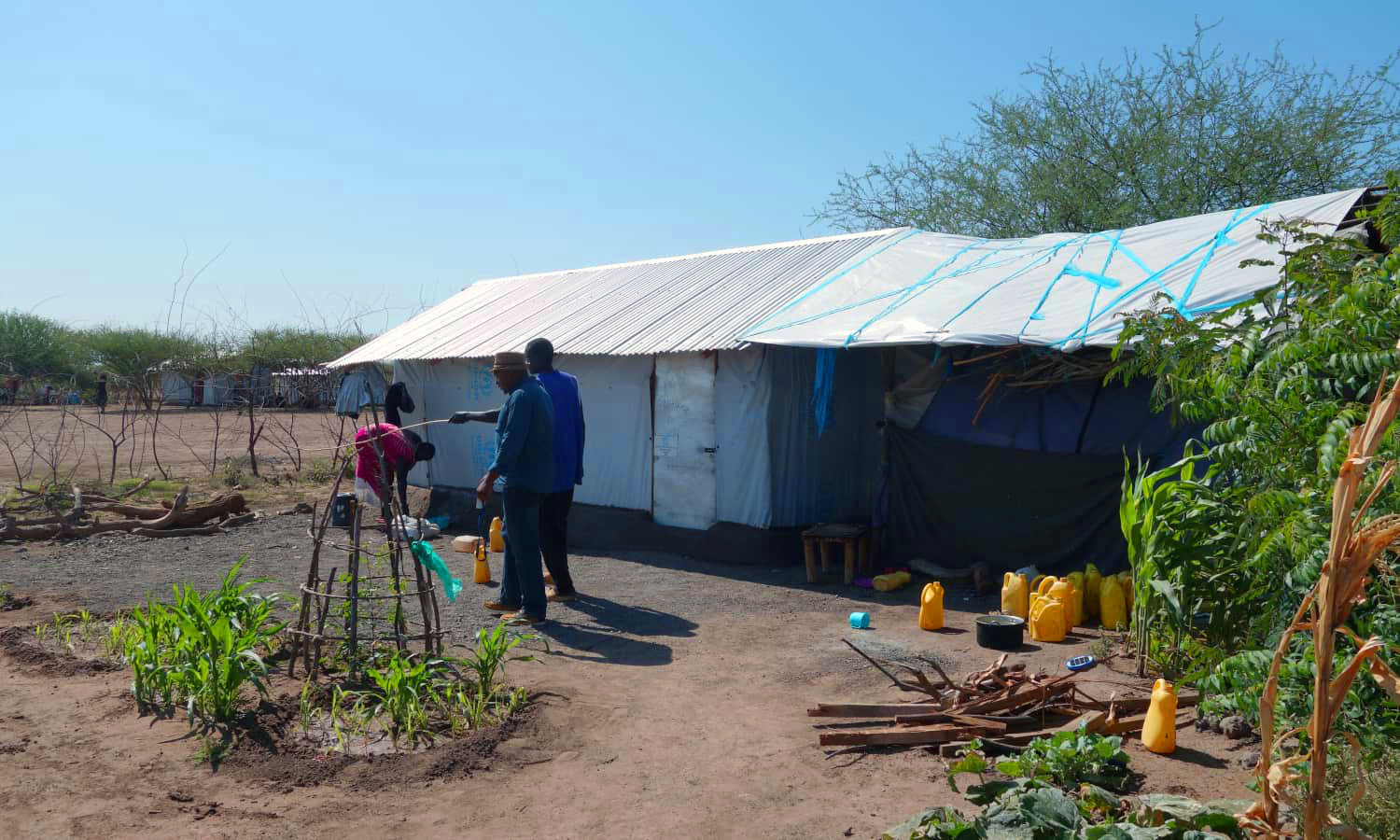
But there are countless ways that cities can feed themselves and create better linkages between rural and urban food systems. In Mexico City, the organization CultiCiudad built the Huerto Tlatelolco, an edible forest with 45 tree varieties, a seed bank and plots for biointensive gardening. In the United States, City Growers uses New York City’s urban farms as a learning laboratory for children to reconnect with nature. And in the Kalobeyei Settlement in northern Kenya, urban agriculture represents a tool for empowerment by improving food security, nutrition, and self-sufficiency among refugees.
“Agriculture and forestry in the city… answer to a variety of urban development goals beyond the provision of green infrastructure and food, such as social inclusion, adaptation to climate change, poverty alleviation, urban water management and opportunities for the productive reuse of urban waste,” says Henk de Zeeuw, senior adviser at the RUAF Foundation.
Did that product come from a genetically modified organism (GMO)? From a consumer perspective, there isn’t always a clear answer.
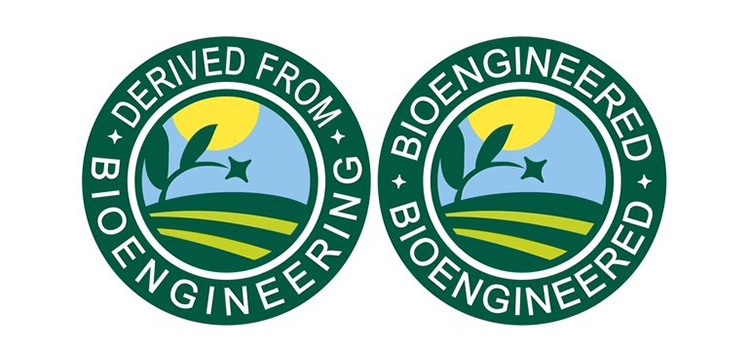
Beginning January 1, 2020, though, genetically modified, or bioengineered, foods in the grocery store will likely become easier to identify thanks to the “National Bioengineered Food Disclosure Standard” brought forward by USDA’s Agricultural Marketing Service (AMS). The standard requires disclosure, including use of the label seen above, on foods that are testable as containing genetically engineered ingredients. This January marks just the start of this GMO food labeling project . . . as there is a two-year phase-in to the standard.
More importantly, however, is the fact that the use of this label should make it clearer to consumers what foods are not genetically engineered.
Better understanding of our food system
Currently, AMS lists only 13 crops whose bioengineered varieties may be sold and produced in the United States:
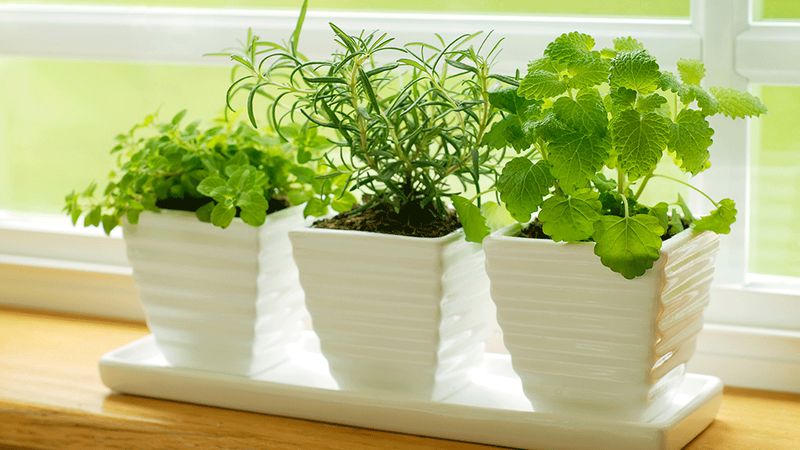
Are you an herb aficionado or garnish lover? Add fresh herbs to every meal by investing in an indoor herb garden.
Sometimes you can’t make it to the store, or an outdoor garden simply isn’t in the cards. An indoor herb garden is a convenient and cost-effective solution. Not only are all your ingredients on hand in a pinch, but also you’ll have attractive greenery enlivening your kitchen or windowsill. It’s so easy to grow an indoor herb garden, that some children even have their own.
If you think the idea of having an indoor herb garden is growing on you, then take a peek at our buying guide. We’re including our top choice, the AeroGarden Bounty Indoor Garden, which can grow nine plants at once.
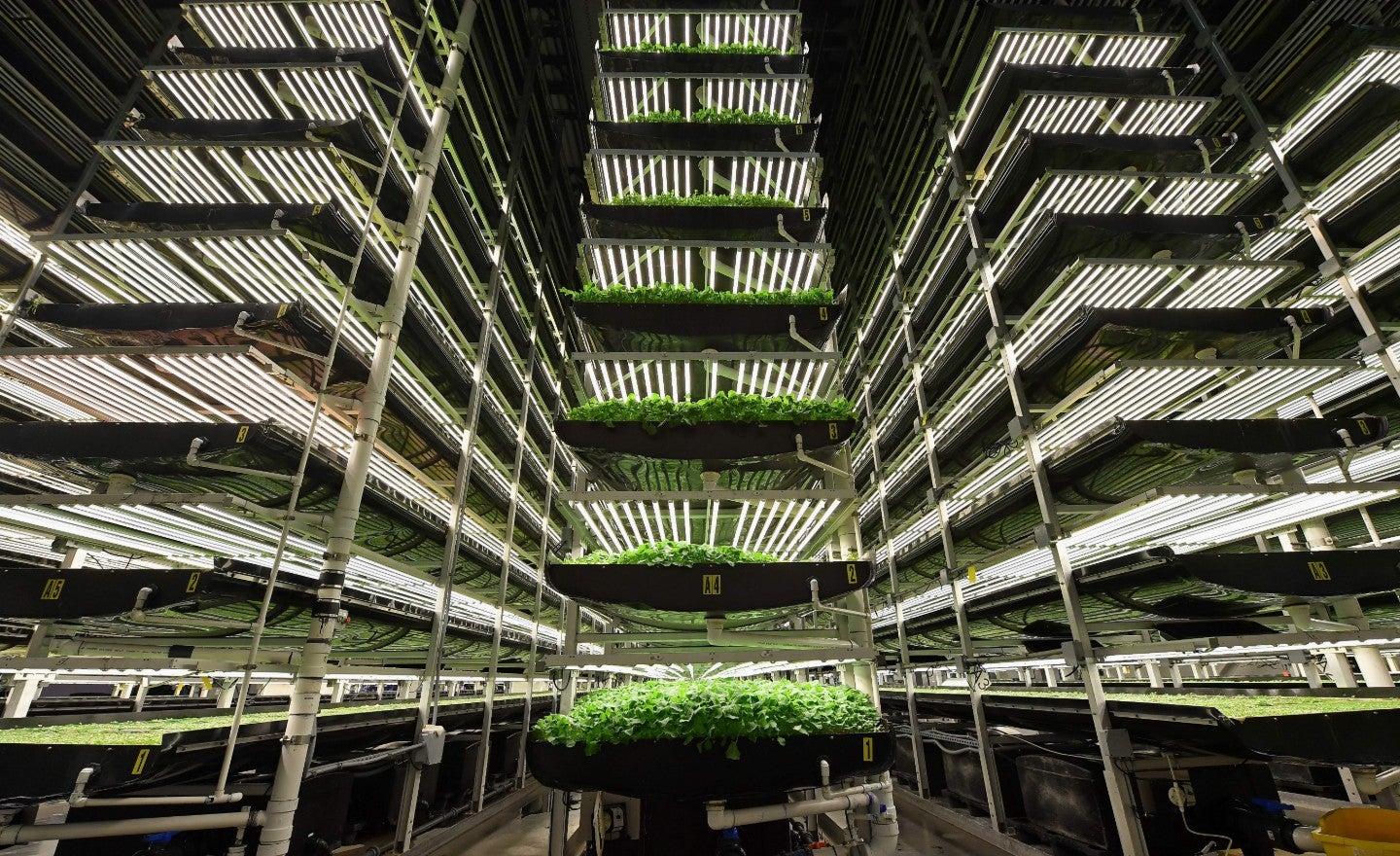
On a cold, blustery day while bare tree branches sway in the winter wind, vibrant, leafy salad greens packed with nutrition and bursting with flavor are flourishing at FreshBox Farms, an indoor vertical farm — where it doesn’t matter what the weather is outside — in Millis, Massachusetts, about 30 miles southwest of Boston.
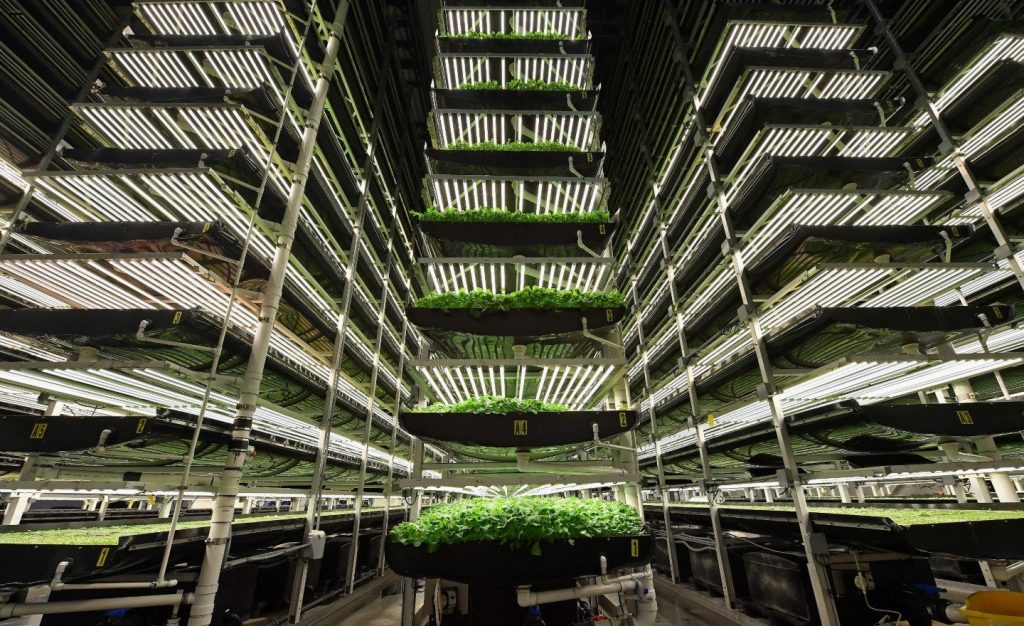
With the world’s growing population expected to exceed 9 billion by 2050, the U.S. Department of Agriculture sees indoor vertical farms — which can operate year-round — as having potential in addressing food security. In a vertical farm, crops are grown in vertically stacked layers to save space and in a climate-controlled system to optimize growing conditions.
FreshBox Farms, which has been operating since 2015, joins a growing number of indoor vertical farms that have been sprouting up in recent years and spanning the country. These include 80 Acres Farm in Cincinnati,which claims to be the world’s first fully automated indoor farm, all the way to the West Coast, where kale, tatsoi, beet leaves, arugula and mizuna greens thrive at the California-based Plenty.
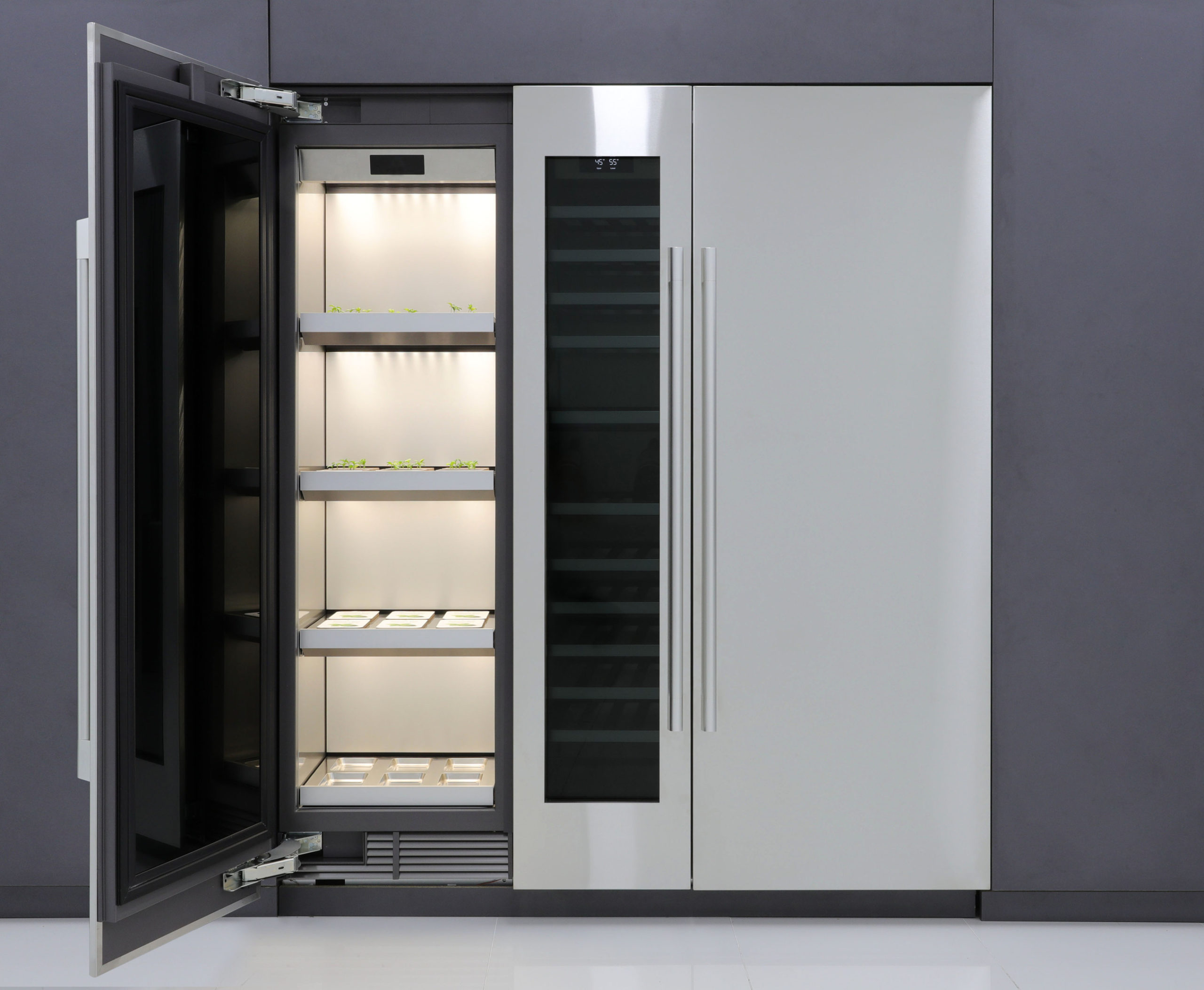
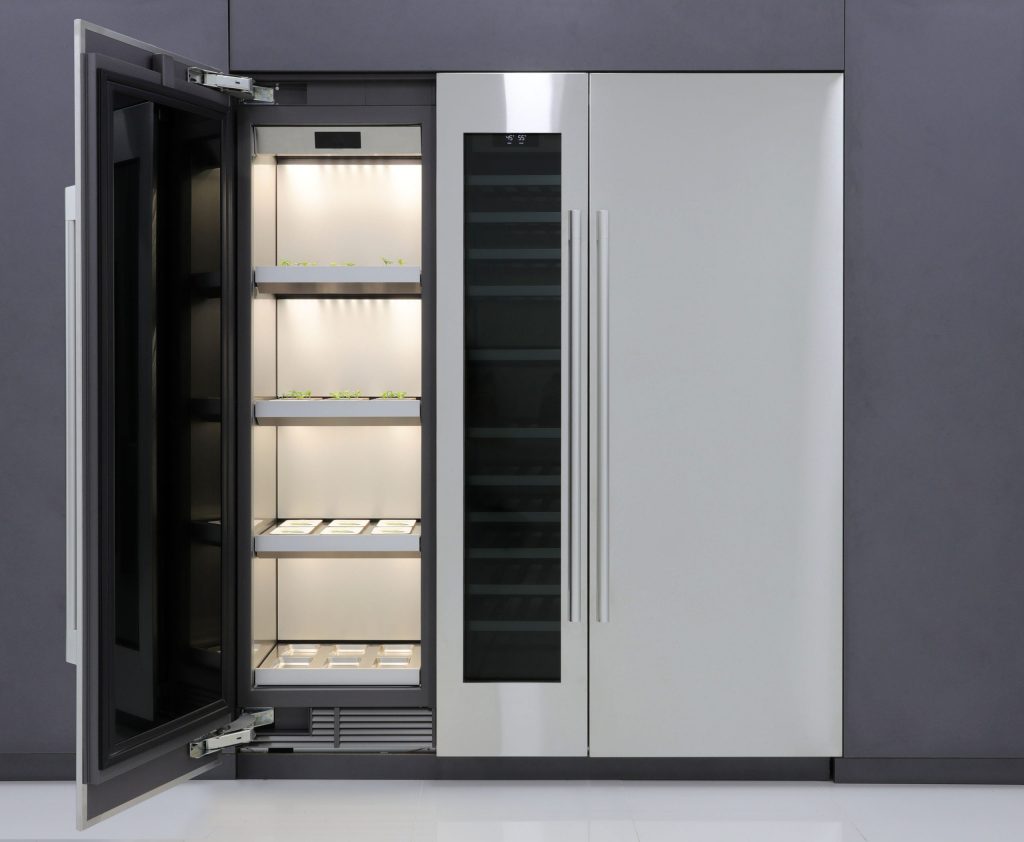
LG Electronics (LG) will unveil an indoor gardening appliance at CES® 2020, its first foray into the booming indoor gardening movement.
With CES right around the corner, the announcements are pouring in for new gadgets and products to be on display at the Las Vegas show, including those that will change the way we cook, eat, and think about our food.
Appliance-maker LG is the latest. The company announced this week it will unveil a smart gardening appliance for the consumer kitchen at CES 2020, one that uses advanced lighting, temperature, and water control to let consumers grow greens year-round inside their kitchens.
The as-yet unnamed appliance takes many of the functions found in commercial-scale indoor farming and applies them to a device specifically made for the average consumer. Software, controlled via the user’s smartphone determines the precise “recipe” of LED lights, air, and water the plants need and when that recipe should change based on the time of day. The goal is to replicate “optimal outdoor conditions by precisely matching the temperature inside the insulated cabinet with the time of day,” according to the announcement from LG.
DANVILLE, Va. (WSET) — The world leader in indoor vertical farming has announced it is investing $42 million to build in Pittsylvania County, creating more than 90 jobs.
AeroFarms builds and operates environmentally responsible farms throughout the world to enable local production at scale and nourish communities with safe, nutritious, and delicious food.
“We defy traditional growing seasons by enabling local farming at commercial scale all-year round. We set a new standard for traceability by managing our greens from seed to package. And we do it all while using 95% less water than field farmed-food and with yields 390 times higher per square foot annually,” their website reads.
Their technology provides the perfect conditions for plants to thrive.
AeroFarms uses proprietary aeroponic growing technology to produce highly flavorful leafy greens at a rate 390-times more productive than field-grown plants.
DETROIT — Timothy Paule Jackson’s affinity for bees began in 2016.
In the midst of a bad cold, he discovered “the power of raw honey” and became infatuated.
Jackson, formerly a self-employed entrepreneur in commercial photography and advertising, and his partner, Nicole Lindsey — both 35-year-old lifetime Detroiters — saw opportunity in Detroit’s tens of thousands of vacant lots.
“We were born and raised in Detroit … so we see (vacant lots) everywhere we go,” Jackson told EHN.
The couple made a pitch to a local micro-crowdfunding campaign, earning $1,600 that led to the purchase of a land plot and three beehives in 2017—and thus began Detroit Hives.
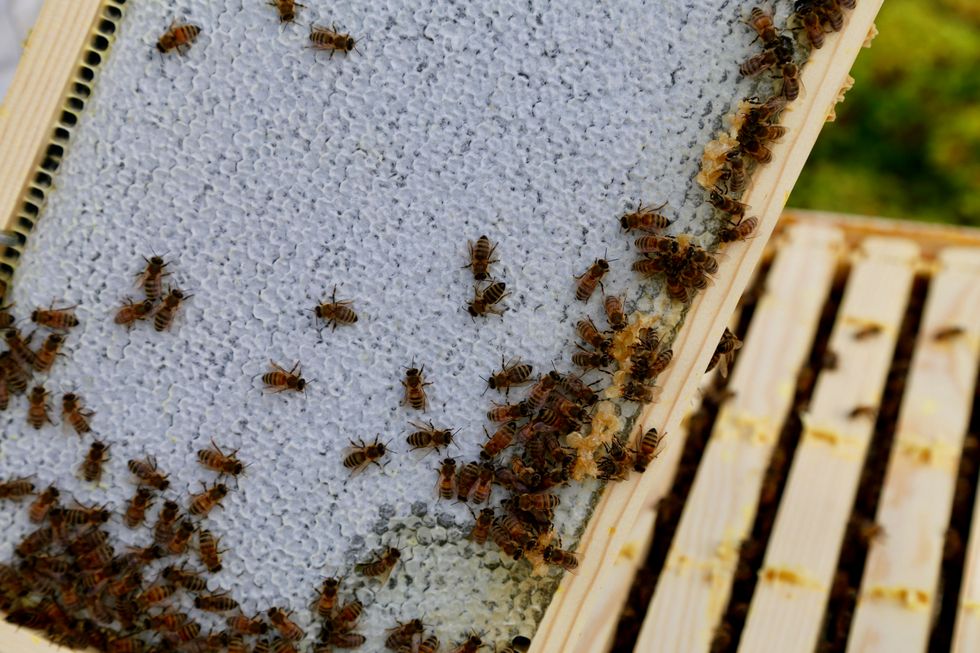
And they’re not alone—across Detroit, unused space is being used for urban gardening, farms and, increasingly, bees. As bees decline around the world, urban entrepreneurs like Jackson are trying to fill the void. Detroit Hives is one of the city’s two major beekeeping nonprofits, combining to operate nearly 200 hives in the metro area.
Modern science has proven environmental factors heavily influence human health – which is why each and every one of us would benefit from an intact ecosphere with good quality air, water and produce. In fact, by changing the conditions in which we live, we might be able to improve our health and reduce costs for healthcare systems.
And since biodiversity is a reasonable indicator of the overall health of an ecosystem, we should try to optimize it. In consequence we might improve the health of the inhabitants and liveability of urban environments.
Ecologists bemoan the fact that urban environments are often left out of biodiversity studies – and that urban environments lack true biodiversity, period, due to the lack of spaces undisturbed by humans, the lack of corridors between green patches and the overall level of pollution.
How can cities of the future transform themselves to be more sustainable, healthier and biodiverse? Here are a few ideas.
A new nonprofit organization in Bend that focuses on urban gardening is partnering with The Giving Plate to build a garden inside the food pantry. Growing vegetables directly in the food pantry would be a first for Central Oregon.
The new organization, Around the Bend Farms, plans to build a hydroponic garden, which creates a controlled environment to grow vegetables indoors without soil. It will allow The Giving Plate to offer fresh vegetables on-site and year-round, said Ranae Staley, executive director at The Giving Plate.
“It’s a farm-to-table right inside our facility,” Staley said.
Plants grown in hydroponic gardens grow in water, not soil. Nutrients are dissolved in the water, which allows the plants to grow much faster. Among their advantages: Plants can be grown indoors, year-round and more of them can be put in a given area than a traditional soil garden. And there’s no weeding.
The Giving Plate and Around the Bend Farms are trying to raise $15,000 to design and build the indoor garden. So far, the organizations are $11,000 away from their goal.
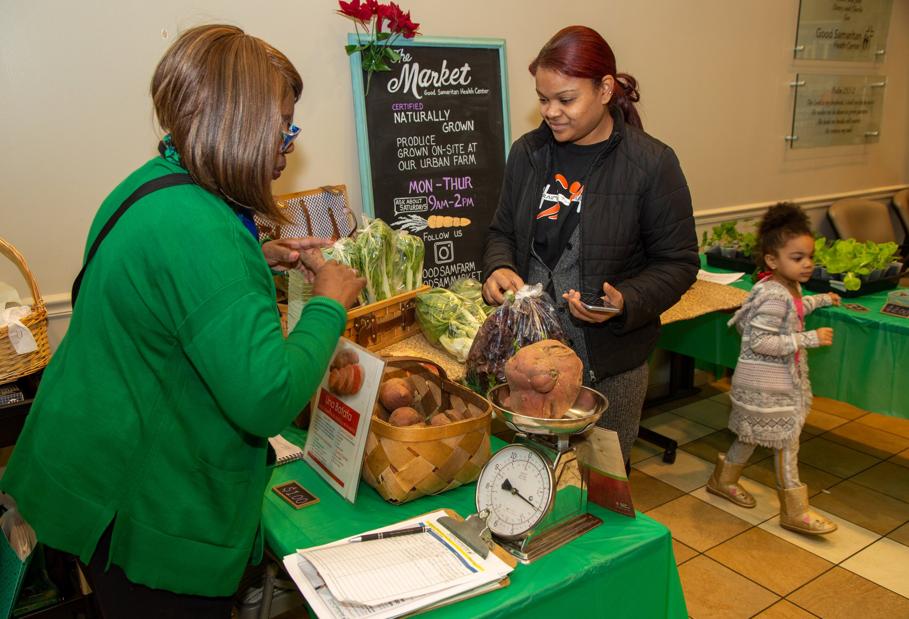
Nobie Muhl braved the wind and rain that signal the approach of winter in metro Atlanta to tend to the strawberries, onions and garlic growing on 1 acre of land just off Donald Lee Hollowell Parkway in Bankhead. As full-time farmers at Good Samaritan Health Center, Muhl, 33, and Alexis Haggerty, 25, didn’t let the dreary weather dampen their enthusiasm for making sure patients at the center have access to fresh produce almost all year round.
At the center, clients waiting for appointments browsed tabletops filled with an assortment of fruits, vegetables and nuts including strawberry plants, pecans and a variety of greens, all of which were priced at $1 or $2. Anileidi Gomez, 31, examined giant sweet potatoes, a favorite of her four children, as Market manager Loren Ferguson offered a recipe for slow cooker sweet potato soup printed in English and Spanish.
“It’s awesome. I always shop here when we come,” said Connie Lotze, 62, who drives over an hour from North Georgia to bring Jim Nelson, 60, to his appointments at the health center. She helped Nelson, who doesn’t have insurance, find the center years ago, and while they don’t come often, the Market is a highlight when they do. Lotze said she had never seen a health clinic with its very own farm and market.
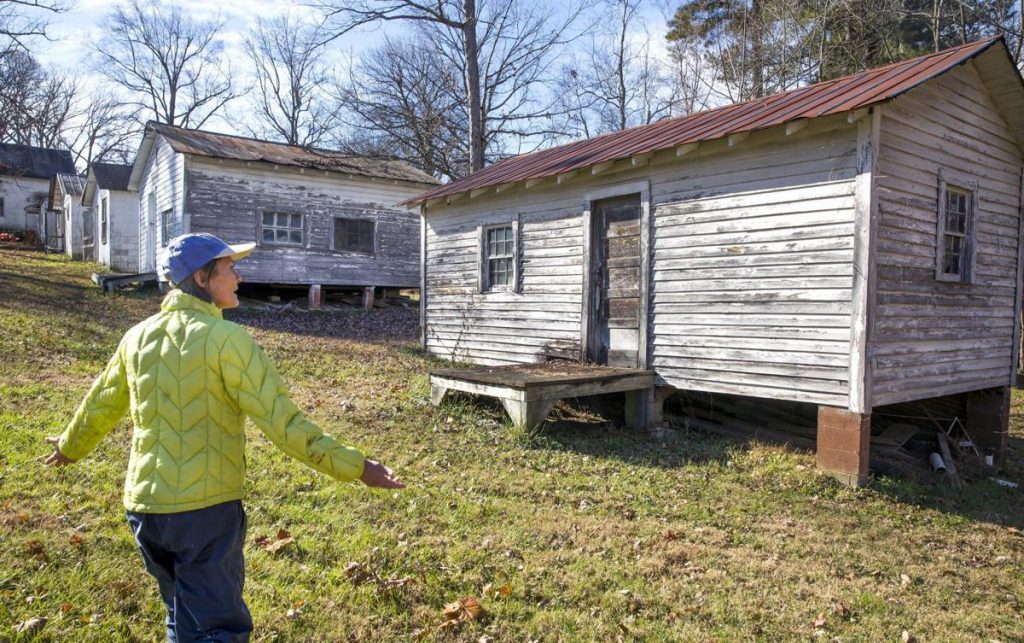
HIGH POINT — Paula Sieber can see long into the future and well beyond the dingy white cabins that hug the trees at the Heroes Center Veterans Support Camp.
She sees an urban farm that grows up to 100,000 pounds of fruits, vegetables, and eggs a year for veterans, community customers and people who can’t afford or can’t find the finest produce.
She sees a place where veterans can learn job skills, from solar-power installation to hydroponic agriculture.
And she sees a place where people can find some of the best-tasting food in the Triad from the first-of-its-kind farm in High Point.
The work to renovate the cabins has already started and the first crop, Lion’s Mane mushrooms, could come out of the first grow house next month.
“I’m gonna serve it at the first board meeting in January,” Sieber said.
The United Nations estimates that nearly 10 billion people will be living in cities by 2050. According to a recent publication by the Barilla Center for Food & Nutrition, urban eaters consume most of the food produced globally and maintain more resource-intensive diets including increased animal-source and processed foods — rich in salt, sugar and fats. At the same time, many urban populations — particularly in low-income areas and informal communities — endure acute hunger and malnutrition as well as limited access to affordable, healthy food.
But there are countless ways that cities can feed themselves and create better linkages between rural and urban food systems. In Mexico City, the organization CultiCiudad built the Huerto Tlatelolco, an edible forest with 45 tree varieties, a seed bank, and plots for biointensive gardening. In the U.S., City Growers uses New York City’s urban farms as a learning laboratory for children to reconnect with nature. And in the Kalobeyei Settlement in northern Kenya, urban agriculture represents a tool for empowerment by improving food security, nutrition and self-sufficiency among refugees.
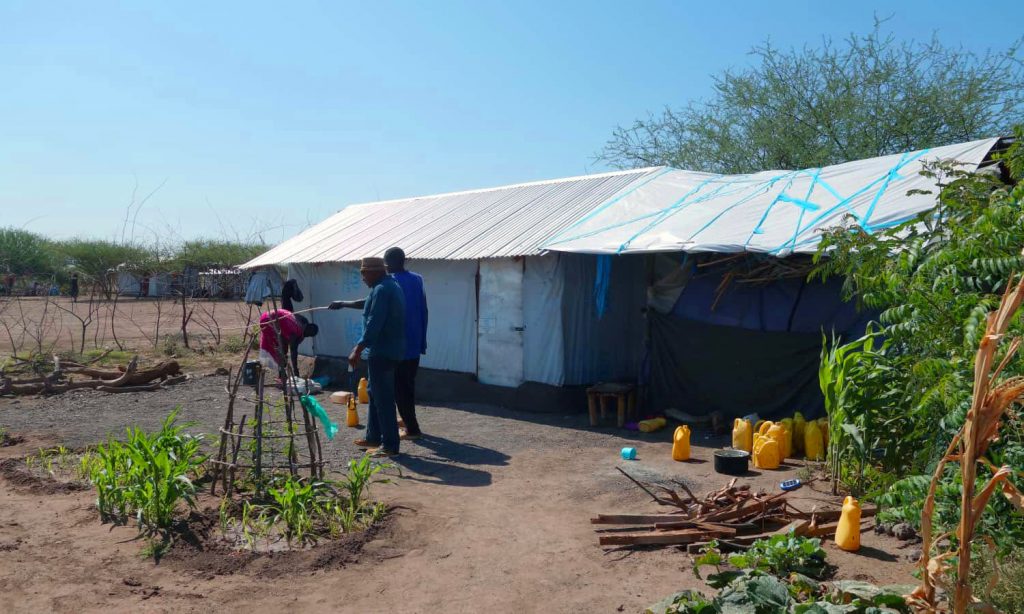
In the Kalobeyei Settlement in northern Kenya, refugees are turning to urban farming to improve food security, nutrition, and self-sufficiency. Kitchen gardens, a project of the multi-agency Kalobeyei Integrated Socio and Economic Development Programme (KISEDP), supplement food distributed by humanitarian aid. The KISEDP program equips households with seeds, tools, and mentorship, helping enable families to set up vegetable gardens using dryland farming techniques.
Droughts and land-use changes in recent years challenge the livelihoods of both refugees and pastoralist communities in Kenya’s desert region. As a response, the U.N. Food and Agriculture Organization (FAO), the World Food Programme, and the Turkana County Government introduced the kitchen gardens in 2017 to combat food insecurity and provide an alternative source of livelihood to both hosts and refugees.
“Food can be a powerful force for social integration,” says Johanna Mendelson Forman, Adjunct Professor at the American University’s School of International Service. Mendelson Forman is also a Distinguished Fellow at the Stimson Center’s Food Security Program. “You can [improve] food security with people that can grow their own food. They can also take the [surplus] product to a place where they can earn a little livelihood,” Mendelson Forman tells Food Tank.
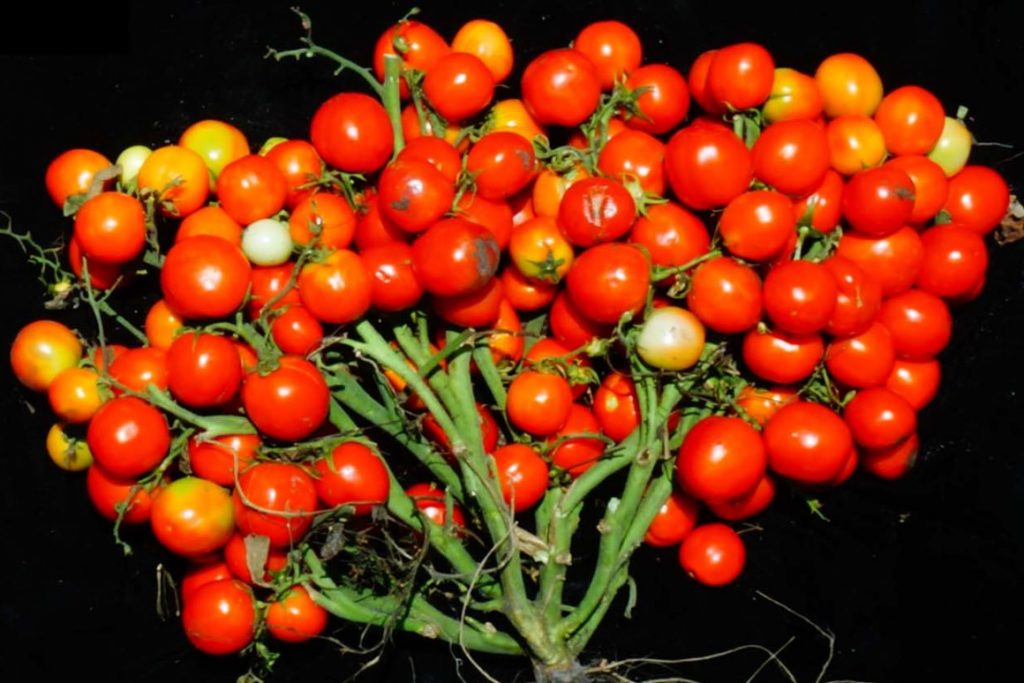
If you’ve ever wished that your tomato plants were a bit more compact, you’re in luck. A team of scientists, led by Cold Spring Harbor Laboratory Professor and HHMI Investigator Zach Lippman, has come up with a genetically-engineered tomato plant that is more a bush than a vine, with fruits that grow like a bunch of grapes.
Urban farming has been garnering a lot of attention in recent years on the grounds that it could provide food for city dwellers while reducing the environmental costs of growing and transporting it. And while raising crops in warehouses or shipping containers has its attractions, it comes up against the fact that city real estate tends to be very expensive compared to conventional farmland, so the space the plants take up is at a premium.
To minimize this, Lippman’s team is working on genetically engineering a variety of crops that are more compact than their conventional versions while maintaining the quality – the first plant in their sights is “urban agriculture tomatoes.”
What are your thoughts on this GMO Tomato “Shrub”? Would you grow one?
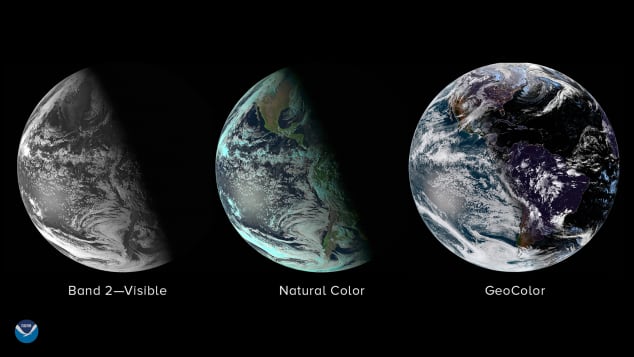
(CNN) — For six months now, the days have grown shorter and the nights have grown longer in the Northern Hemisphere — but that’s about to reverse itself.
Winter solstice, the shortest day of 2019, will be Saturday, December 21. Or it will be Sunday, December 22. Which day is it for you? It all depends on your time zone.
CNN meteorologists Dave Hennen, Judson Jones and Brandon Miller help us understand the science and timing behind the solstice. And then we’ll discover some traditions and celebrations around the world that could inspire a travel adventure.
The science and timing behind a winter solstice
The winter solstice marks the shortest day of the year in the Northern Hemisphere when the sun appears at its most southerly position, directly overhead at the faraway Tropic of Capricorn.
It’s the reverse in the Southern Hemisphere. There, it marks the longest day of the year — and the beginning of summer in places such as Argentina, Namibia, and New Zealand.
This Christmas garden poem was written for this column more than 25 years ago.
It is still the most requested encore of any column I have written, and, as a gift to my readers, I grant copyright permission for it to be downloaded and used from my website. Just visit www.binettigarden.com, and you will also be able to see where I am speaking and giving gardening seminars, how to sign up for our trips and where to send garden questions if you need a quick answer to a garden problem.
Now, here’s the poem:
T’was the week before Christmas, and all through the yard, not a gift was given, not even a card.
The tools were all hung, in the carport with care, with hopes that St. Nicholas soon would repair,
The shovel with blade all rusty and cracked, the pitchfork still shiny, but handle it lacked.
When out on my lawn, (it’s brown and abused) I could see poor old Santa, looking confused.
No list had been left for Santa to see, no gardening gifts were under the tree.
But wait there’s still time, it’s not Christmas yet, and gardening gifts are the quickest to get.
You can forget the silk tie, the fluffy new sweater, give something to make the garden grow better.
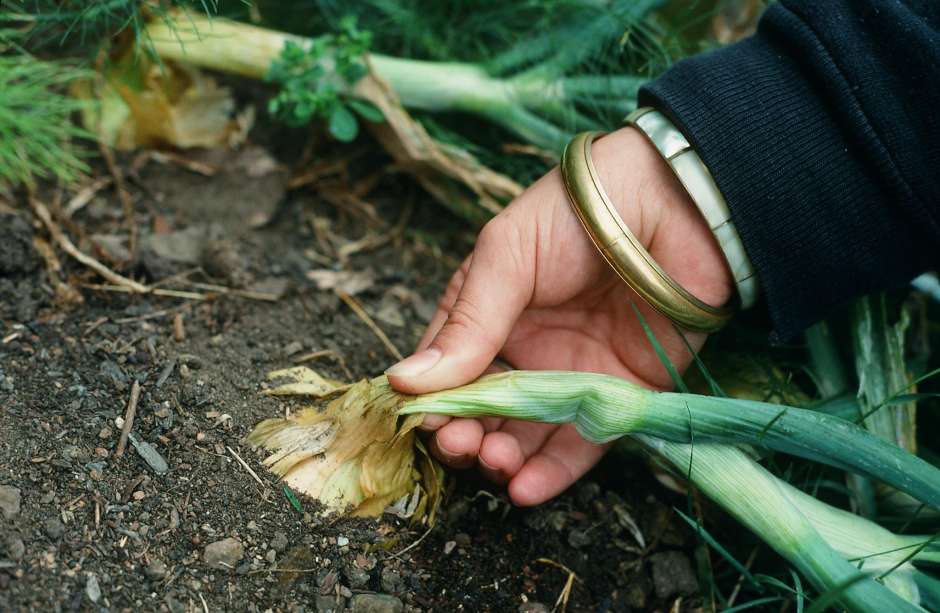
Old farmers would say of a farmer they admired: “He knows his onions.”
Old farmers are few and far between these days, as is any urban gardener who knows his/her/their onions. In addition to the basic knowledge needed, producing globe onions (also called bulb onions) in our gardens is complicated by our many microclimates. But with a little planning, we can harvest the same big, sweet and pungent globe onions that we see in grocery stores.
Before you start, there are two factors to understand: The first is why you shouldn’t plant too early. Onions should be planted in fall or winter. But if by December, the stem of an onion plant is thicker than a pencil, the plant is likely to flower in the spring, and thus form no bulb. (In fact, it won’t form much that is edible, and then will produce seed and die. Not what you had in mind!)
The second factor is that onion plants start to form bulbs in response to the day’s length. At our latitude, even the longest day, June 21, is not long enough to stimulate a long-day variety to form bulbs, so avoid planting them. Short-day varieties start forming bulbs as early as the third week of January. Chances are the plants will be so small when they get the “bulbing signal” that the resulting bulb will be rather small.
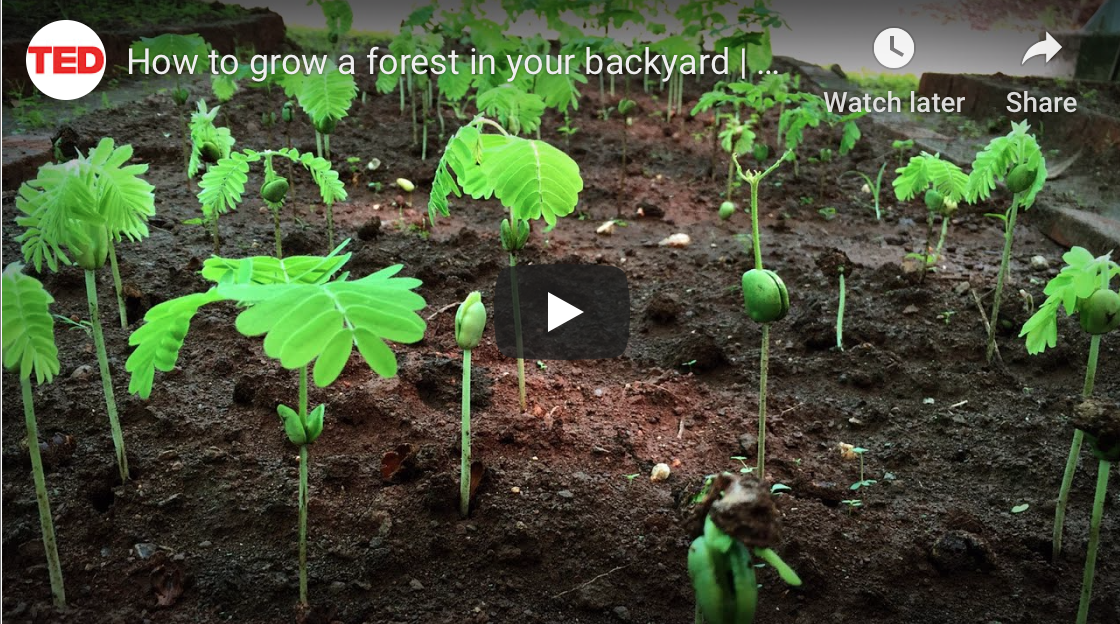
Forests don’t have to be far-flung nature reserves, isolated from human life. Instead, we can grow them right where we are — even in cities.
Eco-entrepreneur and TED Fellow Shubhendu Sharma grows ultra-dense, biodiverse mini-forests of native species in urban areas by engineering soil, microbes and biomass to kickstart natural growth processes.
Follow along as he describes how to grow a 100-year-old forest in just 10 years, and learn how you can get in on this tiny jungle party.
TEDTalks is a daily video podcast of the best talks and performances from the TED Conference, where the world’s leading thinkers and doers give the talk of their lives in 18 minutes (or less).
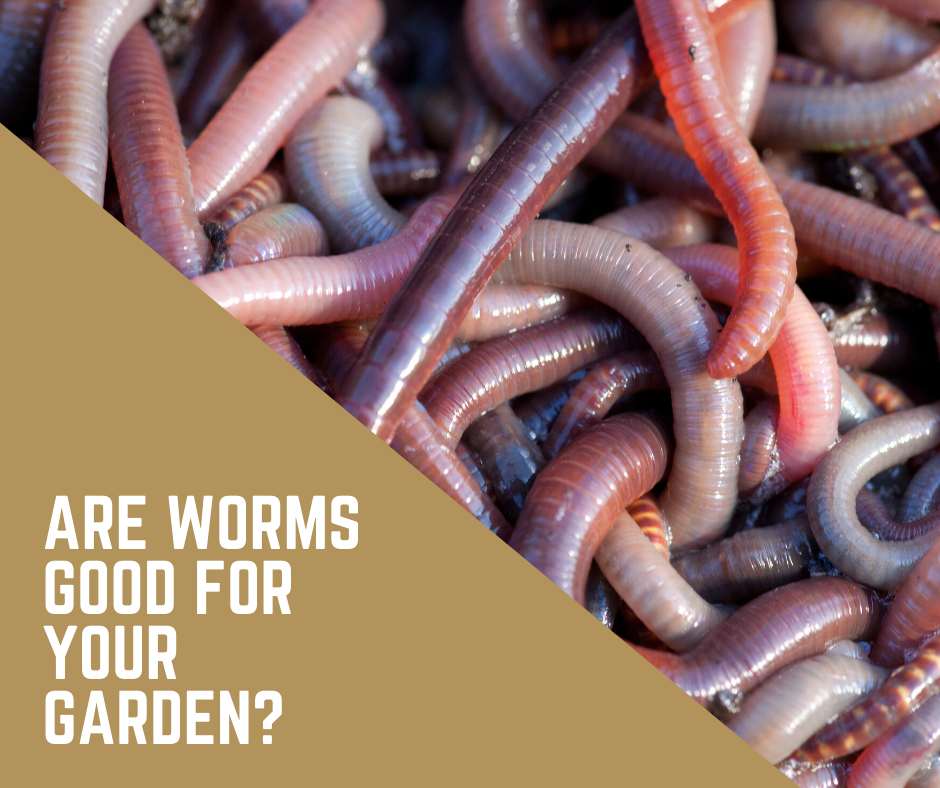
YES! Worms can be very beneficial to your garden. Nutrient-dense, rich garden soil is crucial to a successful vegetable garden. Healthy soil may include plenty of underground animal & plant activity, such as earthworms and fungi. Worms effortlessly increase the quality of your soil and are attracted to decaying matter while they consume bacteria and nematodes. They also excrete worm castings, which is gardener’s GOLD, or basically one of the best soil amendments you’ll find! Worm castings are rich in nutrients and minerals such as nitrogen, phosphates, and potassium. Overall, worms play an important part in soil construction and the recycling of organic waste.
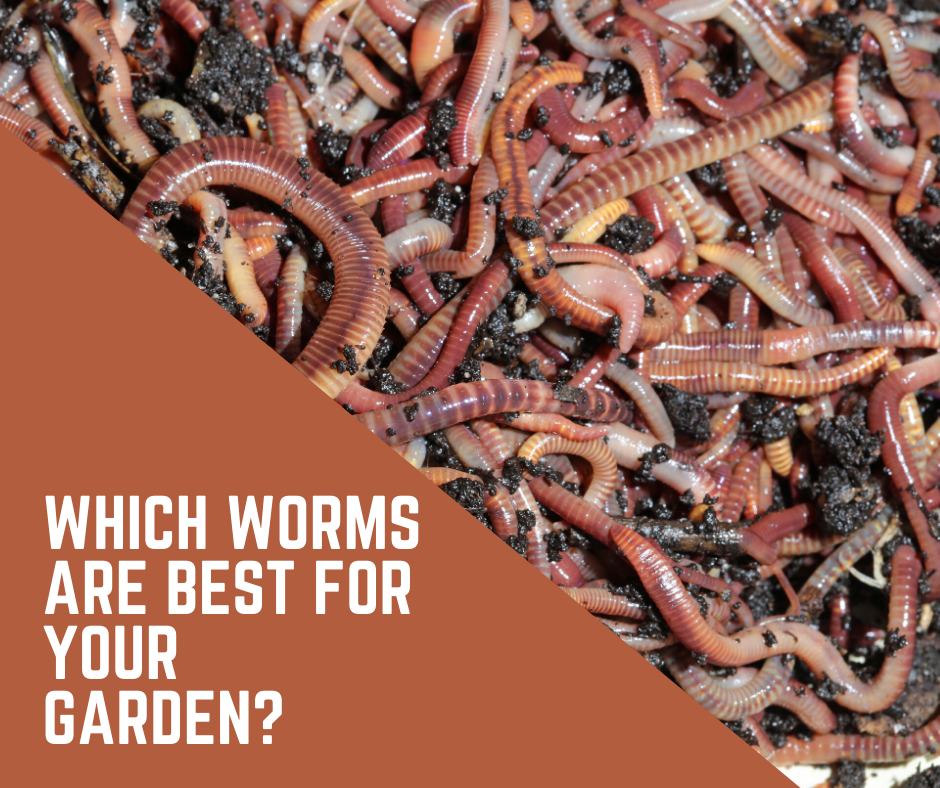
Which Worms Are Best For Your Garden?
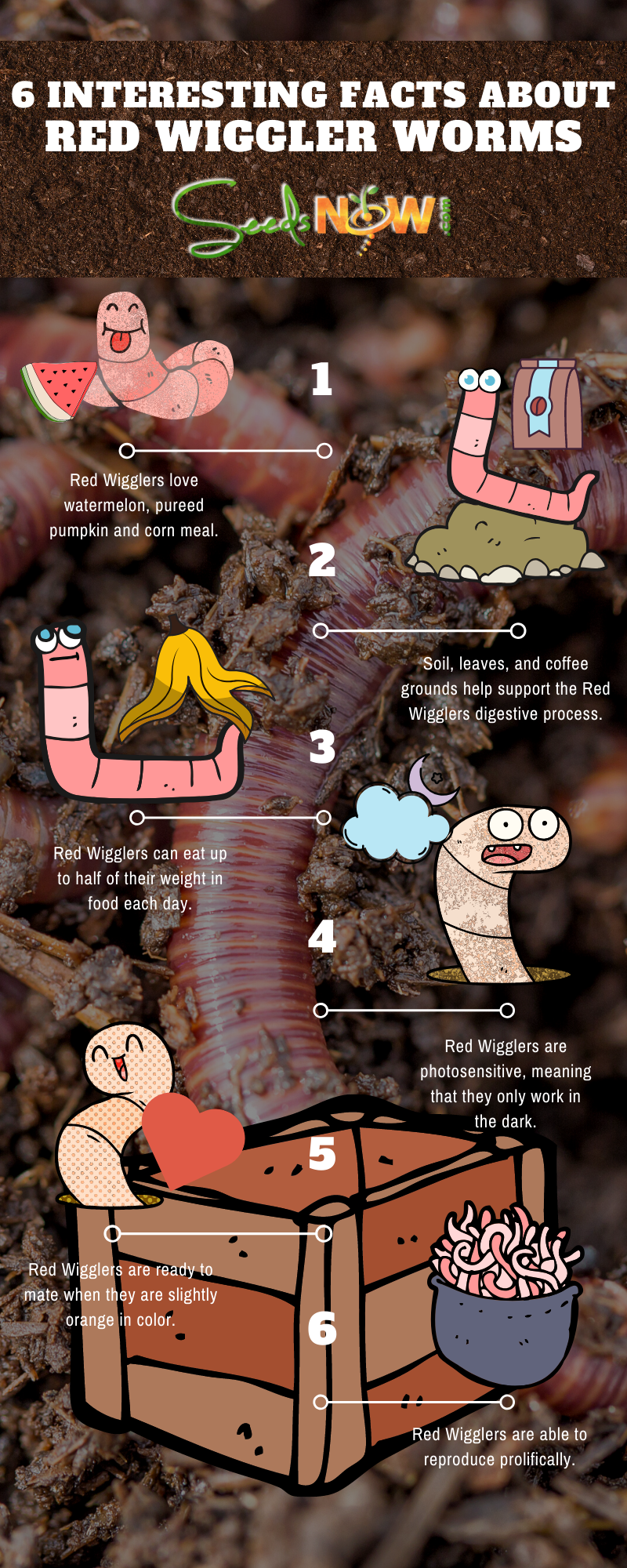
Red Wiggler Worms are often the most sought-after by seasoned gardeners. Although nightcrawler worms can be used, red wigglers are generally agreed upon as being the most effective when processing organic scraps.
Red Wiggler Worms LOVE eating organic scraps! They usually won’t be found more than a foot or so deep beneath the soil. Look for them as they burrow within compost heaps, animal manure, or piles of leaves. You can also try sourcing them through a local worm farm shop, bait shop or garden center.
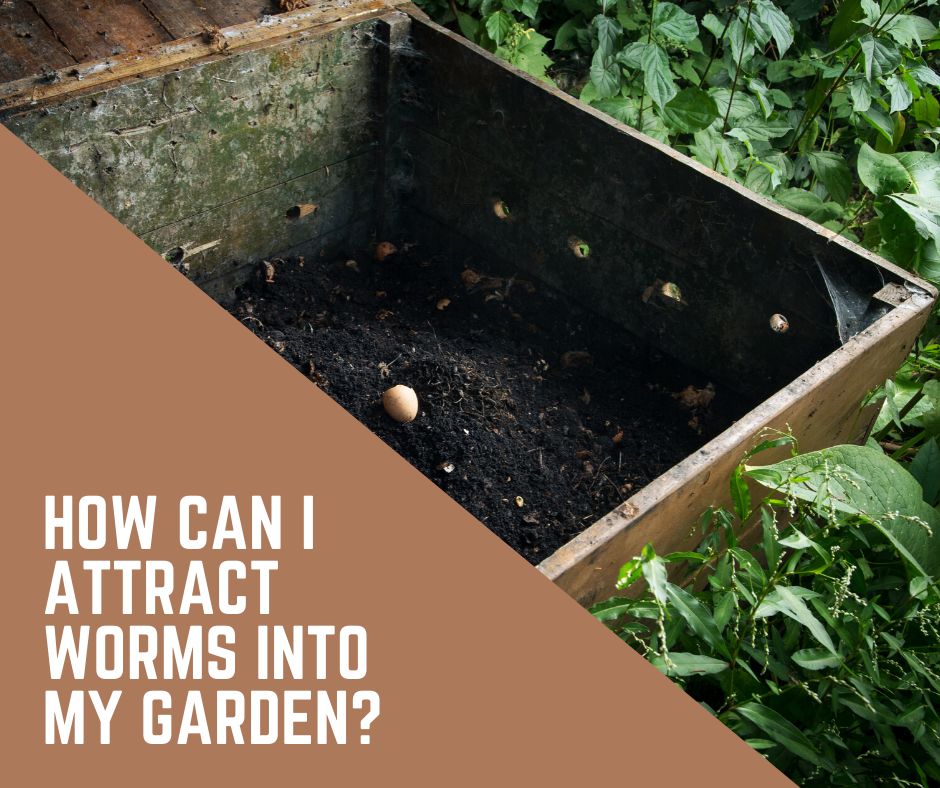
“A real handy and functional item to have in your garden is a worm tower. Not only are the worms fertilizing your soil, but you have a handy “compost garbage” bin at your fingertips. It very easy and inexpensive to make. A bucket, drill with bit and a shovel, that’s it.” – The Abled Gardener
How To Use Worm Castings In Your Garden
“Using worm castings in your garden provides your soil and plants powerful, organic nutrients that help your garden be healthy and productive. In this video, we’ll share what worm castings are, why they are so powerful, and how to use them to feed your garden.” – CaliKim29 Garden & Home DIY