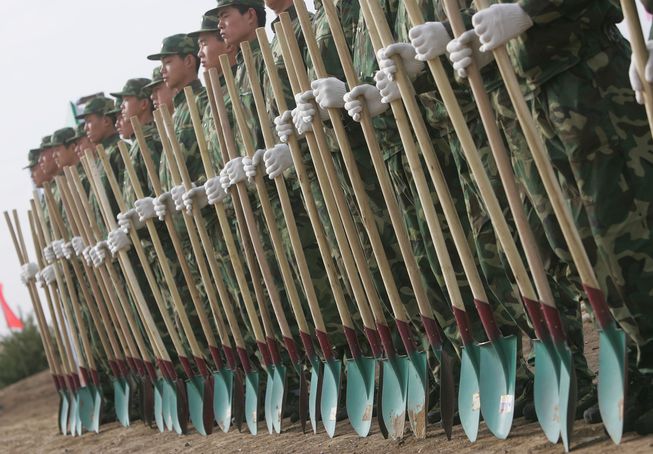
China is going to war with a new kind of enemy — industrial air pollution. The People’s Liberation Army has reassigned 60,000 troops to plant 16 million acres of trees to help clean the air.
Air pollution is such a serious problem in the country it was responsible for one-third of all deaths there in 2016.
By the end of this year, troops will have planted an air pollution-absorbing “sponge” of forested land roughly the size of Ireland, at 32,400 square miles. By 2035, the government aims to increase the portion of China’s total landmass dedicated to forests from 21 to 26 percent.
Visualize a forest. Close your eyes and look around. What do you see?
Of course there are trees in your forest. Moss, fungi, lichens and ferns blanket stones and fallen timber on your forest floor. The earth is covered with an array of low growing herbs.
Song birds flutter from branch to branch, nabbing insects and berries while adorning the landscape with music.
Water springs from high places and collects in low places, forming rivulets, creeks, and eventually streams.
Leaf litter softly yields to your feet, like a sponge as you stroll.
And above all, there’s the sun, whose presence is subtly felt as gentle dapples, like a shower of light.
But the most apparent thing here in the forest may have slipped past your senses, something most of take for granted — relationships. There is nothing more important than relationships.
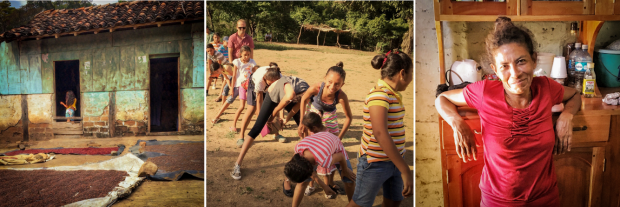
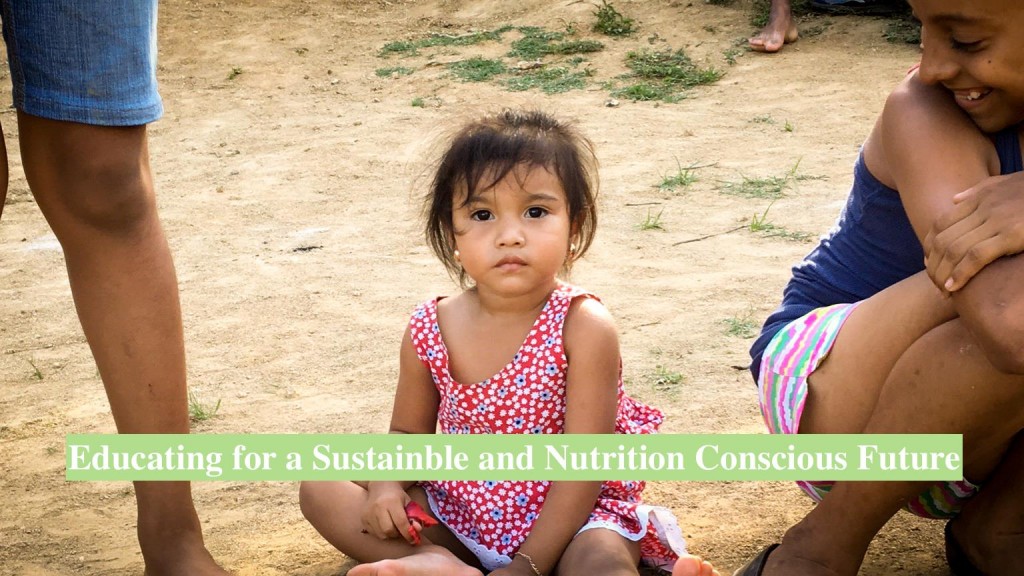
“Since moving to Nicaragua, a day doesn’t go by when we bite into produce grown here and taste the bitter flavor of chemicals. The use of these chemicals goes back generations. This, along with a changing climate and five years of drought has had a devastating impact on the environment, depleted soil quality, and caused malnutrition. With your support we can build a hands-on farm model that teaches sustainable growing methods, nutrition education, and improves health for families and children.”
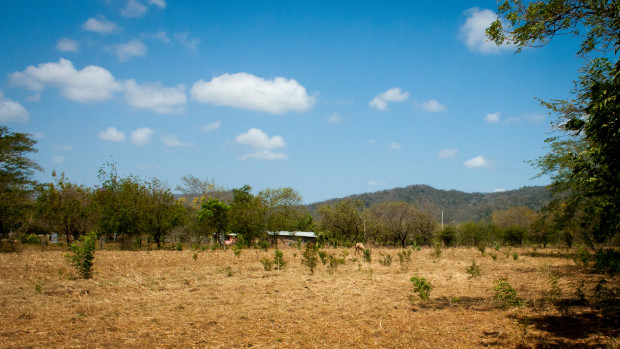
What Mesa Sostenible Looks Like Now:
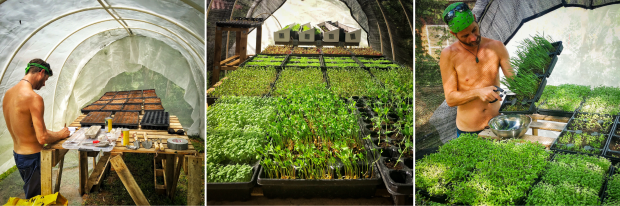
So far they have been successful at securing land, and growing various plant varieties from seed in two small greenhouses. They’ve also started a composting initiative to help reduce waste and promote soil health.
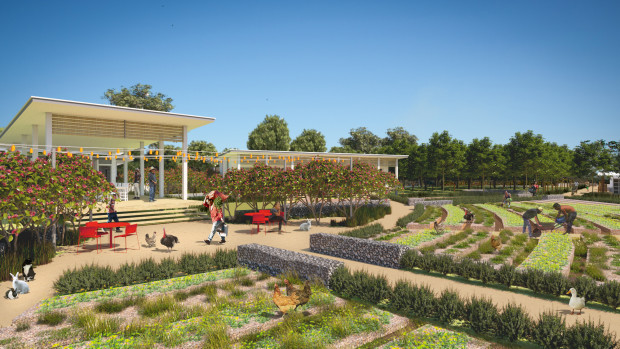
What Mesa Sostenible Can Look Like with Your Help and Support:
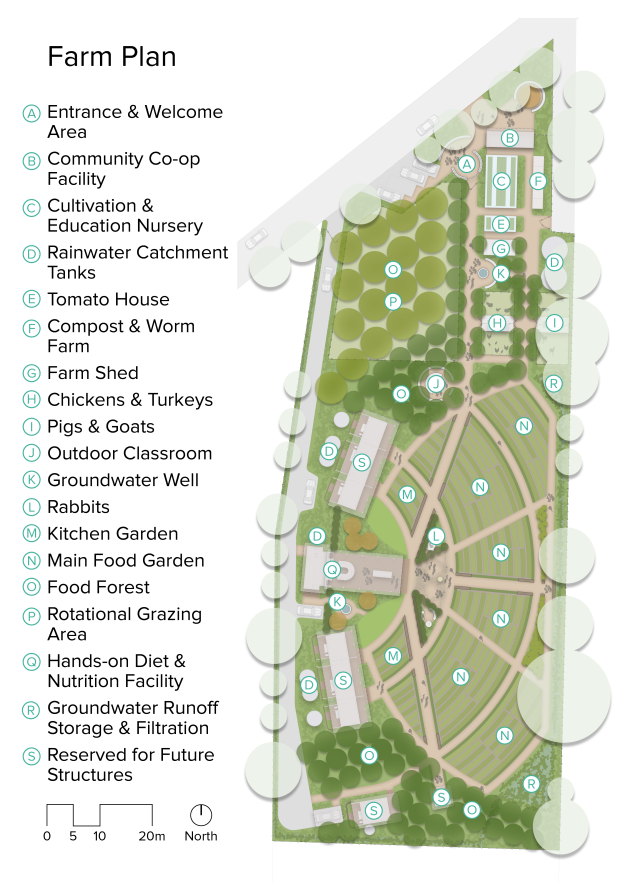
The GOAL is to build a sustainable, working farm that will provide the community and visitors a-like the experience to participate in a unique and memorable educational experience in sustainable farming, living & healthy food preparation.
“MESA Sostenible aims to have the following social, environmental and economic impacts:
Demonstrate the importance of year-round crop diversity to reduce malnutrition through a varied diet and nutrition education.
Increase soil fertility and reduce topsoil erosion.
Eliminate agricultural chemicals used on productive land.
Maximize rainwater infiltration and on-site treatment to improve ground water storage through water harvesting techniques.”
Here’s The Plan:
Our goal is to raise $95,000 in funds to bring the MESA Sostenible Sustainable Farm and Nutrition Kitchen to life.
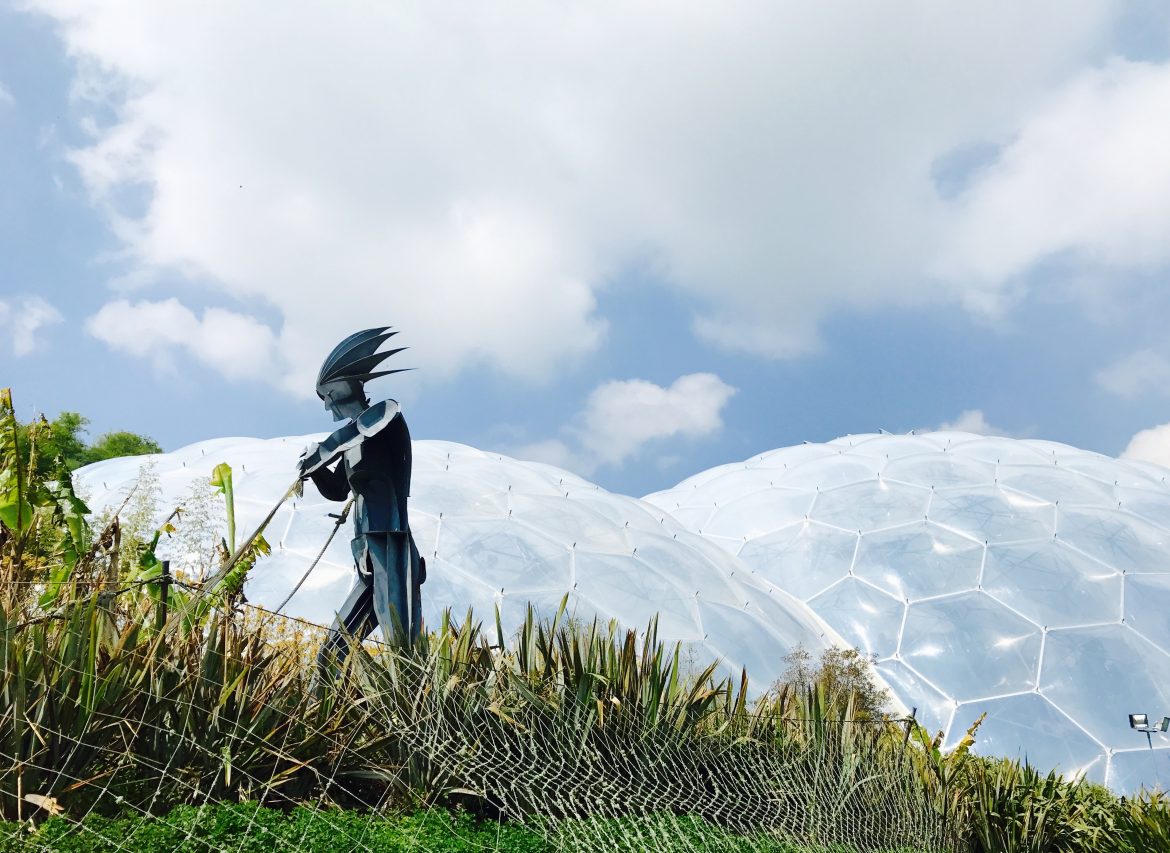
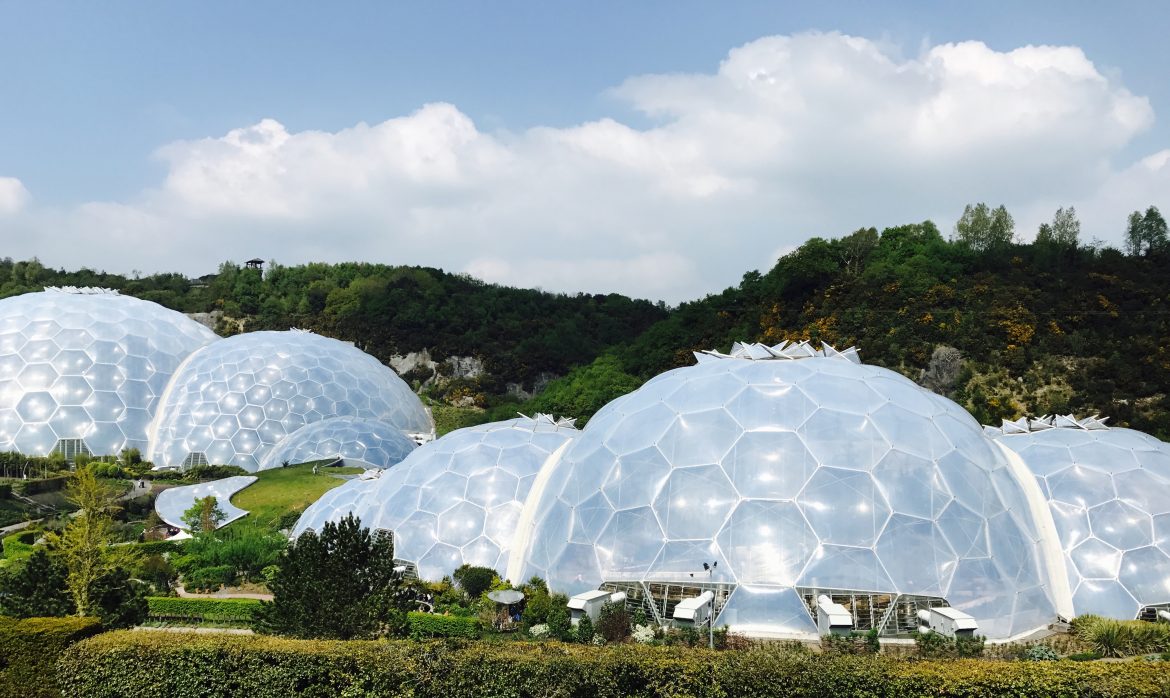
Buried in a steep-sided clay crater, deep within the southwest corner of England you will find The Eden Project; a global garden, home to more than 1 million plants from 5000 different species and housing the worlds largest rainforest in captivity. The site was formally opened on 17th March 2001 after a successful bid to the Millennium commission secured a £37.5 million investment, helping transform the 35 acre site into nothing anyone had seen before. A small group of people who wanted to make a difference, some brilliant entrepreneurial minds, 7 years and 83,000 tonnes of soil later, the Eden Project you see today was constructed. Displaying over 20 exhibits, weaving human stories and tales of historic adventure around the plants to engage visitors and encourage them to think about our relationship with the natural world you can visit this wonderful place all year round in Cornwall, England. Learn more about the Eden Project and view more photos: http://escapemedic.com/2017/06/19/the-eden-project/
Eden Project Biomes in Cornwall, England
Guests of the project are taken on a journey in which they see how plants have changed the world and the ways in which they may continue to do so. Eden itself is a wonderful example of how an old mining site can be reclaimed into a celebration of nature where gardeners can experiment with new varieties of plants capable of thriving in future climates. Learn more about the Eden Project and view more photos: http://escapemedic.com/2017/06/19/the-eden-project/
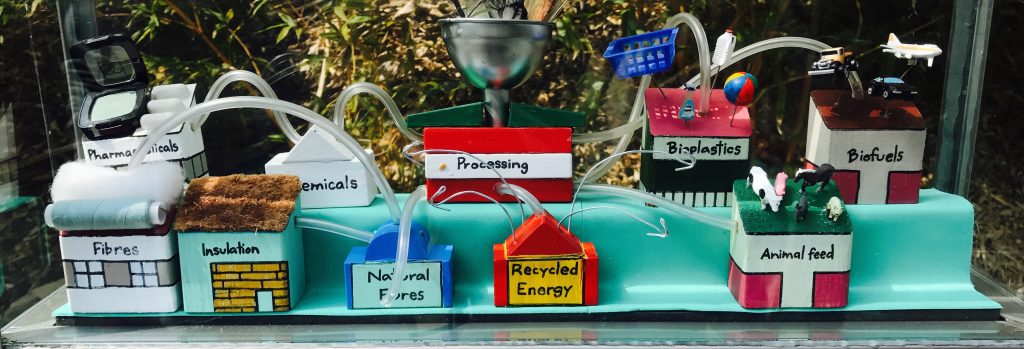
Sunflowers can be used in plastic manufacturing, sugar beet for making bioethanol, in turn utilised for everyday compostable goods.
Sunflowers can be used in plastic manufacturing, sugar beet for making bioethanol, in turn utilised for everyday compostable goods. Thinking about our impact on the environment allows us to explore new ideas to adapt to environmental challenges. Factories are now able to convert waste products into fuel for aircrafts and the emphasis on educational projects is increasing globally. Perhaps the next generation of conservationists will find even more remarkable ways to meet our energy demands.
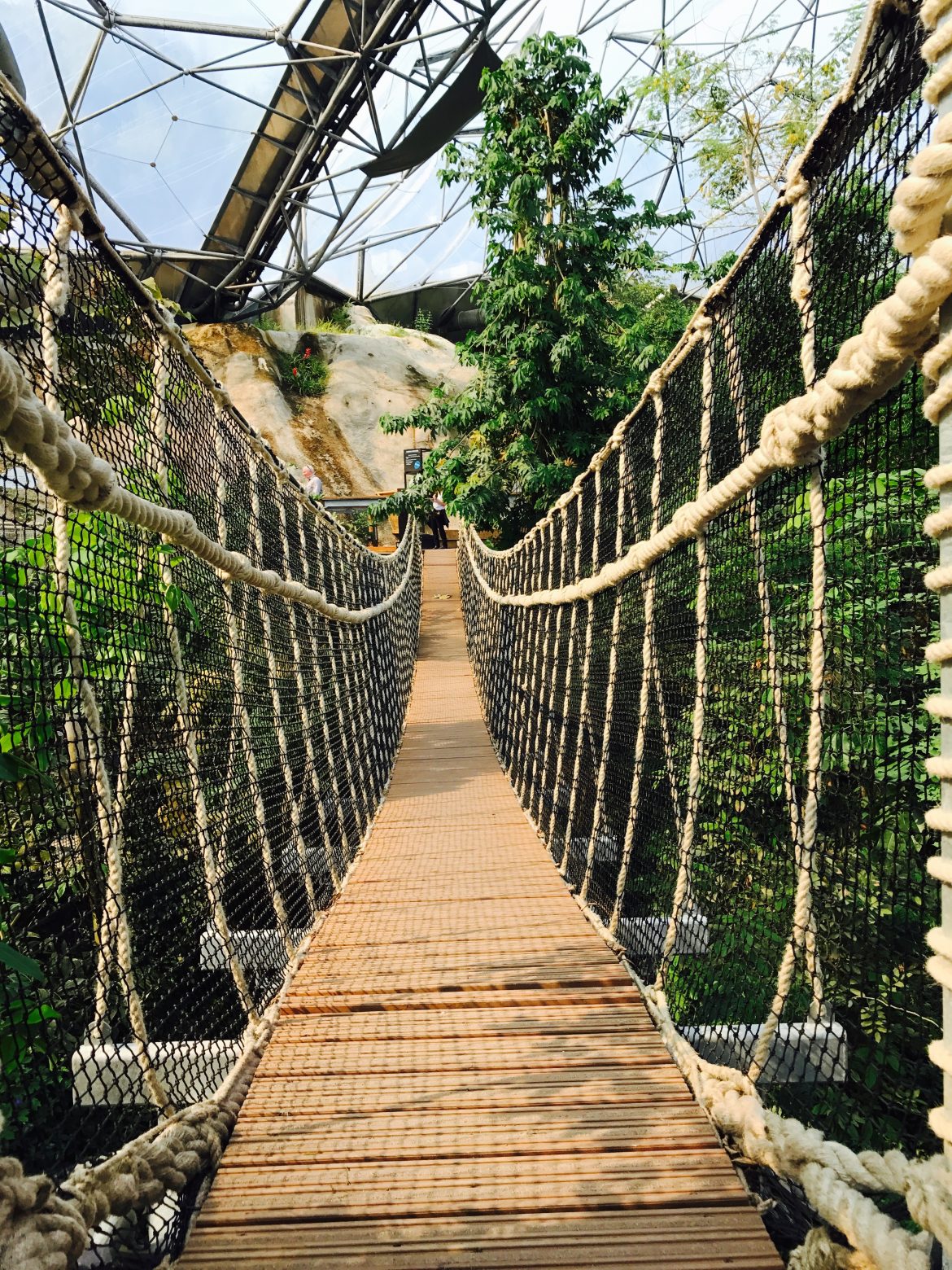
Rainforest biome canopy walk
After 15 years of intensive love and affection, Eden has recreated the natural conditions of the tropics so perfectly that it is now home to a thriving rainforest exhibiting some of the worlds most vital crops and plants. Averaging between 20-30 degrees celsius and 90% humidity you’ll certainly feel you have been transported to the middle of the Congo Basin upon entering the curved space frame. Over half of the world’s terrestrial animals and plants have made their home in the rainforest and this incredible diversity makes it such a magical place. There are still endless creatures, plants and medicines waiting to be discovered.
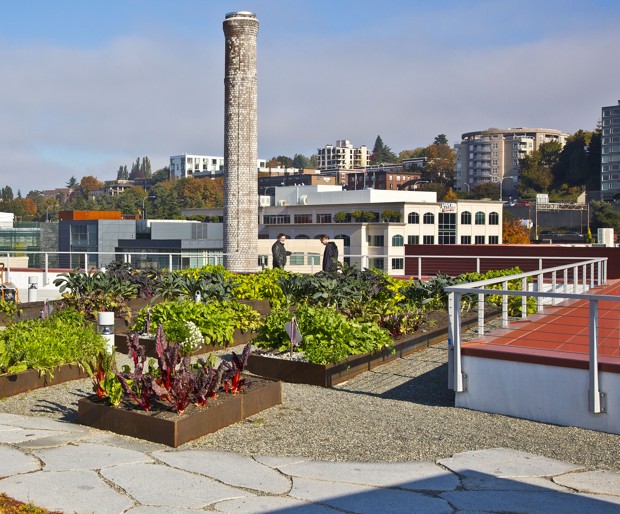
The roof garden on the Stack House Apartments in Seattle’s South Lake Union neighborhood. (Michael Walmsley/Vulcan Real Estate)
At the Stack House Apartments in Seattle’s now-trendy South Lake Union neighborhood, residents can walk out onto a terrace and pluck a tomato right off the vine.
In the South Bronx, an 8,000-square-foot hydroponic greenhouse atop an affordable housing development is creating jobs and food for the residents below—along with cooler summers and warmer winters.
And in Somerville, Massachusetts, Assembly Row, a still-under-construction mixed-use development, features a small garden that serves several local restaurants and is a learning site for area employees.
Environmentally conscious construction and building systems are old news at this point, but building-integrated food production is a relatively new, though growing, area of focus. And it’s led to a bit of a strange bedfellows situation: As both urban agriculture and real estate boom in a number of U.S. cities, real estate developers are looking to small-scale local growers to augment their plans. At the same time, food activists are beginning to recognize how even luxury builders can advance their cause.
Henry Gordon-Smith, who advises schools, builders and cities as they roll out vertical farming projects, says he now receives up to 10 calls a week from builders and architects inquiring about such technologies or, increasingly, seeking experienced growers.
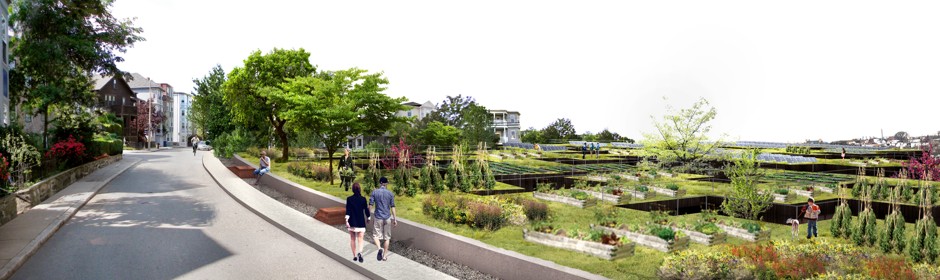
A rendering of Sebastian Mariscal Studio’s forthcoming Mission Hill project in Boston, a mixed-use development that will incorporate a rooftop community roof garden and solar farm. (Courtesy SMS)
“The building has to be productive,” he says. “All of that creates better occupants, and better citizens. Food is the next frontier in this.”
Instead of seeing Boston’s building boom as a threat to her urban farming business, Jessie Banhazl, founder and CEO of the Somerville-based Green City Growers, looks at new development as a positive. She started out installing terra firma gardens in backyards and public spaces, but says much of her work of late has been meeting with major developers and architects to build rooftop and grade-level farms into their plans from the conception stage.
“It’s really important that developers understand the value of this, and that they can provide amenities and lots of value to their property by having a rooftop farm,” she says. “There’s so many different applications where the tenants would value having food growing on the property.”
Indeed, many of these developments view urban agriculture as an added amenity for tenants, similar to a gym or a media lounge. As a perk for tenants like Google and Akamai, commercial property management company Boston Properties asked Green City Growers to initiate a garden and education program at its Kendall Center building in Cambridge. Another firm, Beacon Capital Partners, collaborated with a local beekeeper to put beehives in a number of its Boston buildings, which allows building managers to bring little jars of honey to their tenants, providing a “rare opportunity for a landlord to come by when they don’t need something,” says Noah Wilson-Rich of Best Bees.
Across the country in Seattle, the same is true for a number of newer residential developments. Vulcan Real Estate, run by Microsoft co-founder Paul Allen, has included rooftop community gardens in many of its recent projects. At the 24-story Martin apartment building downtown, residents chose to tend their rooftop gardens themselves, while the terrace garden at the Stack House Apartments in South Lake Union is maintained by Colin McCrate and a team of farmers from Seattle Urban Farm Company. McCrate and Vulcan are now working together on another, larger residential development, and they say gardens appeal to a younger generation of Seattleites who carry with them “a more holistic environmentalism.”
“A lot of our residents wished that they had some green space to tend rather than just a shoebox in the window,” says Brandon Morgan, development manager at Vulcan. “It’s also a visual amenity, as part of our landscaping, it’s sort of a centerpiece on that roof deck. And it also encourages healthy living by basically providing residents with greens, if they want it, for consumption.”
Food activists are starting to see the long-term benefits of integrating agriculture into existing or new infrastructure, says Holly Fowler of Northbound Ventures, who facilitated the yearlong urban agriculture visioning process on behalf of the City of Boston that ended this summer. “Typically, the land that is slated for housing,” she says, “agriculture is not going to be competing with that land. Period. The end.” When conversation at meetings turned to combining development and agriculture, Holly says, “reactions were always, ‘we should do more of this.’”
This is not to say concerns do not exist among the urban food justice crowd. Chief among them is the fear that access to an urban garden is an amenity available only to those who can afford it, says Andrea Dwyer, executive director of Seattle Tilth, a large nonprofit with a variety of urban agriculture projects throughout the city. And after the initial luster of that new bed of veggies at the apartment complex or office wears off, she adds, what will become of the project then?
“I do worry that some of these trendier developments, that while it’s a fad, people will incorporate it, but it will fade and they’ll do the equivalent of asphalting over it and turn it into something else,” she says. “In order for urban food production to have staying power, there has to be a real commitment and dedication to it from all perspectives—from people who are developing the buildings, the planning departments, the politicians.”
Not only are people around the world capable of growing nutrient-dense, nourishing food that will feed their communities, even if they live in an urban setting, but they can also do it with élan. Some of the most creative urban gardening projects around the globe can inspire us to create our own green space in the city, or add luster to a space that’s already underway which just needs a little oomph. Here are some off-the-(biotech)-chain gardens that will get our creative juices flowing so that we can carry the dream of living pesticide and GMO-free, further:
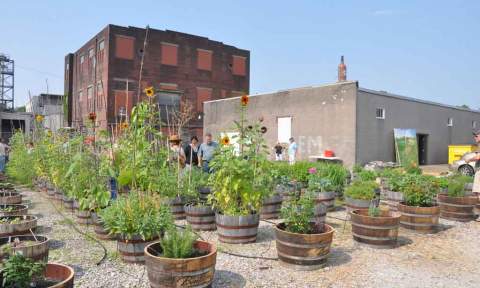
Everyone who has kept abreast of national news has heard of the urban blight that has devastated Detroit. This once burgeoning center of the auto-trade in America is now a sprawling concrete wasteland – or is it? Food Field is an urban farm in the middle of central Detroit. It grows heaping amounts of organic produce using permaculture. They even raise chickens and ducks, grow food utilizing aquaculture, raise honey bees, and have their own organic fruit orchard. This all happens on a piece of land that is smaller than that of many McMansions. Even in one of this country’s most economically depressed cities, where unemployment rates are currently swollen to 14-17 percent, people are flourishing growing their own organic food.
Detroit isn’t the only city under economic duress, but this doesn’t sway the Distributed Urban Farming Initiative or DUfi in downtown Bryan, Texas from mixing sound agricultural practices with community building. They want to spread their plan for city gardens everywhere:
“Our distributed urban farm program aims to resolve the weaknesses of other programs by engaging small businesses as key partners in the downtown farm. It is our intent to develop, implement and promote a sustainable downtown business model that will be available to communities that would otherwise lack the means or direction to execute urban farming.”
The city of Bryan works with the initiative to grant vacant or unused plots around downtown to be used to grow organic gardens. They also plan to provide some of the produce grown to local restaurants to make dining out healthier too.
If you think an urban garden is relegated to just growing vegetables and herbs, think again. People are successfully raising chickens in chicken coops in urban and suburban areas all over the country – and aside from providing nutrient-dense eggs, with sun-yellow yolks like you’ve never seen in a grocery store, these birds also create great compost to amend organic garden soil.
It seems we can do a lot with a little ingenuity.
One supermarket in Brooklyn, New York has decided to get in on the action, and now has an entirely organic rooftop garden. It was constructed via a partnership with Gotham Greens, a Greenpoint-based rooftop farm, and you can’t get more local than five miles from your borough! They produce tons of organic produce all year long and don’t use a single pesticide. I’m sure this miffs Monsanto, Bayer, and Syngenta signifcantly, but you can’t stop Americans who know the truth about GMOs and pesticides.
It isn’t just in the US, though, that people are taking sustainable agriculture into their own hands. Sky Greens in Singapore is the, “World’s first low carbon hydraulic water-driven, tropical vegetable urban vertical farm, using green urban solutions to achieve enhanced green sustainable production of safe, fresh and delicious vegetables, using minimal land, water and energy resources.” Singapore faces the dismal fact that Locally grown vegetables currently only constitute 7% of Singapore’s consumption.
With creative farming initiatives like the ones Sky Greens offers, fewer fruits and vegetables would need to be imported, and people could enjoy more locally sourced food that isn’t controlled by biotech monopolies. According to these innovative farmers, “the production yield of Sky Greens Farm is 5 to 10 times more per unit area compared to other traditional farms growing leafy vegetables using conventional methods in Singapore.” They also offer year-round production and are not subject to climate events like drought or tsunamis.
Finally, an organization in New Zealand, Canada and the US offers a supremely novel idea for helping people grow food who simply don’t have the land to grow it on. They are called Sharing Backyards. Taking advantage of the fact that many urban and suburban areas have lawns, yards, and empty spaces which people aren’t utilizing to grow food, but could be, individuals can logon to their site and either put in a request for space to garden, or offer land that currently sits idle. Not only does this idea help people who are often the most marginalized have better access to healthy food, but it teaches us to rely on each other instead of huge corporate conglomerates that don’t care about feeding the world, only poisoning the planet for profit.
If you have a creative idea about taking the food supply and redirecting it in a more sustainable direction, please share it with us at Nation of Change.
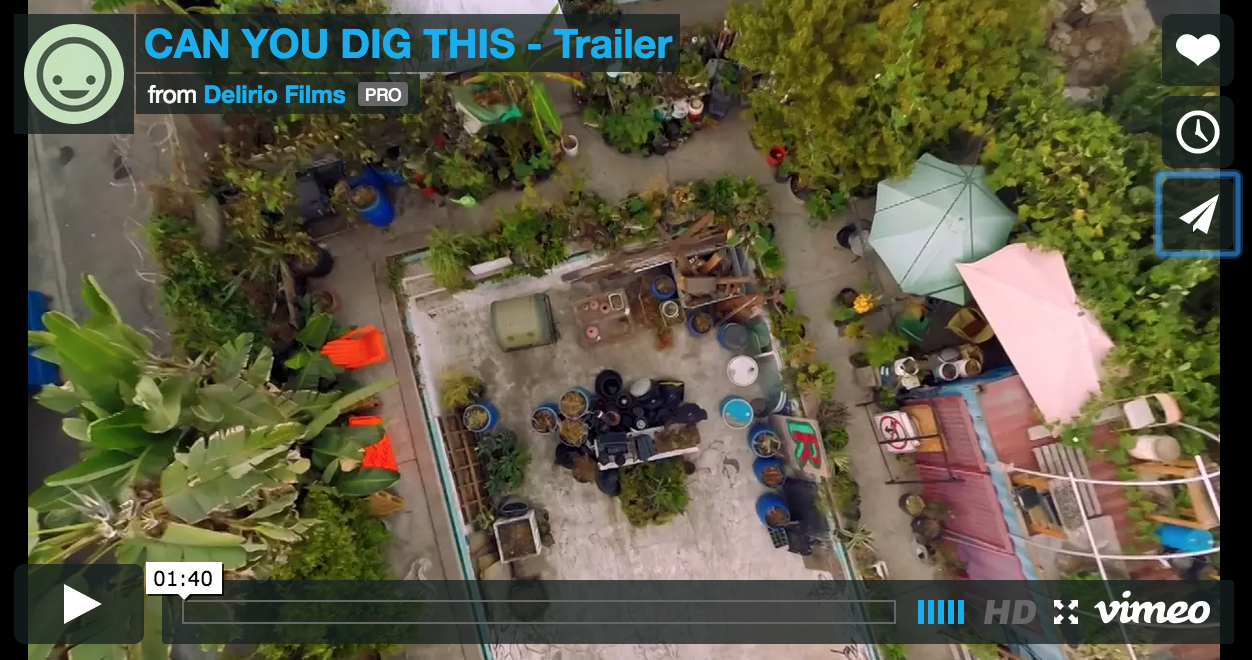
John Legend’s Get Lifted Film Co. is planting a documentary about four “gangster gardeners” who discover what happens when they get their hands dirty — in the soil of South L.A. Check out the trailer for Can You Dig This, which has its world premiere Thursday at the Los Angeles Film Festival. Fusion already has nabbed TV rights to the pic about the urban gardening movement, which was cultivated by director Delila Vallot. It also features a new original song written and performed by defending Best Song Oscar champ Legend and additional music composed by TV on the Radio’s David Sitek.
Source of this contest is from usnews.com by Corinne Ruff
Common Good City Farm produces food for low-income neighborhoods in the District of Columbia.
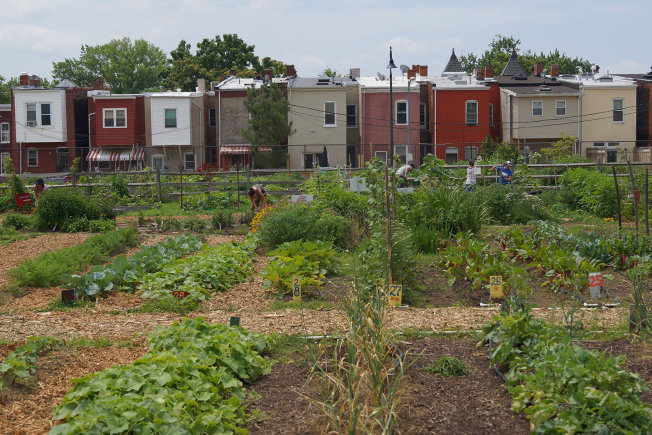
Nearly a decade ago, neighbors living near an abandoned elementary school in LeDroit Park in the District of Columbia described the area as a “thriving, open-air crack market.” But today, the once dangerous lot is flourishing with leafy greens, medicinal herbs and sour cherries.
Entrance to Common Good City Farm.
“Our community has gentrified rapidly, and that creates some tension, but us being a safe place where people can interact is helping to facilitate conversation,” says Rachael Callahan, executive director of Common Good City Farm.
As she walks around the half-acre farm on paths of mulch that cover the old-school baseball field, she proudly points to ripening fig trees and red-veined rhubarb. “Our main goal is food production,” says Callahan, adding that at 5,000 pounds annually, the farm produces the most food for low-income neighborhoods in the District. In 2007, a community task force worked with the District to gain access to the land and transform it into the vibrant farm that attracts about 500 volunteers each season.
The nation’s capitol isn’t the only city lacking food security. More than 2.3 million people live in food deserts, or urban areas that do not have access to fresh produce, according to the U.S. Department of Agriculture. This issue contributes to poor diet, obesity and illnesses like diabetes. Urban agriculture initiatives – producing food in a community for the community – are one solution working to relieve these problems and increase healthy living one garden at a time.
Common Good City Farm is one of thousands in the country to join the growing urban farming movement. With the help of financial incentives from state governments, urban farms have sprouted up from coast to coast, gaining support in major cities such as Chicago, Detroit and Los Angeles. From 2007 to 2013, 13 states and the District of Columbia passed legislation to authorize zoning for urban farms and create councils that promote local food economies, according to the National Conference of State Legislatures.
Why Local Matters to Your Health
In 2014, the USDA reported a total of 8,268 farmers markets nationwide, an increase of 76 percent since 2008. That increase was partly due to demand for more local food.
The mission of many urban farms, like Common Good City Farm, is to sell their harvested produce at farmers markets to low-income residents, Callahan says.
As a gardener and researcher of human rights for adequate food and nutrition, Anne Bellows, professor of food studies at Syracuse University, says these urban farms play an important role in retaining public health.
Cherry tree at Common Good City Farm.
“It’s important to understand and be aware of what the huge multitude of benefits are,” she says. “The food and the nutrition are important, but also very critical are benefits like access to green, quiet, safe space where other people are meeting and working – some place that is a refuge.”
In her research on the health benefits of urban agriculture, she found that a five- to 10-day lag time between produce transportation and consumption can result in a 30 to 50 percent loss of nutritional value. In other words, instead of buying tomatoes from a supermarket that imports them from hundreds of miles away, Bellows says urban farms provide a local option that give consumers better tasting, more nutritious food.
Urban farms also offer local education programs that teach community members how to cook vegetables to retain the most nutrients. On many of these farms, like Common Good City Farm, volunteers can earn a free bag of fresh produce every week by spending a few hours planting, weeding or harvesting at the farm.
Read the full article here: http://health.usnews.com/health-news/health-wellness/articles/2015/06/23/why-joining-the-urban-agriculture-movement-will-make-you-healthier
How would you quickly describe yourself to others?
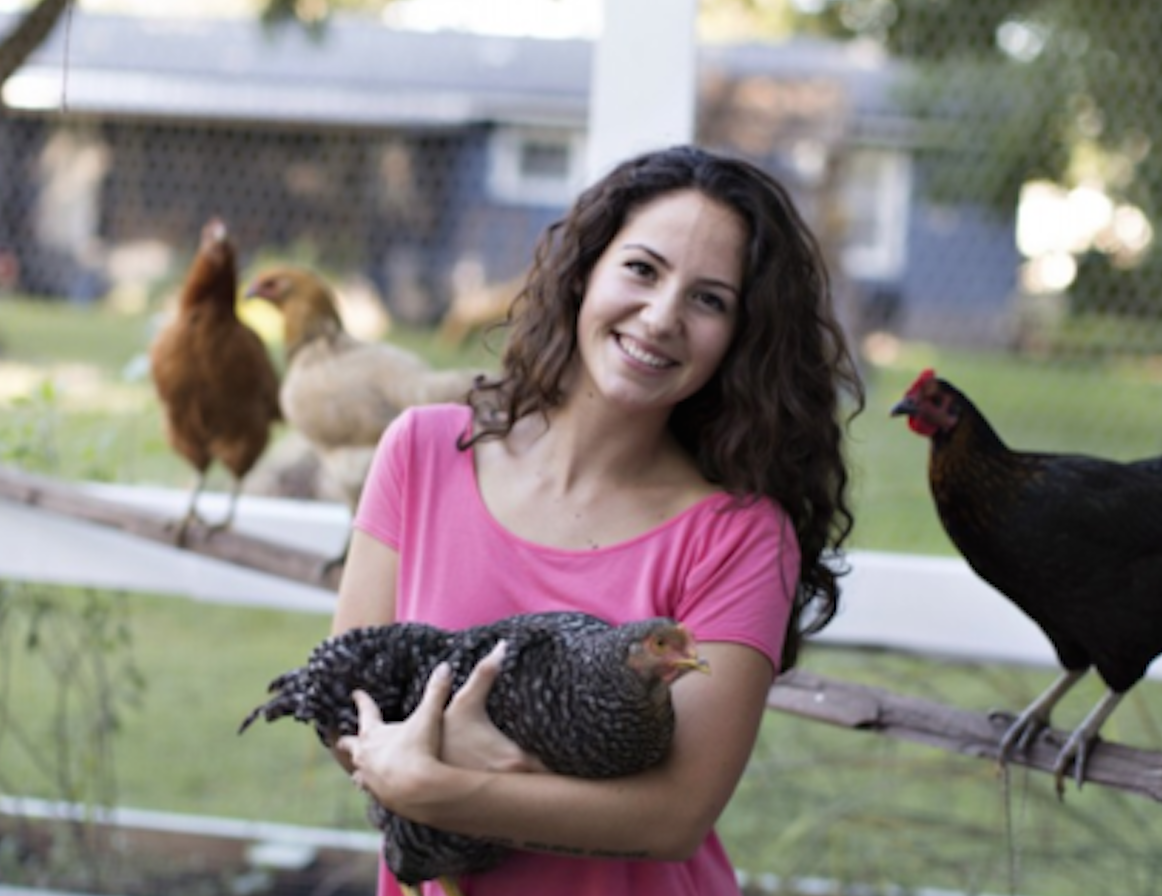
Mom. Wife. Dreamer of self-sufficiency. Lover of sweets. Knack for storytelling. Chicken & cat lady. =)
How did you get started with your blog?
I got started with my blog, NaturallyLoriel.com, because I had just found out information on feeding babies that totally contradicted the information I was given by my doctor — my son was 9 months old at the time. From there, it was a domino affect and I began researching and questioning every single thing I was doing, eating, and buying. After about 4 months of steady research, I began talking about it with my close friends and family. In March of 2011, three different people in the same week suggested that I start a blog. I took that as a sign and so I did. 🙂
Did you start your blog when you started your transition to live this life style?
Yes and no. At first my blog was about real food and learning about GMOs. At the time, I was living in California and I was heavily involved in the Prop 37 campaign so a lot of my blog geared towards that. As you may probably know, once you become passionate about the food you eat, you start to realize that the best way to control what you are eating is to grow it. Now Naturally Loriel is more about the journey to living a natural life and everything that comes with it — real food recipes, gardening, chicken raising, DIY, and more.
A photo posted by Loriel Adams (@naturallyloriel) on
Have you always been this way?
I’ve always been conscious about the earth but it never occurred to me how MUCH there was to *really* know about life. My mom always had a garden when I was growing up but as a child, I was never interested in it. My continuous journey to living a natural life began those first few months before I decided to start my blog. I really began being interested in building a thriving backyard homestead when I moved to Florida and realized my options for fresh food were limited. I knew that it was up to me to create healthy food. Plus, I’ve always been somewhat of a rebel so the idea of growing my own fresh food and raising chickens for eggs is like a huge middle finger to big corporations like Monsanto… which excites me.
FEATURED PHOTOS FROM HER INSTAGRAM
What are some of the other things you would like to have other people understand about living a healthier and self-sufficient life style?
A few things I’d like people to know is that most likely you won’t receive instant gratification. I’m in my third season of gardening and it has been a struggle — between the bugs, the weather, the fungus, more bugs — it seems like I never win. And actually, sometimes I wonder why I still try but I guess it’s because growing my own food and showing my son what real food grown in a garden from love tastes like is absolutely worth trying over and over again.
Living a healthier lifestyle is about trying, trying, and trying again and sometimes it’s certainly anything but easy. It’s about learning to lean on other people for advice, it’s about researching, and ultimately, I think it’s about teaching you to enjoy the process and slow down a little. Our world is moving so fast right now but moving towards a self-sufficient lifestyle takes time and patience.
What tips and tricks could you share with other people?
Honestly, I’m not sure I have any tips or tricks to share on gardening because I’m much of a beginner and haven’t had a successful garden season I could rave about. This spring I thought it would be abundant but I put the garden in too late and the heat has just been brutal. I’m ready for the fall though and I’m pretty confident I’m going to get a good harvest (at least that’s what I keep telling myself)!
A photo posted by Loriel Adams (@naturallyloriel) on
Have you ever made mistakes or failed doing something?
HA! Yes, I have totally made mistakes or failed at doing something. One thing that is constantly a battle for me (and my husband) is my lack of watering the garden therefore keeping my plants alive. If it’s not because I forgot to water, my garden seasons have flopped because of the bugs that I deal with in Florida. Though, with each failed garden season, I am more prepared for the next one.
How did you overcome any obstacles?
Since I’m terrible at remembering to water my garden, I made sure I put my garden beds near my chicken coop. It has helped a lot since I have to change out the chickens’ water every day, but there are still times that I forget simply because I have a lot on my plate.
I am also starting a garden journal to record the things I learned and the solutions I’ve come across to help me remember for the next season.
Have you ever dealt with a person who disregards your life style?
Yes, and I think it is totally normal. 6 years ago, my whole mindset was different. I was ignorant but it wasn’t my fault and I think this is the case with lots of other people. When you think about it, it’s hard and scary to essentially unlearn everything you were taught, so I can see why people have a hard time with going against what mainstream says.
When I first began to make switches, mostly close family members couldn’t understand and I admit, I would get frustrated, upset, and hurt. I would try and preach and give facts but nothing ever changed their minds. It wasn’t until I started just living my life the way I wanted to, that people started to notice and come around. I’ve also learned that some people won’t ever change so it’s not worth using my energy to worry about it and to just keep moving on and focusing on my ultimate goal.
What are some of your greatest rewards with a lifestyle such as the one you live?
I could go on and on about the amazing rewards I get with this lifestyle but I’ll try and keep it somewhat short. In a few words, this lifestyle has taught me patience, gratitude, motivation, excitement, and appreciation for what it takes to grow and raise my own food. For example: by the time I actually account for all the money I put into my chickens, my eggs probably cost me $15-20 a dozen but I never doubt for one second that it’s worth it.
Out of all the rewards, one of the biggest of living this lifestyle is making it possible for my son to grow up with a backyard homestead. I think the problem with our world right now is that most of us have been completely disconnected from our roots. In my opinion, as a society, we’ve all lost the appreciation and knowledge of what it takes to grow real food (veggies, meat, and dairy) and would rather resort to convenience. Most of us don’t realize that the convenience comes with a huge cost that impacts our environment, and ultimately impacts the future of our children.
In my eyes, our children are suffering because they don’t know where their food comes from. That’s why it’s so important to me to continue what I’m doing for my child’s sake and to keep trying each year even if I’ve failed at gardening. It’s imperative for him to see that in order to get an egg that nourishes our body, we need to make sure our chickens are fed, hydrated, and cared for. It’s only until then that a child can see the full circle and learn to appreciate what it takes to have food that makes them feel good.
It’s only until a child sees the patience, handwork, and dedication it takes to start a plant from a seed, water it, love it, and see it grow that they can appreciate their food and truly know the difference between something home grown and something from the store. Ultimately, I want him to know that the good things don’t always come easy, hard work pays off, and there is nothing more gratifying than harvesting something you grew or raised with your own two hands.
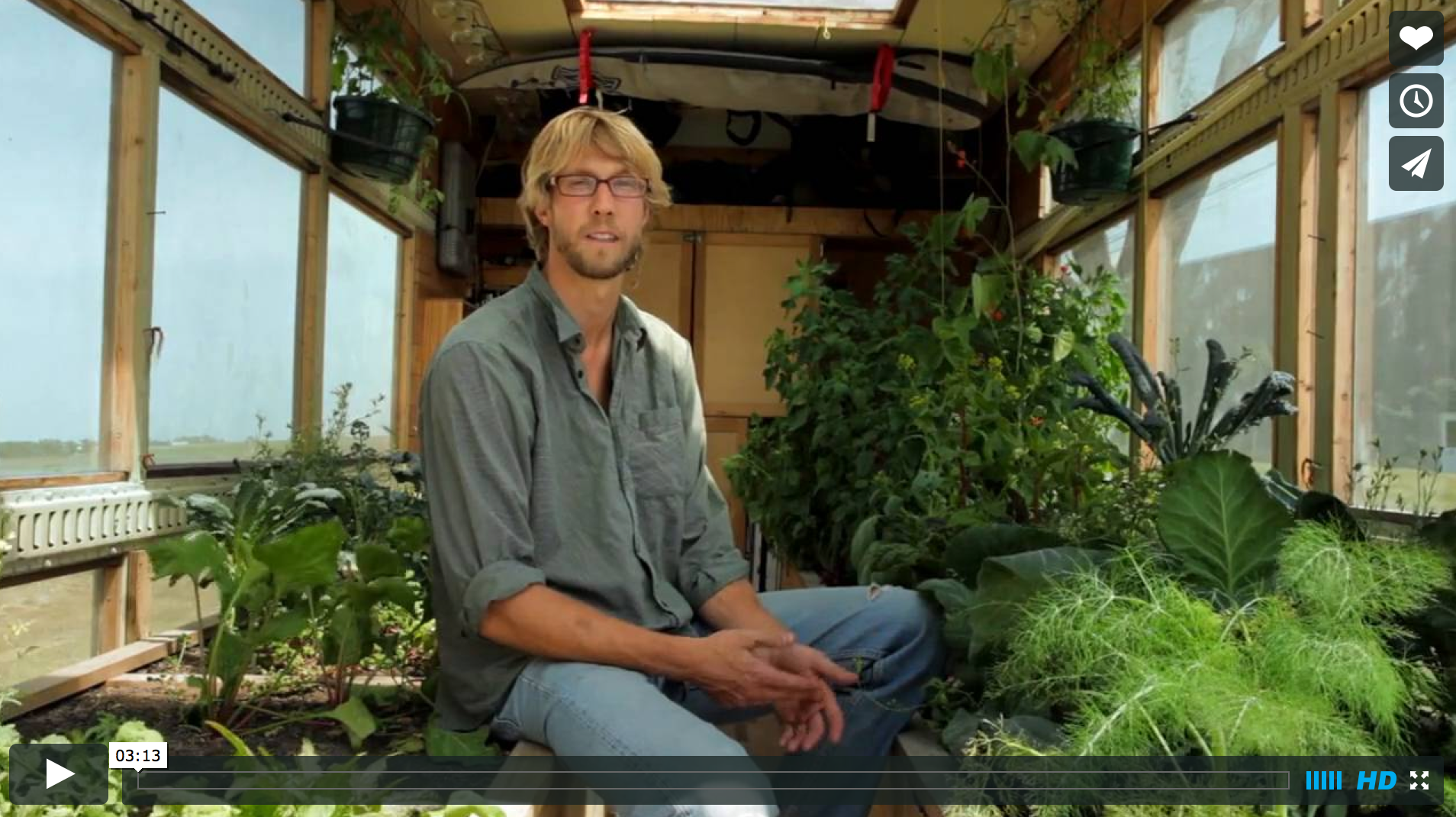
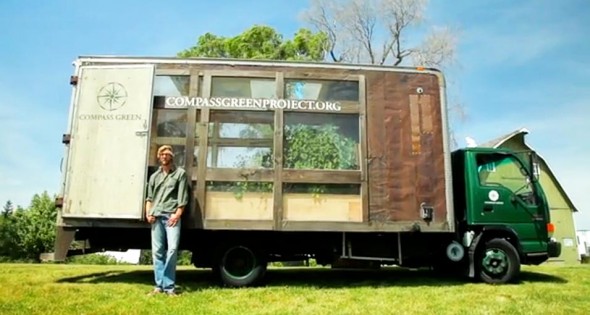
A roving mobile greenhouse teaches children about where their food comes from.
“Compass Green is a school garden on wheels. It is a fully functional mobile greenhouse built in the back of an 18-foot box truck that grows vegetables, grains and herbs and is powered by waste vegetable oil. The project teaches practical farming tools and raise awareness on sustainability through presentations, workshops, greenhouse tours at schools and events across the country.” –Organic Connections
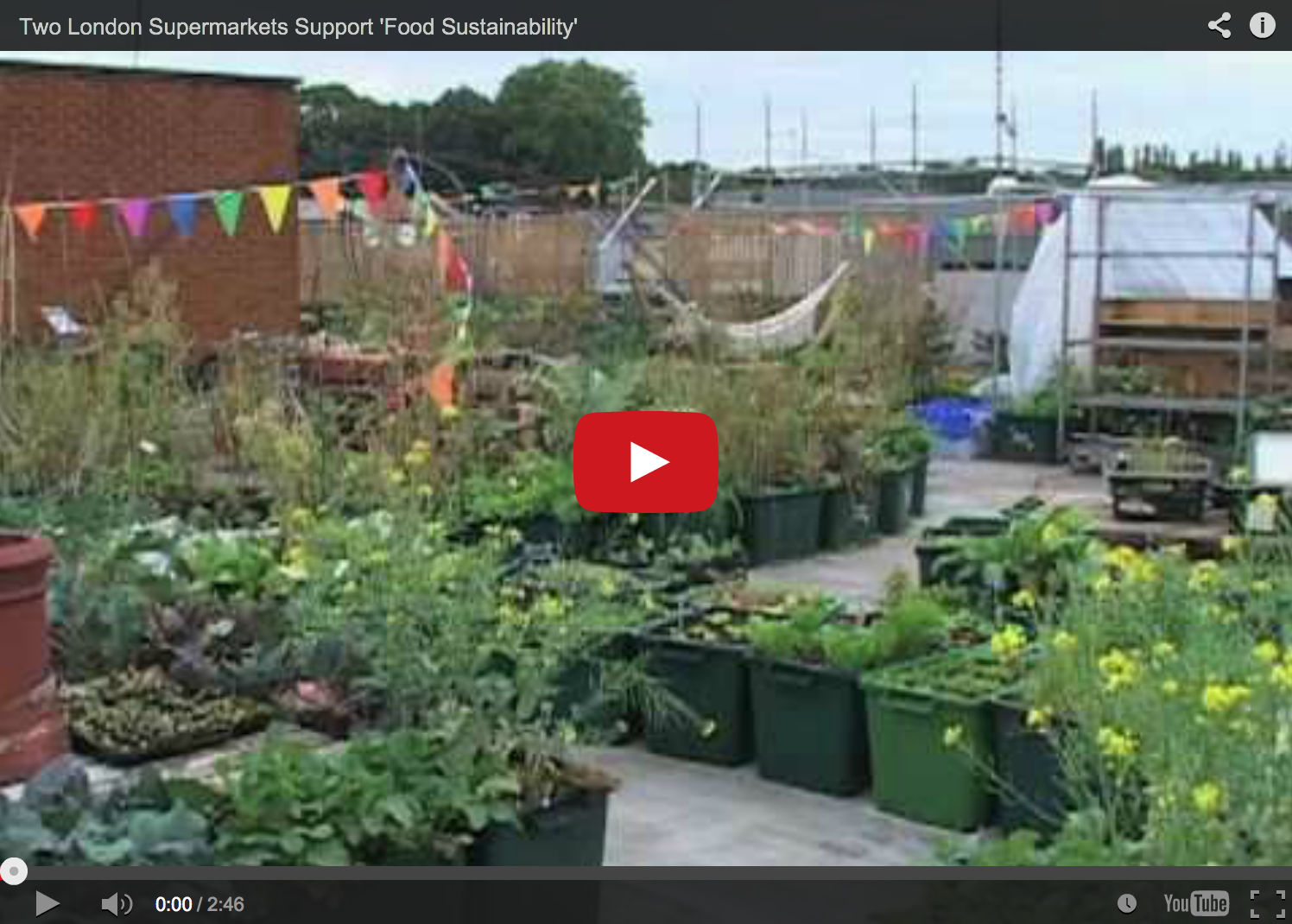
Two London supermarkets are supporting the production of safe, healthy food by sourcing food locally, or growing it themselves. Jennifer Glasse reports from the British capital about the latest efforts in food sustainability, a term often associated with the developing world.
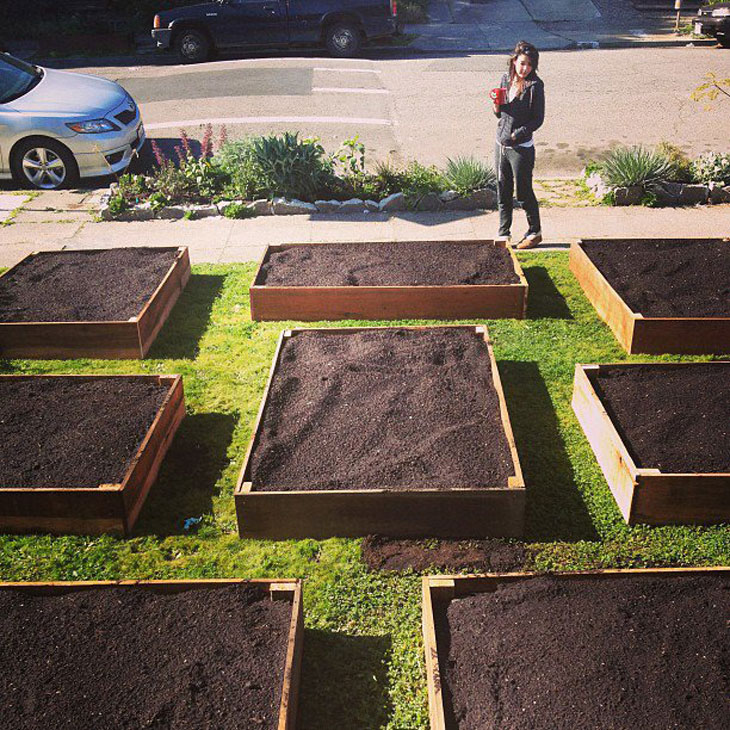
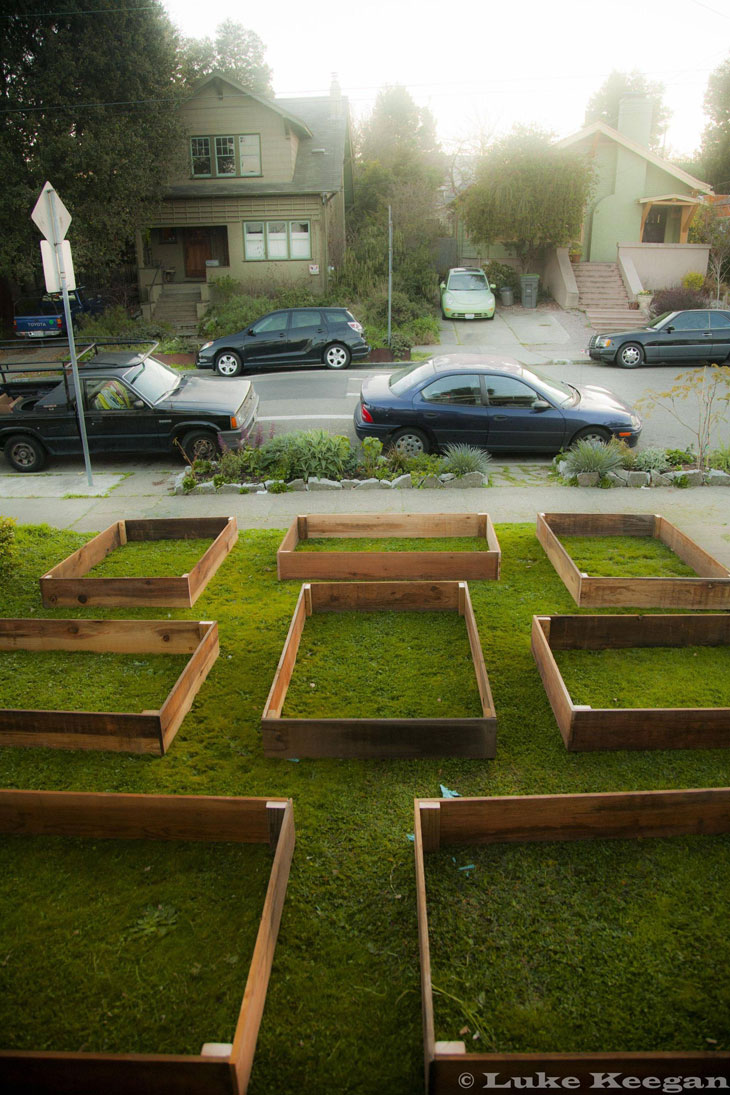
This homeowner observed his boring green lawn, and he started to ask himself, “so what’s the point?” Although it looked nice, it gave him no satisfaction. It was a lot of work to keep too. So he decided to try something else. Check out what he did next.
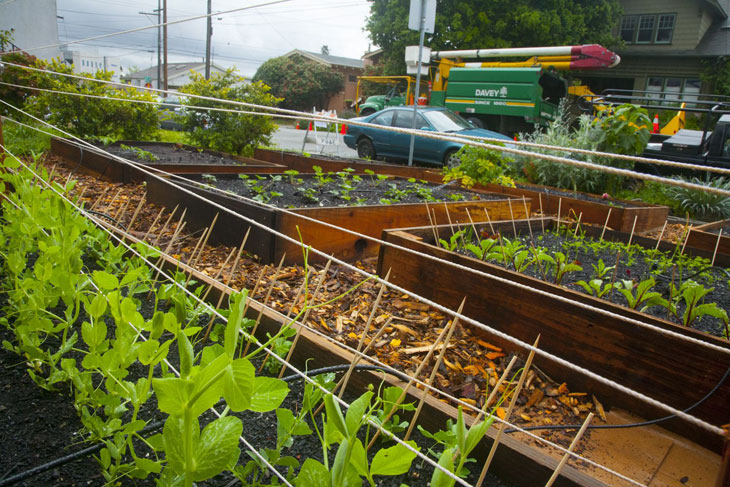
Since the city was giving away compost for free, he got some and that’s what you see in the boxes.
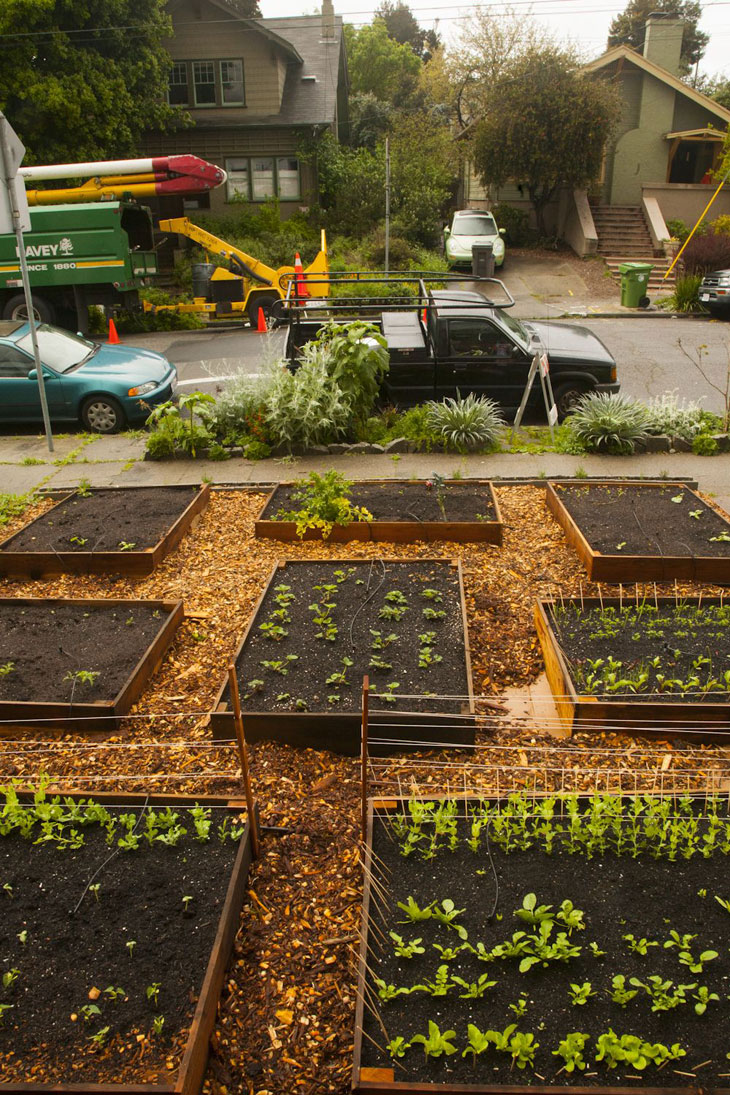
Support systems started coming up as the seeds began sprouting.
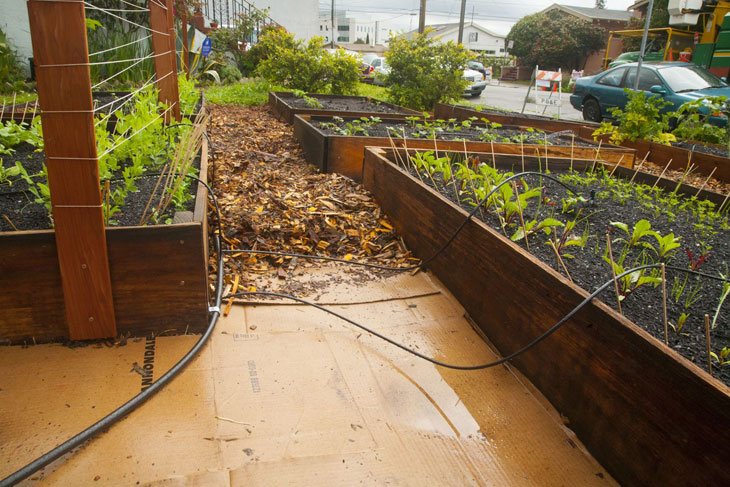
For this guy, the hardest part was developing the irrigation system.
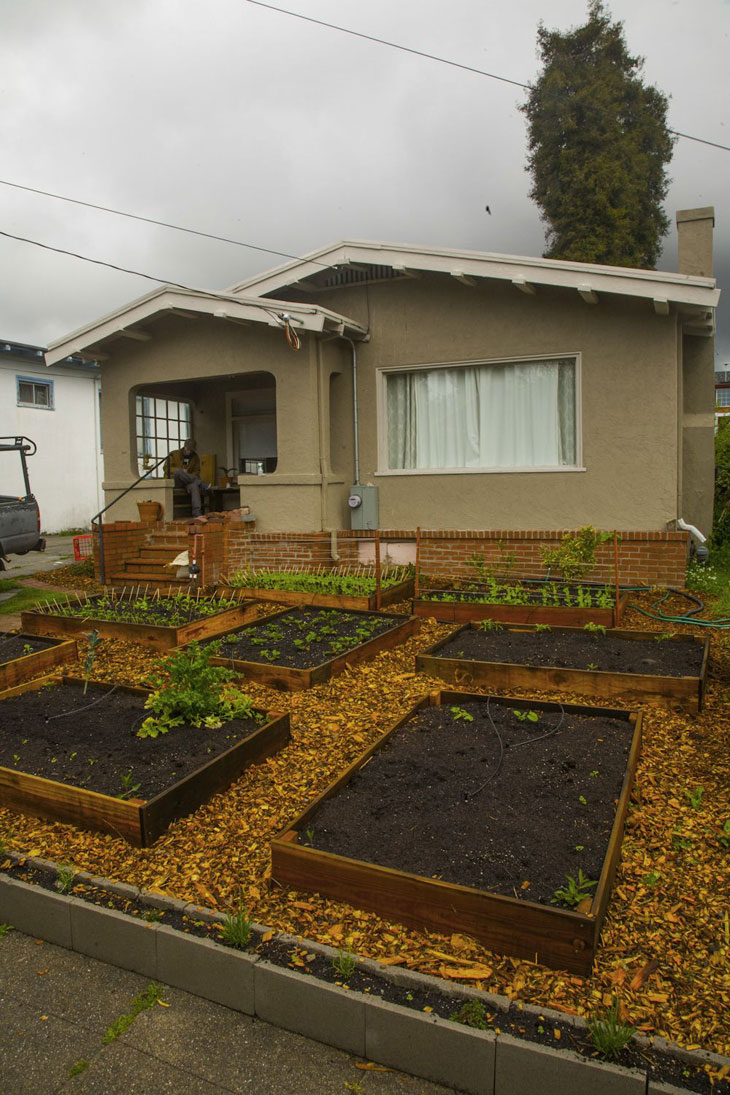
Cinder blocks and wood chips fill in the rest of the lawn.
erer
The arugula came first.
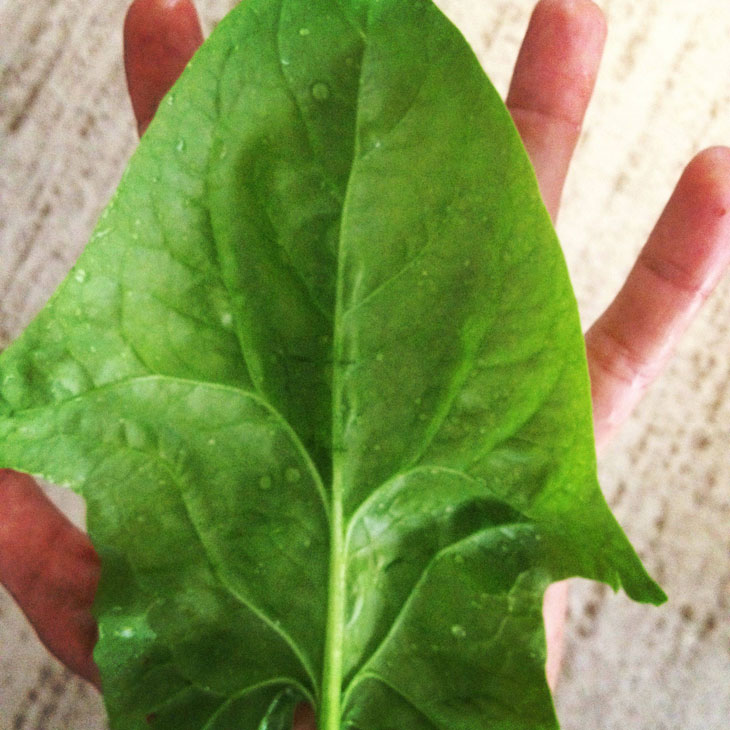
Then spinach was the next to arrive.
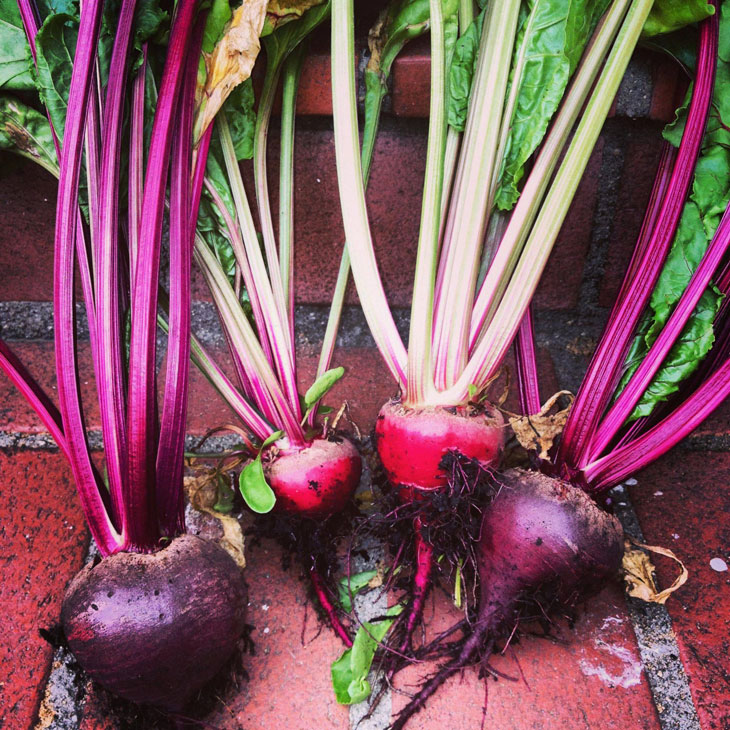
Beautiful beets brought some color.
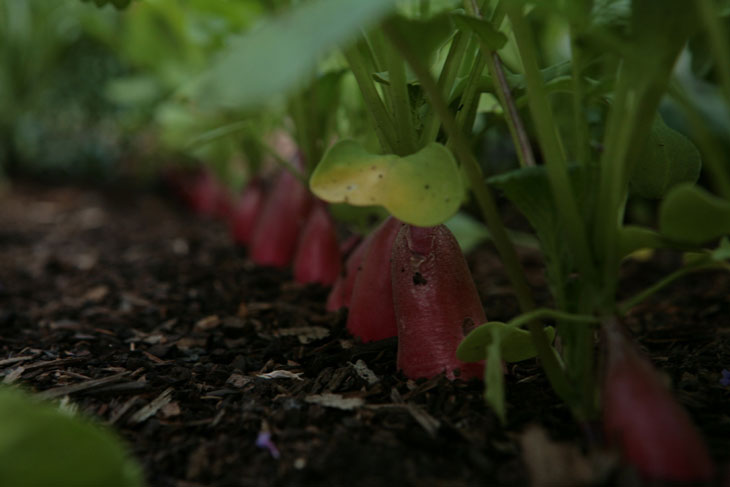
Everything’s coming up radishes.
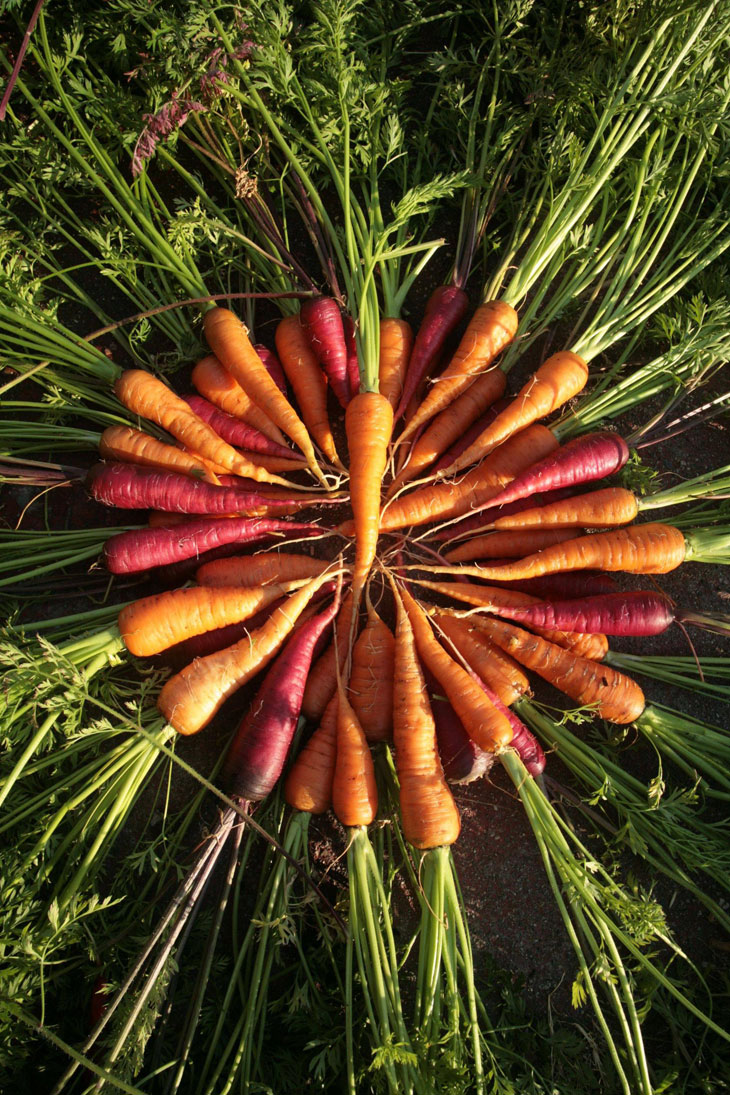
Here’s a whole wreath of carrots, pulled from this man’s lawn.
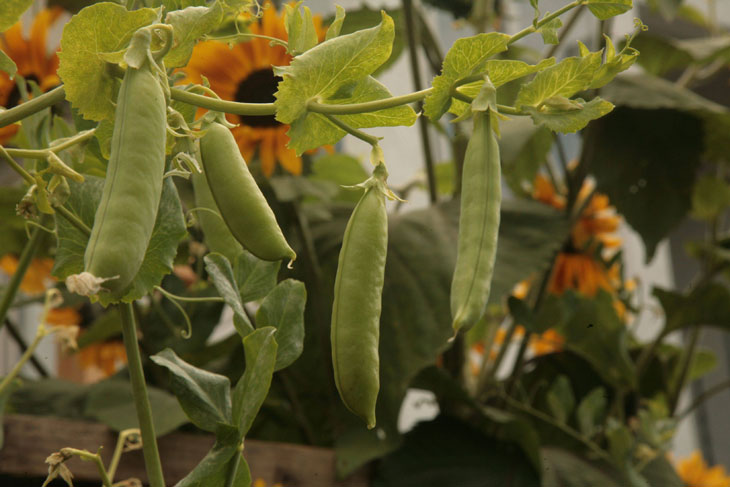
Yes peas.
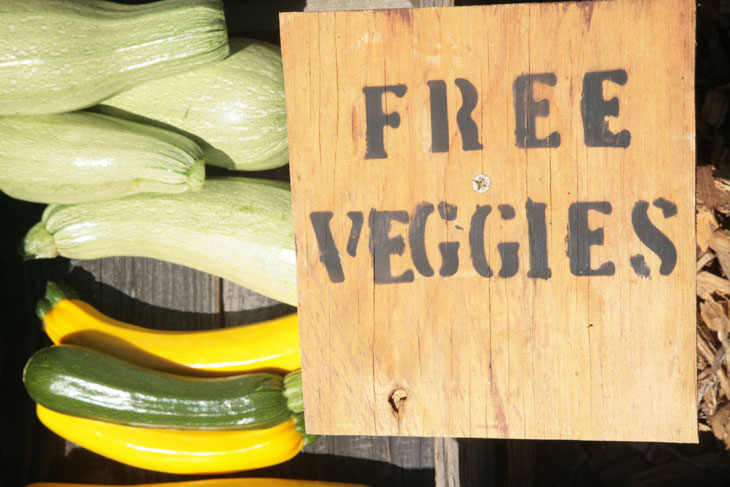
There was so much yield, the guy had to give away some of his vegetables.
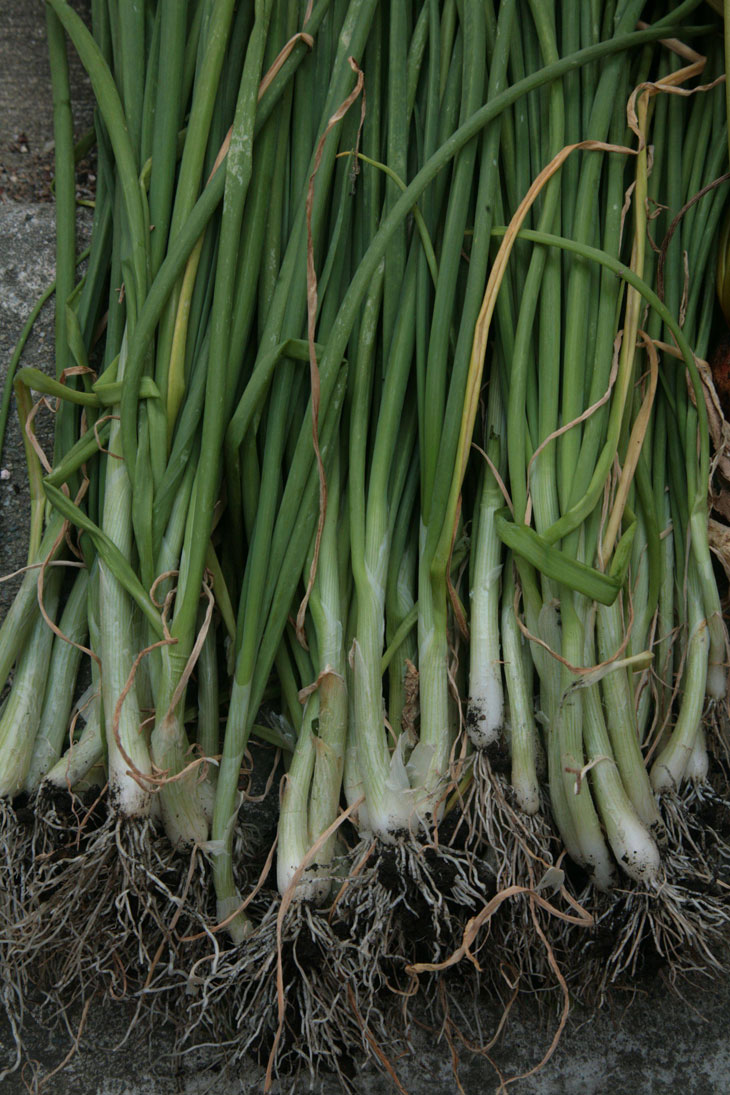
Some good-looking green onions.
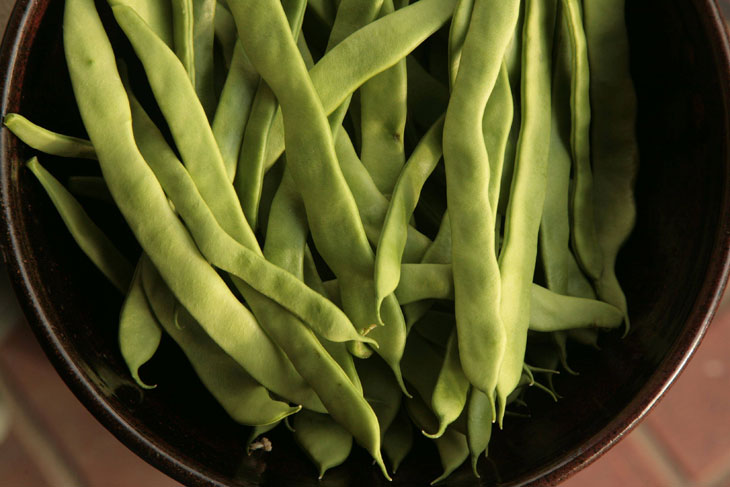
The green of these beans is perfect.
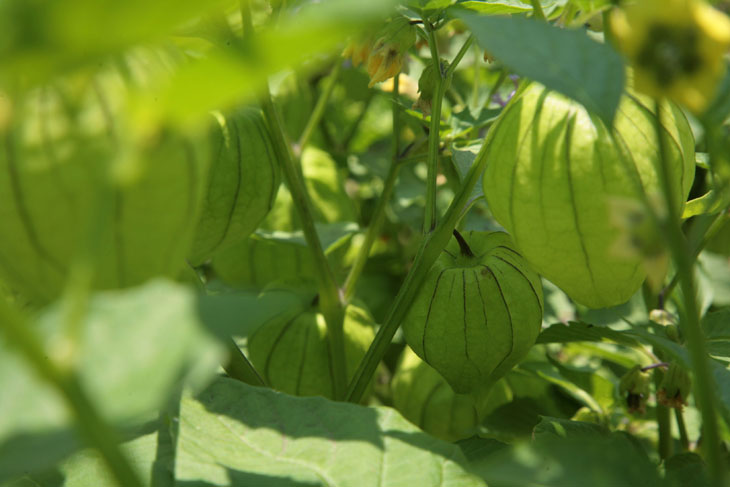
What a lovely bunch of tomatillos.
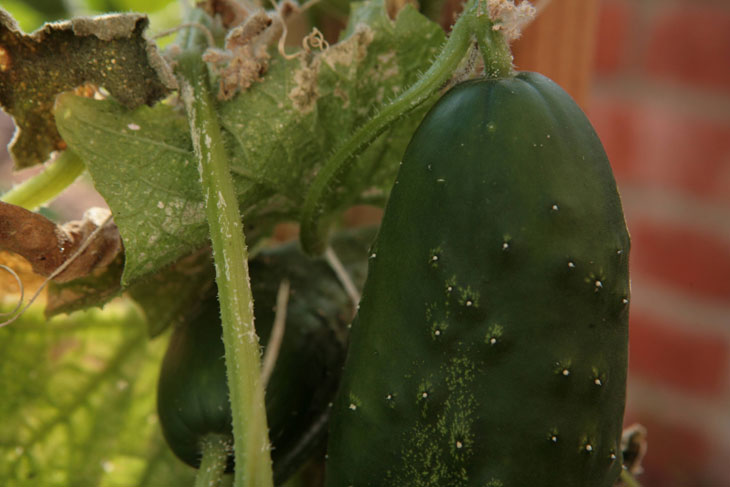
Big and beautiful cucumbers.
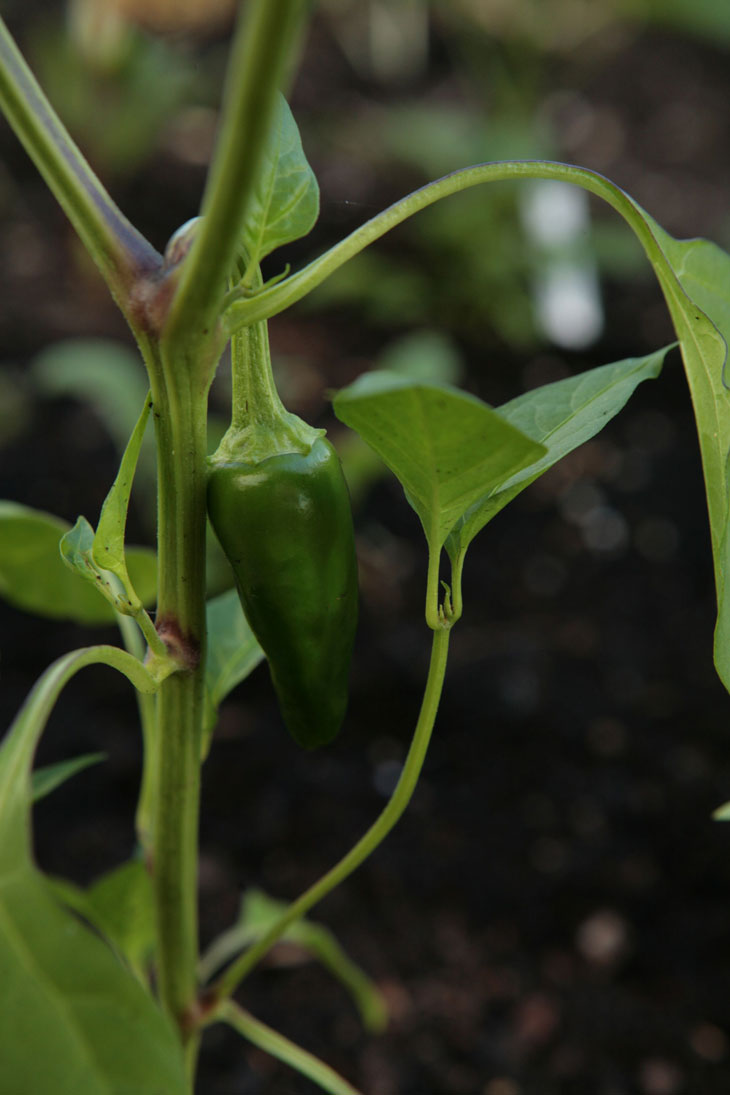
Just one of a bunch of peppers.
As an added bonus, he noticed beautiful flowers blossom before squash grows.
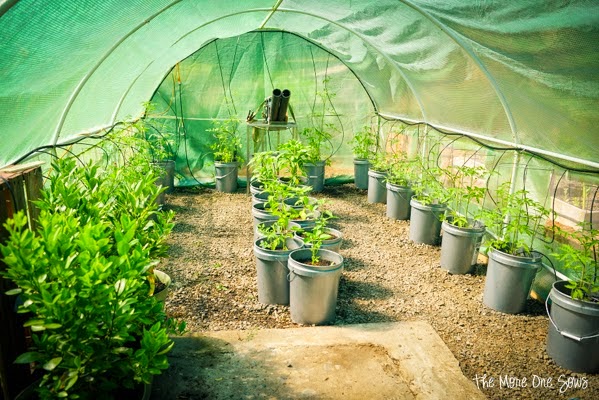
Source: The More One Sows; The Greater The HarvestThis is the story of how and WHY I quit my full-time job, away from my home, to become a full-time homesteader. Can it be done? Of course it can. And although I’m not advocating rushing off to put in your “two weeks notice” after reading this article, maybe it will give you something to think about for your future, where you want to go from here & how you can go about doing it.
So WHY did I quit my job? It certainly wasn’t an easy decision. I had spent just over a decades worth of my time engulfed into my career. I owned a small business and cherished the relationships I had built because of my job so leaving and closing the doors forever seemed a bit robust at first. It was something I had been thinking about for a while, but then all of a sudden it just came to me and an overwhelming sense of peace came over me and I knew that “my calling” was to be home.
So if “my calling” was to be at home, and to pour everything I had into being a full time “mommy-homesteader”, was it going to work? Where would I struggle? How would I make the transition from career woman to living my life full-time on our urban farm? Would I eventually give up my shoe collection all together and find myself wearing my hair in a bun everyday? What was going to become of the person I had been for the last 10 years? All of these were questions that I had and have since learned the answer too.
My Kids.
Obviously, this is one of the biggest perks of quitting my job and becoming a full-time homesteader. Being able to devote more of my time and energy to them has been better for all of us. I feel like a better mother, and better caretaker. I am truly INVESTED in my children. From the moment they wake up in the day, until everyone gets tucked in, I am there. I find myself having more patience. I truly have been able to slow down to enjoy every moment with them though-out the day.
Homeschooling.
Homeschooling has become very important to me over the last few years as I’ve been more and more concerned with the problems of our broken school system. I feel at peace knowing that I’ll be able to homeschool my youngest daughter now that I am a full-time stay at home mom. I feel privileged to be able to teach my daughter in a way that I know will suit her best, and she’ll be in a safe and loving environment without the struggles that come along with being in a public school. With a “faith-based” curriculum, I’m confident I can teach our daughter all that I can about how this world works and give her the basic tools to start creating a wonderful life for herself.
Saving $.
I’m not kidding, I actually SAVE money by not going to work everyday. That $5 latte on my morning drive to work, the constant refilling of the gas tank, not having to buy new shoes and work apparel constantly…it all adds up. No buying lunch while I’m work….Not to mention the money I’ve saved on rent/ utilities/ and overhead costs associated with the small business I owned.
Better Health.
Staying at home during the day to tend to my home, garden, and farm chores has been good for my health. When I stopped feeling like I had an obligation to be somewhere all of the time, I began to learn to focus my day around things that were important to me. Things like cooking, cleaning, making a home, tending to our chickens and goats during the day, talking to my plants, teaching my children different aspects of running a homestead, exercising, and preparing healthy meals for my family. I learned to slow down, and just enjoy the day as it came to me. I learned to prioritize what was truly important and what was best for my family. Less stress makes for a better day and when you cut out the demands of a job away from home, it’s nothing but natural to feel as if a weight has been lifted off of your shoulders. It’s so relaxing to be able to take a deep breathe and just enjoy your surroundings, your home, your garden, your family.
Quality of Life.
I’d say not only has my quality of life gone up, but so has the lives of my family members. Because I am less stressed and more focused on goals and priorities I have within my home, everyone wins. I’ve become more spiritual, and happier because of my decision to stay home and truly devote my time to this family and our homestead. More gets accomplished around here now, which brings along an incredible amount of self-satisfaction. At the end of the day, being home has made me a happier, healthier, and more spiritual person.
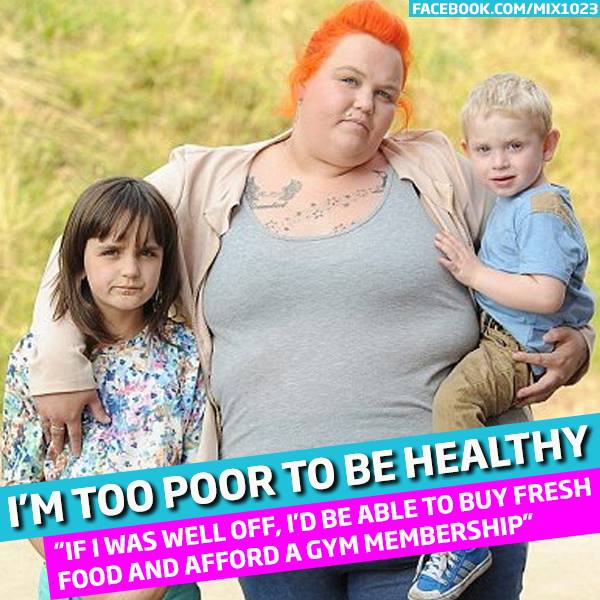
“An obese mother-of-two who lives on benefits says she needs more of taxpayers’ money to overhaul her unhealthy lifestyle. Christina Briggs, 26, says she hates being 160 kilos but she can’t do anything about it because she can only afford junk food. Meanwhile, exercise is out of the question because she doesn’t have the funds to join a gym.”
Unemployed Christina gets £20,000 in benefits a year and lives in a council house with her two children by different fathers, Helena, 10, and Robert, two.
She left school as a teenager after falling pregnant with her daughter following a one night stand.
The family feast everyday on takeaways, chocolate and crisps as Christina says they can’t afford low fat foods. As a result, the mother is currently a dress size 26.
She has been warned by her GP that her health is in danger because of her size – medical complications relating to obesity include heart disease and diabetes.
Christina is desperate not to leave her two children without a mother and doesn’t want her size to take her to an early grave.
But she insists ‘it’s not my fault – healthy food is too expensive’.
She feels her only hope is for the government to give her more money so she can afford to buy fruit and vegetables and join a gym.
She also believes she should be paid to lose weight as that would give her the motivation to fight the flab.
She told the magazine: ‘I need more benefits to eat healthily and exercise. It would be good if the government offered a cash incentive for me to lose weight. I’d like to get £1 for every pound I lose, or healthy food vouchers.
‘If the price of healthy food was lowered that would help, too. I need help, but I need it from the government.’
She added that she can’t get a job to gain more money because she’s needed at home to care for her children, especially as her daughter has attention deficit hyperactivity disorder and issues with her kidneys.
She explained: ‘There’s no way I could get a job. I don’t feel bad about the taxpayer funding my life and my child’s medical problems, because I don’t treat myself or buy anything excessive. I just get enough money to live on – the taxpayers should help fund my diet.’
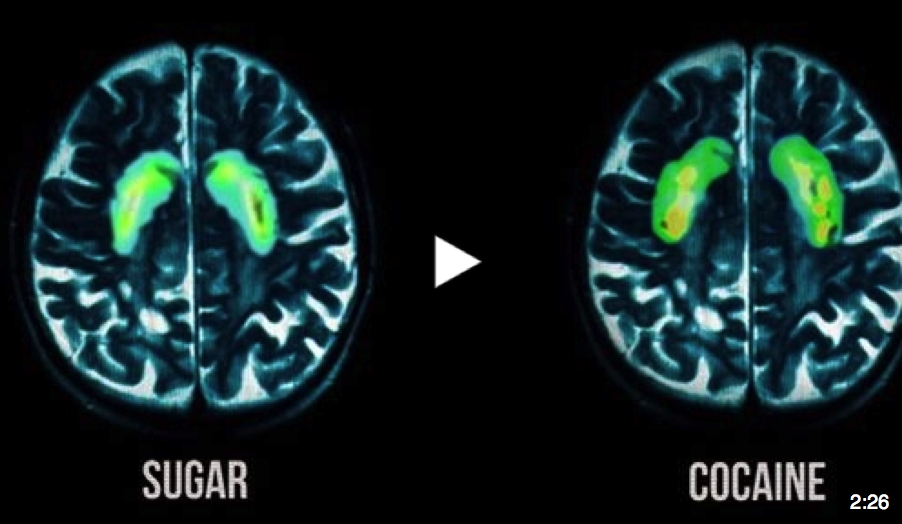
This is the movie the food industry doesn’t want you to see. FED UP blows the lid off everything we thought we knew about food and weight loss, revealing a 30-year campaign by the food industry, aided by the U.S. government, to mislead and confuse the American public, resulting in one of the largest health epidemics in history. From Katie Couric, Laurie David (Oscar winning producer of AN INCONVENIENT TRUTH) and director Stephanie Soechtig, FED UP will change the way you eat forever.
See the film and then join the filmmakers in taking THE FED UP CHALLENGE. Join us in our cause and go sugar-free for 10 days. Get details and sign up for updates here:
http://fedupmovie.com/fedupchallenge/ Worth the watch.
Just came across this post over at jbbardot.com I think everyone should read. You can read the full article here. With the constant onslaught of GMOs, pesticides, and chemicals making their way into the food supply, growing food in your home garden has become less of a hobby and more of a necessity. Many people have now begun to grow a large portion of the fruits and vegetables they consume at home, and an increasing number do so without the luxury of vast amounts of land. Food can be grown in just about anything, and all it takes is a little knowledge and effort. Even if you only have an apartment balcony, there are techniques that can help you produce your own impressive harvest, and this article looks at 5 different ways to grow food in a limited space.
Vertical Gardening
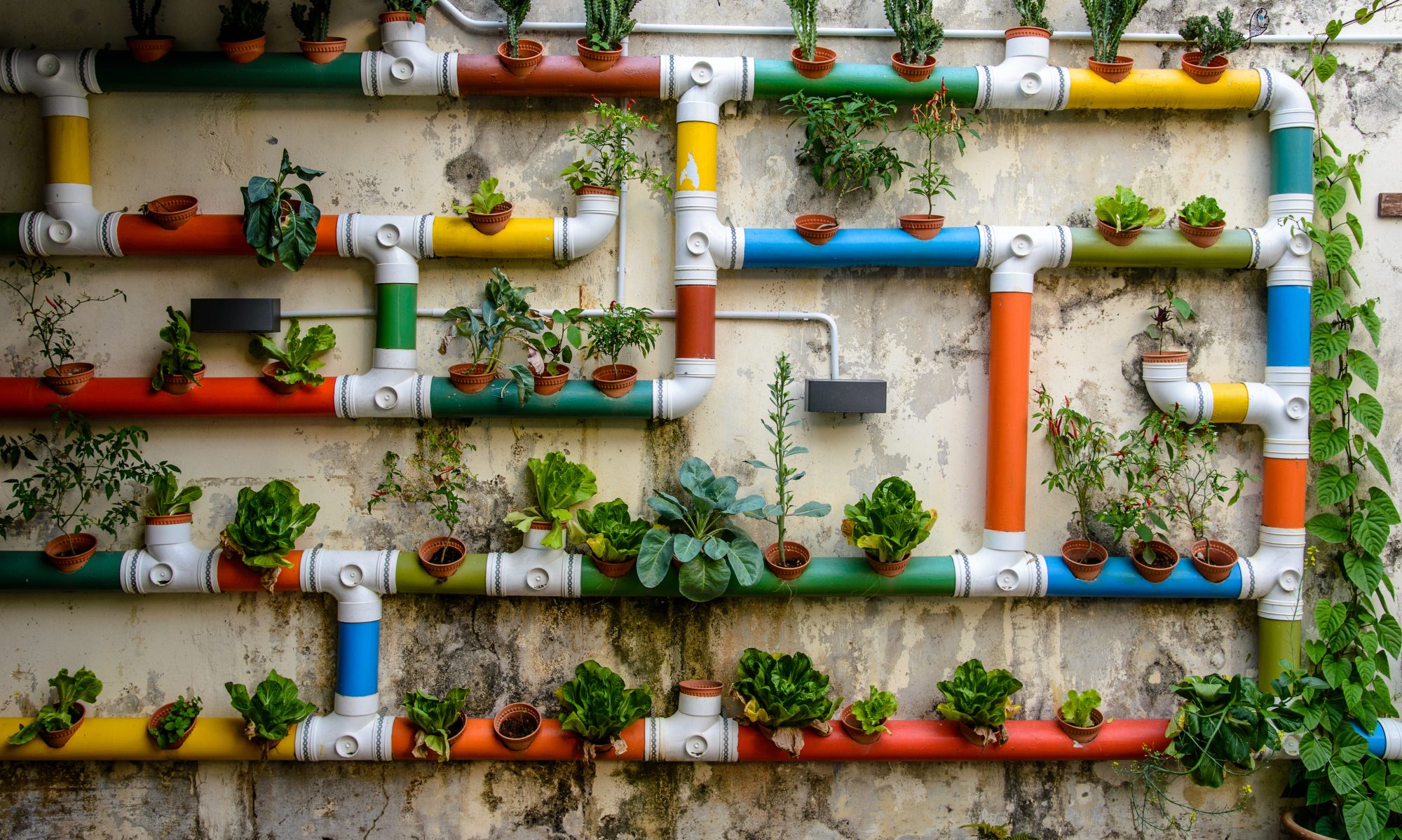
Vertical gardening has become fashionable lately with many interior designers including a ‘green wall’ in office buildings, and they are often used to cover the exterior of museums and galleries to create a ‘living art’ feature. However, their true appeal lies in their effectiveness for growing food, and they are perfect for patio gardens, balconies, or for anyone wishing to maximize their vertical garden space. Most large DIY stores sell container kits that can be attached to a trellis and then attached onto a wall, or you could even make your own containers using 2 litre plastic bottles or empty plastic pots. For those without an outside space, Windowfarms sell a hydroponic indoor vertical gardening kit that feeds and waters itself, and manufacturers claim it can grow everything from herbs to strawberries in just about any climate.
Square Foot Gardening
Square foot gardening found popularity in 1981 when gardener Mel Bartholomew demonstrated how to grow a substantial amount of food in a container or vegetable bed measuring just 4ft x 4ft, and his technique has been emulated in homes all over the world. Square foot gardening involves dividing the space into 16 different squares and planting different seeds in each space. As each crop is harvested a different plant takes its place, and the tallest plants such as tomatoes and leeks are situated at the back. In his book All New Square Foot Gardening, Bartholomew recommends a soil mixture of peat moss, vermiculite, and compost to yield best results, and regular rotation of crops will ensure fertile soil. This method is perfect for new gardeners as it is easy to maintain and needs only a few materials to start up.
Growing Food in Pallets
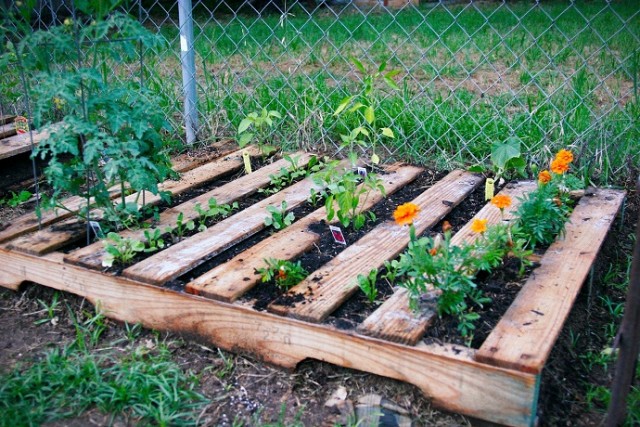
Shipping pallets can be recycled into just about anything, and an entire culture has evolved around creating spectacular pieces of furniture using pallets and other pieces of wood salvaged from shipping yards. Pallets also make excellent vegetable planters and are perfect for shallow root vegetables and succulents. Once filled with soil, the pallets can be layered on top of each other and different vegetables planted around the sides and along the top to maximize growing space. They are also ideal for vertical gardens and can easily be fixed to a wall or fence.
Growing Food in Containers
Container gardening is the most popular choice for balcony or patio gardeners, but you are not limited to the usual plastic tubs. Attach a wire from one end of your space to the other and hang baskets filled with cherry tomatoes, lettuce, cucumber, and herbs to make the most out of your air space. For a quirky touch, search your local thrift stores for some large size men’s work boots and use them to plant herbs and small veggies, or take an old freestanding bathtub and fill it with carrots, spring onions, lettuce, and kale. Other items that can be recycled to use as growing containers include car tires, laundry baskets, tin cans, and casserole dishes. Container gardens are perfect for those who live in cooler climates as they can easily be brought inside when the winter frosts arrive.
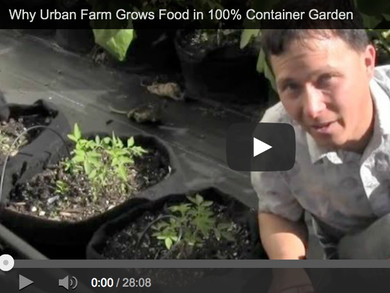
Take a peek at an Urban Garden growing food in containers, right in downtown Fort Lauderdale!
John from http://www.growingyourgreens.com/ goes on a field trip to downtown Fort Lauderdale, Florida to share with you a urban farm who grows food in 100% containers. In this episode, you will learn about Fort Lauderdale Vegetables who grow food in the city and teach about decentralized farming. You will learn some of the techniques they use to grow in a tropical environment that gets lots of rain. You will also discover why smoking is not a good idea around your garden and much, much more.
“Britta Riley wanted to grow her own food (in her tiny apartment). So she and her friends developed a system for growing plants in discarded plastic bottles — researching, testing and tweaking the system using social media, trying many variations at once and quickly arriving at the optimal system. Call it distributed DIY. And the results? Delicious.” –http://www.ted.com