3 Ways to Deal With Slugs in Your Garden

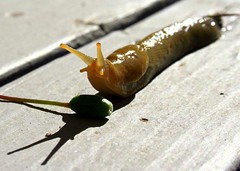
Slugs. They are nasty.

Creepy. Crawly and slimy.

Not much else to say on them besides they are pretty gross.

But how do you rid them from your garden.

This is what Rita asked me.

She asked, “I am having trouble with slugs and really do not feel comfortable using the slug bait called “snail death” any longer. I have free range chickens and I don’t want them to ingest the slug bait either?Any good solutions?”

Here are 3 ways to rid your garden of slugs

Use cornmeal. Slugs love them some cornmeal and it makes them dead.

All you have to do is put a few tablespoons in a glass jar and put that jar on it’s side close to your container garden.

It will attract the slugs. They will eat it and die. Simple and safe way to kill some slugs.

Use beer. Slugs are known alcoholics and can’t resist beer. Dig a small hole and put a shallow dish in the hole. Fill it with beer.

The slugs will fall into the dish of beer and drown in the beer. I know some people that would love to go that way too.

Slug control products. There are also products that you can buy that are non-toxic and safe to use. Safer Brand has a few options for slug control that you can use.

If you sign-up for Safer Brand’s newsletter, you get 10% off all of your purchases. Be sure to sign-up today.

Should You Buy Lady Bugs for Your Container Garden?

Aphids are wiping out your container garden…

…you have tried a DIY spray to no avail.

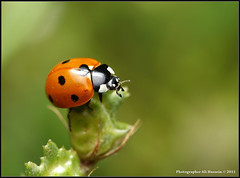
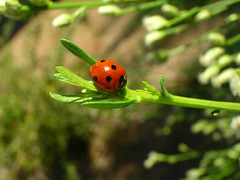
You’ve been told that lady bugs eat aphids and are thinking about buying some for your small container garden.

This is the problem that Catherine is having and sent me this question:

I’ve got several containers on my deck (no self watering though, sadly) and my tomato plants are getting hit pretty hard by red aphids and little white bugs. I tried a mixture of onion and garlic juice sprayed directly on them but to no avail. Should I try to get some ladybugs, and if so, how do I just get a few?

Don’t buy lady bugs!

When people say that they have problems with aphids, the “experts” almost immediately chime in like robots and suggest getting lady bugs.

For someone like you Catherine that would be a total waste, you’d release them and they’d fly away like white doves.

Here’s what I’d recommend since you already attempted you homemade spray:

  1. Buy an organic pesticide spray such as EndAll™ from Safer Brand. It’s OMRI listed and safe to use.
  2. When planning for next season, plant herbs and veggies that will naturally attract the ladybugs such as dill and cilantro.
  3. Insect infestations are also usually a sign of a weak plant. You might want to feed the soil more fertilizer to build up it’s strength.
  4. Save your money on the lady bugs, Catherine, and try one of these other solutions.

    I know that aphids are a huge pain in the ass. They’ve wiped out a few of my containers in the past.

    Your turn

    In the comments below, let me know what insects problems you are currently having in your garden and what ridiculous advice have you received from experts to remedy the situation.

    Image courtesy of علي الحسين on Flickr.

4 Common Garden Insects & Diseases

Are you noticing holes in the leaves of your garden?

Some foreign powdery substances that seem to be spreading?

It’s going to happen eventually. Nobody’s garden is going to be perfect. No matter what you read.

There is no need to beat yourself and think that you’re a failure. That couldn’t be further from the truth.

Lets take a look at what might be eating your garden, shall we?

Here they are…

The four common vegetable garden insects and diseases. In each of the posts listed, you’ll learn how to identify, common signs of and how to defend against them.

  • Cabbage worms. Learn the tell tale signs of whether you have cabbage worms and how to get rid of them.
  • Aphids. You might be noticing some tiny little green, red or red bugs on the underside of your leaves — those are aphids.
  • Ants. You will definitely notice if you have ants. It’s not like there are one or two of them.
  • Powdery mildew. Is there a white chalky substance on the leaves of your plants? That’s powdery mildew.

If you are looking for products that can are non-toxic (OMRI listed) that can help with nearly all of these problems, I’d recommend checking out SaferBrand and their line of organic insect control products.

Your turn

In the comments below, let me know which of these problems you are currently facing in your garden.

Image courtesy of Jeff Kubina on Flickr.

5 Signs That Cabbage Worms are Attacking Your Garden

By Justin Emig
Associate Brand Manager, Safer Brand

For most of the country, Spring has DEFINITELY sprung…

…and with the onset of Spring, comes the onset of our unwelcome garden pests.

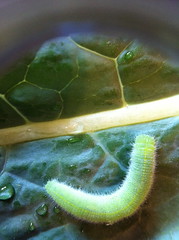
The garden pest that has caused the most concern for organic gardeners in recent years has been the cabbage worm.

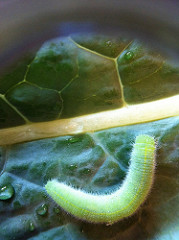
There are several ‘types’ of cabbage worm which include the Imported Cabbage Worm, Cabbage Looper, Cabbage Webworm, and the Leaf Miner.

Regardless of the type, us interested in keeping an organic garden just want them gone!! Here are 5 signs that you might be infested with our green pests and best of all, how to get rid of these ferocious vegetable eaters.

Here are 5 signs that your garden might be infested with cabbage worms. — Tweet This.

Signs you have cabbage worms

1. You are growing their favorite food

As you can guess from their name, cabbage worms primarily attack plants in the cabbage family, but are not exclusively cabbage feeders. Plants that cabbage worms find the most tasty are:

  • Broccoli
  • Cauliflower
  • Brussels sprouts
  • Collards
  • Kale
  • Turnip greens
  • Radishes
  • Other cabbage greens

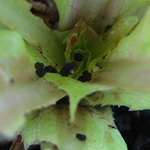
2. You have holes in your plants

Since cabbage worms are such voracious eaters, as little as 2 or 3 worms on your plants can spell disaster for the overall health of your broccoli or other plant.

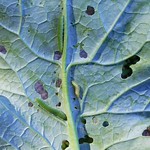
Common signs will be holes in your leaves. A simple google search can connect you to many pictures of cabbage worm damage.
3. You notice dark green droppings on your leaves

A tell-tale sign that you are becoming infested with cabbage worms are their droppings. When you start to notice dark green droppings on your leaves, inspect the underside of your leaves as that is where cabbage worms tend to lay their eggs.

4. A lot more butterflies present

Since caterpillars are in essence the larvae stage of caterpillars, if you start to notice more butterflies hanging around your garden, chances are, you have an infestation of cabbage worms or if you experience one of the previous symptoms, it might be too late.

5. Time of year = Spring

Spring is the time of the year that cabbage worms have awaken from their Winter slumber and are now in search of food and laying their eggs.

Organic control of cabbage worms

If you have experienced this infestation in the past or for those proactive gardeners who are getting prepared for the already started 2012 gardening season, the most common and popular organic control for cabbage worms revolves around the use of bacillus thuringiensis or BT.

This natural bacteria eliminates cabbage worms through ingestion. One of the most popular BT products is Safer® Brand Caterpillar Killer with BT and is available in an 8oz concentrated formula or in Safer® Brand Garden Dust which is a powder formula and is OMRI® Listed.

Your turn

In the comments below, let me know if you have noticed cabbage worms in your garden.

Photos courtesy of
Top: OSU Master Gardener on Flickr
Holes: florence_craye on Flick
White Powdery Coating on Leaves? Yup, That’s Powdery Mildew

There is a white chalky substance on the leaves of your plants.

Your container garden looks like Pablo Escobar and his boys had a party in it…

…What happened?

Don’t worry that white powder is not cocaine, it’s powdery mildew.

You’ll notice that the powdery coating is on both sides of the leaves and will eventually start to spread.

Those leaves will eventually turn yellow and die. It can also cause the leaves to twist and turn.

Your container garden looks like Pablo Escobar and his boys had a party in it. What happened? — Tweet This

Vegetables commonly affected by powdery mildew

  • Cucumbers
  • Peas
  • Squash
  • Tomatoes

Dealing with powdery mildew

If you are first starting to plant, then one effective way to prevent powdery mildew is to allow for air circulation by pruning the leaves, especially at the bottom. This is because excess moisture is a common cause.

Once powdery mildew strikes, you can combat it with a homemade spray using baking soda and water.

There are also organic fungicidal sprays that you can use as well to help, such as Safer Brands Garden Fungicide.

[vimeo clip_id=”40127360″ title=”0″ byline=”0″ portrait=”0″ width=”525″ height=”393″]

Win a Safer Brand Organic Insect & Fungicide Gift Pack

Lucky for you I am now running a contest on Facebook (through April 12, 2012) that includes the Garden Fungicide as part of a gift pack. Check it out and enter today.

Your turn

After you’ve entered the contest, in the comments below let me know which plant of yours has been affected with powdery mildew.

Image courtesy of Jeff Kubina on Flickr.

What is The Power of OMRI®

This post was written by SaferBrand.

Not all ‘Organic’ Products are created the same…

With the rise of organic gardening, comes the rise of products claiming to be the ‘best’ organic gardening solution.

The retail landscape in organic gardening is daunting…

…there are countless products all claiming to be organic or natural and solve the problem you are experiencing in your organic garden.

It seems that every chemical company has a set of organic products they are trying to convince you to buy.

How are you to know what products are truly organic and able to cure your problem without leaving potentially harmful residuals?

Seems every chemical company has a set of organic products they are convincing you to buy. — Tweet This

This where OMRI® comes in…

OMRI® is the Organic Materials Review Institute and products that bear the OMRI® Listed seal have gone through a battery of tests.

OMRI® tests the raw materials used in product production, the production process and facility and the end result, among other tests to validate if the product meets their strict standards, needed to wear the OMRI® Listed seal.

Why do most products on the shelves at your local garden center not have an OMRI® Listed seal?

That is because those products can not obtain the prestigious seal. If you want a truly organic product, you need to look for the OMRI® Listed seal before purchasing.

Just as you would look for the USDA Organic seal prior to purchasing organic produce, the same applies to your organic chemicals, but with the OMRI® Listed seal, being your governing seal of approval.

Safer® Brand and OMRI® Listed products

Safer® Brand boasts more OMRI® Listed products then any other company.

By far!!

Safer® Brand possesses over 50 SKUs that possess the OMRI® Listed seal where the next closest competitor possesses 6 SKUs.

Not only does Safer® Brand have more OMRI® Listed products then any other company, Safer® Brand was the first company to patent Insecticidal soap.

A staple in organic gardening. Safer® Brand continues to innovate in organic gardening by being the first company to patent a true 3-in-1 product, as well as the first and only company to patent an organic insecticidal soap, organic pyrethrin, and neem oil combination (EndALL™).

The next time you are looking to eliminate unwanted pests in your organic garden…rely on OMRI® and rely on Safer® Brand to eliminate the pests, without leaving potentially harmful residuals.

Your Turn

Share this post with your friends and family that are looking to rid their garden of pests without using toxic chemicals.

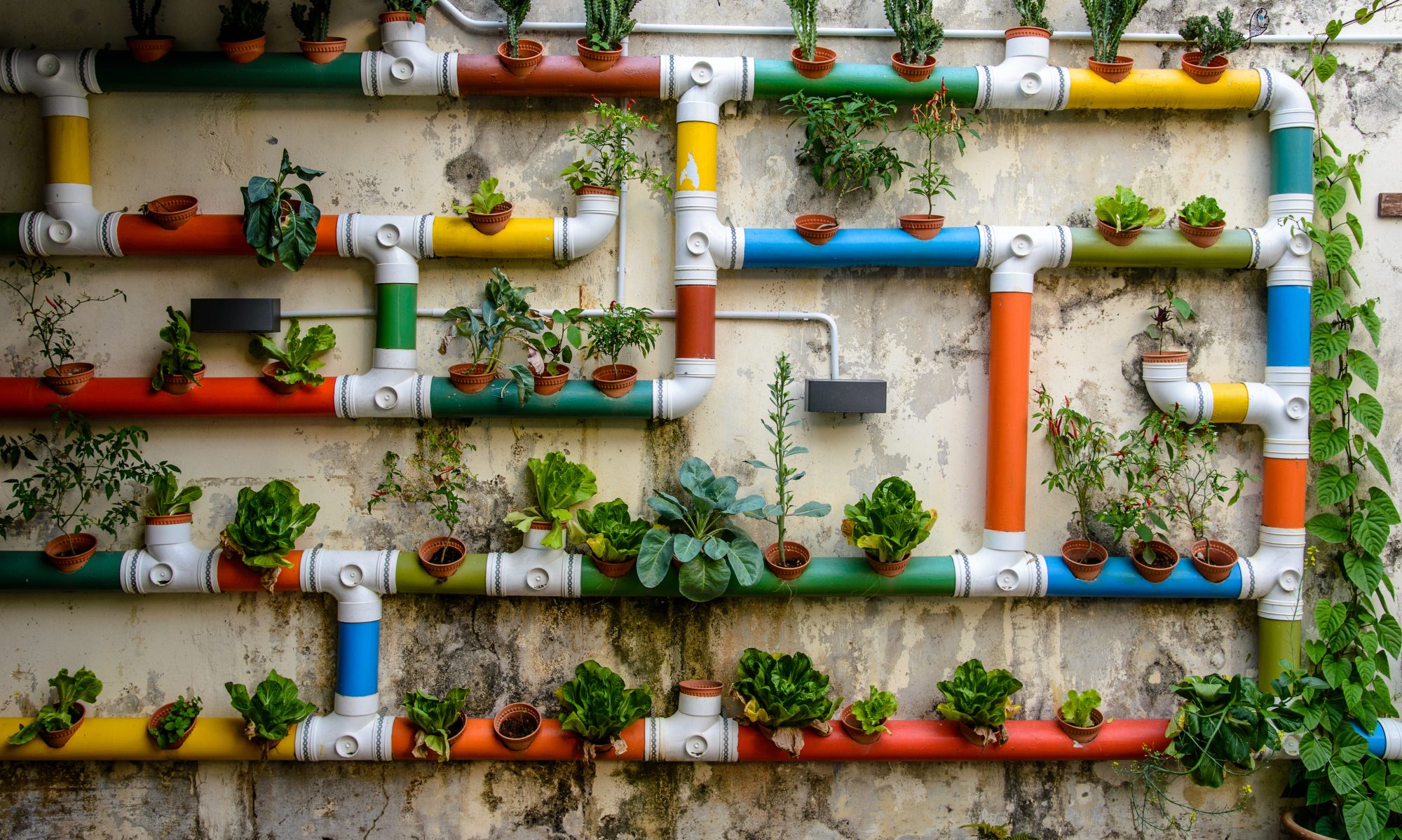
Plant These Herbs & Veggies to Attract Beneficial Insects to Your Urban Garden

You have insects in your urban garden…
…and are looking for practical advice and a non-chemical way to treat them.

I’m with you on that.

Some of the worst advice that I’ve received about controlling insects is to buy beneficial insects and release them into the garden.

Really?

Ladybugs have better things to do then what our urban gardens have to offer.

Instead of buying beneficial insects, grow herbs and veggies that will attract them.

Instead of buying beneficial insects, grow herbs and veggies that will attract them. — Tweet This

A Practical Solution to Attracting Beneficial Insects

Grow something that will serve two purposes. One for you to eat and one to attract the beneficial insects.

This isn’t a post of every single plant that will attract every single insect. Those aren’t useful.

It’s a post that will attract two beneficial insects that will help out most urban gardeners – ladybugs and lacewings.

Both of them will take care of aphids and other soft-bodied insects.

What You Can Plant to Attract Ladybugs & Lacewings

Here is a short list of herbs and veggies that you can eat and use to attract these good guys:

  • Coriander/Cilantro
  • Dandelion
  • Dill
  • Fennel
  • Lady bugs will also be attracted to Marigolds

There are billion other flowers that can be planted to attract these and other beneficial insects, but want to help you really maximize your small space.

[vimeo clip_id=”38064242″ title=”0″ byline=”0″ portrait=”0″ width=”525″ height=”393″]

Your Turn

Which of these plants will you start growing to attract these beneficial insects to your urban garden?

Photo courtesy of marakawalv on Flickr

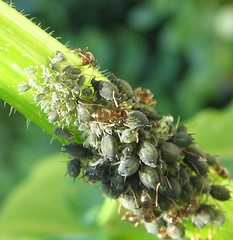
Tiny Green Bugs on Your Plants: Must Be Aphids

Noticing tiny green bugs on your plants…
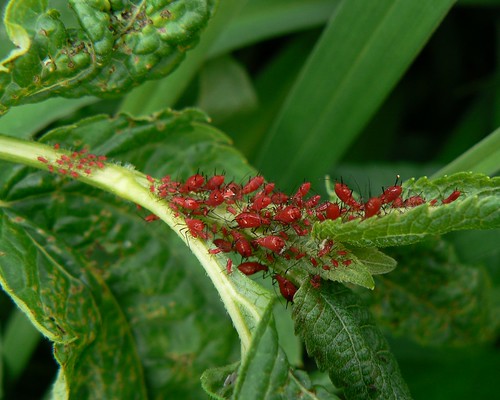
..But not sure what they are?

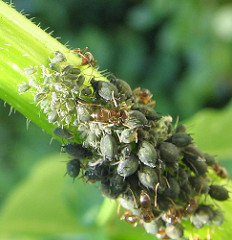
Those annoying little bastids are aphids.

There a billion different varieties of them, but what’s that matter to you?

You just need to know what the are.

In the rest of this post, I’ll share some characteristics, pictures and ways to get rid of them.

Here we go…

Those annoying little green bastids in your garden are aphids. — Tweet This

Characteristics of Aphids

  • The larger ones are 10mm. That aint’ very large.
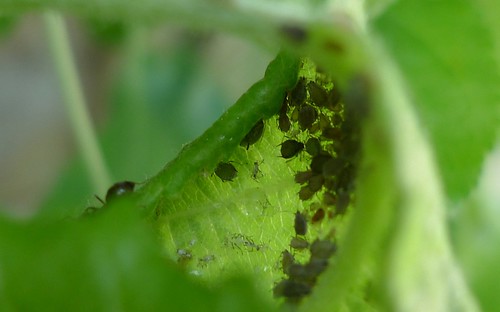
  • You’ll find them on the underside of leafy greens.
  • They hang out in clusters.
  • Besides green, they can be black, brown or pink.
  • Aphids are soft bodied.

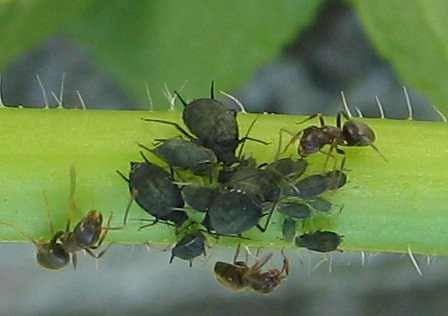
Pictures of Aphids to Help Identify

How to Get Rid of Aphids

Since aphids are soft-bodied you can squish them, but that isn’t a great use of time. Here are three other options for you.

Keep your container garden ant free. Fern from Life on the Balcony wrote a post on how this is a preventative method because ants help to shuttle aphids around. She goes into further depth on this post on her site.

Make a homemade spray. Boil up some water with onions, garlic and cayenne pepper. Let it steep for a bit, then spray down the aphids and undersides of leaves.

Buy an organic pesticide. One solution for an organic pesticide is from Safer Brand (one of my sponsors). Their EndAll organic insect killer will help to solve most of your insect problems and is OMRI listed.

Before you say how it’s going to kill the beneficials as well, I asked them the same question and here was their response.

EndALL is also safe to use around beneficials as if you follow the usage site instructions, you will not harm beneficial insects. Pure neem oil has a history of harming bees if sprayed directly but if you treat in morning and late evening, bees do not feed during those times and will not be harmed. We use azadiractin in our EndALL product which is an extract of the neem seed and is much more gentle then straight neem…but with the same efficacy

[vimeo clip_id=”37922700″ title=”0″ byline=”0″ portrait=”0″ width=”525″ height=”393″]

Your Turn

Now that you can identify those little green bugs on your plant, in the comments below let me know which of your veggies aphids have attacked and how you are going to get rid of them from now on.

Main photo courtesy of Newtonia on Flickr.

How to Deter Ants From Your Garden (or Anywhere) Using Coffee Grounds

There has been a bit of an issue on my balcony garden lately with some ants. One of the swiss chard containers dried up and ants have gotten to it. I’ve been using coffee grounds to help deter them.

I’m not sure why exactly this works, but when the ants go near the grounds, they freak out and won’t cross them.

The first thing that I did was line the bottom of the container with the grounds. Then I had to follow the trail of ants to where they were going, which was into holes that were at the bottom of one of the rails.

A few coffee grounds were sprinkled around the rail, but also into the holes which the ants were using. After grounds were sprinkled into one of them, I watched as they went to the next and filled that one too. Grounds were put directly into the holes, otherwise they would just go around it.

Since putting the grounds down, I’ve definitely noticed a decrease in the ants.

Bonus Tip: If you don’t drink coffee, you can hit up your local coffee shop or cafe. If you ask, they will usually give you the grounds for free.

What are some other ways to deter ants from your garden?

Cabbage Worms Ate My Collard Greens. What’s Eating Your Garden?

When I was checking out my balcony garden, I noticed that one container looked pretty empty. After taking a closer look, I thought to myself…when did I plant aloe?

Turns out it wasn’t aloe, but it was a container that used to be collard greens? Cabbage worms went to town on them and completely devoured them. By the time I noticed, it wasn’t even salvageable so I let them have their way.

I’ve had pest problems before with the aphid infestation and have also wrestled with cabbage worms.

What pests are eating your garden? How to do you combat them without using toxic pesticides?

Aphid Infestation Wiped Out My Purple Kale

A few weeks ago the cabbage worms killed the container that had the oak greens in them. This week an aphid infestation has wiped out the container with the purple kale.

The natural garden pest control worked well for a bit, but I couldn’t keep up with them. There were massive gray clumps of them on the plant each time I went out there.

When I had my fire escape garden in New York City, I had no insect problems at all. In the two months that I’ve had my balcony garden, the insects have already wiped out two containers.

I still refuse to use any kind of pesticides or nasty ass chemicals. What I’ll have to do is buy some netting and make row covers to keep the insects out.

Between killing all the seeds and two containers falling victims to insects, I’m not having the best of luck in LA so far, but I’m still gonna keep on growing.

httpv://www.youtube.com/watch?v=nr6PEl_KT90

Natural Garden Pest Control Inspired By Mr. Miyagi

I had my first problems with garden insects a few weeks ago. I wound up wrestling cabbage worms and fighting aphids.

Since then, it got me thinking…What would Mr. Miyagi do when faced with cabbage worms and aphids?

It came to me. Mr. Miyagi would use natural garden pest control, so would I.

I’ve been using chopsticks to pick the cabbage worms off the purple kale and toss them off of my balcony garden. The damage that’s been done is pretty serious. They’ve managed to chew up most of the leaves. The kale is looking pretty weak and beaten up. On a good note, I haven’t seen cabbage worms in a few days.

For the aphids I thought, “Spray on. Spray off.” So I made a homemade organic aphid spray using Dr. Bronner’s soap. I’ve been spraying down the plants once a day with the soap, then spraying it off with some water afterwards.

That’s how Mr. Miyagi inspired for my natural garden pest control.

httpv://www.youtube.com/watch?v=M7Q3JM0aO9I

Wrestling a Cabbage Worm and Aphids

I was tending to the balcony garden, taking care of the self-watering containers and spraying down the seeds when I noticed a big bit hole taken out of a romaine lettuce leaf.

When I took a closer look at the leaves, I saw a little green critter on the back of a leaf. Pretty sure it was a cabbage worm that was going to town and munching on my stuff.

It took a few attempts to get him (of course it’s a him, right?) off of the plant. A knife was used to get him off the leaf and he fell into the container. I was having a bit of trouble getting him out of the container. Finally, I scooped him out with a piece of paper and tossed his ass off the balcony.

Then I noticed one chilling in the oak greens as well. I got rid of that one much quicker.

Once I got rid of those two little bastids, I was poking around for some signs of more. I noticed little whitish/green bugs on the romaine lettuce as well that I believe are aphids. I just used a water spray bottle to get rid of them.

[flickrset id=”72157623931604197″ thumbnail=”square” overlay=”true” size=”medium”]

Not sure if this is something that I should be more proactive about in preventing. I could just keep checking each morning and wrestling the worms or I could make a garlic or pepper spray to use on the plants to combat the pests.

What’s your thoughts on the best way to handle this? Check every morning? Garlic spray? Pepper spray?

httpv://www.youtube.com/watch?v=VZUotGCoCh0