

4 Questions to Ask Yourself Before Adding Animals to Your Backyard Farm

goat

Fresh eggs, sharp goat cheese, rich honey — raising animals definitely comes with it’s own set of benefits. However, if you’re looking to supplement your farming efforts with a bit of animal husbandry, there’s much to know before you get started. No matter what animal (or animals) you’re looking to keep, ask yourself the following questions:

Is it Legal?

Farming livestock is regulated at the local, state, and federal levels, and each animal type faces unique regulations. The first, of course, are the city and county codes. Contact your local zoningboard or zoning office to find out how your property is zoned. Once you know your property’s zoning category, you will identify the permitted uses for that category. For instance, if your zoning category is agricultural, it’s quite likely you’ll be permitted to raise animals. If your property is zoned as residential, you should expect certain restrictions.In addition to zoning regulations, you may also run into restrictive covenants. A restrictive covenant is a clause in your home’s deed imposing a constraint on how you’re allowed to use your property; and is designed to protect the value and enjoyment of adjoining land. These
covenant are commonly enforced by a homeowners association. If your property is controlled by a restrictive covenant (or other homeowners association rules), you’ll need to determine if there are conditions surrounding the keeping of farm animals. If there are rules against animals, there are some clever ways to create an HOA friendly urban farm if you get creative.If all else checks out, it’s common courtesy to speak with your neighbors before bringing any animals onto your property. You’ll find your neighbors will be far less angry if they’re aware of what’s going on — and you can always sweeten the deal by offering up eggs or honey as a way to thank them for their patience. It’s far easier to keep your neighbors both informed and happy than to deal with being taken to small claims court if they should decide your animals are a nuisance.

What Predators Will You Be Dealing With?

It may surprise you to know that animals kept in a suburban setting will face predators. Depending on what region you live in, coyotes, foxes, raccoons, opossums, skunks, birds of prey, snakes, and even domestic cats and dogs are all dangers to be on the lookout for. Start by finding out what urban wildlife exists in your area. Then, research and identify the best way to protect your animals from said predators. Certain predators can be repelled with nothing more than a solid fence. Others, such as raccoons, are incredibly clever, and can get through even the most reliable security methods. It’s important to prepare yourself for loss. Sometimes, no matter how hard you work to protect them, you lose one or more of you precious animals. It’s never easy, but it very much a part of animal husbandry.

Can You Contain Them Properly?

Containing some animals is far easier than others. Chickens, for instance, need little more that asturdy coop and run. Goats, however, will amaze you with the lengths they’ll go to to break out of their pens. Containment serves two distinct purposes, A.) keeping your animals in one area — and away from anything they might eat/harm, and B.) keeping predators out. While some containment systems serve the first purpose well, they may not focus enough on the second. It’s incredibly important to approach containment on both fronts in order to keep your animals safe and healthy.

When building coops, pens, and fences, keep the following tips in mind:

● Goats will climb on anything — so keep toys, buckets, trees, etc. away from the fence line.

● Goats tend to rub on walls and fences, they need to be extremely sturdy.

● A good rule of thumb for goat fencing is that if the goat can get their head through it, theycan get their body through it. Keep openings small.

● Goats have been known to open hook and eye, lever, and bolt latches. A padlock is the best option to keep them in — just make sure it’s placed on the outside of the gate.

● Hardware cloth (wire mesh) is the best option for chicken runs as it protects against small and medium sized predators such as rats, snakes, minks, and raccoons.

● Chicken fences should be at least five feet tall, and covered with wire mesh fencing or game-bird netting to discourage birds of prey from grabbing your chickens.

● Poultry netting placed around your apiary will deter skunks, as they don’t climb fencing like other members of the weasel family.

● For all animals, solid fencing is almost always better than netting.

● Electric fencing provides added protection against predators, and can be use alone or in conjunction with solid fencing.

● When used alone, electric fencing should reach at least shoulder height on the animal it contains to prevent them from jumping over the fence.Containment will be one of the most trying aspects of raising animals. You will have to adapt it tochanging needs, and make adjustments as your animals puzzle their way out of their pens.

Can You Commit to Their Care?

Last, but certainly not least, is the care aspect of animal husbandry. Chickens and goats live up to ten years, so keeping them calls for a serious investment of both time and money. Food, containment, accessories, and protection from weather and predators will cost a pretty penny. Also, much like cats and dogs, they will require periodic veterinary care for vaccinations, illness, and injuries. Outdoor animals require dedicated, consistent care, even when soaring temperatures, rain, snow, or ice making going outside a nightmare. And since they require daily care, you’ll need to arrange for someone to come to your house and care for them when you’re on vacation or awayfrom the house for a long period of time. While adding animals to your backyard farm can result in joy as well as fresh foodstuffs, it can also end in frustration and heartache if you’re not sufficiently prepared. Do your research, know what’s required, and plan for every possible eventuality. Happy farming, friends!

Liz Greene hails from the beautiful city of trees, Boise, Idaho. She’s happiest when cuddling with her dogs, eating cheese, and re-watching her favorite Marvel movies. You can follow her on Twitter @LizVGreene.
Tackling Urban Farming with a Mobile Greenhouse Concept

gg_6_sarah_hitchens_bsu

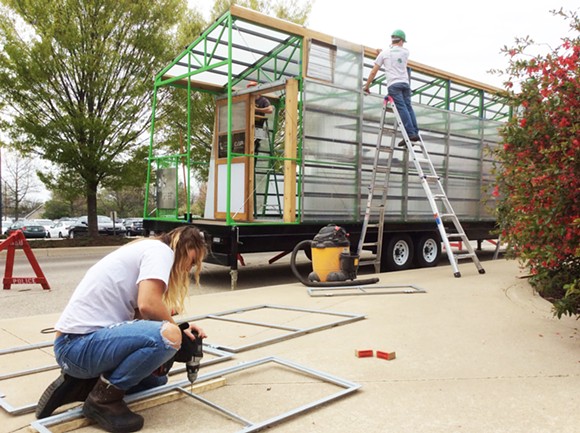
People all over the world are beginning to understand the importance of having a connection with the land and farmers who are growing your food. Butler University has designed a new concept which is “designed and constructed by a group of fourth-year architecture students at Ball State University, and is the first fully automated mobile greenhouse.”

“Funded by a Butler University Innovation Fund Grant, the $50,000 greenhouse prototype was created because of a building code issue. “The farm is in a flood plain, so we couldn’t build a permanent structure,” Gray explains. Realizing that many urban farms face land access challenges that could be appeased by a mobile growing platform, the college embraced the idea as an educational opportunity and a model for others.”

To read the entire article, visit: “NUVO.net

Target is Launching In-Store Vertical Farms for Fresh & Ultra Local Produce

target-vertical-indoor-farm-mit-open-ag-1580x530

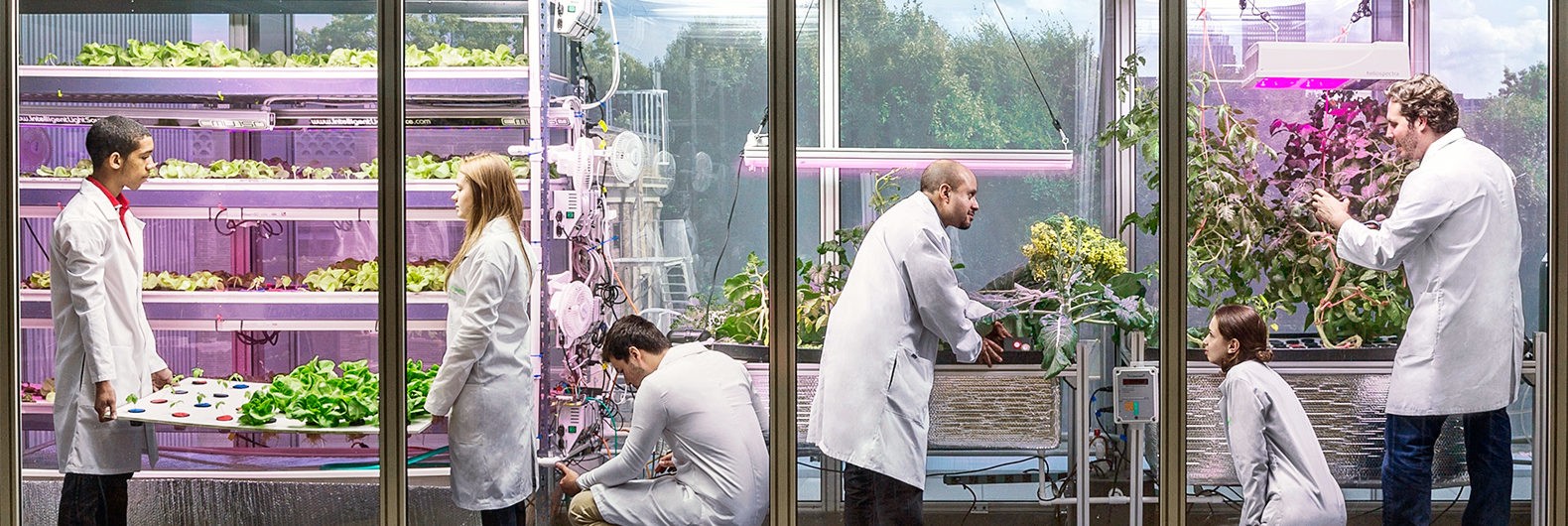
“Consumers are increasingly demanding access to locally grown produce – even at big box stores. Target heard that call, and they’re answering by offering the freshest and most local produce a customer could possibly want—by installing vertical gardens to grow vegetables and herbs right inside stores. The effort will begin with a series of trials in Spring 2017 and, if successful, Target locations across the country could be growing crispy, leafy greens before you know it.”

To see the rest of this story, visit: “Inhabitant.com

Get Your “Cool-Season” Vegetable Garden Off To a Great Start – Join the NEW UOG, Monthly Seed & Garden Club TODAY!

uog-gif
Last Chance! Must join before November 4th if you’d like to receive a shipment this Month. Shipments go out November 5th. Get seeds & garden supplies delivered to you at just the right time of the year.

🌱Fully customized based on your grow zone – garden specs – sunlight – and more. Get your fall and winter garden off to a great start with a hand-selected, customized selection of seeds for your area and garden type.

🌿Join now: https://urbanorganicgardener.cratejoy.com/

🌱This is the easiest way to grow an organic garden all-year-round with totally raw un-treated GMO-FREE seeds. We will guide you and your family on your way to living a healthier and more self-sufficient lifestyle. Join UOG today and let’s grow something together.

9 Strategies for Growing More Food in a Small Space


Here are nine easy tips for growing more food in a small garden:

1) Grow in Beds, not Rows
2) Optimize Spacing between Beds and Plants
3) Grow Vertically
4) Succession Planting
5) Interplanting
6) Grow in the Shade
7) Grow Edible Plants in the Front Yard
8) Grow Microgreens
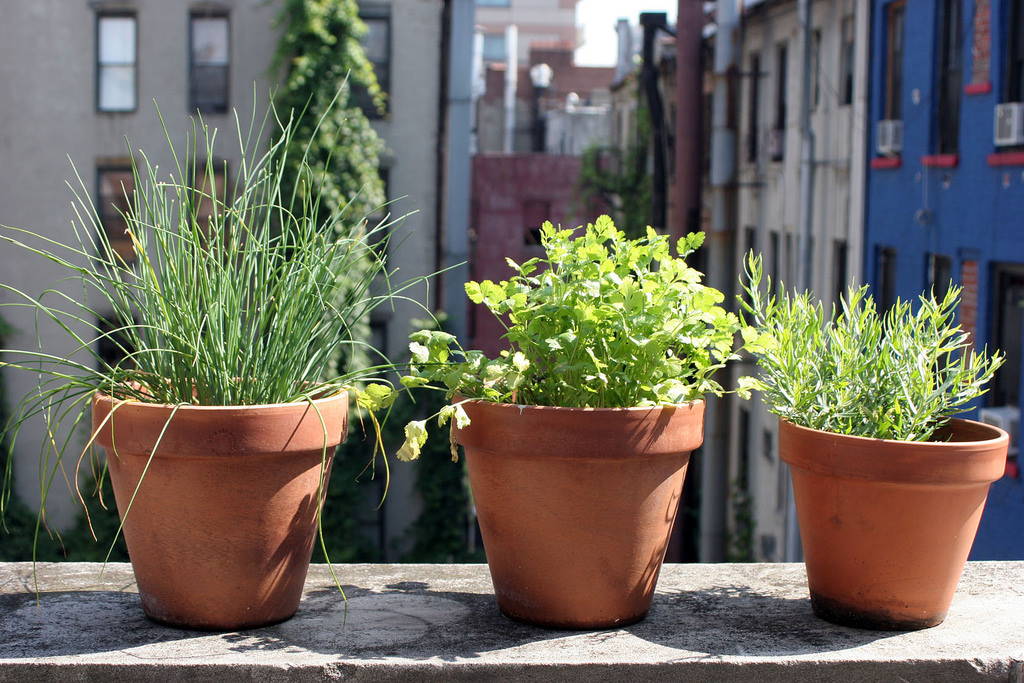
9) Grow in Pots & Containers

Urban Farming at Work in Tokyo

“In a country with very little arable land (only 12% compared with 20% in the US), in one of the most populated cities in the world, one company chose to give up 43,000 square feet of valuable workspace to grow food. In the Tokyo headquarters of human resources company Pasona Group they grow 200 species of fruits and vegetables and even rice that are harvested and served to employees.

The indoor urban farm doesn’t just provide food, but by mixing work space and farm space, the company tries to provide a healthier quality of life for employees. Here green isn’t just a window dressing: immediately upon entering the building you walk over a 1,000-square-foot rice paddy, continue through an okra field and you enter the vine-covered “tomato guest room” or the “vegetable factory” filled with hundreds of hydroponic heads of lettuce. On the second floor, fruit trees form partition walls between meeting spaces, bean sprouts are grown under benches and herbs grow on shelving along the walls.

Even the outside of the building is covered in plants helping keep the building cool in summer and warmer in winter. According to the farm’s designers Kono Designs, it is the largest and most direct farm-to-table of its kind ever realized inside an office building in Japan.

View the original article here: “https://faircompanies.com

WHY URBAN FARMING MAKES SO MUCH SENSE FOR NEW YORK CITY

tmg-article_default_mobile
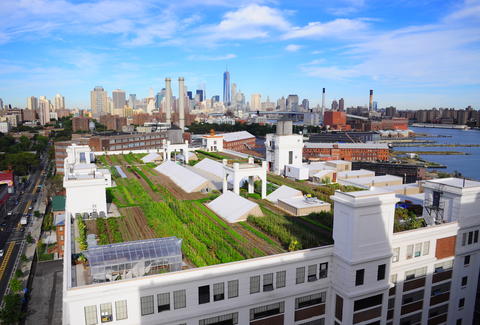
The Brooklyn Grange is an urban farm that sits upon a high-rise in Brooklyn Navy Yard. Teamed with it’s sister farm in Long Island City, Queens, the two farms are producing more than 50,000 lbs. of fresh vegetables and herbs in just 2.5 small acres of space.

“This is truly seed-to-plate agriculture, with no use of fossil fuels,” says Anastasia Cole Plakias, Brooklyn Grange’s vice president and founding partner, of the latter program. “People walk over from where they live, and go home with produce that was picked that morning.”

To read the rest of the article, visit: “Thrillist.com

An All-Volunteer Squad Of Farmers Is Turning Florida Lawns Into Food

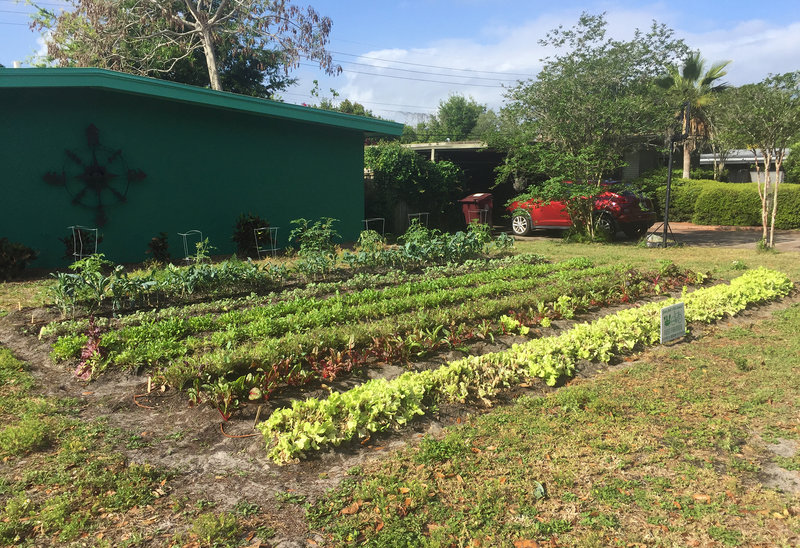
fleetfarming1_custom-d1153632de5bb1cee75cfc521d2e7efb386eab44-s800-c85Florida homeowners are known for having a propensity for upscale, tropical landscapes. They pride themselves on lush green lawns in front of their homes.  One man however, Chris Castro, is turning up the grass in his neighborhood and making mini urban farms.

“His program is called Fleet Farming, and it’s starting off small, with 10 of these yard farms. Most of them sit smack in the middle of the front yard. Lawns are a thing here. Urban farms? Not so much. But so far, no neighbors have complained.”

To read the entire article, visit: “NPR.org

$80,000 on Half An Acre Farming Vegetables – Profitable Mini-Farming with Curtis Stone


“In this presentation you will learn how small scale farming can be used to create a high-income producing farm or improve your current operation.

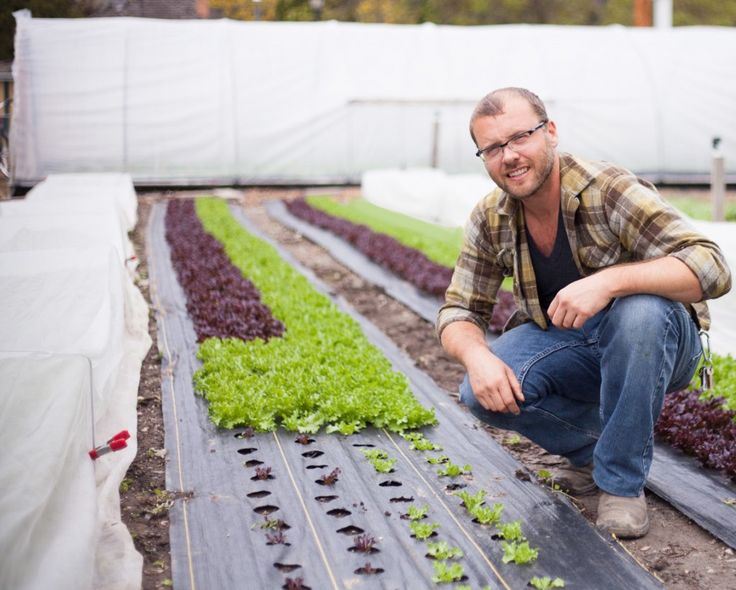
See how profitable urban farming works as farmer Curtis Stone shows you how he assembled a multi-locational urban farm that grossed $20,000 in its first year and $55,000 in it’s second.

He’ll describe the design of his farm, equipment used, planting plan and target markets.

Though records are not yet kept on how quickly farms can get in and off the ground, Curtis got his farm up and running and generating income in 6 months, which has to be some sort of record. It certainly gives new meaning to the term “fast food”!

Curtis Stone is the owner/operator of Green City Acres, a commercial urban farm based out of Kelowna, BC.

Farming under an acre of land on a collection of urban plots, Green City Acres grows vegetables for farmers markets, restaurants, and retail outlets.”

What Urban Farming Looks Like, Across America

“By the end of the 20th century, nearly 80% of Americans lived in urban areas. And they no longer knew who grew their food. Then something happened. Across America, an urban farming movement has begun. Whether it’s on city rooftops, beside freeway off-ramps, in vacant lots, and even in their front yards, when people like Novella Carpenter in Oakland, California grow food in cities it reconnects them to where their food comes from.”

What’s Eating My Plants? [Info-Graphic]

what-eating-my-plants

10 Leaf-Eating Bugs and How to Stop Them From Destroying Your Garden

Gardening is such a rewarding experience. But it can also be absolutely devastating when all your hard work goes to the bugs.

There are 10 main munching culprits to look out for to protect your plants from getting destroyed before they can produce the flowers and vegetables you can enjoy. Safer Brand created the below infographic detailing how to tell which bug is eating your plant and natural ways to get rid of them without spraying harmful chemicals.

IMAGE URL: http://www.saferbrand.com/blog/wp-content/uploads/2016/08/what-eating-my-plants.jpg

10 Leaf-Eating Bugs

  1. Leafminers, which are the larvae of flies and beetles, often will leave maze-like tunnels in a leaf. They are most harmless but if you want to get rid of them for aesthetic reasons you can use neem oil.
  2. Sucking insects-like box suckers, aphids, squash bugs, and spider mites- often will leave needle-sized holes in a leaf. While a few will hardly be noticeable, enough sucking insects can gradually kill your plants by sucking all the nutrients out. Spray an insecticidal soap on both sides of the leaves to keep those sucking insects away.
  3. Vine weevil larvae in the soil will eat a plant’s roots till it collapses. Your plant may seem like it’s suffering from a nutrient deficiency at first so be sure to check the soil for any creepy crawlies hiding there. You can soak the soil in insecticidal soap or dust plant leaves with diatomaceous earth to get rid of the adult vine weevils.
  4. Caterpillars are often the bug that comes to mind when gardeners see holes eaten out of their plants’ leaves. Caterpillars can be a pain to get rid of. The easies method is to brush leaves with B.T. on a dry night. B.T. will kill the caterpillar.
  5. Sawfly larvae (which look like caterpillars) leave transparent holes in leaf tissue. Use insecticidal soap or horticultural oil on the top and bottoms of leaves to get rid of them.
  6. Bees are both a blessing and a curse. We need bees to pollinate plants but they can sting and leaf-cutting bees can even cause damage to your plant’s leaves. However, the missing half-moon pieces shouldn’t kill your plant.
  7. Earwigs are common leaf-eating bugs in indoor plants. To get rid of them dust your plant with diatomaceous earth or fill a cup with straw and tilt on it’s side. The earwigs will craw into the hay away from the plant and then you can dispose outside.
  8. Japanese beetles can cause some of the most extensive damage to plants killing them in just a few days. Adult Japanese beetles eat all the leaf tissue in between the veins on your plant. You can use a Japanese beetle trap to make sure you don’t have issues with them all summer long or spray your plant with neem oil every few days to keep them away.
  9. Viburnum beetles and larvae can be taken care of by releasing lady bugs in your yard every spring.
  10. Cucumber beetles are well known for the devastation they cause to squash plants. While row covers are a great way to keep these insects away, you can also dust the leaves with diatomaceous earth to kill any beetles who may come into contact with it. Just remember that diatomaceous earth only works when dry and it has to come into contact with the insects.


To learn more visit: “http://www.saferbrand.com/blog/whats-eating-my-plants/

An Urban Rooftop Garden With a Twist: They’re Growing Wheat!

roofcrop

“With a limited amount of space and difficulty using heavy machinery, most rooftop farms tend to grow high-value and easy-to-harvest crops, especially fruits and vegetables. But one rooftop farm in Chicago is finding that rooftop gardening can go beyond lettuce and tomatoes.”

A new 5,000 square foot rooftop garden now hosts wildflowers and winter wheat. Wheat is an unconventional choice for rooftop gardens, but that didn’t stop Omni Ecosystems from trying.

To read more about this urban rooftop garden with a twist, visit: “ModernFarmer.com

Madison Fields, a 400 Acre Farm That Unites People with Disabilities Together


“Madison Fields, a project of Madison House Autism Foundation, is a 400-acre property in Dickerson, MD that will provide housing, employment, and recreational opportunities to adults with disabilities, wounded warriors, and the community-at-large.”

The farm includes several structures like a riding stable, chicken coop, housing for tenants, a historic farmhouse and more. Children and adults with autism or other intellectual or developmental disabilities all enjoy the farm life at Madison Fields.

To learn more about Madison Fields, visit: “MadisonHouseAutism.org

Chef’s Produce Travels Just 60 Feet from the Building’s Roof to His Kitchen


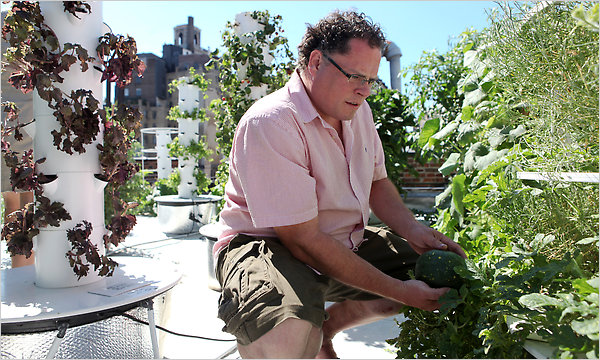
“Chef John Mooney believes so strongly in local food that for his latest restaurant in Manhattan’s West Village, most of his produce travels just 60 feet from the building’s roof to his kitchen.

He’s able to grow nearly two-thirds the vegetables for his restaurant- Bell, Book & Candle- because he doesn’t rely on soil. Instead, Mooney and his partner Mick O’Sullivan installed 60 vertical tower hydroponic systems.”

Meet The Composters on Bikes!

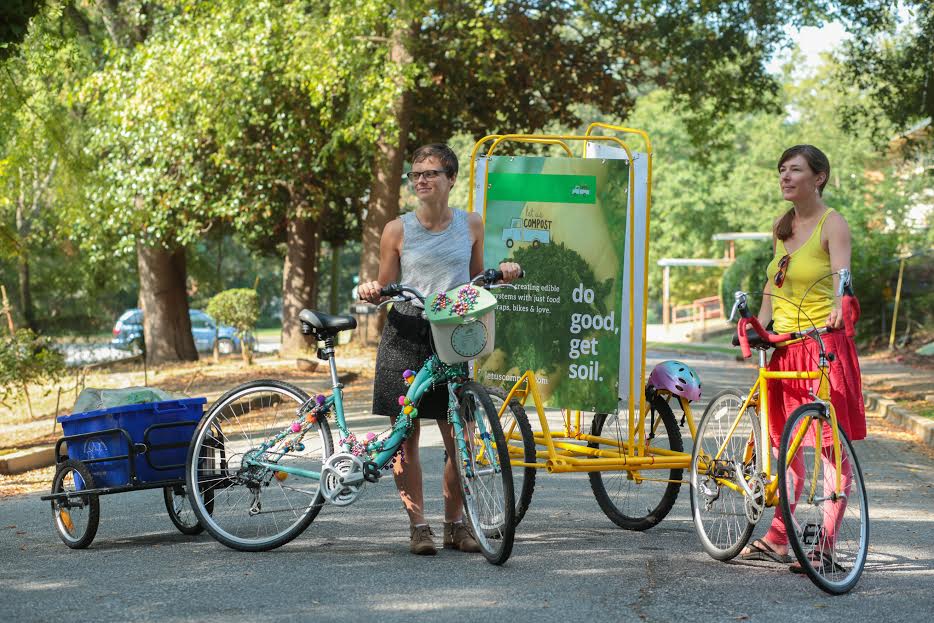
Let Us Compost is a curbside composting service for homes, businesses and events. They started in 2012 with one truck and this year they began picking up by bike. They currently pick up from over 170 homes and businesses. Customers are given a bucket, kitchen pail and biodegradable bags when they sign up and simply place their food waste into the kitchen pail then dump the pail into the bucket when its full. The pail is put on the curb just like a garbage can and it is picked up weekly. Let Us Compost empties it into the trailer, gives the bucket a little refresher spray, and leaves more biodegradable bags made from plants.

The food waste is then brought to their plot at the local community garden where they have made 325,000 pounds of compost already. It then comes full circle as its sold back to their customers to be used in their gardens. Plus they give some away for free to the community gardens in town.
Half of all food is wasted in the USA, most of which goes to a landfill to rot and emit methane which contributes greatly to climate change. Let Us Compost is part of the solution to both food waste and climate change.