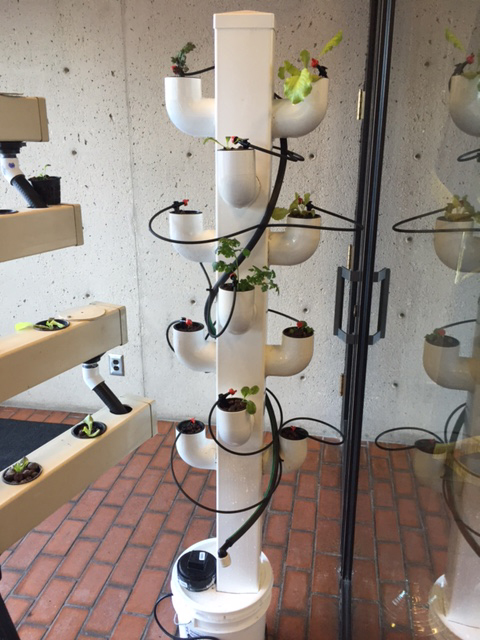
In Salt Lake City, Utah, even though there may be snow on the ground and freezing temperatures…people are growing countless fruits and vegetables indoors in the Utah Department of Agriculture and Food building. They are also using aquaponics, which uses fish to provide the nutrients that the plants need to grow.
“If you want to try out Hydroponics and Aquaponics, it is easy and relatively inexpensive. The State Department of Agriculture has all the information you need HERE.”
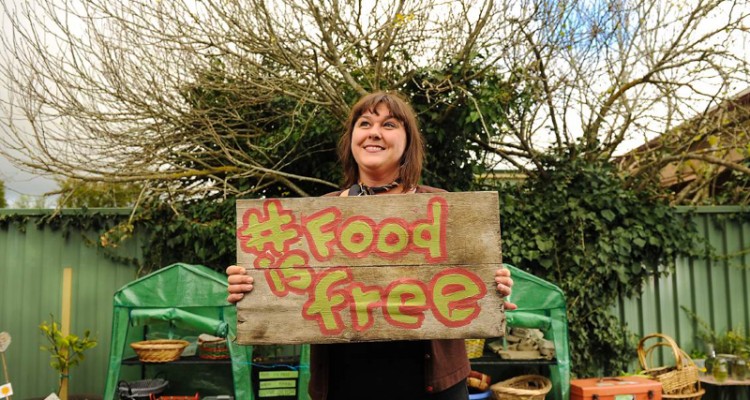
This woman started a “Food is Free” laneway next to the side of her house that she rents. The entire community supports the project by sharing their own “extras” and working together to take care of the plants that are growing there. Everything is free.
“The concept that something is free blows peoples’ minds,” says Risdale to Happen. And yet the rewards far outreach the giving or receiving of food, as Risdale has seen from her own experience with the free-food laneway she started at the corner of Ripon St Sth and Warrior Place, Ballarat, Australia. The laneway has reinvigorated the sense of community.-“ThePlaidZebra.com”
Not everyone who grows their own food has acres of land or even a large suburban backyard. Many home gardeners everywhere are learning how to grow their favorite fruits, veggies and herbs vertically to save space. This is important for high-rise dwellers, balcony or rooftop gardeners and even renters who are unable to use what little space they may have in their yard.
Here’s 7 easy to build vertical gardens, perfect for those who are short on space!
If you’re craving your own fresh winter vegetables but don’t have the space for a garden, you’re in luck.
Here are a few ways you can create your own vertical garden.
You don’t need a lot of space for many winter plants. Though some plants, like broccoli and cauliflower, take a larger space and aren’t necessarily recommended for a vertical garden. However, spinach, lettuce and strawberries can be a great start to your newfound green thumb.
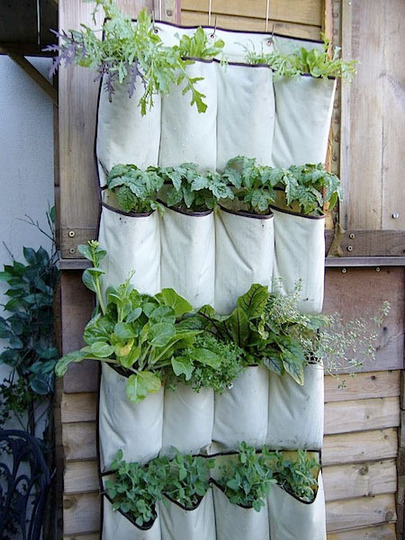
There are a number of items sold at garden centers to help plant your vertical garden. Some felt hangers, much like shoe hangers, can be purchased. Hang your garden in an area where it’ll get plenty of sunlight, but where the harsh winter winds won’t do damage. The advantage to this garden – move it when a freeze is coming.
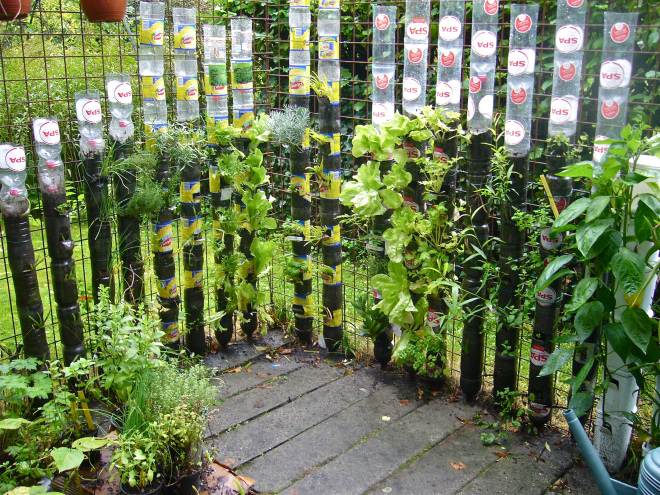
You can “upcycle” almost anything into a vertical planter. Put on your creative gloves and turn your 2-liter or 20-ounce soda bottles into a planter. We know you have those in the recycle bin, so why not recycle them yourself.
As with any garden, you’ll need to follow the seed instructions. Some plants need more space. If you’re planing something like beets or carrots, you’ll need to allow for plenty of root space, so plan accordingly. If you’re looking for leafy vegetables, soda bottles will work perfectly. Plant one per bottle and the plant will regenerate throughout the winter months, providing you with weeks of fresh salads.
Purchase or recycle your containers and locate an area to grow your garden.
Be sure you poke small holes in your container (and put something under them if on your porch) so that the plants will have plenty of drainage. If you’re purchasing a store-bought container, you’ll most likely be able to skip this step.
Buy garden soil and fill your containers with a good organic soil.
You can sow the seeds indoors in small eggshells (yes, just another way to recycle) while you’re preparing your masterpieces. Once you have the vertical garden container purchased or made, you can transfer young seedlings into the containers.
Even if you have enough room out back, vertical gardens can be a fun addition to any home. Many of these options maximize your water and minimize your overall work. So, who’s ready to garden?
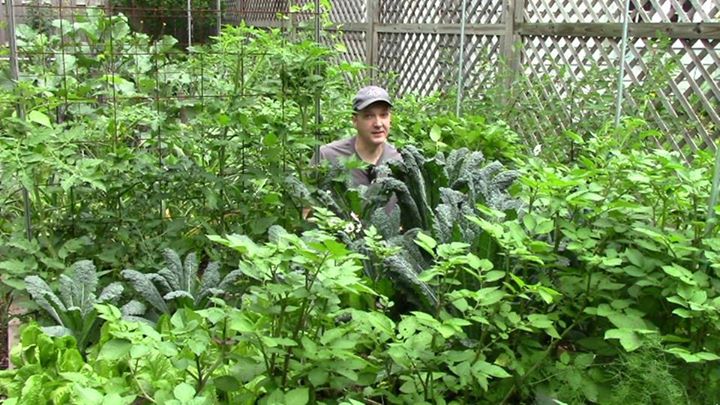
My wife Karen and I live in Chicago and love organic gardening. We started with a small vegetable garden many years ago, but over time it expanded to take over most of the backyard. Now we’re growing in the front yard too. During the summer and early fall, we don’t buy any vegetables from the store and buy very little fruit as well. We also use cold frames and hoop houses to extend the growing season, so we always have some fresh food to harvest, even in the winter.
How did you get started with your One Yard Revolution YouTube channel and Facebook page?
I started my YouTube gardening channel and Facebook page in hopes of promoting a low cost, low effort, sustainable approach to organic gardening that relies minimally on store-bought products. There has been huge a proliferation of organic gardening products in recent years. If you believe the marketing, you could easily get the impression that growing your own food requires a wide array of costly fertilizers and amendments that need to be applied year after year.
Our approach improves soil fertility with compost and mulch from free local resources like autumn leaves, grass clippings, wood chips, and used coffee grounds. We also plant a nitrogen fixing cover crop in late summer. We don’t use any store-bought fertilizers, and we get excellent results. Soil testing has proven that our approach provides more than enough organic matter and nutrients.
I’m passionate about this approach, first of all, because it works very well. But, more importantly, I think all the marketing creates false barriers. It creates financial barriers for those who don’t have the financial resources. It creates access barriers for those who don’t have access to the products. I want to advocate an approach that has few, if any, barriers.
There are also environmental issues with many organic products. For example, rock dust and rock phosphate are mined resources. Bat habitats are disrupted when bat guano is collected, and harvesting kelp from the ocean disrupts a very fragile ecosystem. Using free local resources, on the other hand, actually improves the environment by building soil fertility with material that otherwise may end up in a landfill.
I hope to advocate an environmentally friendly approach that anyone can use to grow healthy food no matter where you live and no matter how much money you have.
Did you start your YouTube channel when you started your transition to live this life style?
In my case, the lifestyle definitely came first. I’ve had a vegetable garden nearly all my life, but I didn’t start my YouTube channel until the spring of 2013.
Have you always been growing your own food? If not, what sparked your passion?
Both of my parents grew up on dairy farms in Pennsylvania, where they produced most of their own food, including vegetables. Though my father wanted to remain on the farm, my grandfather was all too aware of the economic challenges faced by small family farms and insisted my father learn a new trade and find work elsewhere.
When my parents moved to a small town to start their family, they took a little bit of the farm with them by always planting a vegetable garden. Though my approach is somewhat different than that of my parents, I learned a lot of what I know today from my experiences in our family’s vegetable garden.
My wife Karen also grew up with a garden, so it was almost inevitable that we would start our own when we bought our home 25 years ago.
Have you ever made mistakes or failed doing something? How did you overcome any obstacles?
Sure, I make mistakes all the time, but I just learn from them and move on. One great thing about growing your own food is that it’s a lifelong learning experience. No matter how much you learn, it’s still just the tip of the iceberg. This makes gardening both challenging and endlessly fascinating.
Have you ever dealt with a person who disregards your lifestyle?
Not really. I’m a vegetarian, and sometimes get teased about that, but I don’t take it to heart and it’s usually in good fun. As far as my YouTube channel goes, I’ve found that the overwhelming majority of people who leave comments are very kind, positive, and supportive. I think this says a lot about the online gardening community.
What are some of your greatest rewards with a lifestyle such as the one you live?
To me, gardening is a form of meditation. It helps me relax and keeps me grounded and connected to nature, despite the fact I live in a heavy populated urban area. It’s also something my wife and I enjoy doing together, which is great for our relationship. And because we rely on free local resources and nitrogen fixing cover crops to improve soil fertility, our gardening costs are very low and we save a lot of money on groceries. Of course, the flavor and nutritional value of homegrown produce simply can’t be beat.
What are some of the things you would like to have other people understand about living a healthier and self-sufficient lifestyle?
For someone new to gardening, the idea of growing more of your own food might seem like a daunting task. As I mentioned earlier, there are so many gardening products and practices marketed to consumers that it’s easy to get the impression that starting a new garden is very expensive, time consuming, and complicated. I’d like people to know that, while some products can be helpful, most are not needed and many are of questionable value. You can improve soil fertility with homemade compost and mulch from free local resources. You can fix nitrogen in the soil by growing inexpensive nitrogen fixing cover crops. You can all but eliminate weeding by using mulch. Simply put, my message is that you can grow a lot of food on a little land using sustainable organic practices without spending a lot of money or working very hard. This is the message I try to communicate in my videos, and I share specific strategies on how to make it a reality.
What are your favorite plants to grow in the garden?
That’s a tough one to answer, because we grow a wide variety of crops and love them all. Given our goal of working less and growing more, though, I have to say that I really enjoy growing edible perennials like strawberries, blackberries, blueberries, sorrel, Good King Henry, and sun-chokes. They come back year and year with very little effort on our part. Of course, you have to love annuals too. Our garden wouldn’t be the same without tomatoes, peppers, potatoes, kale, and squash. Like I said; it’s really hard to pick favorites.
Urban Organic Gardener Interviewing Rob from “Bits Out The Back”:
How would you quickly describe yourself to others?
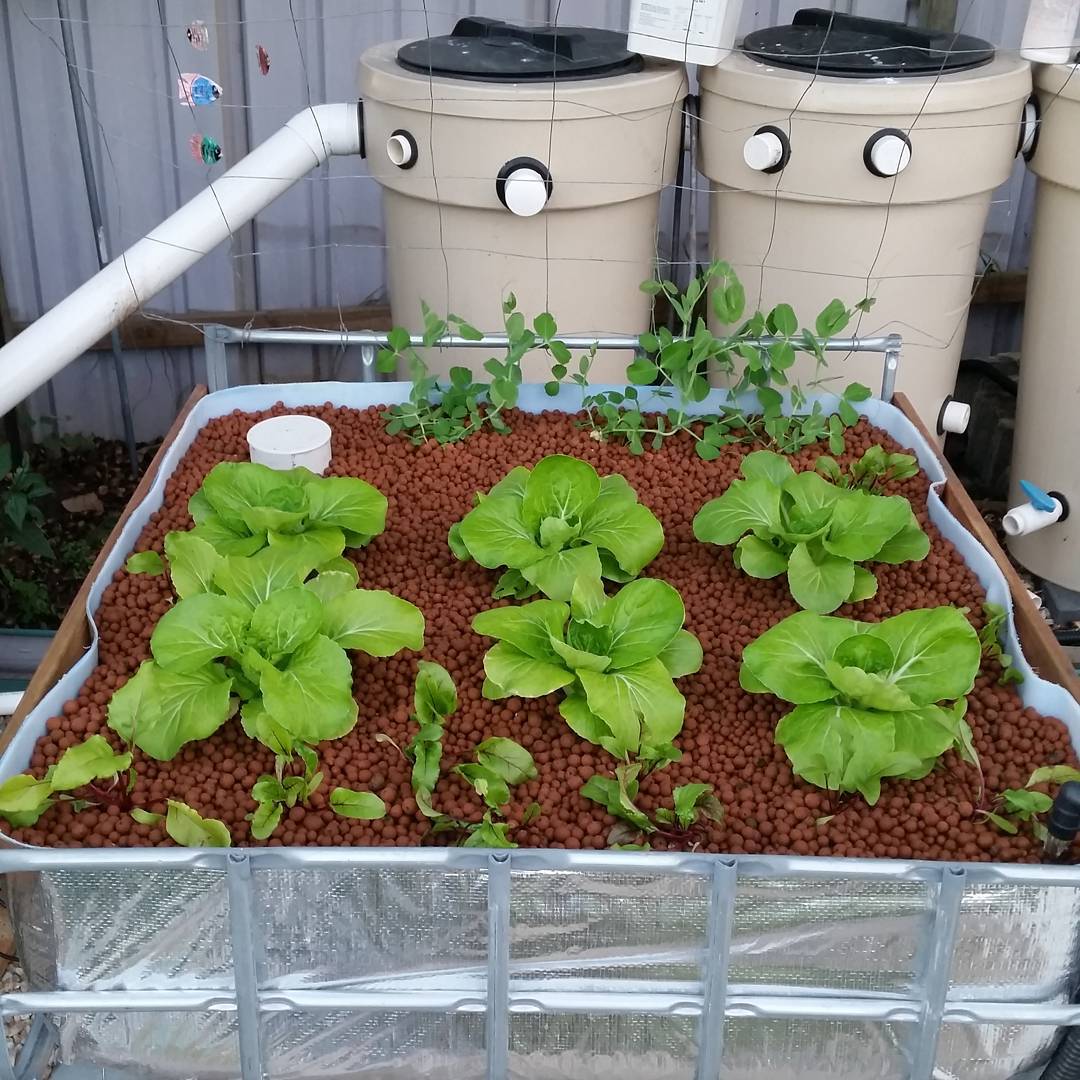
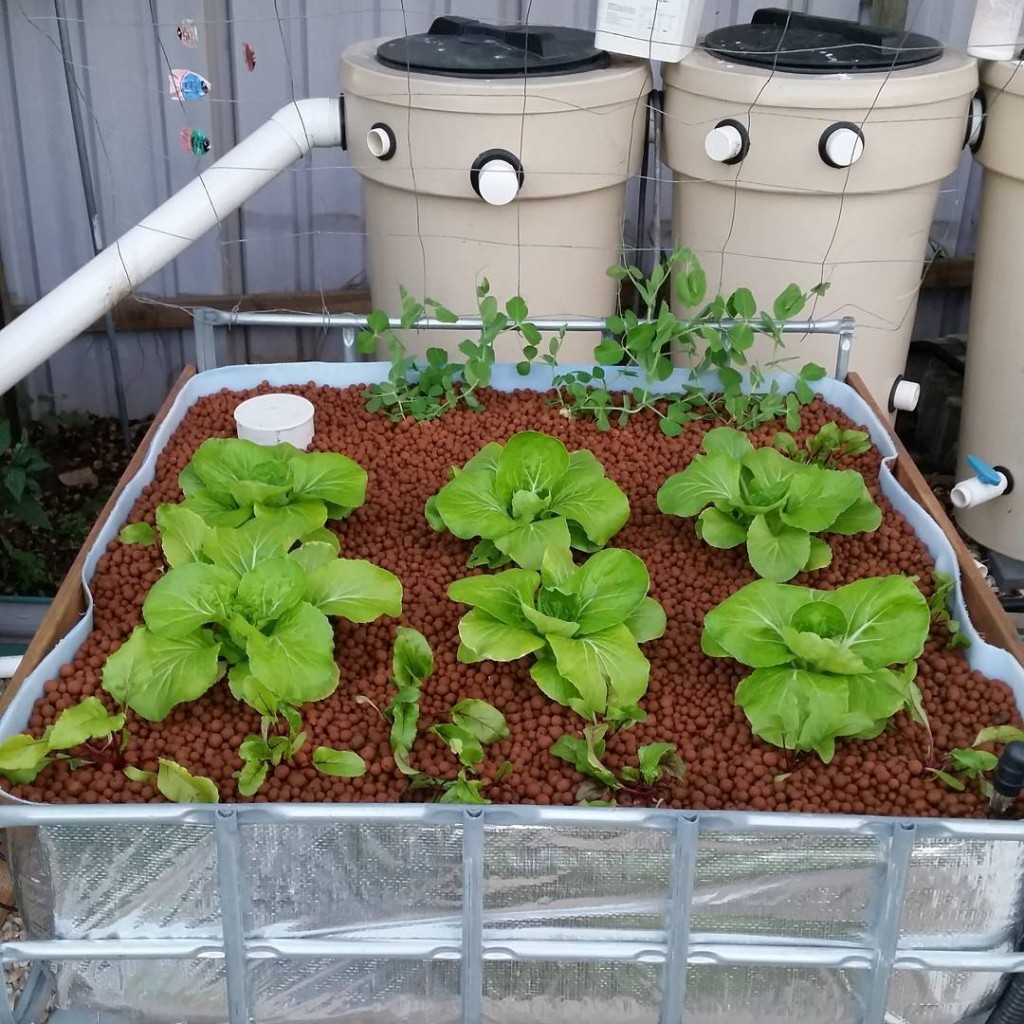
I’m a stay at home dad that’s very interested in growing as much nutritionally dense food as I can to help improve our health and reduce our dependence on the industrialized food system. We live in SE Queensland Australia in a subtropical climate and are lucky enough to be able to grow 12 months a year. Most of our food is grown in self watering wicking/sub irrigated garden beds but also have an ever expanding aquaponic system that has been pumping out a lot of herbs, greens and tomatoes of late. We also have 3 chickens that we quite happily feed scraps to and in return they provide us with a couple of eggs a day.
How did you get started with your blog/facebook page/etc?
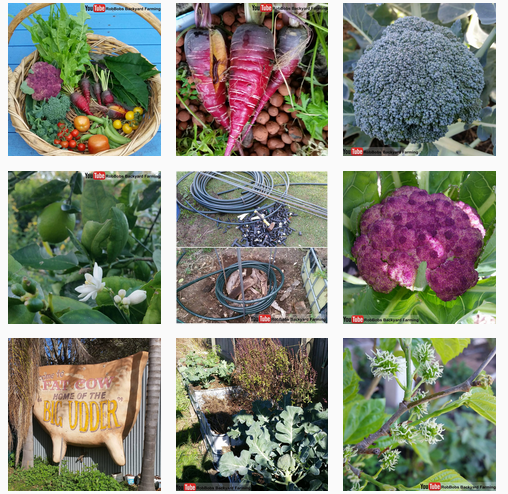
I initially started to post on our “Bits Out the Back” blog that was mainly focused on how we were setting up our small garden patch. Friends and family were interested in seeing more of what we were doing, so I started to post Vlogs (video blogs) onto our YouTube channel to share with them. I found video to be the easiest medium to show what was happening around the patch as many of my relatives and friends live interstate. I think video helps people get a better idea on how to replicate some of the projects I do, especially intricate ones like the aquaponics, chicken feeders and wicking bed builds.
I started our Facebook page and Instagram account as an extension to our YouTube channel. People were interested in our harvests and daily goings on around the patch and I found using Facebook, Instagram and G+ sites were a great way to do small mini updates for them.
Did you start your blog when you started your transition to live this life style?
Growing up my grandparents on both sides of the family had quite impressive vegetable gardens and were able to provide the majority of the veggies and fruit for themselves as well as pass on excess to family. To me this was a normal way of life and only when I got older did I see that many folks did not grow their own food or had stopped, becoming disconnected to how their food is grown/raised.
I started looking at growing food seriously in my mid 20’s when Bianca and I started living together. We had no internet then and only just really plodded along getting inspiration from self sufficiency magazines and making phone calls back to my parents when we needed advice. After we were connected to the web a whole new world opened up and I started to get inspiration from all over the place.
Have you always been growing your own food? If not, what sparked your passion?
I grew a few plants like basil, tomatoes as well as salad greens just before Bianca and I started to live together in the mid 90’s. We didn’t seriously try to grow a lot of food until after our first daughter was born in 1998 when we started a rather substantial container based veggie patch. Gotta love rentals.
A few years after buying our small urban property we decided to turn a lot of the backyard to food production. We decided to do this, not only help ease the grocery bill but to also provide us with food that tasted a lot better and hopefully more nutritious than what was on offer in the local stores.
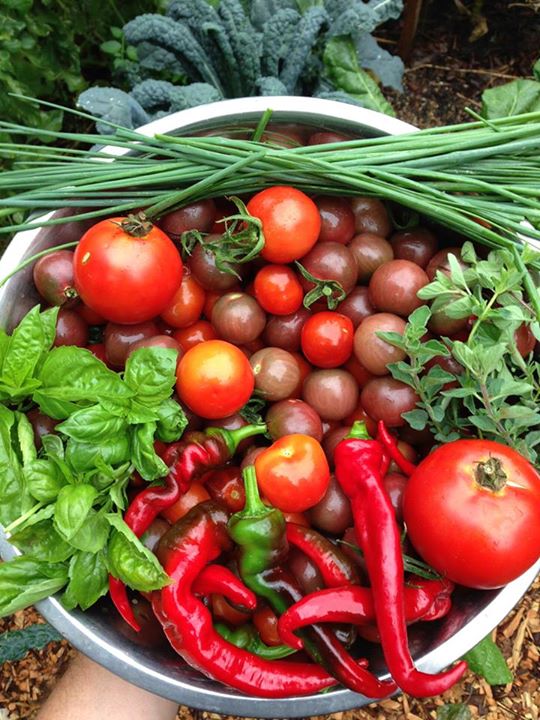
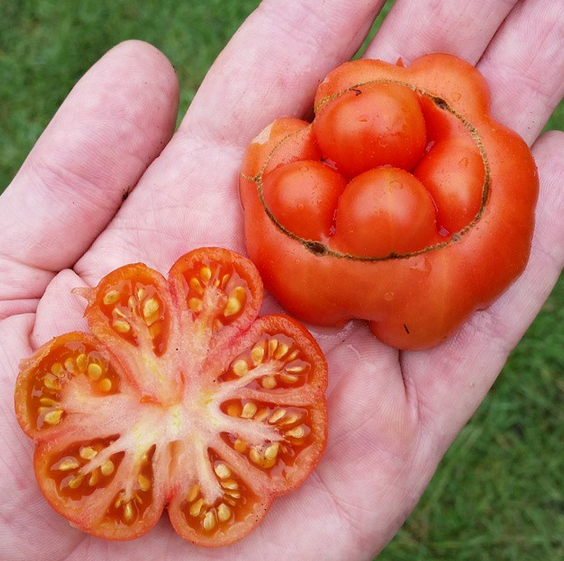
“Brain Tomatoes” grown organically on the Urban Farm
Have you ever made mistakes or failed doing something? How did you overcome any obstacles?
Am very chuffed at how the new grow bed is going. “Looking at adding a very small NFT run at the front of this bed.”
😀 I’ve made MANY mistakes and had a few quite spectacular crop failures since starting out.
Our first raised garden beds were a bit of a mistake. We had bought in soil from a landscape supplier to fill our garden beds, added in some clay Wetpot irrigation devices, planted out our veggies and all was growing great for the first few months. After 2 or 3 months the plants started to look a bit wilted and we started to get the odd 1 or 2 that mysteriously died off. On closer inspection it turned out that roots from our mango and some Chinese elm trees growing on the fence line had decided to take over the beds depriving the veggies of their water. We were also facing heavy water restrictions at that time, due to drought (similar to California is now) and after some research we decided to rebuild all the beds and turn them into water efficient wicking garden beds and haven’t looked back since.
Have lost whole tomato and capsicum/sweet pepper crops to the pesky Queensland fruit fly along with quite a few brassicas crops to the dreaded cabbage butterfly. We did a bit of research and found methods that work for us (exclusion netting) to save the crops now but it was a very steep learning curve at the beginning.
Through all our misadventures we have learnt a lot and found many like minded folks out there that have helped us out.
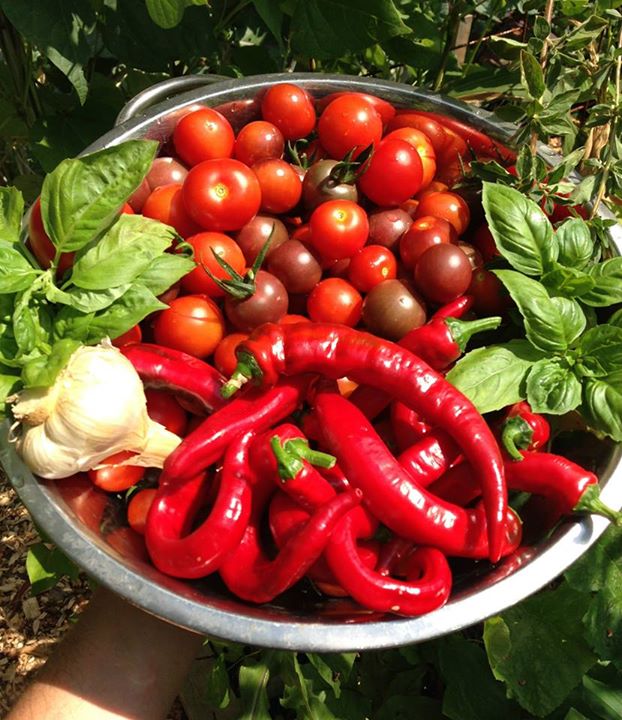
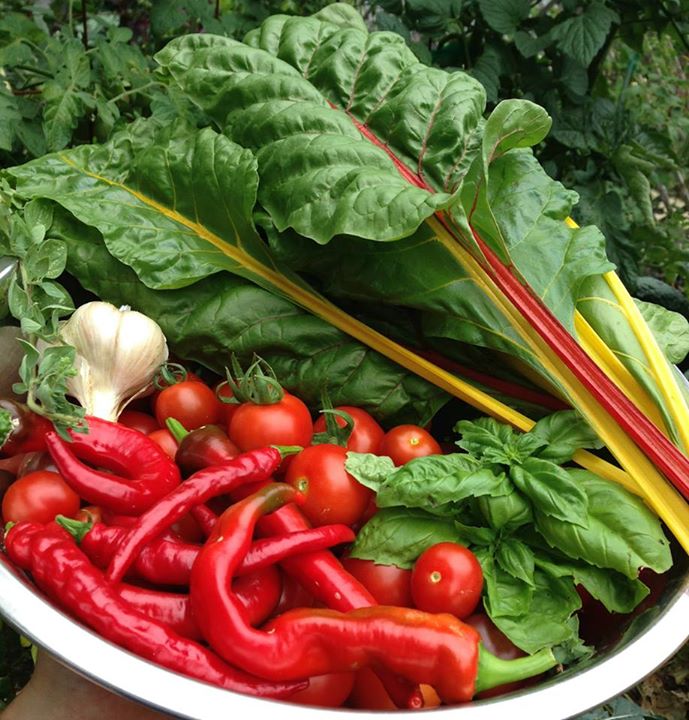
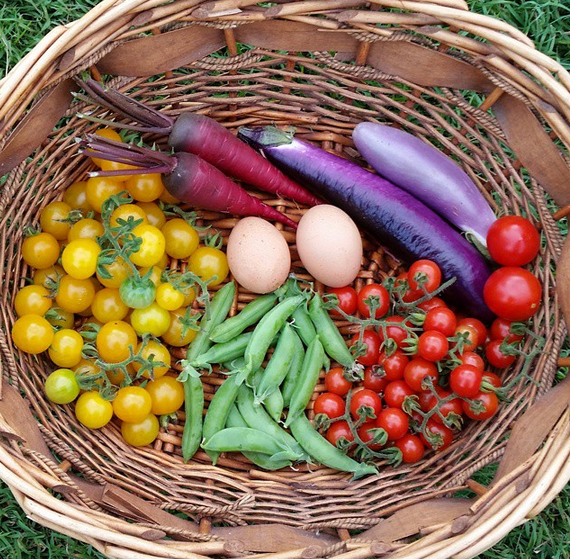
A regular “picking” from Rob’s Urban Garden
Have you ever dealt with a person who disregards your life style?
Have come up against a little bit of resistance from extended family members but nothing too serious. What I find more shocking is the couple of times I have had people ask me if we were allowed to grow our own food. I must say it took me very much by surprise and really shows how disconnected some people have become to believe they are not allowed to grow food.
What are some of your greatest rewards with a lifestyle such as the one you live?
The greatest reward would have to be being able to provide nutritious fresh food for the family that has been grown free of toxic chemicals. That it takes less than 15 min for that food to make it from plant to plate is also a bonus. 😉
Being able to share how easy and rewarding it can be to grow your own food with others via the WWW is something that I’m grateful for. Not only have we learnt from others but have also made dozens of friends along the way. I love that I can ask questions or get inspired by their posts no matter where they live in the world.
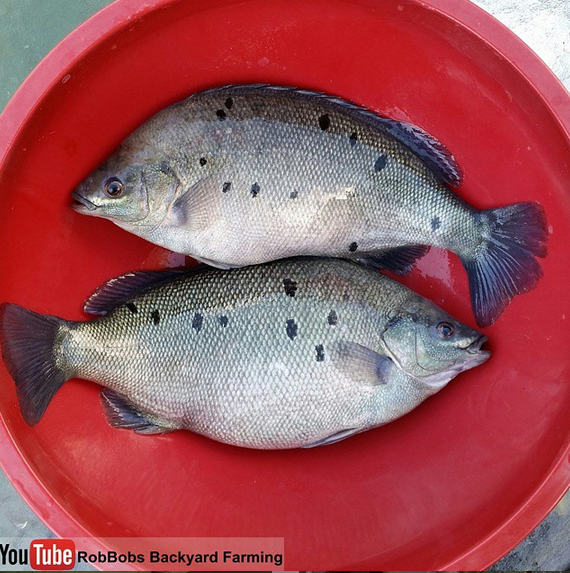
2 Jade Perch raised in their own aquaponic system.
What tips and tricks would you like to share with other people?
First tip I would give anyone looking at growing their own food would be to start small and start now. I can guarantee you that once you’ve tasted your first tomato and basil on a homemade pizza, you’ll be hooked.
Don’t be disheartened if it doesn’t work. Have made plenty of mistakes here and have found that they are a great way to learn. I try not to take life to seriously, laugh off all the mishaps and try again.
Make your own compost and feed the soil is the best practical tip I could give. That’s one lesson I wish I’d learnt when I first started. It would have to be the best ways to help you grow nutrient dense healthy food while recycling waste and feeding the soil at the same time.
What are some of the other things you would like to have other people understand about living a healthier and self-sufficient life style?
I find it extremely rewarding to be able to say I’m responsible for the production of a portion of my own healthy and nutritious food, something that only 2 generations ago was a given for a lot of families.
Starting off a garden is also a great way to educate kids and the local community as to how easy it is to be able to provide for yourself. Our garden has helped create these types of conversations with visitors, neighbors, friends and family, and has also inspired some to create their own gardens, which in-turn has gone on to inspire others to have a go at growing their own.
What are your favorite plants to grow in the garden?
That’s a hard question as there are so many. Some of my favorite plants to grow at the moment would have to be greens like Okinawan spinach, kang kong, sweet potato leaf, rice paddy herb, Thai basil, Chinese cabbage. All of these veggies go into a very quick and fresh Asian inspired salad I like to make. The ginger spice family is another group of plants I love to grow. Broccoli and cauliflowers are also favourites. We only get to grow them during winter here so have been eating quite a bit over the past few weeks.
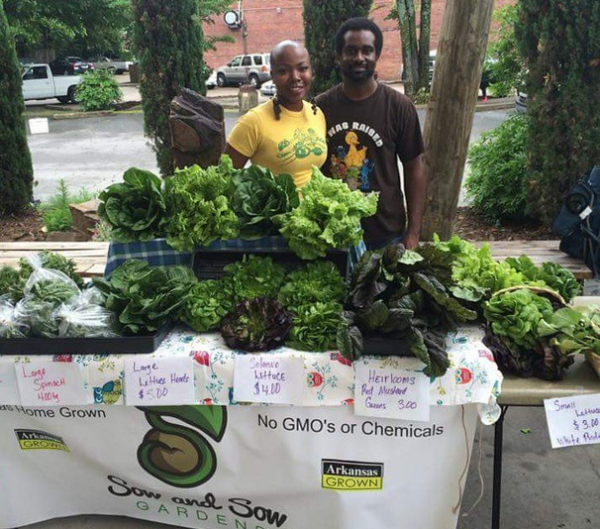
At Urban Organic Gardener, we’re all about sharing inspiring stories of how people are growing food in small spaces. A while back, we found Sow and Sow Gardens on instagram and have been following them ever since. What they’re doing is truly inspiring.
How did you get started with your blog/Instagram page?
“I got started with my personal Instagram page. I would post all kinds of things about what I was going and what troubles I was having in the garden. Then someone asked me on Instagram if I had blog. At the time, I felt like I was no expert and how could I possibly write a blog. About a year later I decided I really enjoyed growing food and why not write about it.”
Did you start your blog/Instagram when you started your transition to live this life style?
“I was let go from my job of almost 7 years and decided I wanted to help my husband out with growing food. We had two mortgages and bills. I figured that growing food would help and that it would be less of a grocery bill.Yes, I began to have many followers on my personal page who was interested in my gardening. I wanted to come up with a creative name. I asked my sisters for their help. My sister Nnenna was like “you are in the South…you know they always say thing like….you know….so and so down the street”. “Why not Sow and Sow Gardens, like sowing seeds.” It was perfect!”
Have you always been this way? If not, what sparked your passion?
“No, I was not always this way. I started learning about GMO’s about 7 years ago. I started reading the labels on things I was buying from the store. Then I started reading about more issues about the food that we were consuming into our bodies.I started telling people at work but of course they would look at me funny. I was the “Earthy One” was what they started calling me. When I started growing food, it was something amazing to see a seed pop its little head out of the dirt. It was just magic to me. It was so beautiful. It was my creation is how I saw it.I know this might sound corny but I wanted to be the change I wanted to see in the world. It has to begin with ourselves if we want to see any change come about on this planet.”
What are some of the other things you would like to have other people understand about living a healthier and self-sufficient life style?
“There is nothing like growing your own food…Period. You know where it comes from and how it was grown. I feel great that I don’t have to depend so much on someone else to provide food for my family. It’s much healthier and taste better than what you will get from the stores. I also like teaching my daughter about where her food comes from and how it grows. As one can see, there have been a lot of issues on this planet when it comes the weather. California is going through a drought. I would not be surprised if the prices rose due to the drought. It’s something my family will not have to worry about . I have started 2 apple trees, goji berries bushes and artichokes. I want to have a little food forest in my backyard. Start off little and work your way up. I started growing my own food 3 and half years ago. I started with a 7×4 raised bed.”
What tips and tricks could you share with other people?
“Always see for yourself how things grow. I was told that radishes did not transplant well. I wanted to see for myself. I transplanted radishes and carrots. The radishes came out great but not the carrots. There are always different results for different growers. I also like to start my seed on paper towels. For two years I could not get pepper seeds to germinate. I was on youtube one day and put in the search engine how to germinate pepper seeds. Someone started theirs from paper towels. I gave it try and now I germinate all my seeds this way. I have the hardest time trying to germinate seeds in the dirt. “
Have you ever made mistakes or failed doing something?
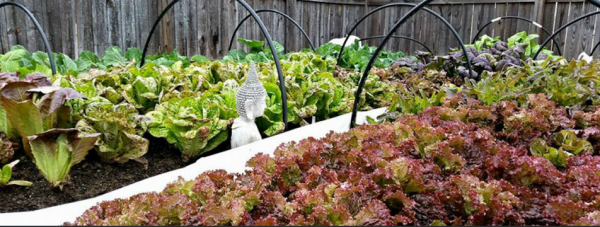
“Oh my!!! Yes, I learned to NEVER put mint in the ground. I have been trying to contain that mint in the backyard. The first year, the soil was bad bad bad. I didn’t amend the soil well. Nothing would grow. I thought planting it was all I needed to do. I started researching and reading lots of books. I was on the internet and YouTube a lot. That’s how I really learned how to grow food. I have never really been able to grow tomatoes well. Looks like this year, I might have some luck. Leafy greens always grow best for me.”
How did you overcome any obstacles?
“My first and second year was hard. I was learning the whole process. I had to learn about the soil.I wanted to give up but I just kept trying because I loved gardening…my creation. I dealt with flooding last year and it ruined most of my crop. It just sat in water. So I had to find another method of growing food with lots of water involved. On my blog I showed the whole process for months of what I went through for the backyard transformation. I tried the double dig method. It’s a lot of work but it worked for me. You have to see what works for you. The double digging method was the way to go. The beds were high enough that the rain did not affect the food. The book that saved me was ‘How to Grow More Food’ by John Jeavons. For me, this is my garden bible.”
Have you ever dealt with a person who disregards your life style?
“No I haven’t met anyone. The only thing I hear from people is that they don’t like to get dirty. I love it!”
What are some of your greatest rewards with a lifestyle such as the one you live?
“It brings a peace of mind. Just walking out of my back door to get herbs to cook is a wonderful thing. We have less of a grocery bill. Knowing where my food comes is the greatest reward there is.”
To follow their journey of building a backyard food forest, you can subscribe to their blog.
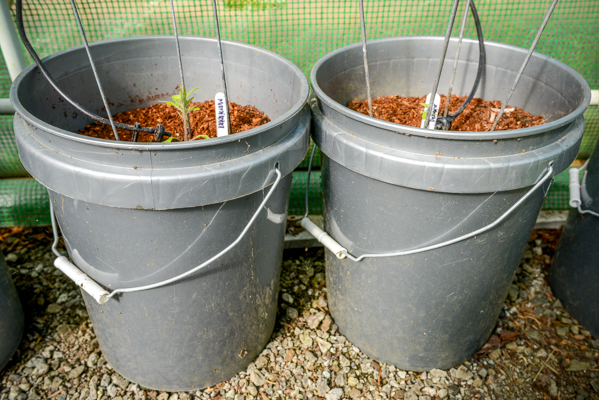
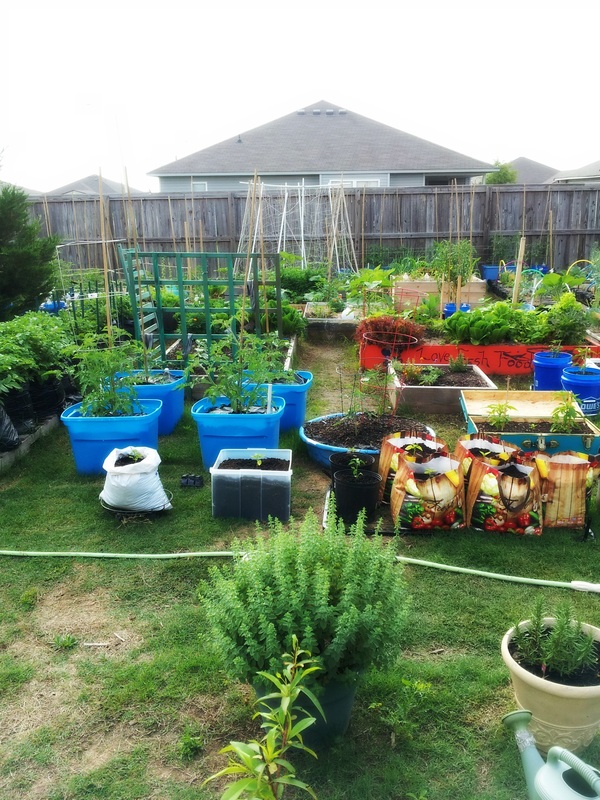
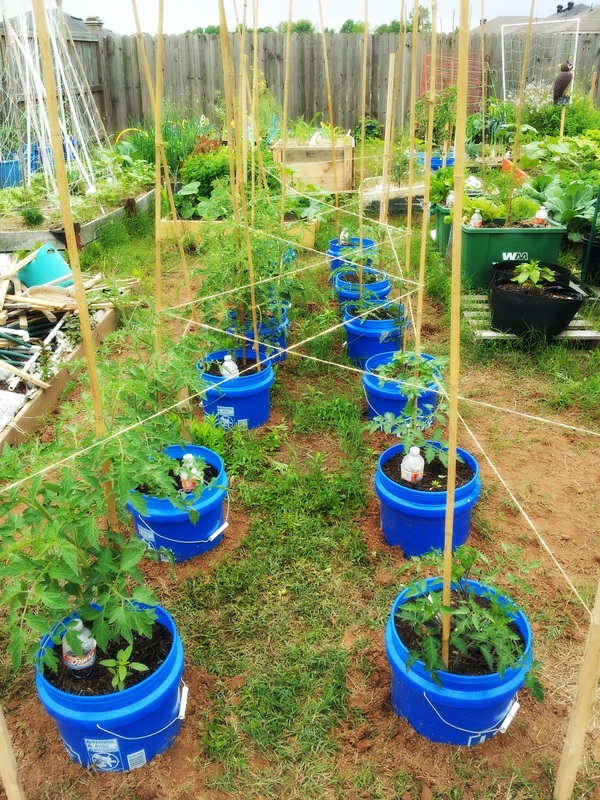
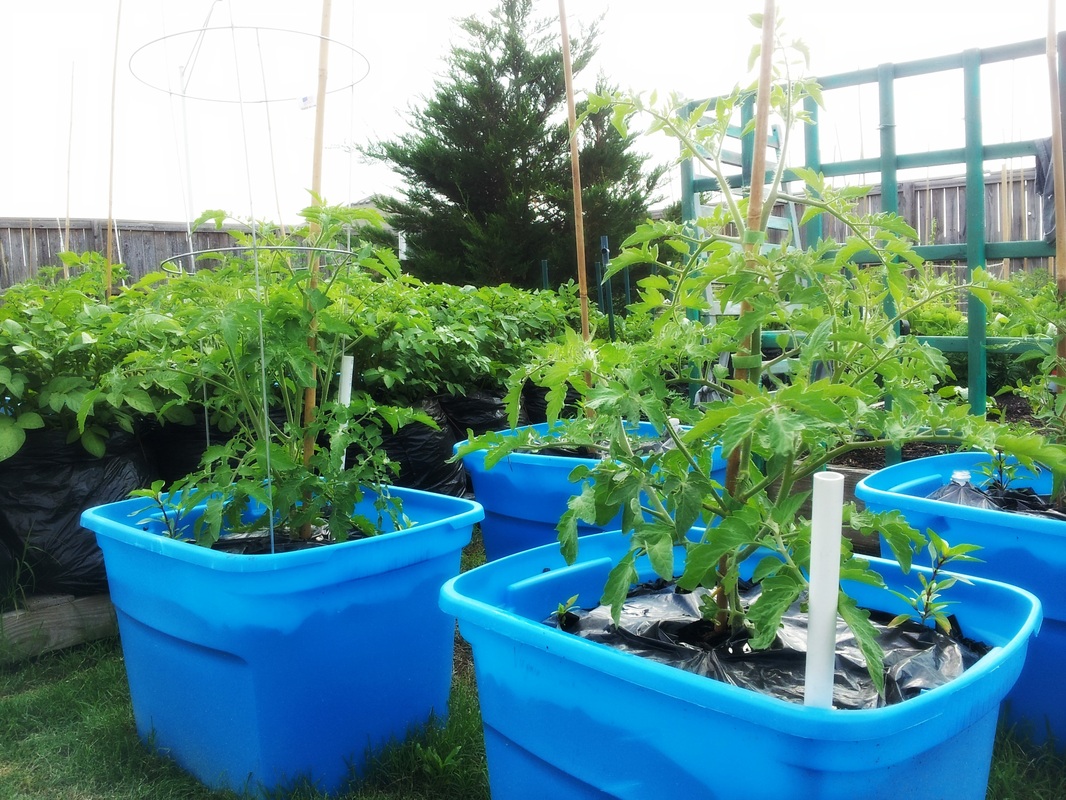
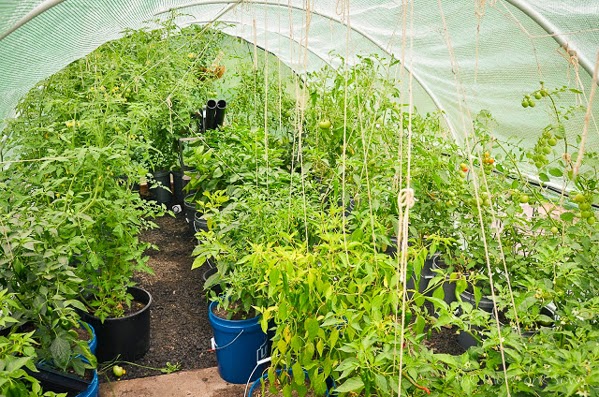
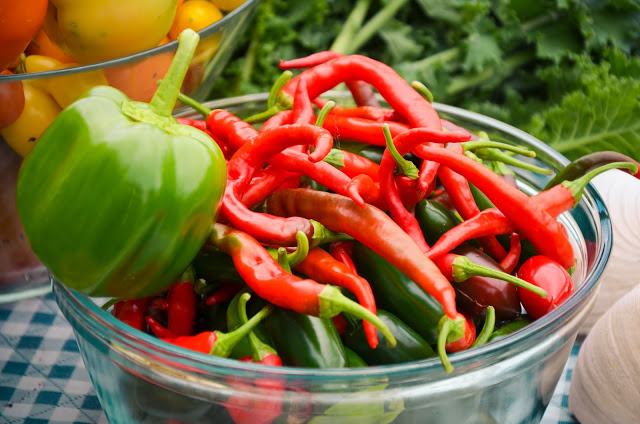
Short on growing space but still yearn for homegrown tomatoes and peppers? Is your garden located on a balcony or terrace and you’re afraid you can’t savor the taste of vine ripened tomatoes or experience the heat of your favorite variety of pepper? Well you can, and all you need is a 5 gallon bucket, nutrient rich soil, a few amendments, water and your favorite variety of heirloom seeds.
Start by finding a 5 gallon bucket. Make sure it is clean and food grade, meaning there’s never been any nasty chemicals stored or shipped in your container. Usually you can acquire these by visiting your local bakery or even a trip to the hardware store will lead you to a simple 5-gallon bucket. Generally they can be purchased at your big-box hardware stores for around $2.50.
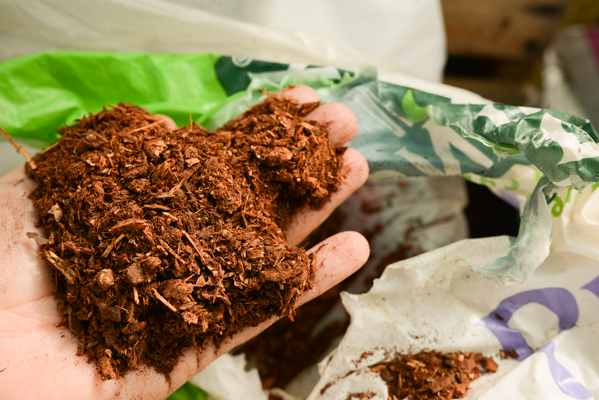
Once your bucket is clean, fill it with nutrient rich soil. If you have your own compost, add some of that. Always use rich organic soil.
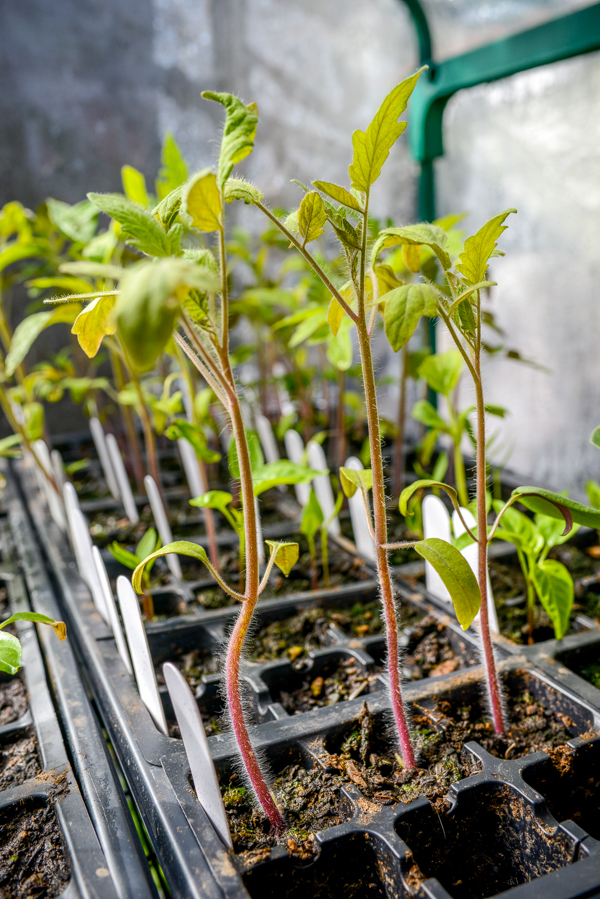
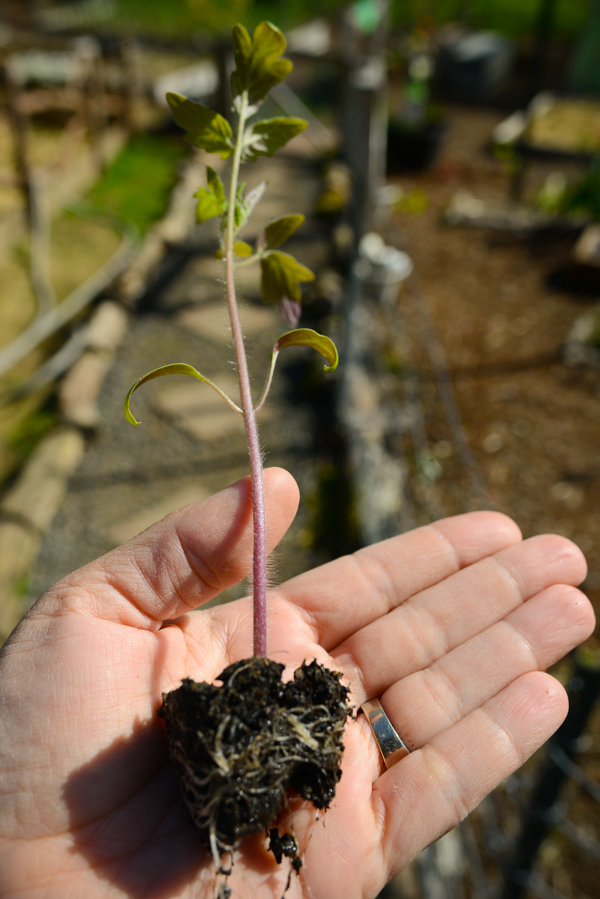
For best results, especially in climates that are a little cooler, try starting your tomato and pepper plants indoors 6-8 weeks before your last average frost date. Tomatoes and peppers do well with transplanting and rarely experience “shock” once they are moved from their indoor locations out into their permanent home in the garden.
Add your nutrient dense soil into your 5 gallon bucket. Dig a hole deep enough for you to plant your seedlings and then add a small amount of vegetable or tomato plant food at the bottom of each hole. Give the soil a light water with a watering can.
Place your tomato plant inside the hole and then fill the surrounding area with soil. Remember that you can bury your tomato plants extra deep, up to their first set of true leaves. This long “stem” that you’re burying into the soil will actually help the tomato plant develop a strong root system. So bury those tomatoes deep! They love it.
Once your tomato and pepper plants have been put into the soil, give the entire bucket a good water.
To help keep weeds down in your container, spread a thin layer of mulch on top of the soil. This will also help keep the soil moist and from drying out too quickly. Because you’re growing in containers, the soil will dry out sooner than if it had been planted directly into the ground, so keep an eye on it. Peppers don’t mind soil that is slightly dryer, once the plant is established but your tomatoes will need regular watering. Too much, or too little watering will result in cracked tomatoes, or blossom end rot, once they have reached maturity.
Tomatoes and peppers both love the sun and the heat. Keep your buckets in a sunny location.
Try planting companion plants near your buckets such as: marigolds, basil, borage, chives, calendula, and carrots. Avoid fertilizing with too much nitrogen. This encourages leafy growth instead of flowering…and the flowers are what will produce the fruit. Try time-released fertilizers so that the nutrients wont all be washed away with frequent watering.
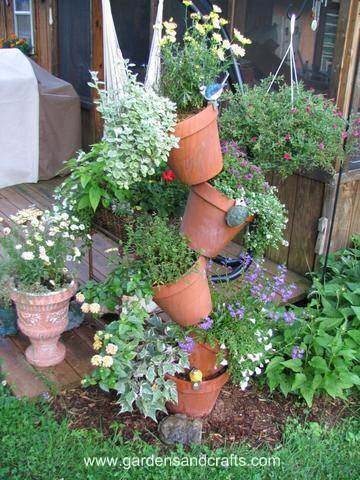 Tipsy Tower Garden
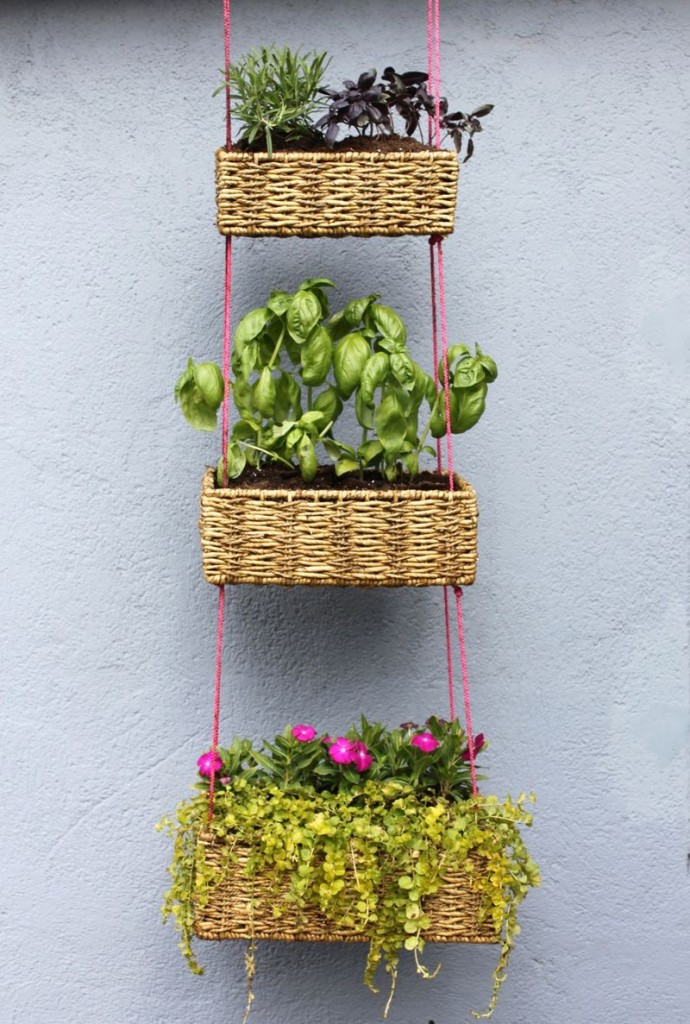 Hanging Basket Garden
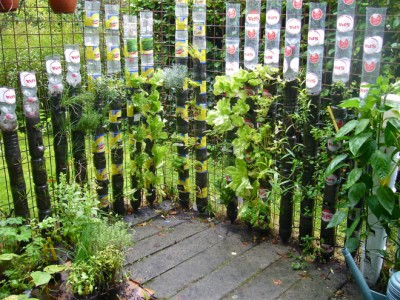 Bottle Garden
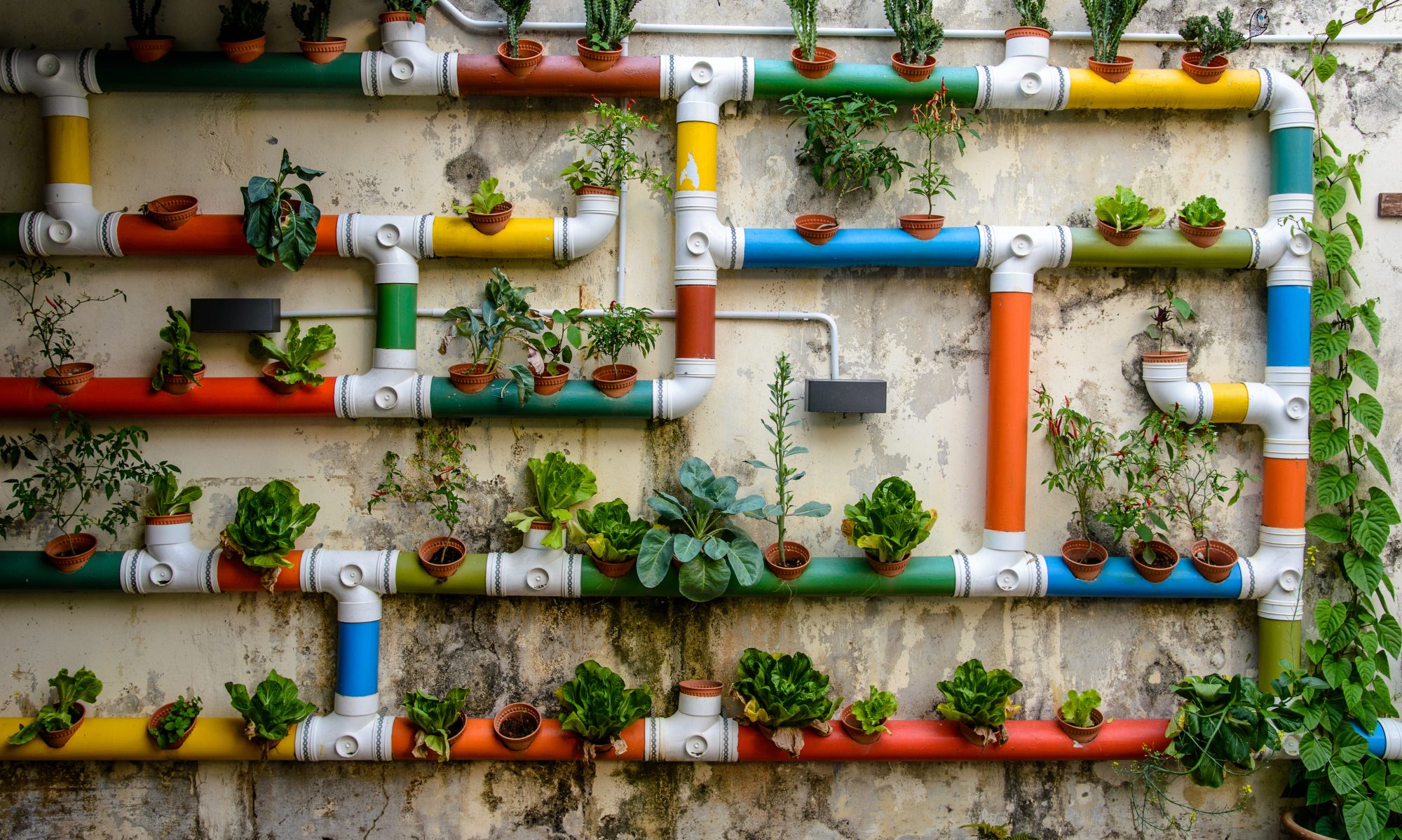
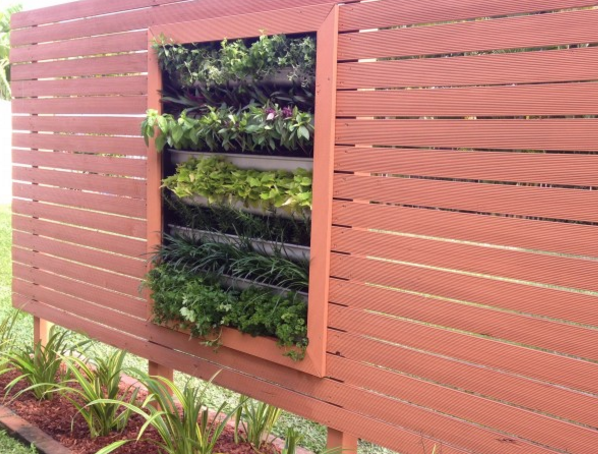 Vertical Living Wall
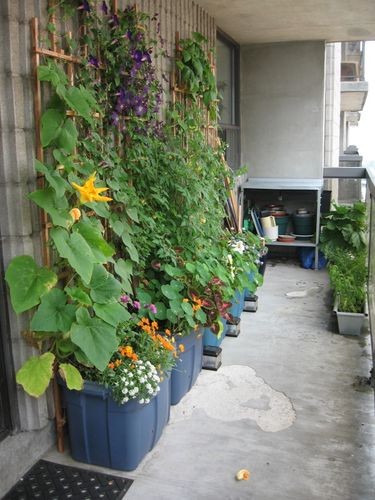 Balcony Garden with Trellis
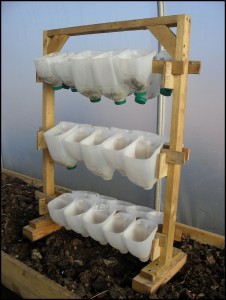 Milk Carton Vertical Garden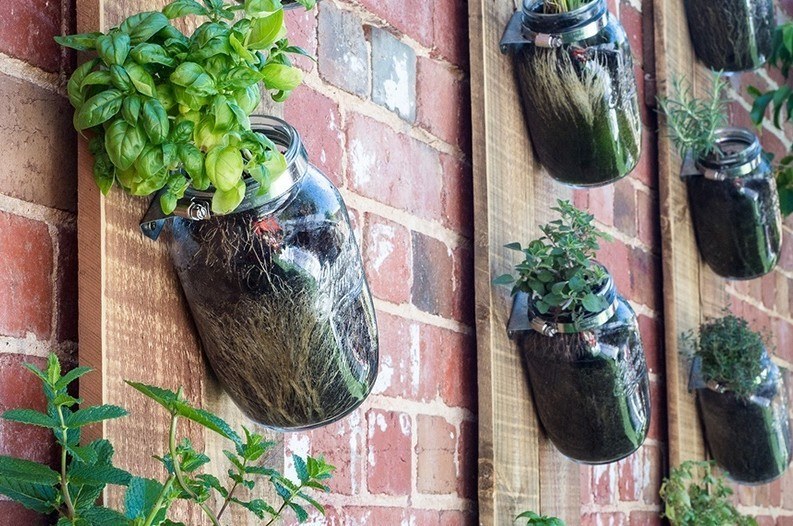




 Start by finding a 5 gallon bucket. Make sure it is clean and food grade, meaning there’s never been any nasty chemicals stored or shipped in your container. Usually you can acquire these by visiting your local bakery or even a trip to the hardware store will lead you to a simple 5-gallon bucket. Generally they can be purchased at your big-box hardware stores for around $2.50.