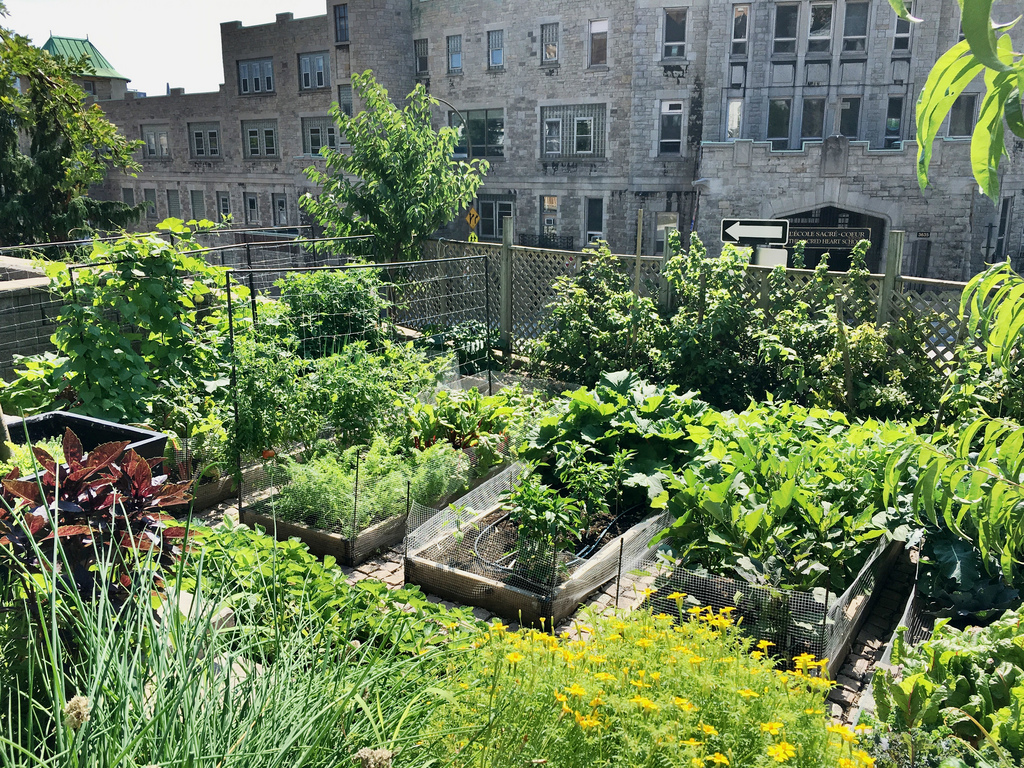
Video via: “vpro documentary“
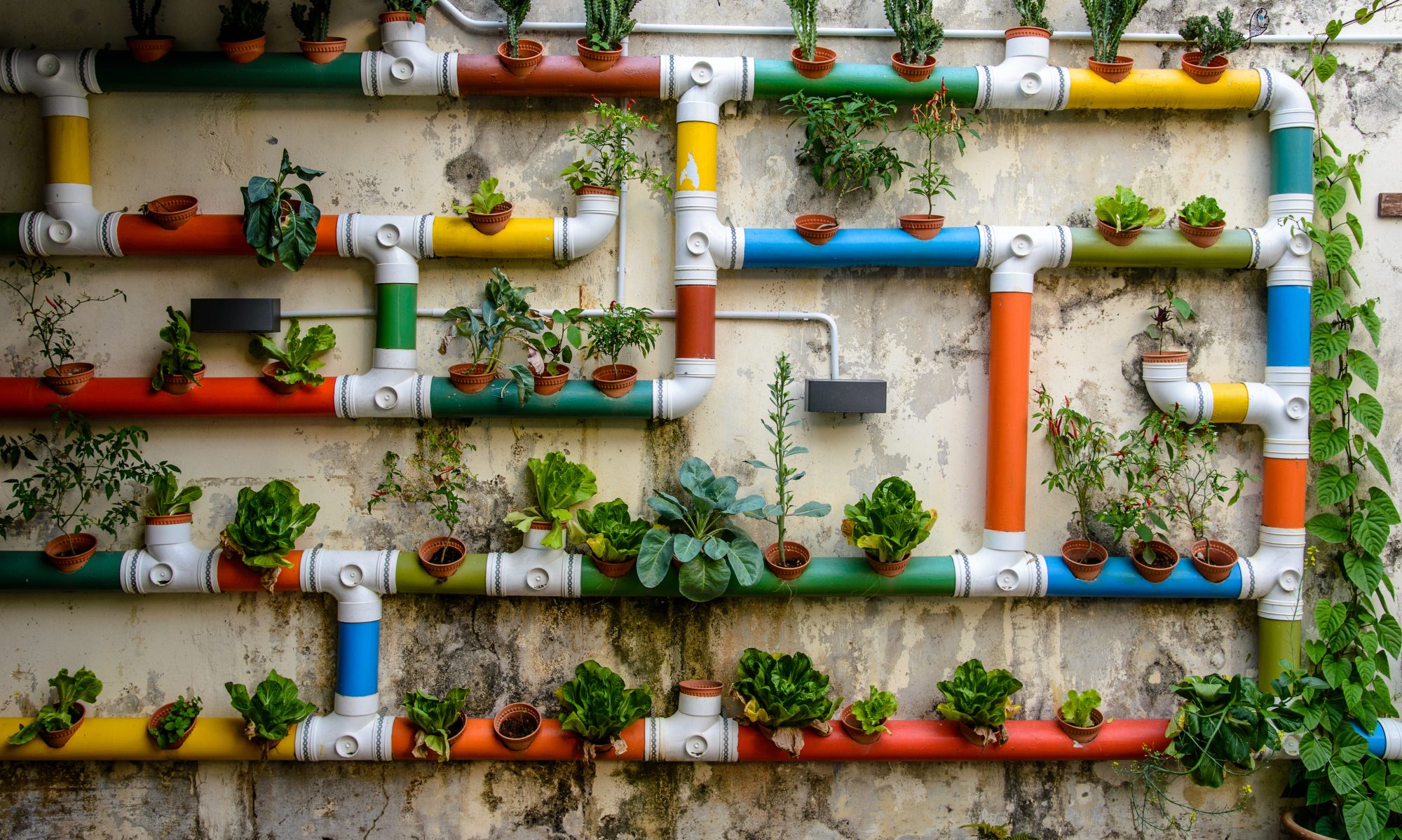

Urban-style organic gardening blog about growing your own food with limited space and creative resources.

Video via: “vpro documentary“
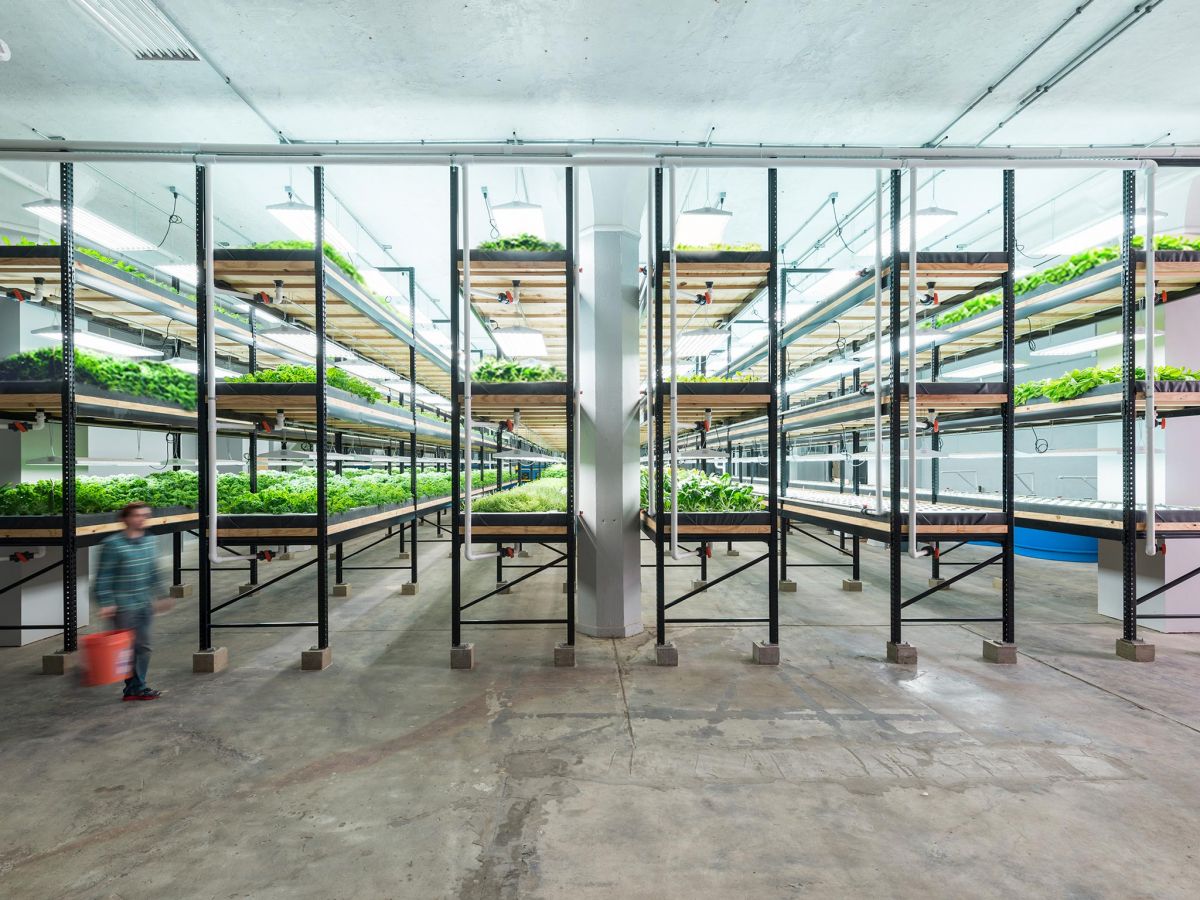
“The planet is growing more food than ever, and yet millions of people continue to starve worldwide. People are hungry everywhere — in the country, in the suburbs. But increasingly, one of the front lines in the war against hunger is in cities. As urban populations grow, more people find themselves in food deserts, areas with “[l]imited access to supermarkets, supercenters, grocery stores, or other sources of healthy and affordable food,” according to a report by the U.S. Department of Agriculture.
New technologies are changing the equation, allowing people to grow food in places where it was previously difficult or impossible, and in quantities akin to traditional farms.”
Read the FULL STORY, at: “Futurism.com“

“Designed by Danish firm Husum & Lindholm Architects, Growmore structures can be assembled using six plywood components. The system is designed for people living in cities to utilise unused urban space for local food production.
The components include planting and shelving units, which are connected by pivotal joints. This enables users to move and rotate assembled structures, so they can fit in a wide range of different spaces.”
Read the FULL STORY at: “DEZEEN.com“
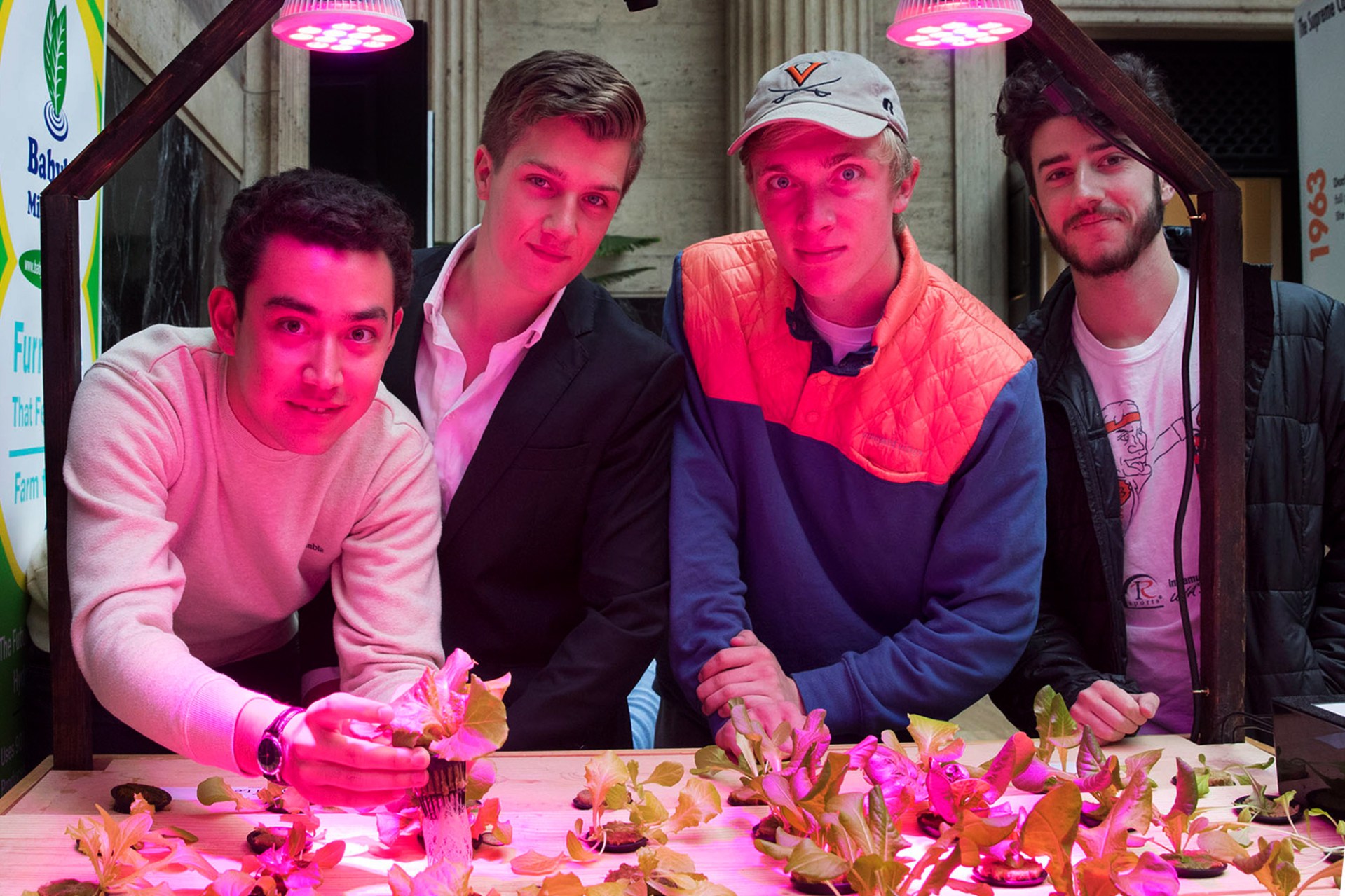
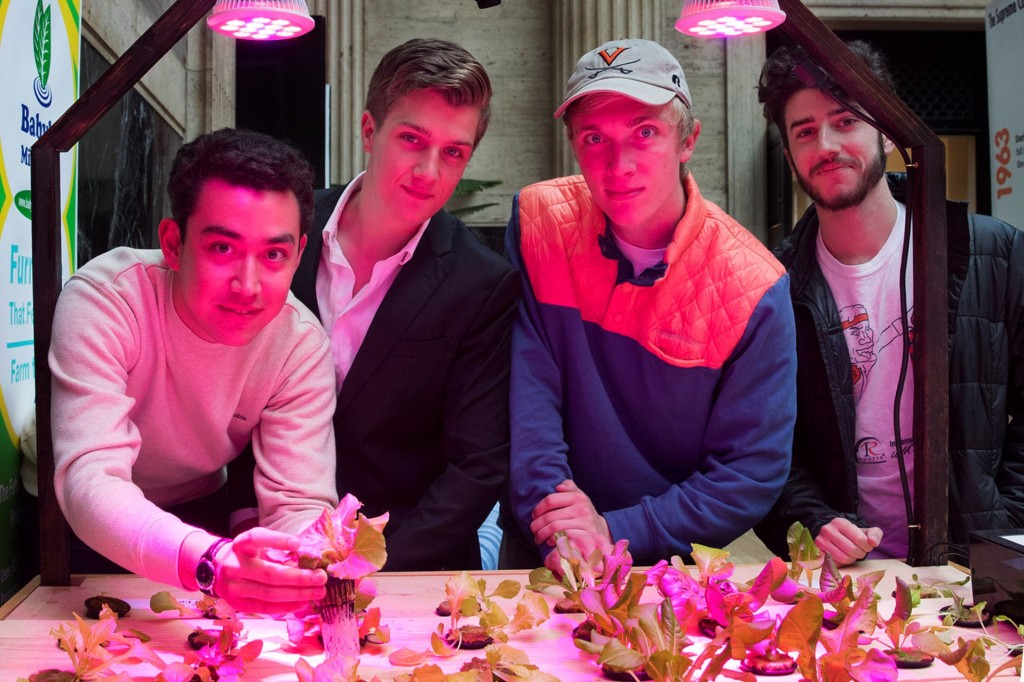
One of the more promising urban-farm concepts is not in New York, Los Angeles, or any other major city. It’s in Charlottesville, Virginia, courtesy of one University of Virginia alum and a very small team of employees.
Recent grad Alexander Olsen started Babylon Micro-Farms in 2016, as part of the UVA student entrepreneurial clubhouse, HackCville. An early prototype won $6,500 from Green Initiatives Funding Tomorrow, part of the UVA student council.
Now, Olsen and six other employees are working to get the hydroponic farms inside the homes of consumers, billing them as “the next generation home appliance.”
Read the FULL STORY at: “TheSpoon.Tech“

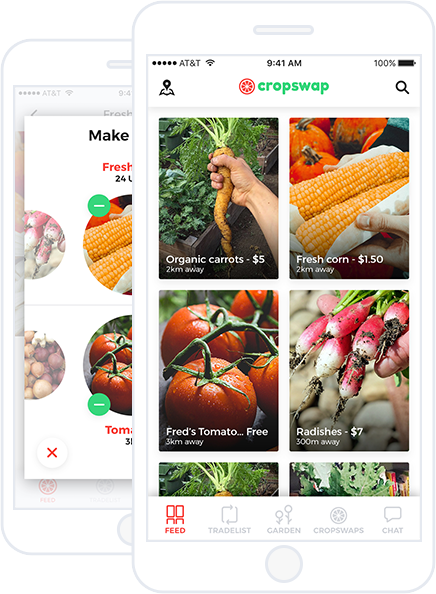
Our friends at CropSwap are hosting another giveaway!
Enter to win a FREE 3 Month Subscription to our Monthly Seed & Garden Club. Entering is fast and easy!
Just head on over to their Instagram page at https://www.instagram.com/cropswapapp/, to enter. Good-luck!
To LEARN MORE about our Monthly Seed & Garden Club, please visit us at: https://urbanorganicgardener.cratejoy.com
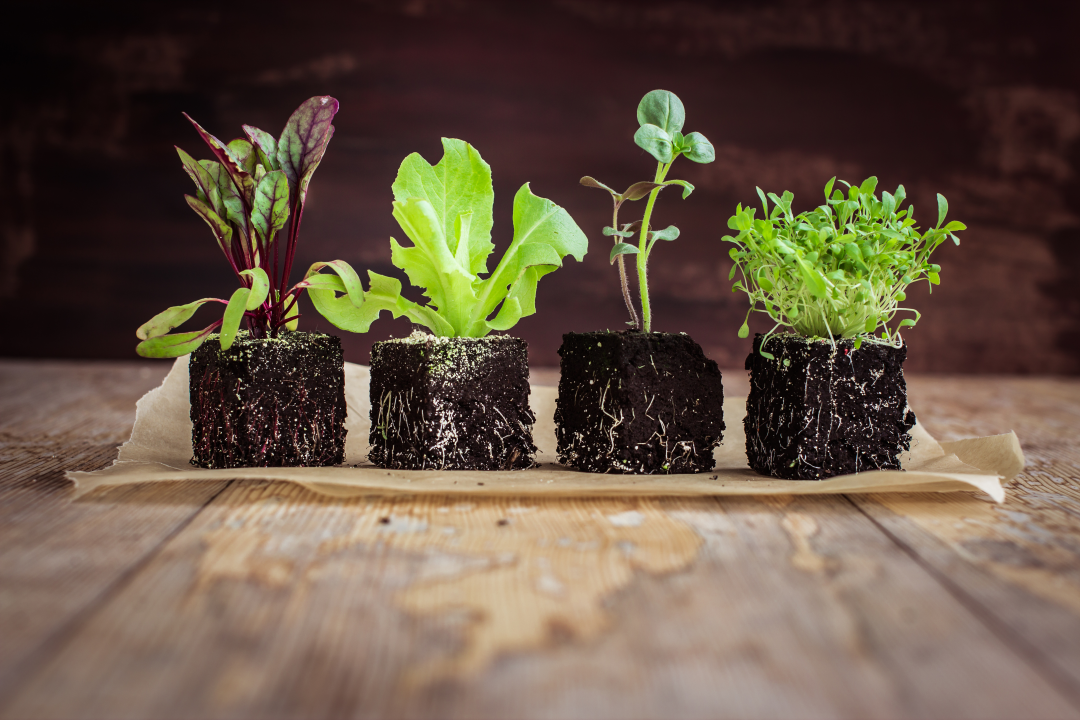
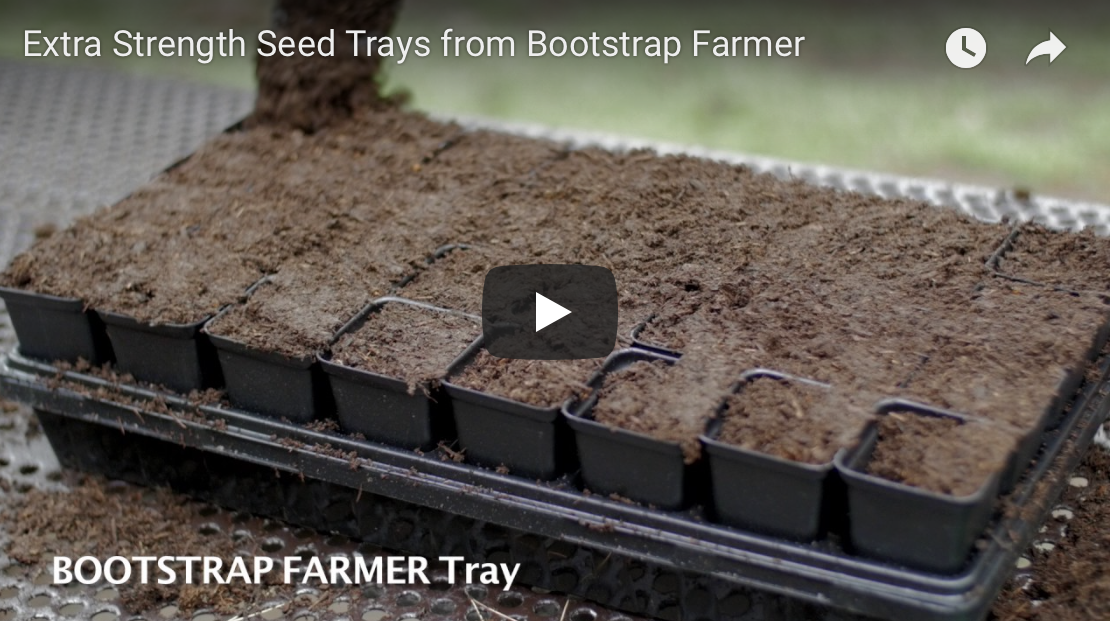
At Bootstrap Farmer, we want to help you get your small farm, garden or business off the ground. Whether that’s through our equipment line, fertility management services or our blog resources, we are here to help make your project a success.
Bootstrap Farmer sprung out of my Farm-to-Table Food Truck Model, Veg2Bowl, in Eastern North Carolina. I was growing vegetables & herbs in high tunnel greenhouses which would go right onto the mobile kitchen. Since it’s a certified commercial kitchen, I am able to harvest, prepare and serve it in meals to customers all on the same day with little to no waste.

Some of the foods that I most frequently grow are lettuce, kale, chard, microgreens, tomatoes, peppers, and onions. And of course, a few chickens for pasture raised eggs. I was doing a local & fresh version of Blue Apron, except everything was already prepared ready to eat or ready to be heated, along with private events & festivals.

For better or worse, while I was building the farm for Veg2Bowl, I was noticing tons of things on my little farm that I wish were better or more efficient. After months of research, I had figured out the most efficient way to build a high tunnel greenhouse, because knowing I had to build it myself with savings from living with mom & dad, I was not going to waste a dime. Then while running the farm, I had the tiny idea of making seed trays so durable, I’d stop breaking them myself.
Maybe it was because I had already quit my previous job and left everything behind, I was feeling adventurous? I still don’t know, but, what I did know is that I could provide value to people. From there, there was no turning back. The idea to create an ultra durable seed tray & a better high-tunnel greenhouse kit was the germination of Bootstrap Farmer, which has now grown into something I could have never imagined.
However… that came at a cost. I was struggling trying to run 2 completely new businesses. I was running a food truck, greenhouses and building an e-commerce business – all from scratch & all by myself (did I mention I also had no previous experience in any of it?) Somehow, by some miracle, both businesses were off to a great start, but it was becoming clear, in order to build either one of them into a long-term business, something had to change.
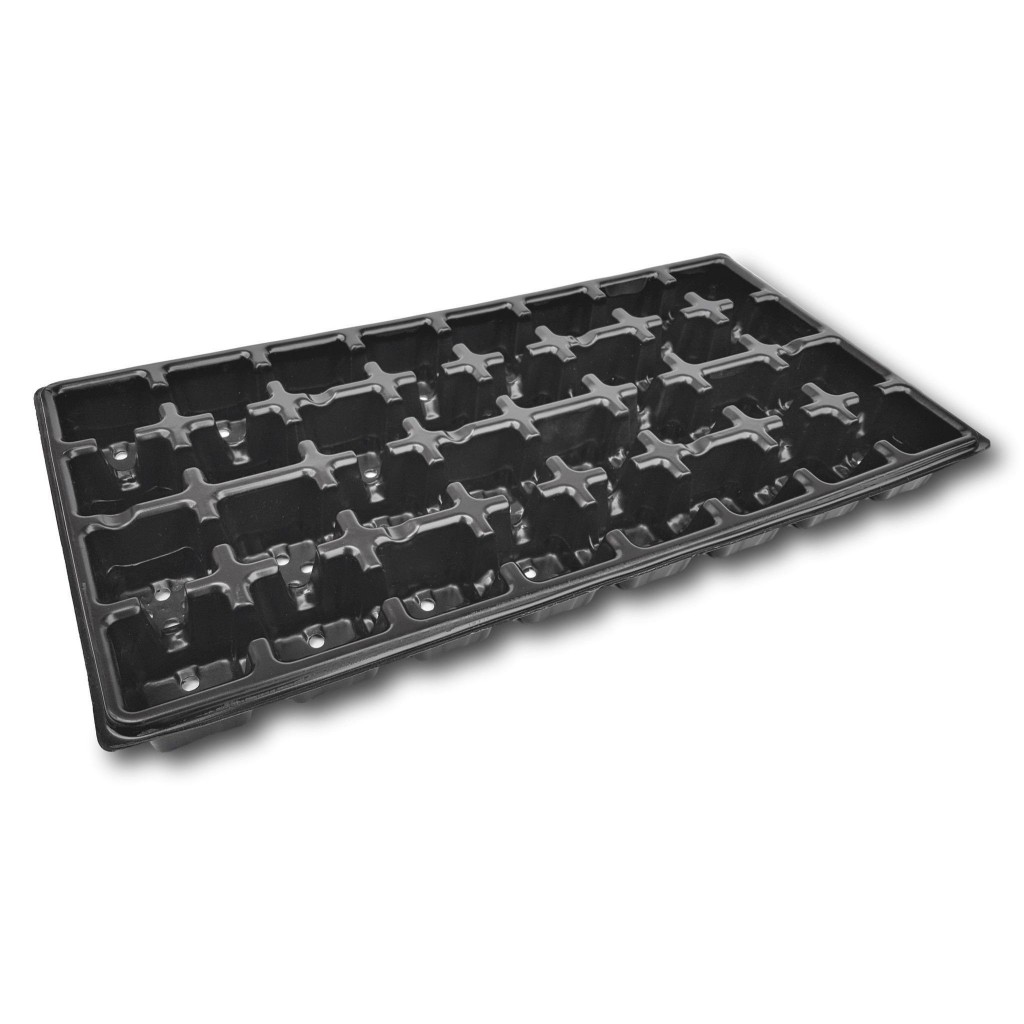
Check out the rest of their products, HERE!
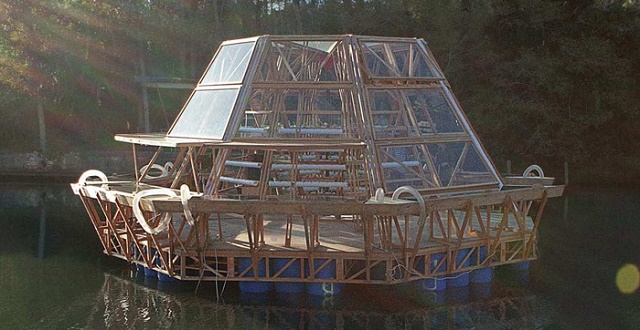
“Thinking about having your own greenhouse but not sure about how to be practical, efficient and environmentally friendly? If you want to check the previous 3 points and at the same time use simple materials and low-cost technology in an innovative approach to growing plants, than this following project will be perfect!
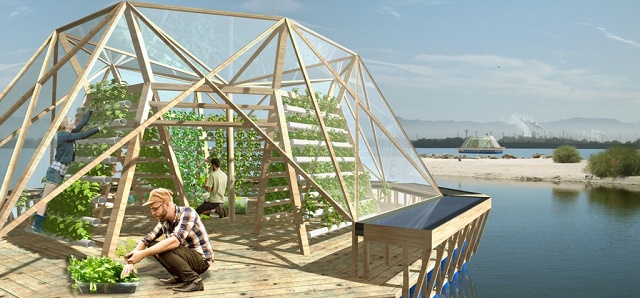
The 750 square feet octagonal shape barge is probably the most creative greenhouse in recent times. Jellyfish Barge, as it is known, floats on the water due to recycled plastic barrels but it is also a solar powered greenhouse. Besides the solar and wind sources, which by the way provide with enough energy to power-up the pumps or any fans included in the greenhouse, you even have the water waves giving energy! How cool is that? Grow your garden on this unique system.
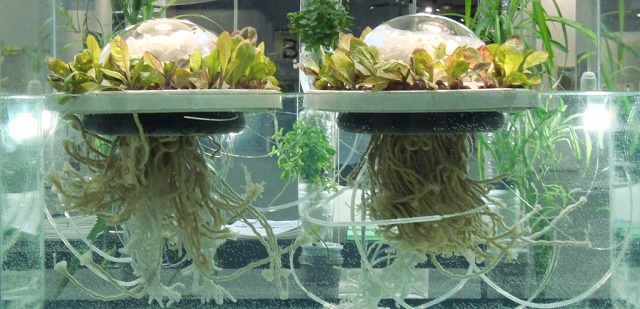
Check out the project in further detail to learn all about how it works and to get a better look at the planter ladder system inside. If you were pondering about choosing a greenhouse design before, you surely made up your mind thanks to this genius floating greenhouse!”
See more at: “GoodsHomeDesign.com“
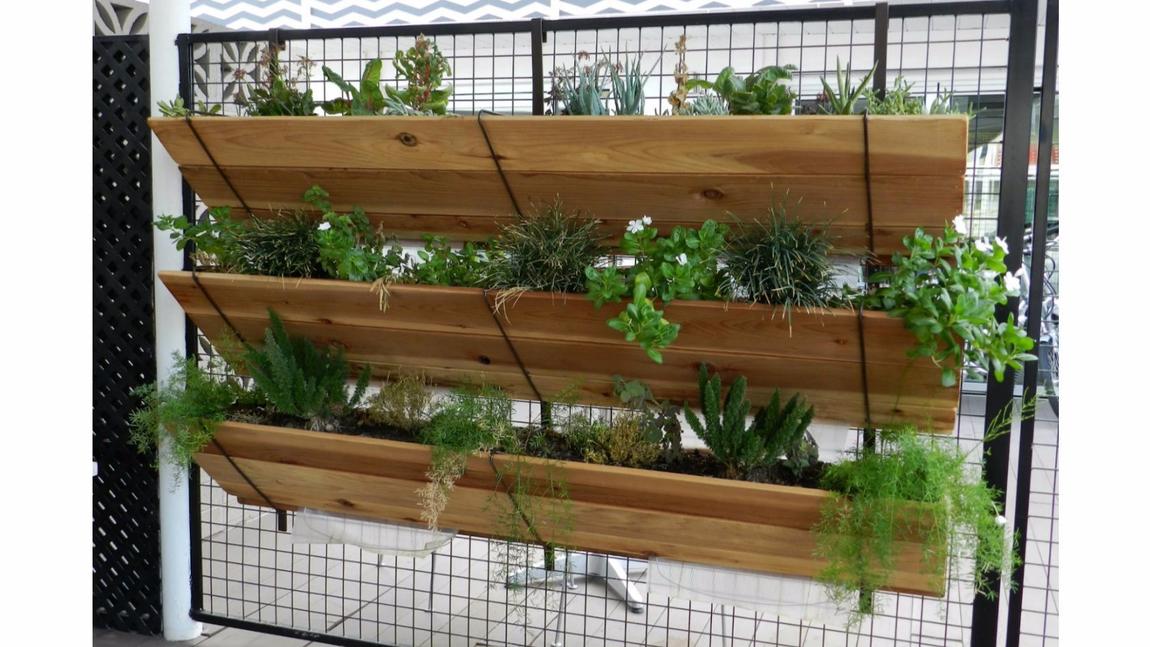
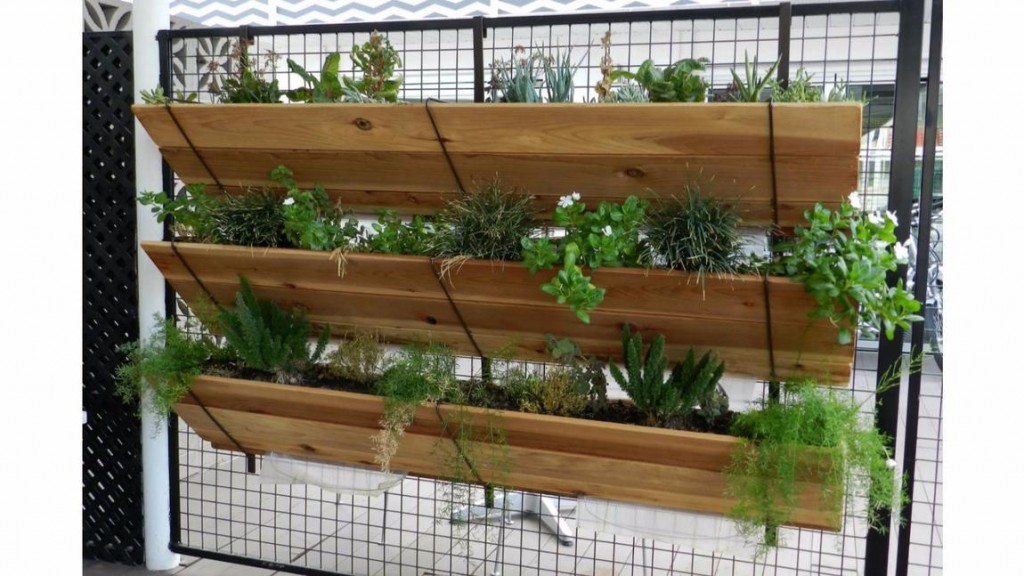 TIP 1– Soft, pouch-type containers are best for shallow roots like herbs, onions and succulents. Plants such as strawberries, lettuces and bushy veggies such as peppers like a larger, more rigid container. Tomatoes do best in large pots with some kind of support, like a cage.
TIP 2– Some kits have self-watering systems, but Forster just uses a “cute little watering can” to keep her patio garden hydrated. Don’t let your plants sit too long in standing water — that can suffocate the roots — but do find a way to contain the runoff from your plants so you don’t make a mess or drip on the balcony downstairs. Giving plants a little elevation, by perching it up on bricks or rocks inside a tray, would do the trick.
TIP 3– Use a good quality potting soil so roots can stretch and breath and make the most of their container. “‘Fluffy’ soils are best,” she said, “with stuff like peat moss, perlite and compost.”
Read MORE ways you can GROW VERTICALLY, HERE: “LATimes.com“
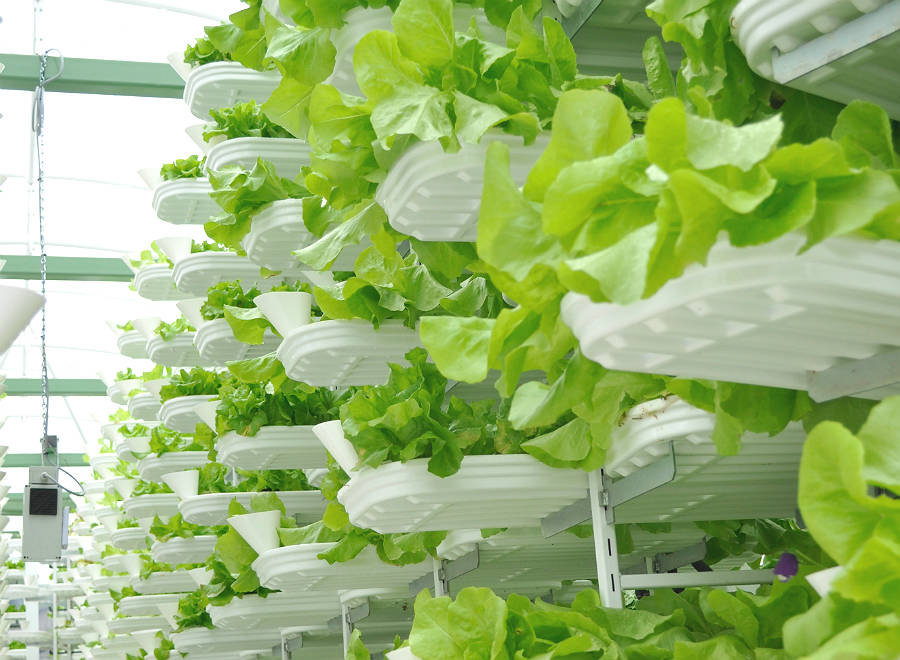
“A crucial battle in a long-brewing conflict over organic farming came to a head Wednesday when an influential government panel met to discuss whether soil is an essential element of organic farming.
On one side: “Dirt first” traditionalists who say that fruits and vegetables must, by definition, be grown in soil to qualify as organic.
On the other: Agri-technophiles who say “controlled environment” methods like hydroponics and aeroponics are just as deserving, dirt or no dirt.”
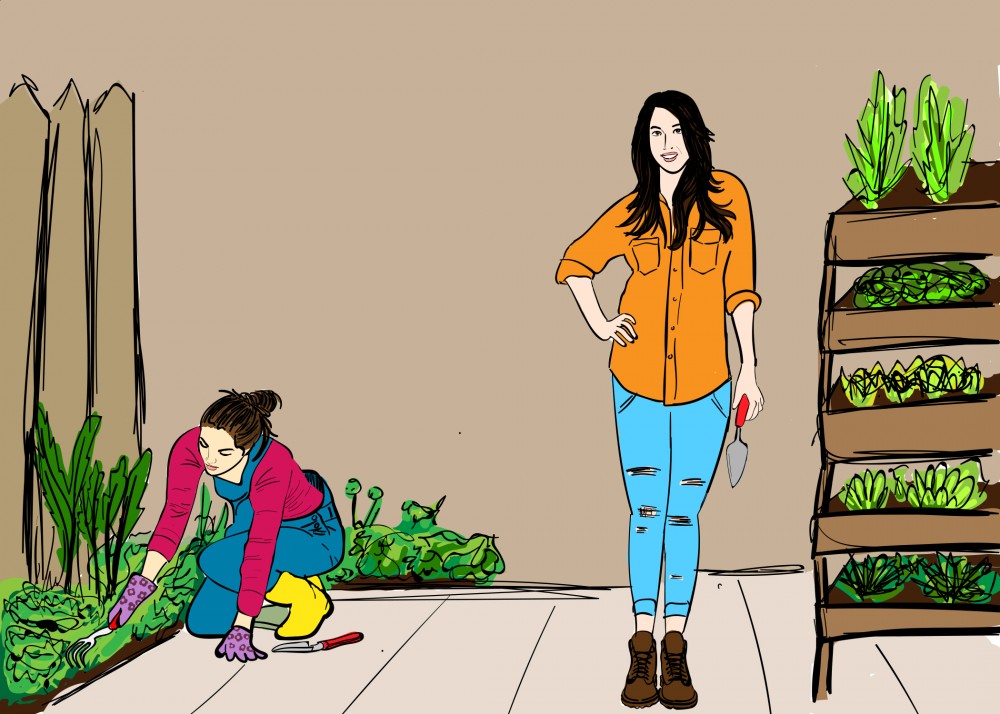
“Troy Albright, a Phoenix based pharmacist and farming entrepreneur spoke to students at ASU’s Polytechnic campus on Oct. 25 about the potential of aeroponics.
Aeroponics is a process of growing plants without the use of soil by suspending plants and nourishing them using mist.
Albright was invited as part of the Science and Mathematics Colloquium Series, a series designed to expose students to the work of researchers and practitioners in various fields.”
Read the FULL Article, at “StatePress.com“
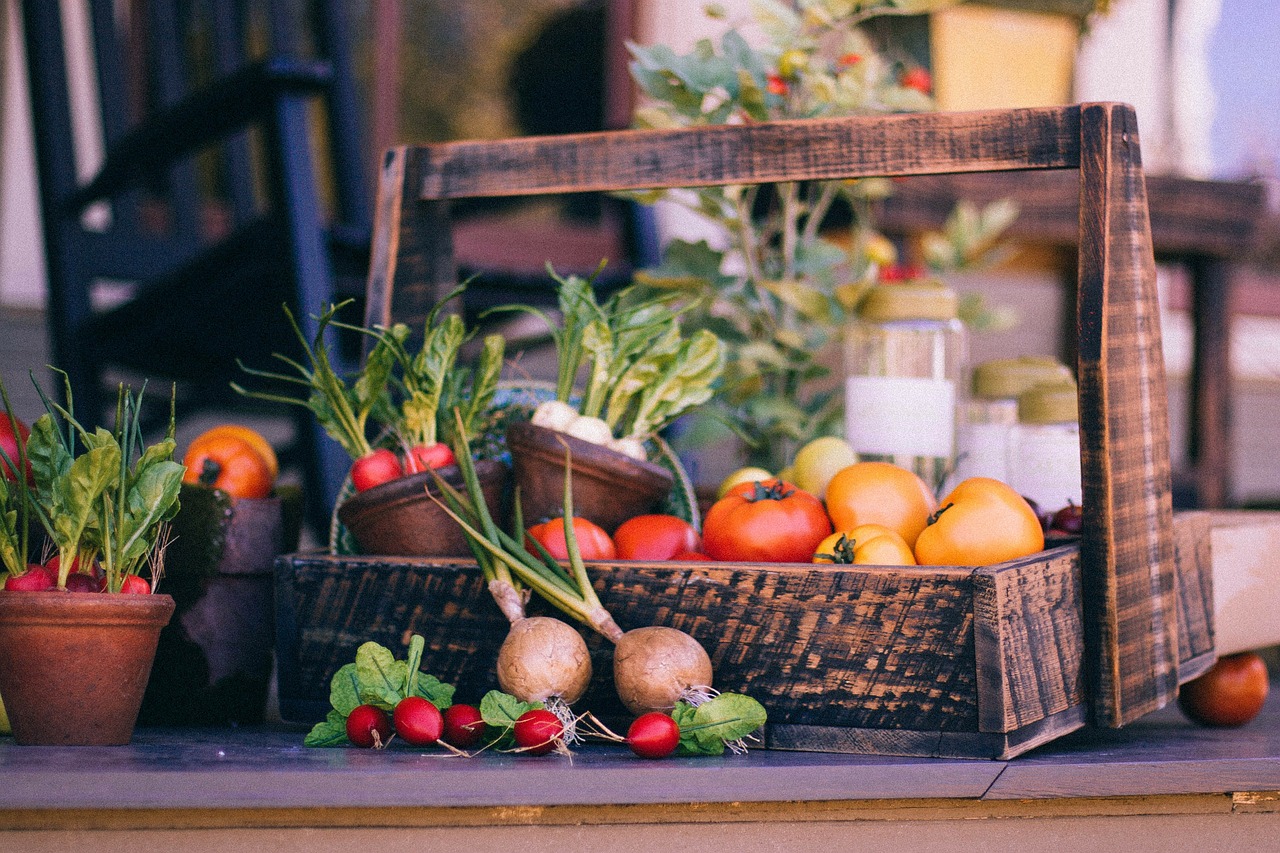
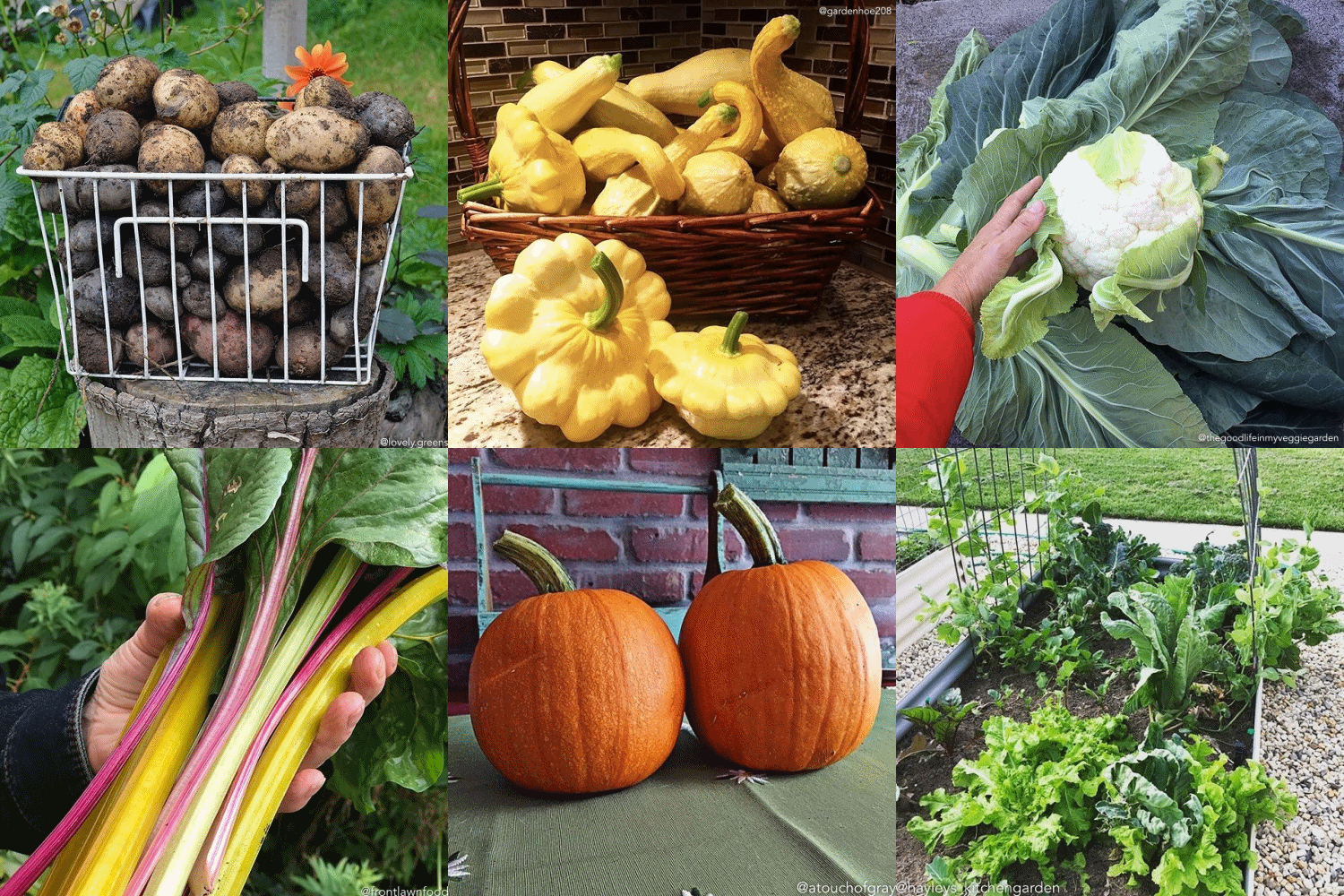
Grow food ALL-YEAR-ROUND with us! Now is the perfect time to start stockpiling seeds for your fall, winter and even early spring gardens! All of our seed club members will be receiving varieties that are perfect for growing during the cooler months. Let us hand-select 5 varieties of heirloom, GMO-free seeds to ship to you EVERY MONTH!
TO LEARN MORE or SIGN UP just visit: https://urbanorganicgardener.cratejoy.com/

We want to be where our fans and fellow gardeners are, so we’ve headed over to snapchat and created an account! We hope you’ll share all of your awesome gardening successes/tips/and learning experiences with us over there.
Let’s be friends! Just use the snap code below to quickly and easily add us and see more great content from us, everyday!


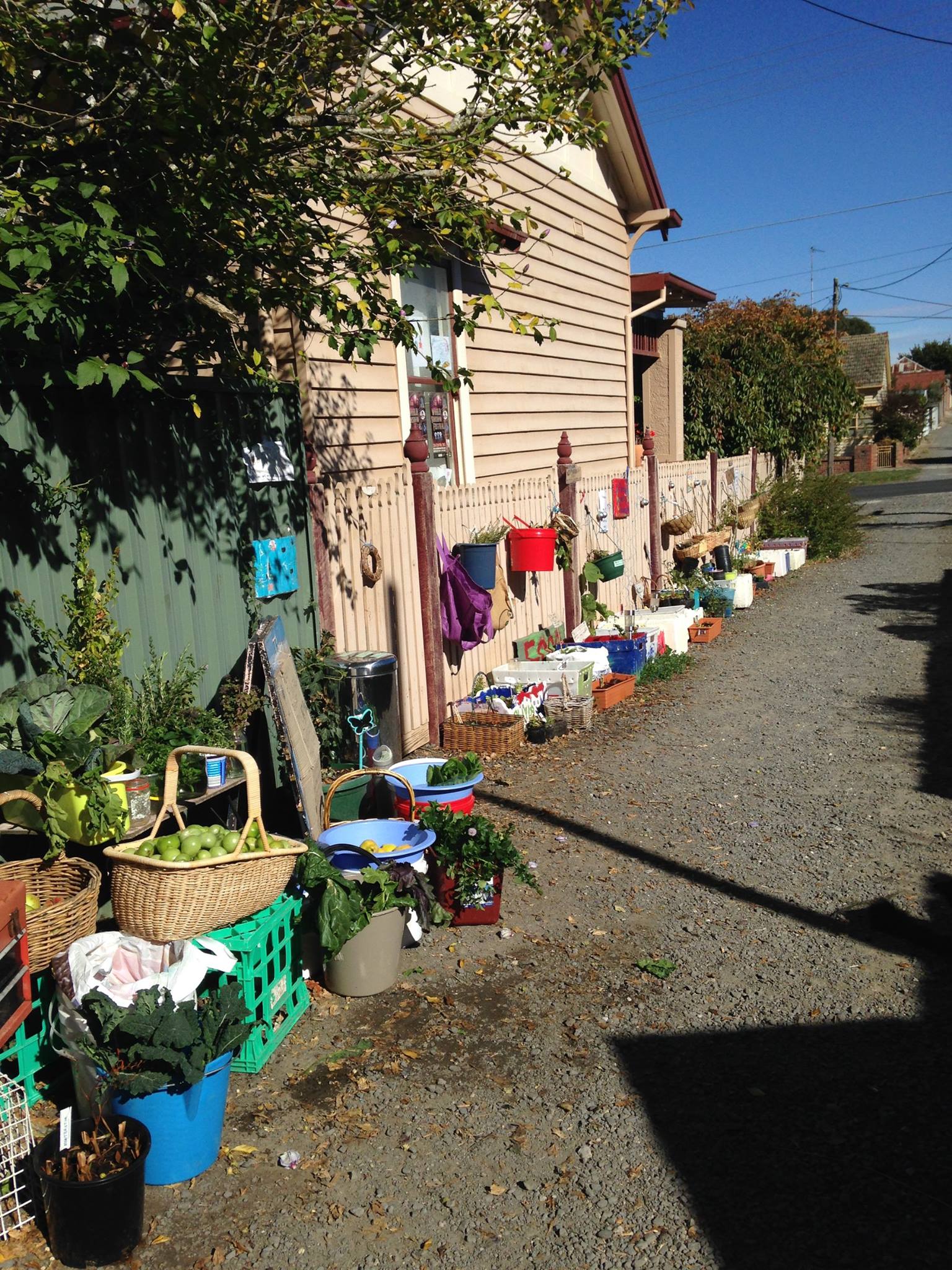
Who else thinks every community should have something like the Food Is Free Laneway Ballarat?
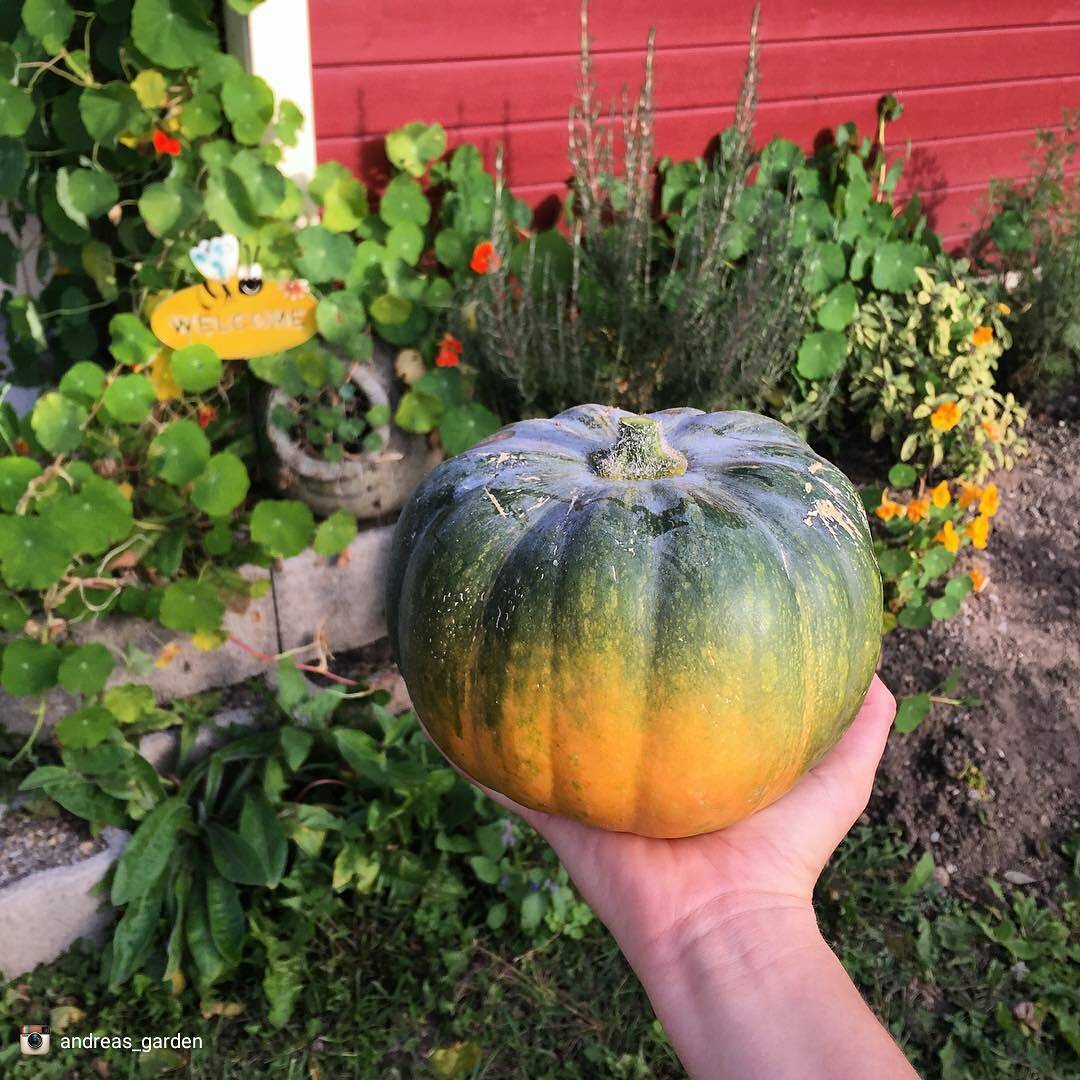
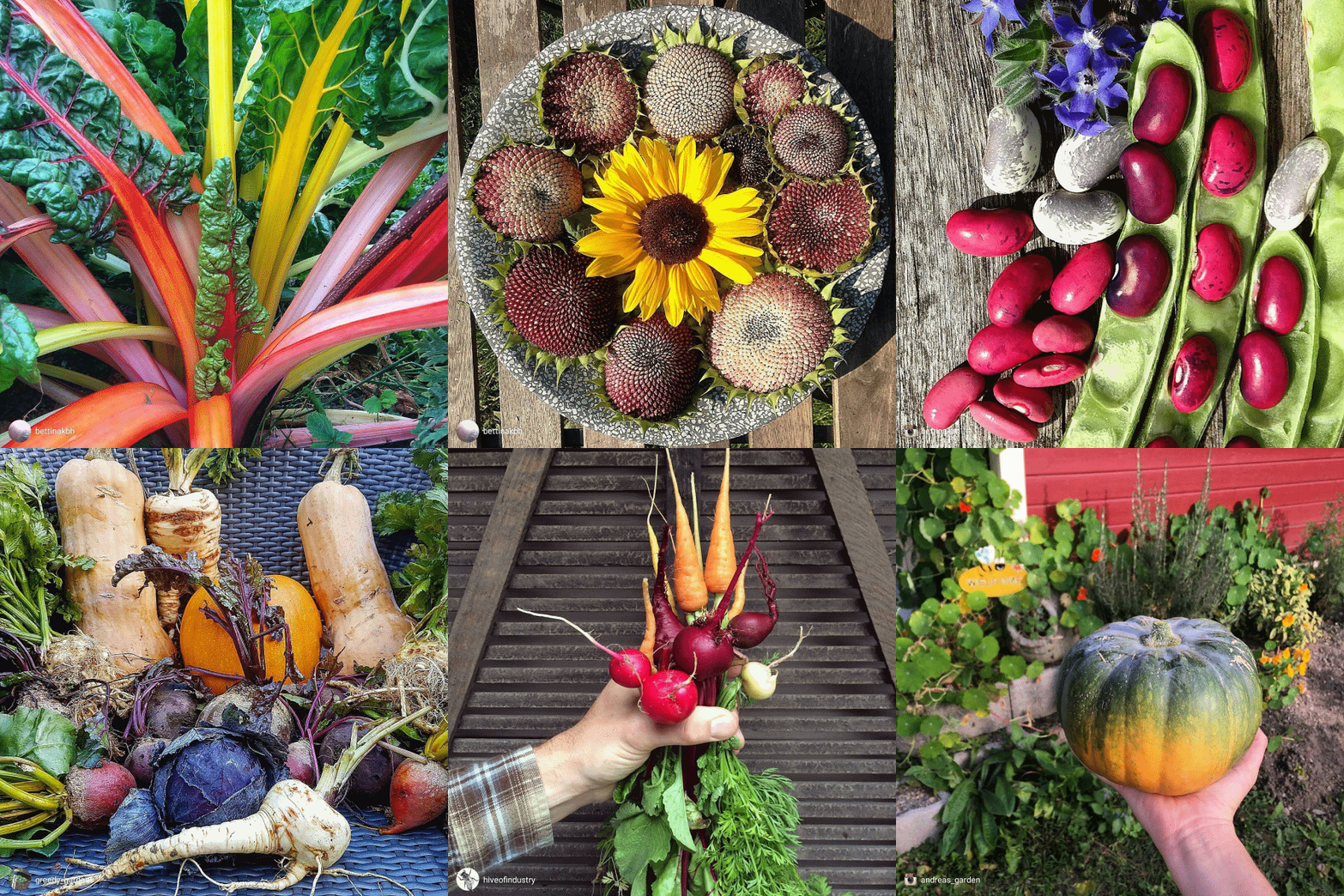
Now is the time to start planting seeds for your fall/winter gardens. Let our Garden Guru’s hand select popular heirloom, GMO-FREE varieties for you to start each month, customized to your location and grow zone! (Think frost hardy crops or varieties that can be grown indoors such as sprouts, lettuces, leafy greens and MORE!)
Sign up today at https://urbanorganicgardener.cratejoy.com
During sign-up, just let us know whether you prefer to grow indoors, outdoors, in partial shade or in the sun. Do you grow hydroponically? Not a problem, we’ve got that figured out too!
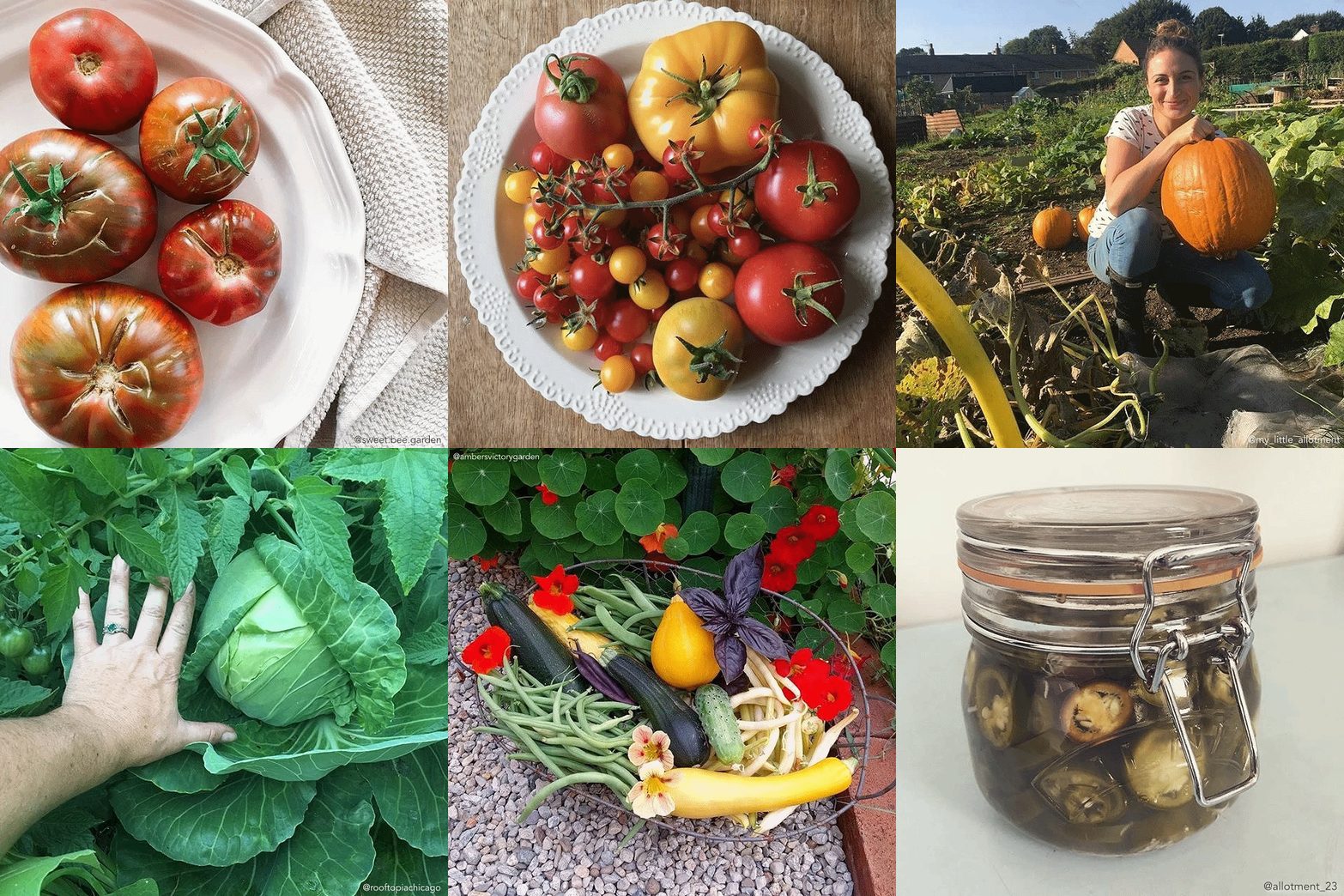
Now is the time to start collecting seeds for your fall/winter gardens. Let our Garden Guru’s hand select popular heirloom, GMO-FREE varieties for you to start each month, customized to your location and grow zone! (Think frost hardy crops or varieties that can be grown indoors such as sprouts, lettuces, leafy greens and MORE!)
Sign up today at https://urbanorganicgardener.cratejoy.com
During sign-up, just let us know whether you prefer to grow indoors, outdoors, in partial shade or in the sun. Do you grow hydroponically? Not a problem, we’ve got that figured out too!
Each month you’ll receive a 5 varieties, and everything you need to start growing more food! Happy Gardening to you, in 2017!

The Joy of Growing Window Herbs Year-Round
Have you ever thought about growing your own indoor herbs? If you’re kitchen windowsill isn’t already crammed full of pots overflowing with leaves, then it should be!
The beauty of keeping a “windowsill herb garden” is that you can rely on a steady supply of leaves all through the year. When outdoor plants have died back or gone dormant over winter, your window herbs will keep happily ticking along.
The process of starting your own “kitchen herb garden” from seed is simple. The great thing is that many plants not normally found in garden centers are available to you. Scrumptious edibles like dark basil, chamomile, lovage and yarrow (to name a few) are all options. What about the magical, medieval plant mugwort? Or that favourite for making lozenges, horehound?
Old favourites like thyme and rosemary will also fare wonderfully indoors as long as they’re properly looked after. Energetic perennials like chives will continue to grow even when light levels dip in winter. So you can lightly harvest even through the darkest months.
All you need are some pots, a good potting mix and some plant feed. If you’re starting your seeds indoors, where there’s no risk of critters eating the young seedlings, you can sow directly into the pots.
Let several seeds germinate and keep the best after they’ve put on some growth, snipping off the others with a pair of scissors. During late spring, summer and early autumn, your plants will be grateful for a bi-monthly or monthly liquid feed. Use a balanced NPK fertilizer (nitrogen-phosphorous-potassium) and a micronutrient feed like liquid seaweed. Many of the problems with herbs are due to trace element deficiencies.
And that’s it! The infographic included below is a visual guide to the process. Remember not to overcomplicate things and don’t be afraid of killing the odd plant…they don’t mind too much.

Indoor herb gardening is growing in popularity by the day. Space-stretched city-dwellers, foodies, and even people with big gardens are filling their kitchen windowsills with potted herbs.
There are so many benefits and almost no drawbacks. It’s cheaper, tastier and also possible to grow unusual and forgotten plants…yarrow or lovage, anyone?
In this little guide, and with the help of my infographic below, I want to cover the main steps involved in growing a scrumptious indoor herb garden.
View the original post with infographic at “UrbanTurnip.org“
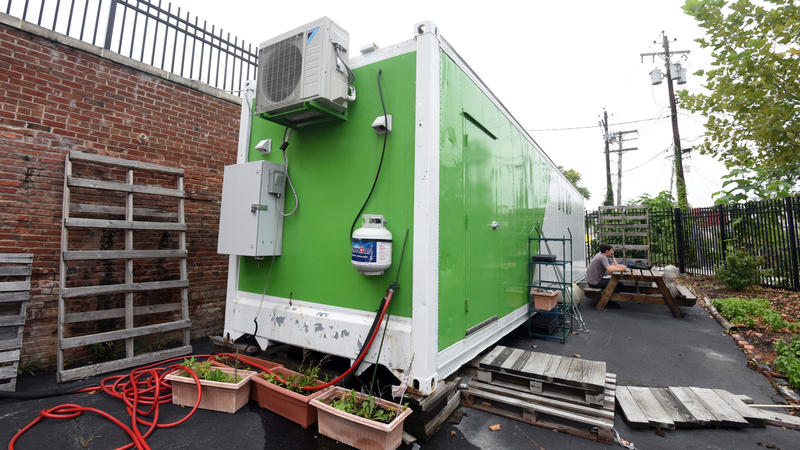
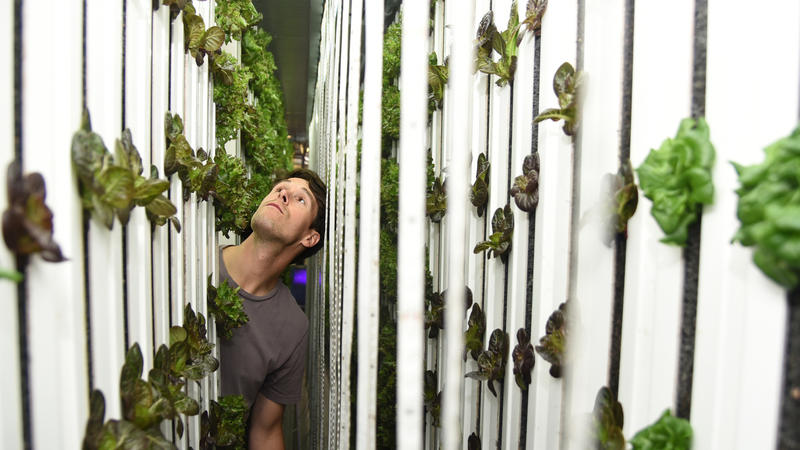
This retrofitted ex-shipping container in a parking lot in Broadway East is hardly your grandfather’s farm. And in his skinny jeans, black sneakers and recycled-materials T-shirt, J.J. Reidy will remind no one of the guy with the pitchfork and overalls in Grant Wood’s “American Gothic.”
Reidy, 29, is the founder and CEO of Urban Pastoral Collective, a two-year-old business with a dual mission: to produce and sell fresh, whole foods in an urban setting and to help leverage the value of such foods into a movement that transforms the way Americans live and interact in cities.
Read the rest of this article at: “BaltimoreSun.com“