Using Pumpkin Tendrils to Help It Grow Up a Tomato Cage

I am growing a miniature pumpkin variety from seed for the first time. It’s Jack Be Little Seed that I got from a sponsor of mine Botanical Interests.

No, I’m growing some huge Charlie Brown type pumpkin on my balcony garden. That would be dope though. These get to be about 2-3″.

It’s been about two-months or so since I first planted it (or maybe a month) and the plant is doing amazing. It looks like it is going to start blossoming soon and the leaves are getting large.

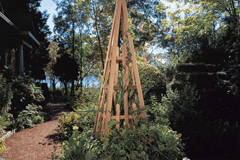
I am using a tomato cage to train it vertically since I don’t have much space for it to sprawl.

To help the plant grow upwards, you want to take the tendrils, those are the small viney (if that’s even a word) type things, and guide them up the cage. The tendrils help to support the plant while it’s growing and will wrap around anything that will support them.

Have you ever thought of growing pumpkins in containers? What have you learned learned about growing pumpkins?

Growing Cucumbers Vertically to Maximize Space

A single cucumber plant can spread out over 12 to 20 square feet when grown in traditional rows or hills. But one way to make better use of space and maximize yields is to grow cucumbers vertically – that is, to let the vines expand upward instead of outward, by supporting them on a raised structure. This is a perfect space-saving solution for anyone growing cukes in containers, raised beds, or other small plots of land (like a narrow side yard).

By the way, if you’re looking for heirloom/non-gmo seeds this is where you can order cucumber seeds online.

There are other benefits to growing cucumbers vertically as well. When plants are raised off the ground, leaves are less susceptible to slugs. Since foliage dries off faster after a rain, fungal problems are reduced. And, vertically-grown plants may have more leaf surface area exposed to the sun, resulting in better growth.

The most important way to ensure success with vertical growing is this: Know the difference between vining and bush types of cucumbers – and choose your seeds or seedlings carefully so you don’t end up with a bush variety!

Bush varieties of cukes have been bred to take up less space when grown flat in the garden. While they’re still sprawling plants, they’re not climbers. Instead, they put out vines that radiate only three feet out from the plant’s center – meaning they require only nine square feet of horizontal space, about a third of what a vining cucumber takes up on the ground. But when you grow a true vining cucumber variety vertically, you can grow one or two plants in just one square foot of ground space.

Many people successfully grow cucumbers on long, low supports – three feet high by five feet long, for example. But when you’re really short on ground space, nothing beats growing them nearly straight up, on a tall support of five feet or more. Always start out with your growing structure in place, and then transplant seedlings around it – you’re less likely to damage roots this way.

If you’re growing in containers, use a pot of 21 inches or more, to allow for root room. You can grow four to six cucumber vines this way, with at least a five-foot trellis in or behind the pot.

Cucumbers climb via tendrils – specialized, touch-sensitive leaves that wrap tightly around objects they contact. If your vines seem reluctant to climb, your latticework may be too far apart or the individual bars may be too wide for the tendrils to grasp. Try stapling chicken wire or netting to your structure, to give the vines a toe-hold.

As you experiment with vertical growing, you can create your own plant supports from materials you have on hand.

Sound off

What other tips do you have for growing cucumbers?
How to Harvest Mint to Promote More Growth

Your mint container is likely overflowing and ready to harvest. If not, it should be. There is a way that you can harvest it to encourage even more growth from the delicious herb.

What you are going to want to do is pinch it from the top. What the hell does that mean? It means that you are going to have to find the sprig that you want and pinch it as close to the next set of leaves as possible. This will help to encourage the plant to grow more.

If that doesn’t make any sense, check out this quick video. It makes more sense visually than written.

What’s your favorite way to use mint?

Where to buy mint seeds? Get them here: http://www.seedsnow.com/collections/types?q=All+mint+seeds

Grow Great Tomatoes Without Using Chemicals


It’s frustrating to say the least when you spend hours tending to your tomato garden and the tomatoes still aren’t as big and vibrant as they could be. The soil quality will determine your success with each plant, and the more organic material you mix into your soil (versus synthetics) the better the plant will grow!

Chemicals Aren’t the Solution

Most people do not want chemicals anywhere near their garden, family, dinner table, pets or the soil. They do not want exposure to dangerous toxins and once they contaminate the soil they can take years to get rid of. Avoid synthetic fertilizers (use organic or worm castings instead), toxic pesticides, products with high nitrogen content or nitrogen only.

Tips for Planting Tomatoes

  • When you plant tomatoes, select a location that has full sun all day long. If sun can hit the entire plant, it will grow better and fruit will appear sooner.
  • Spacing is also important. We suggest 3 feet by 3 feet, and no closer.
  • Proper air circulation will reduce pest and disease problems.
  • Stimulating and maintaining healthy, biological soil is also a key component. Soil that drains well is preferred, and adding organic microbes such as beneficial bacteria and Mycorrhizal fungi will extend the root systems and increase water and nutrient retention.

Your Options

Some gardeners use organic compost or mulches to accelerate plant growth and help deter insect infestation and disease. Organic Compost and mulches contain the same microbes, but in a dry formula it takes a lot longer for them to get to the roots and they cannot attach to plant surfaces.

Read some of the comments below to see what tips and tricks others are using to grow tomatoes organically.

Join the discussion … What have you used and are other options for growing great tomatoes without the chemicals?

Your Seed Starting Soil Should Not Have Twigs

Isn’t it mad frustrating and annoying when you start your seeds and they don’t sprout? Generally seeds will take somewhere between 7-14 days to sprout, depending on the seed. Once it hits that 14 day mark with no sprouts, start getting concerned.

About six-weeks ago, I started some lemon balm seeds on my balcony garden. They were planted in four parts of the container. I planned on thinning them out when they grew their true leaves so only the strongest stood. Six-weeks later and still nothing.

I shouldn’t say nothing, but very little. There are some small sprouts that appear to be attempting to forcing their way through. Not much though.

They have been watered regularly and get at least four hours of direct sunlight a day. I am going to say that the problem is with the soil that I’m using. It’s something that I’ve been suspect of for a while, but this solidifies it for me.

When taking a closer look at the soil, it has lots of twigs and bigger pieces. That’s not a great growing medium for containers. I’m going to toss the soil into the compost and get some new soil. Unfortunately, I don’t have the space to make my own potting soil like I did in Brooklyn. Damned soil.

What are some other reasons that seeds won’t sprout?

httpv://www.youtube.com/watch?v=pRJc05CmoSU

What are True Leaves?

When you read information on seed packets and other garden related materials, you might come across the term “true leaves.”

Screenshot 2014-04-14 17.25.26If you are anything like me, you might be wondering what they hell that means and if there are fake leaves.

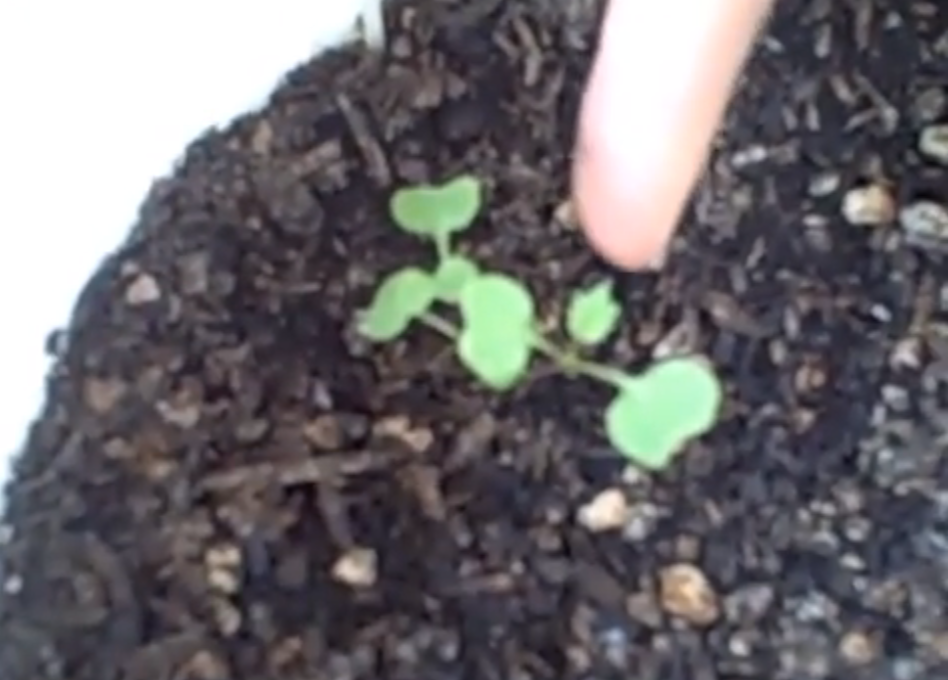
When seedlings sprout, often there are two-sets of leaves that form first. They look almost four-leaf clover like. A few days later a third single leaf will emerge that doesn’t look like the first two. That’s the first true leaf.

When the first true leaves emerge that is usually when you can start fertilizing, transplanting, thinning or doing whatever else you are going to do.

So that’s what true leaves mean figuratively and literally. Now can we come up with a better name for them – maybe third-leaf?! What would a better name be?

Decorating Your Recycled Container Garden

People (haters) often bust my balls about how ugly my balcony garden is. They say that it’s beaten up and used 5-gallon containers and not very pretty.

I’ve decided to take the challenge of the haters and decorate my self-watering containers. One of my containers was decorated by my girlfriend, Anita, who did a much better job than I could ever do. Since I’m not nearly that artistic I got some inspiration from Life on the Balcony. Her finished containers are more stylish than mine, but I’m working on it.

This would be a great project to do with your kids and get them involved.

I removed the reservoir containers and painted them a solid color for now. I’ve been contemplating creating stencils for them, but am undecided at this point.

What do you think of the new look containers? Should I leave them solid colors or decorate them a bit more? If so, what should I put on them?

httpv://www.youtube.com/watch?v=whJeTiFjHRY