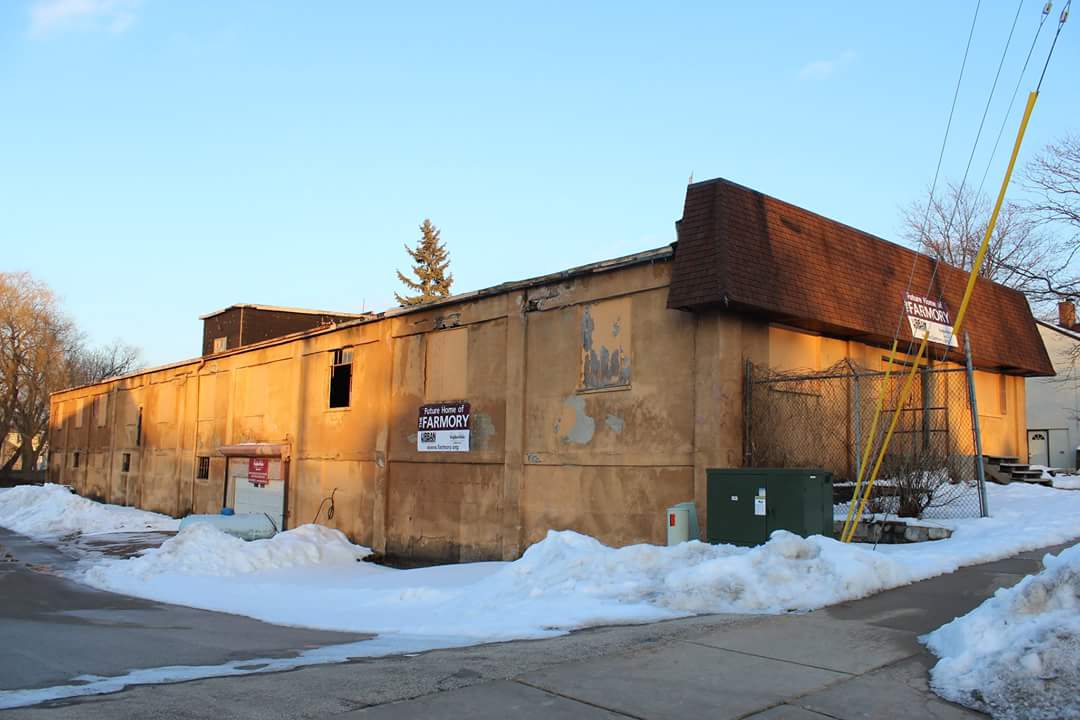
They are looking forward to serving it’s community with locally grown produce such as leafy greens and herbs. Not only that, but they’ll have mushrooms and even fish with their aquaponic set-up.
Today, all over the United States, chefs and restaurants have figured out a way to keep where their food sources more local. This means they could be growing their own tomatoes on a rooftop or even sourcing food from some of their customers backyard gardens.
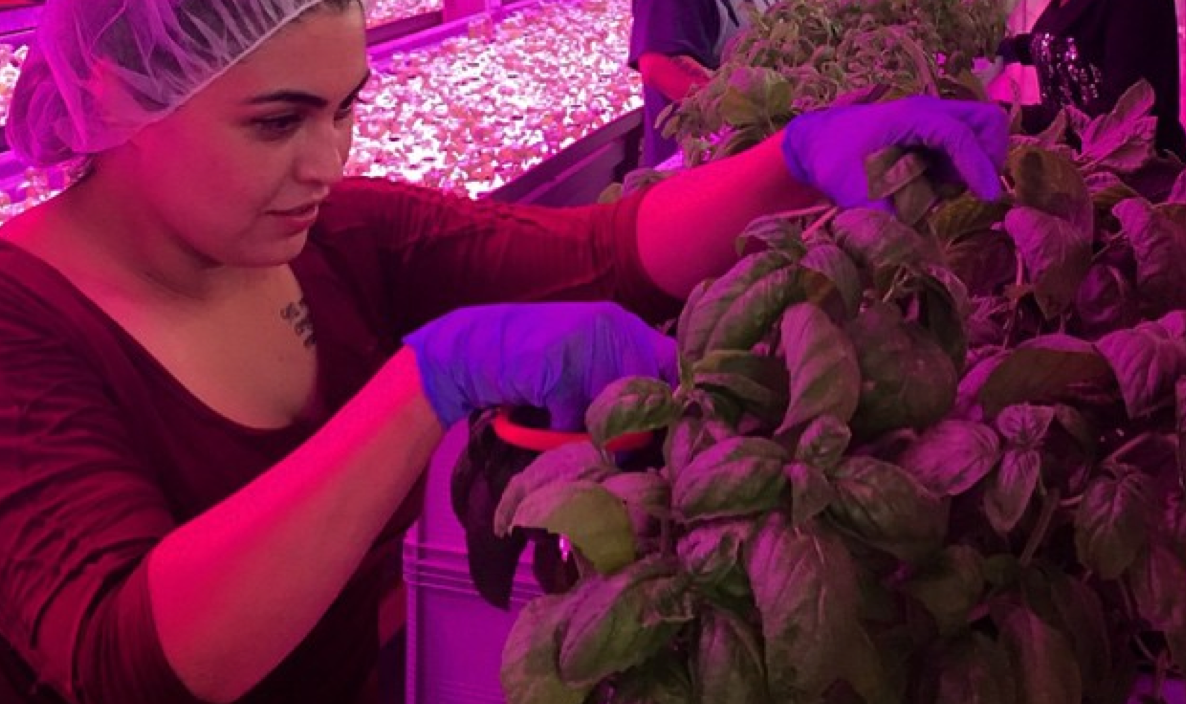
“The Perennial, a soon-to-open San Francisco eatery, plans to take the business of local sourcing several steps further. Many of the greens and herbs the restaurant serves will be grown in a closed-loop aquaponic system based across the Bay in Oakland. And when chef Chris Kiyuna wants to serve say, some sorrel or sprigs of purple basil, he’ll be able to harvest them from the “living pantry”–an area of the restaurant where the greens will float until just moments before they’re served.”
“The living pantry is meant to spark conversation about the many connections between food and climate change–as will many other elements of the restaurant Eater SF has called “mega-sustainable.” Leibowitz says she and Myint were inspired to focus on the topic after hearing that greenhouse gas emissions from the farms and fisheries could increase by 30 percent by 2050.”
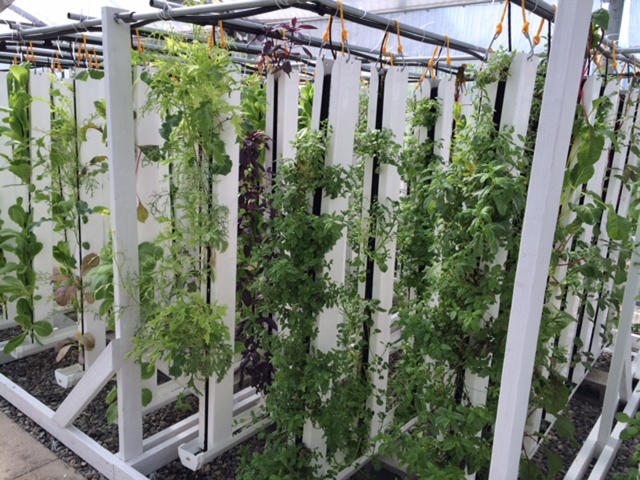
Urban farming is taking off, and California is is getting a glimpse of what future agriculture might be like. Take a look at this Long Beach urban farm, all part of The Growing Experiment. Here you’ll find countless fruits, veggies and herbs growing in 175 metal towers. It’s also home to a 600 gallon tub filled with tilapia and goldfish. They use this tub filled with fish as part of their aquaponic system which delivers the nutrients to the plants.
“For each square foot of space, we’re basically replicating three to four square feet outdoors. We’re maximizing vertical space. Even though this is 1,000 square feet, it’s almost the equivalent of up to 4,000 square feet in the ground.”
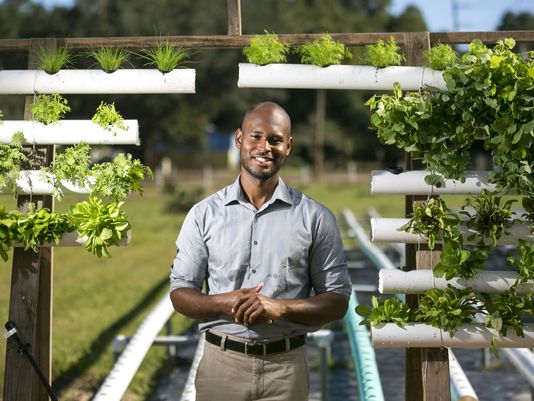
In Florida, a disabled marine has started up a new aquaponics operation where he grows “herbs like fennel, dill, cilantro and chives, as well as a wide range of greens including Bibb lettuce, Tokyo bekana, Cressida cress, mizuna, red Russian kale, Swiss chard, bok choy and red giant mustard greens.”
Besides the fresh produce, he’s also raising 300 tilapia fish which in turn feed the plants that he is growing in a closed-loop aquaponics system he built himself.
“The way I grow food here and give it to people is the way I eat it, the way I want to eat food, free of pesticides, the most natural way of growing things,” Mickell said. “This is a place where we take pride in what we grow and we care about what people are consuming.”
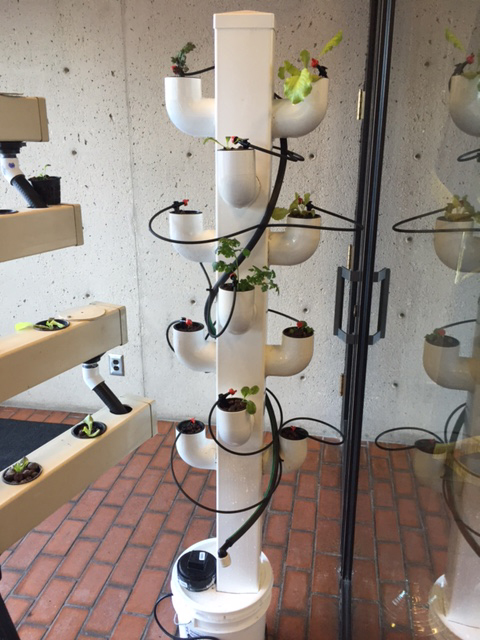
In Salt Lake City, Utah, even though there may be snow on the ground and freezing temperatures…people are growing countless fruits and vegetables indoors in the Utah Department of Agriculture and Food building. They are also using aquaponics, which uses fish to provide the nutrients that the plants need to grow.
“If you want to try out Hydroponics and Aquaponics, it is easy and relatively inexpensive. The State Department of Agriculture has all the information you need HERE.”
Original post: http://www.alternet.org/food/inside-nations-largest-organic-vertical-farm
Chicago isn’t usually known as a farming hub, but did you know that Windy City residents are dining on organic produce such as basil, arugula, kale and microgreens right from their backyard?
FarmedHere, a 90,000-square-foot space in Bedford Park that opened in 2013, is not only the first organically-certified indoor vertical aquaponic farm in Illinois, it’s also the largest indoor farm in North America.
“Our produce is local, it’s healthy, it’s organic and our produce is sold 24 hours from harvest date to our retailers,” says former FarmedHere CEO and current chairman Mark Thomann in the video above.
FarmedHere’s two-story, windowless farming facility currently sits on the site of a formerly abandoned warehouse in the outskirts of Chicago.
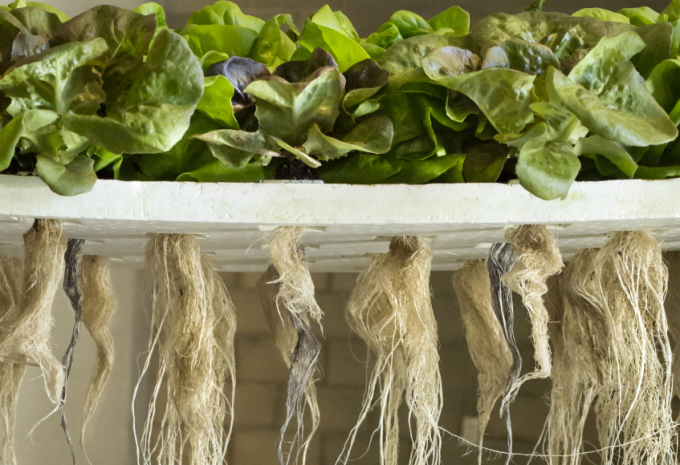
A variety of plants grow on racks that are stacked on top of each other in a vertical farming system, as well as an aquaponics system, which combines tilapia (and the fish’s waste) and plants (which filter the waste) to grow food.
FarmedHere’s produce is grown in a sustainable environment where 97 percent of fresh water is reused and plants are grown without the use of herbicides or pesticides. The farm’s LED lighting system mimics outdoor conditions, meaning plants don’t need natural sunlight to grow.
According to PSFK, the company boasts “up to 15 times as many crop cycles a year compared to traditional farming” and supplies its harvest for approximately 80 retailers in Chicago.
The company says that total growing time is about 30 days, which is half the time of traditional farms.
“Our vertical growing technology and local distribution methods reduce energy use, travel time and costs tremendously, making this model one of the most sustainable ways to guarantee access to fresh, healthy produce in city centers, in any season,” the company, which launched in 2010, advertises on its website.
As EcoWatch has reported, indoor farms could help solve potential global food shortages and food deserts.
The global population is expected to reach a staggering 10 billion by 2056 and there is only so much arable land available. Climate change is only confounding the problem, as extreme weather events such as flooding, hurricanes and drought increase in frequency and intensity, and leave a damaging impact on agriculture.
The beauty of indoor farms, which are sprouting up from Japan to Jackson, Wyoming, is that the plants growing inside are immune to hot, cold or extreme weather.
If all goes according to plan, those of us outside of Illinois might get to enjoy FarmedHere’s year-round, fresh-grown produce a lot closer to home.
At the Indoor Ag-Con held earlier this month in New York, newly appointed FarmedHere CEO Matt Matros announced ambitions for 18 new indoor farms spread across the country that could provide local (meaning less than 200 miles) produce for up to 75 percent of the country’s population.
“We are not competing with each other, but with Central Valley agriculture” Matros said during his keynote speech.
“We want to create the Disneyland of vertical farming,” he said.
Matros told Chicago Tribune that he hopes to expand to 12 to 15 farms across the U.S. within five years and eventually have farms around the world.
“Everything about this business is good, and it solves a really big problem,” Matros told the publication. “We’re going to have nine billion people in the world by 2050. What are we going to feed them?”
Urban Organic Gardener Interviewing Rob from “Bits Out The Back”:
How would you quickly describe yourself to others?
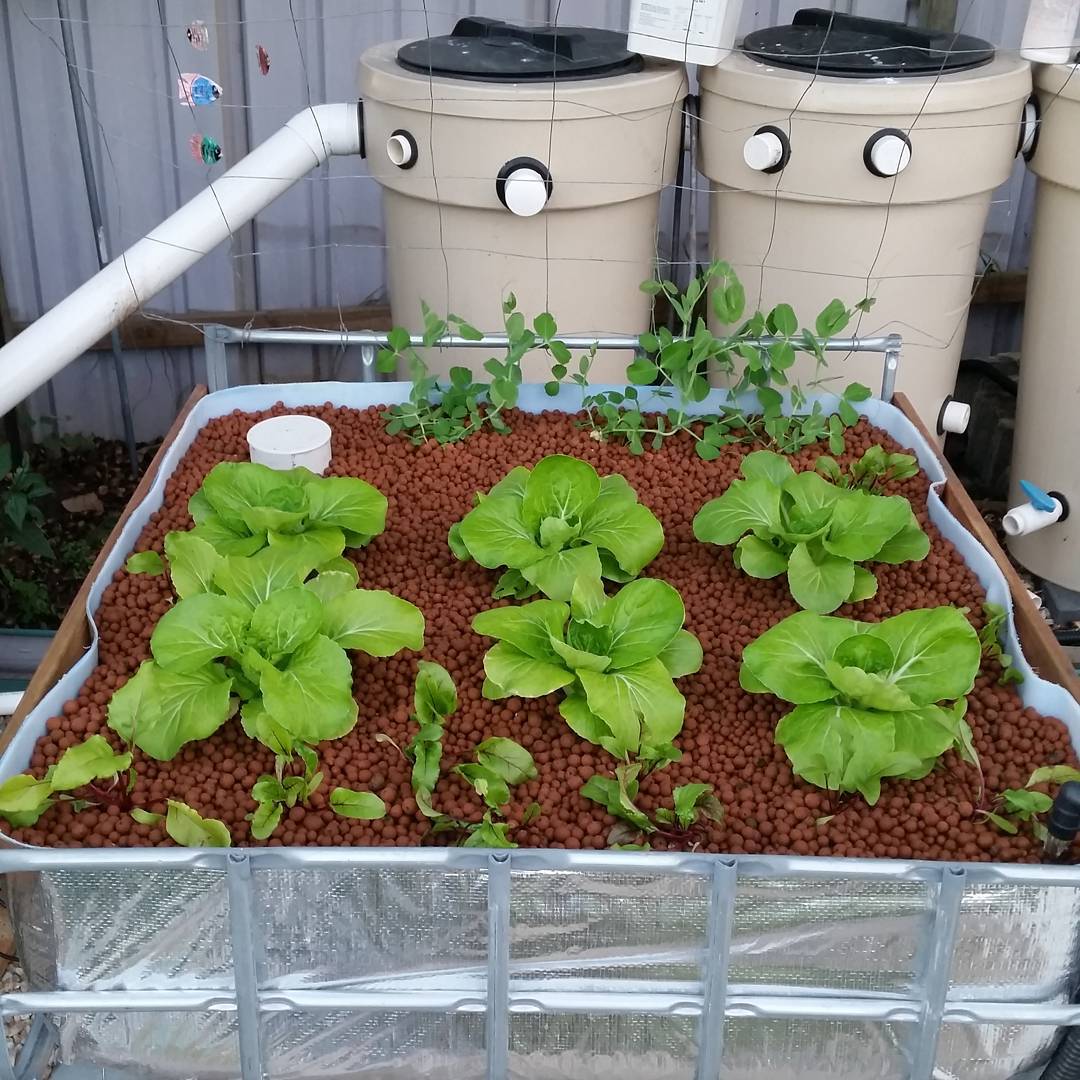
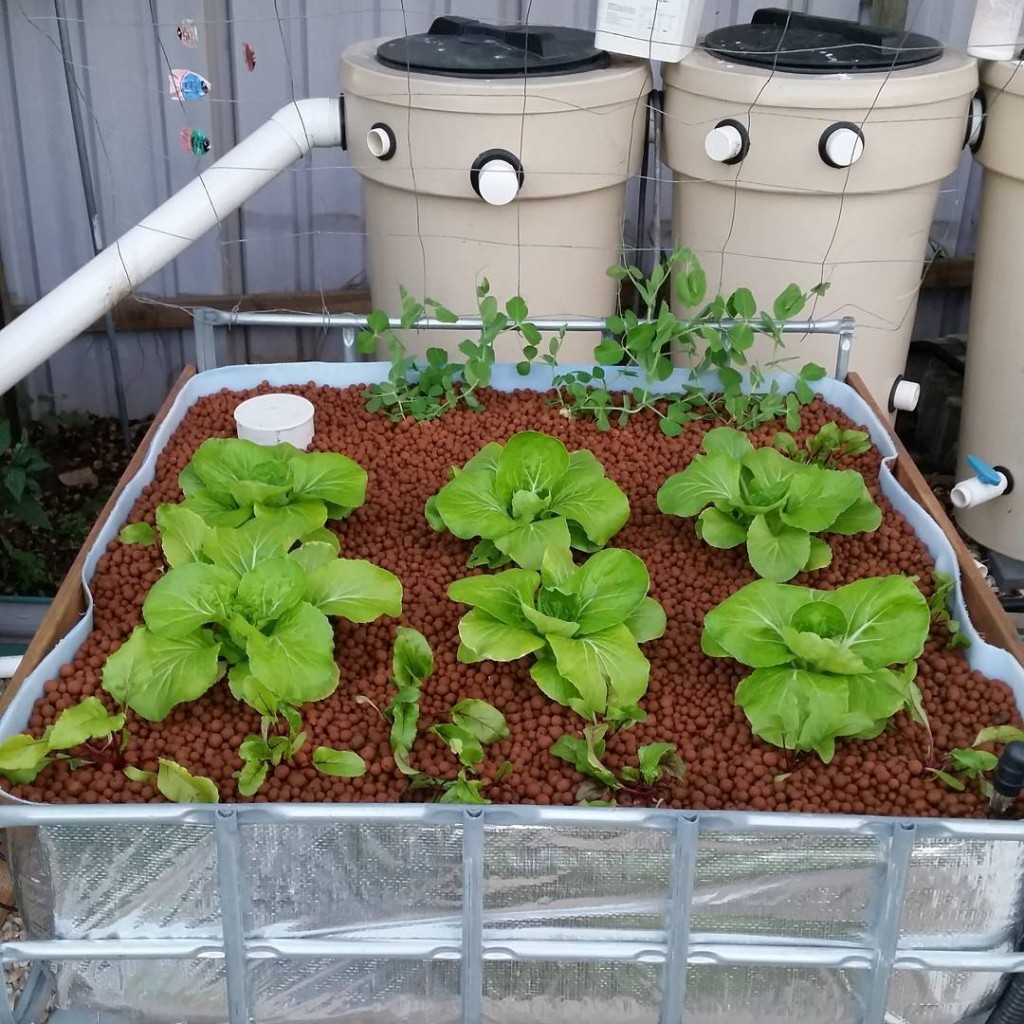
I’m a stay at home dad that’s very interested in growing as much nutritionally dense food as I can to help improve our health and reduce our dependence on the industrialized food system. We live in SE Queensland Australia in a subtropical climate and are lucky enough to be able to grow 12 months a year. Most of our food is grown in self watering wicking/sub irrigated garden beds but also have an ever expanding aquaponic system that has been pumping out a lot of herbs, greens and tomatoes of late. We also have 3 chickens that we quite happily feed scraps to and in return they provide us with a couple of eggs a day.
How did you get started with your blog/facebook page/etc?
I initially started to post on our “Bits Out the Back” blog that was mainly focused on how we were setting up our small garden patch. Friends and family were interested in seeing more of what we were doing, so I started to post Vlogs (video blogs) onto our YouTube channel to share with them. I found video to be the easiest medium to show what was happening around the patch as many of my relatives and friends live interstate. I think video helps people get a better idea on how to replicate some of the projects I do, especially intricate ones like the aquaponics, chicken feeders and wicking bed builds.
I started our Facebook page and Instagram account as an extension to our YouTube channel. People were interested in our harvests and daily goings on around the patch and I found using Facebook, Instagram and G+ sites were a great way to do small mini updates for them.
Did you start your blog when you started your transition to live this life style?
Growing up my grandparents on both sides of the family had quite impressive vegetable gardens and were able to provide the majority of the veggies and fruit for themselves as well as pass on excess to family. To me this was a normal way of life and only when I got older did I see that many folks did not grow their own food or had stopped, becoming disconnected to how their food is grown/raised.
I started looking at growing food seriously in my mid 20’s when Bianca and I started living together. We had no internet then and only just really plodded along getting inspiration from self sufficiency magazines and making phone calls back to my parents when we needed advice. After we were connected to the web a whole new world opened up and I started to get inspiration from all over the place.
Have you always been growing your own food? If not, what sparked your passion?
I grew a few plants like basil, tomatoes as well as salad greens just before Bianca and I started to live together in the mid 90’s. We didn’t seriously try to grow a lot of food until after our first daughter was born in 1998 when we started a rather substantial container based veggie patch. Gotta love rentals.
A few years after buying our small urban property we decided to turn a lot of the backyard to food production. We decided to do this, not only help ease the grocery bill but to also provide us with food that tasted a lot better and hopefully more nutritious than what was on offer in the local stores.
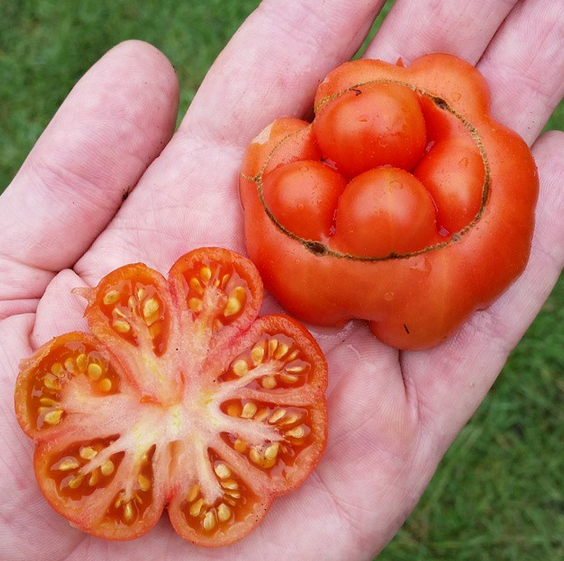
“Brain Tomatoes” grown organically on the Urban Farm
Have you ever made mistakes or failed doing something? How did you overcome any obstacles?
Am very chuffed at how the new grow bed is going. “Looking at adding a very small NFT run at the front of this bed.”
😀 I’ve made MANY mistakes and had a few quite spectacular crop failures since starting out.
Our first raised garden beds were a bit of a mistake. We had bought in soil from a landscape supplier to fill our garden beds, added in some clay Wetpot irrigation devices, planted out our veggies and all was growing great for the first few months. After 2 or 3 months the plants started to look a bit wilted and we started to get the odd 1 or 2 that mysteriously died off. On closer inspection it turned out that roots from our mango and some Chinese elm trees growing on the fence line had decided to take over the beds depriving the veggies of their water. We were also facing heavy water restrictions at that time, due to drought (similar to California is now) and after some research we decided to rebuild all the beds and turn them into water efficient wicking garden beds and haven’t looked back since.
Have lost whole tomato and capsicum/sweet pepper crops to the pesky Queensland fruit fly along with quite a few brassicas crops to the dreaded cabbage butterfly. We did a bit of research and found methods that work for us (exclusion netting) to save the crops now but it was a very steep learning curve at the beginning.
Through all our misadventures we have learnt a lot and found many like minded folks out there that have helped us out.
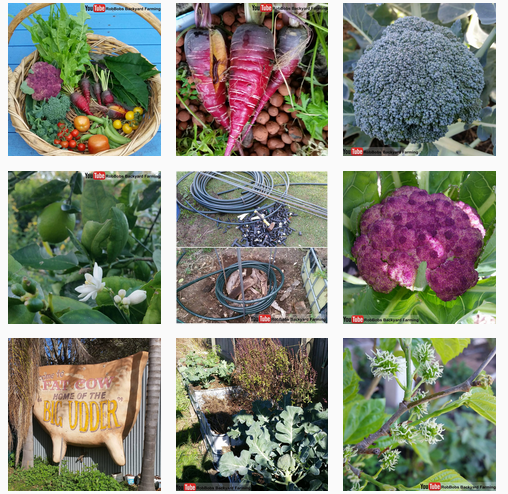
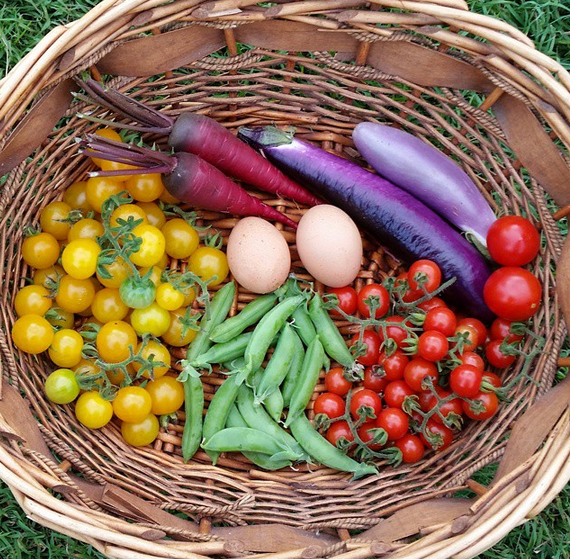
A regular “picking” from Rob’s Urban Garden
Have you ever dealt with a person who disregards your life style?
Have come up against a little bit of resistance from extended family members but nothing too serious. What I find more shocking is the couple of times I have had people ask me if we were allowed to grow our own food. I must say it took me very much by surprise and really shows how disconnected some people have become to believe they are not allowed to grow food.
What are some of your greatest rewards with a lifestyle such as the one you live?
The greatest reward would have to be being able to provide nutritious fresh food for the family that has been grown free of toxic chemicals. That it takes less than 15 min for that food to make it from plant to plate is also a bonus. 😉
Being able to share how easy and rewarding it can be to grow your own food with others via the WWW is something that I’m grateful for. Not only have we learnt from others but have also made dozens of friends along the way. I love that I can ask questions or get inspired by their posts no matter where they live in the world.
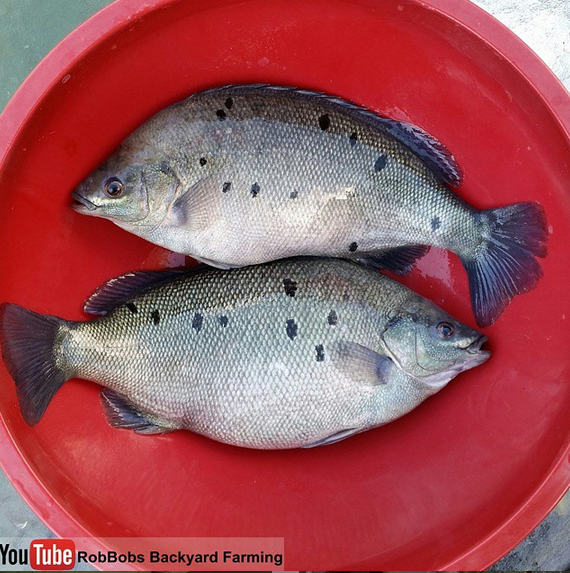
2 Jade Perch raised in their own aquaponic system.
What tips and tricks would you like to share with other people?
First tip I would give anyone looking at growing their own food would be to start small and start now. I can guarantee you that once you’ve tasted your first tomato and basil on a homemade pizza, you’ll be hooked.
Don’t be disheartened if it doesn’t work. Have made plenty of mistakes here and have found that they are a great way to learn. I try not to take life to seriously, laugh off all the mishaps and try again.
Make your own compost and feed the soil is the best practical tip I could give. That’s one lesson I wish I’d learnt when I first started. It would have to be the best ways to help you grow nutrient dense healthy food while recycling waste and feeding the soil at the same time.
What are some of the other things you would like to have other people understand about living a healthier and self-sufficient life style?
I find it extremely rewarding to be able to say I’m responsible for the production of a portion of my own healthy and nutritious food, something that only 2 generations ago was a given for a lot of families.
Starting off a garden is also a great way to educate kids and the local community as to how easy it is to be able to provide for yourself. Our garden has helped create these types of conversations with visitors, neighbors, friends and family, and has also inspired some to create their own gardens, which in-turn has gone on to inspire others to have a go at growing their own.
What are your favorite plants to grow in the garden?
That’s a hard question as there are so many. Some of my favorite plants to grow at the moment would have to be greens like Okinawan spinach, kang kong, sweet potato leaf, rice paddy herb, Thai basil, Chinese cabbage. All of these veggies go into a very quick and fresh Asian inspired salad I like to make. The ginger spice family is another group of plants I love to grow. Broccoli and cauliflowers are also favourites. We only get to grow them during winter here so have been eating quite a bit over the past few weeks.