
5 Signs That Cabbage Worms are Attacking Your Garden

By Justin Emig
Associate Brand Manager, Safer Brand

For most of the country, Spring has DEFINITELY sprung…

…and with the onset of Spring, comes the onset of our unwelcome garden pests.

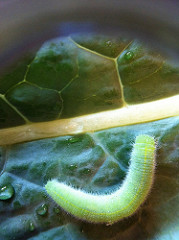
The garden pest that has caused the most concern for organic gardeners in recent years has been the cabbage worm.

There are several ‘types’ of cabbage worm which include the Imported Cabbage Worm, Cabbage Looper, Cabbage Webworm, and the Leaf Miner.

Regardless of the type, us interested in keeping an organic garden just want them gone!! Here are 5 signs that you might be infested with our green pests and best of all, how to get rid of these ferocious vegetable eaters.

Here are 5 signs that your garden might be infested with cabbage worms. — Tweet This.

Signs you have cabbage worms

1. You are growing their favorite food

As you can guess from their name, cabbage worms primarily attack plants in the cabbage family, but are not exclusively cabbage feeders. Plants that cabbage worms find the most tasty are:

  • Broccoli
  • Cauliflower
  • Brussels sprouts
  • Collards
  • Kale
  • Turnip greens
  • Radishes
  • Other cabbage greens

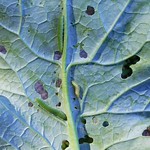
2. You have holes in your plants

Since cabbage worms are such voracious eaters, as little as 2 or 3 worms on your plants can spell disaster for the overall health of your broccoli or other plant.

Common signs will be holes in your leaves. A simple google search can connect you to many pictures of cabbage worm damage.
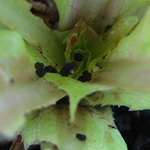
3. You notice dark green droppings on your leaves

A tell-tale sign that you are becoming infested with cabbage worms are their droppings. When you start to notice dark green droppings on your leaves, inspect the underside of your leaves as that is where cabbage worms tend to lay their eggs.

4. A lot more butterflies present

Since caterpillars are in essence the larvae stage of caterpillars, if you start to notice more butterflies hanging around your garden, chances are, you have an infestation of cabbage worms or if you experience one of the previous symptoms, it might be too late.

5. Time of year = Spring

Spring is the time of the year that cabbage worms have awaken from their Winter slumber and are now in search of food and laying their eggs.

Organic control of cabbage worms

If you have experienced this infestation in the past or for those proactive gardeners who are getting prepared for the already started 2012 gardening season, the most common and popular organic control for cabbage worms revolves around the use of bacillus thuringiensis or BT.

This natural bacteria eliminates cabbage worms through ingestion. One of the most popular BT products is Safer® Brand Caterpillar Killer with BT and is available in an 8oz concentrated formula or in Safer® Brand Garden Dust which is a powder formula and is OMRI® Listed.

Your turn

In the comments below, let me know if you have noticed cabbage worms in your garden.

Photos courtesy of
Top: OSU Master Gardener on Flickr
Holes: florence_craye on Flick

What is The Power of OMRI®

This post was written by SaferBrand.

Not all ‘Organic’ Products are created the same…

With the rise of organic gardening, comes the rise of products claiming to be the ‘best’ organic gardening solution.

The retail landscape in organic gardening is daunting…

…there are countless products all claiming to be organic or natural and solve the problem you are experiencing in your organic garden.

It seems that every chemical company has a set of organic products they are trying to convince you to buy.

How are you to know what products are truly organic and able to cure your problem without leaving potentially harmful residuals?

Seems every chemical company has a set of organic products they are convincing you to buy. — Tweet This

This where OMRI® comes in…

OMRI® is the Organic Materials Review Institute and products that bear the OMRI® Listed seal have gone through a battery of tests.

OMRI® tests the raw materials used in product production, the production process and facility and the end result, among other tests to validate if the product meets their strict standards, needed to wear the OMRI® Listed seal.

Why do most products on the shelves at your local garden center not have an OMRI® Listed seal?

That is because those products can not obtain the prestigious seal. If you want a truly organic product, you need to look for the OMRI® Listed seal before purchasing.

Just as you would look for the USDA Organic seal prior to purchasing organic produce, the same applies to your organic chemicals, but with the OMRI® Listed seal, being your governing seal of approval.

Safer® Brand and OMRI® Listed products

Safer® Brand boasts more OMRI® Listed products then any other company.

By far!!

Safer® Brand possesses over 50 SKUs that possess the OMRI® Listed seal where the next closest competitor possesses 6 SKUs.

Not only does Safer® Brand have more OMRI® Listed products then any other company, Safer® Brand was the first company to patent Insecticidal soap.

A staple in organic gardening. Safer® Brand continues to innovate in organic gardening by being the first company to patent a true 3-in-1 product, as well as the first and only company to patent an organic insecticidal soap, organic pyrethrin, and neem oil combination (EndALL™).

The next time you are looking to eliminate unwanted pests in your organic garden…rely on OMRI® and rely on Safer® Brand to eliminate the pests, without leaving potentially harmful residuals.

Your Turn

Share this post with your friends and family that are looking to rid their garden of pests without using toxic chemicals.

Growing Cucumbers Vertically to Maximize Space

A single cucumber plant can spread out over 12 to 20 square feet when grown in traditional rows or hills. But one way to make better use of space and maximize yields is to grow cucumbers vertically – that is, to let the vines expand upward instead of outward, by supporting them on a raised structure. This is a perfect space-saving solution for anyone growing cukes in containers, raised beds, or other small plots of land (like a narrow side yard).

By the way, if you’re looking for heirloom/non-gmo seeds this is where you can order cucumber seeds online.

There are other benefits to growing cucumbers vertically as well. When plants are raised off the ground, leaves are less susceptible to slugs. Since foliage dries off faster after a rain, fungal problems are reduced. And, vertically-grown plants may have more leaf surface area exposed to the sun, resulting in better growth.

The most important way to ensure success with vertical growing is this: Know the difference between vining and bush types of cucumbers – and choose your seeds or seedlings carefully so you don’t end up with a bush variety!

Bush varieties of cukes have been bred to take up less space when grown flat in the garden. While they’re still sprawling plants, they’re not climbers. Instead, they put out vines that radiate only three feet out from the plant’s center – meaning they require only nine square feet of horizontal space, about a third of what a vining cucumber takes up on the ground. But when you grow a true vining cucumber variety vertically, you can grow one or two plants in just one square foot of ground space.

Many people successfully grow cucumbers on long, low supports – three feet high by five feet long, for example. But when you’re really short on ground space, nothing beats growing them nearly straight up, on a tall support of five feet or more. Always start out with your growing structure in place, and then transplant seedlings around it – you’re less likely to damage roots this way.

If you’re growing in containers, use a pot of 21 inches or more, to allow for root room. You can grow four to six cucumber vines this way, with at least a five-foot trellis in or behind the pot.

Cucumbers climb via tendrils – specialized, touch-sensitive leaves that wrap tightly around objects they contact. If your vines seem reluctant to climb, your latticework may be too far apart or the individual bars may be too wide for the tendrils to grasp. Try stapling chicken wire or netting to your structure, to give the vines a toe-hold.

As you experiment with vertical growing, you can create your own plant supports from materials you have on hand.

Sound off

What other tips do you have for growing cucumbers?

Grow Great Tomatoes Without Using Chemicals


It’s frustrating to say the least when you spend hours tending to your tomato garden and the tomatoes still aren’t as big and vibrant as they could be. The soil quality will determine your success with each plant, and the more organic material you mix into your soil (versus synthetics) the better the plant will grow!

Chemicals Aren’t the Solution

Most people do not want chemicals anywhere near their garden, family, dinner table, pets or the soil. They do not want exposure to dangerous toxins and once they contaminate the soil they can take years to get rid of. Avoid synthetic fertilizers (use organic or worm castings instead), toxic pesticides, products with high nitrogen content or nitrogen only.

Tips for Planting Tomatoes

  • When you plant tomatoes, select a location that has full sun all day long. If sun can hit the entire plant, it will grow better and fruit will appear sooner.
  • Spacing is also important. We suggest 3 feet by 3 feet, and no closer.
  • Proper air circulation will reduce pest and disease problems.
  • Stimulating and maintaining healthy, biological soil is also a key component. Soil that drains well is preferred, and adding organic microbes such as beneficial bacteria and Mycorrhizal fungi will extend the root systems and increase water and nutrient retention.

Your Options

Some gardeners use organic compost or mulches to accelerate plant growth and help deter insect infestation and disease. Organic Compost and mulches contain the same microbes, but in a dry formula it takes a lot longer for them to get to the roots and they cannot attach to plant surfaces.

Read some of the comments below to see what tips and tricks others are using to grow tomatoes organically.

Join the discussion … What have you used and are other options for growing great tomatoes without the chemicals?