Spring Gardening Checklist


Spring will officially be here on March 20th and whether there’s still snow out where you are, or it’s already feeling like summer… Spring is a great time of year to start working on a few things in the gardening department.

In March, in addition to starting seeds indoors, gardeners with cold frames (see season extension techniques) may use them either to start an early crop of greens (especially spinach) or to start plants like broccoli that will later get transplanted outside the cold frame.

Each grow zone will be a little bit different when Spring finally does roll around, so we encourage you to do what you can and what the weather is permitting in your unique location.

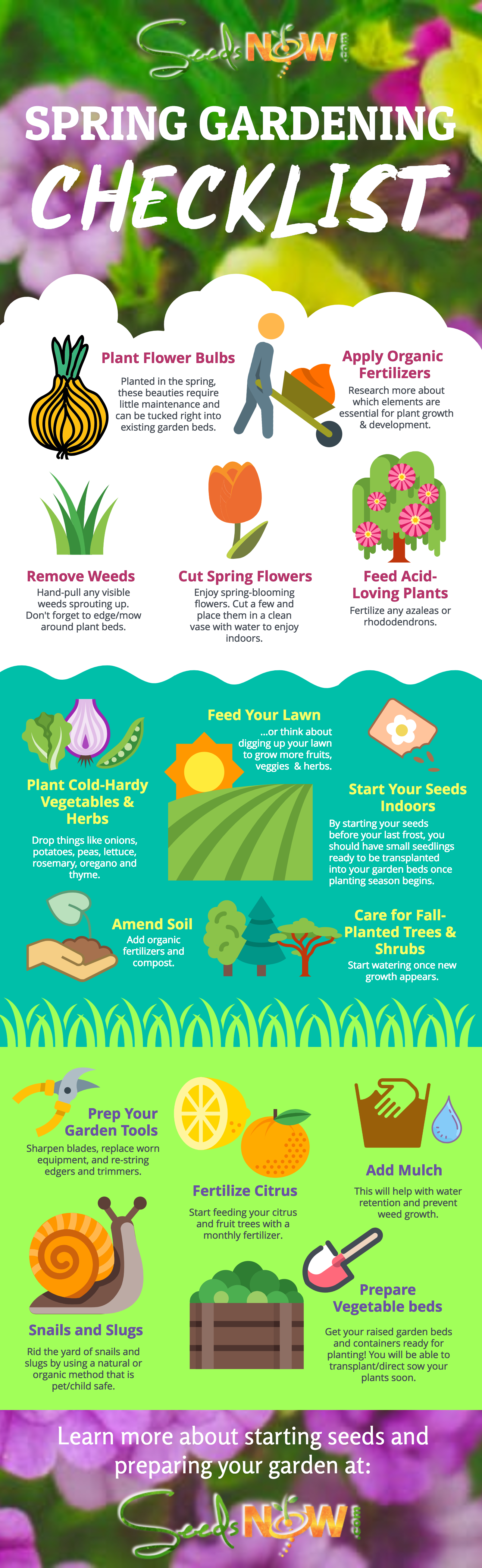
Below is a list of chores that we’ve compiled to help give you some things to start thinking about this time of year.

  • Plant summer bulbs.
  • Read up on applying organic fertilizers.
  • Remove winter weeds and edge plant beds.
  • Cut flowers of spring-blooming bulbs and place them in water & a clean vase to enjoy indoors.
  • Feed acid-loving plants such as azalea & rhododendron.
  • Plant cold-hardy vegetables and herbs, such as onions, potatoes, peas, lettuce, rosemary, oregano, and thyme. (View more cold-hardy vegetables and herbs, here!) 
  • Feed your lawn with a high nitrogen fertilizer. (Or think about digging up your lawn to grow more fruits, veggies and herbs!)
  • Remove weeds before they flower, to keep them from multiplying.

  • Start seeds indoors. (Read our tips on how to start seeds indoors!) 
  • Amend soil by adding organic fertilizers and compost.
  • Water fall-planted trees and shrubs once new growth appears.
  • Sharpen hand tool blades, replace worn equipment, and re-string edgers and trimmers.
  • Fertilize citrus and feed it monthly thereafter.
  • Prepare vegetable beds for when the soil is warm enough to sow seeds or transplant tender plants. For tomatoes, that temperature is 55 degrees.
  • Deadhead spent spring bulb blooms leaving the leaves to continue to produce food that will be stored in the bulb for next year’s blooms.
  • Plant bare root trees and plants just as they are about to break dormancy.
  • Apply mulch around the base of trees. This will help with water retention and prevent weed growth.
  • Rid the yard of snails and slugs, using a natural or organic method that is pet/child safe.
  • Take cuttings of roses, azaleas & geraniums to start new plants.

How To Grow Wheatgrass At Home *WITHOUT SOIL*

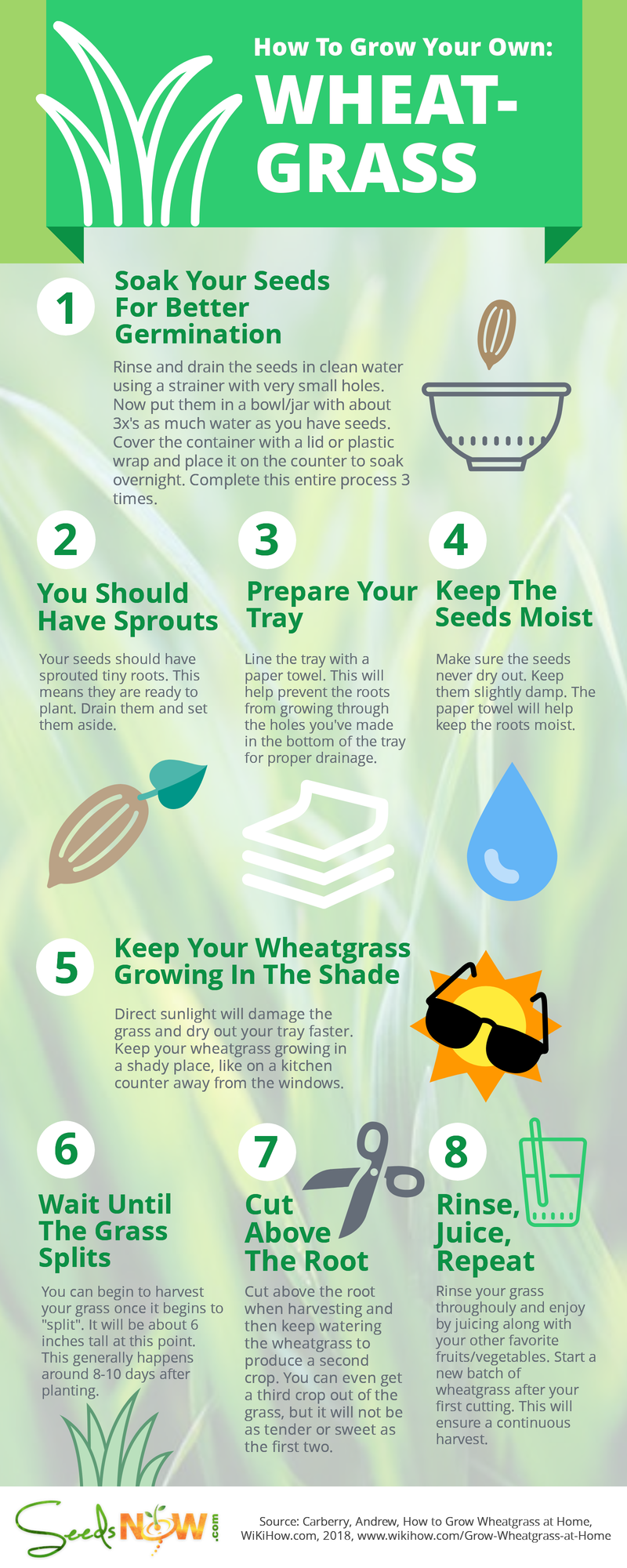
Growing your own wheatgrass at home is easy and fun to do – especially during the winter months!

There are a lot of different methods on how you can achieve this, so below we are going to share with you some of our favorite.

There are both soil and soil-less methods.  Today we are focusing on soil-less.  Make sure you choose which will work best for you.

Before you get started, purchase your wheatgrass seeds.

And this is how it’s done ….

As you can see, wheatgrass can be easily grown and prepared at home.

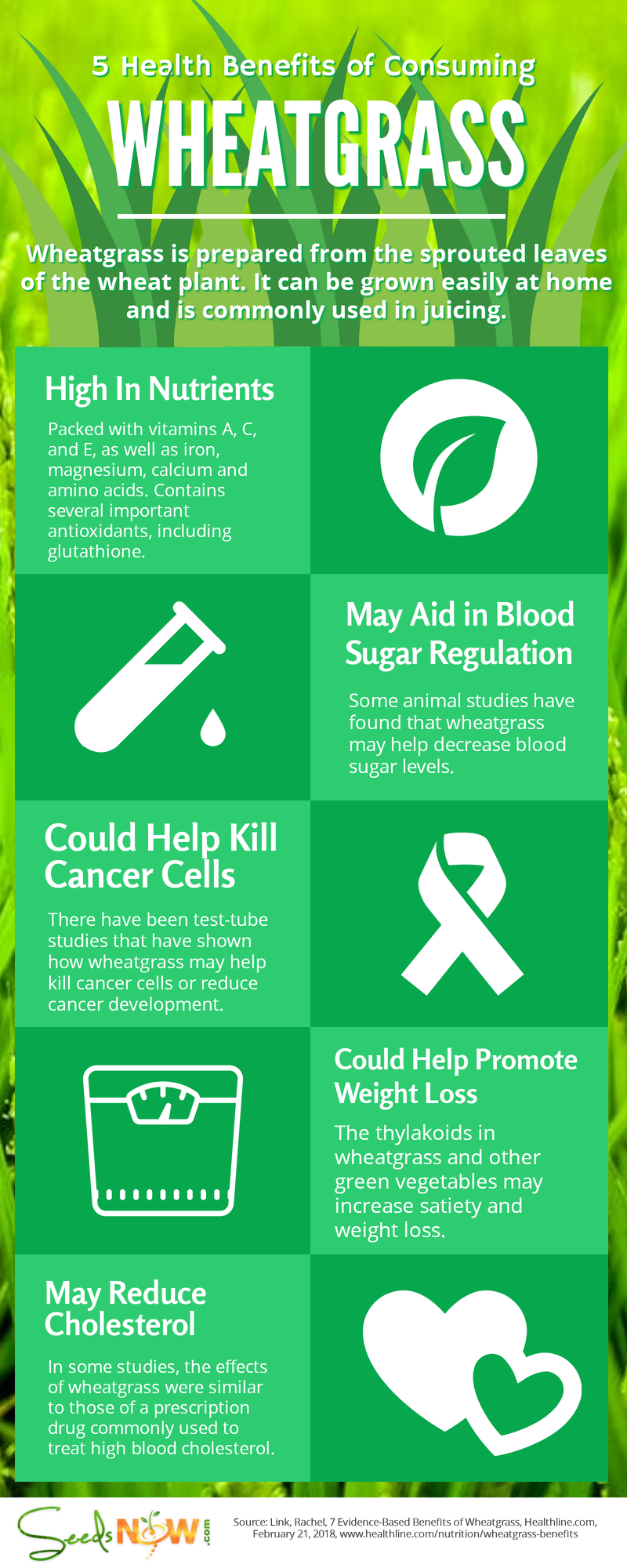
Some claim it can do everything from detoxifying the liver to improving immune function & boost weight loss. Nevertheless, wheatgrass delivers many amazing benefits.

Now, let’s see what happens to your body if you drink wheatgrass daily …


We’ve talked about the amazing health benefits of consuming wheatgrass and showed you how to grow your own, now here are some great ways to enjoy your raw, healthy, nutrient-packed wheatgrass!

Check out these wheatgrass recipes:


Ready to start growing your own Wheatgrass? 
SHOP Wheatgrass seeds!

We’re on SNAPCHAT! [Let’s Get Snapping]

We want to be where our fans and fellow gardeners are, so we’ve headed over to snapchat and created an account! We hope you’ll share all of your awesome gardening successes/tips/and learning experiences with us over there.

Let’s be friends! Just use the snap code below to quickly and easily add us and see more great content from us, everyday!

SnapChat UOG IG


UOG SnapChat Logo

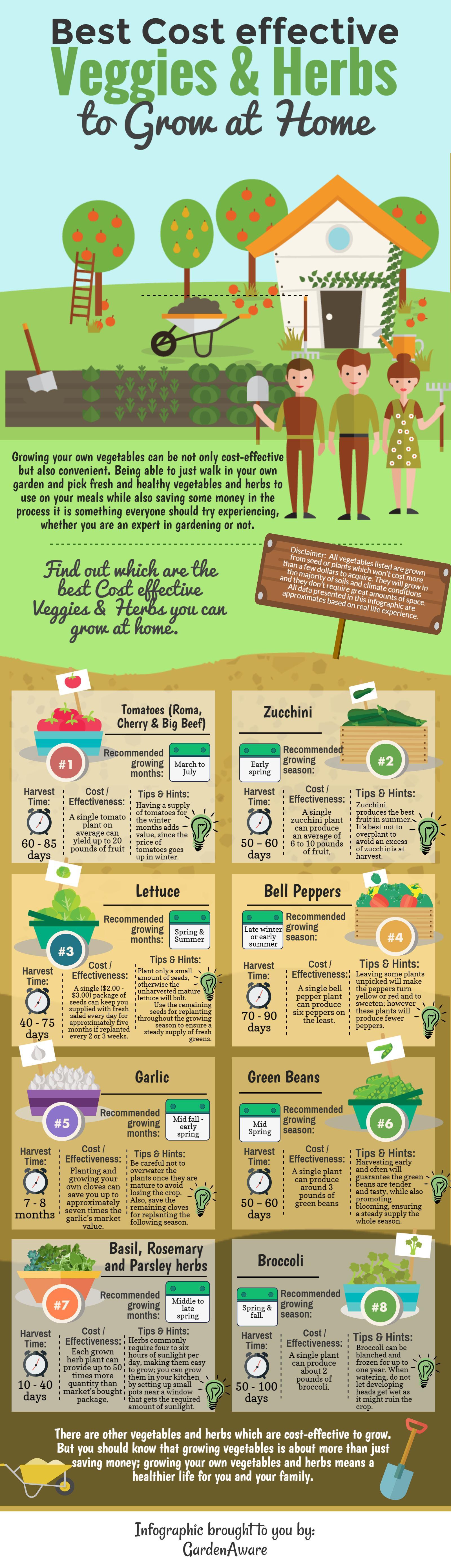
Top 10 Most Profitable Vegetables and Herbs to Grow at Home [Infographic]

gardening_Infographic-1

“In the past few years, the prices of conventional produce have increased steadily. As a result, many families have decided to grow their own foods at home, especially vegetables and herbs. Indoor or outdoor, almost everyone are now enjoying setting up their home organic garden so they can save money and keep their family healthy at all times.

Now, if you are new to gardening or have been doing it for a while and is looking for the most practical veggies and herbs to plant, we have compiled 10 of the best based on the recommendations given by garden experts as well as avid home gardeners. They are not only cost-effective or profitable but are also easy to grow in your indoor or outdoor home garden. They can give you abundant harvests in a short amount of time too.”

Read the FULL Story at: “GardenAware.com

Cut the Crap: Making Your Own Fertilizers is Easier Than You Think!

Sustainable Sushi

“Making your own natural fertilizers is a safe and effective way to grow a lush, chemical-free garden.

Since there are multiple options for DIY natural fertilizers, you may want to experiment with different formulations in different areas of the garden. For example, you could try compost tea for acid-loving plants, fireplace ashes for plants that prefer more alkaline soil, and recycled aquarium water for fruits, vegetables, herbs, and even houseplants.

You can switch things up further, using different natural fertilizers at different times of the year. Ashes may be more abundant in the spring after an entire winter of fires, and your compost might not be ready until the end of summer when the heat has worked its magic to transform waste into nutrient-rich soil.

Experiment with different kinds of natural fertilizers to see how DIY recipes provide the best results in your garden.

Depending on the type of natural fertilizer you choose, the “green” approach to gardening can also help you reduce waste and reuse or recycle natural materials, making DIY fertilizers both inexpensive and environmentally friendly.”

Source: eReplacementParts.com blog

Grow an indoor herb garden: easily, sustainably and veganically

The Joy of Growing Window Herbs Year-Round

Have you ever thought about growing your own indoor herbs? If you’re kitchen windowsill isn’t already crammed full of pots overflowing with leaves, then it should be!

The beauty of keeping a “windowsill herb garden” is that you can rely on a steady supply of leaves all through the year. When outdoor plants have died back or gone dormant over winter, your window herbs will keep happily ticking along.

The process of starting your own “kitchen herb garden” from seed is simple. The great thing is that many plants not normally found in garden centers are available to you. Scrumptious edibles like dark basil, chamomile, lovage and yarrow (to name a few) are all options. What about the magical, medieval plant mugwort? Or that favourite for making lozenges, horehound?

Old favourites like thyme and rosemary will also fare wonderfully indoors as long as they’re properly looked after. Energetic perennials like chives will continue to grow even when light levels dip in winter. So you can lightly harvest even through the darkest months.

All you need are some pots, a good potting mix and some plant feed. If you’re starting your seeds indoors, where there’s no risk of critters eating the young seedlings, you can sow directly into the pots.

Let several seeds germinate and keep the best after they’ve put on some growth, snipping off the others with a pair of scissors. During late spring, summer and early autumn, your plants will be grateful for a bi-monthly or monthly liquid feed. Use a balanced NPK fertilizer (nitrogen-phosphorous-potassium) and a micronutrient feed like liquid seaweed. Many of the problems with herbs are due to trace element deficiencies.

And that’s it! The infographic included below is a visual guide to the process. Remember not to overcomplicate things and don’t be afraid of killing the odd plant…they don’t mind too much.

Herb-Gardening-Infographic

Indoor herb gardening is growing in popularity by the day. Space-stretched city-dwellers, foodies, and even people with big gardens are filling their kitchen windowsills with potted herbs.

There are so many benefits and almost no drawbacks. It’s cheaper, tastier and also possible to grow unusual and forgotten plants…yarrow or lovage, anyone?

In this little guide, and with the help of my infographic below, I want to cover the main steps involved in growing a scrumptious indoor herb garden.

View the original post with infographic at UrbanTurnip.org

From the Ground to the Table: Community Supported Agriculture

“CSAs benefit consumers by providing them with fresh, local produce at a reasonable price. As our lives get busier, it only gets harder to make time for thoughtful grocery shopping, where you try to get a healthy mix of fruits and vegetables. Eliminating that task is a big time-saver. The unexpected benefit of using a CSA, is that you will likely receive produce that you’re unfamiliar with, getting some much needed variety in your vegetable routine! Read our guide to CSA produce, for recipes and instructions on what to do with those unfamiliar vegetables!”


Source: Partselect.com

All About Planting Tomatoes! [INFO-GRAPHIC]

Sun, Soil, Light, Pests & Timing

  • Sun: Tomatoes need lots of sun, so be sure to pick a spot without too much shade.
  • Water: Give your tomatoes about two inches of water every week all season, and give them extra water in the first few weeks.
  • Soil: Tomatoes do best in loamy, acidic soil, and it’s a great idea to plant them in soil that can be well-drained.
  • Timing: Shoot to start seeds six weeks before the Spring’s last frost
  • FertilizingTwo weeks after your first picking, is prime time for fertilizing. 
  • Pests: Plant some basil to ward off common tomato pests.
If you want a handy reference, check out this infographic from Sproutabl’s article on growing tomatoes.

Growing Tomatoes

Gardening for Physical and Mental Health

“As well as providing exercise and boosting energy levels, gardening has a whole range of benefits for you to make the most of no matter what your age! Whether you have your own garden, flat, communal garden or an allotment, get outdoors and enjoy nature and start reaping all the benefits for your physical and mental health, which is especially beneficial for seniors for keeping fit and mobile.”

Gardening for physical and mental health


Read the full article at: “www.uksmobility.co.uk

What’s Eating My Plants? [Info-Graphic]

what-eating-my-plants

10 Leaf-Eating Bugs and How to Stop Them From Destroying Your Garden

Gardening is such a rewarding experience. But it can also be absolutely devastating when all your hard work goes to the bugs.

There are 10 main munching culprits to look out for to protect your plants from getting destroyed before they can produce the flowers and vegetables you can enjoy. Safer Brand created the below infographic detailing how to tell which bug is eating your plant and natural ways to get rid of them without spraying harmful chemicals.

IMAGE URL: http://www.saferbrand.com/blog/wp-content/uploads/2016/08/what-eating-my-plants.jpg

10 Leaf-Eating Bugs

  1. Leafminers, which are the larvae of flies and beetles, often will leave maze-like tunnels in a leaf. They are most harmless but if you want to get rid of them for aesthetic reasons you can use neem oil.
  2. Sucking insects-like box suckers, aphids, squash bugs, and spider mites- often will leave needle-sized holes in a leaf. While a few will hardly be noticeable, enough sucking insects can gradually kill your plants by sucking all the nutrients out. Spray an insecticidal soap on both sides of the leaves to keep those sucking insects away.
  3. Vine weevil larvae in the soil will eat a plant’s roots till it collapses. Your plant may seem like it’s suffering from a nutrient deficiency at first so be sure to check the soil for any creepy crawlies hiding there. You can soak the soil in insecticidal soap or dust plant leaves with diatomaceous earth to get rid of the adult vine weevils.
  4. Caterpillars are often the bug that comes to mind when gardeners see holes eaten out of their plants’ leaves. Caterpillars can be a pain to get rid of. The easies method is to brush leaves with B.T. on a dry night. B.T. will kill the caterpillar.
  5. Sawfly larvae (which look like caterpillars) leave transparent holes in leaf tissue. Use insecticidal soap or horticultural oil on the top and bottoms of leaves to get rid of them.
  6. Bees are both a blessing and a curse. We need bees to pollinate plants but they can sting and leaf-cutting bees can even cause damage to your plant’s leaves. However, the missing half-moon pieces shouldn’t kill your plant.
  7. Earwigs are common leaf-eating bugs in indoor plants. To get rid of them dust your plant with diatomaceous earth or fill a cup with straw and tilt on it’s side. The earwigs will craw into the hay away from the plant and then you can dispose outside.
  8. Japanese beetles can cause some of the most extensive damage to plants killing them in just a few days. Adult Japanese beetles eat all the leaf tissue in between the veins on your plant. You can use a Japanese beetle trap to make sure you don’t have issues with them all summer long or spray your plant with neem oil every few days to keep them away.
  9. Viburnum beetles and larvae can be taken care of by releasing lady bugs in your yard every spring.
  10. Cucumber beetles are well known for the devastation they cause to squash plants. While row covers are a great way to keep these insects away, you can also dust the leaves with diatomaceous earth to kill any beetles who may come into contact with it. Just remember that diatomaceous earth only works when dry and it has to come into contact with the insects.


To learn more visit: “http://www.saferbrand.com/blog/whats-eating-my-plants/