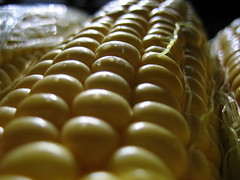
Changes on the way for GMO labeling

Did that product come from a genetically modified organism (GMO)? From a consumer perspective, there isn’t always a clear answer.

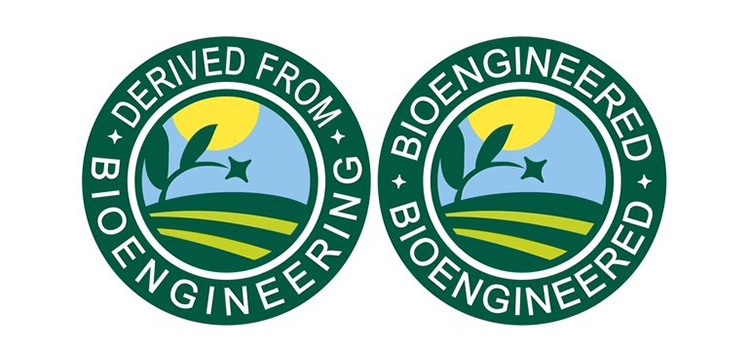
Beginning January 1, 2020, though, genetically modified, or bioengineered, foods in the grocery store will likely become easier to identify thanks to the “National Bioengineered Food Disclosure Standard” brought forward by USDA’s Agricultural Marketing Service (AMS). The standard requires disclosure, including use of the label seen above, on foods that are testable as containing genetically engineered ingredients. This January marks just the start of this GMO food labeling project . . . as there is a two-year phase-in to the standard.

More importantly, however, is the fact that the use of this label should make it clearer to consumers what foods are not genetically engineered.

Better understanding of our food system
Currently, AMS lists only 13 crops whose bioengineered varieties may be sold and produced in the United States:

  • Alfalfa
  • Apples (Arctic varieties)
  • Canola
  • Corn
  • Cotton
  • Eggplant (BARI Bt Begun varieties)
  • Papaya (ringspot virus-resistant varieties)
  • Pineapple (pink flesh varieties)
  • Potato
  • Salmon (AquAdvantage varieties)
  • Soybean
  • Summer squash
  • Sugarbeet

READ THE FULL STORY: https://hoards.com/article-26927-changes-on-the-way-for-gmo-labeling.html

Genetically Modified Tomato “Shrub”? Would you grow one?

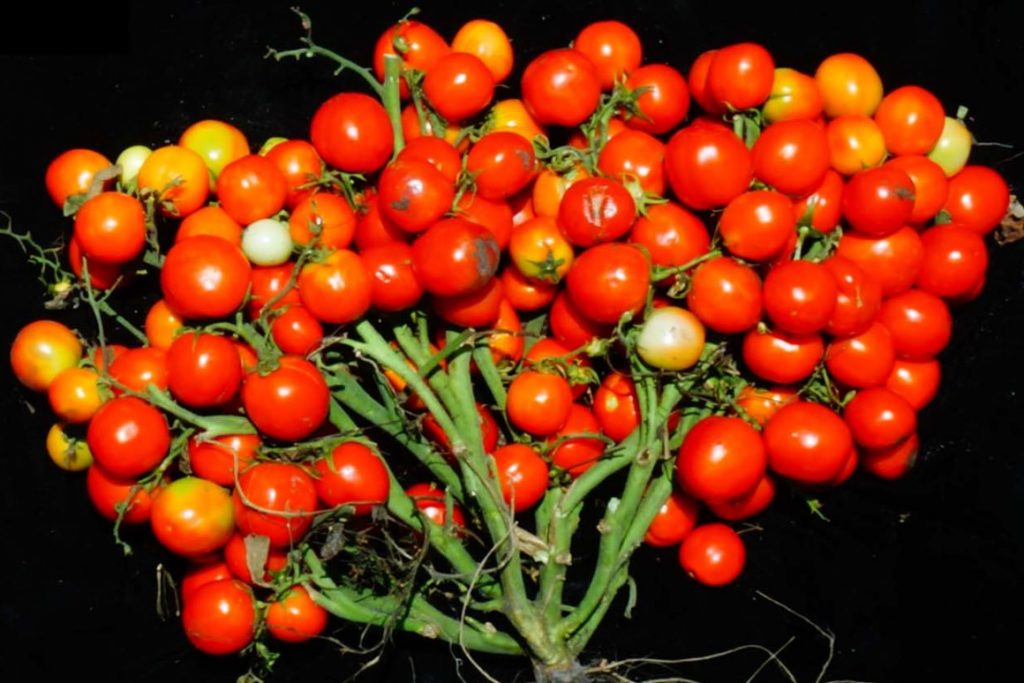
If you’ve ever wished that your tomato plants were a bit more compact, you’re in luck. A team of scientists, led by Cold Spring Harbor Laboratory Professor and HHMI Investigator Zach Lippman, has come up with a genetically-engineered tomato plant that is more a bush than a vine, with fruits that grow like a bunch of grapes.

Urban farming has been garnering a lot of attention in recent years on the grounds that it could provide food for city dwellers while reducing the environmental costs of growing and transporting it. And while raising crops in warehouses or shipping containers has its attractions, it comes up against the fact that city real estate tends to be very expensive compared to conventional farmland, so the space the plants take up is at a premium.

To minimize this, Lippman’s team is working on genetically engineering a variety of crops that are more compact than their conventional versions while maintaining the quality – the first plant in their sights is “urban agriculture tomatoes.”

What are your thoughts on this GMO Tomato “Shrub”? Would you grow one?

READ THE FULL STORY: https://newatlas.com/science/genetically-enginneered-tomato-urban-farming/

Monsanto ordered to pay $289 million in California Roundup cancer trial

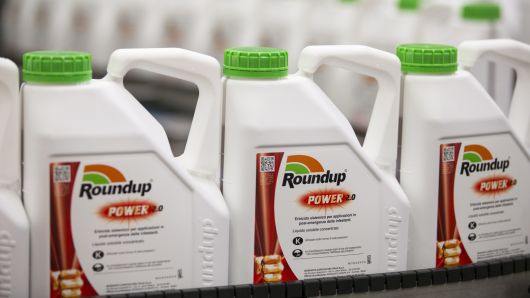
“A California jury on Friday found Monsanto liable in a lawsuit filed by a man who alleged the company’s glyphosate-based weed-killers, including Roundup, caused him cancer and ordered the company to pay $289 million in damages.

The case of school groundskeeper Dewayne Johnson was the first lawsuit alleging glyphosate causes cancer to go to trial. Monsanto, a unit of Bayer AG following a $62.5 billion acquisition by the German conglomerate, faces more than 5,000 similar lawsuits across the United States.

The jury at San Francisco’s Superior Court of California deliberated for three days before finding that Monsanto had failed to warn Johnson and other consumers of the cancer risks posed by its weed killers.

It awarded $39 million in compensatory and $250 million in punitive damages.”

READ THE FULL ARTICLE AT: “CNBC.COM

Genetically Modified Children -MOVIE TRAILER-

capture-20180518-064807

OFFICIAL TRAILER 2018: Genetically Modified Children, Coming June 5.

“Can Monsanto chemicals permanently alter your child’s genes? Low-income tobacco farmers face skyrocketing cancer rates with more devastating repercussions affecting their children: severe physical deformities and mental disabilities.

Choosing between poverty or poison, Latin American growers have no choice but to use harmful chemicals such as the herbicide glyphosate (aka Monsanto’s Roundup) and Bayer’s insecticide Confidor if they want to certify and sell their crops to Big Tobacco.

As patent and regulatory laws continue to favor the profits of Monsanto and chemical companies, the tobacco makes its way into the hands and mouths of consumers worldwide in Philip Morris products, while the poisons used to harvest the crops contaminate the farmers’ blood and are modifying the human genome, creating genetically modified children.”

capture-20180518-064951

Watch the Trailer HERE

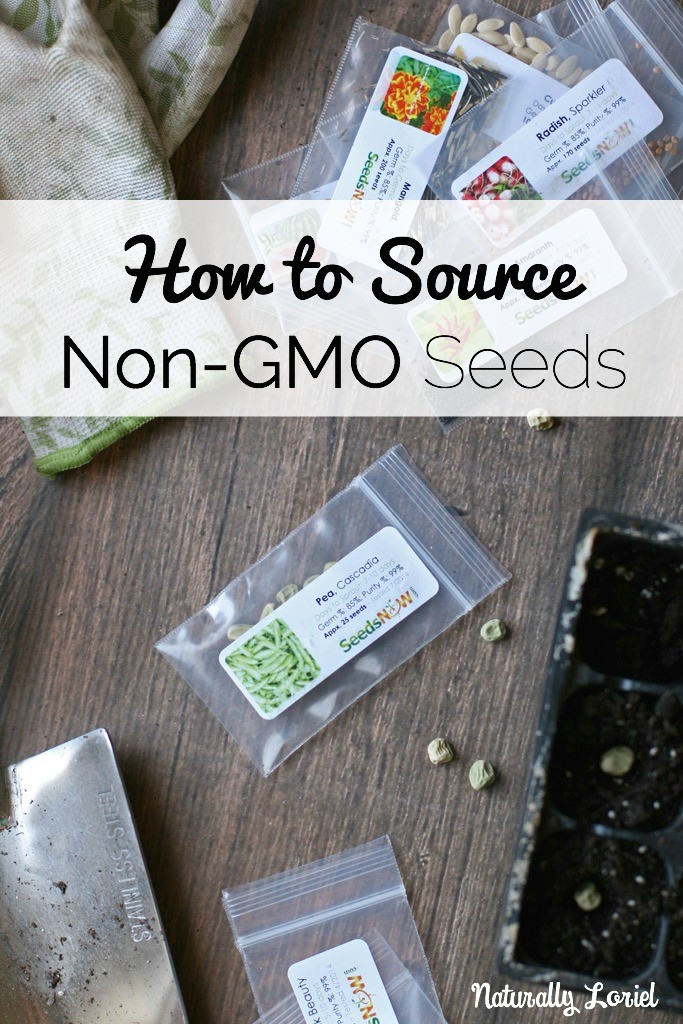
How to Source Non-GMO Seeds

how-to-source-non-gmo-seeds-naturally-loriel-seedsnow-683x1024
Source: NaturallyLoriel.com

Naturally Loriel recently published a blog post on a very important topic:  How to Source Non-GMO Seeds.

She says, “You begin to learn which food companies deserve your support and try to find a local farmer’s market in your area. You realize it’s so important to meet and shake the hands of the farmer that produces your food. Unfortunately though, you’re not as lucky as Lauren is, and the farmer’s markets in your area royally suck. The only other logical solution is to grow your own food.”

Click here to read the original blog post: http://www.naturallyloriel.com/how-to-source-non-gmo-seeds/

GMO Basics: What You Need to Know

GMOs are feeding the world…

GMOs are destroying our health and environment.

With all of the conflicting information out there about GMOs, it’s hard to understand.

That’s why I am going to break down the basics of GMOs for you and tell you why you should care.

What are GMOs?

GMO stands for Genetically Modified Organism and is most often referred to when it comes to our food.

The DNA from other plants, viruses, animals and bacteria are injected into the cells of existing species. This is supposed to make them more resistant to the rain, drought, pests, etc. Up until this point, these viruses and bacteria have never been a part of the human food supply.

More information on what GMOs are

This sounds great. What’s so bad about them?

At face value this might sound great, but there are risks that are involved in such technology. GMOs have not been proven safe and have significant restrictions or outright banned in over 30 countries across the globe.

They are widely grown and used in the food supply in the United States and there is no way for us to know. GMOs should be labeled, so we can make decisions for ourselves. Whether they are good or bad is a moot point. It’s a right to know issue.

I’ll say it again —

It’s not about if GMOs are good or bad. It’s about our right to know what we are eating. — Tweet This

More information on the effects of GMOs

Who produces GMOs?

The company that is responsible for producing most of the GMOs is Monsanto. This is the same company that produced Agent Orange during the Vietnam War. They are a chemical company and now they are producing our food. To me that’s reason enough not to trust their “food.”

Monsanto has been able to patent their GMO seeds, so they own the seed. They also have an exclusive deal with Scotts Miracle-Gro who sells Round-Up.

Now there is a company that owns and sells a seed that is resistant to a spray that they profit off of also. Monsanto makes money off the consumer on both ends.

The fact that a company can own a seed and have that much control over our food supply is a scary thought. Monsanto currently owns about 90% of the seed supply out there. That means they control distribution, costs, etc. Scary.

More information on Monsanto

The World According to Monsanto

httpv://www.youtube.com/watch?v=Rml_k005tsU

The Future of Food

httpv://www.youtube.com/watch?v=EnD-DiDRIJA

If GMOs aren’t considered safe, why would government allow them in our food system?

“The Federal Food, Drug, and Cosmetic Act requires the FDA to prevent consumer deception by clarifying that a food label is misleading if it omits significant, “material” information,” said Naomi Starkman founder of Civil Eats and contributor to the Just Label It campaign.

“In 1992 however, the FDA issued a policy statement that defined “material” by the ability to be sensed by taste, smell, or other senses.

The FDA determined that GE Foods were “substantially equivalent” to conventionally produced foods, so there was no material difference – and no labeling was required. After almost 20 years, this policy is still in effect today.”

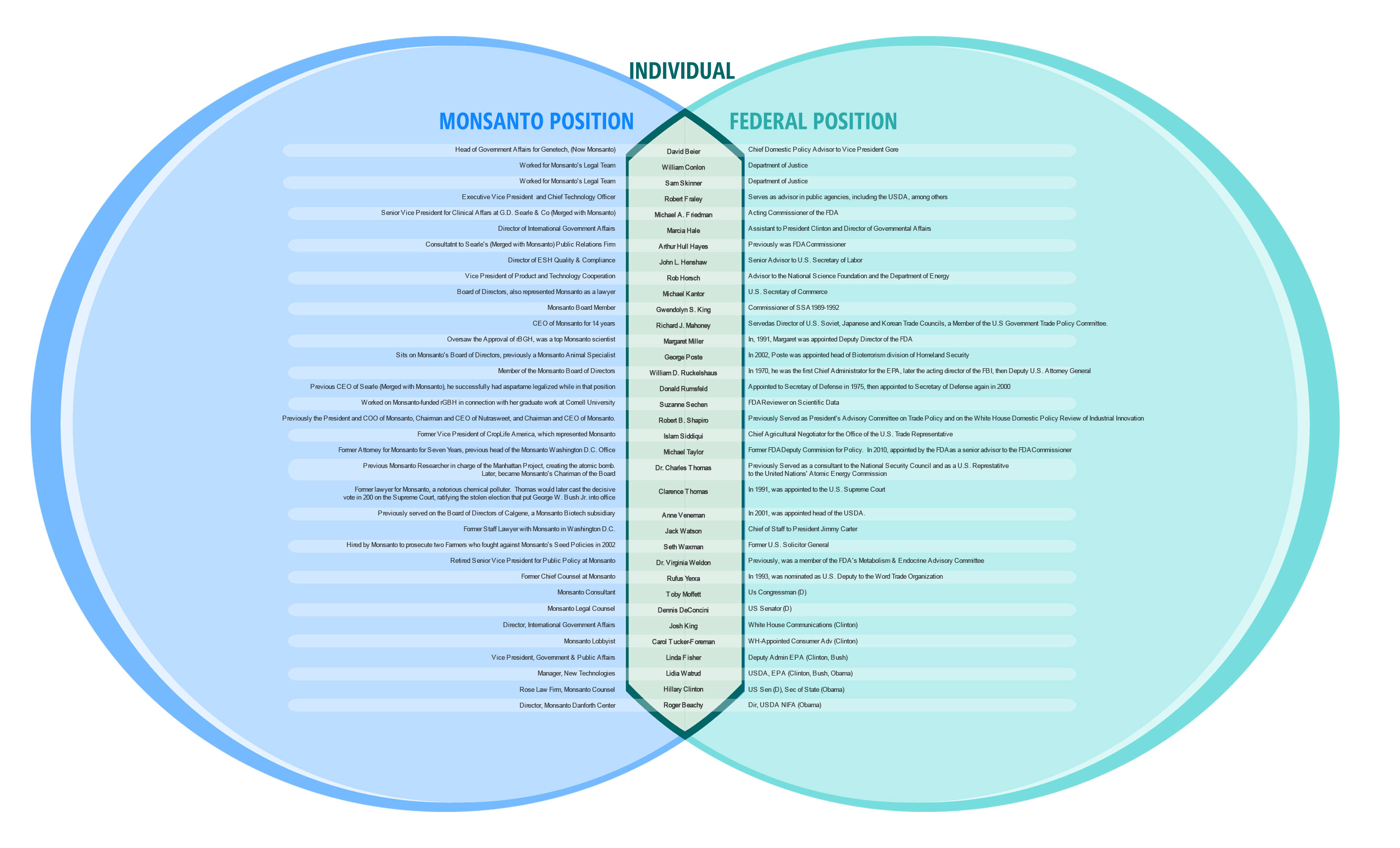
If you also look closely at who holds federal positions, you will notice that many of them have held positions with Monsanto as well. Click the image below to get the full picture of the connections between Monsanto and Federal Positions.

What are the most common GMOs?

According to the Just Label It campaign:

  • 59% of sugar produced in the US is made from sugar beets and 90% of the beets are genetically engineered
  • Over 90% of canola oil is genetically engineered
  • 90% of the cotton planted in the US is genetically modified
  • 94% of all soybeans planted in the US are genetically modified
  • 88% of US Corn is genetically modified

Your turn

Now on to the most important part…what you can do.

  • “If you are looking to avoid GE foods, your best options are to buy USDA certified organic, as the USDA organic standards prohibit the use of GMOs,” said Starkman. “Look for Non-GMO Project Verified goods, and to buy unprocessed foods such as fruits, vegetables because few whole foods are genetically engineered.”
  • Start your own urban garden using non-gmo seeds.
  • Sign the petition at JustLabelIt.org to let the FDA know that you want GMO foods labeled as such.
  • Use the buttons below to share this post with friends and family to let them know about GMOs.

Image courtesy of WayTru on Flickr
The Great GMO Experiment: There Is No Opt-Out Or Is There?

A post on Organic Connections Magazine called People Don’t Want to Be a GMO Experiment got me thinking about a few things.

Why we should be concerned about GMOs

Most people assume that GMOs are safe because they are so widely available, which is not true. GMOs have never been proven to be safe and no they aren’t feeding the world.

It was some time in the late 1980s/early 1990s when they were first widely planted. So it hasn’t been that much time to see any kind of long term effects and if they are truly safe.

Ultimately this means that we are walking experiments to see how safe they really are. GMOs are found in most of the foods that are widely sold in the supermarkets.

This makes us all subjects in the GMO science experiment, not only with our food, but with grass too.

Barack Obama lied to us

When he was campaigning in 2007, he specifically said, “We’ll let folks know whether their foods have been genetically modified because Americans should know what they’re buying.” Check the video to hear it yourself.

This sucks, but we can do something about it!

  • There is the Just Label It campaign, which is a petition to get GMOs labeled. They are hoping to get enough signatures and flood the FDA with them.
  • You can also start to grow some of your own food. Most of us don’t have the time or space to be completely self-reliant, but every little bit matters. It’ll assure you that you aren’t supporting GMOs even the tiniest bit.
  • Join your local CSA or shop at your farmers market. These are great ways that give you direct access to the growers to ask them about their growing practices.

What are other ways to ensure that you aren’t consuming GMOs?

Image courtesy of dzingeek on Flickr

Petition to Get GMOs Labeled

GMOs (genetically modified foods) are something that I frequently discuss on this site and Facebook.

When I saw the Just Label It campaign, I thought it fitting to share here.

The goal of the campaign is to get GMO foods labeled by getting enough signatures and flooding the FDA with them. I’m not one for signing petitions and all that, but thought the cause was worth sharing. Whatever it takes to work.

There are some pretty big names behind the group including the Environmental Working Group, The Organic Trade Association and Robyn O’Brien.

What are your thoughts on the Just Label It campaign and its efforts to get GMO foods labled?

GMO Grass: What’s Next?

The latest in crazy GMO news that I read on Rodale.com is that there will soon be a genetically modified kentucky bluegrass. According to the article:

The grass is still in its research-and-development stage, so it’s not available in stores yet, but experts fear the recent USDA decision to not regulate it as a noxious weed or plant pest could push it onto the market faster, since there are few regulations to hold it back.

Even though this isn’t food, it scares me for many reasons. The first reason is that the USDA is doing nothing to regulate GMOs infiltrating our lives. They’ve done this before with the genetically modified alfalfa and sugar beets, now the grass.

Kentucky bluegrass is usually used in public places such as golf courses, parks and ball fields. It will be resistant to Round-Up, so we will be exposed to even more chemicals in our daily lives. The leisurely picnic or round of golf will be accompanied by a nice dose of Round-Up and chemicals.

Since our government and its agencies are in the pockets of the big chemical companies and don’t have our best interest in mind, it’s up to us to do something about it.

We need to stop supporting companies such as Scotts Miracle-Gro, even if it’s their Organic Choice.

We need to stop using the chemicals in our homes and gardens.

We need to vote with our dollars and support the companies and business practices that believe in.

What do you think about this genetically modified kentucky bluegrass and what else can we do about it?

Photo courtesy of George Eastman House on Flickr

Is Miracle-Gro Organic? Who Cares?

People often ask me if Miracle-Gro is organic. My response is usually, “Who cares?”

The majority of Miracle-Gro’s product line is filled with chemicals and synthetics. They do have some product that is organic and certified by OMRI.

Scott’s, the parent company of Miracle-Gro, is in bed with Monsanto and are the exclusive agent of Round-Up.

For me, I don’t care how organic one small part of their product line is because ultimately it is going to a company that I cannot support. I’d rather source my fertilizer and other gardening needs from elsewhere than to get organics from a company that I don’t believe in.

This is what it all comes down to. It’s not just about being organic. It’s about what your money is supporting.

I don’t care how organic their product is. As consumers, we vote with our dollars. When you give your dollar to a company like Scott’s you are supporting what they are doing. Even if you buy their organic product, it’s still going to the same company.

Once I learned this, I refused to purchase any more Scott’s and Miracle-Gro products. I also do not recommend them to anyone.

What’s your thoughts on buying Miracle-Gro even if it’s just their organic products?

Why GMOs Are (Not) Feeding the World

The main reason that so many people get behind chemical gardening and agriculture is the belief that it’s the only way to feed the world. This load of crap has been force fed to us by the same companies that are producing the food. What else do you expect them to say?

They have all of us believing that with the rising population and our limited resources that organic methods of growing food couldn’t possibly feed the world. I have news for you – GMOs aren’t doing such a great job of it either. Here is why:

Top GMOd crops

Three of the top GMOd crops are corn, soy and wheat. Combined something like 80-90% of all of those crops planted are of the genetically modified variety. Even if it’s on the lower end it’s still somewhere around 70%. Source: USDA

This sounds great. We can grow these crop because they are resistant to pests, drought and everything else. So what’s wrong with that?

They don’t get fed to humans

Instead these crops wind up being unnaturally fed to livestock to help fatten them up quicker. Close to 50% of the soy and 60% of the corn grown goes to feeding livestock. Source: Sustainable Table

All right! This is even better because My Plate says that we need protein. Protein comes from meat, and we are getting meat that’s fattening up quick for us to eat.

Not so much. Since these animals are being fed an unnatural diet and being kept in factory farms, this is what contributes to outbreaks such as e.coli and other food scares.

I don’t know the percentage, but whatever doesn’t get fed to livestock is made into food like products using high fructose corn syrup and all those other mystery ingredients.

In actuality, it’s not even being given directly to people to consume.

Wheat is the new corn

The price of wheat has dropped below that of corn. Now livestock is being fed wheat because it’s cheaper. Source: Bloomberg

This is being done for price reasons, not for health.

Ethanol for cars

Behind the scenes, Monsanto, who is one of the main suppliers of GMO corn, has been pushing hard for using ethanol to power cars. This would result in the corn being grown to be used for a gas alternative instead of food.

Conclusion

Those are just a few of the reasons why GMOs are not feeding the world. The crops aren’t even being given to humans to consume. Let’s not even get started on the potential health and environmental impacts of them.

This is another reason to start growing your own food, at least some of it. You can supply yourself and stop supporting this hamster wheel that we are on of continually giving the same companies our money over and over again. Start putting that money towards your farmers markets, CSA or local co-ops. We have the power to shift and change the power. Let’s utilize that.

What are your thoughts on GMOs feeding the world?

httpv://www.youtube.com/watch?v=fYbT0OF7_F8