Starting My Second Batch of Compost

After using all of the indoor compost to plant on my fire escape, I started a second batch.

This went much smoother and I expect it to continue that way. Here are some of the lessons that I learned from my first go around:

  • Don’t put too many greens in the compost
  • When putting in the newspaper make sure it’s not in chunks. Separate the pieces.
  • Don’t fill it up too much. It’ll make turning a chore
  • With that in mind, I set up my indoor kitchen compost.

  • Put down a layer of newspaper.
  • Topped it with some soil.
  • Covered it with a small layer of greens and dehydrated cow manure.
  • Topped it off with another layer of newspaper and soil
  • Keeping the fingers crossed that there will be no odor.

    Potting Mix or Potting Soil? Peat Moss or Coconut Coir?

    First off, from what I can tell there is no difference between potting soil, potting mix and transplant mix. It’s all the same thing just different names.

    The reason that you want to use potting soil is that it allows for aeration and water to flow. If you use traditional soil in a self watering container, the roots would get too compact and not be able to grow. That’s no bueno.

    Of course it isn’t that simple, there are different kinds of potting soil. There is one that is peat moss based and one that is coconut coir based.

    Not being sure which to use, I decided to use both. Screw it why not? That’s part of this whole experience. Trial and error to find out for myself what works best.

    Besides the base, the other ingredients are pretty similar. They are vermiculite, compost and some kind of mineralization.

    The vermiculite makes the mix lighter and allows for better aeration. The compost provides the nutrients and the minerals, well they provide minerals.

    httpv://www.youtube.com/watch?v=D6y_gpetMkQ

    So I bought some 20lb bags of New York Paydirt Potting Soil from the local Lower East Side Ecology Center.

    This is coconut coir based, which according to the label is “a sustainable alternative to peat moss.” From some of the articles that I read coconut coir retains water, which is bad for self watering containers. I guess I’ll find out.

    I also bought ingredients to make my own organic potting soil – sphagnum peat moss, vermiculite and garden lime. This was mixed up with the compost that I made in my kitchen.

    So instead of reading 100 different arguments on which kind of soil to use, I’ll use both and see which one works best and so will you.

    Vegetable Gardening – Brooklyn Style

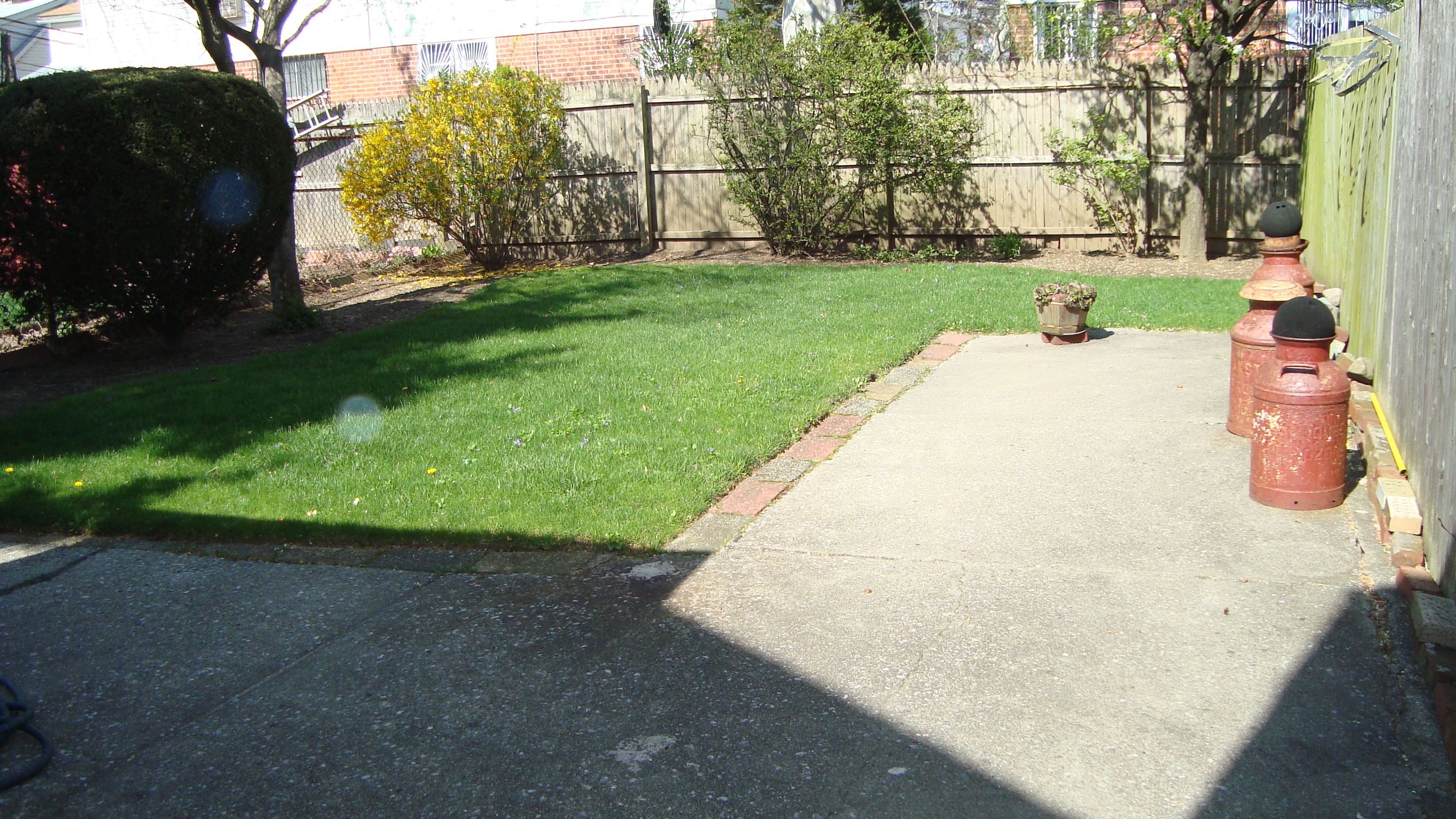
    After two long, but fun, days and some rain I set up my vegetable garden in my grandmother’s backyard in Brooklyn this past weekend. All said and done I planted in 16 containers and 5 herb planters.

    The vegetables I planted were – buttercrunch lettuce, cabbage, cauliflower, celery, collard greens, crisphead lettuce, cucumbers, escarole, onions, radicchio, romaine lettuce, sorrel, stinging nettles, swiss chard, sweet red pepper and wild leaf lettuce.

    The herbs that were basil, chocolate mint, dill, oregano, parsley, rosemary, sage, spearmint,thyme, zataar and nasturtium (which is an edible flower).

    Here’s a quick video of the garden:
    httpv://www.youtube.com/watch?v=oh4lhCTToiU

    My Fire Escape Vegetable Garden

    I set up my vegetable garden on my fire escape this afternoon with 3 buckets and 5 upside down herb planters.

    One bucket has Mottistone Crisphead lettuce, Parris Island Romaine lettuce and Anna Aasa tomato. Another has Mottistone lettuce, Parris Island Romaine lettuce and Buttercrunch. The third bucket has Jimmy Nardello’s sweet pepper and Chile Releno.

    The herbs that I planted were parsley, basil, sage, oregano and dill.

    Check this video tour of the set-up:
    httpv://www.youtube.com/watch?v=ST5rQAt5-_0

    Completing the Self Watering Containers at My Parents

    After getting the news yesterday that the vegetable gardening season already started and some plants should already be out, I need to get moving quicker.

    I went out to visit the ‘rents place today in Staten Island to make all of the self-watering containers at their crib.

    All of the materials were there, so it was just a matter of putting everything together. At their spot, I have am going to have two containers and two buckets set up. Each container took about a half hour to put together regardless of the size.

    There are two 30 quart containers that are about 17X12X11. In those I built room for a 3-4 quart water reservoir.

    Also going made two buckets a five gallon that’s about 15″ diameter and 14″ height. I built about a 1.5 gallon reservoir in that. The other bucket is a little taller at 15″, but it’s more square shape. The reservoir holds about 3-4 quarts of water.

    Each of the containers was marked at the bottom with the reservoir size, so I know for the future.

    The biggest challenge is still cutting out the circles, but it’s getting somewhat easier. Cutting the circle around the pipe was a bit of chore. I am hoping that duct tape will sure things up.

    At this point I have two concerns. The first is the level of the water reservoirs. Are they too much? Not enough? I have most of them measured off at about one gallon. That’s all part of this project though, documenting and learning for the next time.

    The other concern is that the wicking containers and vinyl tiles will be able to handle the weight of the soil. I am thinking there will be some leakage of the soil into the water, but the soil won’t be as heavy because it won’t be water logged.

    It’s the Season for Vegetable Gardening

    I took a trip to the Farmers Market at Union Square today to find out when it’s ok to start putting the containers out and how many plants go in each bucket.

    Yes, it would make sense if I had all of the containers and buckets ready, but I have just about zero complete. Still want to know how much of and what can be grown.

    Went straight to the Silver Heights Farm stand and spoke to Trina, who was helpful.

    Much to my shock she told me that it is the season for vegetable gardening. The containers should be out now because there are some vegetables that don’t stand the heat. That puts me behind a little bit then huh?

    So now I need to truck ahead and build all of these containers. Oh yea, I also need to figure out what I am going to grow where. She said that I can email her any questions that I may have about what can grow in the containers once I have decided.

    Now I need to decide.

    Video: The Compost is Saved

    It’s been two days since I attempted to get rid of the smell of the indoor compost pile.

    httpv://www.youtube.com/watch?v=bsxvgPNor-w

    There is no more leakage out of the bottom and the smell gone. The takeaway from this is not to take it easy on the food scraps.

    Now I can take that and use it when building and maintaining my home composting bins at my parents and grandmothers. They’d be less willing to deal with the smell than my roommate.

    Composting Mistake: Too Many Greens

    On Tuesday when I turned the compost all was well and there was no smell. Two days later not so much. It stank and it stank bad.

    The batteries on my video camera died, so there is no video, but that has nothing to do with the smell. I had a feeling that the last pile of composting greens were too much. Just got too over zealous.

    Instead of scrapping the bin all together, I am attempting to remedy the situation. The bin was leaking through the holes in the bottom and the smell was awful.

    My plan was to remove a lot of what was in the bin and replace it with browns to soak up the moisture and get rid of the smell. I shoveled the existing compost into two of the buckets and mixed them around. It was packed pretty tight in there and took about 20 minutes to get all of the stank compost out.

    Once I got it all out and separated into three buckets, I mixed them around much like would be done in an outdoor composting bin. A fresh bed of newspaper shreds and soil was layered on the bottom, topped with a small layer of the existing compost.

    Did this for about three or four layers. I wound up taking about two full three gallon garbage bags out of my compost bin and brought it to my local composting garden.

    I’ll give this a few days to see if that awful smell subsides. Another lesson learned, don’t put too much food into the compost bin. Especially when that bin is in your kitchen. Have I mentioned the smell?

    Video: Turning the Compost

    It’s been a about a week since the last layer of food scraps were added to my < a href="/category/composting/indoor/">indoor compost bin, so I figured it was time to give it a turn.

    To turn it I use a broomstick to poke around and loosen everything up, then I take a small shovel to mix it. It’s been taking me about 10 minutes each time I turn it.

    httpv://www.youtube.com/watch?v=TwyFFpE-yYg

    It’s pretty full at this point. The last batch that I put on was a lot on top of what was already there, but no smell and nothing seems to be going wrong. It just takes a while to turn it because there isn’t much space and everything is packed in there pretty tightly. It’s a lot of poking, then turning, poking and turning – a bit of work, but didn’t get me out of breath like cutting the pipe.

    I’ve been turning it about once week. This week no new food was added because it was a bit damp. After it was turned a new layer of browns (newspaper and potting mix) were added.

    Hoping it’s going to be ready soon because I plan on getting things growing soon.

    Video: Cutting Copper Pipe for the Self Watering Containers

    After days of back and forth, I decided to go with copper pipe instead of the vinyl tubing in the self watering containers. Wasn’t very clear on the benefits of one over the other because read lots of pros and cons on each of them.

    For using copper pipe, came across a few articles that spoke about leaching into water.

    Came across the same articles for vinyl tubing.

    Since I was going with the vinyl tiles for the insert, I felt better about choosing the copper pipe.

    httpv://www.youtube.com/watch?v=vxXZ1vMyFdI

    In shopping around for the pipe, the ranges varied greatly from $25 to $65 for uncut L copper pipe. The handyman at the hardware store said it was better suited for water.

    I bought two ten foot pieces and tied them on top of my grandmothers car. Yes, I tied them. The back seats in her car don’t go down. Not sure how, but the pipes and I made it back safely. Then I went to town and cut up the pipe.

      Tools required

    • Hacksaw
    • Marker
    • Glove (I’d recommend a vice instead)
    • Table
    • Tape measure
      Materials required

    • Copper pipe

    Each of the buckets are about 13 inches, so the first pipe I marked off every 15 inches to cut off. The other pipe, I marked at about 20 inches.

    The first lesson that I learned was to make sure that the hacksaw is tightened. If not, it’ll pop off.

    Now I need to ration out the cut pipe to my apartment and grandmothers. Still need to figure out what I’m going to grow and where. There is that looming.